Results by title
2706 books match the query 'European' and 238 start with m
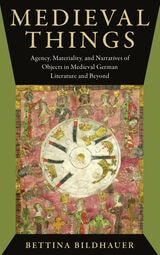
Medieval Things
Agency, Materiality, and Narratives of Objects in Medieval German Literature and BeyondBettina Bildhauer
The Ohio State University Press, 2020
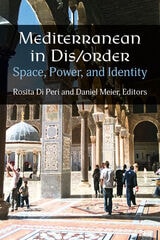
Mediterranean in Dis/order
Space, Power, and IdentityRosita Di Peri and Daniel Meier, Editors
University of Michigan Press, 2023
Mediterranean in Dis/order reveals the connection between space and politics by examining the role that space has played in insurgencies, conflicts, uprisings, and mobilities in the Mediterranean region. With this approach, the authors are able to challenge well-established beliefs about the power structure of the state across different disciplines (including political science, history, sociology, geography, and anthropology), and its impact on the conception, production, and imagination of space in the broader Mediterranean. Further, they contribute to particular areas of studies, such as migration, political Islam, mobilization, and transition to democracy, among others. The book, infusing critical theory, unveils original and revelatory case studies in Tunisia, Libya, Lebanon, Turkey, Syria, Morocco, and the EU Mediterranean policy, through a various set of actors and practices—from refugees and migrations policies, to Islamist or students’ movements, architectural sites, or movies. This multidisciplinary perspective on space and power provides a valuable resource for practitioners interested in how space, context, and time interact to produce institutions, political subjectivities, and asymmetries of power, particularly since the turning point of the Arab uprisings. The book also helps readers understand the conditions under which the uprisings develop, giving a clearer picture about various national, regional, and international dynamics.
Melodramatic Imperial Writing
From the Sepoy Rebellion to Cecil RhodesNeil Hultgren
Ohio University Press, 2014
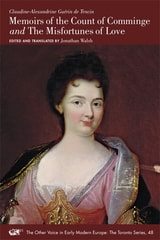
Memoirs of the Count of Comminge and The Misfortunes of Love
Claudine-Alexandrine Guérin de Tencin
Iter Press, 2016
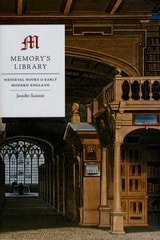
Memory's Library
Medieval Books in Early Modern EnglandJennifer Summit
University of Chicago Press, 2008
In Jennifer Summit’s account, libraries are more than inert storehouses of written tradition; they are volatile spaces that actively shape the meanings and uses of books, reading, and the past. Considering the two-hundred-year period between 1431, which saw the foundation of Duke Humfrey’s famous library, and 1631, when the great antiquarian Sir Robert Cotton died, Memory’s Library revises the history of the modern library by focusing on its origins in medieval and early modern England.
Summit argues that the medieval sources that survive in English collections are the product of a Reformation and post-Reformation struggle to redefine the past by redefining the cultural place, function, and identity of libraries. By establishing the intellectual dynamism of English libraries during this crucial period of their development, Memory’s Library demonstrates how much current discussions about the future of libraries can gain by reexamining their past.
Men Who Hate Women and Women Who Kick Their Asses
Stieg Larsson's Millennium Trilogy in Feminist PerspectiveDonna King
Vanderbilt University Press, 2012
These lively and accessible essays expand the conversation in the blogosphere about the novels and films by connecting the controversies about gender roles to social trends in the real world.
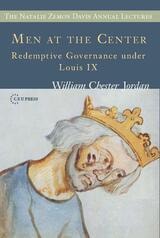
Men at the Center
Redemptive Governance under Louis IXWilliam Chester Jordan
Central European University Press, 2012
Taking Professor Natalie Zemon Davis’ fascinating biographical studies of three Women on the Margins in the seventeenth century as an inspiration, the author of this book offers three portraits of men who were at the very center of governance in thirteenth-century France, men who strove in the shadow of King Louis IX (Saint Louis) to impose a redemptive regime on the realm. Professor Jordan treats them as individuals, but in a sense they are also types: Robert of Sorbon, a churchman; Etienne Boileau, a bourgeois; and Simon de Nesle, an aristocrat. Robert was the founder of the Sorbonne; Boileau was the prévôt or royal administrator of Paris; and Simon was twice co-regent of the kingdom. Thinking about them and their relations with Louis IX opens up a new and altogether sobering vista for exploring the nature of the king’s rule and the impact of his rule on his subjects.
Merrill, Cavafy, Poems, and Dreams
Rachel Hadas
University of Michigan Press, 2000
The second half of the book combines explorations of various corners and horizons of the poetry scene, including neglected American poets and Hadas's thoughts on her own poetics and career. "Two Letters from New York" and "Tangled Web Sites" take bemused looks at literary or cultural landscapes. Hadas also looks inward: to dreams and dreamwork, to her dead mother's address book, to the emblematic drilling of a well in a country house. The range of selections includes essays, interviews, memoir, criticism, and a few of Hadas's own poems.
Rachel Hadas is the author of eleven books of poetry, essays, and translations. Her most recent book is Halfway Down the Hall: New and Selected Poems. She has received a Guggenheim Fellowship in Poetry and an American Academy-Institute of Arts and Letters Award in Literature, and is a member of the American Academy of Arts and Sciences. She is Professor of English at the Newark campus of Rutgers University.
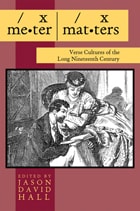
Meter Matters
Verse Cultures of the Long Nineteenth CenturyJason David Hall
Ohio University Press, 2011
Across the nineteenth century, meter mattered—in more ways and to more people than we might well appreciate today. For the period’s poets, metrical matters were a source of inspiration and often vehement debate. And the many readers, teachers, and pupils encountered meter and related topics in both institutional and popular forms.
The ten essays in Meter Matters showcase the range of metrical practice of poets from Wordsworth and Byron to Hopkins, Swinburne, and Tennyson; at the same time, the contributors bring into focus some of the metrical theorizing that shaped poetic thinking and responses to it throughout the nineteenth century. Paying close attention to the historical contours of Romantic and Victorian meters, as well as to the minute workings of the verse line, Meter Matters presents a fresh perspective on a subject that figured significantly in the century’s literature, and in its culture.
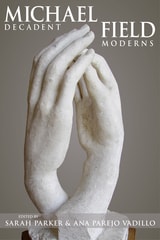
Michael Field
Decadent ModernsSarah Parker
Ohio University Press, 2019
In the last twenty years, Michael Field has emerged as one of the most fascinating poets of the Victorian era. Through their collaborative partnership as “Michael Field,” Katharine Bradley and Edith Cooper engaged in the aesthetic and decadent movements of the fin de siècle, while their poetry and verse drama articulate ideas associated with the New Woman and boldly express queer and lesbian desire. Michael Field: Decadent Moderns extends the focus on these key literary and cultural contexts by emphasizing their continuing significance within twentieth-century literary modernism. Through a series of interdisciplinary essays, this book addresses Michael Field’s energetic engagements with a range of topics including ecology, perfume, tourism, art history, sculpture, formalism, classics, and book history. In doing so, Michael Field: Decadent Moderns highlights the modernity, radicalism, and relevance of their work, both within the nineteenth and twentieth centuries as well as in our own cultural moment.
Contributors: Leire Barrera-Medrano, Joseph Bristow, Jill R. Ehnenn, Sarah E. Kersh, Kristin Mahoney, Catherine Maxwell, Alex Murray, Sarah Parker, Margaret D. Stetz, Kate Thomas, and Ana Parejo Vadillo.
Middle English Dictionary
A.1Robert E. Lewis, Editor-in-Chief
University of Michigan Press, 1956
Middle English Dictionary
A.2Robert E. Lewis, Editor-in-Chief
University of Michigan Press, 1956
Middle English Dictionary
A.3Robert E. Lewis, Editor-in-Chief
University of Michigan Press, 1956
Middle English Dictionary
A.4Robert E. Lewis, Editor-in-Chief
University of Michigan Press, 1957
Middle English Dictionary
B.1Robert E. Lewis, Editor-in-Chief
University of Michigan Press, 1957
Middle English Dictionary
B.2Robert E. Lewis, Editor-in-Chief
University of Michigan Press, 1957
Middle English Dictionary
B.3Robert E. Lewis, Editor-in-Chief
University of Michigan Press, 1957
Middle English Dictionary
B.4Robert E. Lewis, Editor-in-Chief
University of Michigan Press, 1958
Middle English Dictionary
B.5Robert E. Lewis, Editor-in-Chief
University of Michigan Press, 1958
Middle English Dictionary
C.1Robert E. Lewis, Editor-in-Chief
University of Michigan Press, 1959
Middle English Dictionary
C.2Robert E. Lewis, Editor-in-Chief
University of Michigan Press, 1959
Middle English Dictionary
C.3Robert E. Lewis, Editor-in-Chief
University of Michigan Press, 1959
Middle English Dictionary
C.4Robert E. Lewis, Editor-in-Chief
University of Michigan Press, 1960
Middle English Dictionary
C.5Robert E. Lewis, Editor-in-Chief
University of Michigan Press, 1960
Middle English Dictionary
C.6Robert E. Lewis, Editor-in-Chief
University of Michigan Press, 1960
Middle English Dictionary
D.1Robert E. Lewis, Editor-in-Chief
University of Michigan Press, 1961
Middle English Dictionary
D.2Robert E. Lewis, Editor-in-Chief
University of Michigan Press, 1961
Middle English Dictionary
D.3Robert E. Lewis, Editor-in-Chief
University of Michigan Press, 1961
Middle English Dictionary
D.4Robert E. Lewis, Editor-in-Chief
University of Michigan Press, 1962
Middle English Dictionary
D.5Robert E. Lewis, Editor-in-Chief
University of Michigan Press, 1962
Middle English Dictionary
E.1Robert E. Lewis, Editor-in-Chief
University of Michigan Press, 1952
Middle English Dictionary
E.2Robert E. Lewis, Editor-in-Chief
University of Michigan Press, 1953
Middle English Dictionary
E.3Robert E. Lewis, Editor-in-Chief
University of Michigan Press, 1953
Middle English Dictionary
F.1Robert E. Lewis, Editor-in-Chief
University of Michigan Press, 1953
Middle English Dictionary
F.2Robert E. Lewis, Editor-in-Chief
University of Michigan Press, 1954
Middle English Dictionary
F.3Robert E. Lewis, Editor-in-Chief
University of Michigan Press, 1954
Middle English Dictionary
F.4Robert E. Lewis, Editor-in-Chief
University of Michigan Press, 1954
Middle English Dictionary
G.1Robert E. Lewis, Editor-in-Chief
University of Michigan Press, 1963
Middle English Dictionary
G.2Robert E. Lewis, Editor-in-Chief
University of Michigan Press, 1963
Middle English Dictionary
G.3Robert E. Lewis, Editor-in-Chief
University of Michigan Press, 1964
Middle English Dictionary
H.1Robert E. Lewis, Editor-in-Chief
University of Michigan Press, 1966
Middle English Dictionary
H.2Robert E. Lewis, Editor-in-Chief
University of Michigan Press, 1966
Middle English Dictionary
H.3Robert E. Lewis, Editor-in-Chief
University of Michigan Press, 1966
Middle English Dictionary
H.4Robert E. Lewis, Editor-in-Chief
University of Michigan Press, 1966
Middle English Dictionary
H.5Robert E. Lewis, Editor-in-Chief
University of Michigan Press, 1967
Middle English Dictionary
I.1Robert E. Lewis, Editor-in-Chief
University of Michigan Press, 1968
Middle English Dictionary
I.2Robert E. Lewis, Editor-in-Chief
University of Michigan Press, 1968
Middle English Dictionary
J.1Robert E. Lewis, Editor-in-Chief
University of Michigan Press, 1969
Middle English Dictionary
K.1Robert E. Lewis, Editor-in-Chief
University of Michigan Press, 1969
Middle English Dictionary
L.1Robert E. Lewis, Editor-in-Chief
University of Michigan Press, 1970