Results by title
1104 books match the query 'Gender Studies' and 73 start with m
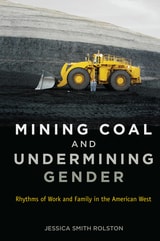
Mining Coal and Undermining Gender
Rhythms of Work and Family in the American WestJessica Smith Rolston
Rutgers University Press, 2014
Though mining is an infamously masculine industry, women make up 20 percent of all production crews in Wyoming’s Powder River Basin—the largest coal-producing region in the United States. How do these women fit into a working culture supposedly hostile to females? This is what anthropologist Jessica Smith Rolston, herself a onetime mine worker and the daughter of a miner, set out to discover. Her answers, based on years of participant-observation in four mines and extensive interviews with miners, managers, engineers, and the families of mine employees, offer a rich and surprising view of the working “families” that miners construct. In this picture, gender roles are not nearly as straightforward—or as straitened—as stereotypes suggest.
Gender is far from the primary concern of coworkers in crews. Far more important, Rolston finds, is protecting the safety of the entire crew and finding a way to treat each other well despite the stresses of their jobs. These miners share the burden of rotating shift work—continually switching between twelve-hour day and night shifts—which deprives them of the daily rhythms of a typical home, from morning breakfasts to bedtime stories. Rolston identifies the mine workers’ response to these shared challenges as a new sort of constructed kinship that both challenges and reproduces gender roles in their everyday working and family lives.
Crews’ expectations for coworkers to treat one another like family and to adopt an “agricultural” work ethic tend to minimize gender differences. And yet, these differences remain tenacious in the equation of masculinity with technical expertise, and of femininity with household responsibilities. For Rolston, such lingering areas of inequality highlight the importance of structural constraints that flout a common impulse among men and women to neutralize the significance of gender, at home and in the workplace.
At a time when the Appalachian region continues to dominate discussion of mining culture, this book provides a very different and unexpected view—of how miners live and work together, and of how their lives and work reconfigure ideas of gender and kinship.
Mobile Subjects
Transnational Imaginaries of Gender ReassignmentAren Z. Aizura
Duke University Press, 2018

Modern Argentine Masculinities
Edited by Carolina Rocha
Intellect Books, 2013
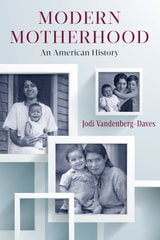
Modern Motherhood
An American HistoryVandenberg-Daves, Jodi
Rutgers University Press, 2014
Modern Motherhood travels through redefinitions of motherhood over time, as mothers encountered a growing cadre of medical and psychological experts, increased their labor force participation, gained the right to vote, agitated for more resources to perform their maternal duties, and demonstrated their vast resourcefulness in providing for and nurturing their families. Navigating rigid gender role prescriptions and a crescendo of mother-blame by the middle of the twentieth century, mothers continued to innovate new ways to combine labor force participation and domestic responsibilities. By the 1960s, they were poised to challenge male expertise, in areas ranging from welfare and abortion rights to childbirth practices and the confinement of women to maternal roles. In the twenty-first century, Americans continue to struggle with maternal contradictions, as we pit an idealized role for mothers in children’s development against the social and economic realities of privatized caregiving, a paltry public policy structure, and mothers’ extensive employment outside the home.
Building on decades of scholarship and spanning a wide range of topics, Vandenberg-Daves tells an inclusive tale of African American, Native American, Asian American, working class, rural, and other hitherto ignored families, exploring sources ranging from sermons, medical advice, diaries and letters to the speeches of impassioned maternal activists. Chapter topics include: inventing a new role for mothers; contradictions of moral motherhood; medicalizing the maternal body; science, expertise, and advice to mothers; uplifting and controlling mothers; modern reproduction; mothers’ resilience and adaptation; the middle-class wife and mother; mother power and mother angst; and mothers’ changing lives and continuous caregiving. While the discussion has been part of all eras of American history, the discussion of the meaning of modern motherhood is far from over.
Modern Odysseys
Cavafy, Woolf, Césaire, and a Poetics of IndirectionMichelle Zerba
The Ohio State University Press, 2021
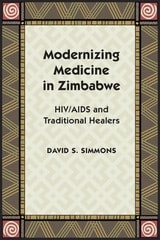
Modernizing Medicine in Zimbabwe
HIV/AIDS and Traditional HealersDavid S. Simmons
Vanderbilt University Press, 2012
Combining anthropological, historical, and public health perspectives, Modernizing Medicine in Zimbabwe explores the intersection of African healing traditions and Western health development, emphasizing the role of this historical relationship in current debates about HIV/AIDS. Drawing on diverse sources including colonial records, missionary correspondence, international health policy reports, and interviews with traditional healers, anthropologist David S. Simmons demonstrates the remarkable adaptive qualities of these disparate communities as they try to meet the urgent needs of the people.
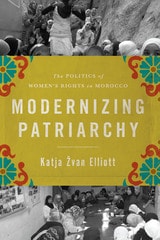
Modernizing Patriarchy
The Politics of Women's Rights in MoroccoBy Katja Žvan Elliott
University of Texas Press, 2015
Morocco is hailed by academics, international NGO workers, and the media as a trailblazer in women’s rights and legal reforms. The country is considered a model for other countries in the Middle East and North African region, but has Morocco made as much progress as experts and government officials claim? In Modernizing Patriarchy, Katja Žvan Elliott examines why women’s rights advances are lauded in Morocco in theory but are often not recognized in reality, despite the efforts of both Islamist and secular feminists.
In Morocco, female literacy rates remain among the lowest in the region; many women are victims of gender-based violence despite legal reforms; and girls as young as twelve are still engaged to adult men, despite numerous reforms. Based on extensive ethnographic research and fieldwork in Oued al-Ouliya, Modernizing Patriarchy offers a window into the life of Moroccan Muslim women who, though often young and educated, find it difficult to lead a dignified life in a country where they are expected to have only one destiny: that of wife and mother. Žvan Elliott exposes their struggles with modernity and the legal reforms that are supposedly ameliorating their lives. In a balanced approach, she also presents male voices and their reasons for criticizing the prevailing women’s rights discourse. Compelling and insightful, Modernizing Patriarchy exposes the rarely talked about reality of Morocco’s approach toward reform.
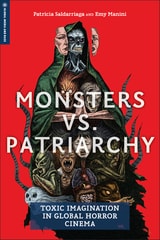
Monsters vs. Patriarchy
Toxic Imagination in Global Horror CinemaPatricia Saldarriaga
Rutgers University Press, 2025
Monsters vs. Patriarchy examines female monstrosity as it appears in horror films from around the world and considers specific political, scientific, and historical contexts to better understand how we construct and reconstruct monstrosity, using an intersectional approach to examine the imposition of gender and racial hierarchies that support national power structures. The authors contend that monstrous female cinematic subjects, including ghosts, witches, cannibals, and posthuman beings, are becoming empowered, using the tools of their monstrification to smash the colonial, white supremacist, and misogynist structures that created them.
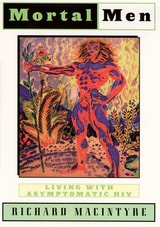
Mortal Men
Living with Asymptomatic HIVMac Intyre, Richard
Rutgers University Press, 1999
Mother Tongues of the High Andes
Gender, Language, and Indigenous Difference in PeruSandhya Krittika Narayanan
University of Arizona Press, 2025
Anthropologist Sandhya Krittika Narayanan begins with these challenges, and asks: What does it mean to be a Quechua or Aymara speaker in Puno today? What does it mean to be an Indigenous ethnic Quechua or Aymara individual?
Mother Tongues of the High Andes opens with these questions, exploring what Quechua and Aymara languages and identities mean for Indigenous puneños as they navigate their past and present. Narayanan argues that understanding inter-Indigenous linguistic and social differences involves examining Indigenous gender roles, responsibilities, and linguistic practices, particularly those of Indigenous puneña women. She shows how these practices have contributed to the maintenance of Indigenous multilingualism and continuity in local modes of understanding Indigenous identity and difference.
Even as ideologies around Indigenous identity and linguistic practices shift due to global discourses on Indigenous ethnic identity and nationalism, Indigenous women continue to play a crucial role, promoting new ways to speak and think about Quechua and Aymara linguistic differences, making the Indigenous roots and histories of Puno recognizable to a global audience. Through a comprehensive ethnographic exploration of gender, language, and Indigenous difference, Narayanan shows how the linguistic and social practices of Indigenous puneña women both contest and reaffirm competing visions of Quechua and Aymara linguistic identity and authority.
Mothering in the Time of Coronavirus
Amy Lutz, Sujung (Crystal) Lee, and Baurzhan Bokayev
University of Massachusetts Press, 2025
When stay-at-home orders during the COVID-19 pandemic erased the division between home and school, many parents in the United States were suddenly expected to become their children’s teachers. Despite this new arrangement, older gender norms largely remained in place, and these extra child rearing responsibilities fell disproportionately on mothers. Mothering in the Time of Coronavirus explores how they juggled working, supervising at-home learning, and protecting their children’s emotional and physical health during the outbreak.
Focusing on both remote and essential workers in central New York, Amy Lutz, Sujung (Crystal) Lee, and Baurzhan Bokayev argue that the pandemic transformed an already intensive style of contemporary American child rearing, in which mothers are expected to be constantly available to meet their children’s needs even when they are working outside the home, into extremely intensive mothering. The authors investigate the consequences of this shift, and how it is influenced by issues such as class and race. They also bring attention to how and why current public policies are not conducive to the de-intensification of motherhood. Locating their study within larger intersections of gender, family, and education, they contend that to fully appreciate the broader social consequences of COVID-19, we must understand the experiences of mothers.
Moving Home
Gender, Place, and Travel Writing in the Early Black AtlanticSandra Gunning
Duke University Press, 2021
Multicultural Girlhood
Racism, Sexuality, and the Conflicted Spaces of American EducationMary E. Thomas
Temple University Press, 2011
High school turf wars are often a teenage rite of passage, but there are extremes—as when a race riot at a Los Angeles campus in the spring of 2005 resulted in a police lockdown. In her fascinating book,Multicultural Girlhood, Mary Thomas interviewed 26 Latina, Armenian, Filipina, African-American, and Anglo girls at this high school to gauge their responses to the campus violence. They all denounced the outbreak, calling for multicultural understanding and peaceful coexistence.
However, as much as the girls want everyone to just “get along,” they also exhibit strong racist beliefs and validate segregated social spaces on campus and beyond. How can teenagers and “girl power” work together to empower instead of alienate multicultural groups? In her perceptive book, Thomas foregrounds the spaces of teen girlhood and the role that space plays in girls' practices that perpetuate social difference, and she explains the ways we navigate the intellectual terrain between scholarship and school yard.

Multiple Meanings of Gender Equality
A critical frame analysis of gender policies in EuropeMieke Verloo
Central European University Press, 2007
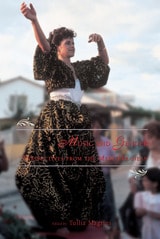
Music and Gender
Perspectives from the MediterraneanEdited by Tullia Magrini
University of Chicago Press, 2003
From Spanish flamenco to Algerian raï, Greek rebetika to Turkish pop music, Sephardi and Berber songs to Egyptian belly dancers, the contributors cover an exceedingly wide range of geographic and musical territories. Individual essays examine musical behavior as representation, assertion, and sometimes transgression of gender identities; compare men's and women's roles in specific musical practices and their historical evolution; and explore how music and gender relate to such issues as ethnicity, nationality, and religion. Anyone studying the musics or cultures of the Mediterranean, or more generally the relations between gender and the arts, will welcome this book.
Contributors:
Caroline Bithell, Joaquina Labajo, Jane C. Sugarman, Carol Silverman, Goffredo Plastino, Gail Holst-Warhaft, Edwin Seroussi, Marie Virolle, Terry Brint Joseph, Deborah Kapchan, Karin van Nieuwkerk, Svanibor Pettan, Martin Stokes, Philip V. Bohlman
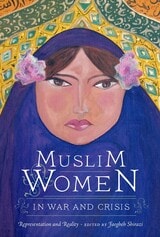
Muslim Women in War and Crisis
Representation and RealityEdited by Faegheh Shirazi
University of Texas Press, 2010
Representing diverse cultural viewpoints, Muslim Women in War and Crisis collects an array of original essays that highlight the experiences and perspectives of Muslim women—their dreams and nightmares and their daily struggles—in times of tremendous social upheaval. Analyzing both how Muslim women have been represented and how they represent themselves, the authors draw on primary sources ranging from poetry and diaries to news reports and visual media. Topics include:
- Peacebrokers in Indonesia
- Exploitation in the Islamic Republic of Iran
- Chechen women rebels
- Fundamentalism in Afghanistan, from refugee camps to Kabul
- Memoirs of Bengali Muslim women
- The 7/7 London bombings, British Muslim women, and the media
Also exploring such images in the United States, Spain, the former Yugoslavia, Tunisia, Algeria, Lebanon, and Iraq, this collection offers a chorus of multidimensional voices that counter Islamophobia and destructive clichés. Encompassing the symbolic national and religious identities of Muslim women, this study goes beyond those facets to examine the realities of day-to-day existence in societies that seek scapegoats and do little to defend the victims of hate crimes. Enhancing their scholarly perspectives, many of the contributors (including the editor) have lived through the strife they analyze. This project taps into their firsthand experiences of war and deadly political oppression.

My Father, the Messiah
A MemoirGil Z. Hochberg
Duke University Press, 2026
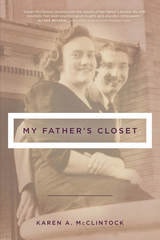
My Father’s Closet
Karen McClintock
The Ohio State University Press, 2017
“Karen McClintock reconstructs the details of her father’s double life with novelistic flair, keen psychological insight, and graceful compassion.” —Alison Bechdel
Thirty years after her father’s death, Karen McClintock sets out to find the gay father she never really knew. As we follow the unraveling family secret, we find ourselves drawn into her story as they stumble into infidelity, grieve heartbreaking losses, and remain loyal in love.
Set in Columbus, Ohio, My Father’s Closet tells the story of how just before the war, McClintock’s parents fell in love and married, while overseas in Germany the man whom she believes became her father’s lover was concealing his Jewish and gay identities in order to escape to America. A set of her father’s journals, letters her parents sent to each other during the Second World War, and a mysterious painting all lead her toward the truth about her gay father. McClintock weaves a complex secret into the fabric of lives we truly care about. And in the process, she leads us out of her father’s closet.
This gripping memoir captures the longing children feel for a distant or hidden parent and taps into the complexity of human connection and abandonment. The characters are resilient and vibrant. The hidden lovers, the nosey neighbors, and surprise lovers all show up. In the end, this extraordinary family finds ways to connect and freedom to love. Anyone who grew up with a family secret will appreciate the dynamics afoot in this fast-paced and compelling story.
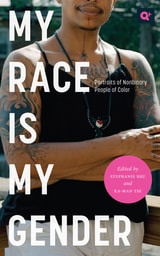
My Race Is My Gender
Portraits of Nonbinary People of ColorStephanie Hsu
Rutgers University Press, 2024
Genderqueer and nonbinary people of color often experience increased marginalization, belonging to an ethnic group that seldom recognizes their gender identity and a queer community that subscribes to white norms. Yet for this very reason, they have a lot to teach about how racial, sexual, and gender identities intersect. Their experiences of challenging social boundaries demonstrate how queer communities can become more inclusive and how the recognition of nonbinary genders can be an anti-racist practice.
My Race is My Gender is the first anthology by nonbinary writers of color to include photography and visual portraits, centering their everyday experiences of negotiating intersectional identities. While informed by queer theory and critical race theory, the authors share their personal stories in accessible language. Bringing together Black, Indigenous, Latine, and Asian perspectives, its six contributors present an intergenerational look at what it means to belong to marginalized queer communities in the U.S. and feel solidarity with a global majority at the same time. They also provide useful insights into how genderqueer and nonbinary activism can both energize and be fueled by such racial justice movements as Black Lives Matter.
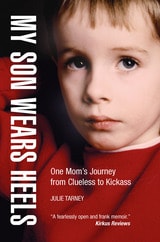
My Son Wears Heels
One Mom's Journey from Clueless to KickassJulie Tarney, Foreword by Diane Ehrensaft
University of Wisconsin Press, 2016
Julie had no idea what that meant. She felt disoriented. Wasn’t it her role to encourage and support her child? Surely she had to set some limits to his self-expression—or did she? Would he be bullied? Could she do the right thing? What was the right thing?
The internet was no help, because there was no internet. And there were zero books for a mom scrambling to understand a toddler who had definite ideas about his gender, regardless of how Nature had endowed him. Terms such as transgender, gender nonconforming, and gender creative were rare or nonexistent.
There were, however, mainstream experts who theorized that a “sissy” boy was the result of a domineering mother. Julie couldn’t believe it. She didn’t want to care what her neighbors thought, but she did care. “Domineering mother” meant controlling mother. It meant bad mother. It meant her mother.
Lacking a positive role model of her own, and fearful of being judged as a mom who was making her son “too feminine,” Julie embarked on an unexpected parenting path. Despite some missteps, and with no map to guide her, she learned to rely on her instincts. She listened carefully, kept an open mind, and as long as Harry was happy, she let him lead the way. Julie eventually realized that Harry knew who he was all along. Her job was simply to love and support him unconditionally, allowing him to be his authentic self. This story of a mother embracing her child’s uniqueness and her own will resonate with all families.
Winner, inaugural BeOUT Award for LGBTQ Visibility, awarded by Milwaukee Pride
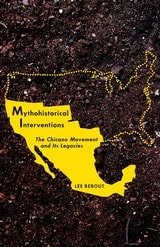
Mythohistorical Interventions
The Chicano Movement and Its LegaciesLee Bebout
University of Minnesota Press, 2010
Examining the deployment of the Aztec eagle by the United Farm Workers union, the poem Yo Soy Joaquín, the document El Plan de Santa Barbara, and icons like La Malinche and La Virgen de Guadalupe, Bebout reveals the centrality of culture to the Chicano movement. For Bebout, the active implementation of cultural narrative was strategically significant in several ways. First, it allowed disparate movement participants to imagine themselves as part of a national, and nationalist, community of resistance. Second, Chicano use of these narratives contested the images that fostered Anglo-American hegemony.
Bringing his analysis up to the present, Bebout delineates how demographic changes have, on the one hand, encouraged the possibility of a panethnic Latino community, while, on the other hand, anti-Mexican nativists attempt to resurrect Chicano myths as a foil to restrict immigration from Mexico.
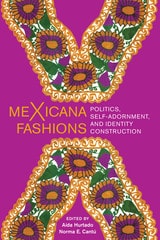
meXicana Fashions
Politics, Self-Adornment, and Identity ConstructionEdited by Aída Hurtado and Norma E. Cantú
University of Texas Press, 2020
2020 Second Place, Best Nonfiction Multi Author, International Latino Book Awards
Collecting the perspectives of scholars who reflect on their own relationships to particular garments, analyze the politics of dress, and examine the role of consumerism and entrepreneurialism in the production of creating and selling a style, meXicana Fashions examines and searches for meaning in these visible, performative aspects of identity.
Focusing primarily on Chicanas but also considering trends connected to other Latin American communities, the authors highlight specific constituencies that are defined by region (“Tejana style,” “L.A. style”), age group (“homie,” “chola”), and social class (marked by haute couture labels such as Carolina Herrera and Oscar de la Renta). The essays acknowledge the complex layers of these styles, which are not mutually exclusive but instead reflect a range of intersections in occupation, origin, personality, sexuality, and fads. Other elements include urban indigenous fashion shows, the shifting quinceañera market, “walking altars” on the Days of the Dead, plus-size clothing, huipiles in the workplace, and dressing in drag. Together, these chapters illuminate the full array of messages woven into a vibrant social fabric.
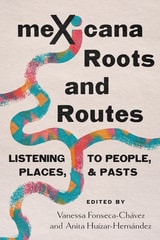
meXicana Roots and Routes
Listening to People, Places, and PastsEdited by Vanessa Fonseca-Chávez and Anita Huízar-Hernández
University of Arizona Press, 2025
In this collection, established and emerging scholars draw upon their rootedness in the U.S. Southwest and U.S.-Mexico borderlands. The meXicana contributors use personal and scholarly inquiry to discuss what it means to cultivate spaces of belonging, navigate language policies, and explore and excavate silences in various spaces, among other important themes.
From the recruitment of Latinas for the U.S. Benito Juárez Squadron in World War II, to the early twentieth-century development of bilingual education in Arizona, to new and insightful analyses of Bracero Program participants and their families, the book details little-known oral histories and archival material to present a rich account of lives along the border with emphasis on women and the working class.
As the inaugural publication of the Arizona Crossroads series, readers will find Arizona featured as a central node of borderlands roots and routes. Each section of the book intentionally centers Arizona within broader comparative and cross-state dialogues, alongside chapters that reflect regional concerns in other southwestern states, including Texas, California, Colorado, and New Mexico. Throughout, this volume highlights the ways in which personal experience, community building, and scholarly perspectives can provide a powerful space for community voices.
Contributors
Vanessa Fonseca-Chávez
Lillian Gorman
Gloria Holguín Cuádraz
Anita Huízar-Hernández
Christine Marin
Valerie A. Martínez
Alina R. Méndez
Karen R. Roybal
Yvette J. Saavedra
Liliana Toledo-Guzmán
Andrea Tovar