Results by title
2646 books match the query 'History & Criticism' and 181 start with m
Media Theory in Japan
Marc Steinberg and Alexander Zahlten, editors
Duke University Press, 2017
Media and the Affective Life of Slavery
Allison Page
University of Minnesota Press, 2022
How media shapes our actions and feelings about race
Amid fervent conversations about antiracism and police violence, Media and the Affective Life of Slavery delivers vital new ideas about how our feelings about race are governed and normalized by our media landscape. Allison Page examines U.S. media from the 1960s to today, analyzing how media culture instructs viewers to act and feel in accordance with new racial norms created for an era supposedly defined by an end to legal racism.
From the classic television miniseries Roots to the edutainment video game Mission 2: Flight to Freedom and the popular website slaveryfootprint.org, Media and the Affective Life of Slavery provides an in-depth look at the capitalist and cultural artifacts that teach the U.S. public about slavery. Page theorizes media not only as a system of representation but also as a technology of citizenship and subjectivity, wherein race is seen as a problem to be solved. Ultimately, she argues that visual culture works through emotion, a powerful lever for shaping and managing racialized subjectivity.
Media and the Affective Life of Slavery delivers compelling, provocative material and includes a wealth of archival research into such realms as news, entertainment, television, curricula, video games, and digital apps, providing new and innovative scholarship where none currently exists.
Mediating Alzheimer's
Cognition and PersonhoodScott Selberg
University of Minnesota Press, 2022
An exploration of the representational culture of Alzheimer’s disease and how media technologies shape our ideas of cognition and aging
With no known cause or cure despite a century of research, Alzheimer’s disease is a true medical mystery. In Mediating Alzheimer’s, Scott Selberg examines the nature of this enduring national health crisis by looking at the disease’s relationship to media and representation. He shows how collective investments in different kinds of media have historically shaped how we understand, treat, and live with this disease.
Selberg demonstrates how the cognitive abilities that Alzheimer’s threatens—memory, for example—are integrated into the operations of representational technologies, from Polaroid photographs to Post-its to digital artificial intelligence. Focusing on a wide variety of media technologies, such as neuroimaging, art therapy, virtual reality, and social media, he shows how these cognitively oriented media ultimately help define personhood for people with Alzheimer’s. Media have changed the practices of successful aging in the United States, and Selberg takes us deep into how technologies like digital brain-training and online care networks shape ideas of cognition and healthy aging.
Packed with startlingly fresh insights, Mediating Alzheimer’s contributes to debates around bioethics, the labor of caregiving, and a national economy increasingly invested in communication and digital media. Probing the very technologies that promise to save and understand our brains, it gives us new ways of understanding Alzheimer’s disease and aging in America.
Mediating the Uprising
Narratives of Gender and Marriage in Syrian Television DramaRebecca Joubin
Rutgers University Press, 2020
While for some screenwriters a return to pre-2011 life would be welcome after so much bloodshed, others advocated profound cultural and social transformation, instead. They employed marriage and gender metaphors in the stories they wrote to engage in political critique, even at the risk of creating marketing difficulties for the shows or they created escapist stories such as transnational adaptations and Old Damascus tales. Serving as heritage preservation, Mediating the Uprising underscores that television drama creators in Syria have many ways of engaging in protest, with gender and marriage at the heart of the polemic.
Mel Gibson's Bible
Religion, Popular Culture, and "The Passion of the Christ"Edited by Timothy K. Beal and Tod Linafelt
University of Chicago Press, 2005
In this volume, biblical scholars Timothy K. Beal and Tod Linafelt—along with an esteemed group of contributors—offer a provocative range of views on The Passion of the Christ. Their book is organized in three parts. The first analyzes the film in terms of its religious foundations, including the Gospels and nonbiblical religious texts: What are the film's literary sources and how does it use them? In what ways does the medium of film require a radically different way of representing gospel narrative? The second group of essays focuses on the ethical and theological implications of the film's presentation of the Christian gospel: What do we make of its representations of female sexuality? What are the implications of focusing on the Passion in terms of atonement rather than social justice? Finally, the third section explores the film as a pop cultural phenomenon: How has the film worked to create a sense of insider status for some and alienated so many others? What can we learn about the religious dimensions of contemporary mass culture from the film's reception?
Whether one is inspired or appalled by The Passion of the Christ, there can be no question that it is a defining moment in the cultural afterlife of the Bible. This volume tries to make sense of that moment and will prove to be a touchstone for adherents and detractors of the film alike.
Melancholy Drift
Marking Time in Chinese CinemaJean Ma
Hong Kong University Press, 2010
Melodrama
An Aesthetics of ImpossibilityJonathan Goldberg
Duke University Press, 2016
Melodramatic Formations
American Theatre and Society, 1820-1870Bruce A. Mcconachie
University of Iowa Press, 1992
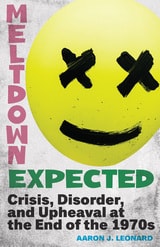
Meltdown Expected
Crisis, Disorder, and Upheaval at the end of the 1970sAaron J. Leonard
Rutgers University Press, 2024
Meltdown Expected tells the story of the power shifts from late 1978 through 1979 whose repercussions are still being felt. Iran’s revolution led to a hostage crisis while neighbouring Afghanistan became the site of a proxy war between the USSR and the US, who supplied aid to Islamic mujahideen fighters that would later form the Taliban. Meanwhile, as tragedies like the Jonestown mass suicide and the assassination of Harvey Milk captured the nation’s attention, the government quietly reasserted and expanded the FBI’s intelligence powers. Drawing from recently declassified government documents and covering everything from Three Mile Island to the rise of punk rock, Aaron J. Leonard paints a vivid portrait of a tumultuous yet pivotal time in American history.
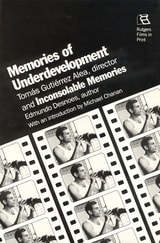
Memories Of Underdevelopment
Chanan, Michael
Rutgers University Press, 1990
This double volume includes the complete continuity script of Memories, as well as the complete novel, Inconsolable Memories, upon which the film is based. An interview with Alea is reproduced here, as well as documentation of the political controversy that surrounded the film in this country. Michael Chanan's introduction places the film in the context of Cuban political and cultural history. The volume also includes a biographical sketch of Alea, a chronology of the Cuban Revolution, reviews, commentary, a filmography, and a bibliography.Michael Chanan lives in England, where he teaches and writes on film. He is the author of The Cuban Image: Cinema and Cultural Politics in Cuba.
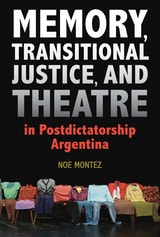
Memory, Transitional Justice, and Theatre in Postdictatorship Argentina
Noe Montez
Southern Illinois University Press, 2018
Montez explores how the sociohistorical phenomenon of the Teatroxlaidentidad—an annual showcase staged with the support of Argentina’s Grandmothers of the Plaza de Mayo—acted as a vehicle for drawing attention to the hundreds of children kidnapped from their families during the dictatorship and looks at why the memory narratives regarding the Malvinas Islands (also known as the Falklands) range from ideological appropriations of the islands, to absurdist commentaries about the failed war that signaled the dictatorship’s end, to the islands’ heavily contested status today.
Memory, Transitional Justice, and Theatre in Postdictatorship Argentina explores the vibrant role of theatrical engagement in postdictatorship Argentina, analyzes plays by artists long neglected in English-language articles and books, and explores the practicalities of staging performances in Latin America.
Menander and the Birth of Domestic Drama
Mitch Brown
University of Wisconsin Press, 2024
The design of the Greek stage was such that the interiors of houses were almost never shown, which posed difficulties for a playwright interested in staging the domestic lives of ordinary people. Here, Mitch Brown dissects how Menander responded to this challenge. As Brown demonstrates, Menander successfully conjured offstage action and even characters in the audiences’ imaginations; these offstage universes, Brown argues, are fundamental to understanding Menander’s dramaturgy and its reception in later centuries. Menander’s offstage methods and the new type of play (domestic drama) that he inaugurated directly influenced Western theater into the early modern period—and the impact of his innovations can still be seen indirectly today.
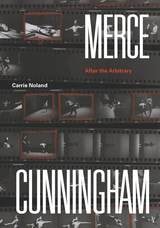
Merce Cunningham
After the ArbitraryCarrie Noland
University of Chicago Press, 2019
Examining a rich and previously unseen archive that includes photographs, film footage, and unpublished writing by Cunningham, Noland counters prior understandings of Cunningham’s influential embrace of the unintended, demonstrating that Cunningham in fact set limits on the role chance played in his dances. Drawing on Cunningham’s written and performed work, Noland reveals that Cunningham introduced variables before the chance procedure was applied and later shaped and modified the chance results. Chapters explore his relation not only to Cage, but also Marcel Duchamp, Robert Rauschenberg, James Joyce, and Bill T. Jones. Ultimately, Noland shows that Cunningham approached movement as more than “movement in itself,” and that his work enacted archetypal human dramas. This remarkable book will forever change our appreciation of the choreographer’s work and legacy.
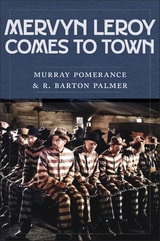
Mervyn LeRoy Comes to Town
Murray Pomerance
Rutgers University Press, 2025
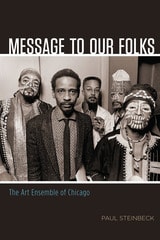
Message to Our Folks
The Art Ensemble of ChicagoPaul Steinbeck
University of Chicago Press, 2017
In Message to Our Folks, Paul Steinbeck combines musical analysis and historical inquiry to give us the definitive study of the Art Ensemble. In the book, he proposes a new theory of group improvisation that explains how the band members were able to improvise together in so many different styles while also drawing on an extensive repertoire of notated compositions. Steinbeck examines the multimedia dimensions of the Art Ensemble’s performances and the ways in which their distinctive model of social relations kept the group performing together for four decades. Message to Our Folks is a striking and valuable contribution to our understanding of one of the world’s premier musical groups.
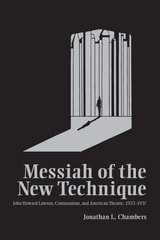
Messiah of the New Technique
John Howard Lawson, Communism, and American Theatre, 1923-1937Jonathan L. Chambers
Southern Illinois University Press, 2006
Messiah of the New Technique: John Howard Lawson, Communism, and American Theatre, 1923–1937 is a critical and political biography and a cultural and social history that focuses on Lawson’s career in the theatre. Using a materialist methodology, Jonathan L. Chambers emphasizes the evolution and interplay of the playwright’s artistic vision and political ideology, considering his art as both a documentation of this evolution and a product of the socio-political and cultural matrix in which he was immersed.
Spanning the playwright’s career, the volume details Lawson’s early indoctrination in and commitment to the avant-garde, his use and development of various nonrealistic playwriting techniques, his subtle though unfocused attacks on bourgeois society, and the varied critical responses he received. Chambers addresses Lawson’s involvement with the New Playwrights’ Theatre and his participation in the protests surrounding the case of Nicola Sacco and Bartolomeo Vanzetti, which stimulated his growing commitment to left-wing politics and radical causes.
Chambers also analyzes the social and cultural factors that shaped Lawson’s growing interest in revolutionary politics, his tutelage in Marxism under Edmund Wilson, and his tenure as president of the Screen Writers Guild. He also covers the final phase of Lawson’s playwriting career, which reveals the playwright’s internal struggle. That struggle, suggests Chambers, pitted Lawson’s view of aesthetics against his political ideology and is reflected in his scripts and theoretical writings.
Messiah of the New Technique provides a wealth of new material about both the playwright and the period, offering a critical synopsis of the artist’s career, addressing his often vehement rebuttals to his critics, and summarizing both his political activism and his creative and critical endeavors in the last forty years of his life.
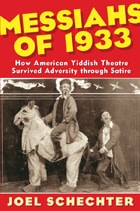
Messiahs of 1933
How American Yiddish Theatre Survived Adversity through SatireJoel Schechter
Temple University Press, 2008
Joel Schechter has rediscovered the funny and often politically-charged plays of the American Yiddish theatre of the 1930s. In Messiahs of 1933 he celebrates their satire, their radical imagination, and their commitment to social change. He introduces readers to the once-famous writers and actors—Moishe Nadir, David Pinski, Yosl Cutler, and others—who brought into artistic form their visions of peace, social justice, and satire for all.
Messiahs of 1933 greatly enlarges our understanding of Yiddish theatre and culture in the United States. It examines the innovative stage performances created by the Artef collective, the Modicut puppeteers, and the Yiddish Unit of the Federal Theatre Project. And it introduces to contemporary readers some of the most popular theatre actors of the 30s, including Leo Fuchs, Menasha Skulnik, and Yetta Zwerling. Throughout, it includes relevant photographs and contemporary comic strips, along with the first English-language publication of excerpts from the featured plays.
Metafilm
Materialist Rhetoric and Reflexive CinemaChristopher Carter
The Ohio State University Press, 2018
Ultimately, Metafilm reframes materialism as a multimodal composing-in-action, or reflexive materialism, focusing on movies that dramatize their entanglement in economic and historical trauma while provoking forms of resistance during and after viewing. Carter contends that even as we recognize the division of social power in the films, we must also recognize how the concept is subversive and eludes control. In looking at the interplay between the films’ content and their production, circulation, and reception, Carter explores how the films persuade us to identify with onscreen worlds before probing our expectations—validating some, rejecting others, and sometimes proposing new ways of watching altogether.
Metaphor and Musical Thought
Michael Spitzer
University of Chicago Press, 2004
The experience of music is an abstract and elusive one, enough so that we're often forced to describe it using analogies to other forms and sensations: we say that music moves or rises like a physical form; that it contains the imagery of paintings or the grammar of language. In these and countless other ways, our discussions of music take the form of metaphor, attempting to describe music's abstractions by referencing more concrete and familiar experiences.
Michael Spitzer's Metaphor and Musical Thought uses this process to create a unique and insightful history of our relationship with music—the first ever book-length study of musical metaphor in any language. Treating issues of language, aesthetics, semiotics, and cognition, Spitzer offers an evaluation, a comprehensive history, and an original theory of the ways our cultural values have informed the metaphors we use to address music. And as he brings these discussions to bear on specific works of music and follows them through current debates on how music's meaning might be considered, what emerges is a clear and engaging guide to both the philosophy of musical thought and the history of musical analysis, from the seventeenth century to the present day. Spitzer writes engagingly for students of philosophy and aesthetics, as well as for music theorists and historians.
Metaphysical Media
The Occult Experience in Popular CultureEmily D. Edwards
Southern Illinois University Press, 2005
Metaphysical Media focuses on the blurred definitions of topics associated with the occult as they are presented in popular culture to show moving-image media as devices that help structure an understanding of the supernatural world. Edwards examines what media treatment of supernatural subjects and the very characteristics of the media themselves reveal about the persistence of the occult. She maintains that popular art has always had a close association with the paranormal or supernatural— sometimes in illustration of an ideology, sometimes in ridicule of it, and sometimes as invocation itself.
Beginning with an overview of the role of the media in contemporary society and in its use of the occult, Metaphysical Media looks at the properties of media technology that extend human senses beyond biological boundaries. Edwards then discusses specific media treatment of topics related to the occult, including witchcraft, atavism, reincarnation, out-of-body experiences, and lycanthropy. She outlines the interplay of media and folklore regarding taboos about the handling of the dead and investigates media stories about creatures that cross the boundaries between human, beast, and god.
Method Acting and Its Discontents
On American Psycho-DramaShonni Enelow
Northwestern University Press, 2015
Method Acting and Its Discontents: On American Psycho-Drama provides a new understanding of a crucial chapter in American theater history. Enelow’s consideration of the broader cultural climate of the late 1950s and early 1960s, specifically the debates within psychology and psychoanalysis, the period’s racial and sexual politics, and the rise of mass media, gives us a nuanced, complex picture of Lee Strasberg and the Actors Studio and contemporaneous works of drama. Combining cultural analysis, dramaturgical criticism, and performance theory, Enelow shows how Method acting’s contradictions reveal powerful tensions inside mid-century notions of individual and collective identity.
Mex-Ciné
Mexican Filmmaking, Production, and Consumption in the Twenty-first CenturyFrederick Luis Aldama
University of Michigan Press, 2013

Mexican Cinema in the Digital Age
Marvin D'Lugo
University of Texas Press, 0
Tracing the integration of digital technologies in film production and distribution that empowered a generation of filmmakers and expanded the global market for Mexican films.
Digital filmmaking and distribution have transformed the movies from what gets made and how to who gets to experience it. But while this has been a global evolution, local cultural forces have also played a decisive role. Mexico is a case in point. In Mexican Cinema in the Digital Age, Marvin D’Lugo traces the dramatic impact of technological innovation on one country’s film industry and aesthetics, revealing profound interactions between art and nation in an era when cultural products know no borders.
Through close analysis of more than twenty movies made this century, D’Lugo shows how technological advances fed the creative energies of Mexican filmmakers. In particular, the agility of the mobile digital camera contributed to a new audiovisual style in Mexico, which achieved global commercial success in the pre-streaming age. Since then, the rise of streaming has encouraged filmmakers to create works that are understood as distinctively Mexican yet marketable to global audiences. As a result, ordinary Mexicans increasingly see their own society through the eyes of outsiders. D’Lugo argues that the consequence has been a novel political subjectivity, as today’s cinema promotes a sense of Mexican cultural affiliation shorn of old nationalist tropes.
Mexico on Main Street
Transnational Film Culture in Los Angeles before World War IIGunckel, Colin
Rutgers University Press, 2015
Meyerhold at Work
Edited by Paul Schmidt; translations by Paul Schmidt, Ilya Levin, and Vern McGee
University of Texas Press, 1980
“Not a mirror but a magnifying glass”—such, in the poet Mayakovsky’s words, was the theater of Vsevolod Meyerhold. The first to insist on the primacy of the director’s role, indeed the first to conceive of it as a role, this passionately dedicated Russian director tore down the fourth wall and forced the actors and audience together into one inescapable community of experience.
Yet Meyerhold recorded few of his theories in writing, and the intensity and brilliance of his work must be recaptured through the actors and artists who helped create the performances. Focusing on Meyerhold’s postrevolutionary career, Paul Schmidt has assembled in this book journals, letters, reminiscences, and, of special interest, actual rehearsal notes that build a fascinating, intimate picture of Meyerhold as a theorist and as a man.
Included are Meyerhold’s frantic notes to his teacher, friend, and bête noire Stanislavsky; detailed descriptions of how he trained his actors in “biomechanics”; and memories by such students as Eisenstein and such friends as Pasternak and Ehrenburg. One chapter deals with Meyerhold’s never-realized conception of Boris Godunov, while another describes his direction of Camille, which starred Zinaida Raikh, his wife, and which played its 725th and last performance on the day Stalin’s government liquidated Meyerhold’s theater. Paul Schmidt’s introduction and headnotes enhance our understanding of Meyerhold as a pioneer of modern theater.
Michael Bay
Lutz Koepnick
University of Illinois Press, 2018
Michael Haneke
Peter Brunette
University of Illinois Press, 2010
Michael Haneke
The Intermedial VoidChristopher Rowe
Northwestern University Press, 2017
Michael Moore and the Rhetoric of Documentary
Edited by Thomas W. Benson and Brian J. Snee
Southern Illinois University Press, 2015
Not afraid to tackle provocative topics in American culture, from gun violence and labor policies to terrorism and health care, Michael Moore has earned both applause and invective in his career as a documentarian. In such polarizing films as Bowling for Columbine, Fahrenheit 9/11, and Sicko, Moore has established a unique voice of radical nostalgia for progressivism, and in doing so has become one of the most recognized documentary filmmakers of all time.
In the first in-depth study of Moore’s feature-length documentary films, editors Thomas W. Benson and Brian J. Snee have gathered leading rhetoric scholars to examine the production, rhetorical appeals, and audience reception of these films. Contributors critique the films primarily as modes of public argument and political art. Each essay is devoted to one of Moore’s films and traces in detail how each film invites specific audience responses.
Michael Moore and the Rhetoric of Documentary reveals not only the art, the argument, and the emotional appeals of Moore’s documentaries but also how these films have revolutionized the genre of documentary filmmaking.
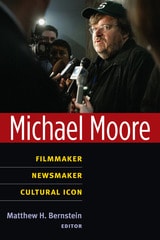
Michael Moore
Filmmaker, Newsmaker, Cultural IconMatthew Bernstein, Editor
University of Michigan Press, 2010
For more than twenty years, Michael Moore has transformed himself from a marginal filmmaker into a cultural icon, unofficial spokesperson for liberals and the Left. American conservatives constantly use him for target practice and target. Book author, film director, television personality, and Web presence, Moore is now a one-man cultural phenomenon. Although Michael Moore is a constant presence on the media landscape, this is the first volume to focus on the Moore phenomenom. It explores Moore's work in film and elsewhere, bringing diverse perspectives on his activities and status as voice of liberal America and the disenfranchised working class. Topics examined include the disjunction between Moore's celebrity status and everyman, middle-western persona, his self-mocking ironic sensibility, his tendency to diagnose American social and political problems in terms of class rather than gender, his reception abroad, and his uneasy relationship with the conventions of documentary filmmaking. The contributors are leading scholars and film critics, including Paul Arthur, Cary Elza, Jeffrey P. Jones, Douglas Kellner, Richard Kilborn, William Luhr, Charles Musser, Richard R. Ness, Miles Orvell, Richard Porton, Sergio Rizzo, Christopher Sharrett, Gaylyn Studlar, and David Teztlaff. The volume features both assessments of Moore's work in general and close analyses of his most successful films. The result is a definitive assessment of Moore's career to date.
Matthew Bernstein is Professor and Chair of Film Studies at Emory University. He is author of Walter Wanger: Hollywood Independent.
Microgroove
Forays into Other MusicJohn Corbett
Duke University Press, 2015
Mike Leigh
Sean O'Sullivan
University of Illinois Press, 2011
O'Sullivan challenges the prevailing characterizations of Leigh's cinema by detailing the complicated constructions of his realism, positing his films not as transparent records of life but as aesthetic transformations of it. Concentrating on the most recent two decades of Leigh's career, the study examines how Naked, Secrets and Lies, Topsy-Turvy, Vera Drake, and other films engage narrative convergence and narrative diffusion, the tension between character and plot, the interplay of coincidence and design, cinema's relationship to other systems of representation, and the filmic rendering of the human figure. The book also spotlights such earlier, less-discussed works as Four Days in July and The Short and Curlies, illustrating the recurring visual and storytelling concerns of Leigh's cinema. With a detailed filmography, this volume also includes key selections from O'Sullivan's several interviews with Leigh.
Mildred Pierce
Edited by Albert J. La Valley; Tino T. Balio, Series Editor
University of Wisconsin Press, 1980
Joan Crawford forged a new and successful screen image in this powerful women's noir film; winning her an Academy Award for best actress.
Albert J. LaValley's through and insightful guide to Mildred Pierce at once tells us much about the making of this complex film, the problems and process of transferring the story to the screen, the specific and important roles of the producer, director, and set designer, and how the film relates to broad trends within the industry. It is without a doubt the most thorough treatment of this important American motion picture.
Militant Visions
Black Soldiers, Internationalism, and the Transformation of American CinemaReich, Elizabeth
Rutgers University Press, 2016
Offering a nuanced reading of a figure that was simultaneously conservative and radical, Reich considers how the cinematic black soldier lent a human face to ongoing debates about racial integration, black internationalism, and American militarism. Militant Visions thus not only presents a new history of how American cinema represented race, but also demonstrates how film images helped to make history, shaping the progress of the civil rights movement itself.
Millennials Killed the Video Star
MTV's Transition to Reality ProgrammingAmanda Ann Klein
Duke University Press, 2021
Minding Movies
Observations on the Art, Craft, and Business of FilmmakingDavid Bordwell and Kristin Thompson
University of Chicago Press, 2011
David Bordwell and Kristin Thompson are two of America’s preeminent film scholars. You would be hard pressed to find a serious student of the cinema who hasn’t spent at least a few hours huddled with their seminal introduction to the field—Film Art, now in its ninth edition—or a cable television junkie unaware that the Independent Film Channel sagely christened them the “Critics of the Naughts.” Since launching their blog Observations on Film Art in 2006, the two have added web virtuosos to their growing list of accolades, pitching unconventional long-form pieces engaged with film artistry that have helped to redefine cinematic storytelling for a new age and audience.
Minding Movies presents a selection from over three hundred essays on genre movies, art films, animation, and the business of Hollywood that have graced Bordwell and Thompson’s blog. Informal pieces, conversational in tone but grounded in three decades of authoritative research, the essays gathered here range from in-depth analyses of individual films such as Slumdog Millionaire and Inglourious Basterds to adjustments of Hollywood media claims and forays into cinematic humor. For Bordwell and Thompson, the most fruitful place to begin is how movies are made, how they work, and how they work on us. Written for film lovers, these essays—on topics ranging from Borat to blockbusters and back again—will delight current fans and gain new enthusiasts.
Serious but not solemn, vibrantly informative without condescension, and above all illuminating reading, Minding Movies offers ideas sure to set film lovers thinking—and keep them returning to the silver screen.
Mission Unaccomplished
American War Films in the Twenty-First CenturyAlan Nadel
University of Texas Press, 2025
An analysis of how post-9/11 war movies changed from following soldiers on specific missions to chronicling war as a day-to-day occupation.
In 2003, the United States began a war in Iraq without a mission. Instead of fighting to restore peace—the traditional objective of warfare—servicemembers faced the grim reality that there was no goal. Lacking even certainty as to who was the enemy, soldiers discovered that their task was simply to survive.
Mission Unaccomplished explores how Hollywood grasped the experience of Iraq from the perspective of US soldiers, reinventing the war film in the process. Historically, films such as Saving Private Ryan valorized the goals of war by chronicling missions that unambiguously contribute to the defeat of the enemy and the restoration of peace. But in The Hurt Locker, American Sniper, Green Zone, and other recent dramas, soldiers just try to outlast the chaos. Dramatizing the aimlessness of the war, events occur in random order, and soldiers have no sense of how their actions contribute to victory or peace. Looking to recent WWII movies such as Dunkirk and Hacksaw Ridge, which use this same cinematic vocabulary to position soldiering as merely a deadly job to be endured, Alan Nadel argues that the disillusionment of Iraq has influenced cinema broadly, inspiring a newly critical war film genre.
Mission to Moscow
Edited by David Culbert; Tino T. Balio, Series Editor
University of Wisconsin Press, 1980
Mission to Moscow is a notorious classic among propaganda films produced in the United States. Never has another feature film been made with such explicit direction from the federal government, although the result failed to persuade every viewer.
Mob Culture
Hidden Histories of the American Gangster FilmGrieveson, Lee
Rutgers University Press, 2005
Sinister, swaggering, yet often sympathetic, the figure of the gangster has stolen and murdered its way into the hearts of American cinema audiences. Despite the enduring popularity of the gangster film, however, traditional criticism has focused almost entirely on a few canonical movies such as Little Caesar, Public Enemy, and The Godfather trilogy, resulting in a limited and distorted understanding of this diverse and changing genre.
Mob Culture offers a long-awaited, fresh look at the American gangster film, exposing its hidden histories from the Black Hand gangs of the early twentieth century to The Sopranos. Departing from traditional approaches that have typically focused on the "nature" of the gangster, the editors have collected essays that engage the larger question of how the meaning of criminality has changed over time. Grouped into three thematic sections, the essays examine gangster films through the lens of social, gender, and racial/ethnic issues.
Destined to become a classroom favorite, Mob Culture is an indispensable reference for future work in the genre.
Modelwork
The Material Culture of Making and KnowingMartin Brückner
University of Minnesota Press, 2021
How making models allows us to recall what was and to discover what still might be
Whether looking inward to the intricacies of human anatomy or outward to the furthest recesses of the universe, expanding the boundaries of human inquiry depends to a surprisingly large degree on the making of models. In this wide-ranging volume, scholars from diverse fields examine the interrelationships between a model’s material foundations and the otherwise invisible things it gestures toward, underscoring the pivotal role of models in understanding and shaping the world around us. Whether in the form of reproductions, interpretive processes, or constitutive tools, models may bridge the gap between the tangible and the abstract.
By focusing on the material aspects of models, including the digital ones that would seem to displace their analogue forebears, these insightful essays ground modeling as a tactile and emphatically humanistic endeavor. With contributions from scholars in the history of science and technology, visual studies, musicology, literary studies, and material culture, this book demonstrates that models serve as invaluable tools across every field of cultural development, both historically and in the present day.
Modelwork is unique in calling attention to modeling’s duality, a dynamic exchange between imagination and matter. This singular publication shows us how models shape our ability to ascertain the surrounding world and to find new ways to transform it.
Contributors: Hilary Bryon, Virginia Tech; Johanna Drucker, UCLA; Seher Erdoğan Ford, Temple U; Peter Galison, Harvard U; Lisa Gitelman, New York U; Reed Gochberg, Harvard U; Catherine Newman Howe, Williams College; Christopher J. Lukasik, Purdue U; Martin Scherzinger, New York U; Juliet S. Sperling, U of Washington; Annabel Jane Wharton, Duke U.
Modern Czech Theatre
Reflector and Conscience of a NationJarka M. Burian
University of Iowa Press, 2000
The story of Czech theatre in the twentieth century involves generations of mesmerizing players and memorable productions. Beyond these artistic considerations, however, lies a larger story: a theatre that has resonated with the intense concerns of its audiences acquires a significance and a force beyond anything created by striking individual talents or random stage hits. Amid the variety of performances during the past hundred years, that basic and provocative reality has been repeatedly demonstrated, as Jarka Burian reveals in his extraordinary history of the dramatic world of Czech theatre.
Following a brief historical background, Burian provides a chronological series of perspectives and observations on the evolving nature of Czech theatre productions during this century in relation to their similarly evolving social and political contexts. Once Czechoslovak independence was achieved in 1918, a repeated interplay of theatre with political realities became the norm, sometimes stifling the creative urge but often producing even greater artistry. When playwright Václav Havel became president in 1990, this was but the latest and most celebrated example of the vital engagement between stage and society that has been a repeated condition of Czech theatre for the past two hundred years. In Jarka Burian's skillful hands, Modern Czech Theatre becomes an extremely important touchstone for understanding the history of modern theatre within western culture.
Modern Hamlets & Soliloquies
An Expanded EditionMary Z. Maher
University of Iowa Press, 2003
In Modern Hamlets and Their Soliloquies (Iowa, 1992), Mary Maher examined how modern actors have chosen to perform Hamlet’s soliloquies, and why they made the choices they made, within the context of their specific productions of the play.
Adding to original interviews with, among others, Derek Jacobi, David Warner, Kevin Kline, and Ben Kingsley, Modern Hamlets and Their Soliloquies: An Expanded Edition offers two new and insightful interviews, one with Kenneth Branagh, focusing on his 1997 film production of the play, and one with Simon Russell Beale, discussing his 2000-2001 run as Hamlet at the Royal National Theatre.
Modern Tragedy and the End of Worlds
Lillo, Leopardi, IbsenLeonardo F. Lisi
Northwestern University Press, 2026
The emergence of a distinctly modern form of tragedy is often associated with the introduction of middle-class characters and settings to high drama during the early eighteenth century. What has not been explored previously, however, is how such tragedy uses modernity’s social circumstances to stage metaphysical conditions that are destructive to human worlds. Leonardo F. Lisi pursues this argument by focusing on three central yet distinct figures in the history of modern thought and theater: eighteenth-century English dramatist George Lillo, early nineteenth-century Italian poet Giacomo Leopardi, and late nineteenth-century Norwegian iconoclast Henrik Ibsen. Modern Tragedy and the End of Worlds: Lillo, Leopardi, Ibsen shows that their works share a critical theme: the impossibility of sustaining human forms of meaning in the face of modern materialism, finance, and reason. Viewed in this light, Lisi argues that modern tragedy requires thinking together the incommensurable scales of human existence and the inhuman processes on which it rests—a task that continues to have profound relevance for imagining the end of worlds in the Anthropocene.
Modernism and Music
An Anthology of SourcesEdited and with Commentary by Daniel Albright
University of Chicago Press, 2004
Modes of Play in Eighteenth-Century France
Fayçal Falaky
Bucknell University Press, 2022

Modes of Spectating
Edited by Alison Oddey and Christine White
Intellect Books, 2009
Modes of Spectating investigates the questions posed by new artistic and technological mediums on the viewer experience. These new visual tools influence not only how spectators view, but also how what they view determines what artists create. Alison Oddey and Christine White analyze how gaming and televisual media and entertainment are used by young people, and the resulting psychological challenges of understanding how viewers navigate these virtual worlds and surroundings. This multidisciplinary approach brings together ideas and examples from gaming art, photography, sculpture, and performance; it will be a valuable text for scholars of both media and art.
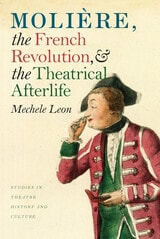
Molière, the French Revolution, and the Theatrical Afterlife
Leon, Mechele
University of Iowa Press, 2009
Leon begins by analyzing the performance of Molière’s plays during the Revolution, showing how his privileged position as royal servant was disrupted by the practical conditions of the revolutionary theatre. Next she explores Molière’s relationship to Louis XIV, Tartuffe, and the social function of his comedy, using Rousseau’s famous critique of Molière as well as appropriations of George Dandin in revolutionary iconography to discuss how Moliérean laughter was retooled to serve republican interests. After examining the profusion of plays dealing with his life in the latter years of the Revolution, she looks at the exhumation of his remains and their reentombment as the tangible manifestation of his passage from Ancien Régime favorite to new national icon.
The great Molière is appreciated by theatre artists and audiences worldwide, but for the French people it is no exaggeration to say that the Father of French Comedy is part of their national soul. By showing how he was represented, reborn, and reburied in the new France—how the revolutionaries asserted his relevance for their tumultuous time in ways that were audacious, irreverent, imaginative, and extreme—Leon clarifies the important role of theatrical figures in preserving and portraying a nation’s history.
Moment of Action
Riddles of Cinematic PerformancePomerance, Murray
Rutgers University Press, 2016
Mondo Exotica
Sounds, Visions, Obsessions of the Cocktail GenerationFrancesco Adinolfi Edited and translated by Karen Pinkus with Jason Vivrette
Duke University Press, 2008
Adinolfi interviewed a number of exotica greats, and Mondo Exotica incorporates material from his interviews with Martin Denny, Esquivel, the Italian film composers Piero Piccioni and Piero Umiliani, and others. It begins with an extended look at the postwar popularity of exotica in the United States. Adinolfi describes how American bachelors and suburbanites embraced the Polynesian god Tiki as a symbol of escape and sexual liberation; how Les Baxter’s album Ritual of the Savage (1951) ushered in the exotica music craze; and how Martin Denny’s Exotica built on that craze, hitting number one in 1957. Adinolfi chronicles the popularity of performers from Yma Sumac, “the Peruvian Nightingale,” to Esquivel, who was described by Variety as “the Mexican Duke Ellington,” to the chanteuses Eartha Kitt, Julie London, and Ann-Margret. He explores exotica’s many sub-genres, including mood music, crime jazz, and spy music. Turning to Italy, he reconstructs the postwar years of la dolce vita, explaining how budget spy films, spaghetti westerns, soft-core porn movies, and other genres demonstrated an attraction to the foreign. Mondo Exotica includes a discography of albums, compilations, and remixes.
Monitoring the Movies
The Fight over Film Censorship in Early Twentieth-Century Urban AmericaBy Jennifer Fronc
University of Texas Press, 2017
As movies took the country by storm in the early twentieth century, Americans argued fiercely about whether municipal or state authorities should step in to control what people could watch when they went to movie theaters, which seemed to be springing up on every corner. Many who opposed the governmental regulation of film conceded that some entity—boards populated by trusted civic leaders, for example—needed to safeguard the public good. The National Board of Review of Motion Pictures (NB), a civic group founded in New York City in 1909, emerged as a national cultural chaperon well suited to protect this emerging form of expression from state incursions.
Using the National Board’s extensive files, Monitoring the Movies offers the first full-length study of the NB and its campaign against motion-picture censorship. Jennifer Fronc traces the NB’s Progressive-era founding in New York; its evolving set of “standards” for directors, producers, municipal officers, and citizens; its “city plan,” which called on citizens to report screenings of condemned movies to local officials; and the spread of the NB’s influence into the urban South. Ultimately, Monitoring the Movies shows how Americans grappled with the issues that arose alongside the powerful new medium of film: the extent of the right to produce and consume images and the proper scope of government control over what citizens can see and show.