Results by title
1106 books match the query 'Memoirs' and 88 start with m
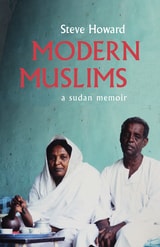
Modern Muslims
A Sudan MemoirSteve Howard
Ohio University Press, 2016
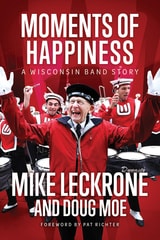
Moments of Happiness
A Wisconsin Band StoryMike Leckrone and Doug Moe
University of Wisconsin Press, 2024
This book is the next best thing to sitting down with this master storyteller. Coauthor Doug Moe captures the joys of performing—whether at Camp Randall, in the Kohl Center, or along the Rose Bowl Parade route. Reading Leckrone’s story, one comes to understand the mix of discipline, showmanship, work ethic, warmth, toughness, wit, and musical skill that make him a Wisconsin treasure. Even for people who know Leckrone, Moments of Happiness details the stories behind the highlights and the unglamorous work that made his accomplishments possible. It both cements his legend and offers unprecedented insights into a career that will never be equaled.
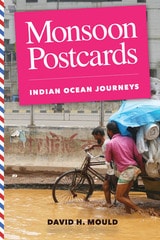
Monsoon Postcards
Indian Ocean JourneysDavid H. Mould
Ohio University Press, 2019
In Monsoon Postcards, journalist David H. Mould, notebook in hand, traverses the Indian Ocean—from Madagascar through India and Bangladesh to Indonesia. It’s an unpredictable journey on battered buses, bush taxis, auto-rickshaws, and crowded ferries. Mould travels from the traffic snarls of Delhi, Dhaka, and Jakarta to the rice paddies and ancestral tombs of Madagascar’s Central Highlands; from the ancient kingdom of Hyderabad to India’s so-called chicken neck—the ethnically diverse and underdeveloped northeast; and from the textile factories and rivers of Bangladesh to the beaches of Bali and the province of Aceh—ground zero for the 2004 tsunami.
Along the way, in markets, shops, roadside cafes, and classrooms, he meets journalists, professors, students, aid workers, cab drivers, and other everyday residents to learn how they view their past and future. Much like its predecessor, Mould’s Postcards from Stanland,Monsoon Postcards offers witty and insightful glimpses into countries linked by history, trade, migration, religion, and a colonial legacy. It explores how they confront the challenges of climate change, urban growth, economic development, land, water and natural resources, and national and ethnic identity.
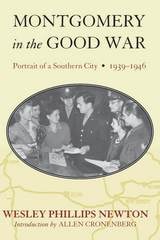
Montgomery in the Good War
Portrait of a Southern City, 1939-1946Wesley Phillips Newton
University of Alabama Press, 2000
One city. One war. A story of transformation at home and abroad.
Using newspaper accounts, interviews, letters, journals, and his own memory of the time, Wesley Newton reconstructs wartime-era Montgomery, Alabama--a sleepy southern capital that was transformed irreversibly during World War II.
The war affected every segment of Montgomery society: black and white, rich and poor, male and female, those who fought in Europe and the Pacific and those who stayed on the home front. Newton follows Montgomerians chronologically through the war from Pearl Harbor to Hiroshima as they experience patriotism, draft and enlistment, rationing, scarcity drives, and the deaths of loved ones. His use of small vignettes based on personal recollections adds drama and poignancy to the story.
Montgomery in the Good War is an important reminder that wars are waged at home as well as abroad and that their impact reverberates well beyond those who fight on the front lines. Those who came of age during the war will recognize themselves in this moving volume. It will also be enlightening to those who have lived in times of relative peace.
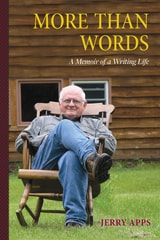
More Than Words
A Memoir of a Writing LifeJerry Apps
Wisconsin Historical Society Press, 2022
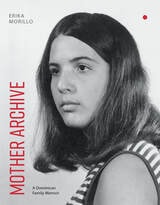
Mother Archive
A Dominican Family MemoirErika Morillo
University of Iowa Press, 2024
2024 NBCC Award Finalist, Autobiography
A family murder kept secret, the mysterious disappearance of her father, the systematic erasing of family photographs, a turbulent relationship with her mother, layers of trauma and abuse. In Mother Archive, Erika Morillo reconciles these demons of her past by searching for and seeking out the roots of her family. Intertwining memories with archival family photographs, news clippings, film stills, and artistic images, Morillo revisits her childhood growing up in the Dominican Republic, a place and time riddled with a history of violence and a tradition of erasure.
Spanning three generations across three different countries, this memoir works as a map in which the author traces incidents in her family history to help her understand herself and her own experience as a mother.
Motherhood Exaggerated
Judith Hannan
CavanKerry Press, 2012
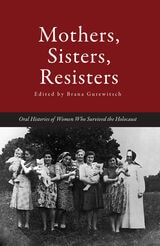
Mothers, Sisters, Resisters
Oral Histories of Women Who Survived the HolocaustBrana Gurewitsch
University of Alabama Press, 1999
Powerful oral histories revealing the unique experiences of women during the Holocaust.
In Mothers, Sisters, Resisters, 25 survivors of the Holocaust furnish compelling and historically vital testimony that illuminates and explores Jewish women's experiences during that terrible period. In entries that preserve each voice, personality, and style, survivors describe their efforts to evade Nazi laws and subsequent dehumanization, protect their children and siblings, and maintain their Jewish identity.
Throughout each narrative, from Brandla Small's description of having her child dragged from her arms at Auschwitz, to Eva Schonbrun's remembrances of her sister who refused to leave her siblings and save herself, to Emilie Schindler's account of rescuing Jews left abandoned on a cattle car, we become intimately involved with each woman's struggle and eventual survival. We also gain a new appreciation and understanding of the Holocaust experiences unique to women.
Muzzled Oxen
Reaping Cotton and Sowing Hope in 1920s ArkansasGenevieve Grant Sadler
Butler Center for Arkansas Studies, 2014
My Bayou
New Orleans through the Eyes of a LoverConstance Adler
Michigan State University Press, 2012
A vividly described and intensely personal memoir, My Bayou charts a personal and spiritual transformation along the fabled banks of Bayou Saint John in New Orleans. When Constance Adler moves to New Orleans, she begins what becomes a lasting love affair with the city, and especially the bayou—a living entity and the beating heart of local culture. Rites of passage, celebrations, mysterious accidents, and magic all take place on its banks, leading Adler to a vibrant awareness of the power of being part of a community. That faith is tested in the wake of Hurricane Katrina, and is ultimately proven right, as Bayou Saint John begins to rebuild.
My Brother's Madness
A MemoirPaul Pines
Northwestern University Press, 2007
My Brother's Madness is part thriller, part exploration that not only describes the causes, character, and journey of mental illness, but also makes sense of it. It is ultimately a story of our own humanity, and answers the question, Am I my brother's keeper?
My City Highrise Garden
Kleit,Micah
Rutgers University Press, 2017
She reports the catastrophes: losing daytime access during building-wide renovations; assaults from a mockingbird during his mating season. And the joys: a peach tree fruited for fifteen years; the windswept birches lasted for twenty-five. Butterflies and bees pay annual visits. She pampers a buddleia, a honeysuckle, roses, hydrangeas, and more. Her adventures celebrate the tenacity of nature, inviting readers to marvel at her garden’s resilience, and her own.
Enhanced by over thirty color photographs, this passionate account of green life in a gritty, urban environment will appeal to readers and gardeners wherever they dwell.
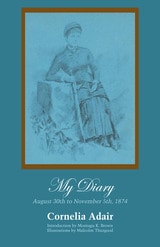
My Diary
August 30th to November 5th, 1874By Cornelia Adair. Introduction by Montagu K. Brown, Illustrations by Malcolm Thurgood
University of Texas Press, 1965
Cornelia Wadsworth Adair’s ancestors had pioneered in western New York, where they opened and developed large, palatial estates; and the life they lived was elegant and aristocratic. Adair too was discreetly cultured; yet she took great personal pleasure in the rough and primitive land of her famed JA Ranch in north Texas. Because of physical discomfort and noisy passengers, she detested traveling by railroad coach; yet she could ride all day on horseback and lie down to sleep on a makeshift cot by a waterhole or on an Indian’s flea-infested buffalo rug. She was a lady of interesting contradictions.
This little Diary is her lively account of a two-month trip which she and her husband made into the western part of the United States in 1874. The ostensible purpose of the trip was to hunt buffalo; however, these large beasts actually play a very small part in the journal. Rather, the book is an interesting and often amusing account, by an observant woman, of the long journey from her husband’s estate in Ireland to New York, to Chicago and on into upper Michigan, across Lake Superior to Minnesota, down the Mississippi for several days, out to the buffalo-hunting grounds in Nebraska, then to Denver and the wonders of the Rocky Mountains, and finally back to New York and the Europe-bound ship.
Adair writes with an easy fluency; and her eye for picturesque detail, her taste for amusing incongruities, her romanticist’s delight in Nature, and her instinct for a “good tale” combine to make her Diary pleasant and entertaining reading, while her powers of keen observation provide valuable insight into life as it was then in the West. First printed for private circulation in 1918, the original book is now a rare collector’s item of Western Americana. Mrs. Adair said that she was allowing its publication for two reasons. First, she was afraid that her grandchildren and young friends would remember her only as “an old lady who sat in an armchair, and whose stick had to be looked for”; she wanted them to know that she had once been “a very lively person . . . [who] did all sorts of exciting things.” Second, she felt it worthwhile to record her experiences because “the world is changing so quickly, ways of travelling especially so . . . and I think it may be interesting to compare what was done in 1874 with what will be done by the time the children are able to travel. No doubt they will do their journeys by air, and do many, many things that I have not been able to do; but they can never see the prairies of America in their wild uncivilised state, or hunt buffalo over them, nor can they pow-wow with the Red Indians in a camp on the Platte River. So every time has its own special joys, and the great thing is to miss as little as possible, and to share as much.”
My Diva
65 Gay Men on the Women Who Inspire ThemEdited by Michael Montlack
University of Wisconsin Press, 2009
These witty and poignant short essays explore reasons for diva-worship as diverse as the writers themselves. My Diva offers both depth and glamour as it pays tribute with joy, intelligence, and fierce, fierce love.
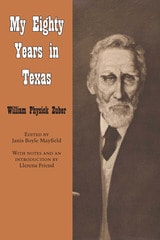
My Eighty Years in Texas
By William Physick Zuber
University of Texas Press, 1971
Almost a century and a half went into the making of My Eighty Years in Texas. It began as a diary, kept by fifteen-year-old William Physick Zuber after he joined Sam Houston’s Texas army in 1836, hoping he could emulate the heroism of American Revolutionary patriots. Although his hopes were never realized, Zuber recorded the privations, victories, and defeats of armies on the move during the Texas Revolution, the Indian campaigns, and, as he styled it, the Confederate War.
In 1910, at the age of ninety, Zuber began the enormous task of transcribing his diaries and his memories for publication. After his death in 1913, the handwritten manuscript, 1, was placed in the Texas State Archives, where it was used as a reference source by students and scholars of Texas history. Over a half century after Zuber’s death, Janis Boyle Mayfield finally brought his publication plans to fruition.
Zuber details his early zest for learning and his laborious methods of self-education. He tells of the trials of organizing and teaching schools in the sparsely populated plains. He recalls the day-by-day happenings of a private soldier in the Texas army of 1836, the Texas Militia, and the Confederate army—including the mishaps of army life and the encounters with enemies from San Jacinto to Cape Girardeau. After the Civil War, his interest turns to the politics of Reconstruction, the veterans’ pension, and the founding of the Texas Veterans Association.
This is the story of and by an outspoken Texian, complete with his attitudes, principles, and moralizings, and the nineteenth-century style and flavor of his writing.
Included as an appendix is “An Escape from the Alamo,” the account of Moses Rose for which Zuber, who was a prolific writer, was best known. A historiography of the Rose story, a bibliography of Zuber’s published and unpublished writings, annotation, and an introduction are provided by Llerena Friend.
My Eyes Feel They Need to Cry
Stories from the Formerly HomelessMartha Aladjem Bloomfield
Michigan State University Press, 2013
My Father's War
A True Story of Nazism and Treasonby Bjørn Westlie, translated by Dean Krouk
University of Wisconsin Press, 2023
With an insightful introduction from translator Dean Krouk, My Father’s War is a contemporary classic of war literature. Committed to genuine understanding without falling into undue sympathizing, this sober and reflective book presents an eye-opening, moving, intense, and necessary account of the allure of fascism in a world at war—and its personal costs.
My Father, the Messiah
A MemoirGil Z. Hochberg
Duke University Press, 2026
My Grandfather's Prison
A Story of Death and Deceit in 1940s Kansas CityRichard A. Serrano
University of Missouri Press, 2009
My House in Damascus
An Inside View of the Syrian CrisisDiana Darke
Haus Publishing, 2014
Diana Darke, a fluent Arabic speaker who moved to Damascus in 2004 after decades of regular visits, details how the Assad regime, and its relationship to the people, differs from the regimes in Egypt, Tunisia, and Libya—and why it was thus always less likely to collapse quickly, even in the face of widespread unrest and violence. Through the author’s firsthand experiences of buying and restoring a house in the old city of Damascus, which she later offered as a sanctuary to friends, Darke presents a clear picture of the realities of life on the ground and what hope there is for Syria’s future. Including additional material on topics like the advance of the Islamic State, as well as a new epilogue describing the current turmoil surrounding her house and the refugees she tried to help, this edition of My House in Damascus powerfully documents the human cost of the ongoing civil war.
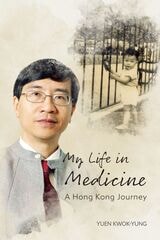
My Life in Medicine
A Hong Kong JourneyKwok-Yung Yuen
Hong Kong University Press, 2024
From humble beginnings in Hong Kong, Yuen Kwok-Yung rose to international prominence as a doctor, surgeon, academic, and microbiologist. As an advisor to governments, he and colleagues made discoveries that helped the world cope with unprecedented threats to public health, including the COVID-19 pandemic. In this compelling memoir, Dr. Yuen weaves personal stories with those from his extraordinary medical career to take readers on an inspiring journey about perseverance, courage, faith, and the ongoing peril of infectious diseases.
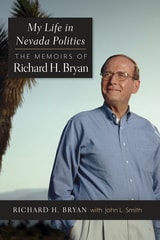
My Life in Nevada Politics
The Memoirs of Senator Richard H. BryanRichard H. Bryan
University of Nevada Press, 2024
Born in Washington, D.C. in 1937, Bryan grew up in Las Vegas. His interest in politics started early, winning school-class elections and expressing a personal goal of one day becoming Governor of Nevada. He was elected student body president at the University of Nevada.
His career in public service began as a deputy district attorney in Clark County. In 1966, he became the first county public defender in state history. Bryan served in the Nevada Legislature in both the Assembly and Senate before winning the statewide office of Attorney General in 1978. He was elected Nevada Governor in 1982, winning re-election in 1986. Bryan was elected to the U.S. Senate in 1988, reelected in 1994, and served on the committees on Commerce, Banking, Taxation, and Intelligence, and chaired the Ethics Committee. He retired from the Senate in 2001 and returned to Nevada.
Bryan’s list of accomplishments is extensive. He was largely responsible for the early call-to-arms in the fight against the Department of Energy’s attempt to create a nuclear waste repository at Yucca Mountain. As governor, he reorganized state economic development programs, improved environmental protections for Lake Tahoe and other threatened areas, and made unprecedented appointments of women. In the Senate, Bryan authored the Southern Nevada Public Lands Management Act and the National Conservation Area for the High Rock Desert country. He had a front-row seat to the historic buildup to the Iraq War and the impeachment of President Bill Clinton. In retirement, Bryan continues to serve the state through his participation on a wide range of committees.
Throughout his political career, Bryan, with wife Bonnie at his side, traversed Nevada from its tiniest hamlets to the metro areas of Reno and Las Vegas with unrivaled zeal in his efforts to represent the state’s citizens. He is famous for knowing thousands of his constituents not only by their first names, but also recalling details of their lives. The simple fact is, while in service to Nevada, Bryan was in his element in the place he loves best.
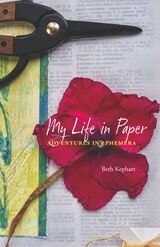
My Life in Paper
Adventures in EphemeraBeth Kephart
Temple University Press, 2023
Kephart’s obsession with paper began in the wake of her father’s death, when she began to handcraft books and make and marble paper in his memory. But it was when she read My Life with Paper, an autobiography by the late renowned paper hunter and historian Dard Hunter, that she felt she had found a kindred spirit, someone to whom she might address a series of one-sided letters about life and how we live it. Remembering and crafting, wanting and loving, doubting and forgetting—the spine and weave of My Life in Paper came into view.
Paper, for Kephart, provides proof of our yearning, proof of our failure, proof of the people who loved us and the people we have lost. It offers, too, a counterweight to the fickle state of memory.
My Life in Paper, illustrated by the author herself, is an intimate and poignant meditation on life’s most pressing questions.
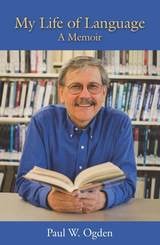
My Life of Language
A Memoirogden
Gallaudet University Press, 2017
Paul W. Ogden has dedicated his life to educating young deaf and hard of hearing people and raising awareness of what it means to be deaf in a hearing world. He has taught and mentored a generation of teachers, and his classic volume, The Silent Garden, has served as a guide for parents and educators for over thirty years. Now he tells his personal story of challenges faced and lessons learned, revealing that the critical, guiding factors for him have always been language and successful communication.
Born in a time when many deaf children had no access to language, Paul learned spoken and written language skills at a young age through the painstaking efforts of his mother. His tight-knit family, which included one deaf and two hearing older brothers, facilitated open and constant communication using a variety of methods. His father was a pastor who was involved in the civil rights movement. He struggled with depression, an illness that would take the life of one of Paul’s brothers. As a student at a residential deaf school where the use of American Sign Language (ASL) was suppressed, Paul continued to build on the speech and lipreading skills he had learned at home. He returned home for high school and graduated as co-valedictorian—unaware of the standing ovation he received as he walked to the podium.
Following a rewarding experience as an undergraduate at Antioch College, Paul went on to earn a PhD from the University of Illinois, a rare accomplishment for a deaf person at that time. During his graduate studies, he finally had the opportunity to learn ASL. As an award-winning professor of Deaf Studies at California State University, Fresno, he successfully petitioned for the university to recognize ASL as a language, and he established the Silent Garden program, which has grown into a flourishing provider of training and resources to support the Deaf community. In My Life of Language, Paul offers eloquent reflections on both the joyful and difficult periods of his life as he navigated relationships, faced discrimination, questioned his faith, and found great happiness in his marriage.
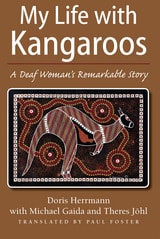
My Life with Kangaroos
A Deaf Woman’s Remarkable StoryDoris Herrmann
Gallaudet University Press, 2013
Doris Herrmann was born deaf in 1933 in Basel, Switzerland, and from the age of three, she possessed a mystical attraction to kangaroos. She recalls seeing them at that age for the first time at the Basel Zoo, and spending every spare moment visiting them from then on. Eventually, her fascination grew into passionate study of their behavior. Her dedication caught the attention of the zookeepers who provided her greater access to these extraordinary animals. Despite her challenges with communication, Herrmann wrote a scientific paper about the kangaroo’s pouch hygiene when raising a joey. Soon, experts from around the world came to visit this precocious deaf girl who knew about kangaroos.
Herrmann appreciated the opportunities opening up to her, but her real dream was to travel to Australia to study kangaroos in the wild. For years she worked and yearned, until Dr. Karl H. Winkelsträter a renowned authority on kangaroos, suggested an independent study in Australia at a place called Pebbly Beach. In 1969, at the age of 35, Herrmann finally traveled to the native land of kangaroos. During the next four decades, she would make many more trips to observe and write about kangaroos.
My Life with Kangaroos explores every facet of Herrmann’s connection to these engaging marsupials. Her single-minded devotion not only made her a leading self-made scholar on kangaroos, it transformed her own personality and her relationships with others. As she forged bonds with kangaroos named Dora, Jacqueline, Manuela, and many others, she engendered great affection and respect in the people around her, truly a remarkable story of success.
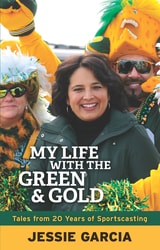
My Life with the Green & Gold
Tales from 20 Years of SportscastingJessie Garcia
Wisconsin Historical Society Press, 2013
Ever wonder what it’s like to interview famous athletes and coaches? For twenty years, sportscaster Jessie Garcia has done just that. In My Life with the Green & Gold she brings fans to the sidelines at Lambeau Field, inside the locker room, aboard the Packers bus, and into the host’s chair at The Mike McCarthy Show.
A self-proclaimed “terrible athlete” born without sports in her blood, Garcia reported on Wisconsin’s beloved Green Bay Packers during the Holmgren, Rhodes, Sherman, and McCarthy years. She’s been a Packers sideline reporter for preseason games and covered the team during their Super Bowl showdowns against the Patriots, Broncos, and Steelers. She’s traveled with the team to Tokyo and the White House and to schools and retirement homes, where the gridiron heroes interacted with their fans. She’s visited the hometowns of players and coaches, she’s met their proud parents and their pets, she’s interviewed the team trainer about their strength exercises. My Life with the Green & Gold also features up-close and personal stories about other teams and athletes she’s covered, from the Badgers and Brewers to Wisconsin Olympians such as Bonnie Blair and Casey FitzRandolph.
Garcia’s expertise is capturing behind-the-scenes, human-interest stories. In My Life with the Green & Gold, she shares a personal and humorous insider’s look at many Wisconsin sports heroes from the perspective of a female sports journalist who has ridden the adrenaline rush to be on the air at 5:00 a.m., 10:00 p.m., and any hour in between, while also juggling the many demands of family life. Not many parents can say they’ve changed their child’s diaper in the tunnel at Lambeau, but Jessie Garcia can.
My Mother’s Funeral
Adriana Páramo
CavanKerry Press, 2013
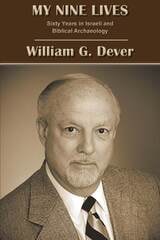
My Nine Lives
Sixty Years in Israeli and Biblical ArchaeologyWilliam G. Dever
SBL Press, 2020
Experience a lifetime of adventure
This autobiography of prominent American archaeologist William G. Dever is unabashedly his story, in which he offers candid, often brutally honest, reflections on his life and sixty-five-year career. Dever places himself in the midst of a remarkable generation of giants in archaeology in Israel during a period when the fields of biblical and Israeli archaeology were evolving. With technical expertise developed over a lifetime of working alongside four generations of Israeli and foreign excavators, he recalls their exploits and shares numerous personal stories that few others would know. His memoir concludes with a postscript on the likely future of biblical archaeology and an annotated bibliography for serious readers who wish to explore some of the scholarly literature to flesh out Dever’s narrative.
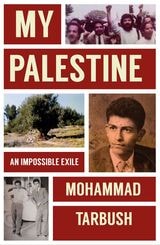
My Palestine
An Impossible ExileMohammad Tarbush
Haus Publishing, 2025
Mohammad Tarbush was born in British Mandate Palestine. As an infant, he and his family were forced to evacuate their village together with its entire population, after the Zionist victory that led to the establishment of the State of Israel. Then as landless refugees in the West Bank, the family sank into poverty. When, as a teenager, Tarbush left home one day under the pretext of visiting relatives in Jordan, he in fact set off on a year-long hitchhiking journey to Europe, where he would eventually become a highly successful international banker and a key behind-the-scenes promoter of the Palestinian cause. In My Palestine, Mohammad Tarbush combines a poignant personal memoir with incisive political and economic commentary on the tumultuous events that shaped the history of Israel, Palestine, and the modern Middle East.
My Parents
Memoirs of New World IcelandersBirna Bjarnadottir
University of Manitoba Press, 2007
My Private Lennon
Explorations from a Fan Who Never ScreamedSibbie O'Sullivan
The Ohio State University Press, 2020
My Private Lennon charts the author’s realization that the Beatles, especially John Lennon, were a crucial force in her development. A radical departure from other books written by Beatles fans, My Private Lennon invites its readers to consider subjects not usually found in works about Lennon and the band, such as the constraints of memory, the male body, grief, the female breast, race, cultural issues, and the importance of privacy in our over-mediated world. In pieces that engage cultural issues and historical contexts, My Private Lennon creates a witty and provocative intimacy with readers who value the power of art to change one’s life and who love John Lennon and the Beatles.
My Sense of Silence
Memoirs of a Childhood with DeafnessLennard J. Davis
University of Illinois Press, 1999
Selected as an "Editors Choice" by the Chicago Tribune
Lennard J. Davis grew up as the hearing child of deaf parents. In this candid, affecting, and often funny memoir, he recalls the joys and confusions of this special world, especially his complex and sometimes difficult relationships with his working-class Jewish immigrant parents. Gracefully slipping through memory, regret, longing, and redemption, My Sense of Silence is an eloquent remembrance of human ties and human failings.
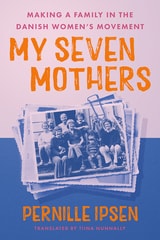
My Seven Mothers
Making a Family in the Danish Women's MovementPernille Ipsen
University of Minnesota Press, 2025
Seven women raise a child together while redefining their place in society at the beginning of the Women’s Movement in Denmark in the 1970s
On New Year’s Eve in Copenhagen in 1972, seven women had a child together: one gave birth and six others attended. They had met a year earlier at a feminist women’s camp on a small island and now, with about twenty other women’s liberationists, they occupied three dilapidated apartment buildings in the center of Copenhagen. One became the country’s first Women’s House, the nerve center of the Women’s Movement in Denmark, and the other two were women-only communal living spaces that were Pernille Ipsen’s first home. In this intimate portrait of life during the exhilarating early days of women’s liberation in Scandinavia and dramatic social change around the globe, she tells the stories of these seven women, her seven mothers.
Recounting her mothers’ history—from the passions and beliefs they shared to the political divisions over sexual identity that ultimately split them apart—Ipsen captures the individuality of each of her mothers as well as the common experiences that drew them together. As she deftly reflects the practical and emotional realities of her mothers’ women-centered life, Ipsen presents an engrossing picture of intersecting lives that, half a century ago, raised questions we still grapple with today: What is a family? Who is a woman? And who gets to decide?
A chronicle of gender, sexuality, and feminism as it was constructed, contested, and lived, My Seven Mothers is an eye-opening account of the challenges and possibilities connected with liberation and radical social change during the 1970s. In this time of fierce struggles over family, sexuality, and child-rearing, it reminds us that new worlds are always possible.
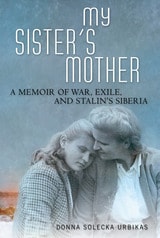
My Sister's Mother
A Memoir of War, Exile, and Stalin’s SiberiaDonna Solecka Urbikas
University of Wisconsin Press, 2019
In 1940, Janina Ślarzynska and her five-year-old daughter Mira were taken by Soviet secret police (NKVD) from their small family farm in eastern Poland and sent to Siberia with hundreds of thousands of others. So began their odyssey of hunger, disease, cunning survival, desperate escape across a continent, and new love amidst terrible circumstances.
But in the 1950s, baby boomer Donna yearns for a “normal” American family while Janina and Mira are haunted by the past. In this unforgettable memoir, Donna recounts her family history and her own survivor’s story, finally understanding the damaged mother who had saved her sister.
Finalist, Best Traditional Non-Fiction Book, Chicago Writers Association
My Sixty Years with Rural Youth
T.A. Erickson
University of Minnesota Press, 1956
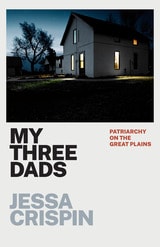
My Three Dads
Patriarchy on the Great PlainsJessa Crispin
University of Chicago Press, 2022
For many Americans, Kansas represents a vision of Midwestern life that is good and wholesome and evokes the American ideals of god, home, and country. But for those like Jessa Crispin who have grown up in Kansas, the realities are much harsher. She argues that the Midwestern values we cling to cover up a long history of oppression and control over Native Americans, women, and the economically disadvantaged.
Blending personal narrative with social commentary, Crispin meditates on why the American Midwest still enjoys an esteemed position in our country's mythic self-image. Ranging from The Wizard of Oz to race, from chastity to rape, from radical militias and recent terrorist plots to Utopian communities, My Three Dads opens on a comic scene in a Kansas rent house the author shares with a (masculine) ghost. This prompts Crispin to think about her intellectual fathers, her spiritual fathers, and her literal fathers. She is curious to understand what she has learned from them and what she needs to unlearn about how a person should be in a family, as a citizen, and as a child of god—ideals, Crispin argues, that have been established and reproduced in service to hierarchy, oppression, and wealth.
Written in Crispin’s well-honed voice—smart, assured, comfortable with darkness—My Three Dads offers a kind of bleak redemption, the insight that no matter where you go, no matter how far from home you roam, the place you came from is always with you, “like it or not.”
My Victorians
Lost in the Nineteenth CenturyRobert Clark
University of Iowa Press, 2019
As Clark delves deeper into the Victorian world, he wonders: What can its artists offer a twenty-first century writer by way of insight into his own life and work? His obsession with Victoriana bleeds into all aspects of his life, even the seemingly incongruous world of online dating. My Victorians is in the spirit of Geoff Dyer’s Out of Sheer Rage and Rebecca Mead’s My Life in Middlemarch. This book considers what happens when heartbreak, eros, faith, and doubt drive us to take refuge in the past.
My World Is Melting
Living with Climate Change in SvalbardLine Nagell Ylvisåker, Translated by Kelsey Camacho
University of Wisconsin Press, 2026
In 2015, in a tragic natural disaster, a massive avalanche descended on the small Arctic Norwegian city of Longyearbyen, Svalbard, leveling eleven houses and killing a child and a young father. In this arresting book, journalist Line Nagell Ylvisåker explores the effects of a warming planet up close and personal, from inside a remote community intimately attuned to its environment.
Ylvisåker introduces readers to her friends and neighbors, including dedicated meteorologists racing to anticipate future disasters and a veteran trapper who harbors doubts about climate change even as he bears witness to a constantly shifting landscape. Blending memoir, long-form journalism, and scientific reportage, she provides an intimate picture of life in a place where the effects of climate change can be seen in all their startling reality—and a compelling and hopeful argument for collective and cooperative action across the globe.