Results by title
1427 books match the query 'Politics' and 69 start with m
Modern Middle Eastern Jewish Thought
Writings on Identity, Politics, and Culture, 1893–1958Edited by Moshe Behar and Zvi Ben-Dor Benite
Brandeis University Press, 2013
Modernity without Restraint (CW5)
Political Religions; The New Science of Politics; and Science, Politics and GnosticismEric Voegelin, Edited & Intro by Manfred Henningsen
University of Missouri Press, 2000
Published together for the first time in one volume are Eric Voegelin's Political Religions, The New Science of Politics, and Science, Politics, and Gnosticism.Political Religions was first published in 1938 in Vienna, the year of Voegelin's forced emigration from Austria to the United States. The New Science of Politics was written in 1952 and established Voegelin's reputation as a political philosopher in America. Science, Politics, and Gnosticism was Voegelin's Inaugural Lecture at the University of Munich in 1958 and introduced him to the West German intellectual public.
Although these books were written during remarkably different historical circumstances of Voegelin's life, all three present an analysis of modern Western civilization that has lost its spiritual foundations and is challenged by various ideological persuasions. Voegelin critiques in these texts a "modernity without restraint." It is a modernity with Hegelian, Marxian, Nietzschean, Heideggerian, positivist, Fascist, and other predominantly German characteristics. The author confronts this modernity with Western meaning as it emerged in ancient Greece, Rome, Israel, and Christianity and became transformed in the European Middle Ages, the Italian Renaissance, and the Anglo- American political formation.
This three-in-one volume delves into the intellectual and spiritual complications of modernity, tracing its evolution from the ancient civilizations to the twentieth century. In his substantial new introduction, Manfred Henningsen explores the experiential background that motivated Voegelin's theoretical analyses and the new relevance that his work has gained in recent years with the unexpected collapse of state socialism in East Germany, Eastern Europe, and the Soviet Union. Modernity without Restraint will be a valuable addition to intellectual history and Voegelin studies.
Modernization and the Working Class
The Politics of LegitimacyBy Carlos H. Waisman
University of Texas Press, 1982
This is a fascinating inquiry into the factors that determine the acceptance or rejection of capitalism by the industrial working class. Combining classical social theory, historical evidence, and survey data, Waisman explores the relationship between the degree of modernization and the legitimacy of the capitalist social order.
Propositions about the interaction between established elites and emerging working classes are illustrated with three typical cases: Disraelian Britain, Bismarckian Germany, and Peronist Argentina. From the contrasting theories of Marx and Bakunin, the author derives hypotheses concerning the position of the working class in the economy and the consequences this has for legitimacy. He finds that countries at middle levels of industrial development—mostly latecomers to industrialization in Southern Europe and advanced areas of Latin America—have the greatest difficulty in establishing capitalism as a legitimate social order. They are advanced enough to have a large working class, yet underdeveloped enough to have a dissatisfied one.
Modernizing Patriarchy
The Politics of Women's Rights in MoroccoBy Katja Žvan Elliott
University of Texas Press, 2015
Morocco is hailed by academics, international NGO workers, and the media as a trailblazer in women’s rights and legal reforms. The country is considered a model for other countries in the Middle East and North African region, but has Morocco made as much progress as experts and government officials claim? In Modernizing Patriarchy, Katja Žvan Elliott examines why women’s rights advances are lauded in Morocco in theory but are often not recognized in reality, despite the efforts of both Islamist and secular feminists.
In Morocco, female literacy rates remain among the lowest in the region; many women are victims of gender-based violence despite legal reforms; and girls as young as twelve are still engaged to adult men, despite numerous reforms. Based on extensive ethnographic research and fieldwork in Oued al-Ouliya, Modernizing Patriarchy offers a window into the life of Moroccan Muslim women who, though often young and educated, find it difficult to lead a dignified life in a country where they are expected to have only one destiny: that of wife and mother. Žvan Elliott exposes their struggles with modernity and the legal reforms that are supposedly ameliorating their lives. In a balanced approach, she also presents male voices and their reasons for criticizing the prevailing women’s rights discourse. Compelling and insightful, Modernizing Patriarchy exposes the rarely talked about reality of Morocco’s approach toward reform.

Moneybags Must Be So Lucky
On the Literary Structure of CapitalRobert P. Wolff
University of Massachusetts Press, 1988

Monitored Peril
Asian Americans and the Politics of TV RepresentationDarrell Y. Hamamoto
University of Minnesota Press, 1994
The first major study of Asian American representation on U.S. television.
Early in the movement of Asian labor to the United States, immigrants from the Far East were viewed by the dominant Euro-American society as a peril to a white, Christian nation. How far have we come since then? This first comprehensive study of Asian American representation on network television supplies some unsettling answers.
A meticulous work of history, cultural criticism, and political analysis, Monitored Peril illuminates the unstable relationship between the discursive practices of commercial television programs, liberal democratic values, and white supremacist ideology. The book clearly demonstrates the pervasiveness of racialized discourse throughout U.S. society, especially as it is reproduced by network television. In treating his topic, Darrell Hamamoto addresses a wide variety of issues facing diverse Asian American communities: interracial conflict, conservative politics, U.S.-Japan trade friction, and postcolonial Vietnam. Through an examination of selected programs from the 1950s to the present, he attempts to correct the consistently distorted optic of network television. Finally, he calls for an engaged independent Asian American media practice, and for the expansion of public sector television. Selected as a CHOICE Outstanding Academic Book for 1995ISBN 0-8166-2368-6 cloth $49.95xISBN 0-8166-2369-4 paper $18.95320 pages 6 x 9AugustContentsPreface1. White Christian Nation2. Asians in the American West3. War against Japanese America4. Asian Americans and U.S. Empire5. Southeast Asian America6. Contemporary Asian America7. Counterprogramming EpilogueRelated BacklistThe Bronze Screen: Chicana and Chicano Film CultureRosa Linda FregosoExplores Chicana and Chicano popular culture in Hollywood commercial and independent cinema. (1993)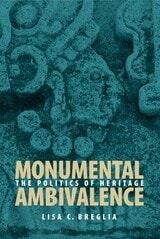
Monumental Ambivalence
The Politics of HeritageBy Lisa C. Breglia
University of Texas Press, 2006
From ancient Maya cities in Mexico and Central America to the Taj Mahal in India, cultural heritage sites around the world are being drawn into the wave of privatization that has already swept through such economic sectors as telecommunications, transportation, and utilities. As nation-states decide they can no longer afford to maintain cultural properties—or find it economically advantageous not to do so in the globalizing economy—private actors are stepping in to excavate, conserve, interpret, and represent archaeological and historical sites. But what are the ramifications when a multinational corporation, or even an indigenous village, owns a piece of national patrimony which holds cultural and perhaps sacred meaning for all the country's people, as well as for visitors from the rest of the world?
In this ambitious book, Lisa Breglia investigates "heritage" as an arena in which a variety of private and public actors compete for the right to benefit, economically and otherwise, from controlling cultural patrimony. She presents ethnographic case studies of two archaeological sites in the Yucatán Peninsula—Chichén Itzá and Chunchucmil and their surrounding modern communities—to demonstrate how indigenous landholders, foreign archaeologists, and the Mexican state use heritage properties to position themselves as legitimate "heirs" and beneficiaries of Mexican national patrimony. Breglia's research masterfully describes the "monumental ambivalence" that results when local residents, excavation laborers, site managers, and state agencies all enact their claims to cultural patrimony. Her findings make it clear that informal and partial privatizations—which go on quietly and continually—are as real a threat to a nation's heritage as the prospect of fast-food restaurants and shopping centers in the ruins of a sacred site.

More Adventures with Britannia
Personalities, Politics and Culture in BritainEdited by Wm. Roger Louis
University of Texas Press, 1998
Collecting the interpretations of outstanding writers on the literature and history of modern Britain, this book deals with a rich variety of themes, some familiar, many unexpected, taking the reader on a highly engaging excursion through British life and intellectual biography. The scope includes not only the personalities, politics, and culture of England, Wales, Scotland, and Ireland, but also the interaction of British and other societies throughout the world.
More Than God Demands
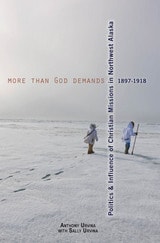
Politics and Influence of Christian Missions in Northwest Alaska, 1897-1918Anthony Urvina with Sally Urvina
University of Alaska Press, 2016
Anthony Urvina, whose mother was an orphan raised at one of the missions established as part of this program, draws on details from her life in order to present the first full history of this missionary effort. Smoothly combining personal and regional history, he tells the story of his mother’s experience amid a fascinating account of Alaska Native life and of the men and women who came to Alaska to spread the word of Christ, confident in their belief and unable to see the power of the ancient traditions they aimed to supplant.

More of Duffy
Editorial Cartoons by Brian DuffyDuffy, Brian
University of Iowa Press, 1995

Mr. Dooley in Peace and in War
Finley Peter Dunne
University of Illinois Press, 1988
As Charlie McCarthy is to Edgar Bergen, so is Martin T. Dooley to newspaper humorist Finley Peter Dunne. Mr. Dooley in Peace and in War, originally published in 1898, collects brief, humorous pieces Dunne wrote for the Chicago Evening Post and the Chicago Journal. In an Irish-American dialect as thick as the foam on a pint of stout, Mr. Dooley and his friends discuss the military "sthrateejy" for American action in Cuba, "iliction" day shenanigans, Queen Victoria's jubilee, the "new woman," and the strange American sport of football, in which a player puts "a pair iv matthresses on his legs, a pillow behind, [and] a mask over his nose" and tries to kill his fellow men. Through his tall tales and speculations, Mr. Dooley reveals the pleasure and pain of being Irish in Chicago at the turn of the twentieth century.
Clothed in the charming hyperbole and mislocution of the unflappable Mr. Dooley, Dunne's incisive social criticism flies unerringly to the target, exposing prejudice, hypocrisy, insensitivity, and plain old-fashioned humbug.

Multiculturalism and the Politics of Guilt
Toward a Secular TheocracyPaul Edward Gottfried
University of Missouri Press, 2003
Multiethnic Moments
The Politics of Urban Education ReformSusan E. Clarke, Rodney E. Hero, Mara S. Sidney, Luis Fraga and Bari Anhalt Erlichson, foreword by Clarence N. Stone
Temple University Press, 2006
Multiparty Government
The Politics of Coalition in EuropeMichael Laver and Norman Schofield
University of Michigan Press, 1998
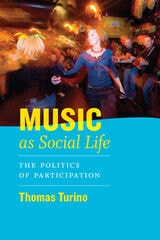
Music as Social Life
The Politics of ParticipationThomas Turino
University of Chicago Press, 2008
Turino begins by developing tools to think about the special properties of music and dance that make them fundamental resources for connecting with our own lives, our communities, and the environment. These concepts are then put into practice as he analyzes various musical examples among indigenous Peruvians, rural and urban Zimbabweans, and American old-time musicians and dancers. To examine the divergent ways that music can fuel social and political movements, Turino looks at its use by the Nazi Party and by the American civil rights movement. Wide-ranging, accessible to anyone with an interest in music’s role in society, and accompanied by a compact disc, Music as Social Life is an illuminating initiation into the power of music.

Muslim Communities Reemerge
Historical Perspectives on Nationality, Politics, and Opposition in the Former Soviet Union and YugoslaviaAndreas Kappeler, Gerhard Simon, and Georg Brunner, eds.
Duke University Press, 1994
In fourteen chapters and an updated introduction, European and North American specialists examine the recent evolution of Islamic expression and practice in these former Communist regions, as well as its political significance within officially atheistic regimes. Representing a wide range of disciplines and perspectives, the authors detail how the modern ethno-religious situation developed and matured in hostile circumstances, the degree of latitude the local Muslims achieved in religious expression, and what prospect the future seemed to offer just before the breakup of the Soviet Union and the Federal Republic of Yugoslavia. Overall, the book provides a thorough analysis of the coincidence and tension between ethnic and religious identity in two countries officially devoted to the separation of ethnic groups in domestic cultural arrangements but not in the social or political realm.
Contributors. Edward Allworth, Hans Bräker, Marie Broxup, Georg Brunner, Bert G. Fragner, Uwe Halbach, Wolfgang Höpken, Andreas Kappeler, Edward J. Lazzerini, Richard Lorenz, Alexandre Popovi´c, Sabrina Petra Ramet, Azade-Ayse Rorlich, Gerhard Simon, Tadeusz Swietochowski
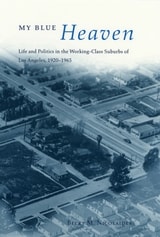
My Blue Heaven
Life and Politics in the Working-Class Suburbs of Los Angeles, 1920-1965Becky M. Nicolaides
University of Chicago Press, 2002
As Becky M. Nicolaides shows in My Blue Heaven, this ethic of self-reliance and homeownership formed the core of South Gate's identity. With post-World War II economic prosperity, the community's emphasis shifted from building homes to protecting them as residents tried to maintain their standard of living against outside threats—including the growing civil rights movement—through grassroots conservative politics based on an ideal of white homeowner rights. As the citizens of South Gate struggled to defend their segregated American Dream of suburban community, they fanned the flames of racial inequality that erupted in the 1965 Watts riots.
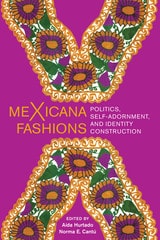
meXicana Fashions
Politics, Self-Adornment, and Identity ConstructionEdited by Aída Hurtado and Norma E. Cantú
University of Texas Press, 2020
2020 Second Place, Best Nonfiction Multi Author, International Latino Book Awards
Collecting the perspectives of scholars who reflect on their own relationships to particular garments, analyze the politics of dress, and examine the role of consumerism and entrepreneurialism in the production of creating and selling a style, meXicana Fashions examines and searches for meaning in these visible, performative aspects of identity.
Focusing primarily on Chicanas but also considering trends connected to other Latin American communities, the authors highlight specific constituencies that are defined by region (“Tejana style,” “L.A. style”), age group (“homie,” “chola”), and social class (marked by haute couture labels such as Carolina Herrera and Oscar de la Renta). The essays acknowledge the complex layers of these styles, which are not mutually exclusive but instead reflect a range of intersections in occupation, origin, personality, sexuality, and fads. Other elements include urban indigenous fashion shows, the shifting quinceañera market, “walking altars” on the Days of the Dead, plus-size clothing, huipiles in the workplace, and dressing in drag. Together, these chapters illuminate the full array of messages woven into a vibrant social fabric.
minor cosmopolitan
Thinking art, politics, and the universe together otherwiseEdited by Zairong Xiang
Diaphanes, 2020