Results by title
1325 books match the query 'Psychology' and 76 start with m
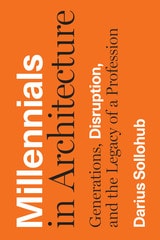
Millennials in Architecture
Generations, Disruption, and the Legacy of a ProfessionDarius Sollohub
University of Texas Press, 2019
Much has been written about Millennials, but until now their growing presence in the field of architecture has not been examined in depth. In an era of significant challenges stemming from explosive population growth, climate change, and the density of cities, Millennials in Architecture embraces the digitally savvy disruptors who are joining the field at a crucial time as it grapples with the best ways to respond to a changing physical world.
Taking a clear-eyed look at the new generation in the context of the design professions, Darius Sollohub begins by situating Millennials in a line of generations stretching back to early Modernism, exploring how each generation negotiates the ones before and after. He then considers the present moment, closely evaluating the significance of Millennial behaviors and characteristics (from civic-mindedness to collaboration, and time management in a 24/7 culture), all underpinned by fluency in the digital world. The book concludes with an assessment of the profound changes and opportunities that Millennial disruption will bring to education, licensure, and firm management. Encouraging new alliances, Millennials in Architecture is an essential resource for the architectural community and its stakeholders.

Mimesis and Science
Empirical Research on Imitation and the Mimetic Theory of Culture and ReligionScott R. Garrels
Michigan State University Press, 2011
This exciting compendium brings together, for the first time, some of the foremost scholars of René Girard’s mimetic theory, with leading imitation researchers from the cognitive, developmental, and neuro sciences. These chapters explore some of the major discoveries and developments concerning the foundational, yet previously overlooked, role of imitation in human life, revealing the unique theoretical links that can now be made from the neural basis of social interaction to the structure and evolution of human culture and religion. Together, mimetic scholars and imitation researchers are on the cutting edge of some of the most important breakthroughs in understanding the distinctive human capacity for both incredible acts of empathy and compassion as well as mass antipathy and violence. As a result, this interdisciplinary volume promises to help shed light on some of the most pressing and complex questions of our contemporary world.
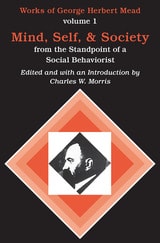
Mind, Self, and Society
From the Standpoint of a Social BehavioristGeorge Herbert Mead
University of Chicago Press, 1967
"If philosophical eminence be measured by the extent to which a man's writings anticipate the focal problems of a later day and contain a point of view which suggests persuasive solutions to many of them, then George Herbert Mead has justly earned the high praise bestowed upon him by Dewey and Whitehead as a 'seminal mind of the very first order.'"—Sidney Hook, The Nation
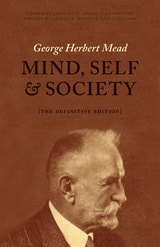
Mind, Self, and Society
The Definitive EditionGeorge Herbert Mead
University of Chicago Press, 2015
This collection gets to the heart of Mead’s meditations on social psychology and social philosophy. Its penetrating, conversational tone transports the reader directly into Mead’s classroom as he teases out the genesis of the self and the nature of the mind. The book captures his wry humor and shrewd reasoning, showing a man comfortable quoting Aristotle alongside Alice in Wonderland.
Included in this edition are an insightful foreword from leading Mead scholar Hans Joas, a revealing set of textual notes by Dan Huebner that detail the text’s origins, and a comprehensive bibliography of Mead’s other published writings. While Mead’s lectures inspired hundreds of students, much of his brilliance has been lost to time. This new edition ensures that Mead’s ideas will carry on, inspiring a new generation of thinkers.

Minnesota Symposia on Child Psychology
Volume 1John Hill
University of Minnesota Press, 1968

Minnesota Symposia on Child Psychology
Volume 2John Hill
University of Minnesota Press, 1969

Minnesota Symposia on Child Psychology
Volume 3John Hill
University of Minnesota Press, 1969

Minnesota Symposia on Child Psychology
Volume 4John Hill
University of Minnesota Press, 1970

Minnesota Symposia on Child Psychology
Volume 5John Hill
University of Minnesota Press, 1971

Misers, Shrews, and Polygamists
Sexuality and Male-Female Relations in Eighteenth-Century Chinese FictionKeith McMahon
Duke University Press, 1995
In many examples of rare erotic fiction, and in other works as well-known as Dream of the Red Chamber, Keith McMahon identifies a sexual economy defined by the figures of the "miser" and the "shrew"—caricatures of the retentive, self-containing man and the overflowing, male-enervating woman. Among these and other characters, the author explores the issues surrounding the practice of polygamy, the logic of its overvaluation of masculinity, and the nature of sexuality generally in Chinese society. How does the man with many wives manage and justify his sexual authority? Why and how might he escape or limit this presumed authority, sometimes to the point of portraying himself as abject before the shrewish woman? How do women accommodate or coddle the man, or else oppose, undermine, or remold him? And in what sense does the man place himself lower than the spiritually and morally superior woman?
The most extensive English-language study of Chinese literature from the eighteenth century, this examination of polygamy will interest not only students of Chinese history, culture, and literature but also all those concerned with histories of gender and sexuality.
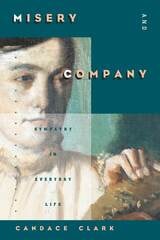
Misery and Company
Sympathy in Everyday LifeCandace Clark
University of Chicago Press, 1997
"Clark's . . . research methods [are] inventive and her glimpses of U.S. life revealing. . . . And you have to love a social scientist so respectful of Miss Manners."—Clifford Orwin, Toronto Globe and Mail
"Clark offers a thought-provoking and quite interesting etiquette of sympathy according to which we ought to act in order to preserve the sympathy credits we can call on in time of need."—Virginia Quarterly Review
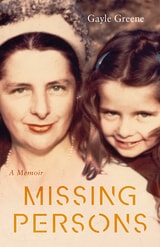
Missing Persons
A MemoirGayle Greene
University of Nevada Press, 2017
The memoir is structured as an account of her mother's and aunt’s final days and the year that follows, a year in which she reconstructs her life. This is a powerful story about family, what it means to have one, to lose one, never to have made one, and what, if anything, might take its place. It’s the story of a vexed mother-daughter relationship that mellows with age. It is also a search for home, as the very landscape shifts around her and the vast orchards are dug up and paved over for tract housing, strip malls, freeways, and the Santa Clara Valley, once known as the Valley of Heart’s Delight, is transformed to “Silicon.”
Mixed Emotions
Beyond Fear and Hatred in International ConflictAndrew A. G. Ross
University of Chicago Press, 2013
From passionate protests to poignant speeches, Andrew A. G. Ross analyzes high-emotion events with an eye to how they shape public sentiment and finds that there is no single answer. The politically powerful play to the public’s emotions to advance their political aims, and such appeals to emotion also often serve to sustain existing values and institutions. But the affective dimension can produce profound change, particularly when a struggle in the present can be shown to line up with emotionally resonant events from the past. Extending his findings to well-studied conflicts, including the War on Terror and the violence in Rwanda and the Balkans, Ross identifies important sites of emotional impact missed by earlier research focused on identities and interests.
Mmpi-A Content Scales
Assessing Psychopathology in AdolescentsCarolyn L. Williams
University of Minnesota Press, 1992
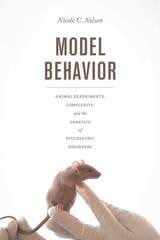
Model Behavior
Animal Experiments, Complexity, and the Genetics of Psychiatric DisordersNicole C. Nelson
University of Chicago Press, 2018
Behavior genetics is a particularly challenging field for making a clear-cut case that mouse experiments work, because researchers believe that both the phenomena they are studying and the animal models they are using are complex. These assumptions of complexity change the nature of what laboratory work produces. Whereas historical and ethnographic studies traditionally portray the laboratory as a place where scientists control, simplify, and stabilize nature in the service of producing durable facts, the laboratory that emerges from Nelson’s extensive interviews and fieldwork is a place where stable findings are always just out of reach. The ongoing work of managing precarious experimental systems means that researchers learn as much—if not more—about the impact of the environment on behavior as they do about genetics. Model Behavior offers a compelling portrait of life in a twenty-first-century laboratory, where partial, provisional answers to complex scientific questions are increasingly the norm.
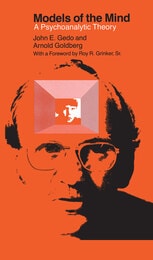
Models of the Mind
A Psychoanalytic TheoryJohn E. Gedo and Arnold Goldberg
University of Chicago Press, 1976
Gedo and Goldberg apply their theory to four classic psychoanalytic case studies to demonstrate its effectiveness: Freud's Rat Man, his Wolf Man, the case of Daniel Paul Schreber, and a case of arrested development. For each of these cases the authors show how it would have been both possible and advantageous to apply a variety of different theories as facts about each continued to accumulate.
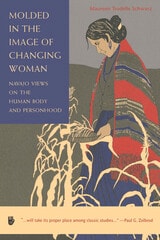
Molded in the Image of Changing Woman
Navajo Views on the Human Body and PersonhoodMaureen Trudelle Schwarz
University of Arizona Press, 1997
This book focuses on the complex interweaving of the cosmological, social, and bodily realms that Navajo people navigate in an effort alternately to control, contain, or harness the power manifested in various effects. Following the Navajo life-course from conception to puberty, Maureen Trudelle Schwarz explores the complex rules defining who or what can affect what or whom in specific circumstances as a means of determining what these effects tell us about the cultural construction of the human body and personhood for the Navajo.
Schwarz shows how oral history informs Navajo conceptions of the body and personhood, showing how these conceptions are central to an ongoing Navajo identity. She treats the vivid narratives of emergence life-origins as compressed metaphorical accounts, rather than as myth, and is thus able to derive from what individual Navajos say about the past their understandings of personhood in a worldview that is actually a viable philosophical system. Working with Navajo religious practitioners, elders, and professional scholars. Schwarz has gained from her informants an unusually firm grasp of the Navajo highlighted by the foregrounding of Navajo voices through excerpts of interviews. These passages enliven the book and present Schwarz and her Navajo consultants as real, multifaceted human beings within the ethnographic context.
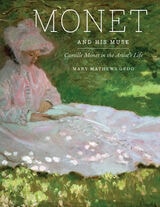
Monet and His Muse
Camille Monet in the Artist's LifeMary Mathews Gedo
University of Chicago Press, 2010
“The mourning never stops, it just changes.” (Edward Albee)
For Claude Monet (1840–1926), the founder of French Impressionist painting, these words are a fitting testament to his lifelong relationship with the female muse, most notably—and most hauntingly—with his first wife, the model Camille Doncieux.
For the esteemed clinical psychologist and art historian Mary Mathews Gedo, Monet and His Muse represents a project twenty years in the making. Artfully interweaving biographical insight with psychoanalytic criticism, Gedo takes us on an exploration of Claude Monet’s conflicted relationships with women, complete with exquisitely researched material never before understood about one of our most popular—and inimitable—artists. Beginning with Monet’s childhood, Gedo delves into his relationships with a distant, unreliable father and his beloved, doting mother—whose death when Monet was just sixteen, the author establishes, inspired a lifetime preoccupation with the sea, its lushly imagined flora, and the figurative landscapes Monet painted to such acclaim.
And then—Camille. Entering Monet’s life when he was still a young man, becoming first his model and then mistress and then—finally—his wife, Camille Doncieux always fulfilled the function of muse, even after her life had ended, as Monet not only painted her one last time on her deathbed, but preserved her memory through the gardens he planted at his home in Giverny. Demonstrating how Monet’s connections with women were exceedingly complex, fraught with abusive impulses and infantile longing, Gedo sensitively uses Monet and Camille as exemplars in order to explore links between artists and muses in our modern age.
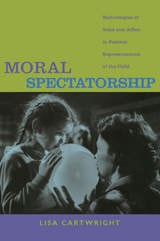
Moral Spectatorship
Technologies of Voice and Affect in Postwar Representations of the ChildLisa Cartwright
Duke University Press, 2008
For more than two decades, film theory has been dominated by a model of identification tacitly based on the idea of feeling what the other feels or of imagining oneself to be the other. Building on the theories of affect and identification developed by André Green, Melanie Klein, Donald W. Winnicott, and Silvan Tomkins, Cartwright develops a model of spectatorship that takes into account and provides a way of critically analyzing the dynamics of a different kind of identification, one that is empathetic and highly intersubjective.
Moral Stealth
How "Correct Behavior" Insinuates Itself into Psychotherapeutic PracticeArnold Goldberg
University of Chicago Press, 2007
A psychiatrist writes a letter to a journal explaining his decision to marry a former patient. Another psychiatrist confides that most of his friends are ex-patients. Both practitioners felt they had to defend their behavior, but psychoanalyst Arnold Goldberg couldn’t pinpoint the reason why. What was wrong about the analysts’ actions?
In Moral Stealth, Goldberg explores and explains that problem of “correct behavior.” He demonstrates that the inflated and official expectations that are part of an analyst’s training—that therapists be universally curious, hopeful, kind, and purposeful, for example—are often of less help than simple empathy amid the ambiguous morality of actual patient interactions. Being a good therapist and being a good person, he argues, are not necessarily the same.
Drawing on case studies from his own practice and from the experiences of others, as well as on philosophers such as John Dewey, Slavoj Žižek, and Jürgen Habermas, Goldberg breaks new ground and leads the way for therapists to understand the relationship between private morality and clinical practice.
More Than a Feeling
Personality, Polarization, and the Transformation of the US CongressAdam J. Ramey, Jonathan D. Klingler, and Gary E. Hollibaugh Jr.
University of Chicago Press, 2017
With More Than a Feeling, Adam J. Ramey, Jonathan D. Klingler, and Gary E. Hollibaugh, Jr. have developed an innovative framework incorporating what are known as the Big Five dimensions of personality—openness to experience, conscientiousness, extraversion, agreeableness, and neuroticism—to improve our understanding of political behavior among members of Congress. To determine how strongly individuals display these traits, the authors identified correlates across a wealth of data, including speeches, campaign contributions and expenditures, committee involvement, willingness to filibuster, and even Twitter feeds. They then show how we might expect to see the influence of these traits across all aspects of Congress members’ political behavior—from the type and quantity of legislation they sponsor and their style of communication to whether they decide to run again or seek a higher office. They also argue convincingly that the types of personalities that have come to dominate Capitol Hill in recent years may be contributing to a lot of the gridlock and frustration plaguing the American political system.

Multiple Paths of Midlife Development
Edited by Margie E. Lachman and Jacquelyn Boone James
University of Chicago Press, 1997
Much of the past work on midlife has been limited by its use of cross-sectional data, its focus on clinical populations, and the analysis of only one target group. Using a diverse set of longitudinal data, this volume provides a broader perspective by examining the similarities and differences in the midlife experience as a function of gender, social class, and birth cohort.
Of interest to scholars as well as to those interested in the midlife period for clinical or personal reasons, this volume informs us of the enormous potential and promise amid the gains and losses of the middle years.

My Escapee
StoriesCorinna Vallianatos
University of Massachusetts Press, 2012
ANew York Times Book Review Editor's Choice
Delicate and assured, the stories in My Escapee illuminate unseen forces in women's lives: the shameful thought, the stifled hope, the subterranean stresses of marriage, friendship, and family. Grappling with lost memories, escaped time, the longing to be loved, and the instinct for autonomy, the stories peer inside their characters' minds to their benign delusions, their triumphs and defeats.
A girl taking a test for admittance to a selective school finds that what she loves most of all is the ordinary. A lonely young woman, sick of being sick, swaps places with her nurse. A college student deploys her more charming roommate to discover the secret rituals of an all-male club on campus. And in the title story, a woman in a nursing home receives mysterious missives from her longtime lover recalling fragments of their old life together.
My Mother's Hip
Lessons From The World Of EldercareLuisa Margolies
Temple University Press, 2004
My Victorian Novel
Critical Essays in the Personal VoiceAnnette R. Federico
University of Missouri Press, 2020
These are essays in the original sense of the word, attempts: individual and experiential approaches to literary works that have subjective meanings beyond social facts. By reflecting on their own histories with novels taught, studied, researched, and re-experienced in different contexts over many years, the contributors reveal how an aesthetic object comes to inhabit our critical, pedagogical, and personal lives.
By inviting scholars to share their experiences with a favorite novel without the pressure of an analytical agenda, the sociable essays in My Victorian Novel seek to restore some vitality to the act of literary criticism, and encourage other scholars to talk about the importance of reading in their lives and the stories that have enchanted and transformed them.
The novels in this collection include:
Jane Eyre by Charlotte Brontë
The Duke’s Children by Anthony Trollope
The Adventures of Sherlock Holmes by Arthur Conan Doyle
The Newcomes by William Makepeace Thackeray
Middlemarch by George Eliot
Daniel Deronda by George Eliot
The Return of the Native by Thomas Hardy
Vanity Fair by William Makepeace Thackeray
North and South by Elizabeth Gaskell
Bleak House by Charles Dickens
David Copperfield by Charles Dickens
New Grub Street by George Gissing
The Pickwick Papers by Charles Dickens
Dracula by Bram Stoker
Wuthering Heights by Emily Brontë

Myths about the Powerless
Contesting Social InequalitiesM. Brinton Lykes
Temple University Press, 1996