Results by title
1861 books match the query 'Social life and customs' and 102 start with m
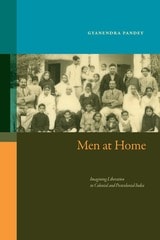
Men at Home
Imagining Liberation in Colonial and Postcolonial IndiaGyanendra Pandey
Duke University Press, 2025

Men on the Moon
Collected Short StoriesSimon J. Ortiz
University of Arizona Press, 1999
Best known for his poetry, Ortiz also has authored 26 short stories that have won the hearts of readers through the years. Men on the Moon brings these stories together—stories filled with memorable characters, written with love by a keen observer and interpreter of his people's community and culture. True to Native American tradition, these tales possess the immediacy—and intimacy—of stories conveyed orally. They are drawn from Ortiz's Acoma Pueblo experience but focus on situations common to Native people, whether living on the land or in cities, and on the issues that affect their lives. We meet Jimmo, a young boy learning that his father is being hunted for murder, and Kaiser, the draft refuser who always wears the suit he was given when he left prison. We also meet some curious Anglos: radicals supporting Indian causes, scholars studying Indian ways, and San Francisco hippies who want to become Indians too.
Whether telling of migrants working potato fields in Idaho and pining for their Arizona home or of a father teaching his son to fly a kite, Ortiz takes readers to the heart of storytelling. Men on the Moon shows that stories told by a poet especially resound with beauty and depth.
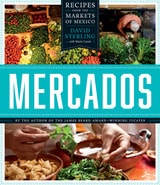
Mercados
Recipes from the Markets of MexicoBy David Sterling
University of Texas Press, 2019
Part travelogue, part cookbook, Mercados takes us on a tour of Mexico’s most colorful destinations—its markets—led by an award-winning, preeminent guide whose passion for Mexican food attracted followers from around the globe. Just as David Sterling’s Yucatán earned him praise for his “meticulously researched knowledge” (Saveur) and for producing “a labor of love that well documents place, people and, yes, food” (Booklist), Mercados now invites readers to learn about local ingredients, meet vendors and cooks, and taste dishes that reflect Mexico’s distinctive regional cuisine.
Serving up more than one hundred recipes, Mercados presents unique versions of Oaxaca’s legendary moles and Michoacan’s carnitas, as well as little-known specialties such as the charcuterie of Chiapas, the wild anise of Pátzcuaro, and the seafood soups of Veracruz. Sumptuous color photographs transport us to the enormous forty-acre, 10,000-merchant Central de Abastos in Oaxaca as well as tiny tianguises in Tabasco. Blending immersive research and passionate appreciation, David Sterling’s final opus is at once a must-have cookbook and a literary feast for the gastronome.
Merchant Class of Medieval London
1300-1500Sylvia L. Thrupp
University of Michigan Press, 1948
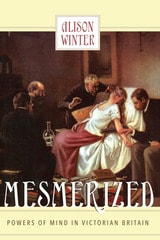
Mesmerized
Powers of Mind in Victorian BritainAlison Winter
University of Chicago Press, 1998
"Dazzling. . . . This splendid book . . . gives us a new form of historical understanding and a model for open and imaginative reading."—James R. Kinkaid, Boston Globe
"A landmark in the history of science scholarship."—John Sutherland, The Independent
"It is difficult to imagine the documentary side of the story being better done than by Winter's well-researched and generously illustrated study. . . . She is a lively and keen observer; and her book is a pleasure to read purely for its range of material and wealth of detail. . . . Fruitful and suggestive."—Daniel Karlin, Times Literary Supplement
"An ambitious, sweeping and fascinating historical study. . . . Beautifully written, thoroughly researched, and well-illustrated."—Bernard Lightman, Washington Times
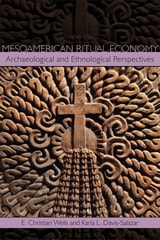
Mesoamerican Ritual Economy
Archaeological and Ethnological PerspectivesE. Christian Wells
University Press of Colorado, 2007
Exploring the intersection of spirituality and materiality, Mesoamerican Ritual Economy will be of interest to all scholars studying how worldview and belief motivate economic behavior. The authors consider a diverse set of Mesoamerican cultural patterns in order to investigate the ways in which ritual and economic practices influenced each other in the operation of communities, small-scale societies, and state-level polities. Contributors include: Sarah B. Barber, Frances F. Berdan, Karla L. Davis-Salazar, Barbara W. Fash, William L. Fash, Antonia E. Foias, Arthur A. Joyce, Brigitte Kovacevich, Ben A. Nelson, Enrique Rodríguez-Alegría, Katherine A. Spielmann, John M. Watanabe, E. Christian Wells.
Metaphysical Community
The Interplay of the Senses and the IntellectBy Greg Urban
University of Texas Press, 1996
Winner, Senior Book Prize, American Ethnological Society
Starting with the post-structuralist idea that truth systems are lodged in discourse, and that discourse varies from society to society, Greg Urban seeks to discover the nature and extent of that variation. His journey to an Amerindian society in which dreams are more prominent than everyday aspects of the sensible world leads him to radically reformulate one of the main problematics of Western thought: the relationship between our sensations of the world and the understandings we form of them.
Metaphysical Community proposes that this dichotomy comes from the interplay between two sides of discourse-its intelligible side as a carrier of meanings, and its sensible side as thing-in-the-world that must be replicated. This insight leads to the heart of the book-the exploration of the uneasy tension that binds experience and understanding, phenomena and noumena.
Urban challenges basic assumptions that underlie social and cultural anthropology and much of the social sciences and humanities. His provocative insights will be of interest to all those concerned with anthropology, cultural studies, literary criticism, the sociology and politics of culture, and philosophy.
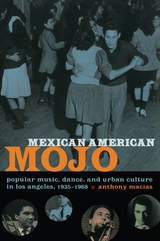
Mexican American Mojo
Popular Music, Dance, and Urban Culture in Los Angeles, 1935–1968Anthony Macías
Duke University Press, 2008
Macías conducted numerous interviews for Mexican American Mojo, and the voices of little-known artists and fans fill its pages. In addition, more famous musicians such as Ritchie Valens and Lalo Guerrero are considered anew in relation to their contemporaries and the city. Macías examines language, fashion, and subcultures to trace the history of hip and cool in Los Angeles as well as the Chicano influence on urban culture. He argues that a grass-roots “multicultural urban civility” that challenged the attempted containment of Mexican Americans and African Americans emerged in the neighborhoods, schools, nightclubs, dance halls, and auditoriums of mid-twentieth-century Los Angeles. So take a little trip with Macías, via streetcar or freeway, to a time when Los Angeles had advanced public high school music programs, segregated musicians’ union locals, a highbrow municipal Bureau of Music, independent R & B labels, and robust rock and roll and Latin music scenes.
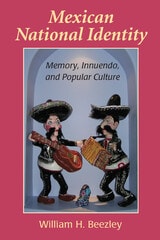
Mexican National Identity
Memory, Innuendo, and Popular CultureWilliam H. Beezley
University of Arizona Press, 2008
In the century that followed Mexico’s independence from Spain in 1821, Beezley maintains, sentiments of nationality were promulgated by people who were concerned not with the promotion of nationalism but with something far more immediate—the need to earn a living. These peddlers, vendors, actors, artisans, writers, publishers, and puppeteers sought widespread popular appeal so that they could earn money. According to Beezley, they constantly refined their performances, as well as the symbols and images they employed, in order to secure larger revenues.
Gradually they discovered the stories, acts, and products that attracted the largest numbers of paying customers. As Beezley convincingly asserts, out of “what sold to the masses” a collective national identity slowly emerged. Mexican National Identity makes an important contribution to the growing body of literature that explores the influences of popular culture on issues of national identity. By looking at identity as it was fashioned “in the streets,” it opens new avenues for exploring identity formation more generally, not just in Mexico and Latin American countries but in every nation.
Check out the New Books in History Interview with Bill Beezley!
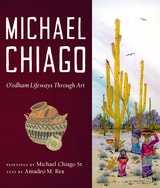
Michael Chiago
O’odham Lifeways Through ArtPaintings by Michael Chiago Sr. Text by Amadeo M. Rea
University of Arizona Press, 2022
A wide array of Chiago’s paintings are represented in this book, illustrating past and present Akimel O’odham and Tohono O’odham culture. The paintings show the lives and traditions of O’odham people from both the artist’s parents’ and grandparents’ generations and today. The paintings demonstrate the colonial Spanish, Mexican, and Anglo-American influences on O’odham culture throughout the decades, and the text explains how wells and windmills, schools, border walls, and nonnative crops have brought about significant change in O’odham life. The paintings and text in this book beautifully depict a variety of O’odham lifeways, including the striking Sonoran Desert environment of O’odham country, gathering local foods and cooking meals, shrines, ceremonies, dances, and more.
By combining Chiago’s paintings of his lived experiences with Rea’s ethnographic work, this book offers a full, colorful, and powerful picture of O’odham heritage, culture, and language, creating a teaching reference for future generations.

Mickey’s Harvest
A Novel of a Deaf Boy’s Checkered LifeHoward L. Terry
Gallaudet University Press, 2015
Mickey Dunmore’s story begins with the sinking of his father’s merchant sailing ship and ends with a cliffhanger in World War I. In school, after an illness caused his deafness, Mickey finds himself constantly fighting the hearing boys and later competing with the signing students when he attends a residential school for deaf students. In college, he and his best friend Dick Wagner leave early to travel the nation with the hobos, carnies, and grifters. In one town, they outfox a barker who was using a deaf girl to “read” the minds of their marks. Further on, they meet Bunny, the Mighty Mite deaf man who helps expose a hearing woman posing as deaf to scam sympathetic people. Mickey faces his greatest challenge when he falls in love with Marion Carrel, a deaf girl whose hearing father forbids their romance on eugenics grounds.
Terry, who became deaf at the age of 11, states from the outset that he means for his novel to reveal the biases confronting deaf people at the time. As a tonic, he populates Mickey’s Harvest with artistic, talented deaf individuals who engage readers in an earlier, colorful time as they “show their stuff.”
Millions of Gifts for the Gods
The Feather Distribution ProjectJonathan Reyman
University Press of Colorado, 2025
Grounded in Sol Tax’s concept of “action anthropology,” the project facilitated community-driven decision-making rather than imposing external solutions. This collaborative approach enabled Indigenous communities to maintain cultural practices that have persisted for over a millennium, dating back to the Ancestral Pueblo people and the Mogollon and Sinagua tribes, who viewed birds as sacred beings that helped humans emerge from the underworld. Yet the project’s impact extended far beyond cultural preservation. Over three decades, it distributed approximately 14.5 million feathers, valued at $20 million, to the Southwest Pueblos and other Indigenous Americans at no cost to them. Through partnerships with turkey hunters, zoos, bird clubs, the National Wild Turkey Federation, and dozens of volunteers, the initiative reduced illegal bird smuggling from Latin America, alleviated pressure on threatened bird populations, and eliminated harmful plucking practices.
Millions of Gifts for the Gods is an extended case study in applied anthropology, demonstrating how sustained collaboration between anthropologists and Indigenous communities can effectively address complex cultural, legal, and environmental challenges while preserving sacred traditions. This unique project is of special interest to anthropologists working in the American Southwest, as well as students and scholars of archaeology, ethnography, and ethnohistory.
Minding the South
John Shelton Reed
University of Missouri Press, 2003
You're in the American South now, a proud region with a distinctive history and culture. A place that echoes with names like Thomas Jefferson and Robert E. Lee, Scarlett O'Hara and Uncle Remus, Martin Luther King and William Faulkner, Billy Graham, Mahalia Jackson, Muhammad Ali, Elvis Presley. Home of the country blues and country music, bluegrass and Dixieland jazz, gospel music and rock and roll. Where menus offer both down-home biscuits and gravy and uptown shrimp and grits. Where churches preach against "cigarettes, whiskey, and wild, wild women" (all Southern products) and where American football is a religion.
For more than thirty years John Shelton Reed has been “minding” the South—watching over it, providing commentary upon it. He is the author or editor of thirteen books about the South, and despite his disclaimer regarding formal study of Southern history, Reed has read widely and in depth about the South. His primary focus is upon Southerners’ present-day culture and consciousness, but he knows that one must approach the South historically in order to understand the place and its people.
Mining Cultures
Men, Women, and Leisure in Butte, 1914-41Mary Murphy
University of Illinois Press, 1997
Butte, Montana, long deserved its reputation as a wide-open town. Mining Cultures shows how the fabled Montana city evolved from a male-dominated mining enclave to a community in which men and women participated on a more equal basis as leisure patterns changed and consumer culture grew. Mary Murphy looks at how women worked and spent their leisure time in a city dominated by the quintessential example of "men's work": mining. Bringing Butte to life, she adds in-depth research on church weeklies, high school yearbooks, holiday rituals, movie plots, and news of local fashion to archival material and interviews.
A richly illustrated jaunt through western history, Mining Cultures is the never-told chronicle of how women transformed the richest hill on earth.
Minority Rules
The Miao and the Feminine in China's Cultural PoliticsLouisa Schein
Duke University Press, 2000
Posing questions about gender, cultural politics, and identity, Schein examines how non-Miao people help to create Miao ethnicity by depicting them as both feminized keepers of Chinese tradition and as exotic others against which dominant groups can assert their own modernity. In representing and consuming aspects of their own culture, Miao distance themselves from the idea that they are less than modern. Thus, Schein explains, everyday practices, village rituals, journalistic encounters, and tourism events are not just moments of cultural production but also performances of modernity through which others are made primitive. Schein finds that these moments frequently highlight internal differences among the Miao and demonstrates how not only minorities but more generally peasants and women offer a valuable key to understanding China as it renegotiates its place in the global order.
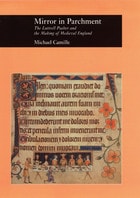
Mirror in Parchment
The Luttrell Psalter and the Making of Medieval EnglandMichael Camille
University of Chicago Press, 1998
The richly illuminated Luttrell Psalter was created for the English nobleman Sir Geoffrey Luttrell (1276-1345). Inexpensive mechanical illustration has since disseminated the book's images to a much wider audience; hence the Psalter's representations of manorial life have come to profoundly shape our modern idea of what medieval English people, high and low, looked like at work and at play. Alongside such supposedly truthful representations, the Psalter presents myriad images of fantastic monsters and beasts. These patently false images have largely been disparaged or ignored by modern historians and art historians alike, for they challenge the credibility of those pictures in the Luttrell Psalter that we wish to see as real.
In the conviction that medieval images were not generally intended to reflect daily life but rather to shape a new reality, Michael Camille analyzes the Psalter's famous pictures as representations of the world, imagined and real, of its original patron. Addressed are late medieval chivalric ideals, physical sites of power, and the boundaries of Sir Geoffrey's imagined community, wherein agricultural laborers and fabulous monsters play a similar ideological role. The Luttrell Psalter thus emerges as a complex social document of the world as its patron hoped and feared it might be.

Mission Underway
The History of the Popular Culture Association/American Culture Association and the Popular Culture Movement 1967–2001Edited, Revised, and Updated by Ray B. Browne
University of Wisconsin Press, 2002
Mission of Change in Southwest Alaska
Conversations with Father René Astruc and Paul Dixon on Their Work with Yup’ik PeopleEdited by Ann Fienup-Riordan
University of Alaska Press, 2012
Mission of Change is an oral history describing various types of change—political, social, cultural, and religious—as seen through the eyes of Father Astruc and Paul Dixon, non-Natives who dedicated their lives to working with the Yup’ik people. Their stories are framed by the an analytic history of regional changes, together with current anthropological theory on the nature of cultural change and the formation of cultural identity. The book presents a subtle and emotionally moving account of the region and the roles of two men, both of whom view issues from a Catholic perspective yet are closely attuned to and involved with changes in the Yup’ik community.
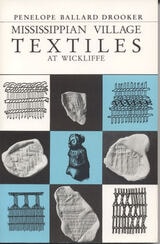
Mississippian Village Textiles at Wickliffe
Penelope Ballard Drooker
University of Alabama Press, 1992
Because textiles rarely are preserved in the archaeological record outside of deserts and permafrost areas, in many regions of the world very little is known about their characteristics, functions, production technology, or socioeconomic importance. While this fact is also true of organic fabrics produced during the Mississippian period in southeastern North Anerica, a wide variety of Mississippian textiles has been preserved in the form of impressions on large pottery vessels. From attribute analysis of 1,574 fabrics impressed on Wickliffe pottery sherds and comparison of the impressions with extant Mississippian textile artifacts, Drooker presents the first comparative analysis of these materials and the most inclusive available summary of information on Mississippian textiles.
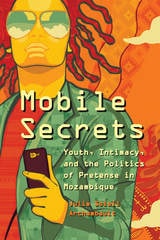
Mobile Secrets
Youth, Intimacy, and the Politics of Pretense in MozambiqueJulie Soleil Archambault
University of Chicago Press, 2017
With Mobile Secrets, Julie Soleil Archambault offers a complete rethinking of how we understand uncertainty, truth, and ignorance by revealing how better access to information may in fact be anything but desirable. By engaging with young adults in a Mozambique suburb, Archambault shows how, in their efforts to create fulfilling lives, young men and women rely on mobile communication not only to mitigate everyday uncertainty but also to juggle the demands of intimacy by courting, producing, and sustaining uncertainty. In their hands, the phone has become a necessary tool in a wider arsenal of pretense—a means of creating the open-endedness on which harmonious social relations depend in postwar postsocialist Mozambique. As Mobile Secrets shows, Mozambicans have harnessed the technology not only to acquire information but also to subvert regimes of truth and preserve public secrets, allowing everyone to feign ignorance about the workings of the postwar intimate economy.
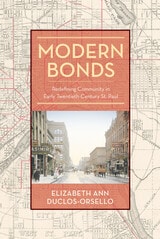
Modern Bonds
Redefining Community in Early Twentieth-Century St. PaulElizabeth Ann Duclos-Orsello
University of Massachusetts Press, 2018
What does community mean, exactly? In this interdisciplinary study, Elizabeth Ann Duclos-Orsello takes seriously the concept of community as an object of historical analysis.
Focusing on St. Paul, Minnesota, from 1900 to 1920, Modern Bonds explores the diverse ways that its people renegotiated private and public affiliations during a period of modernization. The book examines a wide range of subjects and materials, including photographs from an African American family, fictional depictions of middle-class women, built environments that created enclaves of immigrants, and public festivals designed to unite all citizens. As Duclos-Orsello demonstrates, it was in this period that a complex set of activities, policies, and practices led to new understandings of community that continue to shape life today.
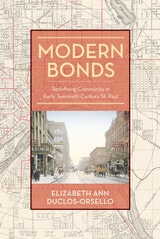
Modern Bonds
Redefining Community in Early Twentieth-Century St. PaulElizabeth Ann Duclos-Orsello
University of Massachusetts Press, 2018
What does community mean, exactly? In this interdisciplinary study, Elizabeth Ann Duclos-Orsello takes seriously the concept of community as an object of historical analysis.
Focusing on St. Paul, Minnesota, from 1900 to 1920, Modern Bonds explores the diverse ways that its people renegotiated private and public affiliations during a period of modernization. The book examines a wide range of subjects and materials, including photographs from an African American family, fictional depictions of middle-class women, built environments that created enclaves of immigrants, and public festivals designed to unite all citizens. As Duclos-Orsello demonstrates, it was in this period that a complex set of activities, policies, and practices led to new understandings of community that continue to shape life today.
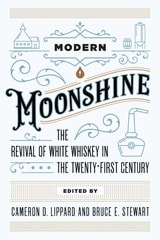
Modern Moonshine
The Revival of White Whiskey in the Twenty-First CenturyCameron D. Lippard
West Virginia University Press, 2019
The craft of making moonshine—an unaged white whiskey, often made and consumed outside legal parameters—nearly went extinct in the late twentieth century as law enforcement cracked down on illicit producers, and cheaper, lawful alcohol became readily available. Yet the twenty-first century has witnessed a resurgence of artisanal distilling, as both connoisseurs and those reconnecting with their heritage have created a vibrant new culture of moonshine. While not limited to Appalachia, moonshine is often entwined with the region in popular understandings.
The first interdisciplinary examination of the legal moonshine industry, Modern Moonshine probes the causes and impact of the so-called moonshine revival. What does the moonshine revival tell us about our national culture? How does it shape the image of Appalachia and rural America? Focusing mostly on southern Appalachia, the book’s eleven essays chronicle such popular figures as Popcorn Sutton and explore how and why distillers promote their product as “traditional” and “authentic.” This edited collection draws from scholars across the disciplines of anthropology, history, geography, and sociology to make sense of the legal, social, and historical shifts behind contemporary production and consumption of moonshine, and offers a fresh perspective on an enduring topic of Appalachian myth and reality.
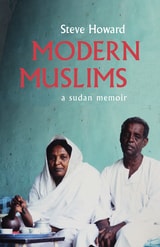
Modern Muslims
A Sudan MemoirSteve Howard
Ohio University Press, 2016
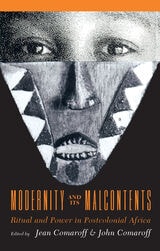
Modernity and Its Malcontents
Ritual and Power in Postcolonial AfricaEdited by Jean Comaroff and John L. Comaroff
University of Chicago Press, 1993
Some of the essays in Modernity and Its Malcontents address familiar anthropological issues—like witchcraft, myth, and the politics of reproduction—but treat them in fresh ways, situating them amidst the polyphonies of contemporary Africa. Others explore distinctly nontraditional subjects—among them the Nigerian popular press and soul-eating in Niger—in such a way as to confront the conceptual limits of Western social science. Together they demonstrate how ritual may be powerfuly mobilized in the making of history, present, and future.
Addressing challenges posed by contemporary African realities, the authors subject such concepts as modernity, ritual, power, and history to renewed critical scrutiny. Writing about a variety of phenomena, they are united by a wish to preserve the diversity and historical specificity of local signs and practices, voices and perspectives. Their work makes a substantial and original contribution toward the historical anthropology of Africa.
The contributors, all from the Africanist circle at the University of Chicago, are Adeline Masquelier, Deborah Kaspin, J. Lorand Matory, Ralph A. Austen, Andrew Apter, Misty L. Bastian, Mark Auslander, and Pamela G. Schmoll.

Modes of Play in Eighteenth-Century France
Fayçal Falaky
Bucknell University Press, 2022
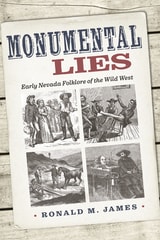
Monumental Lies
Early Nevada Folklore of the Wild WestRonald M. James
University of Nevada Press, 2023
Monumental Lies: Early Nevada Folklore of the Wild West opens the door to understanding how legends and traditions emerged during the first decades following the “Rush to Washoe,” which transformed the region beginning in 1859. During this Wild West period, there was widespread celebration of deceit, manifesting in tall tales, burlesque lies, practical jokes, and journalistic hoaxes. Humor was central to these endeavors and practitioners easily found themselves scorned if they failed to be adequately funny. This ethos became central to the way folklore emerged during the formative years of the Nevada territory and state.
The tens of thousands of people who came to the West, attracted by gold and silver mining, brought distinct cultural legacies. The interaction of diverse perspectives, even while new stories and traditions coalesced or simply appeared, was a complex process. Author Ronald M. James addresses how the fluidity of the region affected new expressions of folklore as they took root.
Mark Twain, often a go-to source for collections of early tall tales of this region, cannot be overlooked, but his interaction with local traditions was specific and narrow. More importantly, William Wright—publishing as Dan De Quille—arose as a key collector of legends, a counterpart of early European folklorists. With a bedrock understanding of what unfolded in the nineteenth century, it is possible to consider

More Stories from the Round Barn
Jacqueline Dougan Jackson
Northwestern University Press, 2002
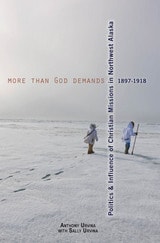
More Than God Demands
Politics and Influence of Christian Missions in Northwest Alaska, 1897-1918Anthony Urvina with Sally Urvina
University of Alaska Press, 2016
Anthony Urvina, whose mother was an orphan raised at one of the missions established as part of this program, draws on details from her life in order to present the first full history of this missionary effort. Smoothly combining personal and regional history, he tells the story of his mother’s experience amid a fascinating account of Alaska Native life and of the men and women who came to Alaska to spread the word of Christ, confident in their belief and unable to see the power of the ancient traditions they aimed to supplant.

More Than Two to Tango
Argentine Tango Immigrants in New York CityAnahí Viladrich
University of Arizona Press, 2013
Based on a highly visible group of performers within the almost hidden population of Argentines in the United States, More than Two to Tango addresses broader questions on the understudied role of informal webs in the entertainment field. Through the voices of both early generations of immigrants and the latest wave of newcomers, Anahí Viladrich explores how the dancers, musicians, and singers utilize their complex social networks to survive as artists and immigrants. She reveals a diverse community navigating issues of identity, class, and race as they struggle with practical concerns, such as the high cost of living in New York City and affordable health care.
Argentina’s social history serves as the compelling backdrop for understanding the trajectory of tango performers, and Viladrich uses these foundations to explore their current unified front to keep tango as their own “authentic” expression. Yet social ties are no panacea for struggling immigrants. Even as More Than Two to Tango offers the notion that each person is truly conceived and transformed by their journeys around the globe, it challenges rosy portraits of Argentine tango artists by uncovering how their glamorous representations veil their difficulties to make ends meet in the global entertainment industry. In the end, the portrait of Argentine tango performers’ diverse career paths contributes to our larger understanding of who may attain the “American Dream,” and redefines what that means for tango artists.

Morning Light
Wildflowers, Night Skies, and Other Ordinary Joys of Oregon Country LifeBarbara Drake
Oregon State University Press, 2014
Barbara Drake articulates the lessons she’s learned from her long stint of country living in her new book, Morning Light. Replete with records of native wildflowers, an encounter with an elderly man who lived on her farm eighty years ago, and an old family recipe for wild blackberry pudding, Morning Light is an appreciation and exploration of the landscape of western Oregon, and readers will come to know it better through the book.
As entertaining and instructive as it is personal and reflective, Drake’s writing will resonate with anyone who has experienced a convergence of family history with natural history, considered their place in the historical continuum, or wondered if their lifestyle can be sustained with age. In a world where even “the country” is becoming increasingly citified, Morning Light reminds us why we should care for our rural landscapes—while we still can.

Moroccan Islam
Tradition and Society in a Pilgrimage CenterBy Dale F. Eickelman
University of Texas Press, 1976
This book is one of the first comprehensive studies of Islam as locally understood in the Middle East. Specifically, it is concerned with the prevalent North African belief that certain men, called marabouts, have a special relation to God that enables them to serve as intermediaries and to influence the well-being of their clients and kin. Dale F. Eickelman examines the Moroccan pilgrimage center of Boujad and unpublished Moroccan and French archival materials related to it to show how popular Islam has been modified by its adherents to accommodate new social and economic realities. In the course of his analysis he demonstrates the necessary interrelationship between social history and the anthropological study of symbolism.
Eickelman begins with an outline of the early development of Islam in Morocco, emphasizing the "maraboutic crisis" of the fourteenth through sixteenth centuries. He also examines the history and social characteristics of the Sherqawi religious lodge, on which the study focuses, in preprotectorate Morocco. In the central portion of the book, he analyzes the economic activities and social institutions of Boujad and its rural hinterland, as well as some basic assumptions the townspeople and tribesmen make about the social order. Finally, there is an intensive discussion of maraboutism as a phenomenon and the changing local character of Islam in Morocco.
In focusing on the "folk" level of Islam, rather than on "high culture" tradition, the author has made possible a more general interpretation of Moroccan society that is in contrast with earlier accounts that postulated a marked discontinuity between tribe and town, past and present.
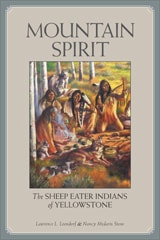
Mountain Spirit
The Sheep Eater Indians of YellowstoneLoendorf, Lawrence L
University of Utah Press, 2006
These robust people were talented artisans, making well-constructed shelters, powerful horn bows, and expertly tailored clothing that was highly sought by their trading partners. They moved in small, kin-based bands, accompanied by large dogs that were indispensable hunting and trekking companions. Moving seasonally through portions of the Beartooth, Absaroka, and Wind River ranges, the Sheep Eaters made skillful use of their environment.
Written for general readers, Mountain Spirit includes photographs, lithographs, and a number of color drawings and sketches of Sheep Eater life ways by Davíd Joaquin. It presents a vivid picture of the vanished way of life of a people whose accomplishments have been largely ignored in histories of Native peoples.
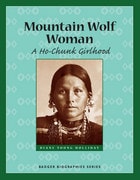
Mountain Wolf Woman
A Ho-Chunk GirlhoodDiane Holliday
Wisconsin Historical Society Press, 2007
With the seasons of the year as a backdrop, author Diane Holliday describes what life was like for a Ho-Chunk girl who lived in the late nineteenth and early twentieth century. Central to the story is the movement of Mountain Wolf Woman and her family in and around Wisconsin. Like many Ho-Chunk people in the mid-1800s, Mountain Wolf Woman's family was displaced to Nebraska by the U.S. government. They later returned to Wisconsin but continued to relocate throughout the state as the seasons changed to gather and hunt food.
Based on her own autobiography as told to anthropologist Nancy Lurie, Mountain Wolf Woman's words are used throughout the book to capture her feelings and memories during childhood. Author Holliday draws young readers into this Badger Biographies series book by asking them to think about how the lives of their ancestors and how their lives today compare to the way Mountain Wolf Woman lived over a hundred years ago.

Mountains of Music
West Virginia Traditional Music from GoldensealJohn Lilly
University of Illinois Press, 1999
The most complete survey to date of the vibrant strands of this music and its colorful practitioners, Mountains of Music delineates a unique culture where music and music making are part of an ancient and treasured heritage. The sly humor, strong faith, clear regional identity, and musical convictions of these performers draw the reader into families and communities bound by music from one generation to another. For devotees as well as newcomers to this infectiously joyous and heartfelt music, Mountains of Music captures the strength of tradition and the spontaneous power of living artistry.
Movable Londons
Performance and the Modern CityJulia H Fawcett
University of Michigan Press, 2025
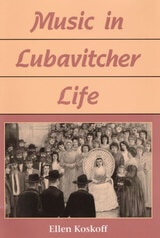
Music in Lubavitcher Life
Ellen Koskoff
University of Illinois Press, 2001
Drawing on twenty years of close study, Ellen Koskoff illuminates the world of the Lubavitcher Hasidim, a community of ultra-orthodox Jews centered in the Crown Heights section of Brooklyn, New York. Her classic ethnography offers an unprecedented look at nigunim, a body of paraliturgical, folk, and popular melodies that Lubavitchers regard as a primary form of spiritual communication with the divine.
Along with vivid descriptions of musical performance in religious contexts and private gatherings, Koskoff details the musical sounds and structures that symbolize Lubavitcher social relations. In particular, she examines the differences between Lubavitcher women's and men's music making and the underlying beliefs and assumptions that give rise to gendered musical behaviors, such as the dictum that prohibits men from hearing a woman sing.
Insightful and distinctive, Music in Lubavitcher Life combines anecdotes with history and musical analysis to reveal music making among the Lubavitchers as a gateway to their ideas about the nature of human spirituality, human social interaction, and God.

Music, Discipline, and Arms in Early Modern France
Kate van Orden
University of Chicago Press, 2005
The great pressure on French noblemen to take up the life of the warrior gave rise to bellicose art forms such as sword dances and equestrian ballets. Far from being construed as effeminizing, such combinations of music and the martial arts were at once refined and masculine-a perfect way to display military prowess. The incursion of music into riding schools and infantry drills contributed materially to disciplinary order, enabling the larger and more effective armies of the seventeenth century. This book is a history of the development of these musical spheres and how they brought forth new cultural priorities of civility, military discipline, and political harmony. Music, Discipline, and Arms in Early Modern France effectively illustrates the seminal role music played in mediating between the cultural spheres of letters and arms.
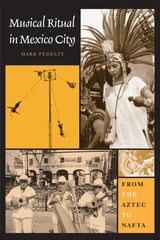
Musical Ritual in Mexico City
From the Aztec to NAFTABy Mark Pedelty
University of Texas Press, 2004
On the Zócalo, the main square of Mexico City, Mexico's entire musical history is performed every day. "Mexica" percussionists drum and dance to the music of Aztec rituals on the open plaza. Inside the Metropolitan Cathedral, choristers sing colonial villancicos. Outside the National Palace, the Mexican army marching band plays the "Himno Nacional," a vestige of the nineteenth century. And all around the square, people listen to the contemporary sounds of pop, rock, and música grupera. In all, some seven centuries of music maintain a living presence in the modern city.
This book offers an up-to-date, comprehensive history and ethnography of musical rituals in the world's largest city. Mark Pedelty details the dominant musical rites of the Aztec, colonial, national, revolutionary, modern, and contemporary eras, analyzing the role that musical ritual played in governance, resistance, and social change. His approach is twofold. Historical chapters describe the rituals and their functions, while ethnographic chapters explore how these musical forms continue to resonate in contemporary Mexican society. As a whole, the book provides a living record of cultural continuity, change, and vitality.
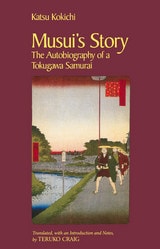
Musui's Story
The Autobiography of a Tokugawa SamuraiKokichi Katsu; Translated by Teruko Craig
University of Arizona Press, 1988
From childhood, Katsu was given to mischief. He ran away from home, once at thirteen, making his way as a beggar on the great trunk road between Edo and Kyoto, and again at twenty, posing as the emissary of a feudal lord. He eventually married and had children but never obtained official preferment and was forced to supplement a meager stipend by dealing in swords, selling protection to shopkeepers, and generally using his muscle and wits.
Katsu's descriptions of loyalty and kindness, greed and deception, vanity and superstition offer an intimate view of daily life in nineteenth-century Japan unavailable in standard history books. Musui's Story will delight not only students of Japan's past but also general readers who will be entranced by Katsu's candor and boundless zest for life.
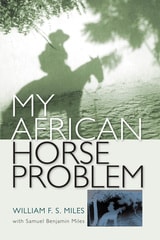
My African Horse Problem
William F. S. Miles
University of Massachusetts Press, 2008
My African Horse Problem recounts the intricacies of this unusual father-son expedition, a sometimes harrowing two-week trip that Samuel joined as "true heir" to the disputed stallion. It relates the circumstances leading up to the dispute and describes the intimacy of a relationship spanning a quarter century between William Miles and the custodians of his family horse—Islamic village friends eking out a precarious existence along the remote sub-Saharan borderline between Nigeria and Niger.
My African Horse Problem is a multi-layered narrative—part memoir, part ethnography—reaching back to Miles's days as a Peace Corps volunteer in Niger in the 1970s and a Fulbright scholar in the 1980s. At a deeper level, the story juxtaposes the idealistic and sometimes irresponsible tendencies of a young university graduate with the parental concerns of a middle-aged, tenured professor. Miles wonders if he was justified in exposing Sam to some of the worst health risks on earth, mainly to restore tenuous ties with long-ago friends in the African bush. Was it reckless to make his son illegally cross international boundaries, in a quixotic quest for justice and family honor? My African Horse Problem is more than an adventurer's tale with a unique story line: it is a father-son travel rumination, leavened by Sam's journal entries that help his father see Africa anew through a child's fresh eyes. In this era of religious and racial tensions, it is also a reaffirmation—within a black Muslim context—of the basic human imperative of trust.

My Bayou
New Orleans through the Eyes of a LoverConstance Adler
Michigan State University Press, 2012
A vividly described and intensely personal memoir, My Bayou charts a personal and spiritual transformation along the fabled banks of Bayou Saint John in New Orleans. When Constance Adler moves to New Orleans, she begins what becomes a lasting love affair with the city, and especially the bayou—a living entity and the beating heart of local culture. Rites of passage, celebrations, mysterious accidents, and magic all take place on its banks, leading Adler to a vibrant awareness of the power of being part of a community. That faith is tested in the wake of Hurricane Katrina, and is ultimately proven right, as Bayou Saint John begins to rebuild.

My Car in Managua
By Forrest D. Colburn
University of Texas Press, 1991
Histories of revolutions often focus on military, political, or economic upheavals but sometimes neglect to connect these larger events to the daily lives of "ordinary" people. Yet the peoples' perception that "things are worse than before" can topple revolutionary governments, as shown by the recent defeat of the Sandinista regime in Nicaragua and the governments of Eastern Europe. Providing the kind of prosaic, revealing details that more formal histories have excluded, My Car in Managua offers an objective, often humorous description of the great difficulties and occasional pleasures of life in Nicaragua during the Sandinista revolution.
During a year's work (1985-1986) at the Instituto Centroamericano de Administración de Empresas (INCAE), Forrest Colburn purchased a dilapidated car—and with it an introduction to everyday life in Nicaragua. His discoveries of the length of time required to register the car (approximately six weeks), the impossibility of finding spare parts (except when U.S. dollars were applied to the search), and the fact that "anyone getting into a car in Managua can be charged a small fee [for car watching] by anyone else" all suggest the difficulties most Nicaraguans faced living in a devastated economy.
Drawing on experiences from visits throughout the revolutionary period (1979-1989), Colburn also sheds light on how the Revolution affected social customs and language, gender roles and family relationships, equality and authority, the availability of goods and services, the status of ethnic minorities, and governmental and other institutions. Illustrations by Nicaragua's celebrated political cartoonist Róger Sánchez Flores enliven the lucid text.

My Daughter's Eyes and Other Stories
StoriesAnnecy Báez
Northwestern University Press, 2007
My Dearest Angel
A Virginia Family Chronicle 1895–1947Katie Letcher Lyle
Ohio University Press, 2002
She was the daughter of a circuit judge and state senator. He was the youngest son of Virginia’s Civil War governor and was a state legislator himself at the age of nineteen. Their courtship and marriage stands as a portrait of a bygone way of life unique to the American South during the first half of the twentieth century. My Dearest Angel is their story, told through their faithful correspondence over the course of their fifty years together.
Piecing together the voluminous letters, their granddaughter, noted author Katie Letcher Lyle, has succeeded in giving us an intimate panorama of the full and oftentimes wrenching lives led by Greenlee and Katie Letcher. Domestic life, family secrets, and visiting luminaries are part of their story. But the abiding appeal of My Dearest Angel is the maturation of a lifelong relationship built on the crest of a changing world.
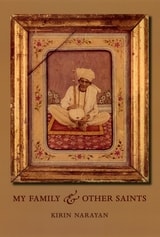
My Family and Other Saints
Kirin Narayan
University of Chicago Press, 2007
A touching, funny, and always affectionate memoir, My Family and Other Saints traces the reverberations of Rahoul's spiritual journey through the entire family. As their beachside Bombay home becomes a crossroads for Westerners seeking Eastern enlightenment, Kirin’s sari-wearing American mother wholeheartedly embraces ashrams and gurus, adopting her son’s spiritual quest as her own. Her Indian father, however, coins the term “urug”—guru spelled backward—to mock these seekers, while young Kirin, surrounded by radiant holy men, parents drifting apart, and a motley of young, often eccentric Westerners, is left to find her own answers. Deftly recreating the turbulent emotional world of her bicultural adolescence, but overlaying it with the hard-won understanding of adulthood, Narayan presents a large, rambunctious cast of quirky characters. Throughout, she brings to life not just a family but also a time when just about everyone, it seemed, was consumed by some sort of spiritual quest.
“A lovely book about the author's youth in Bombay, India. . . . The family home becomes a magnet for truth-seekers, and Narayan is there to affectionately document all of it.”—Body + Soul
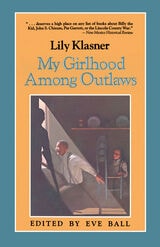
My Girlhood Among Outlaws
Lily Klasner
University of Arizona Press, 1972
In My Girlhood Among Outlaws, Lily recalls her experiences with Billy the Kid and other desperadoes, and sets the record straight on popular misrepresentations of events. Of particular interest to historians is her preservation of the diary of famous cattleman and family friend John Chisum.

My Life with President Kennedy
Christopher Clausen
University of Iowa Press, 1994
As its title implies, this book reflects in varying ways the experiences and attitudes of one who came of age in the first half of that now mythical decade, the 1960s. In an unusual combination of history, criticism, and autobiography, one of our best literary and cultural critics explores life and death in the late twentieth century and some of the older worlds that made American culture what it is today.
Sixties survivors, as Christopher Clausen points out, do not necessarily hold more beliefs or tastes in common than any other group. Nevertheless they may be more likely than most people born earlier or later to consider the relations between public and private life—the political and the personal—a problem, sometimes even an unresolvable problem. While this is not primarily a book about the 1960s, most of it occupies the noisy crossroads where public worlds intersect the private, mysterious lives of individuals and families, where ordinary people pursue their own destinies and desires while submitting consciously or unconsciously to the pressures of the public sphere—a set of demands or aspirations common to people in a particular time and place.
In modern America, where most of these essays are set, any individual is likely to live in several worlds at any given moment, as well as to pass through several more over a lifetime. Because of rapid transitions in public life and culture while they were still at an impressionable age, members of the “Kennedy generation” became almost morbidly conscious of the persistence of the past in the present. The often unpredictable effect on individual lives of historical forces is the main subject of Clausen's fascinating account.
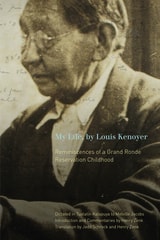
My Life, by Louis Kenoyer
Reminiscences of a Grand Ronde Reservation ChildhoodLouis Kenoyer
Oregon State University Press, 2017
My Mexico
A Culinary Odyssey with RecipesBy Diana Kennedy
University of Texas Press, 2013
By universal acclaim, Diana Kennedy is the world’s authority on the authentic cuisines of Mexico. For decades, she has traveled the length and breadth of the country, seeking out the home cooks, local ingredients, and traditional recipes that make Mexican cuisines some of the most varied and flavorful in the world. Kennedy has published eight classic Mexican cookbooks, including the James Beard Award-winning Oaxaca al Gusto. But her most personal book is My Mexico, a labor of love filled with more than three hundred recipes and stories that capture the essence of Mexican food culture as Kennedy has discovered and lived it. First published in 1998, My Mexico is now back in print with a fresh design and photographs—ready to lead a new generation of gastronomes on an unforgettable journey through the foods of this fascinating and complex country.