Results by title
2285 books match the query 'Women' and 107 start with m
Men I Hate
A Memoir in EssaysLynette D'Amico
The Ohio State University Press, 2026
Can a lesbian who loves a trans man still call herself a lesbian? Against the backdrop of a traditional Sicilian American upbringing, Lynette D’Amico identified as a lesbian despite the expectation that her future hinged on the man she married. As a teenager, she fled her St. Louis home in the dark of night to escape her fate. No boys allowed, until one day D’Amico’s life was completely upended when her lover and spouse of twenty years—P. Carl, the acclaimed author of Becoming a Man: The Story of a Transition—told her he was a man.
Seemingly overnight, D’Amico no longer recognized her spouse in photos of past vacations or of the couple celebrating their legal gay marriage. In Men I Hate, she asks: What happens when the people we are closest to change? As D’Amico tries to engage more deeply with the man she is married to, she looks at all the men—historical figures, politicians, men in her family—in search of clear dividing lines between good men and bad, between the men she loves and the men she hates. These lines dissolve as she writes her way toward an understanding of the words marriage,husband, and home—and how we reconcile who we are with who we become.
Men as Women, Women as Men
Changing Gender in Native American CulturesBy Sabine Lang
University of Texas Press, 1998
As contemporary Native and non-Native Americans explore various forms of "gender bending" and gay and lesbian identities, interest has grown in "berdaches," the womanly men and manly women who existed in many Native American tribal cultures. Yet attempts to find current role models in these historical figures sometimes distort and oversimplify the historical realities.
This book provides an objective, comprehensive study of Native American women-men and men-women across many tribal cultures and an extended time span. Sabine Lang explores such topics as their religious and secular roles; the relation of the roles of women-men and men-women to the roles of women and men in their respective societies; the ways in which gender-role change was carried out, legitimized, and explained in Native American cultures; the widely differing attitudes toward women-men and men-women in tribal cultures; and the role of these figures in Native mythology. Lang's findings challenge the apparent gender equality of the "berdache" institution, as well as the supposed universality of concepts such as homosexuality.

Men, Women, and Jobs
A Study in Human EngineeringDonald Paterson
University of Minnesota Press, 1936
Men, Women, and Work
Class, Gender, and Protest in the New England Shoe Industry, 1780-1910Mary H. Blewett
University of Illinois Press, 1988
Mendings
Megan Sweeney
Duke University Press, 2023
Merchants' Daughters
Women, Commerce, and Regional Culture in South ChinaEdited by Helen F. Siu
Hong Kong University Press, 2010
Mestiza Rhetorics
An Anthology of Mexicana Activism in the Spanish-Language Press, 1887-1922Edited by Jessica Enoch and Cristina Devereaux Ramirez
Southern Illinois University Press, 2019
Mestiza Rhetorics is the first anthology dedicated to mexicana rhetors and provides unmatched access to mexicana rhetorics. This collection puts forward the work of mexicana newspaperwomen in Spanish and English, provides evidence of their participation in political and educational debates at the turn of the twentieth century, and demonstrates how the Spanish-language press operated as a rhetorical space for mexicanas.
Mexican Women and the Other Side of Immigration
Engendering Transnational TiesBy Luz María Gordillo
University of Texas Press, 2010
Weaving narratives with gendered analysis and historiography of Mexicans in the Midwest, Mexican Women and the Other Side of Immigration examines the unique transnational community created between San Ignacio Cerro Gordo, Jalisco, and Detroit, Michigan, in the last three decades of the twentieth century, asserting that both the community of origin and the receiving community are integral to an immigrant's everyday life, though the manifestations of this are rife with contradictions.
Exploring the challenges faced by this population since the inception of the Bracero Program in 1942 in constantly re-creating, adapting, accommodating, shaping, and creating new meanings of their environments, Luz María Gordillo emphasizes the gender-specific aspects of these situations. While other studies of Mexican transnational identity focus on social institutions, Gordillo's work introduces the concept of transnational sexualities, particularly the social construction of working-class sexuality. Her findings indicate that many female San Ignacians shattered stereotypes, transgressing traditionally male roles while their husbands lived abroad. When the women themselves immigrated as well, these transgressions facilitated their adaptation in Detroit. Placed within the larger context of globalization, Mexican Women and the Other Side of Immigration is a timely excavation of oral histories, archival documents, and the remnants of three decades of memory.
Michigan's Con-Con 11
Women and State Constitution-making in 1961Lynn Liberato
Michigan State University Press, 2025
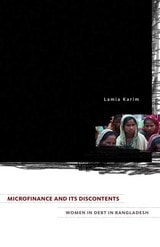
Microfinance and Its Discontents
Women in Debt in BangladeshLamia Karim
University of Minnesota Press, 2010
In 2006 the Grameen Bank of Bangladesh won the Nobel Peace Prize for its innovative microfinancing operations. This path-breaking study of gender, grassroots globalization, and neoliberalism in Bangladesh looks critically at the Grameen Bank and three of the leading NGOs in the country. Amid euphoria over the benefits of microfinance, Lamia Karim offers a timely and sobering perspective on the practical, and possibly detrimental, realities for poor women inducted into microfinance operations.
In a series of ethnographic cases, Karim shows how NGOs use social codes of honor and shame to shape the conduct of women and to further an agenda of capitalist expansion. These unwritten policies subordinate poor women to multiple levels of debt that often lead to increased violence at the household and community levels, thereby weakening women’s ability to resist the onslaught of market forces.
A compelling critique of the relationship between powerful NGOs and the financially strapped women beholden to them for capital, this book cautions us to be vigilant about the social realities within which women and loans circulate—realities that often have adverse effects on the lives of the very women these operations are meant to help.
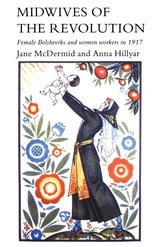
Midwives of the Revolution
Female Bolsheviks and Women Workers in 1917Jane McDermid
Ohio University Press, 1999
The Bolshevik seizure of power in 1917 and the ensuing communist regime have often been portrayed as a man’s revolution, with women as bystanders or even victims. Midwives of the Revolution examines the powerful contribution made by women to the overthrow of tsarism in 1917 and their importance in the formative years of communism in Russia.
Focusing on the masses as well as the high-ranking intelligentsia, Midwives of the Revolution is the first sustained analysis of female involvement in the revolutionary era of Russian history. The authors investigate the role of Bolshevik women and the various forms their participation took. Drawing on the experiences of representative individuals, the authors discuss the important relationship between Bolshevik women and the workers in the turbulent months of 1917.
The authors demonstrate that women were an integral part of the revolutionary process and challenge assumptions that they served merely to ignite an essentially masculine revolt. By placing women center stage, without exaggerating their roles, this study enriches our understanding of a momentous event in twentieth-century history.
Migration and Diaspora
Exegetical Voices of Women in Northeast Asian CountriesHisako Kinukawa
SBL Press, 2014
Engage and explore readings from a multi-religious, globalized, multicultural region
The papers in this collection were presented at the third meeting of the Society of Asian Biblical Studies held at the Sabah Theological Seminary, Malaysia in 2012. The essays represent the work of women/feminist scholars in biblical hermeneutics in this region who have raised questions against traditional, male-centered interpretations, offering distinct perspectives based on their experiences of pain, subjugation, and a forced sacrificial philosophy of life.
Features:
- Articles focused on finding justice for women through dialogue with biblical texts
- Reflections on migration, diaspora, displacement, discrimination, and conditions generated by poverty and systemic oppression
- Five essays from women in China, Japan, and Korea
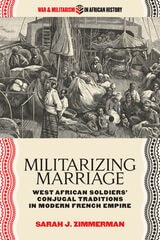
Militarizing Marriage
West African Soldiers’ Conjugal Traditions in Modern French EmpireSarah J. Zimmerman
Ohio University Press, 2020
Following tirailleurs sénégalais’ deployments in West Africa, Congo, Madagascar, North Africa, Syria-Lebanon, Vietnam, and Algeria from the 1880s to 1962, Militarizing Marriage historicizes how African servicemen advanced conjugal strategies with women at home and abroad. Sarah J. Zimmerman examines the evolution of women’s conjugal relationships with West African colonial soldiers to show how the sexuality, gender, and exploitation of women were fundamental to the violent colonial expansion and the everyday operation of colonial rule in modern French Empire.
These conjugal behaviors became military marital traditions that normalized the intimate manifestation of colonial power in social reproduction across the empire. Soldiers’ cross-colonial and interracial households formed at the intersection of race and sexuality outside the colonizer/colonized binary. Militarizing Marriage uses contemporary feminist scholarship on militarism and violence to portray how the subjugation of women was indispensable to military conquest and colonial rule.
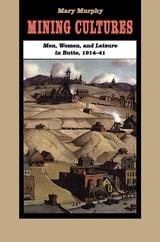
Mining Cultures
Men, Women, and Leisure in Butte, 1914-41Mary Murphy
University of Illinois Press, 1997
Butte, Montana, long deserved its reputation as a wide-open town. Mining Cultures shows how the fabled Montana city evolved from a male-dominated mining enclave to a community in which men and women participated on a more equal basis as leisure patterns changed and consumer culture grew. Mary Murphy looks at how women worked and spent their leisure time in a city dominated by the quintessential example of "men's work": mining. Bringing Butte to life, she adds in-depth research on church weeklies, high school yearbooks, holiday rituals, movie plots, and news of local fashion to archival material and interviews.
A richly illustrated jaunt through western history, Mining Cultures is the never-told chronicle of how women transformed the richest hill on earth.

Miracle Marks
PoemsPurvi Shah
Northwestern University Press, 2019
In her second full-length poetry collection, Miracle Marks, activist Purvi Shah charts women’s status through pointed explorations of Hindu iconography and philosophy and powerful critiques of American racism. In these searing, revelatory poems, Shah reminds us that surviving birth as an infant girl and living as a woman is miraculous—as such, every girl is a miracle mark. And because education is often denied to girls, writing by women is a miracle.
In Miracle Marks, Shah probes belonging, devotion, and social inequity, delving into what it means to be a woman, and what it means to be. Through sound energy and white space, these poems chart multiple realities, including the miracles of women’s labors and survivals. This collection spurs dialogue across audiences and communities and lights a way for brown girls and women who relish in spirit, intellect, politics, and justice.
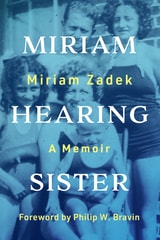
Miriam Hearing Sister
A MemoirMiriam Zadek
Gallaudet University Press, 2022
The prevailing ideological movements of the time permeate her family life. Zadek reveals the traumatic impact of eugenics and the fears surrounding the genetic transmission of deafness. She considers the effects of adhering to the oral method of communication in her home when sign language could have given her family the ability to interact with each other more fully. In this environment, Zadek became an astute communicator and learned to adapt to both the hearing and the deaf world, where she was known as “Miriam Hearing Sister.” Her memoir is an elegant literary work that offers an understanding of how biases and stigmas resonate and evolve, and it showcases her loving family of strong women who pushed against stereotypes and have thrived across generations.
Miss Muriel and Other Stories
Ann Petry, foreword by Jamilah Lemieux
Northwestern University Press, 2017
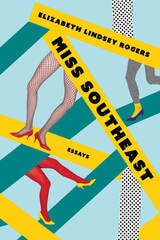
Miss Southeast
EssaysElizabeth Lindsey Rogers
Northwestern University Press, 2024
A collection of narrative essays on femininity, sexuality, community, and belonging
Miss Southeast explores the strange, often contradictory cultural circumstances of being queer and female in the American South and beyond. Born and raised in North Carolina, the youngest in a family of precocious daughters, Rogers spends her teenage years as a half-closeted lesbian desperate to escape the South, convinced the rest of the United States must be “more enlightened than our cow-dotted corner of the county.”
Adulthood takes Rogers to Ohio, New York, Louisiana, Arkansas, Washington, DC, and China, but each essay finds her reckoning with participation in and resistance to rigid cultural institutions—whether a coming-out story set at a high school beauty pageant or a meditation on swimming pools as emblems of racial divides across the South. In lyric prose enlivened by a poet’s sense of musicality, Miss Southeast considers how both place and our layered identities shape our sense of belonging.
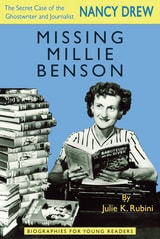
Missing Millie Benson
The Secret Case of the Nancy Drew Ghostwriter and JournalistJulie K. Rubini
Ohio University Press, 2015
Growing up in Ladora, Iowa, Mildred “Millie” Benson had ample time to develop her imagination and sense of adventure. While still a journalism graduate student at the University of Iowa, Millie began writing for the Stratemeyer Syndicate, which published the phenomenally popular Hardy Boys series, among others. Soon, Millie was tapped for a new series starring amateur sleuth Nancy Drew, a young, independent woman not unlike Millie herself. Under the pen name Carolyn Keene, Millie wrote the first book, The Secret of the Old Clock, and twenty-two other Nancy Drew Mystery Stories. In all, Millie wrote more than a hundred novels for young people.
Millie was also a journalist for the Toledo Times and the Toledo Blade. At sixty-two, she obtained her pilot’s license. Follow the clues throughout Missing Millie to discover the story of this ghostwriter, journalist, and adventurer.
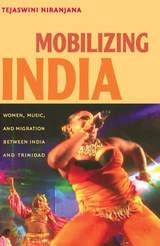
Mobilizing India
Women, Music, and Migration between India and TrinidadTejaswini Niranjana
Duke University Press, 2006
Niranjana draws on nineteenth-century travel narratives, anthropological and historical studies of Trinidad, Hindi film music, and the lyrics, performance, and reception of chutney-soca and calypso songs to argue that perceptions of Indian female sexuality in Trinidad have long been central to the formation and disruption of dominant narratives of nationhood, modernity, and normative sexuality in India. She illuminates debates in India about “the woman question” as they played out in the early-twentieth-century campaign against indentured servitude in the tropics. In so doing, she reveals India’s disavowal of the indentured woman—viewed as morally depraved by her forced labor in Trinidad—as central to its own anticolonial struggle. Turning to the present, Niranjana looks to Trinidad’s most dynamic site of cultural negotiation: popular music. She describes how contested ideas of Indian femininity are staged by contemporary Trinidadian musicians—male and female, of both Indian and African descent—in genres ranging from new hybrids like chutney-soca to the older but still vibrant music of Afro-Caribbean calypso.
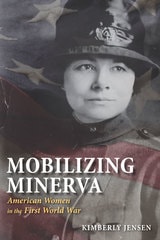
Mobilizing Minerva
American Women in the First World WarKimberly Jensen
University of Illinois Press, 2007
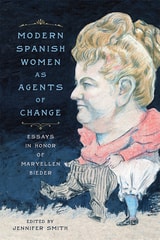
Modern Spanish Women as Agents of Change
Essays in Honor of Maryellen BiederSmith, Jennifer
Bucknell University Press, 2019
Published by Bucknell University Press. Distributed worldwide by Rutgers University Press.
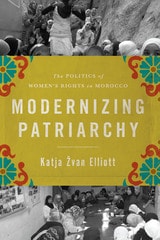
Modernizing Patriarchy
The Politics of Women's Rights in MoroccoBy Katja Žvan Elliott
University of Texas Press, 2015
Morocco is hailed by academics, international NGO workers, and the media as a trailblazer in women’s rights and legal reforms. The country is considered a model for other countries in the Middle East and North African region, but has Morocco made as much progress as experts and government officials claim? In Modernizing Patriarchy, Katja Žvan Elliott examines why women’s rights advances are lauded in Morocco in theory but are often not recognized in reality, despite the efforts of both Islamist and secular feminists.
In Morocco, female literacy rates remain among the lowest in the region; many women are victims of gender-based violence despite legal reforms; and girls as young as twelve are still engaged to adult men, despite numerous reforms. Based on extensive ethnographic research and fieldwork in Oued al-Ouliya, Modernizing Patriarchy offers a window into the life of Moroccan Muslim women who, though often young and educated, find it difficult to lead a dignified life in a country where they are expected to have only one destiny: that of wife and mother. Žvan Elliott exposes their struggles with modernity and the legal reforms that are supposedly ameliorating their lives. In a balanced approach, she also presents male voices and their reasons for criticizing the prevailing women’s rights discourse. Compelling and insightful, Modernizing Patriarchy exposes the rarely talked about reality of Morocco’s approach toward reform.
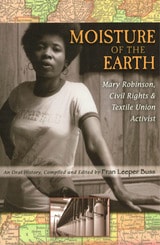
Moisture of the Earth
Mary Robinson, Civil Rights and Textile Union ActivistAn Oral History, Compiled and Edited by Fran Leeper Buss
University of Michigan Press, 2009
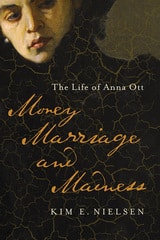
Money, Marriage, and Madness
The Life of Anna OttKim E. Nielsen
University of Illinois Press, 2020
Kim E. Nielsen explores a life at once irregular and unexceptional. Historical and institutional structures, like her whiteness and laws that liberalized divorce and women's ability to control their property, opened up uncommon possibilities for Ott. Other structures, from domestic violence in the home to rampant sexism and ableism outside of it, remained a part of even affluent women's lives. Money, Marriage, and Madness tells a forgotten story of how the legal and medical cultures of the time shaped one woman—and what her life tells us about power and society in nineteenth century America.

Moorings and Metaphors
Figures of Culture and Gender in Black Women's LiteratureKarla F. Holloway
Rutgers University Press, 1991
Proceeding from a consideration of the imaginative textual languages of contemporary African-American and West African writers, Holloway asserts the intertextuality of black women's literature across two continents. She argues the subtext of culture as the source of metaphor and language, analyzes narrative structures and linguistic processes, and develops a combined theoretical/critical apparatus and vocabulary for interpreting these writers' works. The cultural sources and spiritual considerations that inhere in these textual languages are discussed within the framework Holloway employs of patterns of revision, (re)membrance, and recursion--all of which are vehicles for expressive modes inscribed at the narrative level. Her critical reading of contemporary black women's writing in the United States and West Africa is unique, radical, and sure to be controversial.
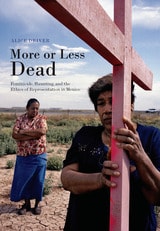
More or Less Dead
Feminicide, Haunting, and the Ethics of Representation in MexicoAlice Driver
University of Arizona Press, 2015
More or Less Dead analyzes how such violence against women has been represented in news media, books, films, photography, and art. Alice Driver argues that the various cultural reports often express anxiety or criticism about how women traverse and inhabit the geography of Ciudad Juárez and further the idea of the public female body as hypersexualized. Rather than searching for justice, the various media—art, photography, and even graffiti—often reuse victimized bodies in sensationalist, attention-grabbing ways. In order to counteract such views, local activists mark the city with graffiti and memorials that create a living memory of the violence and try to humanize the victims of these crimes.
The phrase “more or less dead” was coined by Chilean author Roberto Bolaño in his novel 2666, a penetrating fictional study of Juárez. Driver explains that victims are “more or less dead” because their bodies are never found or aren’t properly identified, leaving families with an uncertainty lasting for decades—or forever.
The author’s clear, precise journalistic style tackles the ethics of representing feminicide victims in Ciudad Juárez. Making a distinction between the words “femicide” (the murder of girls or women) and “feminicide” (murder as a gender-driven event), one of her interviewees says, “Women are killed for being women, and they are victims of masculine violence because they are women. It is a crime of hate against the female gender. These are crimes of power.”

Mormon Enigma
Emma Hale SmithLinda King Newell and Valeen Tippetts Avery
University of Illinois Press, 1994
Winner of the Evans Biography Award, the Mormon History Association Best Book Award, and the John Whitmer Association (RLDS) Best Book Award.
Mormon Enigma is the bestselling biography of Emma Hale Smith, wife of the Mormon prophet Joseph Smith. It was Joseph Smith who announced that an angel of the Lord had commanded him to introduce a 'new order of marriage.' And it was Emma Hale Smith who confronted the practice of polygamy head on.
As the authors note in their introduction, "Early leaders in Utah castigated Emma from their pulpits for opposing Brigham Young and the practice of polygamy, and for lending support to the Reorganization. As these attitudes filtered down through the years, Emma was virtually written out of official Utah histories. In this biography, we have attempted to reconstruct the full story of this remarkable and much misunderstood woman's experiences.
Mormon Sisters
Women In Early UtahClaudia Bushman
Utah State University Press, 1997
Moscow Yankee
Myra Page
University of Illinois Press, 1995
of a Ford plant sends Andy and two companions to Moscow to find work in
a Soviet automotive plant, where he meets Natasha, an exemplar of the
"new Soviet woman." Based on Myra Page's own experiences in Moscow during
the first Five-Year Plan, Natasha is a portrait of women's contradictory
social position in the early periods of socialist construction. At the
core of this novel is a firsthand look at the developing forces and changing
relations of production forces that bring about the conversion of Andy
into a "Moscow Yankee." While revealing the political and economic policies
that would inevitably lead to the demise of Soviet-style socialism, Moscow
Yankee refutes the notion that egalitarian societies cannot succeed
because they fail to take into account the individualism and greed of
"human nature." Barbara Foley's introduction analyzes the Soviet Socialist
construction in Page's novel and the politics of the novelistic form in
relation to Moscow Yankee.
Originally published in 1935
"A picture of Americans lured
to Moscow by hope in the 'great experiment,' and of others driven there
by the depression, and of still others attracted by the simple desire
to get good engineering jobs, Moscow Yankee; has a decided
value . . . a sense of life, stirring in the chaos of destruction and
reconstruction." -- The New York Times Book Review
Moses and the Monster and Miss Anne
Carole C. Marks
University of Illinois Press, 2008
All three women lived for a time in close proximity on the Eastern Shore of Maryland, an isolated region that thrived on tobacco and then lost it, procured slaves and then lost them, and produced strong-minded women and then condemned them. Though they never actually met, and their backgrounds and beliefs differed drastically, these women's lives converged through their active experiences of the conflict over slavery in Maryland and beyond, the uncertainties of economic transformation, the struggles in the legal foundation of slavery and, most of all, the growing dispute in gender relations in America.
Throughout this book, Carole C. Marks gleans historical fact and sociological insight from the persistent myths and exaggerations that color the women's legacies, and she investigates the common roots and motivations of three remarkable figures who bucked the era's expectations for women. She also considers how each woman's public identity reflected changing ideas of domesticity and the public sphere, spirituality, and legal rights and limitations. Cannon, Carroll, and Tubman, each in her own way, passionately fought for the future of Maryland and the United States, and from these unique vantage points, Moses and the Monster and Miss Anne portrays the intersecting and conflicting forces of race, economics, and gender that threatened to rend a nation apart.
Mother India
Selections from the Controversial 1927 Text, Edited and with an Introduction by Mrinalini SinhaKatherine Mayo
University of Michigan Press, 2000
Mrinalini's Sinha's edition provides selections of this controversial book and commentary on the Mother India phenomenon. It also reprints a range of responses from Mayo's contemporaries. Sinha's edition works to locate the book and the controversy it incited in the context of U.S. domestic, British Imperial, and Indian nationalist politics. Unlike previous editions, Sinha's examines the history of cultural feminisms and the relations between women's movements in the United States, Britain, and India; the examination of these different movements reveals intriguing insights into the nature of the varied reactions to Mayo's book. The edition includes several formerly obscure contemporary responses to Mother India from representatives of the women's movement and of the anti-caste movement in India.
Intended as a tool for students and teachers alike, this book will be an important text in the field of women's studies, cultural studies, political science, history, and religion, among others.
Mrinalini Sinha is Associate Professor of History, Southern Illinois University. She is the author of Colonial Masculinity: The 'Manly Englishman' and the 'Effeminate Bengali' in the Late Nineteenth Century.
Mother Jones, The Miners' Angel
Dale Fetherling
Southern Illinois University Press, 1979
For half a century Mother Jones took up the workingman’s cause without question and fought his battles without compromise. Dale Fetherling’s biography for the first time gives her full story, with eloquence and sympathetic understanding.
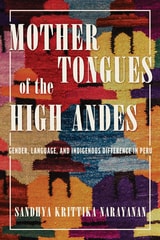
Mother Tongues of the High Andes
Gender, Language, and Indigenous Difference in PeruSandhya Krittika Narayanan
University of Arizona Press, 2025
Anthropologist Sandhya Krittika Narayanan begins with these challenges, and asks: What does it mean to be a Quechua or Aymara speaker in Puno today? What does it mean to be an Indigenous ethnic Quechua or Aymara individual?
Mother Tongues of the High Andes opens with these questions, exploring what Quechua and Aymara languages and identities mean for Indigenous puneños as they navigate their past and present. Narayanan argues that understanding inter-Indigenous linguistic and social differences involves examining Indigenous gender roles, responsibilities, and linguistic practices, particularly those of Indigenous puneña women. She shows how these practices have contributed to the maintenance of Indigenous multilingualism and continuity in local modes of understanding Indigenous identity and difference.
Even as ideologies around Indigenous identity and linguistic practices shift due to global discourses on Indigenous ethnic identity and nationalism, Indigenous women continue to play a crucial role, promoting new ways to speak and think about Quechua and Aymara linguistic differences, making the Indigenous roots and histories of Puno recognizable to a global audience. Through a comprehensive ethnographic exploration of gender, language, and Indigenous difference, Narayanan shows how the linguistic and social practices of Indigenous puneña women both contest and reaffirm competing visions of Quechua and Aymara linguistic identity and authority.
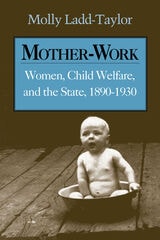
Mother-Work
Women, Child Welfare, and the State, 1890-1930Molly Ladd-Taylor
University of Illinois Press, 1994
Early in the twentieth century, maternal and child welfare evolved from a private family responsibility into a matter of national policy. Molly Ladd-Taylor explores both the private and public aspects of child-rearing, using the relationship between them to cast new light on the histories of motherhood, the welfare state, and women's activism in the United States.
Ladd-Taylor argues that mother-work, "women's unpaid work of reproduction and caregiving," motivated women's public activism and "maternalist" ideology. Mothering experiences led women to become active in the development of public health, education, and welfare services. In turn, the advent of these services altered mothering in many ways, including the reduction of the infant mortality rate.

Motherhood in Bondage
Foreword by Margaret MarshMargaret Sanger
The Ohio State University Press, 2000
In Motherhood in Bondage, first published in 1928, Sanger reproduced letters written to her from women and sometimes men from all over the country, in both urban and rural areas, who were seeking advice on reproductive matters and marital relations, but mostly imploring her to help them find ways to avoid more pregnancies. The letters are grouped by theme into sixteen chapters, and Sanger wrote an introduction to each chapter. With clear relevance to the current post-Roe moment, these pleas to Sanger for advice on avoiding unwanted pregnancy dramatically detail the desperation for reproductive agency when birth control was unknown, withheld, or otherwise inaccessible.
In her foreword for this edition, Margaret Marsh describes the controversies surrounding these letters and places them in their historical context.
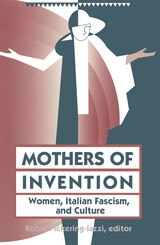
Mothers Of Invention
Women, Italian Facism, and CultureRobin Pickering-Iazzi
University of Minnesota Press, 1995
The first in-depth look at culture produced by women in Fascist Italy.
Mothers of Invention was first published in 1995. Minnesota Archive Editions uses digital technology to make long-unavailable books once again accessible, and are published unaltered from the original University of Minnesota Press editions.
To Mussolini, she was either donna-madre, the lauded domestic model, or donna-crisi, intellectual, masculine, a degenerate type. But woman, as Mothers of Invention shows, was not a category so easily defined or contained by the Italian Fascist state. This volume is the first thorough investigation of culture produced by Italian women during Fascism (1922-1943).In literature, painting, sculpture, film, and fashion, the contributors explore the politics of invention articulated by these women as they negotiated prevailing ideologies. Essays on women’s film spectatorship, on Anna Kuliscioff as the leading feminist in the Socialist party, on Teresa Labriola’s concept of Fascist feminism, on futurism and on Irene Brin’s reportage on female fashion and self-invention examine women in mass culture, political thought, and daily living. Contributors: Rosalia Colombo Ascari, Sweet Briar College; Fiora A. Bassanese, U of Massachusetts, Boston; Maurizia Boscagli, U of California, Santa Barbara; Emily Braun, Hunter College, CUNY; Carole C. Gallucci; Mariolina Graziosi, U of Milan; Clara Orban, Depaul U; Lucia Re, UCLA; Jacqueline Reich, Trinity College; and Barbara Spackman, New York University.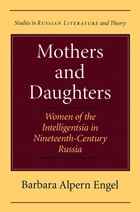
Mothers and Daughters
Women of the Intelligentsia in Nineteenth-Century RussiaBarbara Alpern Engel
Northwestern University Press, 2000
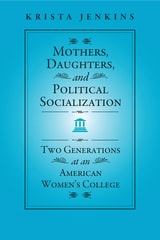
Mothers, Daughters, and Political Socialization
Two Generations at an American Women's CollegeKrista Jenkins
Temple University Press, 2013
Using a unique data set comparing mothers and daughters who attended Douglass College—the women's college of Rutgers University—twenty-five years apart, Krista Jenkins perceptively observes the changes in how women acquire their attitudes toward gender roles and behaviors in the post-women's movement years.
Mothers, Daughters, and Political Socialization examines the role of intergenerational transmission—the maternal influences on younger women—while also looking at differences among women in attitudes and behaviors relative to gender roles that might be attributed to the nature of the times during their formative years. How do daughters coming of age in an era when the women's movement is far less visible deal with gendered expectations compared to their mothers? Do they accept the contemporary status quo their feminist mothers fought so hard to achieve? Or, do they press forward with new goals?
Jenkins shows how contemporary women are socialized to accept or reject traditional gender roles that serve to undermine their equality.
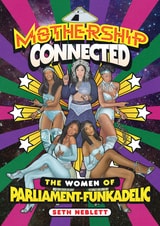
Mothership Connected
The Women of Parliament-FunkadelicSeth Neblett
University of Texas Press, 2025
An oral history with the women of Parliament-Funkadelic, from forming the band to landing the mothership.
Parliament-Funkadelic is perhaps the greatest funk band ever assembled. Yet at the time of the group’s induction into the Rock & Roll Hall of Fame, none of the women who helped create the sound and performed in P-Funk were invited to the ceremony and their contributions have been largely overlooked.
Mothership Connected tells the story of Mallia Franklin, Lynn Mabry, Dawn Silva, Debbie Wright, and Shirley Hayden, all of whom were instrumental in making Parliament-Funkadelic, as well as the spin-off groups Parlet and the Brides of Funkenstein, into the legends they are today. Assembled by Seth Neblett, son of the “Queen of Funk” Mallia Franklin, and filled with the voices of funk icons like George Clinton, Sly Stone, Bootsy Collins, and the women themselves, this oral history makes clear why these “architects” at the “core” of P-Funk were both essential—and erased. From Franklin introducing Bootsy Collins to Clinton, to the Brides’ top-10 hit “Disco to Go,” to the drugs that helped destroy the group, this book reveals the hidden lives and uncomfortable truths of life in P-Funk. More than sex, drugs, and rock and roll, Mothership Connected is about Black women navigating a tumultuous era and industry to become musical pioneers. Now, after decades in the shadows, these genre-defining women are finally telling their story.
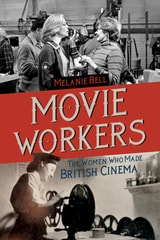
Movie Workers
The Women Who Made British CinemaMelanie Bell
University of Illinois Press, 2021
After the advent of sound, women in the British film industry formed an essential corps of below-the-line workers, laboring in positions from animation artist to negative cutter to costume designer. Melanie Bell maps the work of these women decade-by-decade, examining their far-ranging economic and creative contributions against the backdrop of the discrimination that constrained their careers. Her use of oral histories and trade union records presents a vivid counter-narrative to film history, one that focuses not only on women in a male-dominated business, but on the innumerable types of physical and emotional labor required to make a motion picture. Bell's feminist analysis looks at women's jobs in film at important historical junctures while situating the work in the context of changing expectations around women and gender roles.
Illuminating and astute, Movie Workers is a first-of-its-kind examination of the unsung women whose invisible work brought British filmmaking to the screen.
Moving the Mountain
The Women's Movement in America since 1960Flora Davis
University of Illinois Press, 1999
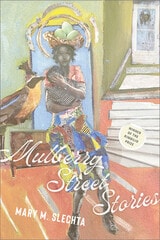
Mulberry Street Stories
Mary Slechta
Four Way Books, 0
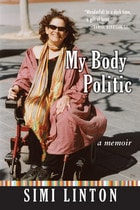
My Body Politic
A MemoirSimi Linton
University of Michigan Press, 2005
-Daniel Berrigan, S.J.
"The struggles, joys, and political awakening of a firecracker of a narrator. . . . Linton has succeeded in creating a life both rich and enviable. With her crackle, irreverence, and intelligence, it's clear that the author would never be willing to settle. . . . Wholly enjoyable."
-Kirkus Reviews
"Linton is a passionate guide to a world many outsiders, and even insiders, find difficult to navigate. . . . In this volume, she recounts her personal odyssey, from flower child . . . to disability-rights/human rights activist."
-Publishers Weekly
"Witty, original, and political without being politically correct, introducing us to a cast of funny, brave, remarkable characters (including the professional dancer with one leg) who have changed the way that 'walkies' understand disability. By the time Linton tells you about the first time she was dancing in her wheelchair, you will feel like dancing, too."
---Carol Tavris, author of Anger: The Misunderstood Emotion
"This astonishing book has perfect pitch. It is filled with wit and passion. Linton shows us how she learned to 'absorb disability,' and to pilot a new and interesting body. With verve and wonder, she discovers her body's pleasures, hungers, surprises, hurts, strengths, limits, and uses."
-Rosemarie Garland-Thomson, author of Extraordinary Bodies: Figuring Physical Disability in American Culture and Literature
"An extraordinarily readable account of life in the fast lane... a brilliant autobiography and a great read."
-Sander L. Gilman, author of Fat Boys: A Slim Book
While hitchhiking from Boston to Washington, D.C., in 1971 to protest the war in Vietnam, Simi Linton was involved in a car accident that paralyzed her legs and took the lives of her young husband and her best friend. Her memoir begins with her struggle to regain physical and emotional strength and to resume her life in the world. Then Linton takes us on the road she traveled (with stops in Berkeley, Paris, Havana) and back to her home in Manhattan, as she learns what it means to be a disabled person in America.
Linton eventually completed a Ph.D., remarried, and began teaching at Hunter College. Along the way she became deeply committed to the disability rights movement and to the people she joined forces with. The stories in My Body Politic are populated with richly drawn portraits of Linton's disabled comrades, people of conviction and lusty exuberance who dance, play-and organize--with passion and commitment.
My Body Politic begins in the midst of the turmoil over Vietnam and concludes with a meditation on the U.S. involvement in the current war in Iraq and the war's wounded veterans. While a memoir of the author's gradual political awakening, My Body Politic is filled with adventure, celebration, and rock and roll-Salvador Dali, James Brown, and Jimi Hendrix all make cameo appearances. Linton weaves a tale that shows disability to be an ordinary part of the twists and turns of life and, simultaneously, a unique vantage point on the world.

My Chicago
Jane Byrne
Northwestern University Press, 2003
My Chicago is the story of Jane Byrne's rise from young campaign worker to the mayor's office, all within the bruising arena of Chicago politics. Part sociopolitical history, part memoir, it begins with a history of the city and her early life, before she enters politics as a paid staff member of JFK's presidential campaign and, soon after, begins service in the Chicago Machine, but not of it.
Her view from the inside allows Byrne to sketch portraits of Daley, for whom she eventually worked, members of the Kennedy family, and Presidents Carter and Reagan. And, of course, it provides a fascinating perspective on the battle to succeed Daley, which ended with her own triumph over the Machine and a controversial term as mayor, which saw her begin development across the city and (famously) move into the Cabrini-Green housing project. The first memoir by a Chicago mayor in two generations, My Chicago is a valuable history as well as an entertaining look at no-holds-barred city politics.
My City Highrise Garden
Kleit,Micah
Rutgers University Press, 2017
She reports the catastrophes: losing daytime access during building-wide renovations; assaults from a mockingbird during his mating season. And the joys: a peach tree fruited for fifteen years; the windswept birches lasted for twenty-five. Butterflies and bees pay annual visits. She pampers a buddleia, a honeysuckle, roses, hydrangeas, and more. Her adventures celebrate the tenacity of nature, inviting readers to marvel at her garden’s resilience, and her own.
Enhanced by over thirty color photographs, this passionate account of green life in a gritty, urban environment will appeal to readers and gardeners wherever they dwell.
My Dearest Angel
A Virginia Family Chronicle 1895–1947Katie Letcher Lyle
Ohio University Press, 2002
She was the daughter of a circuit judge and state senator. He was the youngest son of Virginia’s Civil War governor and was a state legislator himself at the age of nineteen. Their courtship and marriage stands as a portrait of a bygone way of life unique to the American South during the first half of the twentieth century. My Dearest Angel is their story, told through their faithful correspondence over the course of their fifty years together.
Piecing together the voluminous letters, their granddaughter, noted author Katie Letcher Lyle, has succeeded in giving us an intimate panorama of the full and oftentimes wrenching lives led by Greenlee and Katie Letcher. Domestic life, family secrets, and visiting luminaries are part of their story. But the abiding appeal of My Dearest Angel is the maturation of a lifelong relationship built on the crest of a changing world.

My Escapee
StoriesCorinna Vallianatos
University of Massachusetts Press, 2012
ANew York Times Book Review Editor's Choice
Delicate and assured, the stories in My Escapee illuminate unseen forces in women's lives: the shameful thought, the stifled hope, the subterranean stresses of marriage, friendship, and family. Grappling with lost memories, escaped time, the longing to be loved, and the instinct for autonomy, the stories peer inside their characters' minds to their benign delusions, their triumphs and defeats.
A girl taking a test for admittance to a selective school finds that what she loves most of all is the ordinary. A lonely young woman, sick of being sick, swaps places with her nurse. A college student deploys her more charming roommate to discover the secret rituals of an all-male club on campus. And in the title story, a woman in a nursing home receives mysterious missives from her longtime lover recalling fragments of their old life together.

My Friend, Julia Lathrop
Jane Addams
University of Illinois Press, 1935
The memoir reveals a great deal about the influence of Hull-House on the social and political history of the early twentieth century. An introduction by long-time Addams scholar Anne Firor Scott provides a broader account of women's work in voluntary associations.

My Life as an Animal
StoriesLaurie Stone
Northwestern University Press, 2017
A woman meets a man and falls in love. She is sixty, a writer and lifelong New Yorker raised by garmentos. She thought this kind of thing wouldn’t happen again. He is English, so who knows what he thinks. He is fifty-six, a professor now living in Arizona, the son of a bespoke tailor. As the first of Laurie Stone’s linked stories begins, the writer contemplates what life would be like in the desert with the professor. As we learn how she became the person she is, we also come to know the artists and politics of the downtown scene of the ’70s, ’80s, and ’90s, a cultural milieu that remains alive in her. In sharply etched prose, Stone presents a woman constantly seduced by strangers, language, the streets— even a wildlife trail. Her characters realize that they feel at home in dislocation—in always living in two places at the same time: east and west, past and present, the bed and the grave (or copper urn). Love may not last, the writer knows. Then again, when has anything you thought about the future turned out right?