Results by title
1296 books match the query 'Women authors' and 70 start with m
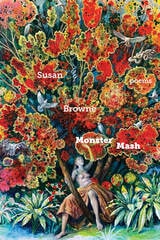
Monster Mash
Susan Browne
Four Way Books, 2025
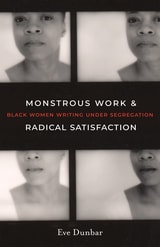
Monstrous Work and Radical Satisfaction
Black Women Writing under SegregationEve Dunbar
University of Minnesota Press, 2024
Radical Black feminist refusal through the works of mid-twentieth-century African American women writers
Monstrous Work and Radical Satisfaction offers new and insightful readings of African American women’s writings in the 1930s–1950s, illustrating how these writers centered Black women’s satisfaction as radical resistance to the false and incomplete promise of liberal racial integration. Eve Dunbar examines the writings of Ann Petry, Dorothy West, Alice Childress, and Gwendolyn Brooks to show how these women explored self-fulfillment over normative and sanctioned models of national belonging.
Paying close attention to literary moments of disruption, miscommunication, or confusion rather than ease, assimilation, or mutual understanding around race and gender, Dunbar tracks these writers’ dissatisfaction with American race relations. She shows how Petry, West, Childress, and Brooks redeploy the idea of monstrous work to offer potential modalities for registering Black women’s capacity to locate satisfaction within the domestic and interpersonal.
While racial integration may satisfy the national idea of equality and inclusion, it has not met the long-term needs of Black people’s quest for equity. Dunbar responds, demonstrating how these mid-century women offer new blueprints for Black life by creating narrative models for radical satisfaction: Black women’s completeness, joy, and happiness outside the bounds of normative racial inclusion.
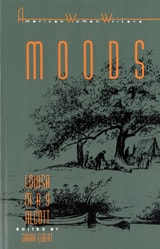
Moods by Louisa May Alcott
Elbert, Sarah
Rutgers University Press, 1991
Moods, Louisa May Alcott's first novel was published in 1864, four years before the best-selling Little Women. The novel unconventionally presents a "little woman," a true-hearted abolitionist spinster, and a fallen Cuban beauty, their lives intersecting in Alcott's first major depiction of the "woman problem."
Sylvia Yule, the heroine of Moods, is a passionate tomboy who yearns for adventure. The novel opens as she embarks on a river camping trip with her brother and his two friends, both of whom fall in love with her. These rival suitors, close friends, are modeled on Ralph Waldo Emerson and Henry Daniel Thoreau. Aroused, but still "moody" and inexperienced, Sylvia marries the wrong man. In the rest of the novel, Alcott attempts to resolve the dilemma she has created and leave her readers asking whether, in fact, there is a place for a woman such as Sylvia in a man's world.
In 1882, eighteen years after the original publication, Alcott revised and republished the novel. Her own literary success and the changes she helped forge in women's lives now allowed her heroine to meet, as Alcott said, "a wiser if less romantic fate than in the former edition." This new volume contains the complete text of the 1864 Moods and Alcott's revisions for the 1882 version, along with explanatory notes by the editor. A critical introduction places Moods in the context of Alcott's own literary history and in the larger historical setting of nineteenth-century society and culture.
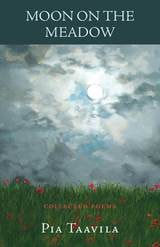
Moon on the Meadow
Collected PoemsPia Taavila-Borsheim
Gallaudet University Press, 2008
As a child of deaf adults (CODA), Pia Taavila first learned to communicate when her deaf father fingerspelled the names of toys in her crib and her mother showed her the signs for objects in picture books. From this primary visual orientation, in combination with her own innate sense of imagery, Taavila crafted the lush verse featured in Moon on the Meadow: Collected Poems.
Taavila uses the graphic power of her poetry to evoke emotions about all aspects of existence — love, loss of love, family, death, and desire — feelings elicited through a lens attuned to the simple beauty of the natural. Most of the poems in Moon on the Meadow have been published at least once in established journals, testimony to the broad appeal of her passionate outlook on life. Yet, Taavila believes that her experiences as a CODA are essential to her ability to write at all. She never strays far from her home, her family, and the comforts they bring her through her art:
At a wedding, a flautist’s
languid notes lilt on the air.
My mother, who cannot hear,
leans forward, attentive
to the dip and sway of his body.
She signs to me:
It sounds like butterflies

Moorings and Metaphors
Figures of Culture and Gender in Black Women's LiteratureKarla F. Holloway
Rutgers University Press, 1991
Proceeding from a consideration of the imaginative textual languages of contemporary African-American and West African writers, Holloway asserts the intertextuality of black women's literature across two continents. She argues the subtext of culture as the source of metaphor and language, analyzes narrative structures and linguistic processes, and develops a combined theoretical/critical apparatus and vocabulary for interpreting these writers' works. The cultural sources and spiritual considerations that inhere in these textual languages are discussed within the framework Holloway employs of patterns of revision, (re)membrance, and recursion--all of which are vehicles for expressive modes inscribed at the narrative level. Her critical reading of contemporary black women's writing in the United States and West Africa is unique, radical, and sure to be controversial.
More Than Meat and Raiment
PoemsAngela Jackson
Northwestern University Press, 2022
The speakers of these poems reflect on memory and saga, history and legend. Voices recall evenings spent catching fireflies with a younger sister, the aroma of homemade rolls, the father who squeezes papers into his wallet alongside bills in order to appear wealthy (“a flock of green birds rustling inside / to get out for some extravagance”). A Black girl watches TV and dreams of the perfect partner. A citizen contends with the unrelenting devastation of police violence in a work reminiscent of Gwendolyn Brooks’s “verse journalism.” A mother loses her daughter only to witness her rebirth: “Praise be / the human being / that is being.”
In “For Our People,” an homage to Margaret Walker, Jackson summons the resilience and imagination of African Americans, celebrating “each of us injured or exalted, betrayer or betrayed, muted / and declamatory, all one, each of us all of us, each a private star beloved in the universe.” Lauded as one of American poetry’s most vivid voices, Jackson continues her reign among the country’s foremost wordsmiths. This sublime collection delves deep into the porch stories and folktales that have carried the Black voice through all its histories.
Mother Imagery in the Novels of Afro-Caribbean Women
Simone A. James Alexander
University of Missouri Press, 2000
Focusing on specific texts by Jamaica Kincaid, Maryse Condé, and Paule Marshall, this fascinating study explores the intricate trichotomous relationship between the mother (biological or surrogate), the motherlands Africa and the Caribbean, and the mothercountry represented by England, France, and/or North America. The mother-daughter relationships in the works discussed address the complex, conflicting notions of motherhood that exist within this trichotomy. Although mothering is usually socialized as a welcoming, nurturing notion, Alexander argues that alongside this nurturing notion there exists much conflict. Specifically, she argues that the mother-daughter relationship, plagued with ambivalence, is often further conflicted by colonialism or colonial intervention from the "other," the colonial mothercountry.
Mother Imagery in the Novels of Afro-Caribbean Women offers an overview of Caribbean women's writings from the 1990s, focusing on the personal relationships these three authors have had with their mothers and/or motherlands to highlight links, despite social, cultural, geographical, and political differences, among Afro-Caribbean women and their writings. Alexander traces acts of resistance, which facilitate the (re)writing/righting of the literary canon and the conception of a "newly created genre" and a "womanist" tradition through fictional narratives with autobiographical components.
Exploring the complex and ambiguous mother-daughter relationship, she examines the connection between the mother and the mother's land. In addition, Alexander addresses the ways in which the absence of a mother can send an individual on a desperate quest for selfhood and a home space. This quest forces and forges the creation of an imagined homeland and the re-validation of "old ways and cultures" preserved by the mother. Creating such an imagined homeland enables the individual to acquire "wholeness," which permits a spiritual return to the motherland, Africa via the Caribbean. This spiritual return or homecoming, through the living and practicing of the old culture, makes possible the acceptance and celebration of the mother's land.
Alexander concludes that the mothers created by these authors are the source of diasporic connections and continuities. Writing/righting black women's histories as Kincaid, Condé, and Marshall have done provides a clearing, a space, a mother's land, for black women. Mother Imagery in the Novels of Afro-Caribbean Women will be of great interest to all teachers and students of women's studies, African American studies, Caribbean literature, and diasporic literatures.
Mother Juana de la Cruz, 1481–1534
Visionary SermonsJuana de la Cruz
Iter Press, 2016
Juana de la Cruz (1481–1534) is a unique figure in the history of the Catholic Church, thanks to her public visionary experiences during which she lost consciousness, while a deep voice, identifying itself as Christ, issued from her, narrating the feasts and pageants taking place in heaven. Juana’s so called “sermons,” collected in a manuscript called Libro del Conorte, form a fascinating window into Castilian religiosity in the early sixteenth century. There is much to reap from these sermons concerning Spanish Renaissance culture, theology, mysticism, gender roles, and interreligious interactions.
Mother Tongues
PoemsTsitsi Ella Jaji
Northwestern University Press, 2020
Winner of the 2018 Cave Canem Northwestern University Press Poetry Prize
Tsitsi Ella Jaji’s second full-length collection of poems, Mother Tongues, begins at home, with the first words and loves we learn, and the most intimate vows we swear. How deep does your language go back? Jaji’s artful verse is a three-tiered gourd of sustenance, vessel, and folklore. The tongues speak the beginnings and the present; they capture and claim the losses, the ironies, and a poet’s human evolution. Mother Tongues is a collection of language unto itself that translates directly to the heart.

Moving On
The Heroines of Shirley Ann Grau, Anne Tyler, and Gail GodwinSusan S. Kissel
University of Wisconsin Press, 1996
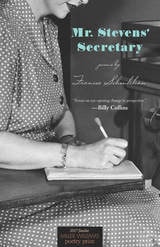
Mr. Stevens' Secretary
PoemsFrances Schenkkan
University of Arkansas Press, 2017
Finalist, 2017 Miller Williams Poetry Prize, edited by Billy Collins
“Forces an eye-opening change in perspective.”
—Billy Collins
In Mr. Stevens’ Secretary, a fictional assistant to Wallace Stevens juggles her roles as a mother, a wife, a believer, and a working woman. Privy at times to the famous poet’s personal life, the secretary must balance her curiosity about Stevens with her commitment to her husband, her faith, and the life she desires.
This vivid and compelling character struggles with fears of mental illness and the challenges of working for a prominent, reserved man, all while adjusting to new environs. She leaves her home, and her job, as she contemplates whether her marriage is worth saving and if she can reconcile the Baptist faith of her upbringing with the questions raised by her new place in the world. Throughout, we are witness to her complex relationship with the famous modernist poet, and with writing itself.
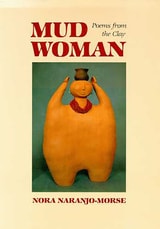
Mud Woman
Poems from the ClayNora Naranjo-Morse
University of Arizona Press, 1992
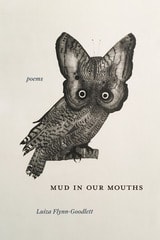
Mud in Our Mouths
PoemsLuiza Flynn-Goodlett
Northwestern University Press, 2025
An award-winning poet writing through violence, solace, and hope
Luiza Flynn-Goodlett’s Mud in Our Mouths illuminates how we are all enmeshed in a web of violence and love. As the speaker of the collection drives cross-country to visit her family of origin in Tennessee, she reckons with the tensions between her current and past selves and the many ways violence—interpersonal, societal, and environmental—has shaped her life. She struggles to find meaning, questioning the ethics of locating faith in a natural world she is unintentionally destroying, and grapples with her complicity in systems of power and oppression as a white Southern woman. Ultimately, she rejects the idea of genetic family as a place of solace; instead, she cleaves to the liberation and joy of connections forged outside those strictures, where intimacy is freely chosen rather than preordained.
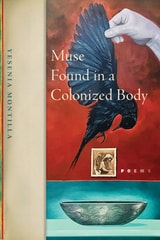
Muse Found in a Colonized Body
Yesenia Montilla
Four Way Books, 2022
In the book's eponymous poem, Yesenia Montilla writes, “How do you not love yourself when you / constantly survive your undoing just by being precious?" Muse Found in a Colonized Body answers this rhetorical question by populating itself with poems that range far and wide in content — observing pop culture, interrogating history, resisting contemporary injustice — but that share the spinal cord of unflinching love. As Rachel Eliza Griffiths notes, Montilla’s “powers orbit and intuit the lives of Philando Castile, Captain America, Christian Cooper, Karl Marx, Ahmaud Arbery, Eartha Kitt, and many more while stitching our wounded identities, memories, and histories in defiant poems of revision and joyous reclamation.” The vertebral odes of this collection at turns uplift desire, affirm life, celebrate protest, and condemn the violent greed of imperial usurpation that has produced the U.S. as we know it. Both in its criticism and its admiration, Muse Found in a Colonized Body calls upon its readers to rise to the occasion of these lyrics’ profound care.
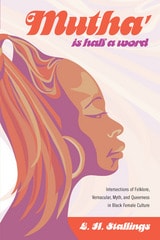
Mutha’ Is Half a Word
Intersections of Folklore, Vernacular, Myth, and Queerness in Black Female CultureL. H. Stallings
The Ohio State University Press, 2007
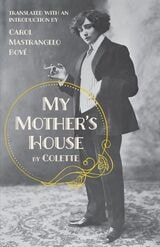
My Mother's House
Colette
Carnegie Mellon University Press, 2026
An updated translation of Colette’s revolutionary 1922 autobiographical collection that contains six previously untranslated chapters.
This book is a much-needed new translation of Colette’s classic La Maison de Claudine. A careful re-reading of the text was long overdue, given Colette’s evolution into one of the most admired French novelists in the modern world, the inadequacy of earlier translations, which omitted six significant chapters, and changes in contemporary attitudes on motherhood and sexual orientation. The controversial topic at the center of the novel, her passion for her mother Sido, animates her writing as a whole. As the BBC notes, “The Most Beloved French writer of all time. . . . An icon in her native France, Colette's scandalous life and works still captivate readers 150 years on from her birth, writes John Self.”
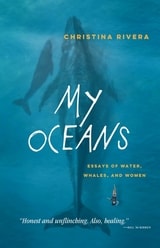
My Oceans
Essays of Water, Whales, and WomenChristina Rivera
Northwestern University Press, 2025
In a swell of sea-linked essays, Christina Rivera explores the kinship between marine animals, humans, and Earth’s blue womb. Rivera’s investigative questions begin with the toxic burden of her body and spiral out—to a grieving orca, a hunted manta ray, a pregnant sea turtle, a spawning salmon, an “endling” porpoise, and the “mother culture” of sperm whales—as she redefines what it means to mother and defend a collective future.
Braiding memoir with embodied climate science, Rivera challenges that it’s not anthropomorphism to feel deep connection to nonhuman species and proposes that gathering in collective grief is essential amid the sixth mass extinction. For ecofeminists, fans of Rachel Carson and Terry Tempest Williams—and for anyone who feels themself disintegrate in the presence of the sea—My Oceans offers a timely and wondrous descent into the deep waters of interconnection in which we swim.
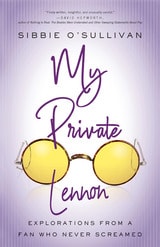
My Private Lennon
Explorations from a Fan Who Never ScreamedSibbie O'Sullivan
The Ohio State University Press, 2020
My Private Lennon charts the author’s realization that the Beatles, especially John Lennon, were a crucial force in her development. A radical departure from other books written by Beatles fans, My Private Lennon invites its readers to consider subjects not usually found in works about Lennon and the band, such as the constraints of memory, the male body, grief, the female breast, race, cultural issues, and the importance of privacy in our over-mediated world. In pieces that engage cultural issues and historical contexts, My Private Lennon creates a witty and provocative intimacy with readers who value the power of art to change one’s life and who love John Lennon and the Beatles.
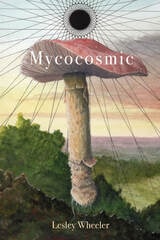
Mycocosmic
Lesley Wheeler
Tupelo Press, 2025
“Good things come to you through fire,” a Tarot reader told Lesley Wheeler as she was composing what became her sixth poetry collection, Mycocosmic. But how could that be true, while the planet was burning and life slamming her with one loss after another? Then she learned about pyrophilic fungi that lurk in soil until activated by fire. Enter mycelia and a teeming underground world that metabolizes death, changing what remains so that life can begin anew.
Mycocosmic offers intricately woven spell poems—prayers, hexes, charms, and invocations—that call for transformation. A parent’s death gives Wheeler the freedom to reveal difficult truths about family violence and her sexuality; a midlife mental health crisis transforms her sense of self. Incantatory language channeled through a wide variety of forms—including free verse, litany, sonnets, the bref double, the golden shovel, and the villanelle—empowers these shifts.
Beneath these poems runs a book-length essay in verse, “Underpoem [Fire Fungus],” sending tendrils across the footer of each page. This poetic mycelium nourishes metamorphosis and highlights its urgency. As Merlyn Sheldrake writes in Entangled Life, “Mycelium describes the most common of fungal habits, better thought of not as a thing but as a process: an exploratory, irregular tendency.” Poetry is rooted in real and imagined communities and conversations. Mycocosmic demonstrates how interdependence binds us together.
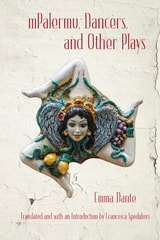
mPalermu, Dancers, and Other Plays
Emma Dante
Swan Isle Press, 2019
This exquisite first English translation of Emma Dante’s work enables English-speaking readers, theatre scholars, and directors alike to encounter character-driven “civic theatre” with its portraits of individuals existing at the fringes of Italy. Ultimately, it allows us to “listen” to those who are not given a voice anywhere else.