Results by title
22279 books match the query 'Social Science' and 1258 start with m
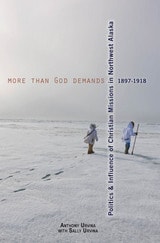
More Than God Demands
Politics and Influence of Christian Missions in Northwest Alaska, 1897-1918Anthony Urvina with Sally Urvina
University of Alaska Press, 2016
Anthony Urvina, whose mother was an orphan raised at one of the missions established as part of this program, draws on details from her life in order to present the first full history of this missionary effort. Smoothly combining personal and regional history, he tells the story of his mother’s experience amid a fascinating account of Alaska Native life and of the men and women who came to Alaska to spread the word of Christ, confident in their belief and unable to see the power of the ancient traditions they aimed to supplant.
More Than Meets the Eye
Revealing the Complexities of an Interpreted EducationMelissa B. Smith
Gallaudet University Press, 2013
Sign language interpreters often offer the primary avenue of access for deaf and hard of hearing students in public schools. More than 80% of all deaf children today are mainstreamed, and few of their teachers sign well enough to provide them with full access. As a result, many K-12 interpreters perform multiple roles beyond interpreting. Yet, very little is known about what they actually do and what factors inform their moment-to-moment decisions. This volume presents the range of activities and responsibilities performed by educational interpreters, and illuminates what they consider when making decisions.
To learn about the roles of K-12 interpreters, author Melissa B. Smith conducted in-depth analyses at three different schools. She learned that in response to what interpreters feel that their deaf students need, many focus on three key areas: 1) visual access, 2) language and learning, and 3) social and academic participation/inclusion. To best serve their deaf students in these contexts, they perform five critical functions: they assess and respond to the needs and abilities of deaf students; they interpret with or without modification as they deem appropriate; they capitalize on available resources; they rely on interactions with teachers and students to inform their choices; and they take on additional responsibilities as the need arises.
More Than Pretty Boxes
How the Rise of Professional Organizing Shows Us the Way We Work Isn’t WorkingCarrie M. Lane
University of Chicago Press, 2024
For a widely dreaded, often mundane task, organizing one’s possessions has taken a surprising hold on our cultural imagination. Today, those with the means can hire professionals to help sort and declutter their homes. In More Than Pretty Boxes, Carrie M. Lane introduces us to this world of professional organizers and offers new insight into the domains of work and home, which are forever entangled—especially for women.
The female-dominated organizing profession didn’t have a name until the 1980s, but it is now the subject of countless reality shows, podcasts, and magazines. Lane draws on interviews with organizers, including many of the field’s founders, to trace the profession’s history and uncover its enduring appeal to those seeking meaningful, flexible, self-directed work. Taking readers behind the scenes of real-life organizing sessions, More Than Pretty Boxes details the strategies organizers use to help people part with their belongings, and it also explores the intimate, empathetic relationships that can form between clients and organizers.
But perhaps most importantly, More Than Pretty Boxes helps us think through an interconnected set of questions around neoliberal work arrangements, overconsumption, emotional connection, and the deeply gendered nature of paid and unpaid work. Ultimately, Lane situates organizing at the center of contemporary conversations around how work isn’t working anymore and makes a case for organizing’s radical potential to push back against the overwhelming demands of work and the home, too often placed on women’s shoulders. Organizers aren’t the sole answer to this crisis, but their work can help us better understand both the nature of the problem and the sorts of solace, support, and solutions that might help ease it.
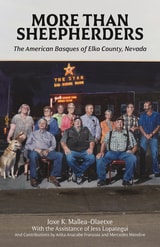
More Than Sheepherders
The American Basques of Elko County, NevadaJoxe K. Mallea-Olaetxe
University of Nevada Press, 2025
Joxe K. Mallea-Olaetxe presents a modern study focused on the post-1970s, when the retired Basque sheepherders and their families became the dominant Americanized minority in the area. During this time, the Fourth of July National Basque Festival began to attract thousands of visitors from as far away as Europe to the small Nevada community and brought to light the vibrant customs of these Nevadans.
This book explores the American Basques’ present-day place in the West, bolstered by the collaborative efforts of four contributors, including two women—all who have been residents of Elko. The writers offer firsthand knowledge of their heritage through numerous vignettes, and these deeply personal perspectives will entice readers into Mallea-Olaetxe’s singular and entertaining historical account.

More Than Two to Tango
Argentine Tango Immigrants in New York CityAnahí Viladrich
University of Arizona Press, 2013
Based on a highly visible group of performers within the almost hidden population of Argentines in the United States, More than Two to Tango addresses broader questions on the understudied role of informal webs in the entertainment field. Through the voices of both early generations of immigrants and the latest wave of newcomers, Anahí Viladrich explores how the dancers, musicians, and singers utilize their complex social networks to survive as artists and immigrants. She reveals a diverse community navigating issues of identity, class, and race as they struggle with practical concerns, such as the high cost of living in New York City and affordable health care.
Argentina’s social history serves as the compelling backdrop for understanding the trajectory of tango performers, and Viladrich uses these foundations to explore their current unified front to keep tango as their own “authentic” expression. Yet social ties are no panacea for struggling immigrants. Even as More Than Two to Tango offers the notion that each person is truly conceived and transformed by their journeys around the globe, it challenges rosy portraits of Argentine tango artists by uncovering how their glamorous representations veil their difficulties to make ends meet in the global entertainment industry. In the end, the portrait of Argentine tango performers’ diverse career paths contributes to our larger understanding of who may attain the “American Dream,” and redefines what that means for tango artists.

More Than Victims
Battered Women, the Syndrome Society, and the LawDonald Alexander Downs
University of Chicago Press, 1996
"More Than Victims is a powerful step in the right direction. Women as well as men need to be protected from violence, and women, in particular, require better understanding of their sometimes oppressive situations. But they also need to be able to participate fully in the discourse of politics and citizenship. Downs offers a solution that helps to make both possible."—Teresa Godwin Phelps, Review of Politics
"Downs has written an important book on a subject that deserves more of our attention."— Susan Mezey, Law and Politics Book Review
"Comprehensive and compelling. [Downs] demonstrates a masterful grasp of the complex legal and philosophical issues implicated in domestic violence cases."—Annette DeMichele, New York Law Journal

More Than an Ocean
Reflections of a Diasporic DaughterAlexis Pauline Gumbs
Duke University Press, 2027
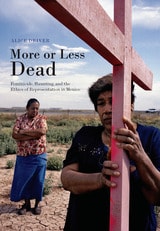
More or Less Dead
Feminicide, Haunting, and the Ethics of Representation in MexicoAlice Driver
University of Arizona Press, 2015
More or Less Dead analyzes how such violence against women has been represented in news media, books, films, photography, and art. Alice Driver argues that the various cultural reports often express anxiety or criticism about how women traverse and inhabit the geography of Ciudad Juárez and further the idea of the public female body as hypersexualized. Rather than searching for justice, the various media—art, photography, and even graffiti—often reuse victimized bodies in sensationalist, attention-grabbing ways. In order to counteract such views, local activists mark the city with graffiti and memorials that create a living memory of the violence and try to humanize the victims of these crimes.
The phrase “more or less dead” was coined by Chilean author Roberto Bolaño in his novel 2666, a penetrating fictional study of Juárez. Driver explains that victims are “more or less dead” because their bodies are never found or aren’t properly identified, leaving families with an uncertainty lasting for decades—or forever.
The author’s clear, precise journalistic style tackles the ethics of representing feminicide victims in Ciudad Juárez. Making a distinction between the words “femicide” (the murder of girls or women) and “feminicide” (murder as a gender-driven event), one of her interviewees says, “Women are killed for being women, and they are victims of masculine violence because they are women. It is a crime of hate against the female gender. These are crimes of power.”
More than Lore
Reminiscences of Marion TalbotMarion Talbot
University of Chicago Press, 2015
Originally published in 1936, More than Lore is a unique firsthand account of the early days of the university, capturing the excitement and travails of life on an academic frontier. Talbot shares gossip from the faculty lounge, relays student antics in the dorms, and tells stories from the living rooms of Hyde Park. It’s also a fascinating look at life as an early twentieth-century college woman, with scandals over improper party invitations and underground sororities, petitions calling for more female professors, and campaigns to have students be known as “university women” instead of “college girls.” With Talbot as our guide, we reenter a lost world where simply to be a woman was to be a pioneer and where the foundations of the modern undergrad experience were being established.
More than a Farmer's Wife
Voices of American Farm Women, 1910-1960Amy Mattson Lauters
University of Missouri Press, 2009

More-than-Human Aging
Animals, Robots, and Care in Later LifeCristina Douglas
Rutgers University Press, 2025

Moritz Gottlieb Saphir
Nineteenth-Century Pioneer of Journalism and Food WritingAndrás Koerner
Central European University Press, 2027
His literary and journalistic innovations included publishing the first modern newspapers in Berlin, Munich and Vienna, developing a new style of humorous writing, introducing the journalistic genre of the feuilleton to Austria, authoring the first extended prose poem in the German language and writing the first study of vernacular Ashkenazi Jewish cuisine, as well as the first review of a Jewish cookbook and restaurant. Although due to censorship he had to largely eschew political subjects, he courageously fought for press freedom and against anti-Jewish prejudice. Although perhaps not a great writer, he was an important and intriguing figure of European cultural history who certainly doesn’t deserve the neglect his work has suffered since the early 20th century.
András Koerner’s book is the first modern monograph of him, which in addition to a detailed presentation of his eventful, interesting life and an examination of his personality, identity and work also includes the first-ever extensive annotated anthology of him in English.
Mormon Garments
Sacred and SecretNancy Ross, Jessica Finnigan, and Larissa Kanno Kindred
University of Illinois Press, 2026
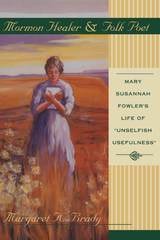
Mormon Healer Folk Poet
Mary Susannah Fowler's Life of 'Unselfish Usefulness'Margaret Brady
Utah State University Press, 2000
Mormon Women at the Crossroads
Global Narratives and the Power of ConnectednessCaroline Kline
University of Illinois Press, 2022
Winner of the Mormon History Association Best International Book Award
The Church of Jesus Christ of Latter-day Saints continues to contend with longstanding tensions surrounding gender and race. Yet women of color in the United States and across the Global South adopt and adapt the faith to their contexts, many sharing the high level of satisfaction expressed by Latter-day Saints in general. Caroline Kline explores the ways Latter-day Saint women of color in Mexico, Botswana, and the United States navigate gender norms, but also how their moral priorities and actions challenge Western feminist assumptions. Kline analyzes these traditional religious women through non-oppressive connectedness, a worldview that blends elements of female empowerment and liberation with a broader focus on fostering positive and productive relationships in different realms. Even as members of a patriarchal institution, the women feel a sense of liberation that empowers them to work against oppression and against alienation from both God and other human beings.
Vivid and groundbreaking, Mormon Women at the Crossroads merges interviews with theory to offer a rare discussion of Latter-day Saint women from a global perspective.
Mormonisms in Asia
Stories of Global Faith and Local LivesEdited by Melissa Wei-Tsing Inouye and Laurie F. Maffly-Kipp
University of Illinois Press, 2026
This volume focuses on Asia, a region that includes more than half the world's population, but where Restoration traditions specifically and Christianity broadly are minority faiths. It uses a combination of focused case studies and theoretical analysis to highlight broader trends and themes that those studies suggest about the meaning of a globalized faith in the twenty-first century. The first section of this book lays out ways of thinking about Mormonism’s global presence in terms of the nation-state, and the essays explore where and how Restoration traditions as institutional actors have made their way into new political and social contexts. The second section studies the tensions created by the encounters of LDS norms with preexisting cultural and political values in local settings. These essays burrow more deeply into political and religious realities and explore the variations in Mormon cultural assumptions about politics and society, as well as the relationship between local congregants and the Mormon administrative center. The final section presents fine-grained
studies that focus attention on one of the central features of LDS lived religion: the role of gender and the family in the religious community. In each case, divine dictates necessarily bump up against traditional societal norms that converts must navigate.
Contributors: John-Charles Duffy, Stacilee Ford, Taunalyn Ford, Conan Grames, David J. Howlett, Melissa Wei-Tsing Inouye, Keisha Lai, Laurie Maffly-Kipp, Matthew Martinich, Meagan Rainock, Shinji Takagi, Pierre Vendassi
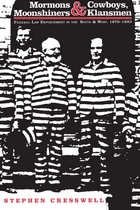
Mormons and Cowboys, Moonshiners and Klansman
Federal Law Enforcement in the South and West, 1870-1893Stephen Cresswell
University of Alabama Press, 1991
A critical study of the expansion of federal law enforcement across the post-Civil War American South and frontier West.
In the decades immediately following the Civil War, the United States expanded rapidly. As the nation grew, so too did federal law, moving into areas of citizens’ lives previously regulated by local custom and state and territorial statutes.
Drawing on contemporary accounts and the letters that flowed between the Washington office of the Justice Department and its attorneys and marshals throughout the states and territories, Cresswell uses a case-study approach to explore the enforcement of federal law in four regions. In northern Mississippi, the rights of freedmen to vote clashed with established rules of relations between blacks and whites. In Utah Territory, Mormon polygamy and economic dominance challenged the aspirations of non-Mormon settlers. In eastern Tennessee, desperate poverty lent enchantment to the easy money of moonshining. In Arizona Territory, frontier greed and violence threatened the lives of people and the chances of early admission to the Union of states.
Mormons and Cowboys, Moonshiners and Klansmen moves beyond these local case studies to illuminate larger questions, including the evolution of the American criminal justice system, the relationship of the South and the West to the rest of the nation, the workings of the 19th-century American bureaucracy, and conflict of the local, state, and federal governments.
Out of the efforts of these early federal marshals came the modern federal justice system, with its firm policy guidelines, its Federal Bureau of Investigation, and its broader powers over the country as a whole.

Morning Dew and Roses
Nuance, Metaphor, and Meaning in FolksongsBarre Toelken
University of Illinois Press, 1995
"Toelken's insights . . . are unique. His study broadens and deepens scholarly appreciation of how folksong metaphors carry their own semantic weight. . . . One of the best expressions of the power of music in folksong that I have seen in recent years." -- James Porter, author of The Traditional Music of Britain and Ireland
In this lively exploration of folksongs and their meanings, Barre Toelken looks closely at riddle songs and other ambiguous folksongs, as well as the various "ballad commonplaces." Ranging through metaphors such as weaving, plowing, plucking flowers, and walking in the dew, Toelken shows how each contributes to meaning in vernacular song. He includes comparisons to German folksongs, medieval poetry, Italian folk lyrics, and a wide range of Euro-American vernacular expression.
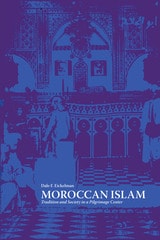
Moroccan Islam
Tradition and Society in a Pilgrimage CenterBy Dale F. Eickelman
University of Texas Press, 1976
This book is one of the first comprehensive studies of Islam as locally understood in the Middle East. Specifically, it is concerned with the prevalent North African belief that certain men, called marabouts, have a special relation to God that enables them to serve as intermediaries and to influence the well-being of their clients and kin. Dale F. Eickelman examines the Moroccan pilgrimage center of Boujad and unpublished Moroccan and French archival materials related to it to show how popular Islam has been modified by its adherents to accommodate new social and economic realities. In the course of his analysis he demonstrates the necessary interrelationship between social history and the anthropological study of symbolism.
Eickelman begins with an outline of the early development of Islam in Morocco, emphasizing the "maraboutic crisis" of the fourteenth through sixteenth centuries. He also examines the history and social characteristics of the Sherqawi religious lodge, on which the study focuses, in preprotectorate Morocco. In the central portion of the book, he analyzes the economic activities and social institutions of Boujad and its rural hinterland, as well as some basic assumptions the townspeople and tribesmen make about the social order. Finally, there is an intensive discussion of maraboutism as a phenomenon and the changing local character of Islam in Morocco.
In focusing on the "folk" level of Islam, rather than on "high culture" tradition, the author has made possible a more general interpretation of Moroccan society that is in contrast with earlier accounts that postulated a marked discontinuity between tribe and town, past and present.
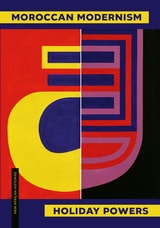
Moroccan Modernism
Holiday Powers
Ohio University Press, 2024
In the years after independence, new art forms and practices flourished at the Casablanca École des beaux-arts, transforming the colonial relic into a wellspring of Moroccan modernism. Casablanca School artists, including Farid Belkahia, Mohammed Chebaa, and Mohammed Melehi, defined the modernist movement in Morocco. Their visual arts activism was displayed at their iconic outdoor exhibition in the Djemaa al-Fna plaza in Marrakech, in their collaborations with the cultural and political journal Souffles, through their radical anticolonial pedagogy, and through their use of abstraction to expand the horizons of postcolonial national culture.
In Moroccan Modernism, Holiday Powers argues that the pedagogy and transnational solidarities of this generation of artists were intrinsic to their broader artistic projects. She advances a novel reading of Moroccan modernism that is rooted in its cosmopolitan national context and in Pan-Africanism and Pan-Arabism, the transnational anticolonial intellectual movements that defined the era.
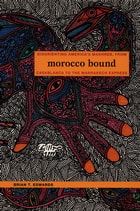
Morocco Bound
Disorienting America's Maghreb, from Casablanca to the Marrakech ExpressBrian T. Edwards
Duke University Press, 2005
Edwards reads a broad range of texts to recuperate the disorienting possibilities for rethinking American empire. Examining work by William Burroughs, Jane Bowles, Ernie Pyle, A. J. Liebling, Jane Kramer, Alfred Hitchcock, Clifford Geertz, James Michener, Ornette Coleman, General George S. Patton, and others, he puts American texts in conversation with an archive of Maghrebi responses. Whether considering Warner Brothers’ marketing of the movie Casablanca in 1942, journalistic representations of Tangier as a city of excess and queerness, Paul Bowles’s collaboration with the Moroccan artist Mohammed Mrabet, the hippie communities in and around Marrakech in the 1960s and early 1970s, or the writings of young American anthropologists working nearby at the same time, Edwards illuminates the circulation of American texts, their relationship to Maghrebi history, and the ways they might be read so as to reimagine the role of American culture in the world.
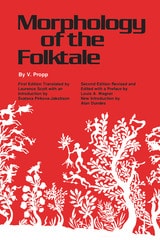
Morphology of the Folktale
Second EditionBy V. Propp
University of Texas Press, 1968

Morrissey
Fandom, Representations and IdentitiesEdited by Eoin Devereux, Aileen Dillane, and Martin Power
Intellect Books, 2011
An influential star of British pop for more than three decades, Morrissey is known for his outspoken and often controversial views on class, ethnicity, and sexuality. Among critics and his many fans, he has long been seen as an anti-establishment figure who continues to provoke devotion, argument, and spirited debate.
This is the first collection of academic essays to focus exclusively on Morrissey’s solo career, and this important book offers a nuanced and rich reading of his highly influential creative and cultural output. Covering a broad range of academic disciplines and approaches, including musicology, ethnography, sociology, and cultural studies, these essays will be a must for fans of Morrissey or the Smiths, or those seeking to make sense of the many fascinating complexities of this global icon and controversial figure.

Mortal Kombat
Games of DeathDavid Church
University of Michigan Press, 2022
This book traces Mortal Kombat’s history as an American product inspired by both Japanese video games and Chinese martial-arts cinema, its successes and struggles in adapting to new market trends, and the ongoing influence of its secret-strewn narrative world. After outlining the specific elements of gameplay that differentiated Mortal Kombat from its competitors in the coin-op market, David Church examines the various martial-arts films that inspired its Orientalist imagery, helping explain its stereotypical uses of race and gender. He also posits the games as a cultural landmark from a moment when public policy attempted to intervene in both the remediation of cinematic aesthetics within interactive digital games and in the transition of public gaming spaces into the domestic sphere. Finally, the book explores how the franchise attempted to conquer other forms of media in the 1990s, lost ground to a new generation of 3D games in the 2000s, and has successfully rebooted itself in the 2010s to reclaim its legacy.
Mortal Men
Living with Asymptomatic HIVMac Intyre, Richard
Rutgers University Press, 1999

Mortal Stakes
Hunters and Hunting in Contemporary AmericaJan E. Dizard
University of Massachusetts Press, 2003
Each autumn, millions of men and increasing numbers of women don camouflage or blaze orange outfits and go afield in pursuit of game. For much of American history, there was no need to explain why they did this. Hunting was simply another aspect of the annual cycle of planting, breeding, and harvesting. But modern hunting began separating from its agrarian roots well over a century ago, and although it has retained its connection to the metaphor of the harvest, the self-perceptions and motives of hunters today are no longer transparent, especially to nonhunters. Indeed, hunting—and those who hunt—have become targets of a vocal and growing array of critics.
In Mortal Stakes, Jan E. Dizard examines the place of hunting in contemporary America. Drawing on detailed interviews with hunters as well as opinion surveys and demographic statistics, he analyzes the meanings these men and women attach to hunting and situates this traditional activity in its current setting. He looks at who hunts, how they compare socially and politically with nonhunters, and how they see themselves and are seen by others.
With fewer and fewer Americans closely linked to the land, hunting seems less ordinary and less necessary. As the gulf between hunters and nonhunters widens, hunters have begun to think of themselves as a minority group which, like other minorities, suffers from prejudice and stereotyping. As a result, Dizard argues, hunting is fast becoming one more front in an expanding “culture war” over what it means to be an American.
Mortuary Landscapes of the Classic Maya
Rituals of Body and SoulBy Andrew K. Scherer
University of Texas Press, 2015
From the tombs of the elite to the graves of commoners, mortuary remains offer rich insights into Classic Maya society. In Mortuary Landscapes of the Classic Maya: Rituals of Body and Soul, the anthropological archaeologist and bioarchaeologist Andrew K. Scherer explores the broad range of burial practices among the Maya of the Classic period (AD 250–900), integrating information gleaned from his own fieldwork with insights from the fields of iconography, epigraphy, and ethnography to illuminate this society’s rich funerary traditions.
Scherer’s study of burials along the Usumacinta River at the Mexican-Guatemalan border and in the Central Petén region of Guatemala—areas that include Piedras Negras, El Kinel, Tecolote, El Zotz, and Yaxha—reveals commonalities and differences among royal, elite, and commoner mortuary practices. By analyzing skeletons containing dental and cranial modifications, as well as the adornments of interred bodies, Scherer probes Classic Maya conceptions of body, wellness, and the afterlife.
Scherer also moves beyond the body to look at the spatial orientation of the burials and their integration into the architecture of Maya communities. Taking a unique interdisciplinary approach, the author examines how Classic Maya deathways can expand our understanding of this society’s beliefs and traditions, making Mortuary Landscapes of the Classic Maya an important step forward in Mesoamerican archeology.
Mortuary Practices and Social Differentiation at Casas Grandes, Chihuahua, Mexico
John C. Ravesloot
University of Arizona Press, 1988
Moses Mendelssohn
Writings on Judaism, Christianity, and the BibleEdited by Michah Gottlieb
Brandeis University Press, 2011
Moses and the Monster and Miss Anne
Carole C. Marks
University of Illinois Press, 2008
All three women lived for a time in close proximity on the Eastern Shore of Maryland, an isolated region that thrived on tobacco and then lost it, procured slaves and then lost them, and produced strong-minded women and then condemned them. Though they never actually met, and their backgrounds and beliefs differed drastically, these women's lives converged through their active experiences of the conflict over slavery in Maryland and beyond, the uncertainties of economic transformation, the struggles in the legal foundation of slavery and, most of all, the growing dispute in gender relations in America.
Throughout this book, Carole C. Marks gleans historical fact and sociological insight from the persistent myths and exaggerations that color the women's legacies, and she investigates the common roots and motivations of three remarkable figures who bucked the era's expectations for women. She also considers how each woman's public identity reflected changing ideas of domesticity and the public sphere, spirituality, and legal rights and limitations. Cannon, Carroll, and Tubman, each in her own way, passionately fought for the future of Maryland and the United States, and from these unique vantage points, Moses and the Monster and Miss Anne portrays the intersecting and conflicting forces of race, economics, and gender that threatened to rend a nation apart.
Mosques in the Metropolis
Incivility, Caste, and Contention in EuropeElisabeth Becker
University of Chicago Press, 2021
Mosquito Work
Vectors of Global HealthAnn H. Kelly and Javier Lezaun
Duke University Press, 2026
Mother Ann Lee
Morning Star of the ShakersNardi Reeder Campion
Brandeis University Press, 2026
The definitive biography of the founder of the Shaker movement, whose remarkable life is the subject of a new film, The Testament of Ann Lee.
This acclaimed, accessible, and thoroughly researched biography documents the life of Ann Lee, a controversial, religious leader and early feminist figure. Lee established the Shaker movement in 1770 in Manchester, England. The core principles of the Shakers were radical: in an era when wives were the possession of their husband, Lee proclaimed the equality of men and women. The Shakers were dedicated to beliefs in absolute pacifism, equality of the sexes, absolute celibacy, and the cleansing of sin through dancing and chanting to shake away the past.
The Shakers sought inner peace and harmony, but their unusual beliefs, including total abstinence from sex and their exhibitions of mystical ecstasy were considered suspect and led to the imprisonment of Lee and her followers. While jailed, Lee experienced a blinding, soul-splitting vision which reaffirmed her belief in celibacy and named her the second coming of Christ. Seeking religious freedom, she led her followers, known as the United Society of Believers in Christ’s Second Appearing, from England to settle in upstate New York, near Albany.
Mother Ann Lee died in 1784, but her movement continued to grow into the nineteenth century with at least eighteen utopian Shaker communities in Kentucky, Maine, Massachusetts, New Hampshire, New York, and Ohio. Today many of those Shaker settlements are museums. The last remaining Shaker community is at Sabbathday Lake Shaker Village near Poland, Maine. The Testament of Ann Lee, starring Amanda Seyfried, drew on this book among other sources to tell Lee’s story.
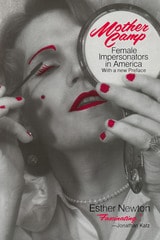
Mother Camp
Female Impersonators in AmericaEsther Newton
University of Chicago Press, 1979
"Newton's fascinating book shows how study of the extraordinary can brilliantly illuminate the ordinary—that social-sexual division of personality, appearance, and activity we usually take for granted."—Jonathan Katz, author of Gay American History
"A trenchant statement of the social force and arbitrary nature of gender roles."—Martin S. Weinberg, Contemporary Sociology
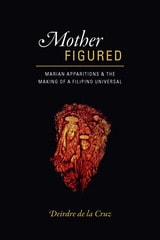
Mother Figured
Marian Apparitions and the Making of a Filipino UniversalDeirdre de la Cruz
University of Chicago Press, 2015
In Mother Figured, historical anthropologist Deirdre de la Cruz offers a detailed examination of several appearances and miracles of the Virgin Mary in the Philippines from materials and sites ranging from the mid-nineteenth century to the present. By analyzing the effects of the mass media on the perception and proliferation of apparition phenomena, de la Cruz charts the intriguing emergence of new voices in the Philippines that are broadcasting Marian discourse globally. Based on two years of ethnographic fieldwork and hitherto unexplored archives in the Philippines, the United States, and Spain, Mother Figured documents the conditions of Marian devotion’s modern development and tracks how it has transformed Filipinos’ social and political role within the greater Catholic world.
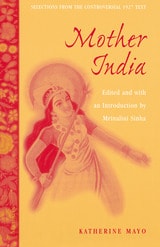
Mother India
Selections from the Controversial 1927 Text, Edited and with an Introduction by Mrinalini SinhaKatherine Mayo
University of Michigan Press, 2000
Mrinalini's Sinha's edition provides selections of this controversial book and commentary on the Mother India phenomenon. It also reprints a range of responses from Mayo's contemporaries. Sinha's edition works to locate the book and the controversy it incited in the context of U.S. domestic, British Imperial, and Indian nationalist politics. Unlike previous editions, Sinha's examines the history of cultural feminisms and the relations between women's movements in the United States, Britain, and India; the examination of these different movements reveals intriguing insights into the nature of the varied reactions to Mayo's book. The edition includes several formerly obscure contemporary responses to Mother India from representatives of the women's movement and of the anti-caste movement in India.
Intended as a tool for students and teachers alike, this book will be an important text in the field of women's studies, cultural studies, political science, history, and religion, among others.
Mrinalini Sinha is Associate Professor of History, Southern Illinois University. She is the author of Colonial Masculinity: The 'Manly Englishman' and the 'Effeminate Bengali' in the Late Nineteenth Century.
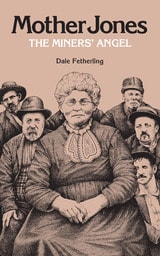
Mother Jones, The Miners' Angel
Dale Fetherling
Southern Illinois University Press, 1979
For half a century Mother Jones took up the workingman’s cause without question and fought his battles without compromise. Dale Fetherling’s biography for the first time gives her full story, with eloquence and sympathetic understanding.
Mother Tongues of the High Andes
Gender, Language, and Indigenous Difference in PeruSandhya Krittika Narayanan
University of Arizona Press, 2025
Anthropologist Sandhya Krittika Narayanan begins with these challenges, and asks: What does it mean to be a Quechua or Aymara speaker in Puno today? What does it mean to be an Indigenous ethnic Quechua or Aymara individual?
Mother Tongues of the High Andes opens with these questions, exploring what Quechua and Aymara languages and identities mean for Indigenous puneños as they navigate their past and present. Narayanan argues that understanding inter-Indigenous linguistic and social differences involves examining Indigenous gender roles, responsibilities, and linguistic practices, particularly those of Indigenous puneña women. She shows how these practices have contributed to the maintenance of Indigenous multilingualism and continuity in local modes of understanding Indigenous identity and difference.
Even as ideologies around Indigenous identity and linguistic practices shift due to global discourses on Indigenous ethnic identity and nationalism, Indigenous women continue to play a crucial role, promoting new ways to speak and think about Quechua and Aymara linguistic differences, making the Indigenous roots and histories of Puno recognizable to a global audience. Through a comprehensive ethnographic exploration of gender, language, and Indigenous difference, Narayanan shows how the linguistic and social practices of Indigenous puneña women both contest and reaffirm competing visions of Quechua and Aymara linguistic identity and authority.

Mother of Detective Fiction
The Life and Works of Anna Katharine GreenPatricia D. Maida
University of Wisconsin Press, 1989
In examining the life and works of Anna Katharine Green, one discovers a slice of American life: in the social events of New York City, in the plight of young working women, in the moral dilemmas of upright citizens pursuing the American dream.
Mother of the Blues
A Study of Ma RaineySandra R. Lieb
University of Massachusetts Press, 1981
Mother of the Blues is the first substantive biography of Gertrude "Ma" Rainey, the pioneering blues vocalist that dominated blues in the 1920s. Through a comprehensive study of Rainey's remarkable career, Sandra R. Lieb analyzes how Rainey combined African American folk traditions with emerging blues styles to help establish and popularize the blues as a national musical phenomenon in the early twentieth century. With close attention to Rainey's recordings, performances, and cultural significance as a Black female artist, Lieb explores the impact of Ma Rainey distinctive deep-throated voice, mesmerizing presence, and songs of love, desire, sexuality, and society in American music history and blues culture.
Mother-Work
Women, Child Welfare, and the State, 1890-1930Molly Ladd-Taylor
University of Illinois Press, 1994
Early in the twentieth century, maternal and child welfare evolved from a private family responsibility into a matter of national policy. Molly Ladd-Taylor explores both the private and public aspects of child-rearing, using the relationship between them to cast new light on the histories of motherhood, the welfare state, and women's activism in the United States.
Ladd-Taylor argues that mother-work, "women's unpaid work of reproduction and caregiving," motivated women's public activism and "maternalist" ideology. Mothering experiences led women to become active in the development of public health, education, and welfare services. In turn, the advent of these services altered mothering in many ways, including the reduction of the infant mortality rate.

Motherhood in Bondage
Foreword by Margaret MarshMargaret Sanger
The Ohio State University Press, 2000
In Motherhood in Bondage, first published in 1928, Sanger reproduced letters written to her from women and sometimes men from all over the country, in both urban and rural areas, who were seeking advice on reproductive matters and marital relations, but mostly imploring her to help them find ways to avoid more pregnancies. The letters are grouped by theme into sixteen chapters, and Sanger wrote an introduction to each chapter. With clear relevance to the current post-Roe moment, these pleas to Sanger for advice on avoiding unwanted pregnancy dramatically detail the desperation for reproductive agency when birth control was unknown, withheld, or otherwise inaccessible.
In her foreword for this edition, Margaret Marsh describes the controversies surrounding these letters and places them in their historical context.
Mothering Across Cultures
Postcolonial RepresentationsAngelita Reyes
University of Minnesota Press, 2001
A multifaceted exploration of memory, mothering, literature, and postcoloniality.
Blending the personal and the historical, the practical and the theoretical, Angelita Reyes draws on a wide range of texts from Africa and the African diaspora to establish mothering as a paradigm of progressive feminisms. Reyes creates a comparative dialogue among the fictions of five postcolonial women writers: Toni Morrison, Paule Marshall, Simone Schwarz-Bart, Jean Rhys, and Mariama Bâ.
Reyes discusses the theme of mothering as a human reality, as a paradigm for cultural crossings, and as what she refers to as autobiographical memory-telling. Not only does her work explore the fraught relationships among memory, history, and mothering, but it also questions conventional ways of approaching the often fragmented testimony and artifacts of the lives of women of African descent. Finally, Reyes uses memory-telling to present the autobiography of her own mother, whose extended American family said she "married a Spanish Negro who don’t speak good English." Her blending of authorial, critical, historical, and autobiographical voices in this work extends our understanding of the cross-cultural ideas of mothering.
Mothering Inner-City Children
The Early School YearsKatherine Brown Rosier
Rutgers University Press, 2000
There are few groups more stereotyped and demonized than "welfare mothers," particularly low-income, African American women raising children in the inner city. But what are the day-to-day stories behind the stereotypes? How do African American mothers (both single women and those living with a partner) in poor families handle their roles as parents? What support networks do they rely on to help raise their children? How do their personal histories affect their parenting styles?
Sociologist Katherine Brown Rosier spent three years interviewing and observing Indianapolis mothers as their children made the transition from a Head Start program to kindergarten and through second grade, analyzing the families in their homes, schools, and other social settings. She brings forth the voices of the mothers, children, and their teachers, providing a multifaceted picture of how low-income African American families cope with the daily pressures and responsibilities of child rearing.
Rosier also examines how larger socio-economic factors influence these families' specific circumstances and histories. What child-rearing strategies do these mothers employ, she asks, to promote a smooth transition into school despite complex discontinuities among their homes, schools, and communities? How are these strategies viewed and supported or impeded by teachers, family, friends, and neighbors?
Until now, most research on poor African American families has focused so intently on the problems confronted by this seemingly homogenous group that the routine practices of every day life have been ignored. In this unique project, Rosier allows the families' individual experiences and thoughts to contribute to and complicate current research.

Mothering Without A Compass
White Mother’s Love, Black Son’s CourageBecky Thompson
University of Minnesota Press, 2000
A lively meditation on creating a multiracial family.
In 1997, Becky Thompson began parenting nine-year-old Adrian at the request of his mother, and her life changed forever. Mothering without a Compass is the moving story of her first year as the white lesbian "sudden-mother" of an African American boy. From the everyday yet sometimes overwhelming tasks of finding Adrian a school and debating the significance of action figures, to unexpected discussions about who pays whom at the sperm bank, to the more complicated matters of racism, sexuality, nontraditional families, open adoption, love, and loss, Thompson gives us an absorbing and often humorous account of her attempt at antiracist, multicultural parenting.
Mothering without a Compass highlights a range of issues and experiences: Thompson’s desire to be a good mother while holding on to her sense of self; her growing, detailed knowledge of the ways in which racism affects people’s feelings about themselves and the world around them; her increasing appreciation of the inner life of a child; her realization that mothering forces her to confront her own vulnerabilities and past losses. The book opens with Adrian’s arrival and ends with a visit from Adrian’s biological mother, during which she and Thompson search for ways to respect each other as parents across racial, religious, and cultural divides.Mothering without a Compass relates a lesbian parent’s struggle to help her child grow up and describes the complexities facing children who have more than one family. This candid, personal story shows that it is through everyday life that questions about race, class, gender, and sexuality are often played out. It is a necessary book for all parents-for anyone concerned with the challenge of raising justice-minded children in a complicated world.
Mothering and Motherhood in Ancient Greece and Rome
Edited by Lauren Hackworth Petersen and Patricia Salzman-Mitchell
University of Texas Press, 2012
Motherhood played a central role in ancient Greece and Rome, despite the virtual absence of female participation in the public spheres of life. Mothers could wield enormous influence as the reproductive bodies of society and, in many cases, of culture. Yet motherhood and acts of mothering have received relatively little focused and sustained attention by modern scholars, who have concentrated almost exclusively on analyzing depictions of ancient women more generally.
In this volume, experts from across the humanities present a wealth of evidence from legal, literary, and medical texts, as well as art, architecture, ritual, and material culture, to reveal the multilayered dimensions of motherhood in both Greece and Rome and to confront the fact that not all mothers and acts of mothering can be easily categorized. The authors consider a variety of mothers—from the mythical to the real, from empress to prostitute, and from citizen to foreigner—to expose both the mundane and the ideologically charged lives of mothers in the Classical world. Some essays focus on motherhood as a largely private (emotional, intimate) experience, while others explore the ramifications of public, oftentimes politicized, displays of motherhood. This state-of-the art look at mothers and mothering in the ancient world also takes on a contemporary relevance as the authors join current debates on motherhood and suggest links between the lives of ancient mothers and the diverse, often conflicting roles of women in modern Western society.
Mothering by Degrees
Single Mothers and the Pursuit of Postsecondary EducationDuquaine-Watson, Jillian M.
Rutgers University Press, 2017
In Mothering by Degrees, Jillian Duquaine-Watson shows how single mothers pursuing college degrees must navigate a difficult course as they attempt to reconcile their identities as single moms, college students, and in many cases, employees. They also negotiate a balance between what they think a good mother should be, and what society is telling them, and how that affects their choices to go to college, and whether to stay in college or not.
The first book length study to focus on the lives and experiences of single mothers who are college students, Mothering by Degrees points out how these women are influenced by dominant American ideologies of motherhood, and the institutional parameters of the schools they attend, and argues for increased attention to the specific ways in which the choices, challenges, and opportunities available to mothers are shaped within their specific environments, as well as the ways in which mothers help shape those environments...
Mothering for Capital
Labor, Race, and Child "Value" in NeoliberalismMaria Kromidas
Vanderbilt University Press, 2026
Mothering for Capital offers a bold new interpretation about the crisis of motherhood in neoliberalism. It documents how the drive of capital stealthily subsumes mothering, tethering women’s work, care, and socialization of children, as well as their wishes, fears, and understandings of themselves as mothers, to the imperatives of value accumulation. Through the framework of “good” parenting that maximizes the odds of a child’s “success” in a precarious future, capital orients mothers to cultivate a set of specific cognitive, social, emotional, and psychological traits that shape children as future labor power, the ideal manageable yet self-managed subject. The child is the site of capital’s most audacious aspirations—to flatten and empty human life of all that is superfluous or dangerous to capital. What is ultimately at stake, Kromidas argues, is the subordination or emancipation of the human subject, and Mothering for Capital tracks this hidden terrain of struggle.
Mothering from the Field
The Impact of Motherhood on Site-Based ResearchEdited by Bahiyyah Miallah Muhammad and Mélanie-Angela Neuilly
Rutgers University Press, 2019
Mothering from the Field offers both a mosaic of perspectives from current women scientists’ experiences of conducting field research across a variety of sub-disciplines while raising children, and an analytical framework to understand how we can redefine methodological and theoretical contributions based on mothers’ experiences in order not just to promote healthier, more inclusive, nurturing, and supportive environments in physical, life, and social sciences, but also to revolutionize how we conceptualize research.

Mothering in the Time of Coronavirus
Amy Lutz, Sujung (Crystal) Lee, and Baurzhan Bokayev
University of Massachusetts Press, 2025
When stay-at-home orders during the COVID-19 pandemic erased the division between home and school, many parents in the United States were suddenly expected to become their children’s teachers. Despite this new arrangement, older gender norms largely remained in place, and these extra child rearing responsibilities fell disproportionately on mothers. Mothering in the Time of Coronavirus explores how they juggled working, supervising at-home learning, and protecting their children’s emotional and physical health during the outbreak.
Focusing on both remote and essential workers in central New York, Amy Lutz, Sujung (Crystal) Lee, and Baurzhan Bokayev argue that the pandemic transformed an already intensive style of contemporary American child rearing, in which mothers are expected to be constantly available to meet their children’s needs even when they are working outside the home, into extremely intensive mothering. The authors investigate the consequences of this shift, and how it is influenced by issues such as class and race. They also bring attention to how and why current public policies are not conducive to the de-intensification of motherhood. Locating their study within larger intersections of gender, family, and education, they contend that to fully appreciate the broader social consequences of COVID-19, we must understand the experiences of mothers.