Results by title
22279 books match the query 'Social Science' and 1258 start with m
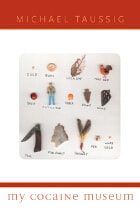
My Cocaine Museum
Michael Taussig
University of Chicago Press, 2004
Combining natural history with political history in a filmic, montage style, Taussig deploys the show-and-tell modality of a museum to engage with the inner life of heat, rain, stone, and swamp, no less than with the life of gold and cocaine.
This effort to find a poetry of words becoming things is brought to a head by the explosive qualities of those sublime fetishes of evil beauty, gold and cocaine. At its core, Taussig's museum is about the lure of forbidden things, charged substances that transgress moral codes, the distinctions we use to make sense of the world, and above all the conventional way we write stories.
My Culture, My Color, My Self
Heritage, Resilience, and Community in the Lives of Young AdultsToby S. Jenkins
Temple University Press, 2013
In her vibrant ethnography My Culture, My Color, My Self, Toby Jenkins provides engrossing, in-depth interviews and poignant snapshots of young adults talking about their lives and culture. She recounts D'Leon's dream to become a positive example for African American men, and Francheska describing how her late mother inspired her appreciation of her Boricua heritage. In these and other portraits, Jenkins considers the role that cultural education and engagement plays in enhancing educational systems, neighborhood programs, and community structures.
My Culture, My Color, My Self also features critical essays that focus on broader themes such as family bonds, education, and religion. Taken together, Jenkins shows how people of color use their culture as both a politic of social survival and a tool for social change.
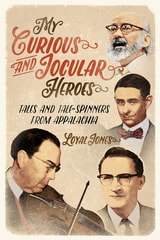
My Curious and Jocular Heroes
Tales and Tale-Spinners from AppalachiaLoyal Jones
University of Illinois Press, 2017
We stopped, and we heard the biggest racket you ever heard up in the house.
“What’s the matter, son?”
“Why, Maw and Paw are up there fightin’.”
“Who is your Paw, son?”
“Well, that’s what they are fightin’ over.”
Brimming with ballads, stories, riddles, tall tales, and great good humor, My Curious and Jocular Heroes pays homage to four people who guided and inspired Loyal Jones’s own study of Appalachian culture. His sharp-eyed portraits introduce a new generation to Bascom Lunsford, the pioneer behind the “memory collections” of song and story at Columbia University and the Library of Congress; the Sorbonne-educated collector and performer Josiah H. Combs; Cratis D. Williams, the legendary father of Appalachian studies; and the folklorist and master storyteller Leonard W. Roberts. Throughout, Jones highlights the tales, songs, jokes, and other collected nuggets that define the breadth of each man’s research and repertoire.
My Dangerous Desires
A Queer Girl Dreaming Her Way HomeAmber L. Hollibaugh
Duke University Press, 2000
In looking at themes such as the relationship between activism and desire or how sexuality can be intimately tied to one’s class identity, Hollibaugh fiercely and fearlessly analyzes her own political development as a response to her unique personal history. She explores the concept of labeling and the associated issues of categories such as butch or femme, transgender, bisexual, top or bottom, drag queen, b-girl, or drag king. The volume includes conversations with other writers, such as Deirdre English, Gayle Rubin, Jewelle Gomez, and Cherríe Moraga. From the groundbreaking article “What We’re Rollin’ Around in Bed With” to the radical “Sex Work Notes: Some Tensions of a Former Whore and a Practicing Feminist,” Hollibaugh charges ahead to describe her reality, never flinching from the truth. Dorothy Allison’s moving foreword pays tribute to a life lived in struggle by a working-class lesbian who, like herself, refuses to suppress her dangerous desires.
Having informed many of the debates that have become central to gay and lesbian activism, Hollibaugh’s work challenges her readers to speak, write, and record their desires—especially, perhaps, the most dangerous of them—“in order for us all to survive.”
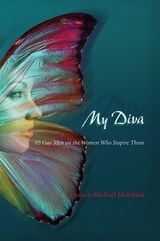
My Diva
65 Gay Men on the Women Who Inspire ThemEdited by Michael Montlack
University of Wisconsin Press, 2009
These witty and poignant short essays explore reasons for diva-worship as diverse as the writers themselves. My Diva offers both depth and glamour as it pays tribute with joy, intelligence, and fierce, fierce love.
My Eyes Feel They Need to Cry
Stories from the Formerly HomelessMartha Aladjem Bloomfield
Michigan State University Press, 2013
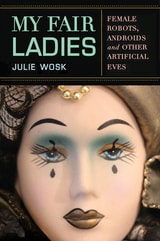
My Fair Ladies
Female Robots, Androids, and Other Artificial EvesWosk, Julie
Rutgers University Press, 2015
The fantasy of a male creator constructing his perfect woman dates back to the Greek myth of Pygmalion and Galatea. Yet as technology has advanced over the past century, the figure of the lifelike manmade woman has become nearly ubiquitous, popping up in everything from Bride of Frankenstein to Weird Science to The Stepford Wives. Now Julie Wosk takes us on a fascinating tour through this bevy of artificial women, revealing the array of cultural fantasies and fears they embody.
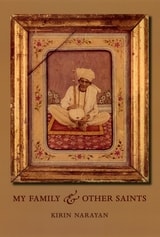
My Family and Other Saints
Kirin Narayan
University of Chicago Press, 2007
A touching, funny, and always affectionate memoir, My Family and Other Saints traces the reverberations of Rahoul's spiritual journey through the entire family. As their beachside Bombay home becomes a crossroads for Westerners seeking Eastern enlightenment, Kirin’s sari-wearing American mother wholeheartedly embraces ashrams and gurus, adopting her son’s spiritual quest as her own. Her Indian father, however, coins the term “urug”—guru spelled backward—to mock these seekers, while young Kirin, surrounded by radiant holy men, parents drifting apart, and a motley of young, often eccentric Westerners, is left to find her own answers. Deftly recreating the turbulent emotional world of her bicultural adolescence, but overlaying it with the hard-won understanding of adulthood, Narayan presents a large, rambunctious cast of quirky characters. Throughout, she brings to life not just a family but also a time when just about everyone, it seemed, was consumed by some sort of spiritual quest.
“A lovely book about the author's youth in Bombay, India. . . . The family home becomes a magnet for truth-seekers, and Narayan is there to affectionately document all of it.”—Body + Soul
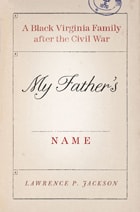
My Father's Name
A Black Virginia Family after the Civil WarLawrence P. Jackson
University of Chicago Press, 2012
My Father’s Name is a family story full of twists and turns—and one of haunting familiarity to many Americans, who may question whether the promises of emancipation have ever truly been fulfilled. It is also a resolute look at the duties that come with reclaiming and honoring Americans who survived slavery and a thoughtful meditation on its painful and enduring history.
My Father, the Messiah
A MemoirGil Z. Hochberg
Duke University Press, 2026
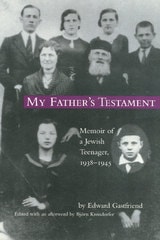
My Fathers Testament
Edward Gastfriend
Temple University Press, 1999
The accelerating Nazi assault on the Jews abruptly shattered Lolek's life. Jews were randomly beaten and arrested, forced out of their homes, deported to slave labor camps, and shot on the streets. During this time, Lolek lost his family, friends, and neighbors, the whole while struggling to hold onto a promise he made to his father before his father was deported. Lolek pledged never to denounce God and to maintain his faith. This covenant proved to be the key to his remarkable survival in several slave labor camps including Auschwitz and several satellite camps of Auschwitz-Birkenau.
My Father's Testament is an intimate portrayal of a teenage boy trying to stay alive without losing his humanity - in hiding, in the camps, and during the death marches at the end of the war.
Embedded in this unique memoir are two other stories of fathers and sons. One lies in the moving Foreword by David R. Gastfriend, Ed's son, now a psychiatrist at Harvard Medical School. The other lies in Bjorn Krondorfer's Afterword. Years after he met Edward Gastfriend, Krondorfer was startled to hear his father mention Blechhammer as one of the places where he was stationed as a young German soldier. Blechhammer was where Lolek was held in a slave labor camp. The coincidence led this German father and son to travel back to the site to confront the Holocaust.
My Father's Testament will engage readers interested in history, the Holocaust, and religion.
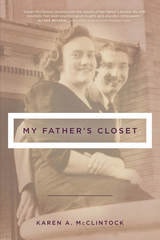
My Father’s Closet
Karen McClintock
The Ohio State University Press, 2017
“Karen McClintock reconstructs the details of her father’s double life with novelistic flair, keen psychological insight, and graceful compassion.” —Alison Bechdel
Thirty years after her father’s death, Karen McClintock sets out to find the gay father she never really knew. As we follow the unraveling family secret, we find ourselves drawn into her story as they stumble into infidelity, grieve heartbreaking losses, and remain loyal in love.
Set in Columbus, Ohio, My Father’s Closet tells the story of how just before the war, McClintock’s parents fell in love and married, while overseas in Germany the man whom she believes became her father’s lover was concealing his Jewish and gay identities in order to escape to America. A set of her father’s journals, letters her parents sent to each other during the Second World War, and a mysterious painting all lead her toward the truth about her gay father. McClintock weaves a complex secret into the fabric of lives we truly care about. And in the process, she leads us out of her father’s closet.
This gripping memoir captures the longing children feel for a distant or hidden parent and taps into the complexity of human connection and abandonment. The characters are resilient and vibrant. The hidden lovers, the nosey neighbors, and surprise lovers all show up. In the end, this extraordinary family finds ways to connect and freedom to love. Anyone who grew up with a family secret will appreciate the dynamics afoot in this fast-paced and compelling story.
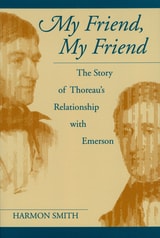
My Friend, My Friend
The Story of Thoreau's Relationship with EmersonHarmon Smith
University of Massachusetts Press, 1999
Henry David Thoreau was a twenty-year-old scholarship student at Harvard when he met Ralph Waldo Emerson in 1837. Emerson, fourteen years Thoreau's senior and independently wealthy, had recently shaken the intellectual world of New England with the publication of Nature. Despite the disparity in their circumstances, Thoreau and Emerson quickly formed a close relationship that lasted until Thoreau's death at the age of forty-four. This book tells the story of their friendship. Harmon Smith emphasizes their personal bond, but also shows how their relationship affected their thought and writing, and was in turn influenced by their careers.
Without Emerson's interest and support, it is unlikely that Thoreau could have expended the energy on writing that enabled him to achieve greatness. By inviting Thoreau into his home to live during two different periods in the 1840s, Emerson effectively made Thoreau “one of the family.” He provided him with work, lent him money, and allowed him to build a cabin on the shore of Walden Pond. Emerson also broadened Thoreau's horizon immeasurably by introducing him to an ever-widening circle of friends and colleagues.
Although the bond between Thoreau and Emerson was strong, their needs were often greatly at variance. While this led to a prolonged period of estrangement between them, they were ultimately able to reconcile their differences. Many years after Thoreau died, Emerson could look back over his long life and say that Henry had been his best friend. Since the thoughts and feelings of the two men are so well documented in their journals and letters, Smith is able to trace the pattern of their emotional involvement in great detail. What emerges is both a remarkable portrait of their relationship and an intimate look at the nature of friendship itself.
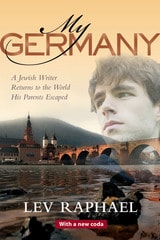
My Germany
A Jewish Writer Returns to the World His Parents EscapedLev Raphael
University of Wisconsin Press, 2009
Haunted by his parents’ horrific suffering and traumatic losses under Nazi rule, Lev Raphael grew up loathing everything German. Those feelings shaped his Jewish identity, his life, and his career. While researching his mother’s war years after her death, he discovers a distant relative living in the very city where she had worked in a slave labor camp, found freedom, and met his father. Soon after, Raphael is launched on book tours in Germany and, in the process, redefines himself as someone unafraid to face the past and let it go.
Bookmarks, “Top Ten Nonfiction Titles of 2009”
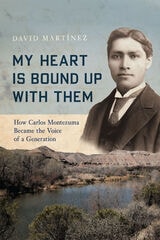
My Heart Is Bound Up with Them
How Carlos Montezuma Became the Voice of a GenerationDavid Martínez
University of Arizona Press, 2023
Through his diligent research and transcription of the letters archived in the Carlos Montezuma Collection at Arizona State University Libraries, David Martínez offers a critical new perspective on Montezuma’s biography and legacy. During an attempt to force the Fort McDowell Yavapai community off of their traditional homelands north of Phoenix, the Yavapai community members and leaders wrote to Montezuma pleading for help. It was these letters and personal correspondence from his Yavapai cousins George and Charles Dickens, as well as Mike Burns that sparked Montezuma’s desperate but principled desire to liberate his Yavapai family and community—and all Indigenous people—from the clutches of an oppressive Indian Bureau.
Centering historically neglected Indigenous voices as his primary source material, Martínez elevates Montezuma’s correspondence and interactions with his family and their community and shows how it influenced his advocacy. Martínez argues that Montezuma’s work in Arizona directly contributed to his national projects. For his Yavapai community, Montezuma set an example as a resistance fighter and advocate on behalf of his people and other Indigenous groups. Martínez offers a critical exploration of history, memory, the formation of archival collections, and the art of writing biography.
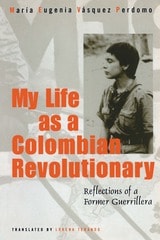
My Life As A Revolutionary
Reflections Of A Former GuerrilleraMaria Eugenia Vasquez Perdomo
Temple University Press, 2005
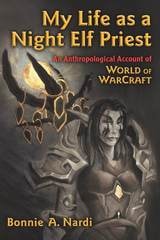
My Life as a Night Elf Priest
An Anthropological Account of World of WarcraftBonnie A. Nardi
University of Michigan Press, 2010
"Ever since the creators of the animated television show South Park turned their lovingly sardonic gaze on the massively multiplayer online game World of Warcraft for an entire episode, WoW's status as an icon of digital culture has been secure. My Life as a Night Elf Priest digs deep beneath the surface of that icon to explore the rich particulars of the World of Warcraft player's experience."
—Julian Dibbell, Wired
"World of Warcraft is the best representative of a significant new technology, art form, and sector of society: the theme-oriented virtual world. Bonnie Nardi's pioneering transnational ethnography explores this game both sensitively and systematically using the methods of cultural anthropology and aesthetics with intensive personal experience as a guild member, media teacher, and magical quest Elf."
—Lisa Nakamura, University of Illinois
World of Warcraft rapidly became one of the most popular online world games on the planet, amassing 11.5 million subscribers—officially making it an online community of gamers that had more inhabitants than the state of Ohio and was almost twice as populous as Scotland. It's a massively multiplayer online game, or MMO in gamer jargon, where each person controls a single character inside a virtual world, interacting with other people's characters and computer-controlled monsters, quest-givers, and merchants.
In My Life as a Night Elf Priest, Bonnie Nardi, a well-known ethnographer who has published extensively on how theories of what we do intersect with how we adopt and use technology, compiles more than three years of participatory research in Warcraft play and culture in the United States and China into this field study of player behavior and activity. She introduces us to her research strategy and the history, structure, and culture of Warcraft; argues for applying activity theory and theories of aesthetic experience to the study of gaming and play; and educates us on issues of gender, culture, and addiction as part of the play experience. Nardi paints a compelling portrait of what drives online gamers both in this country and in China, where she spent a month studying players in Internet cafes.
Bonnie Nardi has given us a fresh look not only at World of Warcraft but at the field of game studies as a whole. One of the first in-depth studies of a game that has become an icon of digital culture, My Life as a Night Elf Priest will capture the interest of both the gamer and the ethnographer.
Bonnie A. Nardi is an anthropologist by training and a professor in the Department of Informatics in the Donald Bren School of Information and Computer Sciences at the University of California, Irvine. Her research focus is the social implications of digital technologies. She is the author of A Small Matter of Programming: Perspectives on End User Computing and the coauthor of Information Ecologies: Using Technology with Heart and Acting with Technology: Activity Theory and Interaction Design.
Cover art by Jessica Damsky
My Life as a Spy
Investigations in a Secret Police FileKatherine Verdery
Duke University Press, 2018
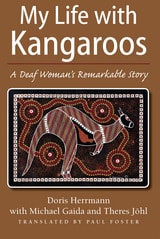
My Life with Kangaroos
A Deaf Woman’s Remarkable StoryDoris Herrmann
Gallaudet University Press, 2013
Doris Herrmann was born deaf in 1933 in Basel, Switzerland, and from the age of three, she possessed a mystical attraction to kangaroos. She recalls seeing them at that age for the first time at the Basel Zoo, and spending every spare moment visiting them from then on. Eventually, her fascination grew into passionate study of their behavior. Her dedication caught the attention of the zookeepers who provided her greater access to these extraordinary animals. Despite her challenges with communication, Herrmann wrote a scientific paper about the kangaroo’s pouch hygiene when raising a joey. Soon, experts from around the world came to visit this precocious deaf girl who knew about kangaroos.
Herrmann appreciated the opportunities opening up to her, but her real dream was to travel to Australia to study kangaroos in the wild. For years she worked and yearned, until Dr. Karl H. Winkelsträter a renowned authority on kangaroos, suggested an independent study in Australia at a place called Pebbly Beach. In 1969, at the age of 35, Herrmann finally traveled to the native land of kangaroos. During the next four decades, she would make many more trips to observe and write about kangaroos.
My Life with Kangaroos explores every facet of Herrmann’s connection to these engaging marsupials. Her single-minded devotion not only made her a leading self-made scholar on kangaroos, it transformed her own personality and her relationships with others. As she forged bonds with kangaroos named Dora, Jacqueline, Manuela, and many others, she engendered great affection and respect in the people around her, truly a remarkable story of success.
My Life with Things
The Consumer DiariesElizabeth Chin
Duke University Press, 2016
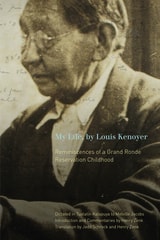
My Life, by Louis Kenoyer
Reminiscences of a Grand Ronde Reservation ChildhoodLouis Kenoyer
Oregon State University Press, 2017
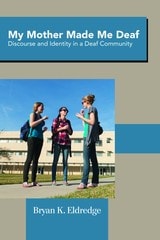
My Mother Made Me Deaf
Discourse and Identity in a Deaf CommunityBryan K. Eldredge
Gallaudet University Press, 2017
Bryan K. Eldredge seeks to more precisely understand the relationship between ASL use and Deaf identity using the tools of linguistic anthropology. In this work, he presents research resulting from fieldwork with the Deaf community of Utah Valley. Through informal interactions and formal interviews, he explores the role of discourse in the projection and construction of Deaf identities and, conversely, considers how ideas about language affect the discourse that shapes identities. He finds that specific linguistic ideologies exist that valorize some forms of language over others and that certain forms of ASL serve to establish a culturally Deaf identity. My Mother Made Me Deaf demonstrates that the DEAF-WORLD consists of a multitude of experiences and ways of being even as it is bound together by certain essential elements that are common to Deaf people.
My Mother’s Funeral
Adriana Páramo
CavanKerry Press, 2013
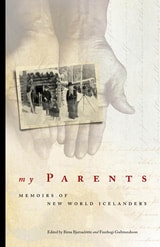
My Parents
Memoirs of New World IcelandersBirna Bjarnadottir
University of Manitoba Press, 2007
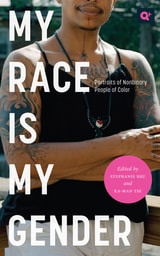
My Race Is My Gender
Portraits of Nonbinary People of ColorStephanie Hsu
Rutgers University Press, 2024
Genderqueer and nonbinary people of color often experience increased marginalization, belonging to an ethnic group that seldom recognizes their gender identity and a queer community that subscribes to white norms. Yet for this very reason, they have a lot to teach about how racial, sexual, and gender identities intersect. Their experiences of challenging social boundaries demonstrate how queer communities can become more inclusive and how the recognition of nonbinary genders can be an anti-racist practice.
My Race is My Gender is the first anthology by nonbinary writers of color to include photography and visual portraits, centering their everyday experiences of negotiating intersectional identities. While informed by queer theory and critical race theory, the authors share their personal stories in accessible language. Bringing together Black, Indigenous, Latine, and Asian perspectives, its six contributors present an intergenerational look at what it means to belong to marginalized queer communities in the U.S. and feel solidarity with a global majority at the same time. They also provide useful insights into how genderqueer and nonbinary activism can both energize and be fueled by such racial justice movements as Black Lives Matter.
My Sense of Silence
Memoirs of a Childhood with DeafnessLennard J. Davis
University of Illinois Press, 1999
Selected as an "Editors Choice" by the Chicago Tribune
Lennard J. Davis grew up as the hearing child of deaf parents. In this candid, affecting, and often funny memoir, he recalls the joys and confusions of this special world, especially his complex and sometimes difficult relationships with his working-class Jewish immigrant parents. Gracefully slipping through memory, regret, longing, and redemption, My Sense of Silence is an eloquent remembrance of human ties and human failings.
My Seven Mothers
Making a Family in the Danish Women's MovementPernille Ipsen
University of Minnesota Press, 2025
Seven women raise a child together while redefining their place in society at the beginning of the Women’s Movement in Denmark in the 1970s
On New Year’s Eve in Copenhagen in 1972, seven women had a child together: one gave birth and six others attended. They had met a year earlier at a feminist women’s camp on a small island and now, with about twenty other women’s liberationists, they occupied three dilapidated apartment buildings in the center of Copenhagen. One became the country’s first Women’s House, the nerve center of the Women’s Movement in Denmark, and the other two were women-only communal living spaces that were Pernille Ipsen’s first home. In this intimate portrait of life during the exhilarating early days of women’s liberation in Scandinavia and dramatic social change around the globe, she tells the stories of these seven women, her seven mothers.
Recounting her mothers’ history—from the passions and beliefs they shared to the political divisions over sexual identity that ultimately split them apart—Ipsen captures the individuality of each of her mothers as well as the common experiences that drew them together. As she deftly reflects the practical and emotional realities of her mothers’ women-centered life, Ipsen presents an engrossing picture of intersecting lives that, half a century ago, raised questions we still grapple with today: What is a family? Who is a woman? And who gets to decide?
A chronicle of gender, sexuality, and feminism as it was constructed, contested, and lived, My Seven Mothers is an eye-opening account of the challenges and possibilities connected with liberation and radical social change during the 1970s. In this time of fierce struggles over family, sexuality, and child-rearing, it reminds us that new worlds are always possible.
My Sisters Telegraphic
Women in the Telegraph Office, 1846–1950Thomas C. Jepsen
Ohio University Press, 2000
The role of the telegraph operator in the mid-nineteenth century was like that of today’s software programmer/analyst, according to independent scholar Tom Jepsen, who notes that in the “cyberspace” of long ago, male operators were often surprised to learn that the “first-class man” on the other end of the wire was a woman.
Like the computer, the telegraph caused a technological revolution. The telegraph soon worked synergistically with the era’s other mass-scale technology, the railroad, to share facilities as well as provide communications to help trains run on time.
The strategic nature of the telegraph in the Civil War opened opportunities for women, but tension arose as men began to return from military service. However, women telegraphers did not affect male employment or wage levels. Women kept their jobs after the war with support from industry—Western Union in particular—and because they defended and justified their role.
“Although women were predominantly employed in lower-paying positions and in rural offices, women who persisted and made a career of the profession could work up to managerial or senior technical positions that, except for wage discrimination, were identical to those of their male counterparts,” writes Jepsen. “Telegraphy as an occupation became gendered, in the sense that we understand today, only after the introduction of the teletype and the creation of a separate role for women teletype operators.”
My Sisters Telegraphic is a fresh introduction to this pivotal communications technology and its unsung women workers, long neglected by labor and social historians.
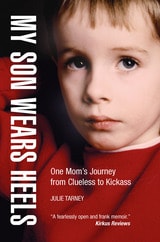
My Son Wears Heels
One Mom's Journey from Clueless to KickassJulie Tarney, Foreword by Diane Ehrensaft
University of Wisconsin Press, 2016
Julie had no idea what that meant. She felt disoriented. Wasn’t it her role to encourage and support her child? Surely she had to set some limits to his self-expression—or did she? Would he be bullied? Could she do the right thing? What was the right thing?
The internet was no help, because there was no internet. And there were zero books for a mom scrambling to understand a toddler who had definite ideas about his gender, regardless of how Nature had endowed him. Terms such as transgender, gender nonconforming, and gender creative were rare or nonexistent.
There were, however, mainstream experts who theorized that a “sissy” boy was the result of a domineering mother. Julie couldn’t believe it. She didn’t want to care what her neighbors thought, but she did care. “Domineering mother” meant controlling mother. It meant bad mother. It meant her mother.
Lacking a positive role model of her own, and fearful of being judged as a mom who was making her son “too feminine,” Julie embarked on an unexpected parenting path. Despite some missteps, and with no map to guide her, she learned to rely on her instincts. She listened carefully, kept an open mind, and as long as Harry was happy, she let him lead the way. Julie eventually realized that Harry knew who he was all along. Her job was simply to love and support him unconditionally, allowing him to be his authentic self. This story of a mother embracing her child’s uniqueness and her own will resonate with all families.
Winner, inaugural BeOUT Award for LGBTQ Visibility, awarded by Milwaukee Pride
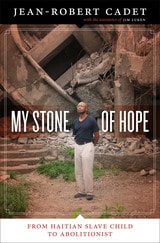
My Stone of Hope
From Haitian Slave Child to AbolitionistBy Jean-Robert Cadet
University of Texas Press, 2011
There are 27 million slaves living in the world today—more than at any time in history. Three hundred thousand of them are impoverished children in Haiti, who "stay with" families as unpaid and uneducated domestic workers, subject to physical, emotional, and sexual abuse. This practice, known locally as restavek ("staying with"), is so widespread that one in ten Haitian children is caught up in this form of slavery.
Jean-Robert Cadet was a restavek in Haiti from the late 1950s until the early 1970s. He told the harrowing story of his youth in Restavec: From Haitian Slave Child to Middle-Class American—a landmark book that exposed ongoing child slavery in Haiti. Now in My Stone of Hope, Cadet continues his story from his early attempts to adjust to freedom in American society to his current life mission of eliminating child slavery through advocacy and education. As he recounts his own struggles to surmount the psychological wounds of slavery, Cadet puts a human face on the suffering that hundreds of thousands of Haitians still endure daily. He also builds a convincing case that child slavery is not just one among many problems that Haiti faces as the Western Hemisphere's poorest nation. Rather, he argues that the systematic abuse of so many of its children is Haiti's fundamental problem, because it creates damaged adults who seem incapable of governing the country justly or managing its economy productively.
For everyone concerned about the fate of Haiti, the welfare of children, and the freedom of people around the globe, My Stone of Hope sounds an irresistible call to action.
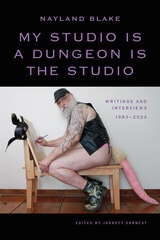
My Studio Is a Dungeon Is the Studio
Writings and Interviews, 1983–2024Nayland Blake. Edited and with an Introduction by Jarrett Earnest.
Duke University Press, 2025

My Voice Is My Weapon
Music, Nationalism, and the Poetics of Palestinian ResistanceDavid A. McDonald
Duke University Press, 2013
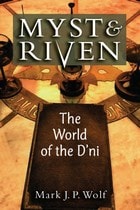
Myst and Riven
The World of the D'niMark J.P. Wolf
University of Michigan Press, 2011
“Myst and Riven is well-written, interesting, on-topic, insightful, and a real pleasure to read.”
—Edward Castronova, Indiana University
Video games have become a major cultural force, and within their history, Myst and its sequel Riven stand out as influential examples. Myst and Riven: The World of the D’ni is a close analysis of two of the most popular and significant video games in the history of the genre, investigating in detail their design, their functionality, and the gameplay experience they provide players. While scholarly close analysis has been applied to films for some time now, it has only rarely been applied at this level to video games. Mark J. P. Wolf uses elements such as graphics and sound, the games’ mood and atmosphere and how they are generated, the geography and design of the digital worlds, and the narrative structures of the games to examine their appeal to both critical and general audiences, their legacy, and what made them great.
Myst and Riven is the inaugural book in the Landmark Video Games series, edited by Mark J. P. Wolf and Bernard Perron, which is the first series to examine individual video games of historical significance.

Mysteries of Africa
Eugene Schleh
University of Wisconsin Press, 1991
Mystery Fanfare
A Composite Annotated Index to Mystery and Related Fanzines 1963–1981Michael L. Cook
University of Wisconsin Press, 1983
This work is a composite index of the complete runs of all mystery and detective fan magazines that have been published, through 1981. Added to it are indexes of many magazines of related nature. This includes magazines that are primarily oriented to boys' book collecting, the paperbacks, and the pulp magazine hero characters, since these all have a place in the mystery and detective genre.
Mystics
Presence and AporiaEdited by Michael Kessler and Christian Sheppard
University of Chicago Press, 2003
Mystics presents a collection of previously unpublished essays by prominent scholars that consider both the idea of mystics and mysticism. The contributors offer detailed discussions of a variety of mystics from history, including Dionysius the Areopagite, Thomas Aquinas, Joan of Arc, Nicholas of Cusa, Saint Teresa of Avila, Martin Luther, and George Herbert. Essays on mysticism in George Bataille, Maurice Blanchot, and contemporary technology bring the volume into the twenty-first century.
For anyone interested in the state of current thinking about mysticism, this collection will be an essential touchstone.
Contributors:
Thomas A. Carlson, Alexander Golitzin, Kevin Hart, Amy Hollywood, Michael Kessler, Jean-Luc Marion, Bernard McGinn, Françoise Meltzer, Susan Schreiner, Regina M. Schwartz, Christian Sheppard, David Tracy

Myth and Archive
A Theory of Latin American NarrativeRoberto González-Echevarría
Duke University Press, 1998
Providing ways to link literary and nonliterary narratives, González Echevarría examines a variety of archival writings—from the chronicles of the discovery and conquest of the New World to scientific travel narratives and records of criminal confessions—and explores the relationship of these writings to novels by authors such as García Márquez, Borges, Barnet, Sarmiento, Carpentier, and Garcilaso de la Vega. Moving beyond demonstrating that early forms of creative narrative had their geneses in the sixteenth-century authoritative discourse of the Spanish Empire, González Echevarría shows how this same originating process has been repeated in other key moments in the history of the Latin American narrative. He shows how the discourse of scientific discovery was the model for much nineteenth-century literature, as well as how anthropological writings on the nature of language and myth have come to shape the ideology and form of literature in the twentieth century. This most recent form of Latin American narrative creates its own mythic form through an atavistic return to its legal origins—the archive.
This acclaimed book—originally published in 1990—will be of continuing interest to historians, anthropologists, literary theorists, and students of Latin American culture.

Myth and History in the Historiography of Early Burma
Paradigms, Primary Sources, and PrejudicesMichael A. Aung-Thwin
Ohio University Press, 1998
After careful re-reading and analysis of original Old Burmese and other primary sources, the author discovered that four out of the five events considered to be the most important in the history of early Burma, and believed to have been historically accurate, are actually late-nineteenth and twentieth-century inventions of colonial historians caught in their own intellectual and political world.
Only one of these is a genuine indigenous Burmese myth, but it too has been embellished by modern historians.
The author discusses each of these five myths and concludes with an assessment of the current situation in Burma in the context of the new myths springing up today, thereby bringing the thirteenth century into the twentieth.
Myth and Scripture
Contemporary Perspectives on Religion, Language, and ImaginationDexter E. Callender, Jr.
SBL Press, 2014
An interdisciplinary collection for scholars and students interested in the connections between myth and scripture
In this collection scholars suggest that using “myth” creates a framework within which to set biblical writings in both cultural and literary comparative contexts. Reading biblical accounts alongside the religious narratives of other ancient civilizations reveals what is commonplace and shared among them. The fruit of such work widens and enriches our understanding of the nature and character of biblical texts, and the results provide fresh evidence for how biblical writings became “scripture.”
Features:
- Essays that explore how myth sheds light on the emergence of scripture
- Examples drawn from the Ancient Near East, Hebrew Bible, New Testament, and Greco-Roman world
- Articles by experts from a range of disciplines

Myth and Southern History, Volume 1
The Old SouthEdited by Patrick Gerster and Nicholas Cords
University of Illinois Press, 1989
Myth of Quetzalcoatl
Religion, Rulership, and History in the Nahua WorldAlfredo López Austin
University Press of Colorado, 2015
The Myth of Quetzalcoatl is a translation of Alfredo López Austin’s 1973 book Hombre-Dios: Religión y politica en el mundo náhuatl. Despite its pervasive and lasting influence on the study of Mesoamerican history, religion in general, and the Quetzalcoatl myth in particular, this work has not been available in English until now.
The importance of Hombre-Dios and its status as a classic arise from its interdisciplinary approach, creative use of a wide range of source material, and unsurpassed treatment of its subject—the nature and content of religious beliefs and rituals among the native populations of Mesoamerica and the manner in which they fused with and helped sanctify political authority and rulership in both the pre- and post-conquest periods. Working from a wide variety of previously neglected documentary sources, incorporating myth, archaeology, and the ethnography of contemporary Native Americans including non-Nahua peoples, López Austin traces the figure of Quetzalcoatl as a “Man-God” from pre-conquest times, while Russ Davidson’s translator’s note, Davíd Carrasco's foreword, and López Austin’s introduction place the work within the context of modern scholarship.
López Austin’s original work on Quetzalcoatl is a pivotal work in the field of anthropology, and this long-overdue English translation will be of significance to historians, anthropologists, linguists, and serious readers interested in Mesoamerica.
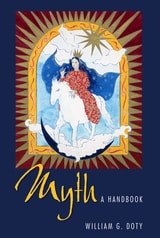
Myth
A HandbookWilliam G. Doty
University of Alabama Press, 2007
An accessible introduction to the role of myth historically and in popular culture.
Myth: A Handbook by William G. Doty is a foundational and wide-ranging exploration of myth as one of humanity’s most enduring and powerful forms of expression. Designed for students and scholars across the humanities and social sciences, this authoritative volume offers both a comprehensive introduction to myth studies and a sophisticated framework for interpreting myth in diverse cultural contexts.
Doty approaches myth not as a static body of ancient stories, but as a dynamic and evolving system of meaning—one that reflects the values, beliefs, and psychological structures of the societies that produce and preserve it. Drawing from a rich interdisciplinary base that includes anthropology, literary criticism, psychology, religious studies, and cultural theory, the book examines how myths operate symbolically, structurally, and socially. Readers are guided through major theoretical approaches to myth, from classical interpretations to modern critical frameworks, enabling them to engage thoughtfully with myth as both narrative and cultural artifact.
One of the book’s central strengths is its emphasis on methodology. Rather than presenting myth as a fixed subject, Doty equips readers with analytical tools to interpret myths across different traditions and historical periods. He explores how myths encode meaning through symbols and archetypes, how they reinforce or challenge cultural norms, and how they adapt over time to address shifting social realities. By emphasizing interpretation over simple retelling, Doty transforms myth from a collection of stories into a living field of inquiry.
The handbook also addresses key questions that continue to resonate in contemporary scholarship: What distinguishes myth from legend or folklore? How do myths shape identity—individual, communal, and national? In what ways do myths persist in modern literature, film, and popular culture? Through clear explanations and carefully structured discussions, Doty demonstrates that myth remains deeply relevant, not only in understanding ancient civilizations but also in analyzing modern narratives and cultural expressions.
Accessible yet intellectually rigorous, Myth: A Handbook has become a widely respected resource in university classrooms, providing students with the conceptual grounding needed to engage critically with mythological material. At the same time, its clarity and breadth make it valuable for general readers interested in the deeper meanings behind the stories that have shaped human thought across time and place.
Ultimately, Doty’s work reveals that myth is not confined to the past—it is an essential framework through which humans interpret experience, construct meaning, and understand their place in the world. This handbook stands as an indispensable guide to that process, illuminating the enduring significance of myth in both ancient traditions and contemporary life.
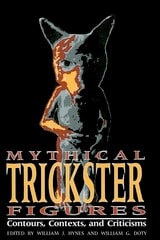
Mythical Trickster Figures
Contours, Contexts, and CriticismsEdited by William J. Hynes and William G. Doty
University of Alabama Press, 1997
The first substantial collection of essays about the trickster since 1955
Mythical Trickster Figures, is the first substantial collection of essays about the trickster to appear since Radin’s 1955 The Trickster. Contributions by leading scholars treat a wide range of manifestations of this mischievous character, ranging from the Coyote of the American Southwest to such African figures as Eshu-Elegba and Ananse, the Japanese Susa-no-o, the Greek Hermes, Christian adaptations of Saint Peter, and examples found in contemporary American fiction and drama.
The many humorous trickster stories included are fascinating in themselves, but Hynes and Doty also highlight the wide range of features of the trickster—the figure whose comic appearance often signifies that the most serious cultural values are being both challenged and enforced.
Mythography
The Study of Myths and RitualsWilliam G. Doty
University of Alabama Press, 2000
This new edition of William Doty's critically acclaimed study provides a comprehensive guidebook to the many schools of interpretation in this burgeoning field
William Doty's popular text has been hailed as the most comprehensive work of its kind. Extensively rewritten and completely restructured, the new edition provides further depth and perspective and is even more accessible to students of myth. It includes expanded coverage of postmodern and poststructuralist perspectives, the Gernet Center, mythic iconography, neo-Jungian approaches, and cultural studies, and it summarizes what is new in the study of Greek myth, iconography, French classical scholarship, and ritual studies. It also features a comprehensive index of names and topics, a glossary, an up-to-date annotated bibliography, and a guide to myth on the Internet.
Presenting all major myth theorists from antiquity to the present, Mythography is an encyclopedic work that offers a cross-disciplinary approach to the study of myth. By reflecting the dramatic increase in interest in myth among both scholars and general readers since publication of the first edition, it remains a key study of modern approaches to myth and
an essential guide to the wealth of mythographic research available today.
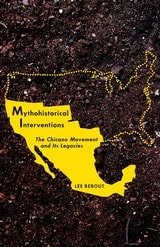
Mythohistorical Interventions
The Chicano Movement and Its LegaciesLee Bebout
University of Minnesota Press, 2010
Examining the deployment of the Aztec eagle by the United Farm Workers union, the poem Yo Soy Joaquín, the document El Plan de Santa Barbara, and icons like La Malinche and La Virgen de Guadalupe, Bebout reveals the centrality of culture to the Chicano movement. For Bebout, the active implementation of cultural narrative was strategically significant in several ways. First, it allowed disparate movement participants to imagine themselves as part of a national, and nationalist, community of resistance. Second, Chicano use of these narratives contested the images that fostered Anglo-American hegemony.
Bringing his analysis up to the present, Bebout delineates how demographic changes have, on the one hand, encouraged the possibility of a panethnic Latino community, while, on the other hand, anti-Mexican nativists attempt to resurrect Chicano myths as a foil to restrict immigration from Mexico.
Mythologies
Edited by Yves Bonnefoy
University of Chicago Press, 1991
Drawing on a breathtaking array of sources, from the history of religions to anthropology, archaeology, literature, and linguistics, the contributors define a new approach to the understanding of myth in society.
For this first English-language edition, the articles have been rearranged by region or culture. Together they comprise an exceptionally broad, stimulating introduction to the religious and mythical traditions of the world—from the idea of death in Ancient Egypt to the ideology of nationalism in modern Europe. Greeks and Romans are here in force, naturally, but so too are the Bantu, Dinka, and Dogon of Africa and the Armenians, Mongols, and Turks of Asia.
Readers of Mythologies will discover a wealth of fresh primary sources on such little known traditions as those of the Vietnamese—and bold, provocative new interpretations of well-studied traditions, such as those of classical Greece.
Mythology and Values
An Analysis of Navaho Chantway MythsBy Katherine Spencer
University of Texas Press, 1957
Mythology of the Lenape
Guide and TextsJohn Bierhorst
University of Arizona Press, 1995
This catalog of Lenape mythology, featuring synopses of all known Lenape tales, was assembled by folklorist John Bierhorst from historical sources and from material collected by linguists and ethnographers—a difficult task in light of both the paucity of research done on Lenape mythology and the fragmentation of traditional Lenape culture over the past three centuries.
Bierhorst here offers an unprecedented guide to the Lenape corpus with supporting texts. Part one of the "Guide" presents a thematic summary of the folkloric tale types and motifs found throughout the texts; part two presents a synopsis of each of the 218 Lenape narratives on record; part three lists stories of uncertain origin; and part four compares types and motifs occurring in Lenape myths with those found in myths of neighboring Algonquian and Iroquoian cultures.
In the "Texts" section of the book, Bierhorst presents previously unpublished stories collected in the early twentieth century by ethnographers M. R. Harrington and Truman Michelson. Included are two versions of the Lenape trickster cycle, narratives accounting for dance origins, Lenape views of Europeans, and tales of such traditional figures as Mother Corn and the little man of the woods called Wemategunis.
By gathering every available example of Lenape mythology, Bierhorst has produced a work that will long stand as a definitive reference. Perhaps more important, it restores to the land in which the Lenape once thrived a long-missing piece of its Native literary heritage.
Myths America Lives By
White Supremacy and the Stories That Give Us MeaningRichard T. Hughes
University of Illinois Press, 2018
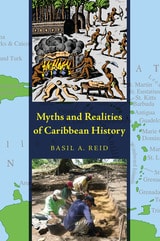
Myths and Realities of Caribbean History
Basil A. Reid
University of Alabama Press, 2009
This book seeks to debunk eleven popular and prevalent myths about Caribbean history. Using archaeological evidence, it corrects many previous misconceptions promulgated by history books and oral tradition as they specifically relate to the pre-Colonial and European-contact periods. It informs popular audiences, as well as scholars, about the current state of archaeological/historical research in the Caribbean Basin and asserts the value of that research in fostering a better understanding of the region’s past.
Contrary to popular belief, the history of the Caribbean did not begin with the arrival of Europeans in 1492. It actually started 7,000 years ago with the infusion of Archaic groups from South America and the successive migrations of other peoples from Central America for about 2,000 years thereafter. In addition to discussing this rich cultural diversity of the Antillean past, Myths and Realities of Caribbean History debates the misuse of terms such as "Arawak" and "Ciboneys," and the validity of Carib cannibalism allegations.