Results by title
3745 books match the query 'Europe' and 307 start with m
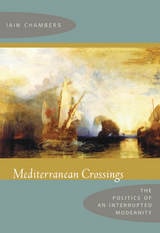
Mediterranean Crossings
The Politics of an Interrupted ModernityIain Chambers
Duke University Press, 2008
In evocative and erudite prose, Chambers renders the Mediterranean a mutable space, profoundly marked by the linguistic, literary, culinary, musical, and intellectual dissemination of Arab, Jewish, Turkish, and Latin cultures. He brings to light histories of Mediterranean crossings—of people, goods, melodies, thought—that are rarely part of orthodox understandings. Chambers writes in a style that reflects the fluidity of the exchanges that have formed the region; he segues between major historical events and local daily routines, backwards and forwards in time, and from one part of the Mediterranean to another. A sea of endlessly overlapping cultural and historical currents, the Mediterranean exceeds the immediate constraints of nationalism and inflexible identity. It offers scholars an opportunity to rethink the past and present and to imagine a future beyond the confines of Western humanistic thought.
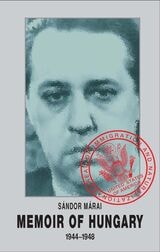
Memoir of Hungary
1944-1948Sándor Márai
Central European University Press, 1996
This scathing, at times humorous, and always insightful memoir by exiled Hungarian novelist Sándor Márai, provides one of the most poignant and human portraits of life in Hungary between the German occupation in 1944 and the solidification of communist power in 1948. Both a fervent anti-fascist and anti-communist, Márai draws a vivid portrait of the Hungarian peasantry and middle-class during this period, while delivering a telling indictment of the communist system from which he fled. Witty, aphoristic and psychologically clear-sighted, this memoir depicts the tragedy and pathos of a crucial period in the post-war history of a nation which has been 'central' to both the communists and the post-communist history of our times.
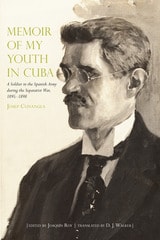
Memoir of My Youth in Cuba
A Soldier in the Spanish Army during the Separatist War, 1895–1898Dolores J. Walker
University of Alabama Press, 2017
A historically significant memoir offering a firsthand perspective on life, identity, and cultural transformation in nineteenth-century Cuba.
Memoir of My Youth in Cuba: A Soldier in the Spanish Army during the Separatist War, 1895–1898 is a translation of the memoir Memorias de mi juventud en Cuba: Un soldado del ejército español en la guerra separatista (1895–1898) by Josep Conangla. The English edition is based on the Spanish version edited by Joaquín Roy, who found the memoir and was given access to the Conangla family archives. Conangla’s memoir, now available in English, is an important addition to the accounts of Spanish and Cuban soldiers who served in Cuba’s second War of Independence.
Spaniard Josep Conangla was conscripted at the age of twenty and sent to Cuba. In the course of his time there, he reaffirmed his pacifism and support of Cuban independence. The young man was a believer who unfailingly connected his view of events to the Christian humanitarianism on which he prided himself. Conangla’s advanced education and the influence of well-placed friends facilitated his assignment to safe bureaucratic positions during the war, ensuring that he would not see combat. From his privileged position, he was a keen observer of his surroundings. He described some of the decisions he made—which at times put him at odds with the military bureaucracy he served—along with what he saw as the consequences of General Valeriano Weyler’s decree mandating the reconcentración, an early version of concentration camps. What Conangla saw fueled his revulsion at the collusion of the Spanish state and its state-sponsored religion in that policy. “Red Mass,” published six years after the War of Independence and included in his memoir, is a vivid expression in verse of his abhorrence.
Conangla’s recollections of the contacts between Spaniards and Cubans in the areas to which he was assigned reveal his ability to forge friendships even with Creole opponents of the insurrection. As an aspiring poet and writer, Conangla included material on fellow writers, Cuban and Spanish, who managed to meet and exchange ideas despite their circumstances. His accounts of the Spanish defeat, the scene in Havana around the end of the war, along with his return to Spain, are stirring.
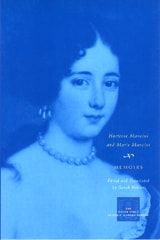
Memoirs
Marie Mancini and Hortense Mancini
University of Chicago Press, 2008
Through their writings, the Mancinis sought to rehabilitate their reputations and reclaim the right to define their public images themselves, rather than leave the stories of their lives to the intrigues of the court—and to their disgruntled ex-husbands. First translated in 1676 and 1678 and credited largely to male redactors, the two memoirs reemerge here in an accessible English translation that chronicles the beginnings of women’s rights to personal independence within the confines of an otherwise circumscribed early modern aristocratic society.
Memoirs Of A Cold War Son
Post, Gaines, Jr.
University of Iowa Press, 2000
In 1951 Gaines Post was a gangly, bespectacled, introspective teenager preparing to spend a year in Paris with his professorial father and older brother; his mother, who suffered from extreme depression, had been absent from the family for some time. Ten years later, now less gangly but no less introspective, he was finishing a two-year stint in the army in West Germany and heading toward Oxford on a Rhodes scholarship, having narrowly escaped combat in the Berlin crisis of 1961. His quietly intense coming-of-age story is both self-revealing and reflective of an entire generation of young men who came to adulthood before the Cuban Missile Crisis and the Vietnam War.
Post's experiences in high school in Madison, Wisconsin, and Paris, his Camus-influenced undergraduate years at Cornell University, and his army service in Germany are set very effectively against the events of the Cold War. McCarthyism and American crackdowns on dissidents, American foreign and military policy in Western Europe in the nuclear age, French and German life and culture, crises in Paris and Berlin that nearly bring the West to war and the Post family to dissolution—these are the larger scenes and subjects of his self-disclosure as a contemplative, conflicted "Cold War agnostic."
His intelligent, talented mother and her fragile health hover over Post's narrative, informing his hesitant relationships with women and his acutely questioning sense of self-worth. His story is strongly academic and historical as well as political and military; his perceptions and judgments lean toward no ideological extreme but remain true to the heroic ideals of his boyhood during the Second World War.
Memoirs of a Fortunate Jew
An Italian StoryDan Vittorio Segre
University of Chicago Press, 2008
“Taut and illuminating . . . memorable . . . written with the humility of he who confesses himself and with the honesty of he who bore witness.”—Primo Levi
“The writing of memoirs is a difficult art that Dan Segre fully possesses. Under his pen, history and psychology merge in one captivating narrative which illuminates the turmoils, fears and triumphs of his generation.”—Elie Wiesel
“Beautifully written. . . . [A] labyrinthine, spell-binding autobiography, full of passionate tenderness.”—New York Review of Books
“An unusually attractive book—attractive in its irony, its energy and its moral insight. Mr. Segre had some rich material to work with, and he has done it justice.”—New York Times
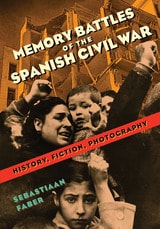
Memory Battles of the Spanish Civil War
History, Fiction, PhotographySebastiaan Faber
Vanderbilt University Press, 2017
Faber traces the curious trajectories of iconic Spanish Civil War photographs by Robert Capa, Gerda Taro, and David Seymour; critically reads a dozen recent Spanish novels and essays; interrogates basic scholarly assumptions about history, memory, and literature; and interviews nine scholars, activists, and documentarians who in the past decade and a half have helped redefine Spain's relationship to its past. In this book Faber argues that recent political developments in Spain--from the grassroots call for the recovery of historical memory to the indignados movement and the foundation of Podemos--provide an opportunity for scholars in the humanities to engage in a more activist, public, and democratic practice.
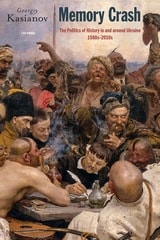
Memory Crash
Politics of History in and around Ukraine, 1980s–2010sGeorgiy Kasianov
Central European University Press, 2022
This account of historical politics in Ukraine, framed in a broader European context, shows how social, political, and cultural groups have used and misused the past from the final years of the Soviet Union to 2020. Georgiy Kasianov details practices relating to history and memory by a variety of actors, including state institutions, non-governmental organizations, political parties, historians, and local governments. He identifies the main political purposes of these practices in the construction of nation and identity, struggles for power, warfare, and international relations.
Kasianov considers the Ukrainian case in the context of a global increase in the politics of history and memory, with particular emphasis on a distinctive East-European variety. He pays special attention to the use and abuse of history in relations between Ukraine, Russia, and Poland.
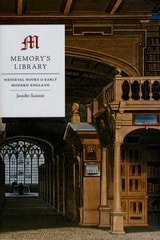
Memory's Library
Medieval Books in Early Modern EnglandJennifer Summit
University of Chicago Press, 2008
In Jennifer Summit’s account, libraries are more than inert storehouses of written tradition; they are volatile spaces that actively shape the meanings and uses of books, reading, and the past. Considering the two-hundred-year period between 1431, which saw the foundation of Duke Humfrey’s famous library, and 1631, when the great antiquarian Sir Robert Cotton died, Memory’s Library revises the history of the modern library by focusing on its origins in medieval and early modern England.
Summit argues that the medieval sources that survive in English collections are the product of a Reformation and post-Reformation struggle to redefine the past by redefining the cultural place, function, and identity of libraries. By establishing the intellectual dynamism of English libraries during this crucial period of their development, Memory’s Library demonstrates how much current discussions about the future of libraries can gain by reexamining their past.
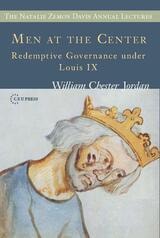
Men at the Center
Redemptive Governance under Louis IXWilliam Chester Jordan
Central European University Press, 2012
Taking Professor Natalie Zemon Davis’ fascinating biographical studies of three Women on the Margins in the seventeenth century as an inspiration, the author of this book offers three portraits of men who were at the very center of governance in thirteenth-century France, men who strove in the shadow of King Louis IX (Saint Louis) to impose a redemptive regime on the realm. Professor Jordan treats them as individuals, but in a sense they are also types: Robert of Sorbon, a churchman; Etienne Boileau, a bourgeois; and Simon de Nesle, an aristocrat. Robert was the founder of the Sorbonne; Boileau was the prévôt or royal administrator of Paris; and Simon was twice co-regent of the kingdom. Thinking about them and their relations with Louis IX opens up a new and altogether sobering vista for exploring the nature of the king’s rule and the impact of his rule on his subjects.
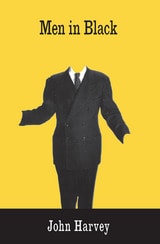
Men in Black
John Harvey
University of Chicago Press, 1995
"Why can't we pick out our own color?"
Joe:
"I tried that once, it don't work. You get four guys fighting over who's gonna be Mr. Black."
—Quentin Tarantino, Reservoir Dogs
Men's clothes went black in the nineteenth century. Dickens, Ruskin and Baudelaire all asked why it was, in an age of supreme wealth and power, that men wanted to dress as if going to a funeral. The answer is in this history of the color black. Over the last 1000 years there have been successive expansions in the wearing of black—from the Church to the Court, from the Court to the merchant class. Though black as fashion was often smart and elegant, its growth as a cultural marker was fed by several currents in Europe's history—in politics, asceticism, religious warfare. Only in the nineteenth century, however, did black fully come into its own as fashion, the most telling witnesses constantly saw connections between the taste for black and the forms of constraint with which European society regimented itself.
Concentrating on the general shift away from color that began around 1800, Harvey traces the transition to black from the court of Burgundy in the 15th century, through 16th-century Venice, 17th-century Spain and the Netherlands. He uses paintings from Van Eyck and Degas to Francis Bacon, religious art, period lithographs, wood engravings, costume books, newsphotos, movie stills and related sources in his compelling study of the meaning of color and clothes.
Although in the twentieth century tastes have moved toward new colors, black has retained its authority as well as its associations with strength and cruelty. At the same time black is still smart, and fashion keeps returning to black. It is, perhaps, the color that has come to acquire the greatest, most significant range of meaning in history.
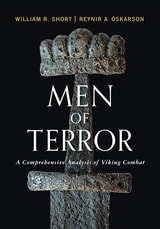
Men of Terror
A Comprehensive Analysis of Viking CombatWilliam R. Short and Reynir A. Óskarson
Westholme Publishing, 2027
Sometime near the end of the tenth century, a man named Fraði died in Sweden. His kinsmen raised a granite runestone to his memory in Denmark. The carved message appears to tell us that Fraði was “first among all Vikings” and that he was the “terror of men.” Known sources about the Vikings revolve around the constant threat of violence: literary and artistic sources from both inside and outside Viking lands, including poetry, myths, stories, and artwork; law codes; burial practices; weapons; even their ship and house architecture.
Based on nearly two decades of research, Men of Terror: A Comprehensive Analysis of Viking Combat is a richly illustrated interdisciplinary study of the heart of Viking society: weapons and combat. Relying on a vast array of sources from a wide range of fields, research scientist William R. Short and independent scholar and martial arts instructor Reynir A. Óskarson dig deep into the culture of men like Fraði to better understand the mindset and performance of Viking warriors that led them to venerate and praise acts of violence and aggression. In the process they have painstakingly reverse-engineered Viking combat to account for the archaeology we have. Along the way, they answer questions such as: Were there women warriors? Why were acts such as raiding held in such high esteem? What mundane object was the king of Viking weapons and how was it used? Could bowstrings of human hair really work? Through their comprehensive research, the authors present a holistic picture of this society from what previously had only been disparate and intriguing parts. By the end of the book, the reader will understand the importance of combat to Viking society, the nature of that combat, and the code of these “men of terror.”
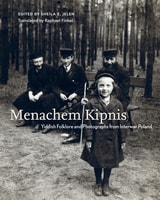
Menachem Kipnis
Yiddish Folklore and Photographs from Interwar PolandSheila E. Jelen
Rutgers University Press, 2026
Menachem Kipnis (1878–1942) was one of the early twentieth-century’s greatest Jewish eastern European ethnomusicologists, folklorists, and photographers. He had a weekly column in the Warsaw Yiddish newspaper Haynt, retelling humorous old folk stories about the fictional Polish town of Chelm, populated exclusively by fools. At the same time, his photographs of Jewish life in eastern Europe regularly appeared in the Forverts (Forward), the most popular Yiddish daily newspaper in the United States. Now, for the first time, Kipnis’s stories and photographs are published together in a single book.
Menachem Kipnis brings these photographs and stories into dialogue with one another, bridging the Jewish communities in Poland and in America during the interwar period. This dialogue, between image and text, between European metropolis and American metropolis, captures a key historical moment when American Jews sought to imagine the lives of their coreligionists in the “Old Country” and eastern European urban Jews sought to distinguish themselves from their Jewish compatriots who were still living in the shtetl. Including an introductory essay, annotations, and an epilogue by Sheila E. Jelen, Menachem Kipnis suggests new ways of understanding both visual and literary depictions of eastern European Jewish culture between the two world wars.
Mennonites, Politics, and Peoplehood
1525 to 1980James Urry
University of Manitoba Press, 2006
Merchant Class of Medieval London
1300-1500Sylvia L. Thrupp
University of Michigan Press, 1948

Merchants of Medicines
The Commerce and Coercion of Health in Britain’s Long Eighteenth CenturyZachary Dorner
University of Chicago Press, 2020
In Merchants of Medicines, Zachary Dorner follows the earliest industrial pharmaceuticals from their manufacture in the United Kingdom, across trade routes, and to the edges of empire, telling a story of what medicines were, what they did, and what they meant. He brings to life business, medical, and government records to evoke a vibrant early modern world of London laboratories, Caribbean estates, South Asian factories, New England timber camps, and ships at sea. In these settings, medicines were produced, distributed, and consumed in new ways to help confront challenges of distance, labor, and authority in colonial territories. Merchants of Medicines offers a new history of economic and medical development across early America, Britain, and South Asia, revealing the unsettlingly close ties among medicine, finance, warfare, and slavery that changed people’s expectations of their health and their bodies.

Merchants, Pirates, and Smugglers
Criminalization, Economics, and the Transformation of the Maritime World (1200–1600)Edited by Thomas Heebøll-Holm, Philipp Höhn, and Gregor Rohmann
Campus Verlag, 2019

Merton College Library
Julia C. Walworth
Bodleian Library Publishing, 2020
Drawing on the remarkable wealth of documentation in the college’s archives, this is the first history of the library to explore collections, buildings, readers, and staff across more than seven hundred years. The story is told in part through stunning color images that depict not only exceptional treasures but also the library furnishings and decorations, and which show manuscripts, books, bindings, and artifacts of different periods in their changing contexts. Featuring a historical timeline and a floor plan of the college, this book will be of interest to historians, alumni, and tourists alike.
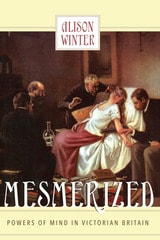
Mesmerized
Powers of Mind in Victorian BritainAlison Winter
University of Chicago Press, 1998
"Dazzling. . . . This splendid book . . . gives us a new form of historical understanding and a model for open and imaginative reading."—James R. Kinkaid, Boston Globe
"A landmark in the history of science scholarship."—John Sutherland, The Independent
"It is difficult to imagine the documentary side of the story being better done than by Winter's well-researched and generously illustrated study. . . . She is a lively and keen observer; and her book is a pleasure to read purely for its range of material and wealth of detail. . . . Fruitful and suggestive."—Daniel Karlin, Times Literary Supplement
"An ambitious, sweeping and fascinating historical study. . . . Beautifully written, thoroughly researched, and well-illustrated."—Bernard Lightman, Washington Times
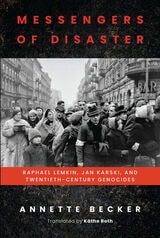
Messengers of Disaster
Raphael Lemkin, Jan Karski, and Twentieth-Century GenocidesAnnette Becker, Translated by Käthe Roth
University of Wisconsin Press, 2021
Messengers of Disaster draws upon little-known texts from an array of archives, including the International Committee of the Red Cross in Geneva and the International Tracing Service in Bad Arolsen. Carrying the knowledge of disaster took a toll on Lemkin and Karski, but their work prepared the way for the United Nations to unanimously adopt the first human rights convention in 1948 and influenced the language we use to talk about genocide today. Annette Becker's detailed study of these two important figures illuminates how distortions of fact can lead people to deny knowledge of what is happening in front of their own eyes.
Metaromanticism
Aesthetics, Literature, TheoryPaul Hamilton
University of Chicago Press, 2003
Through a close look at the aesthetics of Friedrich Schiller and Jean-Jacques Rousseau, and key works by Samuel Taylor Coleridge, Percy and Mary Shelley, John Keats, Sir Walter Scott, Jane Austen, and many others, Hamilton shows how the romantic movement's struggle with its own tenets was not an effort to seek an alternative way of thought, but instead a way of becoming what it already was. And yet, as he reveals, the romanticists were still not content with their own self-consciousness. Pushed to the limit, such contemplation either manifested itself as self-disgust or found aesthetic ideas regenerated in discourses outside of aesthetics altogether.

Metternich's Diplomacy at its Zenith, 1820-1823
Austria and the Congresses of Troppau, Laibach, and VeronaBy Paul W. Schroeder
University of Texas Press, 1962
What Metiernich wanted at the peak of his career, why he wanted it, and the methods by which he achieved his goals are questions brilliantly answered in this survey and analysis of the Austrian chancellor's diplomacy during the period when he was the pre-eminent figure in European politics.
Metternich's single-minded objective during 1820–1823 was to preserve the Austrian hegemony he had gained in Central Europe after long wars, enormous effort, and great sacrifice. If the internal security and international-power position secured by Austria at the Congress of Vienna were to be defended against the impact of widespread revolution in Europe, it was imperative that peace in Europe and the status quo be maintained. This required an unyielding opposition to all political movements that might disturb the equilibrium, especially French chauvinism and the spread of French constitutional ideas.
A one-man distillate of the doctrine of absolute monarchy, Metternich was the relentless foe of any cause, just or unjust, that threatened European repose. Hence, when the revolution in Naples seriously menaced Austrian hegemony in Italy, Metternich determined that the constitutional regime in Naples must be overthrown by an Austrian armed force, an absolute monarchy restored, and an Austrian army of occupation kept there. Nor did he scruple to use duplicity, secret negotiation, trickery, or deceit against ally and adversary alike in his effort to enlist them in the common cause of all thrones. At the Congress of Troppau, Metternich succeeded not only in defeating Russian ideas for peaceful intervention and a moderate constitution at Naples, but also in converting Tsar Alexander to thoroughly conservative views, thereby making Russia a powerful supporter of Austrian policies and knowingly alienating England, formerly Austria's closest ally.
Paul W. Schroeder brings to this bookexceptional scholarship and an objectivity hard to attain when dealing with a personality. Although Metternich, as Schroeder sees him, doubtless helped to maintain European peace and order, his real greatness consisted not in his European principles, but in his ability to defend Austrian interests under the guise of European principles. The evidence, gathered from documentary material in the Haus Hof- und Staatsarchiv in Vienna, has forced the author to the conclusion that Metternich was no real statesman. The very qualities that distinguished him as a brilliant diplomat—keen vision, cogent analysis, fertility of expedients, farsightedness, flexibility, and firmness of purpose—were converted into those of blindness to reality, superficial analysis, sterility of expedients, dogmatism, and failure of will when confronted with fundamental problems of state and society.
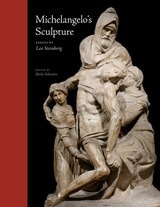
Michelangelo’s Sculpture
Selected EssaysLeo Steinberg
University of Chicago Press, 2018
For half a century, Steinberg delved into Michelangelo’s work, revealing the symbolic structures underlying the artist’s highly charged idiom. This volume of essays and unpublished lectures explicates many of Michelangelo’s most celebrated sculptures, applying principles gleaned from long, hard looking. Almost everything Steinberg wrote included passages of old-fashioned formal analysis, but here put to the service of interpretation. He understood that Michelangelo’s rendering of figures as well as their gestures and interrelations conveys an emblematic significance masquerading under the guise of naturalism. Michelangelo pushed Renaissance naturalism into the furthest reaches of metaphor, using the language of the body and its actions to express fundamental Christian tenets once expressible only by poets and preachers—or, as Steinberg put it, in Michelangelo’s art, “anatomy becomes theology.”
Michelangelo’s Sculpture is the first in a series of volumes of Steinberg’s selected writings and unpublished lectures, edited by his longtime associate Sheila Schwartz. The volume also includes a book review debunking psychoanalytic interpretation of the master’s work, a light-hearted look at Michelangelo and the medical profession and, finally, the shortest piece Steinberg ever published.

Middle English Dictionary
A.1Robert E. Lewis, Editor-in-Chief
University of Michigan Press, 1956

Middle English Dictionary
A.2Robert E. Lewis, Editor-in-Chief
University of Michigan Press, 1956

Middle English Dictionary
A.3Robert E. Lewis, Editor-in-Chief
University of Michigan Press, 1956

Middle English Dictionary
A.4Robert E. Lewis, Editor-in-Chief
University of Michigan Press, 1957

Middle English Dictionary
B.1Robert E. Lewis, Editor-in-Chief
University of Michigan Press, 1957

Middle English Dictionary
B.2Robert E. Lewis, Editor-in-Chief
University of Michigan Press, 1957

Middle English Dictionary
B.3Robert E. Lewis, Editor-in-Chief
University of Michigan Press, 1957

Middle English Dictionary
B.4Robert E. Lewis, Editor-in-Chief
University of Michigan Press, 1958

Middle English Dictionary
B.5Robert E. Lewis, Editor-in-Chief
University of Michigan Press, 1958

Middle English Dictionary
C.1Robert E. Lewis, Editor-in-Chief
University of Michigan Press, 1959

Middle English Dictionary
C.2Robert E. Lewis, Editor-in-Chief
University of Michigan Press, 1959

Middle English Dictionary
C.3Robert E. Lewis, Editor-in-Chief
University of Michigan Press, 1959

Middle English Dictionary
C.4Robert E. Lewis, Editor-in-Chief
University of Michigan Press, 1960

Middle English Dictionary
C.5Robert E. Lewis, Editor-in-Chief
University of Michigan Press, 1960

Middle English Dictionary
C.6Robert E. Lewis, Editor-in-Chief
University of Michigan Press, 1960

Middle English Dictionary
D.1Robert E. Lewis, Editor-in-Chief
University of Michigan Press, 1961

Middle English Dictionary
D.2Robert E. Lewis, Editor-in-Chief
University of Michigan Press, 1961

Middle English Dictionary
D.3Robert E. Lewis, Editor-in-Chief
University of Michigan Press, 1961

Middle English Dictionary
D.4Robert E. Lewis, Editor-in-Chief
University of Michigan Press, 1962

Middle English Dictionary
D.5Robert E. Lewis, Editor-in-Chief
University of Michigan Press, 1962

Middle English Dictionary
E.1Robert E. Lewis, Editor-in-Chief
University of Michigan Press, 1952

Middle English Dictionary
E.2Robert E. Lewis, Editor-in-Chief
University of Michigan Press, 1953

Middle English Dictionary
E.3Robert E. Lewis, Editor-in-Chief
University of Michigan Press, 1953

Middle English Dictionary
F.1Robert E. Lewis, Editor-in-Chief
University of Michigan Press, 1953

Middle English Dictionary
F.2Robert E. Lewis, Editor-in-Chief
University of Michigan Press, 1954

Middle English Dictionary
F.3Robert E. Lewis, Editor-in-Chief
University of Michigan Press, 1954

Middle English Dictionary
F.4Robert E. Lewis, Editor-in-Chief
University of Michigan Press, 1954