Results by title
1993 books match the query 'Latin America' and 137 start with m
Minor Omissions
Children in Latin American History and SocietyEdited by Tobias Hecht
University of Wisconsin Press, 2002
Latin American history—the stuff of wars, elections, conquests, inventions, colonization, and all those other events and processes attributed to adults—has also been lived and partially forged by children. Taking a fresh look at Latin American and Caribbean society over the course of more than half a millennium, this book explores how the omission of children from the region's historiography may in fact be no small matter.
Children currently make up one-third of the population of Latin America and the Caribbean, and over the centuries they have worked, played, worshipped, committed crimes, and fought and suffered in wars. Regarded as more promising converts to the Christian faith than adults, children were vital in European efforts to invent loyal subjects during the colonial era. In the contemporary economies of Latin America and the Caribbean—where 23 percent of people live on a dollar per day or less—the labor of children may spell the difference between survival and starvation for millions of households.
Minor Omissions brings together scholars of history, anthropology, religion, and art history as well as a talented young author who has lived in the streets of a Brazilian city since the age of nine. The book closes with the prophetic dystopian tale "The Children's Rebellion" by the noted Uruguayan writer Cristina Peri Rossi.
Miraculous Celebrity
The Christ of Ixmiquilpan and Colonial Piety in Mexico CityDerek S. Burdette
University of Texas Press, 2025
A study of the Christ of Ixmiquilpan, a historically beloved religious icon from sixteenth-century Mexico, and its evolving cultural importance.
The life-sized crucifix known as the Christ of Ixmiquilpan (also the Señor de Santa Teresa) was one of the most important artworks in colonial Mexico. The statue began as an ordinary devotional image, but in 1621 devotees witnessed it undergo a miraculous renovation that gave it a supernatural beauty. Over the next two and half centuries, its perceived power increased until it was surpassed in importance only by the Virgin of Guadalupe. Despite its historical significance, the Christ of Ixmiquilpan’s history has yet to be fully told.
Derek Burdette brings the miraculous crucifix out of the shadows and explores its instrumental role in shaping the devotional culture of New Spain. Following the arc of the statue’s life, he chronicles the story of the statue’s creation, miraculous renovation, and subsequent veneration at the heart of Mexico City. He also reveals how colonial politics were woven into the statue’s life from the very start. Reconstructing the history of a key artwork, Miraculous Celebrity sheds new light on the intersection of art, faith, and politics in the Spanish colonial world.
Miscellaneous Studies in Mexican Prehistory
Michael W. Spence, Jeffrey R. Parsons, and Mary H. Parsons
University of Michigan Press, 1972
Missing Mila, Finding Family
An International Adoption in the Shadow of the Salvadoran Civil WarBy Margaret E. Ward
University of Texas Press, 2011
In the spring of 1983, a North American couple who were hoping to adopt a child internationally received word that if they acted quickly, they could become the parents of a boy in an orphanage in Honduras. Layers of red tape dissolved as the American Embassy there smoothed the way for the adoption. Within a few weeks, Margaret Ward and Thomas de Witt were the parents of a toddler they named Nelson—an adorable boy whose prior life seemed as mysterious as the fact that government officials in two countries had inexplicably expedited his adoption.
In Missing Mila, Finding Family, Margaret Ward tells the poignant and compelling story of this international adoption and the astonishing revelations that emerged when Nelson's birth family finally relocated him in 1997. After recounting their early years together, during which she and Tom welcomed the birth of a second son, Derek, and created a family with both boys, Ward vividly recalls the upheaval that occurred when members of Nelson's birth family contacted them and sought a reunion with the boy they knew as Roberto. She describes how their sense of family expanded to include Nelson's Central American relatives, who helped her piece together the lives of her son's birth parents and their clandestine activities as guerrillas in El Salvador's civil war. In particular, Ward develops an internal dialogue with Nelson's deceased mother Mila, an elusive figure whose life and motivations she tries to understand.
Missionaries, Miners, and Indians
Spanish Contact with the Yaqui Nation of Northwestern New Spain, 1533–1820Evelyn Hu-DeHart
University of Arizona Press, 1981
More than a tale of Yaqui Indian resistance, Missionaries, Miners, and Indians documents the history of the Jesuit missions during a period of encroaching secularization. The Yaqui rebellion of 1740, analyzed here in detail, enabled the Yaqui to work for the mines without repudiating the missions; however, the erosion of the mission system ultimately led to the Jesuits’ expulsion from New Spain in 1767, and through their own perseverance, the Yaqui were able to bring their culture intact into the nineteenth century.
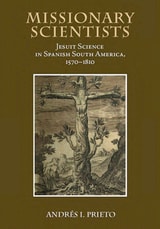
Missionary Scientists
Jesuit Science in Spanish South America, 1570-1810Andres I. Prieto
Vanderbilt University Press, 2011
What becomes clear throughout Missionary Scientists is that early missionaries were adept in adapting to local practices, in order to both understand the scientific foundations of these techniques and ingratiate themselves to the native communities.
Spanning the disciplines of history, religion, and Latin American studies, Missionary Scientists reshapes our understanding of the importance of the Jesuit missions in establishing early scientific traditions in the New World.
Mobility and Integration in Urban Argentina
Córdoba in the Liberal EraBy Mark D. Szuchman
University of Texas Press, 1981
Between the 1870s, when the great influx of European immigrants began, and the start of World War I, Argentina underwent a radical alteration of its social composition and patterns of economic productivity. Mark Szuchman, in this groundbreaking study, examines the occupational, residential, educational, and economic patterns of mobility of some four thousand men, women, and children who resided in Córdoba, Argentina's most important interior city, during this changeful era.
Through several kinds of samples, Szuchman provides a widely encompassing social picture of Córdoba, describing, among others, the unskilled laborer, the immigrant bachelor in search of roots and identity, the merchant seeking or giving credit, and the member of the elite, blind to some of the realities around him. The challenge that the pursuit of security entailed for most people and the failure of so many to persist successfully form a large part of that picture.
The author has made ample use of quantitative techniques, but secondary materials are also utilized to provide social perspectives that round out and humanize the quantitative data. The use of record linkage as the essential research method makes this work the first book on Argentina to follow similar and very successful research methodologies employed by U.S. historians.
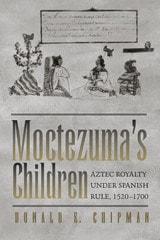
Moctezuma's Children
Aztec Royalty under Spanish Rule, 1520–1700By Donald E. Chipman
University of Texas Press, 2005
Though the Aztec Empire fell to Spain in 1521, three principal heirs of the last emperor, Moctezuma II, survived the conquest and were later acknowledged by the Spanish victors as reyes naturales (natural kings or monarchs) who possessed certain inalienable rights as Indian royalty. For their part, the descendants of Moctezuma II used Spanish law and customs to maintain and enhance their status throughout the colonial period, achieving titles of knighthood and nobility in Mexico and Spain. So respected were they that a Moctezuma descendant by marriage became Viceroy of New Spain (colonial Mexico's highest governmental office) in 1696.
This authoritative history follows the fortunes of the principal heirs of Moctezuma II across nearly two centuries. Drawing on extensive research in both Mexican and Spanish archives, Donald E. Chipman shows how daughters Isabel and Mariana and son Pedro and their offspring used lawsuits, strategic marriages, and political maneuvers and alliances to gain pensions, rights of entailment, admission to military orders, and titles of nobility from the Spanish government. Chipman also discusses how the Moctezuma family history illuminates several larger issues in colonial Latin American history, including women's status and opportunities and trans-Atlantic relations between Spain and its New World colonies.
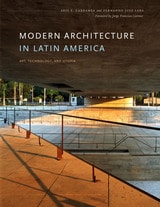
Modern Architecture in Latin America
Art, Technology, and UtopiaBy Luis E. Carranza and Fernando Luiz Lara; foreword by Jorge Francisco Liernur
University of Texas Press, 2015
Designed as a survey and focused on key examples and movements arranged chronologically from 1903 to 2003, this is the first comprehensive history of modern architecture in Latin America in any language.
Runner-up, University Co-op Robert W. Hamilton Book Award, 2015
Modern Architecture in Latin America: Art, Technology, and Utopia is an introductory text on the issues, polemics, and works that represent the complex processes of political, economic, and cultural modernization in the twentieth century. The number and types of projects varied greatly from country to country, but, as a whole, the region produced a significant body of architecture that has never before been presented in a single volume in any language. Modern Architecture in Latin America is the first comprehensive history of this important production.
Designed as a survey and focused on key examples/paradigms arranged chronologically from 1903 to 2003, this volume covers a myriad of countries; historical, social, and political conditions; and projects/developments that range from small houses to urban plans to architectural movements. The book is structured so that it can be read in a variety of ways—as a historically developed narrative of modern architecture in Latin America, as a country-specific chronology, or as a treatment of traditions centered on issues of art, technology, or utopia. This structure allows readers to see the development of multiple and parallel branches/historical strands of architecture and, at times, their interconnections across countries. The authors provide a critical evaluation of the movements presented in relationship to their overall goals and architectural transformations.
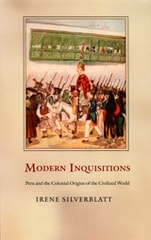
Modern Inquisitions
Peru and the Colonial Origins of the Civilized WorldIrene Silverblatt
Duke University Press, 2004
Drawing on extensive research in Peruvian and Spanish archives, Silverblatt uses church records, evangelizing sermons, and missionary guides to explore how the emerging modern world was built, experienced, and understood by colonists, native peoples, and Inquisition officials: Early missionaries preached about world history and about the races and nations that inhabited the globe; Inquisitors, able bureaucrats, defined who was a legitimate Spaniard as they executed heretics for “reasons of state”; the “stained blood” of Indians, blacks, and descendants of Jews and Moors was said to cause their deficient character; and native Peruvians began to call themselves Indian.
In dialogue with Arendt and other theorists of modernity, Silverblatt shows that the modern world’s underside is tied to its origins in colonialism and to its capacity to rationalize violence. Modern Inquisitions forces the reader to confront the idea that the Inquisition was not only a product of the modern world of the sixteenth and seventeenth centuries, but party to the creation of the civilized world we know today.
Modern Mexican Culture
Critical FoundationsEdited by Stuart A. Day
University of Arizona Press, 2017
Modern Mexican Culture offers an enriching and deep investigation of key ideas and events in Mexico through an examination of art and history. Experts in Mexican cultural and literary studies cover the 1968 Tlatelolco student massacre, the figure of the charro (cowboy), the construct of the postrevolutionary teacher, the class-correlated construct of gente decente, a borderlands response to the rhetoric of dominance, and the “democratic transition” in late twentieth-century Mexico. Each essay is a rich reading experience, providing teachers and students alike with a deep and well-contextualized sense of Mexican life, culture, and politics.
Each chapter provides a historical grounding of its topic, followed by a multifaceted analysis through various artistic representations that provide a more complex view of Mexico. Chapters are accompanied by lists of readily available murals, political cartoons, plays, pamphlets, posters, films, poems, novels, and other cultural products. Modern Mexican Culture demonstrates the power of art and artists to question, explain, and influence the world around us.
Contributors:
Rafael Acosta Morales
Jacqueline E. Bixler
Marta Caminero-Santangelo
Debra A. Castillo
Christopher Conway
David S. Dalton
Stuart A. Day
Emily Hind
Robert McKee Irwin
Ryan Long
Dana A. Meredith
Magalí Rabasa
Luis Alberto Rodríguez Cortés
Fernando Fabio Sánchez
Ignacio M. Sánchez Prado
Analisa Taylor
Oswaldo Zavala
Modern Peru
A New HistoryPaulo Drinot and Alberto Vergara, editors
Duke University Press, 2025
Contributors. Eduardo Dargent, Paulo Drinot, Cynthia McClintock, José Luis Rénique, Natalia Sobrevilla Perea, Alberto Vergara, Charles Walker
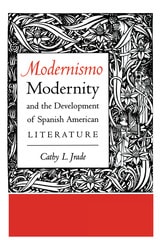
Modernismo, Modernity and the Development of Spanish American Literature
By Cathy L. Jrade
University of Texas Press, 1998
A CHOICE Outstanding Academic Book
Modernismo arose in Spanish American literature as a confrontation with and a response to modernizing forces that were transforming Spanish American society in the later nineteenth century. In this book, Cathy L. Jrade undertakes a full exploration of the modernista project and shows how it provided a foundation for trends and movements that have continued to shape literary production in Spanish America throughout the twentieth century.
Jrade opens with a systematic consideration of the development of modernismo and then proceeds with detailed analyses of works-poetry, narrative, and essays-that typified and altered the movement's course. In this way, she situates the writing of key authors, such as Rubén Darío, José Martí, and Leopoldo Lugones, within the overall modernista project and traces modernismo's influence on subsequent generations of writers.
Jrade's analysis reclaims the power of the visionary stance taken by these creative intellectuals. She firmly abolishes any lingering tendency to associate modernismo with affectation and effete elegance, revealing instead how the modernistas' new literary language expressed their profound political and epistemological concerns.
Monstrous Politics
Geography, Rights, and the Urban Revolution in Mexico CityBen Gerlofs
Vanderbilt University Press, 2022
Transdisciplinary by design, Monstrous Politics first moves historically through Mexico City’s turbulent twentieth century, driven centrally by the contentious imbrication of the Institutional Revolutionary Party (PRI) and its capital city. Participant observation, expert interviews, and archival materials demonstrate the shifting strategies and alliances of recent decades, provide the reader with a sense of the texture of contemporary political life in the city during a time of unprecedented change, and locate these dynamics within the history and geography of twentieth-century urbanization and political revolution. Substantive ethnographic chapters trace the emergence and decline of the political language of “the right to the city,” the establishment and contestation of a “postpolitical” governance regime, and the culmination of a century of urban politics in the processes of “political reform” by which Mexico City finally wrested back significant political autonomy and local democracy from the federal state.
A four-fold transection of the revolutionary structure of feeling that pervades the city in this historic moment illustrates the complex and contradictory sentiments, appraisals, and motivations through which contemporary politics are understood and enacted. Drawing on theories of social revolution that embrace complexity, and espousing a methodology that foregrounds the everyday nature of politics, Monstrous Politics develops an understanding of revolutionary urban politics at once contextually nuanced and conceptually expansive, and thus better able to address the realities of politics in the “urban age” even beyond Mexico City.

Montane Foragers
Asana and the South-Central Andean ArchaicMark S. Aldenderfer
University of Iowa Press, 1998
Aldenderfer's investigation forms a methodological and theoretical tour de force that elucidates elevational stress—what it takes for humans to adjust and survive at high altitudes. In a masterful integration of mountain biology and ecology, he emphasizes the nature of hunter-gatherer adaptations to high-mountain environments. He carefully documents the cultural history of Asana, the first stratified, open-air site discovered in the highlands of the south-central Andes. He establishes a number of major occurrences at this revolutionary site, including the origins of plant and animal domestication and transitions to food production, the growth and packing of forager populations, and the advent of some form of complexity and social hierarchy.
The rich and diversified archaeological record recovered at Asana—which spans from 10,000 to 3,500 years ago—includes the earliest houses as well as public and ceremonial buildings in the central cordillera. Built, used, and abandoned over many millennia, the Asana structures completely transform our understanding of the antiquity and development of native American architecture. Aldenderfer's detailed archaeological case study of high-elevation foraging adaptation, his description of this extreme environment as a viable human habitat, and his theoretical model of montane foraging create a new understanding of the lifeways of foraging peoples worldwide.
Monte Alban's Hinterland, Part I
The Prehispanic Settlement Patterns of the Central and Southern Parts of the Valley of Oaxaca, MexicoRichard E. Blanton, Stephen Kowalewski, Gary Feinman, and Jill Appel
University of Michigan Press, 1982
Monte Albán's Hinterland, Part II
Prehispanic Settlement Patterns in Tlacolula, Etla, and Ocotlan, the Valley of Oaxaca, Mexico, Vols. 1 and 2Stephen Kowalewski, Gary Feinman, Laura Finsten, Richard Blanton, and Linda Nicholas
University of Michigan Press, 1989

More-than-Human Histories of Latin America and the Caribbean
Decentring the Human in Environmental HistoryEdited by Diogo de Carvalho Cabral
University of London Press, 2024
The Latin American and Caribbean regions’ historical trajectories have been shaped by complex human-nonhuman interactions. In these histories, people are important, even crucial, actors, but not the only ones. Offering a novel approach to the writing of Latin American history, this book brings eight thought-provoking chapters together with a historiographical introduction and critical afterword to center nonhuman beings and things. The oscillating glare of the sun, the allure and resourcefulness of animals, the reluctant genetic malleability of plant seeds, and the life-giving and intractable impassivity of rivers are some of the other-than-human agents driving history in the volume’s chapters.
This book problematizes Latin American(ist) historiography’s tendency to frame “nature” as a separate ontological domain that is only acted upon—conquered, manipulated, devastated—lacking the self-propelled dynamics capable of shaping the course of events. With broad regional and temporal coverage across Latin America and the Caribbean from the pre-colonial period to the present day, More-than-Human Histories of Latin America and the Caribbean responds to environmental history’s call to write biophysical environments into the human past—a reconsideration of historical agency that, in this era of climate change, is more necessary than ever.
Mortuary Practices and Social Differentiation at Casas Grandes, Chihuahua, Mexico
John C. Ravesloot
University of Arizona Press, 1988
Mothers and the Mexican Antinuclear Power Movement
Velma García-Gorena
University of Arizona Press, 1999
In Mothers and the Mexican Antinuclear Power Movement, Velma García-Gorena traces the protest movement against the Mexican government's Laguna Verde nuclear plant, outlining the movement's formation, development, and decline. Documenting the movement's key players and turning points in superb detail, she interweaves important historical narrative with a deft examination of the events, framing her analysis in terms of social movement literature. In a departure from the more conventional New Social Movements approach to analyzing antinuclear movements, García-Gorena demonstrates how, in many ways, movements of this kind are not so new and how a modified "political process" approach fits much better. With a sophisticated application of various social movements' paradigms, García-Gorena incorporates perspectives such as resource mobilization, political process paradigms, and feminist theory.
Timely, well written, and thoroughly researched, Mothers and the Mexican Antinuclear Power Movement fills a major gap in the literature on grassroots environmental movements in Latin America. Both rich in empirical detail and convincing in its conclusions, this study provides a broader understanding of Mexican social movements and the quest for democracy in developing countries.
Muchachas No More
Household Workers in Latin America and the CaribbeanElsa Chaney
Temple University Press, 1991
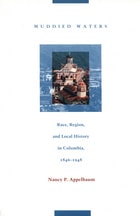
Muddied Waters
Race, Region, and Local History in Colombia, 1846–1948Nancy P. Appelbaum
Duke University Press, 2003
Nineteenth- and twentieth-century Colombian elite intellectuals, Appelbaum contends, mapped race onto their mountainous topography by defining regions in racial terms. They privileged certain places and inhabitants as white and modern and denigrated others as racially inferior and backward. Inhabitants of Riosucio, however, elaborated local narratives about their mestizo and indigenous identities that contested the white mystique of the Coffee Region. Ongoing violent conflicts over land and politics, Appelbaum finds, continue to shape local debates over history and identity. Drawing on archival and published sources complemented by oral history, Muddied Waters vividly illustrates the relationship of mythmaking and racial inequality to regionalism and frontier colonization in postcolonial Latin America.
Multiple InJustices
Indigenous Women, Law, and Political Struggle in Latin AmericaR. Aída Hernández Castillo
University of Arizona Press, 2016
Multiple InJustices synthesizes R. Aída Hernández Castillo’s twenty-four years of activism and research among indigenous women’s organizations in Latin America. As both feminist and critical anthropologist, Hernández Castillo analyzes the context of legal pluralism wherein the indigenous women of Mexico, Guatemala, and Colombia struggle for justice. Through ethnographical research in community, state, and international justice, she reflects on the possibilities and limitations of customary, national, and international law for indigenous women.
Colonialism, racism, and patriarchal violence have been fundamental elements for the reproduction of capitalism, Hernández Castillo asserts. Only a social policy that offers economic alternatives based on distribution of wealth and a real recognition of cultural and political rights of indigenous peoples can counter the damage of outside forces such as drug cartels on indigenous lands.
She concludes that the theories of indigenous women on culture, tradition, and gender equity—as expressed in political documents, event reports, public discourse, and their intellectual writings—are key factors in the decolonization of Latin American feminisms and social justice for all.
Mummies and Mortuary Monuments
A Postprocessual Prehistory of Central Andean Social OrganizationBy William H. Isbell
University of Texas Press, 1997
Since prehistoric times, Andean societies have been organized around the ayllu, a grouping of real or ceremonial kinspeople who share labor, resources, and ritual obligations. Many Andean scholars believe that the ayllu is as ancient as Andean culture itself, possibly dating back as far as 6000 B.C., and that it arose to alleviate the hardships of farming in the mountainous Andean environment.
In this boldly revisionist book, however, William Isbell persuasively argues that the ayllu developed during the latter half of the Early Intermediate Period (around A.D. 200) as a means of resistance to the process of state formation. Drawing on archaeological evidence, as well as records of Inca life taken from the chroniclers, Isbell asserts that prehistoric ayllus were organized around the veneration of deceased ancestors, whose mummified bodies were housed in open sepulchers, or challups, where they could be visited by descendants seeking approval and favors. By charting the temporal and spatial distribution of chullpa ruins, Isbell offers a convincing new explanation of where, when, and why the ayllu developed.
Murder and Masculinity
Violent Fictions of Twentieth-Century Latin AmericaRebecca E. Biron
Vanderbilt University Press, 2000
The introduction to this study deftly situates Biron's work in relation to previous theoretical arguments on the social and political dimensions of Latin American writing. The five subsequent chapters offer superb analyses of the individual texts. Like their male protagonists who experiment with the psychological and legal extremes of gender division, these narratives risk nonconformity to the laws of genre in their quest for liberation from violent social and literary conventions. In combining elements of detective stories, crime narratives, psychological case studies, and magical or grotesque realism, they offer metafictional commentary on a network of discourses that confuses images of masculinity, national identity, and political autonomy in postcolonial Latin America.
Museum Matters
Making and Unmaking Mexico’s National CollectionsEdited by Miruna Achim, Susan Deans-Smith, Sandra Rozental
University of Arizona Press, 2021
Museum Matters traces the emergence, consolidation, and dispersal of this national museum complex by telling the stories of its objects. Objects that have been separated over time are brought back together in this book in order to shed light on the interactions and processes that have forged things into symbols of science, aesthetics, and politics. The contributors to this volume illuminate how collections came into being or ceased to exist over time, or how objects moved in and out of collections and museum spaces. They explore what it means to move things physically and spatially, as well as conceptually and symbolically.
Museum Matters unravels the concept of the national museum. By unmaking the spaces, frameworks, and structures that form the complicated landscape of national museums, this volume brings a new way to understand the storage, displays, and claims about the Mexican nation’s collections today.
Contributors
Miruna Achim, Christina Bueno, Laura Cházaro, Susan Deans-Smith, Frida Gorbach, Haydeé López Hernández, Carlos Mondragón, Bertina Olmedo Vera, Sandra Rozental, Mario Rufer
Music, Race, and Nation
Musica Tropical in ColombiaPeter Wade
University of Chicago Press, 2000
Wade's fresh look at the way music transforms and is transformed by ideologies of race, nation, sexuality, tradition, and modernity is the first book-length study of Colombian popular music.
Musicians in Transit
Argentina and the Globalization of Popular MusicMatthew B. Karush
Duke University Press, 2017
Mutual Impressions
Writers from the Americas Reading One AnotherIlan Stavans, ed.
Duke University Press, 1999
Divided into symmetrical halves—South reading North and North reading South—the book presents essays by leading novelists, poets, and other writers that focus on the work of another literary figure from across the divide. Borges, for example, finds in Hawthorne the perfect precursor to his own interest in allegories; Katherine Anne Porter examines José Joaquín Fernández de Lizardi as a rascal whose picaresque views of life in The Itching Parrot served to launch the Latin American novel; Cortázar’s study of the plots and style of Poe shows an affinity that left an indelible mark on the Argentine’s short fiction; Susan Sontag views Machado de Assis as the ultimate mirror, a proto–postmodernist.
With other essays by Thomas Pynchon, William H. Gass, John Updike, Gabriel García Márquez, Alejo Carpentier, John Barth, Robert Coover, Pedro Henríquez Ureña, Grace Paley, Juan Carlos Onetti, and Mark Strand, among others, Mutual Impressions offers a remarkable view of the connections that comprise a literary tradition of the Americas. It is a book that will surprise and enliven its readers as it informs and awakens in them a sense of wonder.
Contributors. John Barth, José Bianco, Robert Bly, Jorge Luis Borges, Alejo Carpentier, Hiber Conteris, Robert Coover, Julio Cortázar, Ezequiel Martínez Estrada, Waldo Frank, Carlos Fuentes, William H. Gass, Nicolás Guillén, William Kennedy, Mario Vargas Llosa, Gabriel García Márquez, José Martí, Pablo Neruda, Victoria Ocampo, Juan Carlos Onetti, Grace Paley, Octavio Paz, Katherine Anne Porter, Thomas Pynchon, Kenneth Rexroth, Antonio Benítez Rojo, Barbara Probst Solomon, Susan Sontag, Ilan Stavans, Mark Strand, John Updike, Pedro Henríque Ureña, Derek Walcott, Paul West
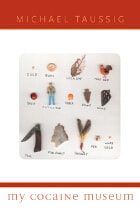
My Cocaine Museum
Michael Taussig
University of Chicago Press, 2004
Combining natural history with political history in a filmic, montage style, Taussig deploys the show-and-tell modality of a museum to engage with the inner life of heat, rain, stone, and swamp, no less than with the life of gold and cocaine.
This effort to find a poetry of words becoming things is brought to a head by the explosive qualities of those sublime fetishes of evil beauty, gold and cocaine. At its core, Taussig's museum is about the lure of forbidden things, charged substances that transgress moral codes, the distinctions we use to make sense of the world, and above all the conventional way we write stories.
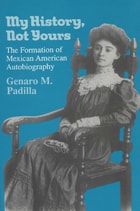
My History, Not Yours
The Formation of Mexican American AutobiographyGenaro M. Padilla
University of Wisconsin Press, 1994
"I am willing to relate all I can remember, but I wish it clearly understood that it must be in my own way, and at my own time. I will not be hurried or dictated to. It is my history and not yours I propose to tell.”—Mariano Guadelupe Vallejo, on “Recuerdos históricos y personales” (1875)
My History, Not Yours is a landmark study of the autobiographical writings of Mexican Americans in the century following the US-Mexican War of 1846-1848. Some 75,000 inhabitants of what is now Texas, New Mexico, Arizona, Nevada, and California were suddenly foreigners on their own lands. Faced with the deliberate obliteration of their history, culture, language, and personal experiences, these women and men set down the stories of their lives and their communities, as a means of both remembering and resisting.
Genaro M. Padilla and other scholars have begun to uncover the huge store of literary materials forgotten in manuscript archives: memoirs long out of print, others unpublished and unread, diaries, family histories, poetry, correspondence, and texts of corridos (ballads). Padilla writes, “Lives are scattered on broken pages, faded, partially lost at the margins, suspended in language unread until there is a reader who opens the file and begins. It is my intention to initiate a recovery of that autobiographical formation that emerged after a war of conquest.”
In providing an overview of this rich literature, Padilla also points out the power relations embedded in the narratives, showing that the reconstruction of the Mexican past was not merely nostalgic idealization, but often an angry and deeply politicized recovery of a world ruptured by American domination.
My Nerves Are Bad
Puerto Rican Women Managing Mental Illness and HIV RiskSana Loue
Vanderbilt University Press, 2011
Sana Loue lets us see the remarkable strength of many of the women and hear in their own words about their efforts to survive, despite long histories of childhood physical and sexual abuse, partner violence, substance use, poverty, and severe mental illness. We also witness the violence that surrounds them and the HIV risk that becomes a part of their lives in their efforts to survive economically and emotionally.

Myth and Archive
A Theory of Latin American NarrativeRoberto González-Echevarría
Duke University Press, 1998
Providing ways to link literary and nonliterary narratives, González Echevarría examines a variety of archival writings—from the chronicles of the discovery and conquest of the New World to scientific travel narratives and records of criminal confessions—and explores the relationship of these writings to novels by authors such as García Márquez, Borges, Barnet, Sarmiento, Carpentier, and Garcilaso de la Vega. Moving beyond demonstrating that early forms of creative narrative had their geneses in the sixteenth-century authoritative discourse of the Spanish Empire, González Echevarría shows how this same originating process has been repeated in other key moments in the history of the Latin American narrative. He shows how the discourse of scientific discovery was the model for much nineteenth-century literature, as well as how anthropological writings on the nature of language and myth have come to shape the ideology and form of literature in the twentieth century. This most recent form of Latin American narrative creates its own mythic form through an atavistic return to its legal origins—the archive.
This acclaimed book—originally published in 1990—will be of continuing interest to historians, anthropologists, literary theorists, and students of Latin American culture.
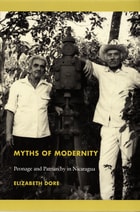
Myths of Modernity
Peonage and Patriarchy in NicaraguaElizabeth Dore
Duke University Press, 2006
Dore seamlessly combines archival research, oral history, and an innovative theoretical approach that unites political economy with social history. She recovers the bygone voices of peons, planters, and local officials within documents such as labor contracts, court records, and official correspondence. She juxtaposes these historical perspectives with those of contemporary peasants, landowners, activists, and politicians who share memories passed down to the present. The reconceptualization of the coffee economy that Dore elaborates has far-reaching implications. The Sandinistas mistakenly believed, she contends, that Nicaraguan capitalism was mature and ripe for socialist revolution, and after their victory in 1979 that belief led them to alienate many peasants by ignoring their demands for land. Thus, the Sandinistas’ myths of modernity contributed to their downfall.
Myths of the Popol Vuh in Cosmology, Art, and Ritual
Holley Moyes
University Press of Colorado, 2021
The chapters are grouped into four sections. The first section interprets the Highland Maya worldview through examination of the text, analyzing interdependence between deities and human beings as well as the textual and cosmological coherence of the Popol Vuh as a source. The second section analyzes the Precolumbian Maya archaeological record as it relates to the myths of the Popol Vuh, providing new interpretations of the use of space, architecture, burials, artifacts, and human remains found in Classic Maya caves. The third explores ancient Maya iconographic motifs, including those found in Classic Maya ceramic art; the nature of predatory birds; and the Hero Twins’ deeds in the Popol Vuh. The final chapters address mythological continuities and change, reexamining past methodological approaches using the Popol Vuh as a resource for the interpretation of Classic Maya iconography and ancient Maya religion and mythology, connecting the myths of the Popol Vuh to iconography from Preclassic Izapa, and demonstrating how narratives from the Popol Vuh can illuminate mythologies from other parts of Mesoamerica.
The Myths of the Popol Vuh in Cosmology, Art, and Ritual is the first volume to bring together multiple perspectives and original interpretations of the Popol Vuh myths. It will be of interest not only to Mesoamericanists but also to art historians, archaeologists, ethnohistorians, iconographers, linguists, anthropologists, and scholars working in ritual studies, the history of religion, historic and Precolumbian literature and historic linguistics.
Contributors: Jaime J. Awe, Karen Bassie-Sweet, Oswaldo Chinchilla Mazariegos, Michael D. Coe, Iyaxel Cojtí Ren, Héctor Escobedo, Thomas H. Guderjan, Julia Guernsey, Christophe Helmke, Nicholas A. Hopkins, Barbara MacLeod, Jesper Nielsen, Colin Snider, Karl A. Taube
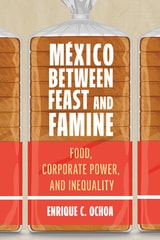
México Between Feast and Famine
Food, Corporate Power, and InequalityEnrique C. Ochoa
University of Arizona Press, 2025
As the birthplace of maize and a celebrated culinary destination, Mexico stands at the crossroads of gastronomic richness and stark social disparities. In México Between Feast and Famine Enrique C. Ochoa unveils the historical and contemporary forces behind Mexico’s polarized food systems.
México Between Feast and Famine provides one of the first comprehensive analyses of Mexico’s food systems and how they reflect the contradictions and inequalities at the heart of Mexico. Ochoa examines the historical roots and contemporary manifestations of neoliberal policies that have reshaped food production, distribution, and consumption in Mexico. Ochoa analyzes the histories of Mexico’s mega food companies, including GRUMA, Bimbo, Oxxo, Aurrera/Walmex, and reveals how corporations have captured the food system at the same time that diet-related diseases have soared. The author not only examines the economic and political dimensions of food production but also interrogates the social and cultural impacts.
As debates around food sovereignty, globalization, and sustainable development intensify globally, México Between Feast and Famine provides a timely analysis that counters conventional narratives about Mexican cuisine. Even as it looks back, this work looks to the future, where more equitable and sustainable food systems prioritize social justice and community well-being.
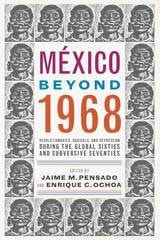
México Beyond 1968
Revolutionaries, Radicals, and Repression During the Global Sixties and Subversive SeventiesEdited by Jaime M. Pensado and Enrique C. Ochoa
University of Arizona Press, 2018
The book illustrates how expressions of resistance developed from the ground up in different regions of Mexico, including Chihuahua, Guerrero, Jalisco, Mexico City, Puebla, and Nuevo León. Movements in these regions took on a variety of forms, including militant strikes, land invasions, cross-country marches, independent forums, popular organizing, and urban and rural guerrilla uprisings.
México Beyond 1968 brings together leading scholars of Mexican studies today. They share their original research from Mexican archives partially opened after 2000 and now closed again to scholars, and they offer analysis of this rich primary source material, including interviews, political manifestos, newspapers, and human rights reports.
By centering on movements throughout Mexico, México Beyond 1968 underscores the deep-rooted histories of inequality and the frustrations with a regime that monopolized power for decades. It challenges the conception of the Mexican state as “exceptional” and underscores and refocuses the centrality of the 1968 student movement. It brings to light the documents and voices of those who fought repression with revolution and asks us to rethink Mexico’s place in tumultuous times.
Contributors:
Alexander Aviña
Adela Cedillo
A. S. Dillingham
Luis Herrán Avila
Fernando Herrera Calderón
Enrique C. Ochoa
Verónica Oikión Solano
Tanalís Padilla
Wil G. Pansters
Jaime M. Pensado
Gema Santamaría
Michael Soldatenko
Carla Irina Villanueva
Eric Zolov