Results by title
3785 books match the query 'Poetry' and 149 start with m

Moonbook and Sunbook
Willis Barnstone
Tupelo Press, 2014
More Poems about Money
Daniel Wolff
Four Way Books, 2022
More Than Meat and Raiment
PoemsAngela Jackson
Northwestern University Press, 2022
The speakers of these poems reflect on memory and saga, history and legend. Voices recall evenings spent catching fireflies with a younger sister, the aroma of homemade rolls, the father who squeezes papers into his wallet alongside bills in order to appear wealthy (“a flock of green birds rustling inside / to get out for some extravagance”). A Black girl watches TV and dreams of the perfect partner. A citizen contends with the unrelenting devastation of police violence in a work reminiscent of Gwendolyn Brooks’s “verse journalism.” A mother loses her daughter only to witness her rebirth: “Praise be / the human being / that is being.”
In “For Our People,” an homage to Margaret Walker, Jackson summons the resilience and imagination of African Americans, celebrating “each of us injured or exalted, betrayer or betrayed, muted / and declamatory, all one, each of us all of us, each a private star beloved in the universe.” Lauded as one of American poetry’s most vivid voices, Jackson continues her reign among the country’s foremost wordsmiths. This sublime collection delves deep into the porch stories and folktales that have carried the Black voice through all its histories.
Mortal Forms
Affect and Temporality in Early English PoetryEvelyn Reynolds
The Ohio State University Press, 2026
Morte Darthur
Sir Thomas Malory
Northwestern University Press, 1968
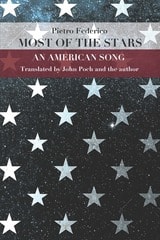
Most of the Stars
An American SongPietro Federico
St. Augustine's Press, 2024
In Most of the Stars the linguistic power of the Italian literary tradition and the contemporary vernacular combine to articulate an idiosyncratic understanding of the New World—the breadth of its cities, its towns, its frontiers and interiors. Federico’s deeply spiritual understanding of our own American personalities and histories offers us a gift of beautiful objectivity. Students of poetry, linguistics, and cultural anthropology will be grateful to Federico and Poch for the wonder offered in this bilingual collection.
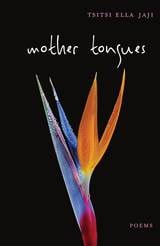
Mother Tongues
PoemsTsitsi Ella Jaji
Northwestern University Press, 2020
Winner of the 2018 Cave Canem Northwestern University Press Poetry Prize
Tsitsi Ella Jaji’s second full-length collection of poems, Mother Tongues, begins at home, with the first words and loves we learn, and the most intimate vows we swear. How deep does your language go back? Jaji’s artful verse is a three-tiered gourd of sustenance, vessel, and folklore. The tongues speak the beginnings and the present; they capture and claim the losses, the ironies, and a poet’s human evolution. Mother Tongues is a collection of language unto itself that translates directly to the heart.
Mother in Summer
Susan Hahn
Northwestern University Press, 2002
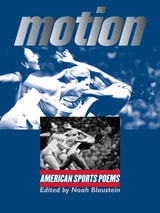
Motion
American Sports PoemsNoah Blaustein
University of Iowa Press, 2001
Sports have long served as inspiration for poetry-the ancient Greeks wrote odes in praise of their athletes-so it is little surprise that in a culture as obsessed with athletes as our own sports would exert an influence on contemporary poets. Motion: American Sports Poems rescues sports from our society's focus on superstars, multimillion-dollar contracts, and gold medals to capture champions and losers, competitors and spectators in moments that are anything but fleeting.
As Noah Blaustein points out in his preface, among the many parallels made between sports and poetry is the idea of transcendence. Forged from the most basic elements of sport-energy, movement, and rhythm-the poems in this anthology reflect something universal: sport as metaphor, sport as struggle, sport as the battleground for mythic figures and local heroes.
The often celebrated sports-baseball, boxing, football, and basketball-are here along with unexpected pastimes like surfing, skateboarding, tennis, soccer, karate, rock climbing, bowling, and curling. Young and old, black and white, male and female, the poets in this anthology celebrate everyone who has come together in the shimmy and shake and sweat of sport.
Mountain Amnesia
Gale Marie Thompson
University Press of Colorado, 2023
Mountain Amnesia also explores the question of how implicated or dependent we are on the lives and actions of others. What does it mean to be accountable to and responsible for those around you? How are we implicated in others’ crimes? What can we do in the aftermath? The poems in this collection explore the limits of knowing and seeing, and how we come to be known and seen: “I ask the world for its bandage /of meaning.” Mountain Amnesia both pursues and surrenders to these limits of knowing, narrowing the vast distances between ourselves and others.
Mountain River
Vietnamese Poetry from the Wars, 1948-1993Kevin Bowen
University of Massachusetts Press, 1998
This landmark bilingual collection presents a comprehensive selection of Vietnamese poetry spanning nearly fifty years of warfare and its aftermath, from the Indochinese War (1946-1954) through the Vietnam War (1961-1975) and into the post-war period. Edited and translated by renowned Vietnam War scholars and poets Kevin Bowen and Bruce Weigl, in collaboration with Vietnamese poet and editor Nguyen Ba Chung, this volume captures the voices of Vietnamese writers who experienced, witnessed, or processed the transformative conflicts that shaped modern Vietnam.
Encompassing poetry from multiple generations, these poems reflect on the diverse responses to conflict: some express patriotic commitment, others grapple with loss and trauma, while many explore the intimate human experiences of war. Mountain River demonstrates how Vietnamese poets drew upon a rich literary tradition while creating new forms of expression to address the unprecedented scale of modern warfare. The result is a collaborative effort that represents a significant achievement in postwar Vietnamese-American literary relations and cross-cultural translation.
Mountains Piled upon Mountains
Appalachian Nature Writing in the AnthropoceneJessica Cory
West Virginia University Press, 2019
Mountains Piled upon Mountains features nearly fifty writers from across Appalachia sharing their place-based fiction, literary nonfiction, and poetry. Moving beyond the tradition of transcendental nature writing, much of the work collected here engages current issues facing the region and the planet (such as hydraulic fracturing, water contamination, mountaintop removal, and deforestation), and provides readers with insights on the human-nature relationship in an era of rapid environmental change.
This book includes a mix of new and recent creative work by established and emerging authors. The contributors write about experiences from northern Georgia to upstate New York, invite parallels between a watershed in West Virginia and one in North Carolina, and often emphasize connections between Appalachia and more distant locations. In the pages of Mountains Piled upon Mountains are celebration, mourning, confusion, loneliness, admiration, and other emotions and experiences rooted in place but transcending Appalachia’s boundaries.
Mouth Filled with Night
PoemsRodney Gomez
Northwestern University Press, 2014
The winner of the Drinking Gourd Chapbook Poetry Prize, Rodney Gomez’s collection Mouth Filled with Night employs familiar emblems of Mexican American identity to repeatedly subvert expectations while intensifying the dilemmas of affiliation. The poems run beyond more conventional ideas of agency, identity, and experience, creating a newly invigorated imaginative space. As a collection, Mouth Filled with Night gains particular momentum—a pitched anxiety that slowly grows throughout the volume—to create a poetic experience unique to the chapbook form.
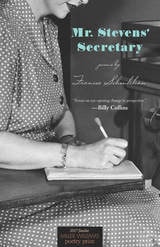
Mr. Stevens' Secretary
PoemsFrances Schenkkan
University of Arkansas Press, 2017
Finalist, 2017 Miller Williams Poetry Prize, edited by Billy Collins
“Forces an eye-opening change in perspective.”
—Billy Collins
In Mr. Stevens’ Secretary, a fictional assistant to Wallace Stevens juggles her roles as a mother, a wife, a believer, and a working woman. Privy at times to the famous poet’s personal life, the secretary must balance her curiosity about Stevens with her commitment to her husband, her faith, and the life she desires.
This vivid and compelling character struggles with fears of mental illness and the challenges of working for a prominent, reserved man, all while adjusting to new environs. She leaves her home, and her job, as she contemplates whether her marriage is worth saving and if she can reconcile the Baptist faith of her upbringing with the questions raised by her new place in the world. Throughout, we are witness to her complex relationship with the famous modernist poet, and with writing itself.
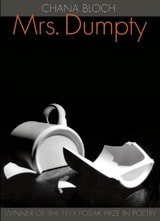
Mrs. Dumpty
Chana Bloch
University of Wisconsin Press, 1998
The poems in Mrs. Dumpty are about “a great fall,” the dissolution of a long and loving marriage, but they are not simply documentary or elegiac. What interests Chana Bloch is the inner life: how we are formed by our losses and our parents’ losses, how we learn what we need to know through our intuitions and confusions, how we deny and delay and finally discover who we are.
Mrs. Ramsay's Knee
Idris Anderson
Utah State University Press, 2008
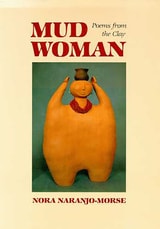
Mud Woman
Poems from the ClayNora Naranjo-Morse
University of Arizona Press, 1992
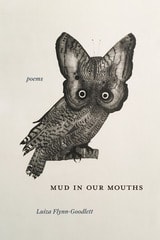
Mud in Our Mouths
PoemsLuiza Flynn-Goodlett
Northwestern University Press, 2025
An award-winning poet writing through violence, solace, and hope
Luiza Flynn-Goodlett’s Mud in Our Mouths illuminates how we are all enmeshed in a web of violence and love. As the speaker of the collection drives cross-country to visit her family of origin in Tennessee, she reckons with the tensions between her current and past selves and the many ways violence—interpersonal, societal, and environmental—has shaped her life. She struggles to find meaning, questioning the ethics of locating faith in a natural world she is unintentionally destroying, and grapples with her complicity in systems of power and oppression as a white Southern woman. Ultimately, she rejects the idea of genetic family as a place of solace; instead, she cleaves to the liberation and joy of connections forged outside those strictures, where intimacy is freely chosen rather than preordained.
Muriel Rukeyser's the Book of the Dead
Tim Dayton
University of Missouri Press, 2003
Muscadine
A. H. Jerriod Avant
Four Way Books, 2023
Muscadine
A. H. Jerriod Avant
Four Way Books, 2023
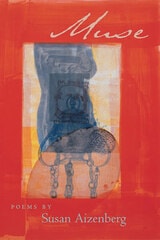
Muse
Susan Aizenberg
Southern Illinois University Press, 2002
Muse, the first full-length collection from poet Susan Aizenberg, brings together poems of personal history, elegy, and the complex lives of artists, writers, and “ordinary” people, in an exploration of the relationship between art and life, esthetics and ethics. She is sharp-eyed in purpose, trying to understand “what love is” in a continual shifting between loss and knowledge. While “there is no other world than this one” for Aizenberg, nevertheless she finds a world of affirmation. Aizenberg sings elegant blues, keeps a perfect balance between elaboration and restraint with formal skill that is both impressive and consoling, reminding us that poetry is a form of intelligence in which music creates a world full of mystery and depth.
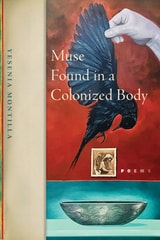
Muse Found in a Colonized Body
Yesenia Montilla
Four Way Books, 2022
In the book's eponymous poem, Yesenia Montilla writes, “How do you not love yourself when you / constantly survive your undoing just by being precious?" Muse Found in a Colonized Body answers this rhetorical question by populating itself with poems that range far and wide in content — observing pop culture, interrogating history, resisting contemporary injustice — but that share the spinal cord of unflinching love. As Rachel Eliza Griffiths notes, Montilla’s “powers orbit and intuit the lives of Philando Castile, Captain America, Christian Cooper, Karl Marx, Ahmaud Arbery, Eartha Kitt, and many more while stitching our wounded identities, memories, and histories in defiant poems of revision and joyous reclamation.” The vertebral odes of this collection at turns uplift desire, affirm life, celebrate protest, and condemn the violent greed of imperial usurpation that has produced the U.S. as we know it. Both in its criticism and its admiration, Muse Found in a Colonized Body calls upon its readers to rise to the occasion of these lyrics’ profound care.
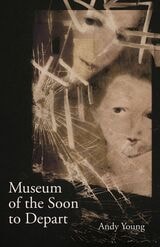
Museum of the Soon to Depart
Andy Young
Carnegie Mellon University Press, 2024
In Museum of the Soon to Depart, poet Andy Young searches for her place in history as it unfolds around her through revolution, plague, and natural disaster. As curator of her museum, she navigates her own and others’ suffering through intense observation, from the inner mechanisms of grief and illness to the solace of distance provided by photography. The material of the poet’s own life and events on the world stage intertwine, resulting in poems with a staggering range, inhabiting language in ways that ultimately point to its limits.
Musho!
Zulu Popular PraisesLiz Gunner
Michigan State University Press, 1991
Music For Exile
Nehassaiu deGannes
Tupelo Press, 2021
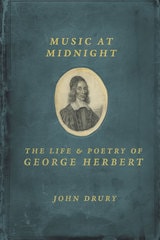
Music at Midnight
The Life and Poetry of George HerbertJohn Drury
University of Chicago Press, 2014
As Drury writes in his preface, Herbert lived “a quiet life with a crisis in the middle of it.” Drury follows Herbert from his academic success as a young man, seemingly destined for a career at court, through his abandonment of those hopes, his devotion to the restoration of a church in Huntingdonshire, and his final years as a country parson. Because Herbert’s work was only published posthumously, it has always been difficult to know when or in what context Herbert wrote his poems. But Drury skillfully places readings of the poems into his narrative at biographically credible moments, allowing us to appreciate not only Herbert’s frame of mind while writing, but also the society that produced it. A sensitive critic of Herbert’s poems as well as a theologian, Drury does full justice to the spiritual dimension of Herbert’s work. In addition, he reveals the occasions of sorrow, happiness, regret, and hope that Herbert captured in his poetry and that led T. S. Eliot to write, “What we can confidently believe is that every poem . . . is true to the poet’s experience.”
Painting a picture of a man torn between worldly ambition and spiritual life, Music at Midnight is an eloquent biography that breathes new life into some of the greatest English poems ever written.
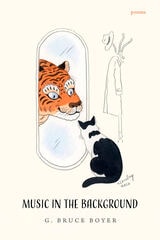
Music in the Background
Bryce G. Boyer
Bridwell Press, 2026
I’ve been a professional journalist for over 50 years now, a prose writer whose favorite form is the essay. But there are emotions that poetry seems to capture better than prose. Not unique emotions because there are no such things as unique emotions, only the emotions shared by all of us, shared by the whole world. For me, prose seems much more observational, more a reflection of what our senses present and whatever meaning we attach to that reflection. Poetry is more an attempt to understand our feelings by digging down into ourselves like a spelunker explores a cave. The cave is ourselves, and we try to discover—or more probably uncover—what's down there that makes us human. In these few poems I've tried to throw a small flashlight beam on a few of those places down there.
Music of the Wide Lane
Poems by Sharron Hass; translated by Marcela Sulak
University of Texas Press, 2025
A translated volume containing masterworks by an award-winning poet.
Sharron Hass’s award-winning poetry is distinctive for its ability to capture ephemeral moments in time, and Music of the Wide Lane evokes epic figures from Greek philosophy, the Hebrew Bible, and poetry. Her inspirations include Sophocles, Aristotle, the medieval Iberian Hebrew poet Yehuda Halevi, Emily Dickinson, and Wallace Stevens. Hass masterfully alters time and expression, lending an impression of perpetual change, as the past, present, and future intermingle.
Music of the Wide Lane explores homoerotic relationships, tense mother–daughter bonds, and the concept of light as a metaphor for truth and goodness. This remarkable fifth collection of Hass’s work includes an extended elegy for a dying father, two major poems from her previous work, and invites readers to expand their understanding of and appreciation for Hebrew-language poetry.
Must a Violence
Oni Buchanan
University of Iowa Press, 2012
In sounding out the problem of how to respond to violence and to the betrayal and domestication of that which is wild, this book counters with aesthetic violence and disruption of its own, opening the self to the unexpected powers of the senses and to encounters between "wildness" and "domestication" within the self. Though never easy, this openness creates the possibility for an all-enveloping love that touches and joins all animals, both nonhuman and human.

My Alexandria
POEMSMark Doty
University of Illinois Press, 1995
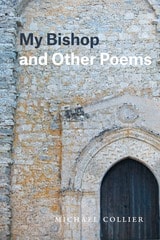
My Bishop and Other Poems
Michael Collier
University of Chicago Press, 2018
The poems of this collection explore such everyday dualities—how the human need for attachment is as much a source of pain as of vitality and how our longing for transcendence often leads to sinister complicities. The title poem tells the conflicted and devastating story of the poet’s friendship with the now-disgraced Bishop of Phoenix, Arizona, interweaving fragments of his parents’ funerals, which the Bishop concelebrated, with memories of his childhood spiritual leanings and how they were disrupted by a pedophilic priest the Bishop failed to protect him from.
This meditation on spiritual life, physical death, and betrayal is joined by an array of poised, short lyrics and expansive prose poems exploring how the terror and unpredictability of our era intrudes on our most intimate moments. Whether Michael Collier is writing about an airline disaster, Huey Newton’s trial, Thomas Jefferson’s bees, a piano in the woods, or his own fraught friendship with the disgraced Catholic Bishop, his syntactic verve, scrupulously observed detail, and flawless ear bring the felt—and sometimes frightening—dimensions of the mundane to life. Throughout, this collection pursues a quiet but ferocious need to get to the bottom of things.
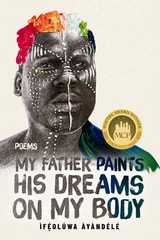
My Father Paints His Dreams on My Body
PoemsÌféolúwa Áyàndélé
Moon City Press, 2026
How do our ancestors inhabit the world that they have abandoned? What is the place of our family in our hearts? In this stunning debut collection, Ìfẹ́olúwa Àyàndélé reveals this interior world in which the past sings its lament in the present moment. The father is Àyàndélé’s connection to the deep past and his ancestors, who move through love and the Nigerian-Biafran war, but also through the luxuriant landscape of rivers and forests. How does one person balance the past and the present? Animals can show us the way of nature. Prayer can form a river of the soul as it chants, praises, and reveres the terrible beauty of this world.
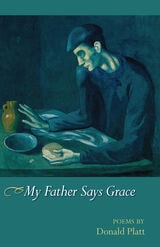
My Father Says Grace
PoemsDonald Platt
University of Arkansas Press, 2007
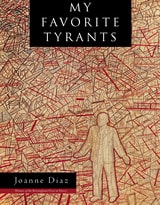
My Favorite Tyrants
Joanne Diaz
University of Wisconsin Press, 2014
Winner, Midwest Book Award for Poetry, Midwest Independent Publishers Association
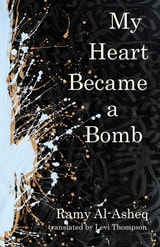
My Heart Became a Bomb
Poems by Ramy al-Asheq; translated by Levi Thompson
University of Texas Press, 2021
My Heart Became a Bomb is the first collection of poetry by Syrian-Palestinian poet Ramy al-Asheq to be translated into English. Poignant and raw, these poems take the reader along a path of forced emigration from Bashar al-Assad’s prisons in Syria to Amsterdam to Auschwitz to Berlin, Germany, where Al-Asheq is now creating a new home. By turns melancholy and reflective, celebratory and hopeful, Al-Asheq’s newly translated poems offer the English-reading audience a contemporary perspective on the experience of exile in a world facing the phenomeno of mass migration, whether for political or environmental reasons. The translations are the result of a long collaboration between Al-Asheq and Thompson (who also edited this collection). Raising questions about the nature of love, identity, and the role of poetry in the face of constant flux and great uncertainty, My Heart Became a Bomb introduces an important new voice to the world of contemporary poetry.
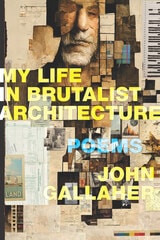
My Life in Brutalist Architecture
John Gallaher
Four Way Books, 2024
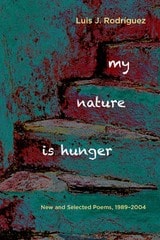
My Nature Is Hunger
New and Selected Poems, 1989 2004Luis J. Rodriguez
Northwestern University Press, 2005
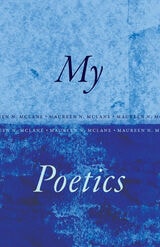
My Poetics
Maureen N. McLane
University of Chicago Press, 2024
In My Poetics, Maureen N. McLane writes as a poet, critic, theorist, and scholar—but above all as an impassioned reader. Written in an innovative, conversable style, McLane’s essays illuminate her own poetics and suggest more generally all that poetics can encompass. Ranging widely from romantic-era odes and hymns to anonymous ballads to haikus and haibuns to modernist and contemporary poetries in English, My Poetics explores poems as speculative instruments and as ways of registering our very sense of being alive. McLane pursues a number of open questions: How do poems generate modes for thinking? How does rhyme help us measure out thought? What is the relation of poetry to its surroundings, and how do specific poems activate that relation?
If, as Wallace Stevens wrote, “poetry is the scholar’s art,” My Poetics flies under a slightly different banner: study and criticism are also the poet’s art. Punctuated with McLane’s poems and drawing variously on Hannah Arendt, Percy Bysshe Shelley, Roland Barthes, Bruno Latour, and other writers and poets, My Poetics is a formally as well as intellectually adventurous work. Its artful arrangement of readings and divagations shows us a way to be with poems and poetics.
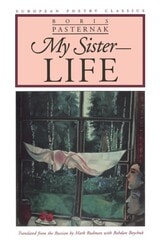
My Sister - Life
Boris Pasternak
Northwestern University Press, 2001
Osip Mandelstam wrote: "To read the poems of Pasternak is to get one's throat clear, to fortify one's breathing. . . . I see Pasternak's My Sister - Life as a collection of magnificent exercises in breathing . . . a cure for tuberculosis." This English translation, rendered with verve and intelligence by Mark Rudman, is a heady gust that matches the intensity and power of the original Russian text.
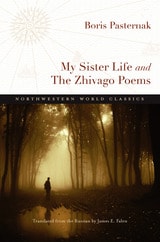
My Sister Life and The Zhivago Poems
Boris Pasternak, Translated from the Russian by James E. Falen
Northwestern University Press, 2012
Boris Pasternak is best known in the West for his epic novel Doctor Zhivago, whereas in Russia he is most celebrated as a poet. The two poetry collections offered here in translation are chronological and thematic bookends, and they capture Pasternak’s abiding and powerful vision of life: his sense of its beauty and terror, its precariousness for the individual, and its persistence in time—that vitality of being with which he is on familiar and familial terms.
In the early work My Sister Life, which commemorates the year 1917, Pasternak, then in his late twenties, found his poetic voice. The book would go on to become one of the most influential collections of Russian poetry of the twentieth century. “The Poems of Yury Zhivago” are a part of the poet’s famous novel, Dr. Zhivago, whose title might be rendered in English as “Doctor Life.” These later lyrics are a kind of summing up that reflect, from the perspective of age and approaching death, upon the accumulated experience of a contemplative life amid turbulent and terrifying times.
Falen’s fresh new translations of these poems capture their expression of the beauty and the joy, the terror and the pain, of what it is to be alive . . . and to die.
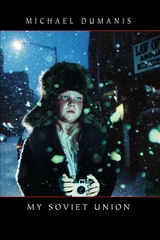
My Soviet Union
Michael Dumanis
University of Massachusetts Press, 2007
The speaker of the simultaneously funny and devastating poems in this remarkable first collection comes from a country that, like the Soviet Union, no longer exists, a place he treats with a mixture of nostalgia, disdain, and bewilderment as he strives to achieve a sense of order in his current disordered environment, a post-apocalyptic landscape with striking similarities to our own. He takes the reader through haunting and disjunctive childhood memories, on visits to Azerbaijan and West Des Moines, through the ravages of physical and spiritual illness, into and out of wars and ill-fated romantic escapades, as he carefully pieces together a complex narrative of self. This is a book of location and dis-location, intent and inaction, struggle and failure, restraint and mania, love and anger, savagery and healing, grief and merriment, elegy and ode. Technically, the poems-often litanies-are marked by syntactical variation, recurring imagery, paradoxical statement, cultural idioms, shifts between high and low diction, a carnivalesque sense of humor, and an elliptical approach to exposition. The speaker also takes on the identities of various personae in the book, including Joseph Cornell, Vladimir Mayakovsky, Pol Pot, a vaudevillian, a movie extra, minor dictators, vagrants, ambigendered lovers, and a lighthouse keeper on an uninhabited island.
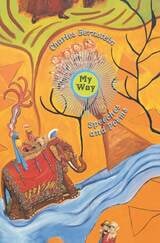
My Way
Speeches and PoemsCharles Bernstein
University of Chicago Press, 1998
In My Way, (in)famous language poet and critic Charles Bernstein deploys a wide variety of interlinked forms—speeches and poems, interviews and essays—to explore the place of poetry in American culture and in the university. Sometimes comic, sometimes dark, Bernstein's writing is irreverent but always relevant, "not structurally challenged, but structurally challenging."
Addressing many interrelated issues, Bernstein moves from the role of the public intellectual to the poetics of scholarly prose, from vernacular modernism to idiosyncratic postmodernism, from identity politics to the resurgence of the aesthetic, from cultural studies to poetry as a performance art, from the small press movement to the Web. Along the way he provides "close listening" to such poets as Charles Reznikoff, Laura Riding, Susan Howe, Ezra Pound, Allen Ginsberg, and Gertrude Stein, as well as a fresh perspective on L=A=N=G=U=A=G=E, the magazine he coedited that became a fulcrum for a new wave of North American writing.
In his passionate defense of an activist, innovative poetry, Bernstein never departs from the culturally engaged, linguistically complex, yet often very funny writing that has characterized his unique approach to poetry for over twenty years. Offering some of his most daring work yet—essays in poetic lines, prose with poetic motifs, interviews miming speech, speeches veering into song—Charles Bernstein's My Way illuminates the newest developments in contemporary poetry with its own contributions to them.
"The result of [Bernstein's] provocative groping is more stimulating than many books of either poetry or criticism have been in recent years."—Molly McQuade, Washington Post Book World
"This book, for all of its centrifugal activity, is a singular yet globally relevant perspective on the literary arts and their institutions, offered in good faith, yet cranky and poignant enough to not be easily ignored."—Publishers Weekly
"Bernstein has emerged as postmodern poetry's sous-chef of insouciance. My Way is another of his rich concoctions, fortified with intellect and seasoned with laughter."—Timothy Gray, American Literature
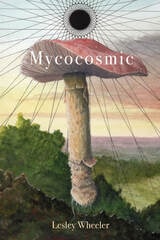
Mycocosmic
Lesley Wheeler
Tupelo Press, 2025
“Good things come to you through fire,” a Tarot reader told Lesley Wheeler as she was composing what became her sixth poetry collection, Mycocosmic. But how could that be true, while the planet was burning and life slamming her with one loss after another? Then she learned about pyrophilic fungi that lurk in soil until activated by fire. Enter mycelia and a teeming underground world that metabolizes death, changing what remains so that life can begin anew.
Mycocosmic offers intricately woven spell poems—prayers, hexes, charms, and invocations—that call for transformation. A parent’s death gives Wheeler the freedom to reveal difficult truths about family violence and her sexuality; a midlife mental health crisis transforms her sense of self. Incantatory language channeled through a wide variety of forms—including free verse, litany, sonnets, the bref double, the golden shovel, and the villanelle—empowers these shifts.
Beneath these poems runs a book-length essay in verse, “Underpoem [Fire Fungus],” sending tendrils across the footer of each page. This poetic mycelium nourishes metamorphosis and highlights its urgency. As Merlyn Sheldrake writes in Entangled Life, “Mycelium describes the most common of fungal habits, better thought of not as a thing but as a process: an exploratory, irregular tendency.” Poetry is rooted in real and imagined communities and conversations. Mycocosmic demonstrates how interdependence binds us together.
Mydriasis
Followed by ‘To the Icebergs’J.M.G. Le Clezio
Seagull Books, 2019
Michaux is, in fact, at the heart of To the Icebergs. Fascinated by his writing, Le Clézio includes Michaux’s "poem of the poem," "Iniji," thereby allowing the poet’s voice to emerge by itself. What follows is much more than a simple analysis of the poem; rather, it is an act of complete insight and understanding, a personal appropriation and elevation of the work. Written originally in the 1970s and now translated into English for the first time, these two brief, incisive and haunting texts will further strengthen the reputation of one of the world’s greatest and most visionary living writers.
Myrrh, Mothwing, Smoke
Erotic PoemsEdited by Jeffrey Levine and Marie Gauthier
Tupelo Press, 2013
Mystical Poems of Rumi
Jalal al-Din Rumi
University of Chicago Press, 2009
Devour it the moment it is fresh, before the dust settles upon it.
Its place is the warm climate of the heart; in this world it dies of cold.
Like a fish it quivered for an instant on dry land, another moment and you see it is cold.
Even if you eat it imagining it is fresh, it is necessary to conjure up many images.
What you drink is really your own imagination; it is no old tale, my good man.
“Rumi is one of the world’s greatest lyrical poets in any language—as well as probably the most accessible and approachable representative of Islamic civilization for Western students.”—James W. Morris, Oberlin College
Myth and Identity in the Epic of Imperial Spain
Elizabeth B. Davis
University of Missouri Press, 2026
The first in-depth analysis of some of the most important epic poems of the Spanish Golden Age, Myth and Identity in the Epic of Imperial Spain breathes new life into five of these long- neglected texts. Elizabeth Davis demonstrates that the epic must not be overlooked, for doing so creates a significant gap in one's ability to appraise not only the cultural practice of the imperial age, but also the purest expression of its ideology.
Davis's study focuses on heroic poetry written from 1569 to 1611, including Alonso de Ercilla's La Araucana, undeniably the most significant epic poem of its time. Also included are Diego de Hojeda's La Christiada, Juan Rufo's La Austriada,. Lope de Vega's Jerusalén Conquistada, and Cristóbal de Virués's Historia del Monserrate.
Examining these epics as the major site for the construction of cultural identities and Renaissance nationalist myths, Davis analyzes the means by which the epic constructs a Spanish sense of self. Because this sense of identity is not easily susceptible to direct representation, it is often derived in opposition to an "other," which serves to reaffirm Spanish cultural superiority. The Spanish Christian caballeros are almost always pitted against Amerindians, Muslims, Jews, or other adversaries portrayed as backward or heathen for their cultural and ethnic differences.
The pro-Castilian elite of sixteenth-century Spain faced the daunting task of constructing unity at home in the process of expansion and conquest abroad, yet ethnic and regional differences in the Iberian Peninsula made the creation of an imperial identity particularly difficult. The epic, as Davis shows, strains to convey the overriding image of a Spain that appears more unified than the Spanish empire ever truly was.
An important reexamination of the Golden Age canon, Myth and Identity in the Epic of Imperial Spain brings a new twist to the study of canon formation. While Davis does not ignore more traditional approaches to the literary text, she does apply recent theories, such as deconstruction and feminist criticism, to these poems, resulting in an innovative examination of the material.
Confronting such issues as canonicity, gender, the relationship between literature and Golden Age culture, and that between art and power, this publication offers scholars a new perspective for assessing Golden Age and Transatlantic studies.
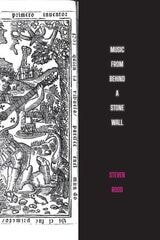
music from behind a stone wall
Steven Rood
Omnidawn, 2024
The poems in Steven Rood’s newest collection take on a musical sensibility as they flow from the poet’s sixty years as a classical guitarist who remains preoccupied with the tonalities of daily life. Each poem in music from behind a stone wall comes together to build a multi-layered symphony that reveals the delights and travails of family life and moments of intimate connection with animals and plants. At the core of the book are poems considering the overwhelming task of trying to communicate the essence of musical experience via the written word. This is a book of grief and joy sung with lyric acuity, vivid images, and formal variation.