Results by title
3027 books match the query 'Sociology' and 178 start with m
Miami in the Anthropocene
Rising Seas and Urban ResilienceStephanie Wakefield
University of Minnesota Press, 2025
Reimagining adaptation amidst climate change–driven mutations of urban space and life
Between its susceptibility to flooding and an ever-expanding real estate market powered by global surges of people and capital, Miami is an epicenter of the urban Anthropocene and a living laboratory for adaptation to sea level rise. Miami in the Anthropocene explores the social, environmental, and technical transformations involved in climate adaptation infrastructure and imaginaries in a global city seen as climate change ground zero.
Using Miami as a compelling microcosm for understanding the complex interplay between urbanization and environmental upheaval in the twenty-first century, Stephanie Wakefield shows how “aqua-urban futures” are being imagined for the city, from governmental scenario exercises for severe weather events to proposals to transform the city’s metropolitan area into an archipelago of islands connected by bridges. She examines the shifts reweaving the fabric of urban life and presents designs that imagine dramatic new ways of living with water.
Grounded in the dynamic landscape of Miami but reaching far beyond its shores, Miami in the Anthropocene delves into the broader debates shaping urban thought and practice in the Anthropocene. Focusing on postresilience urban designs, Wakefield illuminates the path toward a future where cities embrace opportunities for evolution rather than merely for survival.
Michel Foucault
Beyond Structuralism and HermeneuticsHubert L. Dreyfus and Paul Rabinow
University of Chicago Press, 1983
To demonstrate the sense in which Foucault's work is beyond structuralism and hermeneutics, the authors unfold a careful, analytical exposition of his oeuvre. They argue that during the of Foucault's work became a sustained and largely successful effort to develop a new method—"interpretative analytics"—capable fo explaining both the logic of structuralism's claim to be an objective science and the apparent validity of the hermeneutical counterclaim that the human sciences can proceed only by understanding the deepest meaning of the subject and his tradition.
"There are many new secondary sources [on Foucault]. None surpass the book by Hubert Dreyfus and Paul Rabinow. . . . The American paperback edition contains Foucault's 'On the Genealogy of Ethics,' a lucid interview that is now our best source for seeing how he construed the whole project of the history of sexuality."—David Hoy, London Review of Books
Microsociology
Discourse, Emotion, and Social StructureThomas J. Scheff
University of Chicago Press, 1990
Thomas J. Scheff brings together the study of communication and the social
psychology of emotions to explore the microworld of thoughts, feelings,
and moods. Drawing on strikingly diverse and rich sources—the findings of
artificial intelligence and cognitive science, and examples from literary
dialogues and psychiatric interviews—Scheff provides an inventive account
of the nature of social life and a theory of motivation that brilliantly
accounts for the immense complexity involved in understanding even the most
routine conversation.
"A major contribution to some central debates in social theory at the
present time. . . . What Thomas Scheff seeks to develop is essentially a
quite novel account of the nature of social life, its relation to language
and human reflexivity, in which he insists upon the importance of a theory
of emotion. . . . A work of true originality and jolting impact. . . .
Microsociology is of exceptional interest, which bears witness to the
very creativity which it puts at the center of human social contact."
—Anthony Giddens, from the Foreword
"Scheff provides a rich theory that can easily generate further exploration. And he drives home the message that sociological work on interaction, social bonds, and society cannot ignore human emotionality."—Candace Clark, American Journal of Sociology
"This outstanding and ground-breaking little volume contains a wealth of original ideas that bring together many insights concerning the relationship of emotion to motivation in a wide variety of social settings. It is strongly recommended to all serious students of emotion, of society, and of human nature."—Melvin R. Lansky, American Journal of Psychiatry
Midnight Basketball
Race, Sports, and Neoliberal Social PolicyDouglas Hartmann
University of Chicago Press, 2016
Organized in the 1980s and ’90s by dozens of American cities, late-night basketball leagues were designed for social intervention, risk reduction, and crime prevention targeted at African American youth and young men. In Midnight Basketball, Hartmann traces the history of the program and the policy transformations of the period, while exploring the racial ideologies, cultural tensions, and institutional realities that shaped the entire field of sports-based social policy. Drawing on extensive fieldwork, the book also brings to life the actual, on-the-ground practices of midnight basketball programs and the young men that the programs intended to serve. In the process, Midnight Basketball offers a more grounded and nuanced understanding of the intricate ways sports, race, and risk intersect and interact in urban America.
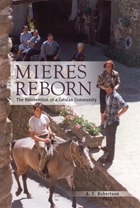
Mieres Reborn
The Reinvention of a Catalan CommunityA. F. Robertson
University of Alabama Press, 2012
Mieres Reborn reveals how patient observation and an analysis of one small community have much to tell us about human progress more generally.
Not long ago Mieres, a village in the eastern foothills of the Pyrenees, seemed destined to die. As in countless thousands of rural communities around the world, young people in Mieres over the years have moved to the towns and cities, leaving behind abandoned fields and meadows, derelict houses, and their aging and disconsolate parents and grandparents.
Close observation of this social microcosm over two decades reveals the capacity of ordinary people in a locality to reinvent themselves, reconstruct relationships with the wider world, and confront new threats to their collective survival. A. F. Robertson describes how the determination that Mieres should survive is most evident in a vigorous round of fiestas, fairs, and other public events in which natives, exiles, and newcomers work to create a lively sense of belonging. Since the 1980s, Mieres has been enlivened by a reverse flow of migrants from the cities, new settlers who have brought an infusion of youth to the community, devised new livelihoods, revitalized the village school, energized the native ”Mierencs,” and provided the impetus for a rediscovery of historical roots and political identity.
The regeneration of life in the countryside, in part a reaction to urban expansion and decay, is a global phenomenon of increasing political, economic, and social significance.
Migrants and City-Making
Dispossession, Displacement, and Urban RegenerationAyse Caglar and Nina Glick Schiller
Duke University Press, 2018
Migrants for Export
How the Philippine State Brokers Labor to the WorldRobyn Magalit Rodriguez
University of Minnesota Press, 2010
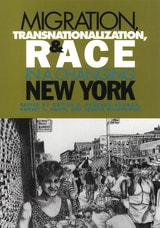
Migration, Transnationalization & Race
In A Changing New YorkHector Cordero-Guzman
Temple University Press, 2001
In this ambitious book, nineteen scholars from a broad range of disciplines bring our understanding of New York's immigrant communities up to date by exploring the interaction between economic globalization and transnationalization, demographic change, and the evolving racial, ethnic, gender dynamics in the City. Urban and suburban, Asian, European, Latin American, and Caribbean, men and women and children—the essays here analyze the complex forces that shape the contemporary immigrant experience in New York City and the links between immigrant communities in New York and their countries of origin.
Mikhail Bakhtin
The Duvakin Interviews, 1973Slav N Gratchev
Bucknell University Press, 2019
Published by Bucknell University Press. Distributed worldwide by Rutgers University Press.
Militant Nationalism
Between Movement and Party in Ireland and the Basque CountryCynthia Irvin
University of Minnesota Press, 1999
A comparative analysis of two militant nationalist groups.
Why do some militant nationalists turn to electoral politics while others resist-and even seek to destroy-that arena? Cynthia L. Irvin examines two cases of electoral interventions by nationalist organizations engaged in violent political competition: in Northern Ireland and in the Basque provinces of Spain. Based on her findings, she offers insights into the circumstances that lead such groups to abandon violence in favor of institutional political struggle.
Using fieldwork done in Northern Ireland and the Basque Country, Irvin develops a model linking the internal dynamics of Sinn Fein and Herri Batasuna (the electoral arm of the militant Basque separatists) to changes in their external environments. In this unusual comparative analysis, she draws on interviews with more than 100 Sinn Fein and Herri Batasuna activists and on a unique survey of 140 Herri Batasuna activists. This approach moves Irvin’s work beyond previous analyses, which have relied on either descriptive and historical accounts or formal models of insurgent violence. This detailed account has broad implications for the study of social movements and ethnic identity, providing a valuable new perspective into the strategic interactions and often conflict-ridden relationship between social movements and political parties. ISBN 0-8166-3114-X Cloth £00.00 $49.95xxISBN 0-8166-3115-8 Paper £00.00 $19.95x304 Pages 26 Tables 5 7/8 x 9 MaySocial Movements, Protest, and Contention Series, volume 9Translation inquiries: University of Minnesota Press
Militarism, Imperialism, and Racial Accommodation
An Analysis and Interpretation of the Early Writings of Robert E. ParkStanford Lyman
University of Arkansas Press, 1992
1993 Mid-South Sociological Association Book Award
Robert E. Park has long been recognized as one of the most influential thinkers in early American sociology, yet virtually all of his works appearing before 1913 were published in popular magazines and were dismissed as nonsociological muckraking. In Militarism, Imperialism, and Racial Accommodation: An Analysis and Interpretation of the Early Writings of Robert E. Park, Stanford M. Lyman examines and reprints many of these little-known works, including Park’s essays on German military organization, his exposés of the atrocities committed by Belgium’s Leopold II in the Congo State, his studies of the black community in Winston-Salem, North Carolina, and of Booker T. Washington’s agricultural education program at Tuskegee, Alabama.
Lyman shows clearly that Park’s essays, written outside the academy, formulated a far more complex perspective on modern modes of evil than any proposed by his contemporaries, thereby influencing sociological debates for decades to come. By writing his essays on topical subjects and by publishing them for a public audience, Park dramatized his profound belief that the struggle to achieve racial accommodation and to establish a true and lasting democracy is a concern for all.
Militarization
A ReaderRoberto J. González, Hugh Gusterson, and Gustaaf Houtman, editors
Duke University Press, 2019
In collaboration with Catherine Besteman, Andrew Bickford, Catherine Lutz, Katherine T. McCaffrey, Austin Miller, David H. Price, David Vine
Militarized Global Apartheid
Catherine Besteman
Duke University Press, 2021
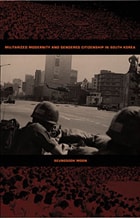
Militarized Modernity and Gendered Citizenship in South Korea
Seungsook Moon
Duke University Press, 2005
Moon situates militarized modernity in the historical context of colonialism and nationalism in the twentieth century. She follows the course of militarized modernity in South Korea from its development in the early 1960s through its peak in the 1970s and its decline after rule by military dictatorship ceased in 1987. She highlights the crucial role of the Cold War in South Korea’s militarization and the continuities in the disciplinary tactics used by the Japanese colonial rulers and the postcolonial military regimes. Moon reveals how, in the years since 1987, various social movements—particularly the women’s and labor movements—began the still-ongoing process of revitalizing South Korean civil society and forging citizenship as a new form of membership in the democratizing nation.

Milking in the Shadows
Migrants and Mobility in America’s DairylandKeller, Julie C
Rutgers University Press, 2019

Mill and Mansion
A Study of Architecture and Society in Lowell, Massachusetts, 1820-1865John Coolidge
University of Massachusetts Press, 1993
Mind, Self, and Society
The Definitive EditionGeorge Herbert Mead
University of Chicago Press, 2015
This collection gets to the heart of Mead’s meditations on social psychology and social philosophy. Its penetrating, conversational tone transports the reader directly into Mead’s classroom as he teases out the genesis of the self and the nature of the mind. The book captures his wry humor and shrewd reasoning, showing a man comfortable quoting Aristotle alongside Alice in Wonderland.
Included in this edition are an insightful foreword from leading Mead scholar Hans Joas, a revealing set of textual notes by Dan Huebner that detail the text’s origins, and a comprehensive bibliography of Mead’s other published writings. While Mead’s lectures inspired hundreds of students, much of his brilliance has been lost to time. This new edition ensures that Mead’s ideas will carry on, inspiring a new generation of thinkers.

Mining Coal and Undermining Gender
Rhythms of Work and Family in the American WestJessica Smith Rolston
Rutgers University Press, 2014
Though mining is an infamously masculine industry, women make up 20 percent of all production crews in Wyoming’s Powder River Basin—the largest coal-producing region in the United States. How do these women fit into a working culture supposedly hostile to females? This is what anthropologist Jessica Smith Rolston, herself a onetime mine worker and the daughter of a miner, set out to discover. Her answers, based on years of participant-observation in four mines and extensive interviews with miners, managers, engineers, and the families of mine employees, offer a rich and surprising view of the working “families” that miners construct. In this picture, gender roles are not nearly as straightforward—or as straitened—as stereotypes suggest.
Gender is far from the primary concern of coworkers in crews. Far more important, Rolston finds, is protecting the safety of the entire crew and finding a way to treat each other well despite the stresses of their jobs. These miners share the burden of rotating shift work—continually switching between twelve-hour day and night shifts—which deprives them of the daily rhythms of a typical home, from morning breakfasts to bedtime stories. Rolston identifies the mine workers’ response to these shared challenges as a new sort of constructed kinship that both challenges and reproduces gender roles in their everyday working and family lives.
Crews’ expectations for coworkers to treat one another like family and to adopt an “agricultural” work ethic tend to minimize gender differences. And yet, these differences remain tenacious in the equation of masculinity with technical expertise, and of femininity with household responsibilities. For Rolston, such lingering areas of inequality highlight the importance of structural constraints that flout a common impulse among men and women to neutralize the significance of gender, at home and in the workplace.
At a time when the Appalachian region continues to dominate discussion of mining culture, this book provides a very different and unexpected view—of how miners live and work together, and of how their lives and work reconfigure ideas of gender and kinship.
Minor Transnationalism
Françoise Lionnet and Shu-mei Shih, eds.
Duke University Press, 2005
Based in a broad range of fields—including literature, history, African studies, Asian American studies, Asian studies, French and francophone studies, and Latin American studies—the contributors complicate ideas of minority cultural formations and challenge the notion that transnationalism is necessarily a homogenizing force. They cover topics as diverse as competing versions of Chinese womanhood; American rockabilly music in Japan; the trope of mestizaje in Chicano art and culture; dub poetry radio broadcasts in Jamaica; creole theater in Mauritius; and race relations in Salvador, Brazil. Together, they point toward a new theoretical vocabulary, one capacious enough to capture the almost infinitely complex experiences of minority groups and positions in a transnational world.
Contributors. Moradewun Adejunmobi, Ali Behdad, Michael Bourdaghs, Suzanne Gearhart, Susan Koshy, Françoise Lionnet, Seiji M. Lippit, Elizabeth Marchant, Kathleen McHugh, David Palumbo-Liu, Rafael Pérez-Torres, Jenny Sharpe, Shu-mei Shih , Tyler Stovall
Misbehaving Science
Controversy and the Development of Behavior GeneticsAaron Panofsky
University of Chicago Press, 2014
In Misbehaving Science, Aaron Panofsky traces the field of behavior genetics back to its origins in the 1950s, telling the story through close looks at five major controversies. In the process, Panofsky argues that persistent, ungovernable controversy in behavior genetics is due to the broken hierarchies within the field. All authority and scientific norms are questioned, while the absence of unanimously accepted methods and theories leaves a foundationless field, where disorder is ongoing. Critics charge behavior geneticists with political motivations; champions say they merely follow the data where they lead. But Panofsky shows how pragmatic coping with repeated controversies drives their scientific actions. Ironically, behavior geneticists’ struggles for scientific authority and efforts to deal with the threats to their legitimacy and autonomy have made controversy inevitable—and in some ways essential—to the study of behavior genetics.

Misconceiving Mothers
Legislators, Prosecutors, and the Politics of Prenatal Drug ExposureLaura Gomez
Temple University Press, 1997
Misconceiving Mothers is a case study of how public policy about reproduction and crime is made. Laura E. Gomez uses secondary research and first-hand interviews with legislators and prosecutors to examine attitudes toward the criminalization and/or medicalization of drug use during pregnancy by the legislature and criminal justice systems in California. She traces how an initial tendency toward criminalization gave way to a trend toward seeing the problem of "crack babies" as an issue of social welfare and public health.
It is no surprise that in an atmosphere of mother-blaming, particularly targeted at poor women and women of color, "crack babies" so easily captured the American popular imagination in the late 1980s. What is surprising is the was prenatal drug exposure came to be institutionalized in the state apparatus. Gomez attributes this circumstance to four interrelated cause: the gendered nature of the social problem; the recasting of the problem as fundamentally "medical" rather than "criminal"; the dynamic nature of t he process of institutionalization; and the specific feature of the legal institutions -- that is, the legislature and prosecutors' offices -- the became prominent in the case.
At one level Misconceiving Mothers tells the story of a particular problem at a particular time and place -- how the California legislature and district attorneys grappled with pregnant women's drug use in the late 1980s and early 1990s. At another level, the book tells a more general story about the political nature of contemporary social problems. The story it tells is political not just because it deals with the character of political institutions but because the process itself and the nature of the claims-making concern the power to control the allocation of state resources.
A number of studies have looked at how the initial criminalization of social problems takes place. Misconceiving Mothers looks at the process by which a criminalized social problem is institutionalized through the attitudes and policies of elite decision-makers.
Misframing Men
The Politics of Contemporary MasculinitiesKimmel, Michael
Rutgers University Press, 2010
This past decade has witnessed an extraordinary transformation in men's lives. For years, wave after wave of the women's movement, a movement that reshaped every aspect of American life, produced nary a ripple among men. But suddenly men are in the spotlight.
Yet, the public discussions often seem strained, silly, and sometimes flat-out wrong. The spotlight itself seems to obscure as much as it illuminates. Old tired clichTs about men's resistance to romantic commitment or reluctance to be led to the marriage altar seem perennially recyclable in advice books and on TV talk shows, but these days the laughter feels more forced, the defensiveness more pronounced. Pop biologists avoid careful confrontation with serious scientific research in their quest to find anatomical or evolutionary bases for promiscuity or porn addiction, hoping that by fiat, one can pronounce that "boys will be boys" and render it more than a flaccid tautology. And political pundits wring their hands about the feminization of American manhood, as if gender equality has neutered these formerly proud studs. Misframing Men, a collection of Michael Kimmel's commentaries on contemporary debates about masculinity, argues that the media have largely misframed this debate.
Kimmel, among the world's best-known scholars in gender studies, discusses political moments such as the Virginia Military Institute and Citadel cases that reached the Supreme Court (he participated as expert witness for the Justice Department) along with Promise Keepers rallies, mythopoetic gatherings, and white supremacists. He takes on antifeminists as the real male bashers, questions the unsubstantiated assertions that men suffer from domestic violence to the same degree as women, and examines the claims made by those who want to rescue boys from the "misandrous" reforms initiated by feminism.
In writings both solidly grounded and forcefully argued, Kimmel pushes the boundaries of today's modern conversation about men and masculinity.
Misplacing Ogden, Utah
Race, Class, Immigration, and the Construction of Urban ReputationsPepper Glass
University of Utah Press, 2020
Ogden, a working-class city with a history of racial and immigrant diversity, has long held a reputation among Utahns as a “sin city” in the middle of an entrenched religious culture. Glass blends ethnographic research with historical accounts, census reports, and other secondary sources to provide insight into Ogden’s reputation, past and present. Capturing residents’ perceptions of an entire city, as opposed to only some of its neighborhoods, and exploring the regional contexts shaping these views, is rare among urban researchers. Glass’s unique approach suggests we can better confront urban problems by rethinking assumptions about place and promoting interventions that break down boundaries.

Miss Cutler and the Case of the Resurrected Horse
Social Work and the Story of Poverty in America, Australia, and BritainMark Peel
University of Chicago Press, 2011
Social workers produced thousands of case files about the poor during the interwar years. Analyzing almost two thousand such case files and traveling from Boston, Minneapolis, and Portland to London and Melbourne, Miss Cutler and the Case of the Resurrected Horse is a pioneering comparative study that examines how these stories of poverty were narrated and reshaped by ethnic diversity, economic crisis, and war.
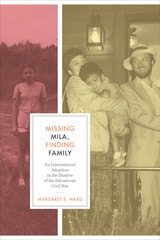
Missing Mila, Finding Family
An International Adoption in the Shadow of the Salvadoran Civil WarBy Margaret E. Ward
University of Texas Press, 2011
In the spring of 1983, a North American couple who were hoping to adopt a child internationally received word that if they acted quickly, they could become the parents of a boy in an orphanage in Honduras. Layers of red tape dissolved as the American Embassy there smoothed the way for the adoption. Within a few weeks, Margaret Ward and Thomas de Witt were the parents of a toddler they named Nelson—an adorable boy whose prior life seemed as mysterious as the fact that government officials in two countries had inexplicably expedited his adoption.
In Missing Mila, Finding Family, Margaret Ward tells the poignant and compelling story of this international adoption and the astonishing revelations that emerged when Nelson's birth family finally relocated him in 1997. After recounting their early years together, during which she and Tom welcomed the birth of a second son, Derek, and created a family with both boys, Ward vividly recalls the upheaval that occurred when members of Nelson's birth family contacted them and sought a reunion with the boy they knew as Roberto. She describes how their sense of family expanded to include Nelson's Central American relatives, who helped her piece together the lives of her son's birth parents and their clandestine activities as guerrillas in El Salvador's civil war. In particular, Ward develops an internal dialogue with Nelson's deceased mother Mila, an elusive figure whose life and motivations she tries to understand.
Mistrust
An Ethnographic TheoryMatthew Carey
HAU, 2017
While mistrust can quickly ruin relationships and even dissolve extensive social ties, Carey shows that it might have other values. Drawing on fieldwork in Morocco’s High Atlas Mountains as well as comparative material from regions stretching from Eastern Europe to Melanesia, he examines the impact of mistrust on practices of conversation and communication, friendship and society, and politics and cooperation. In doing so, he demonstrates that trust is not the only basis for organizing human society and cooperating with others. The result is a provocative but enlightening work that makes us rethink social issues such as suspicion, doubt, and uncertainty.

Mixed Heritage in the Family
Racial Identity, Spousal Choice, and ChildrearingCarolyn Liebler
Russell Sage Foundation, 2025
Liebler and Song break new ground by being the first to combine and integrate the study of three aspects of life for people of mixed racial heritage – identity, spouse choice, and childrearing. This integrated approach reveals how complicated racial identification can be, and how it can be expressed in one’s choice of partner or in how one raises their children. The authors draw on census data and interviews with Asian-White, Black-White, and American Indian/Alaska Native-White mixed people to better understand how their identity choices are related to their choice of spouse and how they racially identify and raise their children.
Increasingly, mixed people in the United States are identifying with multiple races. However, the authors find that mixed-race people are not a monolith and that how and why they identify varies considerably between and within each group. They found several common factors that influenced whether mixed-race people choose to identify as biracial, solely White, or solely as a racial minority. These factors include the history of the specific minority race in the U.S., the racial demographics of where they were raised, their social and cultural exposure to their White and non-White backgrounds, their attachment to their racial backgrounds, and how they are seen racially by others.
The way mixed-heritage people identify was closely tied to the race of their spouse. However, having a White spouse did not necessarily mean the mixed-race person felt disconnected from their non-White heritage. White spouses varied in their racial consciousness and their interest in the culture of their mixed-race spouse’s minority ancestry. The spouse’s race, and the nature of racial overlap between the spouses, was also key in the racial upbringing of a mixed-heritage person’s child. In families where the parents share a minority racial heritage, couples lean into their shared ‘family race’, which guides their parenting choices and family life. Many mixed heritage parents found it important to foster racial pride in their children and combat negative racial stereotypes.
Liebler and Song caution against making superficial predictions about the state of race relations in the U.S. based on an increase in the multiracial population. They show that race has not become less salient in the lives of many mixed-race people—American society is not post-racial.
Mixed Heritage in the Family breaks new ground, provides compelling insights in its examination of the lives of mixed-race people, and shows how complicated racial identification can be.

Mixed Media
Feminist Presses and Publishing PoliticsSimone Murray
Pluto Press, 2004
Mobile Orientations
An Intimate Autoethnography of Migration, Sex Work, and Humanitarian BordersNicola Mai
University of Chicago Press, 2018
Using a bold blend of personal narrative and autoethnography, Mai provides intimate portrayals of sex workers from sites including the Balkans, the Maghreb, and West Africa who decided to sell sex as the means to achieve a better life. Mai explores the contrast between how migrants understand themselves and their work and how humanitarian and governmental agencies conceal their stories, often unwittingly, by addressing them all as helpless victims. The culmination of two decades of research, Mobile Orientations sheds new light on the desires and ambitions of migrant sex workers across the world.
Mobile Urbanism
Cities and Policymaking in the Global AgeEugene McCann
University of Minnesota Press, 2010
The essays in this volume argue for a theorizing of both urban policymaking and place-making that understands them as groups of territorial and relational geographies. It broadens our comprehension of agents of transference, reconceiving how policies are made mobile, and acknowledging the importance of interlocal policy mobility. Through the richness of its empirical examples from Europe, North America, South America, Africa, Asia, and Australia, contributors bring to light the significant methodological challenges that researchers face in the study of an urban–global, territorial–relational conceptualization of cities and suggest productive new approaches to understanding urbanism in a networked world.
Contributors: S. Harris Ali, York U, Toronto; Allan Cochrane, Open U; Roger Keil , York U, Toronto; Doreen Massey, Open U; Donald McNeill, U of Western Sydney; Jamie Peck, U of British Columbia; Jennifer Robinson, University College London.
Mobility without Mayhem
Safety, Cars, and CitizenshipJeremy Packer
Duke University Press, 2007
Packer focuses on cultural figures that have been singled out as particularly dangerous. Women drivers, hot-rodders, bikers, hitchhikers, truckers, those who “drive while black,” and road ragers have all been targets of fear. As Packer debunks claims about the dangers posed by each figure, he exposes biases against marginalized populations, anxieties about social change, and commercial and political desires to profit by fomenting fear. Certain populations have been labeled as dangerous or deviant, he argues, to legitimize monitoring and regulation and, ultimately, to curtail access to automotive mobility. Packer reveals how the boundary between personal freedom and social constraint is continually renegotiated in discussions about safe, proper driving.
Mobilizing Mutations
Human Genetics in the Age of Patient AdvocacyDaniel Navon
University of Chicago Press, 2019
Drawing on a wealth of fieldwork and historical material, Navon presents a sociological account of the ways genetic mutations have been mobilized and transformed in the sixty years since it became possible to see abnormal human genomes, providing a new vista onto the myriad ways contemporary genetic testing can transform people’s lives.
Taking us inside these shifting worlds of research and advocacy over the last half century, Navon reveals the ways in which knowledge about genetic mutations can redefine what it means to be ill, different, and ultimately, human.
Mobilizing Public Opinion
Black Insurgency and Racial Attitudes in the Civil Rights EraTaeku Lee
University of Chicago Press, 2002
Ultimately, Mobilizing Public Opinion is a timely, cautionary tale about how we view public opinion and a compelling testament to the potential power of ordinary citizens.
Model Behavior
Animal Experiments, Complexity, and the Genetics of Psychiatric DisordersNicole C. Nelson
University of Chicago Press, 2018
Behavior genetics is a particularly challenging field for making a clear-cut case that mouse experiments work, because researchers believe that both the phenomena they are studying and the animal models they are using are complex. These assumptions of complexity change the nature of what laboratory work produces. Whereas historical and ethnographic studies traditionally portray the laboratory as a place where scientists control, simplify, and stabilize nature in the service of producing durable facts, the laboratory that emerges from Nelson’s extensive interviews and fieldwork is a place where stable findings are always just out of reach. The ongoing work of managing precarious experimental systems means that researchers learn as much—if not more—about the impact of the environment on behavior as they do about genetics. Model Behavior offers a compelling portrait of life in a twenty-first-century laboratory, where partial, provisional answers to complex scientific questions are increasingly the norm.
Model Cases
On Canonical Research Objects and SitesMonika Krause
University of Chicago Press, 2021
In Model Cases, Monika Krause asks about the concrete material research objects behind shared conversations about classes of objects, periods, and regions in the social sciences and humanities. It is well known that biologists focus on particular organisms, such as mice, fruit flies, or particular viruses when they study general questions about life, development, and disease. Krause shows that scholars in the social sciences and humanities also draw on some cases more than others, selecting research objects influenced by a range of ideological but also mundane factors, such as convenience, historicist ideas about development over time, schemas in the general population, and schemas particular to specific scholarly communities.
Some research objects are studied repeatedly and shape our understanding of more general ideas in disproportionate ways: The French Revolution has profoundly influenced our concepts of revolution, of citizenship, and of political modernity, just like studies of doctors have set the agenda for research on the professions. Based on an extensive analysis of the role of model cases in different fields, Krause argues that they can be useful for scholarly communities if they are acknowledged and reflected as particular objects; she also highlights the importance of research strategies based on neglected research objects and neglected combinations of research objects and scholarly concerns.
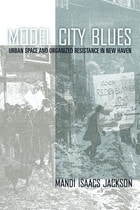
Model City Blues
Urban Space and Organized Resistance in New HavenMandi Isaacs Jackson
Temple University Press, 2008
Model City Blues tells the story of how regular people, facing a changing city landscape, fought for their own model of the “ideal city” by creating grassroots plans for urban renewal. Filled with vivid descriptions of significant moments in a protracted struggle, it offers a street-level account of organized resistance to institutional plans to transform New Haven, Connecticut in the 1960s. Anchored in the physical spaces and political struggles of the city, it brings back to center stage the individuals and groups who demanded that their voices be heard.
By reexamining the converging class- and race-based movements of 1960s New Haven, Mandi Jackson helps to explain the city's present-day economic and political struggles. More broadly, by closely analyzing particular sites of resistance in New Haven, Model City Blues employs multiple academic disciplines to redefine and reimagine the roles of everyday city spaces in building social movements and creating urban landscapes.
Modeling and Interpreting Interactive Hypotheses in Regression Analysis
Cindy D. Kam and Robert J. Franzese, Jr.
University of Michigan Press, 2007
Social scientists study complex phenomena about which they often propose intricate hypotheses tested with linear-interactive or multiplicative terms. While interaction terms are hardly new to social science research, researchers have yet to develop a common methodology for using and interpreting them. Modeling and Interpreting Interactive Hypotheses in Regression Analysis provides step-by-step guidance on how to connect substantive theories to statistical models and how to interpret and present the results.
"Kam and Franzese is a must-have for all empirical social scientists interested in teasing out the complexities of their data."
---Janet M. Box-Steffensmeier, Ohio State University
"Kam and Franzese have written what will become the definitive source on dealing with interaction terms and testing interactive hypotheses. It will serve as the standard reference for political scientists and will be one of those books that everyone will turn to when helping our students or doing our work. But more than that, this book is the best text I have seen for getting students to really think about the importance of careful specification and testing of their hypotheses."
---David A. M. Peterson, Texas A&M University
"Kam and Franzese have given scholars and teachers of regression models something they've needed for years: a clear, concise guide to understanding multiplicative interactions. Motivated by real substantive examples and packed with valuable examples and graphs, their book belongs on the shelf of every working social scientist."
---Christopher Zorn, University of South Carolina
"Kam and Franzese make it easy to model what good researchers have known for a long time: many important and interesting causal effects depend on the presence of other conditions. Their book shows how to explore interactive hypotheses in your own research and how to present your results. The book is straightforward yet technically sophisticated. There are no more excuses for misunderstanding, misrepresenting, or simply missing out on interaction effects!"
---Andrew Gould, University of Notre Dame
Cindy D. Kam is Assistant Professor, Department of Political Science, University of California, Davis.
Robert J. Franzese Jr. is Associate Professor, Department of Political Science, University of Michigan, and Research Associate Professor, Center for Political Studies, Institute for Social Research, University of Michigan.
For datasets, syntax, and worksheets to help readers work through the examples covered in the book, visit: www.press.umich.edu/KamFranzese/Interactions.html
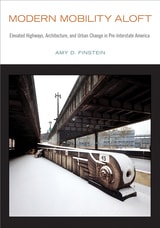
Modern Mobility Aloft
Elevated Highways, Architecture, and Urban Change in Pre-Interstate AmericaAmy D. Finstein
Temple University Press, 2020
In the first half of the twentieth century, urban elevated highways were much more than utilitarian infrastructure, lifting traffic above the streets; they were statements of civic pride, asserting boldly modern visions for a city’s architecture, economy, and transportation network. Yet three of the most ambitious projects, launched in Chicago, New York, and Boston in the spirit of utopian models by architects such as Le Corbusier and Hugh Ferriss, ultimately fell short of their ideals.
Modern Mobility Aloft is the first study to focus on pre-Interstate urban elevated highways within American architectural and urban history. Amy Finstein traces the idealistic roots of these superstructures, their contrasting realities once built, their impacts on successive development patterns, and the recent challenges they have posed to contemporary urban designers.
Filled with more than 100 historic photographs and illustrations of beaux arts and art deco architecture, Modern Mobility Aloft provides a critical understanding of urban landscapes, transportation, and technological change as cities moved into the modern era.
Modernity and the Jews in Western Social Thought
Chad Alan Goldberg
University of Chicago Press, 2017
In Modernity and the Jews in Western Social Thought, Chad Alan Goldberg brings us a major new study of Western social thought through the lens of Jews and Judaism. In France, where antisemites decried the French Revolution as the “Jewish Revolution,” Émile Durkheim challenged depictions of Jews as agents of revolutionary subversion or counterrevolutionary reaction. When German thinkers such as Karl Marx, Georg Simmel, Werner Sombart, and Max Weber debated the relationship of the Jews to modern industrial capitalism, they reproduced, in secularized form, cultural assumptions derived from Christian theology. In the United States, William Thomas, Robert Park, and their students conceived the modern city and its new modes of social organization in part by reference to the Jewish immigrants concentrating there. In all three countries, social thinkers invoked real or purported differences between Jews and gentiles to elucidate key dualisms of modern social thought. The Jews thus became an intermediary through which social thinkers discerned in a roundabout fashion the nature, problems, and trajectory of their own wider societies. Goldberg rounds out his fascinating study by proposing a novel explanation for why Jews were such an important cultural reference point. He suggests a rethinking of previous scholarship on Orientalism, Occidentalism, and European perceptions of America, arguing that history extends into the present, with the Jews—and now the Jewish state—continuing to serve as an intermediary for self-reflection in the twenty-first century.
Modernity on Endless Trial
Leszek Kolakowski
University of Chicago Press, 1990
"Exemplary. . . . It should be celebrated." —Arthur C. Danto, New York Times Book Review
"This book . . . express[es] Kolakowski's thought on God, man, reason, history, moral truth and original sin, prompted by observation of the dramatic struggle among Christianity, the Enlightenment and modern totalitarianism. It is a wonderful collection of topics." —Thomas Nagel, Times Literary Supplement
"No better antidote to bumper-sticker thinking exists than this collection of 24 'appeals for moderation in consistency,' and never has such an antidote been needed more than it is now." —Joseph Coates, Chicago Tribune
"Whether learned or humorous, these essays offer gems in prose of diamond hardness, precision, and brilliance." —Thomas D'Evelyn, The Christian Science Monitor
A "Notable Books of the Year 1991" selection, New York Times Book Review—a "Noted with Pleasure" selection, New York Times Book Review—a "Summer Reading 1991" selection, New York Times Book Review—a "Books of the Year" selection, The Times.
Modernization and the Working Class
The Politics of LegitimacyBy Carlos H. Waisman
University of Texas Press, 1982
This is a fascinating inquiry into the factors that determine the acceptance or rejection of capitalism by the industrial working class. Combining classical social theory, historical evidence, and survey data, Waisman explores the relationship between the degree of modernization and the legitimacy of the capitalist social order.
Propositions about the interaction between established elites and emerging working classes are illustrated with three typical cases: Disraelian Britain, Bismarckian Germany, and Peronist Argentina. From the contrasting theories of Marx and Bakunin, the author derives hypotheses concerning the position of the working class in the economy and the consequences this has for legitimacy. He finds that countries at middle levels of industrial development—mostly latecomers to industrialization in Southern Europe and advanced areas of Latin America—have the greatest difficulty in establishing capitalism as a legitimate social order. They are advanced enough to have a large working class, yet underdeveloped enough to have a dissatisfied one.
Modes of Uncertainty
Anthropological CasesEdited by Limor Samimian-Darash and Paul Rabinow
University of Chicago Press, 2015
Organizing contributions from various anthropological subfields—including economics, business, security, humanitarianism, health, and environment—Limor Samimian-Darash and Paul Rabinow offer new tools with which to consider uncertainty, its management, and the differing modes of subjectivity appropriate to it. Taking up policies and experiences as objects of research and analysis, the essays here seek a rigorous inquiry into a sound conceptualization of uncertainty in order to better confront contemporary problems. Ultimately, they open the way for a participatory anthropology that asks crucial questions about our contemporary state.
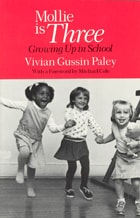
Mollie Is Three
Growing Up in SchoolVivian Gussin Paley
University of Chicago Press, 1986
Mollie Is Three describes a year in the life of a little girl and her preschool classmates in a nursery school classroom run by Vivian Gussin Paley, whose groundbreaking ideas about the best way to teach young children continue to be influential today. We first encounter Mollie on the first day of school, just before her third birthday, and we follow her and her classmates for the next year. Alongside her, we go from confusion and uncertainty in new surroundings to growing understanding and confidence, as patterns emerge and Mollie begins to grasp their significance--and her teacher begins to understand how to track her growth and development.
Rather than offer an account of an idealized, all but imaginary child, Paley presents us with one actual kid, in all their complexity and confusion. The result is a landmark contribution to our understanding of child development and the role early education can play in fostering it.

Money Jungle
Imagining the New Times SquareChesluk, Benjamin
Rutgers University Press, 2008
For more than a century, Times Square has mesmerized the world with the spectacle of its dazzling supersigns, its theaters, and its often-seedy nightlife. New York City’s iconic crossroads has drawn crowds of revelers, thrill-seekers, and other urban denizens, not to mention lavish outpourings of advertising and development money.
Many have hotly debated the recent transformation of this legendary intersection, with voices typically falling into two opposing camps. Some applaud a blighted red-light district becoming a big-budget, mainstream destination. Others lament an urban zone of lawless possibility being replaced by a Disneyfied, theme-park version of New York. In Money Jungle, Benjamin Chesluk shows that what is really at stake in Times Square are fundamental questions about city life—questions of power, pleasure, and what it means to be a citizen in contemporary urban space.
Chesluk weaves together surprising stories of everyday life in and around the Times Square redevelopment, tracing the connections between people from every level of this grand project in social and spatial engineering: the developers, architects, and designers responsible for reshaping the urban public spaces of Times Square and Forty-second Street; the experimental Midtown Community Court and its Times Square Ink. job-training program for misdemeanor criminals; encounters between NYPD officers and residents of Hell’s Kitchen; and angry confrontations between city planners and neighborhood activists over the future of the area.
With an eye for offbeat, telling details and a perspective that is at once sympathetic and critical, Chesluk documents how the redevelopment has tried, sometimes successfully and sometimes not, to reshape the people and places of Times Square. The result is a colorful and engaging portrait, illustrated by stunning photographs by long-time local photographer Maggie Hopp, of the street life, politics, economics, and cultural forces that mold America’s urban centers.
Money and Liberation
The Micropolitics of Alternative Currency MovementsPeter North
University of Minnesota Press, 2007
Is conventional money simply a discourse? Is it merely a socially constructed unit of exchange? If money is not an actual thing, are people then free to make collective agreements to use other forms of currency that might work more effectively for them? Proponents of “better money” argue that they have created currencies that value people more than profitability, ensuring that human needs are met with reasonable costs and decent wages—and supporting local economies that emphasize local sustainability. How did proponents develop these new economies? Are their claims valid?
Grappling with these questions and more, Money and Liberation examines the experiences of groups who have tried to build a more equitable world by inventing new forms of money. Presenting in-depth profiles of the trading networks that have been constructed both historically and more recently, including Local Exchange Trading Schemes (England), Green Dollars (New Zealand), Talente (Hungary), and the barter system in Argentina, Peter North shows how the use of currency has been redefined as part of political action, revealing surprising political ambiguity and a nuanced understanding of the potential and limits on alternative currencies as a resistance practice.
Peter North is lecturer in geography at the University of Liverpool.
Money and Society
A Critical CompanionAxel T. Paul
Pluto Press, 2021
Money, Myths, and Change
The Economic Lives of Lesbians and Gay MenM.V. Lee Badgett
University of Chicago Press, 2001
Money, Myths, and Change provides new answers to these complex questions. This is the first comprehensive work to explore the economic lives of gays and lesbians in the United States. M. V. Lee Badgett weaves through and debunks common stereotypes about gay privilege, income, and consumer behavior. Studying the ends and means of gay life from an economic perspective, she disproves the assumption that gay men and lesbians are more affluent than heterosexuals, that they inspire discrimination when they come out of the closet, that they consume more conspicuously, that they enjoy a more self-indulgent, even hedonistic lifestyle. Badgett gets to the heart of these misconceptions through an analysis of the crucial issues that affect the livelihood of gay men and lesbians: discrimination in the workplace, denial of health care benefits to domestic partners and children, lack of access to legal institutions such as marriage, the corporate wooing of gay consumer dollars, and the use of gay economic clout to inspire social and political change.
Both timely and readable, Money, Myths, and Change stands as a much-needed corrective to the assumptions that inhibit gay economic equality. It is a definitive work that sheds new light on just what it means to be gay or lesbian in the United States.
Monstrous Politics
Geography, Rights, and the Urban Revolution in Mexico CityBen Gerlofs
Vanderbilt University Press, 2022
Transdisciplinary by design, Monstrous Politics first moves historically through Mexico City’s turbulent twentieth century, driven centrally by the contentious imbrication of the Institutional Revolutionary Party (PRI) and its capital city. Participant observation, expert interviews, and archival materials demonstrate the shifting strategies and alliances of recent decades, provide the reader with a sense of the texture of contemporary political life in the city during a time of unprecedented change, and locate these dynamics within the history and geography of twentieth-century urbanization and political revolution. Substantive ethnographic chapters trace the emergence and decline of the political language of “the right to the city,” the establishment and contestation of a “postpolitical” governance regime, and the culmination of a century of urban politics in the processes of “political reform” by which Mexico City finally wrested back significant political autonomy and local democracy from the federal state.
A four-fold transection of the revolutionary structure of feeling that pervades the city in this historic moment illustrates the complex and contradictory sentiments, appraisals, and motivations through which contemporary politics are understood and enacted. Drawing on theories of social revolution that embrace complexity, and espousing a methodology that foregrounds the everyday nature of politics, Monstrous Politics develops an understanding of revolutionary urban politics at once contextually nuanced and conceptually expansive, and thus better able to address the realities of politics in the “urban age” even beyond Mexico City.
Montesquieu and Rousseau
Forerunners of SociologyEmile Durkheim
University of Michigan Press, 1960

Moral Entanglements
Conserving Birds in Britain and GermanyStefan Bargheer
University of Chicago Press, 2018