Results by title
4155 books match the query 'State & Local' and 216 start with m

Michigan Railway Company
The Northern and Southern DivisionsNorman L. Krentel
Michigan State University Press, 2024
This also explores how electric railway history is intertwined with the state of Michigan. The interurban electric rail system supported automobile manufacturing, allowing for the shipment of parts supplies, and finished automobiles through Michigan, Indiana, Ohio, and Kentucky. Major auto plants like REO and Oldsmobile had rail sidetracks served by Michigan Railway’s interurban freight trains. Electric railway history is thus an essential, previously overlooked factor in Michigan’s industrial development.

Michigan State University
The Rise of a Research University and the New Millennium, 1970-2005Douglas A. Noverr
Michigan State University Press, 2015
Through the vicissitudes of government funding and other challenges, the university has established itself as a renowned research and educational institution with a remarkably rich array of facilities, scientists, and researchers who continue to make landmark contributions to their fields. At the same time it has strived to be known for its accessibility, diversity, equality of opportunity, and antidiscrimination policies and practices. Michigan State University sheds new light on the growth of this dynamic and multifaceted institution.

Michigan Supreme Court Historical Reference Guide, 2nd Edition
David Chardavoyne
Michigan State University Press, 2015
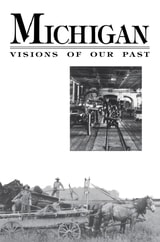
Michigan Visions of Our Past
Richard J. Hathaway
Michigan State University Press, 1989
Throughout the history of michigan, many problems occur and recur: satisfying a diverse population, economic booms and busts, business and labor conflicts, religion in public education, environmental concerns.
A number of writers collaborated to bring such themes to light in 18 illuminating essays. The collection provides a tool for the teacher, a sourse for the scholar, and a pleasurable trip through Michigan history. Michigan: Visions of Our Past, also provides a challenge; a challenge to citizens to understand the past, and apply its lessons to the future of Michigan.

Michigan's Capitol
Construction and RestorationWilliam Seale
University of Michigan Press, 1995
Michigan's Capitol: Construction and Restoration is the history of a great American landmark, one among fifty statehouses. Construction of Michigan's State Capitol began in 1871, six years after the close of the Civil War, and was brought to completion less than a decade later. It has survived for more than a century to become the object of one of America's most authentic restorations. This volume allows the reader to chronicle the building and restoration of Michigan's Capitol through words and magnificent color and black-and-white photographs. An archive of treasured historical images, beginning with a group scene at the time the cornerstone was placed, is also included alongside original architectural drawings and sketches.
Michigan's Capitol: Construction and Restoration is not only the history of a great vision realized, but a celebration of the rediscovery and revival of that vision in the 1980s and 1990s culminating in one of the most comprehensive restorations ever carried out on an American building. The author, William Seale, a part of the restoration team for Michigan's Capitol from the start, has written extensively about many American buildings, including the White House.
Written in a lively, narrative style accessible to readers of all ages, Michigan's Capitol: Construction and Restoration is an especially useful introduction to the art of building as well as the politics of public building.
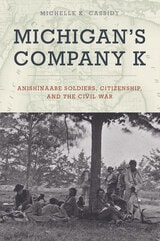
Michigan's Company K
Anishinaabe Soldiers, Citizenship, and the Civil WarMichelle K Cassidy
Michigan State University Press, 2023

Michigan's Con-Con 11
Women and State Constitution-making in 1961Lynn Liberato
Michigan State University Press, 2025

Michigan's County Courthouses
John Fedynsky
University of Michigan Press, 2011
John Fedynsky documents in narrative and photos every county courthouse of Michigan's eighty-three counties, as well as the Michigan Hall of Justice. These buildings are symbols: physically they stand, but figuratively they speak. They embody the purposes for which they were created: law, order, justice, and the promise of a better tomorrow.
Fedynsky tells the story of each building. For Michigan, the typical evolution begins in the cabin, tavern, or hotel of a prominent local settler and progresses through incarnations of simple log or wooden clapboard, and then opulent stone or brick, before the structure arrives in modern and utilitarian form. But there are myriad exceptions to this rule, and they add to the diversity of Michigan's county courthouses.
In Fedynsky's descriptions, verifiable facts and local lore weave together in dramatic tales of outrageous crime, courtroom intrigue, backroom dealing, jury determination, and judicial prerogative. Released jail inmates assist with evacuating and extinguishing a courthouse fire, residents during a natural disaster seek and find physical refuge behind the sure walls of the courthouse, and vigilant legions of homebound defenders are stationed in wartime throughout the courthouse towers scanning the skies for signs of foreign aircraft.
Then there are the homey touches that emphasize the "house" half of Michigan's courthouses: local folks dropping off plants in the courthouse atrium to use it as a winter greenhouse, cows grazing on the public square, county fairs in or near the courthouse, and locally made artwork hanging in public hallways. The courthouses bear within their walls a richness of soul endowed by the good people who make each one special.
Cover design by Heidi Dailey
Cover photos: John Fedynsky

Michigan's State Forests
A Century of StewardshipWilliam B. Botti
Michigan State University Press, 2006
It has been said that Michigan’s nineteenth century white pine stands were the finest the world has ever seen. Dense, parklike stands, more than 150 feet tall, covered vast areas northward from the Bay City– Muskegon line. The sheer quantity of timber lured many adventurous entrepreneurs and enterprising farmers to Michigan. Lumber became a mainstay of Michigan’s economy as logging interests and railroad entrepreneurs became adept at harvesting, transporting, and processing pine logs. Many considered the pine to be practically limitless.
In October of 1871, the first indication of a troubled future occurred when Michigan settlers experienced fires unlike any they had ever seen. Following two months of serious drought, and fed by hundreds of small fires set by land-clearing operations, much of northern Lower Michigan erupted in flames; dry winds fanned the many small fires into one unbelievable conflagration that swept entirely across the Lower Peninsula, from Lake Michigan to Lake Huron. Many towns were reduced to ashes, among them Holland, Glen Haven, Huron City, Sand Beach, White Rock, and Forestville. Navigation was interrupted on Lake Huron and as far downriver as Detroit because of the heavy smoke. More than 200 people lost their lives.
Michigan’s State Forests recounts how an abandoned, cutover, and often burned wilderness has been converted once again into highly productive and protected public lands. For more than 100 years, these lands have been preserved, managed and developed to form one of Michigan’s great assets, not only for economic development but also as enhancements to our quality of life.
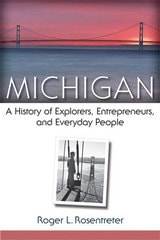
Michigan
A History of Explorers, Entrepreneurs, and Everyday PeopleRoger L. Rosentreter
University of Michigan Press, 2013
The history of Michigan is a fascinating story of breathtaking geography enriched by an abundant water supply, of bold fur traders and missionaries who developed settlements that grew into major cities, of ingenious entrepreneurs who established thriving industries, and of celebrated cultural icons like the Motown sound. It is also the story of the exploitation of Native Americans, racial discord that resulted in a devastating riot, and ongoing tensions between employers and unions. Michigan: A History of Explorers, Entrepreneurs, and Everyday People recounts this colorful past and the significant role the state has played in shaping the United States. Well-researched and engagingly written, the book spans from Michigan’s geologic formation to important 21st-century developments in a concise but detailed chronicle that will appeal to general readers, scholars, and students interested in Michigan’s past, present, and future.

Michigan’s War
The Civil War in DocumentsJohn W. Quist
Ohio University Press, 2018
When it came to the Civil War, Michiganians never spoke with one voice. At the beginning of the conflict, family farms defined the southern Lower Peninsula, while a sparsely settled frontier characterized the state’s north. Although differing strategies for economic development initially divided Michigan’s settlers, by the 1850s Michiganians’ attention increasingly focused on slavery, race, and the future of the national union. They exchanged charges of treason and political opportunism while wrestling with the meanings of secession, the national union, emancipation, citizenship, race, and their changing economy. Their actions launched transformations in their communities, their state, and their nation in ways that Americans still struggle to understand.
Building upon the current scholarship of the Civil War, the Midwest, and Michigan’s role in the national experience, Michigan’s War is a documentary history of the Civil War era as told by the state’s residents and observers in private letters, reminiscences, newspapers, and other contemporary sources. Clear annotations and thoughtful editing allow teachers and students to delve into the political, social, and military context of the war, making it ideal for classroom use.

Midcentury Modern Art in Texas
By Katie Robinson Edwards
University of Texas Press, 2014
Winner, Award of Merit for Non-Fiction, The Philosophical Society of Texas, 2015
Before Abstract Expressionism of New York City was canonized as American postwar modernism, the United States was filled with localized manifestations of modern art. One such place where considerable modernist activity occurred was Texas, where artists absorbed and interpreted the latest, most radical formal lessons from Mexico, the East Coast, and Europe, while still responding to the state’s dramatic history and geography. This barely known chapter in the story of American art is the focus of Midcentury Modern Art in Texas.
Presenting new research and artwork that has never before been published, Katie Robinson Edwards examines the contributions of many modernist painters and sculptors in Texas, with an emphasis on the era’s most abstract and compelling artists. Edwards looks first at the Dallas Nine and the 1936 Texas Centennial, which offered local artists a chance to take stock of who they were and where they stood within the national artistic setting. She then traces the modernist impulse through various manifestations, including the foundations of early Texas modernism in Houston; early practitioners of abstraction and non-objectivity; the Fort Worth Circle; artists at the University of Texas at Austin; Houston artists in the 1950s; sculpture in and around an influential Fort Worth studio; and, to see how some Texas artists fared on a national scale, the Museum of Modern Art’s “Americans” exhibitions.
The first full-length treatment of abstract art in Texas during this vital and canon-defining period, Midcentury Modern Art in Texas gives these artists their due place in American art, while also valuing the quality of Texan-ness that subtly undergirds much of their production.

Middle Mississippi Exploitation of Animal Populations
Bruce D. Smith
University of Michigan Press, 1975

Midwest Maize
How Corn Shaped the U.S. HeartlandCynthia Clampitt
University of Illinois Press, 2015

Midwestern Food
A Chef’s Guide to the Surprising History of a Great American Cuisine, with More Than 100 Tasty RecipesPaul Fehribach
University of Chicago Press, 2023
Celebrated chef Paul Fehribach has made his name serving up some of the most thoughtful and authentic regional southern cooking—not in the South, but in Chicago at Big Jones. But over the last several years, he has been looking to his Indiana roots in the kitchen, while digging deep into the archives to document and record the history and changing foodways of the Midwest.
Fehribach is as painstaking with his historical research as he is with his culinary execution. In Midwestern Food, he focuses not only on the past and present of Midwestern foodways but on the diverse cultural migrations from the Ohio River Valley north- and westward that have informed them. Drawing on a range of little-explored sources, he traces the influence of several heritages, especially German, and debunks many culinary myths along the way.
The book is also full of Fehribach’s delicious recipes informed by history and family alike, such as his grandfather's favorite watermelon rind pickles; sorghum-pecan sticky rolls; Detroit-style coney sauce; Duck and manoomin hotdish; pawpaw chiffon pie; strawberry pretzel gelatin salad (!); and he breaks the code to the most famous Midwestern pizza and BBQ styles you can easily reproduce at home. But it is more than just a cookbook, weaving together historical analysis and personal memoir with profiles of the chefs, purveyors, and farmers who make up the food networks of the region.
The result is a mouth-watering and surprising Midwestern feast from farm to plate. Flyover this!
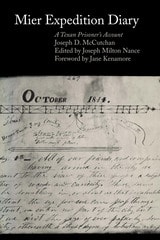
Mier Expedition Diary
A Texan Prisoner's AccountJoseph D. McCutchan
University of Texas Press, 1979
Few episodes in Texas history have excited more popular interest than the Mier Expedition of 1842. Nineteen-year-old Joseph D. McCutchan was among the 300 Texans who, without the cover of the Lone Star flag, launched their own disastrous invasion across the Rio Grande.
McCutchan's diary provides a vivid account of his experience—the Texans' quick dispatch by Mexican troops at the town of Mier, the hardships of a forced march to Mexico City, over twenty months of imprisonment, and the journey back home after release. Although there are other firsthand accounts of the Mier Expedition, McCutchan was the only diarist who followed the Tampico route to Mexico City. His account documents a different experience than that of the main body of prisoners who marched to the national capital by way of Monterrey, Saltillo, and Agua Nueva.
Among the last of the prisoners to be freed, McCutchan covers in his journal the whole period of confinement from December 26, 1842, to the final release on September 16, 1844.
The McCutchan diary is set apart from other Mier accounts not only by the new information it provides, but also by Joseph Milton Nance's superb editing. Nance is an acknowledged authority on the hostilities between Texas and Mexico during the era of the Texas Republic. He has transcribed, edited, and annotated the diary with characteristic scholarship and painstaking attention to detail.
Migration, Mill Work, and Portuguese Communities in New England
Edited by Cristiana Bastos, Bela Feldman-Bianco, and Miguel Moniz
Tagus Press, 2024

Miles Lord
The Maverick Judge Who Brought Corporate America to JusticeRoberta Walburn
University of Minnesota Press, 2017
The life of a crusading federal judge who stood up and fought for “the little guy”
This is the story of Miles Lord (1919–2016), who rose from humble beginnings on Minnesota’s Iron Range to become one of the most colorful and powerful judges in the country, described as “an unabashed Prairie populist” and “a live-wire slayer of corporate behemoths.” He cut a wide swath through history on his path to the bench: coming of age alongside a cadre of young Midwestern social-gospel progressives, including Hubert H. Humphrey, Eugene McCarthy, and Walter Mondale, in the days before they reached national fame; teaming with Bobby Kennedy as a hotshot prosecutor in pursuit of Jimmy Hoffa; and serving as the secret envoy between his friends Hubert and Eugene in their battle for the soul of the Democratic party in the historic 1968 presidential campaign. Later, after donning his black robe, he reshaped jurisprudence with precedent-breaking rulings—on issues ranging from women’s rights to consumer protection to education reform—and breaking trail when he ordered the shutdown of the Reserve Mining Company in northern Minnesota, which was spewing its waste into Lake Superior, in the most sensational trial of the early environmental era.
One of Judge Lord’s landmark cases—and interlaced as a centerpiece narrative of this book—involved the Dalkon Shield intrauterine device, which caused horrific infections in thousands of women, resulting in infertility and sometimes death. Author Roberta Walburn served as the judge’s law clerk during that litigation in 1983–84, and she provides a page-turning account (both an insider’s view and an in-depth chronicle) of what was called “one of the most disastrous episodes of American corporate misconduct.” In the end, more than 200,000 women received nearly $3 billion in compensation, and the Fortune 500 defendant was left in ruins. But Judge Lord was hauled up on judicial misconduct charges for his no-holds-barred actions that were certainly provocative but also stand as a timely reminder, even (or especially) today, of the challenges in balancing the scales of justice for a legal system that too often skews to the rich and powerful.
The author deftly weaves the Dalkon Shield drama into the larger story of the life of a one-of-a-kind man, crafting a sweeping and spirited true-life tale with not only her first-hand experiences as the judge’s law clerk but also with unrestricted access to the judge’s personal files. This is a rare and compelling portrait of a remarkable man and his place in both Minnesota and U.S. history.

Mill and Mansion
A Study of Architecture and Society in Lowell, Massachusetts, 1820-1865John Coolidge
University of Massachusetts Press, 1993
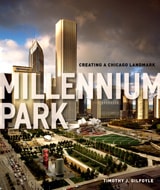
Millennium Park
Creating a Chicago LandmarkTimothy J. Gilfoyle
University of Chicago Press, 2006
Timothy Gilfoyle here offers a biography of this phenomenal undertaking, beginning before 1850 when the site of the park, the “city’s front yard,” was part of Lake Michigan. Gilfoyle studied the history of downtown; spent years with the planners, artists, and public officials behind Millennium Park; documented it at every stage of its construction; and traced the skeins of financing through municipal government, global corporations, private foundations, and wealthy civic leaders. The result is a thoroughly readable and lavishly illustrated testament to the park, the city, and all those attempting to think and act on a monumental scale. And underlying Gilfoyle’s history is also a revealing study of the globalization of art, the use of culture as an engine of economic expansion, and the nature of political and philanthropic power.
Born out of civic idealism, raised in political controversy, and maturing into a
symbol of the new Chicago, Millennium Park is truly a twenty-first-century
landmark, and it now has the history it deserves.

Milwaukee Mayhem
Murder and Mystery in the Cream City's First CenturyMatthew J. Prigge
Wisconsin Historical Society Press, 2015
From murder and matchstick men to all-consuming fires, painted women, and Great Lakes disasters--and the wide-eyed public who could not help but gawk at it all--"Milwaukee Mayhem" uncovers the little-remembered and rarely told history of the underbelly of a Midwestern metropolis. "Milwaukee Mayhem" offers a new perspective on Milwaukee's early years, forgoing the major historical signposts found in traditional histories and focusing instead on the strange and brutal tales of mystery, vice, murder, and disaster that were born of the city's transformation from lakeside settlement to American metropolis. Author Matthew J. Prigge presents these stories as they were recounted to the public in the newspapers of the era, using the vivid and often grim language of the times to create an engaging and occasionally chilling narrative of a forgotten Milwaukee.
Through his thoughtful introduction, Prigge gives the work context, eschewing assumptions about "simpler times" and highlighting the mayhem that the growth and rise of a city can bring about. These stories are the orphans of Milwaukee's history, too unusual to register in broad historic narratives, too strange to qualify as nostalgia, but nevertheless essential to our understanding of this American city.
Milwaukee Through History
A Young Reader's Guide to the People and Events That Shaped a CityJames K. Nelsen
Wisconsin Historical Society Press, 2025
This richly illustrated book for middle grade and high school learners uses primary sources and archival photos to explore Milwaukee’s role in Wisconsin and US history. Milwaukee Through History highlights the city’s multiple transformations—from a resource-rich homeland of Ho-Chunk, Menominee, Ojibwe, Potawatomi, and other Native peoples to an immigrant hub to an industrial boomtown and, finally, to a vibrant tourist destination that continues to grapple with issues of poverty and inequality.
Readers will discover key people, places, events, and innovations that made Milwaukee—and national—history, including:
• Freedom seeker Joshua Glover
• Industrial giants like Harley Davidson & Allen Bradley
• Whitnall Park and the North Point Water Tower
• Labor movements and the fair housing marches
• Civil rights leader Vel Phillips
Author James K. Nelsen sheds new light on important events and milestones in history, including the American Revolution, the War of 1812, the Civil War, and the Great Migration. Written with middle and high school readers in mind, the book will appeal to people of all ages who are curious about Milwaukee’s history and culture. Milwaukee Through History is both an engaging supplement to Wisconsin and US history curricula and a great read for anyone seeking a deeper understanding of a diverse and dynamic city.
Milwaukee in the 1930s
A Federal Writers Project City GuideJohn D. Buenker
Wisconsin Historical Society Press, 2016
What would it be like to take an intensive tour of Milwaukee as it was during the late 1930s—at the confluence of the Great Depression, the New Deal, and the run-up to World War II? That is precisely what the participants in the Federal Writers Project did while researching their Guide to Milwaukee. The fruits of their labors were ready for publication by 1940, but for a number of reasons the finished product never saw the light of day—until now.
Fortunately, the manuscript has been carefully preserved in the Wisconsin Historical Society Archives
. Seventy-five years after the work’s completion, the Wisconsin Historical Society Press and historian John D. Buenker present this guide—now serving as a time machine, ready to transport readers back to the Milwaukee of the 1930s, neighborhood by neighborhood, building by building. Much more than a nostalgic snapshot, the book examines Milwaukee’s history from its earliest days to 1940.
Buenker’s thoughtful introduction provides historical context, detailing the FWP’s development of this guide, as well as Milwaukee’s political climate leading up to, and during, the 1930s. Next, essays on thirteen "areas," ranging from Civic Center to Bay View, delve deeper into the geography, economy, and culture of old Milwaukee’s neighborhoods, and simulated auto tours take readers to locales still familiar today, exploring the city’s most celebrated landmarks and institutions. With a calendar of annual events and a list of public services and institutions, plus dozens of photographs from the era, Milwaukee in the 1930s provides a unique record of a pre–World War II American city.

Milwaukee
A City Built on WaterJohn Gurda
Wisconsin Historical Society Press, 2026
The success and survival of Milwaukee lies in the rivers that meander through its streets and the great lake at its eastern boundary. The Indigenous peoples of the region recognized the value of an abundant, clean water supply for food and transportation. Generations of immigrants, entrepreneurs, innovators, and recreationists used the same waters to travel greater distances, power million-dollar industries, and even have a bit of fun.
In Milwaukee: A City Built on Water, celebrated historian John Gurda relates the history of the waters that gave Milwaukee life—and occasionally threatened the city through erosion, invasive species, and water-borne diseases. Telling tales of brewers, brickmakers, ecologists, and engineers, Gurda explores the city’s complicated connections with its most precious resource and greatest challenge. You’ll meet the generations of people, from a Potawatomi chief to fur traders and fishermen, who settled on the small spit of land known as Jones Island; learn how Milwaukee’s unique water composition creates its distinct cream-colored bricks; visit Wisconsin’s first waterparks; and see how city leaders transformed the Milwaukee River—once described as a “vast sewer” with an “odorous tide”—into today’s lively and lovely Riverwalk.
Now available in paperback, Milwaukee: A City Built on Water is the sweeping chronicle of a critical natural resource that has weathered heavy use and flagrant abuse to emerge as a focal point of both celebration and concern in the twenty-first century.
Minding the South
John Shelton Reed
University of Missouri Press, 2003
You're in the American South now, a proud region with a distinctive history and culture. A place that echoes with names like Thomas Jefferson and Robert E. Lee, Scarlett O'Hara and Uncle Remus, Martin Luther King and William Faulkner, Billy Graham, Mahalia Jackson, Muhammad Ali, Elvis Presley. Home of the country blues and country music, bluegrass and Dixieland jazz, gospel music and rock and roll. Where menus offer both down-home biscuits and gravy and uptown shrimp and grits. Where churches preach against "cigarettes, whiskey, and wild, wild women" (all Southern products) and where American football is a religion.
For more than thirty years John Shelton Reed has been “minding” the South—watching over it, providing commentary upon it. He is the author or editor of thirteen books about the South, and despite his disclaimer regarding formal study of Southern history, Reed has read widely and in depth about the South. His primary focus is upon Southerners’ present-day culture and consciousness, but he knows that one must approach the South historically in order to understand the place and its people.

Minds and Hearts
The Story of James Otis Jr. and Mercy Otis WarrenJeffrey H. Hacker
University of Massachusetts Press, 2021
Minds and Hearts is the dual biography of these remarkable siblings, placing James and Mercy in the spotlight together for the first time, amid the rush of events, competing ideologies, and changing social conditions of eighteenth-century America. Jeffrey H. Hacker crafts a compelling narrative that focuses on the Otises' unique and dramatic relationship and traces their impact on the Revolutionary movement in Massachusetts. If the real American Revolution took place "in the minds and hearts of the people," as John Adams claimed, then the Otises were among the nation's true patriots.
Mine Towns
Buildings for Workers in Michigan’s Copper CountryAlison K. Hoagland
University of Minnesota Press, 2010

Mineral Point
A HistoryGeorge Fiedler
Wisconsin Historical Society Press, 1973

Mining America
The Industry and the Environment, 1800-1980Duane A. Smith
University Press of Colorado, 1994
Mining Cultures
Men, Women, and Leisure in Butte, 1914-41Mary Murphy
University of Illinois Press, 1997
Butte, Montana, long deserved its reputation as a wide-open town. Mining Cultures shows how the fabled Montana city evolved from a male-dominated mining enclave to a community in which men and women participated on a more equal basis as leisure patterns changed and consumer culture grew. Mary Murphy looks at how women worked and spent their leisure time in a city dominated by the quintessential example of "men's work": mining. Bringing Butte to life, she adds in-depth research on church weeklies, high school yearbooks, holiday rituals, movie plots, and news of local fashion to archival material and interviews.
A richly illustrated jaunt through western history, Mining Cultures is the never-told chronicle of how women transformed the richest hill on earth.
Mining Irish-American Lives
Western Communities from 1849 to 1920Alan J. M. Noonan
University Press of Colorado, 2022
Historian Alan J. M. Noonan uses a range of previously overlooked sources, including collections of emigrant letters, hospital logbooks, private detective reports, and internment records, to tell the stories of Irish men and women who emigrated to mining towns to search for opportunity. Noonan details the periods, the places, and the experiences over multiple generations in the late nineteenth and early twentieth centuries. He carefully examines their encounters with nativists, other ethnic groups, and mining companies to highlight the contested emergence of a hyphenated Irish-American identity.
Unearthing personal details along with the histories of different communities, the book investigates Irish immigrants and Irish-Americans through the prism of their own experiences, significantly enriching the history of the period.
Mining among the Clouds
The Mosquito Range and the Origins of Colorado's Silver BoomHarvey N. Gardiner
University Press of Colorado, 2002

Minneapolis Madams
The Lost History of Prostitution on the RiverfrontPenny A. Petersen
University of Minnesota Press, 2013
Sex, money, and politics—no, it’s not a thriller novel. Minneapolis Madams is the surprising and riveting account of the Minneapolis red-light district and the powerful madams who ran it. Penny Petersen brings to life this nearly forgotten chapter of Minneapolis history, tracing the story of how these “houses of ill fame” rose to prominence in the late nineteenth century and then were finally shut down in the early twentieth century.
In their heyday Minneapolis brothels were not only open for business but constituted a substantial economic and political force in the city. Women of independent means, madams built custom bordellos to suit their tastes and exerted influence over leading figures and politicians. Petersen digs deep into city archives, period newspapers, and other primary sources to illuminate the Minneapolis sex trade and its opponents, bringing into focus the ideologies and economic concerns that shaped the lives of prostitutes, the men who used their services, and the social-purity reformers who sought to eradicate their trade altogether. Usually written off as deviants, madams were actually crucial components of a larger system of social control and regulation. These entrepreneurial women bought real estate, hired well-known architects and interior decorators to design their bordellos, and played an important part in the politics of the developing city.
Petersen argues that we cannot understand Minneapolis unless we can grasp the scope and significance of its sex trade. She also provides intriguing glimpses into racial interactions within the vice economy, investigating an African American madam who possibly married into one of the city’s most prestigious families. Fascinating and rigorously researched, Minneapolis Madams is a true detective story and a key resource for anyone interested in the history of women, sexuality, and urban life in Minneapolis.
Minneapolis Teamsters Strike of 1934
Philip Korth
Michigan State University Press, 1995
The 1934 Minneapolis Teamsters Strike proved to be a pivotal event in twentieth-century American labor history. The Minneapolis Teamsters challenged the muscle of big business, as well as the authority of local, state, and federal government, and in the process they changed the very nature of labor relations in the United States. In The Minneapolis Teamsters Strike of 1934, Philip Korth's description of events surrounding this landmark labor action are filtered through the recollections of the people who were there. Korth blends historical record with the words of actual participants to draw a thorough and compelling portrait of a labor strike and its consequences. Philip Korth's study illustrates the organizational strategies that made the Minneapolis strike a success, as well as how opposition and public perception defined emerging labor relations practices and public policy. At the same time, the author provides an in-depth examination of the conflict through interviews with witnesses and participants in this pivotal event in labor history.

Minnesota Green
The Highs and Lows of Cannabis in the North CountryTanner Berris
University of Minnesota Press, 2027
The socially fraught and surprisingly colorful history of cannabis in Minnesota
In a sweeping narrative, Minnesota Green presents the previously untold story of cannabis and its long and complex history of criminalization, activism, and legislative contention. Seamlessly blending historical research, political analysis, and lived experience, activist and industry insider Tanner Berris traces the highs and lows of the plant’s presence in a state often held up as a beacon of progressive policymaking. Trekking across this fraught history, Berris documents how nineteenth-century hemp cultivation coincided with the federal dispossession of Indigenous lands, how, by the 1930s, moral panic turned cannabis from a common crop into a criminal threat, and how the “Hemp for Victory” campaign during World War II temporarily lifted a federal ban before the postwar decades gave way to renewed policing and punishment.
Paying close attention to school-based antidrug curricula, racialized rhetoric, patient testimonies, eradication campaigns, and widespread propaganda, Berris uncovers the prohibitionist roots of the “marijuana menace” and how reformers worked to reclaim the plant’s maligned reputation throughout the twentieth century. The fight for medical cannabis during the AIDS crisis, the revival of industrial hemp, and Minnesota’s embrace of low-dose hemp-derived products—all are pivotal points in the state’s reshaping of both public opinion and regulatory imagination.
At its core, this story is about Minnesotans: farmers experimenting with commercial hemp, activists staging legalization protests, policymakers wrestling with public caution, entrepreneurs and tribal leaders navigating a complex regulatory landscape, and local communities confronting the unjust racial and social consequences of punitive—and often violently policed—prohibition. At once a regional history and civic memoir, Minnesota Green vividly documents how a once-criminalized plant reemerged as a symbol of renewal and self-determination in Minnesota.
Retail e-book files for this title are screen-reader friendly with images accompanied by short alt text and/or extended descriptions.

Minnesota Marvels
Roadside Attractions in the Land of LakesEric Dregni
University of Minnesota Press, 2001
Only in Minnesota can you snap a Polaroid of a fifty-five-foot-tall grinning green man with a size seventy-eight shoe or marvel at the spunk of a Swede who dedicated his life to spinning a gigantic ball of twine. The world’s largest hockey stick, as well as the biggest pelican, prairie chicken, turkey, fish, otter, fox, and loon also make Minnesota their home. Where else can you ponder the mysterious "miracle meat" of Spam in a museum dedicated to pork products or have your head examined by the phrenology machines at the Museum of Questionable Medical Devices?
Minnesota Marvels is a tour of the inspired, bizarre, brilliant, scandalous, and funny sites around the state. Look up in wonder at the several Paul Bunyan statues, including the original (Bemidji), the tallest (Akeley), and the largest talking version (Brainerd). Ease on down the road to visit the first home of the heel-tapping native of Grand Rapids, Judy Garland, or walk the "main street" of Sauk Centre immortalized by native son Sinclair Lewis. See the birthplaces of Charles Lindbergh, the Mayo brothers, the Greyhound bus, the snowmobile, and the ice-cream sandwich.
Minnesota is also the home of such attractions as the Minneapolis Sculpture Garden and the world’s largest aerial lift bridge in Duluth, and architectural wonders such as Frank Lloyd Wright’s modernist gas station in Cloquet and Frank Gehry’s arresting Weisman Art Museum. Stunning mansions with histories of ghost sightings, the hangouts and lairs of infamous gangsters, and old-fashioned breweries dot the state.
Conveniently organized by town name and illustrated throughout, Minnesota Marvels is the perfect light-hearted guide for entertaining road trips all over the state.

Minnesota Rag
Corruption, Yellow Journalism, and the Case That Saved Freedom of the PressFred W. Friendly
University of Minnesota Press, 2003
The fascinating behind-the-scenes story of this landmark First Amendment case
Minnesota Rag takes the reader on an exhilarating tour of the seamy underside of a dark period in Minnesota’s past, one rife with crooked public officials, vengeful gangsters, and yellow journalists. Featuring notorious characters such as Jay M. Near, racist and antilabor publisher of Minneapolis’s Saturday Press, pioneering newsman Fred W. Friendly weaves the tale of a court case that molded our understanding of freedom of the press and set a precedent for the publication of the Pentagon Papers.

Minnesota's Geologist
The Life of Newton Horace WinchellSue Leaf
University of Minnesota Press, 2026
Winner of the 2021 Minnesota Book Award for Minnesota Nonfiction
The story of the scientist who first mapped Minnesota’s geology, set against the backdrop of early scientific inquiry in the state
At twenty, Newton Horace Winchell declared, “I know nothing about rocks.” At twenty-five, he decided to make them his life’s work. As a young geologist tasked with heading the Minnesota Geological and Natural History Survey, Winchell (1839–1914) charted the prehistory of the region, its era of inland seas, its volcanic activity, and its several ice ages—laying the foundation for the monumental five-volume Geology of Minnesota. Tracing Winchell’s remarkable path from impoverished fifteen-year-old schoolteacher to a leading light of an emerging scientific field, Minnesota’s Geologist also recreates the heady early days of scientific inquiry in Minnesota, a time when one man’s determination and passion for learning could unlock the secrets of the state’s distant past and present landscape.
Traveling by horse and cart, by sailboat and birchbark canoe, Winchell and his group surveyed rock outcrops, river valleys, basalt formations on Lake Superior, and the vast Red River Valley. He studied petrology at the Sorbonne in Paris, bringing cutting-edge knowledge to bear on the volcanic rocks of the Arrowhead region. As a founder of the American Geological Society and founding editor of American Geologist, the first journal for professional geologists, Winchell was the driving force behind scientific endeavor in early state history, serving as mentor to many young scientists and presiding over a household—the Winchell House, located on the University of Minnesota’s present-day mall—that was a nexus of intellectual ferment. His life story, told here for the first time, draws an intimate picture of this influential scientist, set against a backdrop of Minnesota’s geological complexity and splendor.

Minnesota
A History of the StateTheodore C. Blegen
University of Minnesota Press, 2004

Minorities in Phoenix
A Profile of Mexican American, Chinese American, and African American Communities, 1860-1992Bradford Luckingham
University of Arizona Press, 1994
Settled in the mid-nineteenth century by Anglo and Mexican pioneers, Phoenix emerged as an Anglo-dominated society that presented formidable obstacles to minorities seeking access to jobs, education, housing, and public services. It was not until World War II and the subsequent economic boom and civil rights era that opportunities began to open up. Drawing on a variety of sources, from newspaper files to statistical data to oral accounts, Luckingham profiles the general history of each community, revealing the problems it has faced and the progress it has made. His overview of the public life of these three ethnic groups shows not only how they survived, but how they contributed to the evolution of one of America's fastest-growing cities.

Miracle Road
The Story of Research Triangle ParkAllen Paul and Mack Paul
Duke University Press, 2026
Research Triangle Park in North Carolina (RTP) emerged under the unique circumstances of a poor Southern state that needed to find a way to offset the declining industries of tobacco, furniture, and textiles in the 1950s. Through the sustained commitment of nearby universities, business leaders, and local and state officials, state leaders established the largest science and research park in the United States in an area that was nothing but “possums and pines.” Miracle Road tells this story through the eyes of those at the center of it, like the local black leaders who convinced white officials to desegregate public schools with the justification that it would make the area more appealing to tech companies, or how a chance meeting between the governor and a Danish executive led to North Carolina becoming an epicenter for weight loss drugmakers decades later. Allen Paul and Mack Paul organize the story around major periods in RTP’s growth, showing how RTP came to define the region and the state by the 1990s as well as the major setbacks it encountered in the early 2000s. Breaking down the strategies that led to RTP’s success, like creating new institutions in targeted tech areas to spur activity and factoring quality of life into the regional planning of the area, Miracle Road demonstrates how the story of Research Triangle Park is a fascinating and important case study of urban development in the twenty-first century.

Mirage-Land
Images of NevadaWilbur S. Shepperson
University of Nevada Press, 1996

Miscellaneous Studies in Typology and Classification
Anta M. White, Lewis R. Binford and Mark L. Papworth
University of Michigan Press, 1963

Missing Stories
Leslie Kelen
Utah State University Press, 2000
Utah's ethnic diversity is often overlooked. In a society sometimes presumed to be homogeneous, there is a danger that the varied experiences of its members will be lost to history. Missing Stories, available here for the first time in paperback, effectively counters such misconceptions and explores the rich history of ethnic and minority groups in the state. Several representatives from each of eight such groups tell in their own voices stories of themselves, their families, and their communities. The groups represented are Utes, African-Americans, Jews, Chinese, Italians, Japanese, Greeks, and Hispanics. In a preface to each section of oral history interviews, a respected historian of the community introduces background and heritage, setting the context for the personal recollections that follow. Also included are striking photographs by Kent Miles and George Janecek that capture much of the personality and character of the interviewees.
These oral histories recount migrations to new homes in Utah or adjustment to white settlement of traditional homelands in the state. They bring to light the struggles of individuals and families to survive and the formation and maintenance of communities in frequently adverse conditions, whether on reservations or farms, in small towns or large cities. The histories are enriched by accounts of challenges met and overcome and enlivened by stories of events and persons who sometimes achieved legendary status within and outside the groups. Missing Stories reveals the many ways that ethnic and minority groups have contributed to Utah's history and fills in missing pieces necessary to a complete portrayal of the state's society and culture.
Mission of Sorrows
Jesuit Guevavi and the Pimas, 1691–1767John L. Kessell; Foreword by Ernest J. Burrus, S.J.
University of Arizona Press, 1970
For three-quarters of a century, from the first visit by the renowned Eusebio Francisco Kino in 1691 until the Jesuit Expulsion in 1767, the difficult process of replacing one culture with another—the heart of the Spanish mission system—went on at Guevavi. Yet all but the initial years presided over by Father Kino have been forgotten.
Drawing upon archival materials in Mexico, Spain, and the United States—including accounts by the missionaries themselves and the surviving pages of the Guevavi record books—Kessell brings to life those forgotten years and forgotten men who struggled to transform a native ranchería into an ordered mission community.
Of the eleven Black Robes who resided at Guevavi between 1701 and 1767, only a few are well known to history. Others—such as Joseph Garrucho, who presided more years at Guevavi than any other Padre; Alexandro Rapicani, son of a favorite of Sweden's Queen Christina; Custodio Zimeno, Guevavi's last Jesuit—have the details of their roles filled in here for the first time.
In this in-depth study of a single missionary center, Kessell describes in detail the daily round of the Padres in their activities as missionaries, educators, governors, and intercessors among the often-indifferent and occassionally hostile Pimas. He discusses the Pima uprising of 1751 and the events that led up to it, concluding that it actually continued sporadically for some ten years.
The growing ferocity of the Apache, the disastrous results of certain government policies—especially the removal of the Sobaípuri Indians from the San Pedro Valley—and the declining native population due to a combination of enforced culture change and epidemics of European diseases are also carefully explored.
The story of Guevavi is one of continuing adversity and triumph. It is the story, finally, of explusion for the Jesuits and, a few short years later, the end of Mission Guevavi at the hands of the Apaches.
In Mission of Sorrows Kessell has projected meticulous research into a highly readable narrative to produce an important contribution to the history of the Spanish Borderlands.
Mississippian Communities and Households
Edited by J. Daniel Rogers and Bruce D. Smith
University of Alabama Press, 1995
During the Mississippian period (approximately A.D. 1000-1600) in the midwestern and southeastern United States a variety of greater and lesser chiefdoms took shape. Archaeologists have for many years explored the nature of these chiefdoms from the perspective common in archaeological investigations—from the top down, investigating ceremonial elite mound structures and predicting the basic domestic unit from that data. Because of the increased number of field investigations at the community level in recent years, this volume is able to move the scale of investigation down to the level of community and household, and it contributes to major revisions of settlement hierarchy concepts.
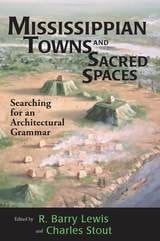
Mississippian Towns and Sacred Spaces
Searching for an Architectural GrammarEdited by R. Barry Lewis and Charles Stout
University of Alabama Press, 1998
Archaeologists and architects draw upon theoretical perspectives from their fields to provide valuable insights into the structure, development, and meaning of prehistoric communities.
Architecture is the most visible physical manifestation of human culture. The built environment envelops our lives and projects our distinctive regional and ethnic identities to the world around us. Archaeology and architecture find common theoretical ground in their perspectives of the homes, spaces, and communities that people create for themselves. Although archaeologists and architects may ask different questions and apply different methods, the results are the same—a deeper understanding of what it means to be human.
In this volume, prominent archaeologists examine the architectural design spaces of Mississippian towns and mound centers of the eastern United States. The diverse Mississippian societies, which existed between A.D. 900 and 1700, created some of the largest and most complex Native American archaeological sites in the United States. The dominant architectural feature shared by these communities was one or more large plazas, each of which was often flanked by buildings set on platform mounds. The authors describe the major dimensions of an architectural grammar, centered on the design of the plaza and mound complex that was shared by different societies across the Mississippian world. They then explore these shared architectural features as physical representations or metaphors for Mississippian world views and culture.
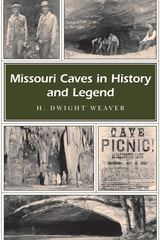
Missouri Caves in History and Legend
H. Dwight Weaver
University of Missouri Press, 2007
Missouri has been likened to a “cave factory” because its limestone bedrock can be slowly dissolved by groundwater to form caverns, and the state boasts more than six thousand caves in an unbelievable variety of sizes, lengths, and shapes. Dwight Weaver has been fascinated by Missouri’s caves since boyhood and now distills a lifetime of exploration and research in a book that will equally fascinate readers of all ages.
Missouri Caves in History and Legend records a cultural heritage stretching from the end of the ice age to the twenty-first century. In a grand tour of the state’s darkest places, Weaver takes readers deep underground to shed light on the historical significance of caves, correct misinformation about them, and describe the ways in which people have used and abused these resources.
Weaver tells how these underground places have enriched our knowledge of extinct animals and early Native Americans. He explores the early uses of caves: for the mining of saltpeter, onyx, and guano; as sources of water; for cold storage; and as livestock shelters. And he tells how caves were used for burial sites and moonshine stills, as hideouts for Civil War soldiers and outlaws—revealing how Jesse James became associated with Missouri caves—and even as venues for underground dance parties in the late nineteenth century.
Bringing caves into the modern era, Weaver relates the history of Missouri’s “show caves” over a hundred years—from the opening of Mark Twain Cave in 1886 to that of Onyx Mountain Caverns in 1990—and tells of the men and women who played a major role in expanding the state’s tourism industry. He also tracks the hunt for the buried treasure and uranium ore that have captivated cave explorers, documents the emergence of organized caving, and explains how caves now play a role in wildlife management by providing a sanctuary for endangered bats and other creatures.
Included in the book is an overview of cave resources in twelve regions, covering all the counties that currently have recorded caves, as well as a superb selection of photos from the author’s extensive collection, depicting the history and natural features of these underground wonders. Missouri Caves in History and Legend is a riveting account that marks an important contribution to the state’s heritage and brings this world of darkness into the light of day.

Missouri Law and the American Conscience
Historical Rights and WrongsEdited by Kenneth H. Winn
University of Missouri Press, 2016

Missouri at Sea
Warships with Show-Me State NamesRichard E. Schroeder
University of Missouri Press, 2004
For each vessel, a brief history is supplied, and the book is illustrated with many extraordinary images and photographs taken from official U.S. government records and archives. Schroeder begins his volume with the first St. Louis and other small early ships that were symbolic of America’s modest nineteenth-century commercial and political ambitions. The first Missouri, one of the earliest American steamships, depicts the United States’ move into the industrial and technological revolution of the nineteenth century.
Another Federal St. Louis and a Confederate Missouri highlight the Mississippi River Civil War campaign. Schroeder then turns to America’s rise as a global military power at the beginning of the twentieth century with stories of the St. Louis in the Spanish-American War and the first battleship Missouri of Teddy Roosevelt’s Great White Fleet. The dominance of the U.S. Navy during World War II in the Pacific theater is illustrated by the fourth and most famous of all the ships to bear the name Missouri, whose deck was the site for the Japanese surrender.
The advanced technological achievements of the mid-twentieth century are represented by the nuclear submarines named for one of Missouri’s favorite sons and for its capital: Daniel Boone and Jefferson City. Also highlighted in the volume is the 5,000-crew nuclear aircraft carrier Harry S. Truman, along with smaller ships named for Missouri war heroes. Missouri at Sea will appeal to those readers interested in naval history and technology or Missouri history.