Results by title
28167 books match the query 'History' and 1583 start with m
Mutant Ecologies
Manufacturing Life in the Age of Genomic CapitalErica Borg
Pluto Press, 2022
How capitalism is reconfiguring the very texture of life
Mutant Ecologies traces the spinning of new synthetic threads into the web of life. It is a critical cartography of the shifting landscapes of capital accumulation conjured by recent developments in genomic science, genome editing, and the biotech industry.
CRISPR crops, fast-growing salmons, heat-resistant Slick™ cows, Friendly™ Mosquitoes, humanized mice, pigs growing human organs – these are but a few of the dazzling new life-forms that have recently emerged from corporate and university laboratories around the world, all promising to lubricate the circuits of capital accumulation in distinct ways. The deliberate induction of genetic mutations is increasingly central to business operations in a number of sectors, from agriculture to pharmaceuticals.
While the Nobel Committee recently proclaimed the life sciences to have entered 'a new epoch', the authors show how these technological innovations continue to operate within a socio-historical context defined by the iron rules of capitalist competition and exploitation. Capital no longer contents itself by simply appropriating the living bodies of plants and animals. It purposefully designs its internal metabolism, and in that way, it redesigns the countless living vectors that constitute the global biosphere. It is driving a biological revolution, which will ripple through the everyday lives of people everywhere.
Mutants and Mystics
Science Fiction, Superhero Comics, and the ParanormalJeffrey J. Kripal
University of Chicago Press, 2011
But that's just scratching the surface, says Jeffrey Kripal. In Mutants and Mystics, Kripal offers a brilliantly insightful account of how comic book heroes have helped their creators and fans alike explore and express a wealth of paranormal experiences ignored by mainstream science. Delving deeply into the work of major figures in the field—from Jack Kirby’s cosmic superhero sagas and Philip K. Dick’s futuristic head-trips to Alan Moore’s sex magic and Whitley Strieber’s communion with visitors—Kripal shows how creators turned to science fiction to convey the reality of the inexplicable and the paranormal they experienced in their lives. Expanded consciousness found its language in the metaphors of sci-fi—incredible powers, unprecedented mutations, time-loops and vast intergalactic intelligences—and the deeper influences of mythology and religion that these in turn drew from; the wildly creative work that followed caught the imaginations of millions. Moving deftly from Cold War science and Fredric Wertham's anticomics crusade to gnostic revelation and alien abduction, Kripal spins out a hidden history of American culture, rich with mythical themes and shot through with an awareness that there are other realities far beyond our everyday understanding.
A bravura performance, beautifully illustrated in full color throughout and brimming over with incredible personal stories, Mutants and Mystics is that rarest of things: a book that is guaranteed to broaden—and maybe even blow—your mind.
Mute Dreams, Blind Owls, and Dispersed Knowledges
Persian Poesis in the Transnational CircuitryMichael M. J. Fischer
Duke University Press, 2004
Fischer reveals how the distinctive expressive idiom emerging in contemporary Iranian film reworks Persian imagery that has itself been in dialogue with other cultures since the time of Zoroaster and ancient Greece. He examines a range of narrative influences on this expressive idiom and imagery, including Zoroastrian ritual as it is practiced in Iran, North America, and India; the mythic stories, moral lessons, and historical figures written about in Iran’s national epic, the Shahnameh; the dreamlike allegorical world of Persian surrealism exemplified in Sadeq Hedayat’s 1939 novella The Blind Owl; and the politically charged films of the 1960s and 1970s. Fischer contends that by combining Persian traditions with cosmopolitan influences, contemporary Iranian filmmakers—many of whom studied in Europe and America—provide audiences around the world with new modes of accessing ethical and political experiences.
Muting Israeli Democracy
How Media and Cultural Policy Undermine Free ExpressionAmit M. Schejter
University of Illinois Press, 2009
Muzzled Oxen
Reaping Cotton and Sowing Hope in 1920s ArkansasGenevieve Grant Sadler
Butler Center for Arkansas Studies, 2014
My Blue Heaven
Life and Politics in the Working-Class Suburbs of Los Angeles, 1920-1965Becky M. Nicolaides
University of Chicago Press, 2002
As Becky M. Nicolaides shows in My Blue Heaven, this ethic of self-reliance and homeownership formed the core of South Gate's identity. With post-World War II economic prosperity, the community's emphasis shifted from building homes to protecting them as residents tried to maintain their standard of living against outside threats—including the growing civil rights movement—through grassroots conservative politics based on an ideal of white homeowner rights. As the citizens of South Gate struggled to defend their segregated American Dream of suburban community, they fanned the flames of racial inequality that erupted in the 1965 Watts riots.
My Bondage and My Freedom
Frederick Douglass
University of Illinois Press, 1988
My Brother's Keeper
George McGovern and Progressive ChristianityMark A. Lempke
University of Massachusetts Press, 2017
George McGovern is chiefly remembered for his landslide loss to Richard Nixon in 1972. Yet at the time, his candidacy raised eyebrows by invoking the prophetic tradition, an element of his legacy that is little studied. In My Brother's Keeper, Mark A. Lempke explores the influence of McGovern's evangelical childhood, Social Gospel worldview, and conscientious Methodism on a campaign that brought antiwar activism into the mainstream.
McGovern's candidacy signified a passing of the torch within Christian social justice. He initially allied with the ecumenical movement and the mainline Protestant churches during a time when these institutions worked easily with liberal statesmen. But the senator also galvanized a dynamic movement of evangelicals rooted in the New Left, who would dominate subsequent progressive religious activism as the mainline entered a period of decline. My Brother's Keeper argues for the influential, and often unwitting, role McGovern played in fomenting a “Religious Left” in 1970s America, a movement that continues to this day. It joins a growing body of scholarship that complicates the dominant narrative of that era's conservative Christianity.
My Cocaine Museum
Michael Taussig
University of Chicago Press, 2004
Combining natural history with political history in a filmic, montage style, Taussig deploys the show-and-tell modality of a museum to engage with the inner life of heat, rain, stone, and swamp, no less than with the life of gold and cocaine.
This effort to find a poetry of words becoming things is brought to a head by the explosive qualities of those sublime fetishes of evil beauty, gold and cocaine. At its core, Taussig's museum is about the lure of forbidden things, charged substances that transgress moral codes, the distinctions we use to make sense of the world, and above all the conventional way we write stories.
My Culture, My Color, My Self
Heritage, Resilience, and Community in the Lives of Young AdultsToby S. Jenkins
Temple University Press, 2013
In her vibrant ethnography My Culture, My Color, My Self, Toby Jenkins provides engrossing, in-depth interviews and poignant snapshots of young adults talking about their lives and culture. She recounts D'Leon's dream to become a positive example for African American men, and Francheska describing how her late mother inspired her appreciation of her Boricua heritage. In these and other portraits, Jenkins considers the role that cultural education and engagement plays in enhancing educational systems, neighborhood programs, and community structures.
My Culture, My Color, My Self also features critical essays that focus on broader themes such as family bonds, education, and religion. Taken together, Jenkins shows how people of color use their culture as both a politic of social survival and a tool for social change.
My Daughter, the Teacher
Jewish Teachers in the New York City SchoolsMarkowitz, Ruth Jacknow
Rutgers University Press, 1993
My Dearest Angel
A Virginia Family Chronicle 1895–1947Katie Letcher Lyle
Ohio University Press, 2002
She was the daughter of a circuit judge and state senator. He was the youngest son of Virginia’s Civil War governor and was a state legislator himself at the age of nineteen. Their courtship and marriage stands as a portrait of a bygone way of life unique to the American South during the first half of the twentieth century. My Dearest Angel is their story, told through their faithful correspondence over the course of their fifty years together.
Piecing together the voluminous letters, their granddaughter, noted author Katie Letcher Lyle, has succeeded in giving us an intimate panorama of the full and oftentimes wrenching lives led by Greenlee and Katie Letcher. Domestic life, family secrets, and visiting luminaries are part of their story. But the abiding appeal of My Dearest Angel is the maturation of a lifelong relationship built on the crest of a changing world.
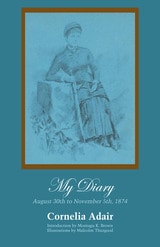
My Diary
August 30th to November 5th, 1874By Cornelia Adair. Introduction by Montagu K. Brown, Illustrations by Malcolm Thurgood
University of Texas Press, 1965
Cornelia Wadsworth Adair’s ancestors had pioneered in western New York, where they opened and developed large, palatial estates; and the life they lived was elegant and aristocratic. Adair too was discreetly cultured; yet she took great personal pleasure in the rough and primitive land of her famed JA Ranch in north Texas. Because of physical discomfort and noisy passengers, she detested traveling by railroad coach; yet she could ride all day on horseback and lie down to sleep on a makeshift cot by a waterhole or on an Indian’s flea-infested buffalo rug. She was a lady of interesting contradictions.
This little Diary is her lively account of a two-month trip which she and her husband made into the western part of the United States in 1874. The ostensible purpose of the trip was to hunt buffalo; however, these large beasts actually play a very small part in the journal. Rather, the book is an interesting and often amusing account, by an observant woman, of the long journey from her husband’s estate in Ireland to New York, to Chicago and on into upper Michigan, across Lake Superior to Minnesota, down the Mississippi for several days, out to the buffalo-hunting grounds in Nebraska, then to Denver and the wonders of the Rocky Mountains, and finally back to New York and the Europe-bound ship.
Adair writes with an easy fluency; and her eye for picturesque detail, her taste for amusing incongruities, her romanticist’s delight in Nature, and her instinct for a “good tale” combine to make her Diary pleasant and entertaining reading, while her powers of keen observation provide valuable insight into life as it was then in the West. First printed for private circulation in 1918, the original book is now a rare collector’s item of Western Americana. Mrs. Adair said that she was allowing its publication for two reasons. First, she was afraid that her grandchildren and young friends would remember her only as “an old lady who sat in an armchair, and whose stick had to be looked for”; she wanted them to know that she had once been “a very lively person . . . [who] did all sorts of exciting things.” Second, she felt it worthwhile to record her experiences because “the world is changing so quickly, ways of travelling especially so . . . and I think it may be interesting to compare what was done in 1874 with what will be done by the time the children are able to travel. No doubt they will do their journeys by air, and do many, many things that I have not been able to do; but they can never see the prairies of America in their wild uncivilised state, or hunt buffalo over them, nor can they pow-wow with the Red Indians in a camp on the Platte River. So every time has its own special joys, and the great thing is to miss as little as possible, and to share as much.”

My Eighty Years in Texas
By William Physick Zuber
University of Texas Press, 1971
Almost a century and a half went into the making of My Eighty Years in Texas. It began as a diary, kept by fifteen-year-old William Physick Zuber after he joined Sam Houston’s Texas army in 1836, hoping he could emulate the heroism of American Revolutionary patriots. Although his hopes were never realized, Zuber recorded the privations, victories, and defeats of armies on the move during the Texas Revolution, the Indian campaigns, and, as he styled it, the Confederate War.
In 1910, at the age of ninety, Zuber began the enormous task of transcribing his diaries and his memories for publication. After his death in 1913, the handwritten manuscript, 1, was placed in the Texas State Archives, where it was used as a reference source by students and scholars of Texas history. Over a half century after Zuber’s death, Janis Boyle Mayfield finally brought his publication plans to fruition.
Zuber details his early zest for learning and his laborious methods of self-education. He tells of the trials of organizing and teaching schools in the sparsely populated plains. He recalls the day-by-day happenings of a private soldier in the Texas army of 1836, the Texas Militia, and the Confederate army—including the mishaps of army life and the encounters with enemies from San Jacinto to Cape Girardeau. After the Civil War, his interest turns to the politics of Reconstruction, the veterans’ pension, and the founding of the Texas Veterans Association.
This is the story of and by an outspoken Texian, complete with his attitudes, principles, and moralizings, and the nineteenth-century style and flavor of his writing.
Included as an appendix is “An Escape from the Alamo,” the account of Moses Rose for which Zuber, who was a prolific writer, was best known. A historiography of the Rose story, a bibliography of Zuber’s published and unpublished writings, annotation, and an introduction are provided by Llerena Friend.

My Ever Dear Daughter, My Own Dear Mother
The Correspondence of Julia Sonte Towne and Mary Julia Towne, 1868-1882Katherine R. Morgan
University of Iowa Press, 1996
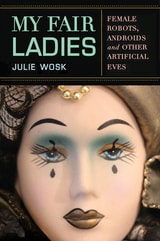
My Fair Ladies
Female Robots, Androids, and Other Artificial EvesWosk, Julie
Rutgers University Press, 2015
The fantasy of a male creator constructing his perfect woman dates back to the Greek myth of Pygmalion and Galatea. Yet as technology has advanced over the past century, the figure of the lifelike manmade woman has become nearly ubiquitous, popping up in everything from Bride of Frankenstein to Weird Science to The Stepford Wives. Now Julie Wosk takes us on a fascinating tour through this bevy of artificial women, revealing the array of cultural fantasies and fears they embody.
My Family's Role in the World Revolution
and Other ProseBora Cosic
Northwestern University Press, 1997
During the German occupation of Belgrade, a family—including an alarmist mother, an eternally drunk father, two young aunts who swoon over American movie stars, and a playboy uncle—attempt to find any kind of work they can do at home. When the postwar Socialist society is being ushered in after the war, the narrator becomes the slogan-spouting ideological leader of the household, while his family tries—and often fails miserably—to take part in the "great change."
This volume also includes several Ćosić short stories, and recent essays on the war in the former Yugoslavia.

My Father Said Yes
A White Pastor in Little Rock School IntegrationDunbar H. Ogden
Vanderbilt University Press, 2008
My Father Said Yes is the untold story of the Reverend Dunbar Ogden, who became the pro-integration leader in Little Rock's white community. He responded to a call for support from Daisy Bates, co-owner of the town's black newspaper. Both faced fierce opposition from within as well as from outside. Reverend Ogden lost his church and Daisy Bates lost her newspaper.
This memoir is also a moving father-son story. In this frank account, the author discusses the depression his father battled for most of his life, as well as the family tragedy of his brother's suicide.
My Father's Name
A Black Virginia Family after the Civil WarLawrence P. Jackson
University of Chicago Press, 2012
My Father’s Name is a family story full of twists and turns—and one of haunting familiarity to many Americans, who may question whether the promises of emancipation have ever truly been fulfilled. It is also a resolute look at the duties that come with reclaiming and honoring Americans who survived slavery and a thoughtful meditation on its painful and enduring history.
My Father's War
A True Story of Nazism and Treasonby Bjørn Westlie, translated by Dean Krouk
University of Wisconsin Press, 2023
With an insightful introduction from translator Dean Krouk, My Father’s War is a contemporary classic of war literature. Committed to genuine understanding without falling into undue sympathizing, this sober and reflective book presents an eye-opening, moving, intense, and necessary account of the allure of fascism in a world at war—and its personal costs.
My Father's War
Fighting with the Buffalo Soldiers in World War IICarolyn Ross Johnston
University of Alabama Press, 2012
A compelling story of a unit of Buffalo Soldiers and their white commander fighting on the Italian front during World War II.
The 92nd Division of the Fifth Army was the only African American infantry division to see combat in Europe during 1944 and 1945, suffering more than 3,200 casualties. Members of this unit, known as Buffalo Soldiers, endured racial violence on the home front and experienced racism abroad. Engaged in combat for nine months, they were under the command of southern white infantry officers like their captain, Eugene E. Johnston.
Carolyn Ross Johnston draws on her father’s account of the war and her extensive interviews with other veterans of the 92nd Division to describe the experiences of a naïve southern white officer and his segregated unit on an intimate level. During the war, the protocol that required the assignment of southern white officers to command black units, both in Europe and in the Pacific theater, was often problematic, but Johnston seemed more successful than most, earning the trust and respect of his men at the same time that he learned to trust and respect them. Gene Johnston and the African American soldiers were transformed by the war and upon their return helped transform the nation.
My Father’s Books
Luan Starova; Translated by Christina E. Kramer
University of Wisconsin Press, 2012
In My Father’s Books, the first volume in Luan Starova’s multivolume Balkan Saga, he explores themes of history, displacement, and identity under three turbulent regimes—Ottoman, Fascist, and Stalinist—in the twentieth century. Weaving a story from the threads of his parents’ lives from 1926 to 1976, he offers a child’s-eye view of personal relationships in shifting political landscapes and an elegiac reminder of the enduring power of books to sustain a literate culture.
Through lyrical waves of memory, Starova reveals his family’s overlapping religious, linguistic, national, and cultural histories. His father left Constantinople as the Ottoman Empire collapsed, and the young family fled from Albania to Yugoslav Macedonia when Luan was a boy. His parents, cosmopolitan and well-traveled in their youth, and steeped in the cultures of both Orient and Occident, find themselves raising their children in yet another stagnant and repressive state. Against this backdrop, Starova remembers the protected spaces of his childhood—his mother’s walled garden, his father’s library, the cupboard holding the rarest and most precious of his father’s books. Preserving a lost heritage, these books also open up a world that seems wide, deep, and boundless.
My Father’s Closet
Karen McClintock
The Ohio State University Press, 2017
“Karen McClintock reconstructs the details of her father’s double life with novelistic flair, keen psychological insight, and graceful compassion.” —Alison Bechdel
Thirty years after her father’s death, Karen McClintock sets out to find the gay father she never really knew. As we follow the unraveling family secret, we find ourselves drawn into her story as they stumble into infidelity, grieve heartbreaking losses, and remain loyal in love.
Set in Columbus, Ohio, My Father’s Closet tells the story of how just before the war, McClintock’s parents fell in love and married, while overseas in Germany the man whom she believes became her father’s lover was concealing his Jewish and gay identities in order to escape to America. A set of her father’s journals, letters her parents sent to each other during the Second World War, and a mysterious painting all lead her toward the truth about her gay father. McClintock weaves a complex secret into the fabric of lives we truly care about. And in the process, she leads us out of her father’s closet.
This gripping memoir captures the longing children feel for a distant or hidden parent and taps into the complexity of human connection and abandonment. The characters are resilient and vibrant. The hidden lovers, the nosey neighbors, and surprise lovers all show up. In the end, this extraordinary family finds ways to connect and freedom to love. Anyone who grew up with a family secret will appreciate the dynamics afoot in this fast-paced and compelling story.

My Germany
A Jewish Writer Returns to the World His Parents EscapedLev Raphael
University of Wisconsin Press, 2009
Haunted by his parents’ horrific suffering and traumatic losses under Nazi rule, Lev Raphael grew up loathing everything German. Those feelings shaped his Jewish identity, his life, and his career. While researching his mother’s war years after her death, he discovers a distant relative living in the very city where she had worked in a slave labor camp, found freedom, and met his father. Soon after, Raphael is launched on book tours in Germany and, in the process, redefines himself as someone unafraid to face the past and let it go.
Bookmarks, “Top Ten Nonfiction Titles of 2009”
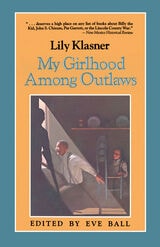
My Girlhood Among Outlaws
Lily Klasner
University of Arizona Press, 1972
In My Girlhood Among Outlaws, Lily recalls her experiences with Billy the Kid and other desperadoes, and sets the record straight on popular misrepresentations of events. Of particular interest to historians is her preservation of the diary of famous cattleman and family friend John Chisum.
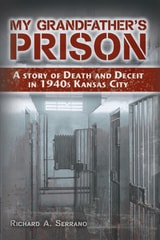
My Grandfather's Prison
A Story of Death and Deceit in 1940s Kansas CityRichard A. Serrano
University of Missouri Press, 2009
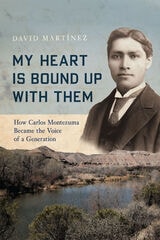
My Heart Is Bound Up with Them
How Carlos Montezuma Became the Voice of a GenerationDavid Martínez
University of Arizona Press, 2023
Through his diligent research and transcription of the letters archived in the Carlos Montezuma Collection at Arizona State University Libraries, David Martínez offers a critical new perspective on Montezuma’s biography and legacy. During an attempt to force the Fort McDowell Yavapai community off of their traditional homelands north of Phoenix, the Yavapai community members and leaders wrote to Montezuma pleading for help. It was these letters and personal correspondence from his Yavapai cousins George and Charles Dickens, as well as Mike Burns that sparked Montezuma’s desperate but principled desire to liberate his Yavapai family and community—and all Indigenous people—from the clutches of an oppressive Indian Bureau.
Centering historically neglected Indigenous voices as his primary source material, Martínez elevates Montezuma’s correspondence and interactions with his family and their community and shows how it influenced his advocacy. Martínez argues that Montezuma’s work in Arizona directly contributed to his national projects. For his Yavapai community, Montezuma set an example as a resistance fighter and advocate on behalf of his people and other Indigenous groups. Martínez offers a critical exploration of history, memory, the formation of archival collections, and the art of writing biography.
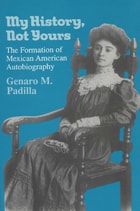
My History, Not Yours
The Formation of Mexican American AutobiographyGenaro M. Padilla
University of Wisconsin Press, 1994
"I am willing to relate all I can remember, but I wish it clearly understood that it must be in my own way, and at my own time. I will not be hurried or dictated to. It is my history and not yours I propose to tell.”—Mariano Guadelupe Vallejo, on “Recuerdos históricos y personales” (1875)
My History, Not Yours is a landmark study of the autobiographical writings of Mexican Americans in the century following the US-Mexican War of 1846-1848. Some 75,000 inhabitants of what is now Texas, New Mexico, Arizona, Nevada, and California were suddenly foreigners on their own lands. Faced with the deliberate obliteration of their history, culture, language, and personal experiences, these women and men set down the stories of their lives and their communities, as a means of both remembering and resisting.
Genaro M. Padilla and other scholars have begun to uncover the huge store of literary materials forgotten in manuscript archives: memoirs long out of print, others unpublished and unread, diaries, family histories, poetry, correspondence, and texts of corridos (ballads). Padilla writes, “Lives are scattered on broken pages, faded, partially lost at the margins, suspended in language unread until there is a reader who opens the file and begins. It is my intention to initiate a recovery of that autobiographical formation that emerged after a war of conquest.”
In providing an overview of this rich literature, Padilla also points out the power relations embedded in the narratives, showing that the reconstruction of the Mexican past was not merely nostalgic idealization, but often an angry and deeply politicized recovery of a world ruptured by American domination.

My House in Damascus
An Inside View of the Syrian CrisisDiana Darke
Haus Publishing, 2014
Diana Darke, a fluent Arabic speaker who moved to Damascus in 2004 after decades of regular visits, details how the Assad regime, and its relationship to the people, differs from the regimes in Egypt, Tunisia, and Libya—and why it was thus always less likely to collapse quickly, even in the face of widespread unrest and violence. Through the author’s firsthand experiences of buying and restoring a house in the old city of Damascus, which she later offered as a sanctuary to friends, Darke presents a clear picture of the realities of life on the ground and what hope there is for Syria’s future. Including additional material on topics like the advance of the Islamic State, as well as a new epilogue describing the current turmoil surrounding her house and the refugees she tried to help, this edition of My House in Damascus powerfully documents the human cost of the ongoing civil war.
My Journey
How One Woman Survived Stalin's GulagOlga Adamova-Sliozberg
Northwestern University Press, 2011
Arrested along with her husband (who, she would much later learn, was shot the next day) in the great purges of the thirties, Adamova-Sliozberg decided to record her Gulag experiences a year after her arrest, and she “wrote them down in her head” (paper and pencils were not available to prisoners) every night for years. When she returned to Moscow after the war in 1946, she composed the memoir on paper for the first time and then buried it in the garden of the family dacha. After her re-arrest and seven more years of banishment to Kazakhstan, she returned to the dacha to dig up the buried memoir, but could not find it. She sat down and wrote it all over again.
In her later years she also added a collection of stories about her family. Concluding on a hopeful note—Adamova-Sliozberg’s record is cleared, she re-marries a fellow former-prisoner, and she is reunited with her children—this story is a stunning account of perseverance in the face of injustice and unimaginable hardship. This vital primary source continues to fascinate anyone interesting in the tumultuous history of Russia and the Soviet Union in the twentieth century.
My Life As A Revolutionary
Reflections Of A Former GuerrilleraMaria Eugenia Vasquez Perdomo
Temple University Press, 2005
My Life On Mountain Railroads
William Gould
Utah State University Press, 1995
In 1917, Gilbert Gould achieved his dream to be an engineer, and began running engines for the Denver & Rio Grande and later for the Utah Railway. He was a natural storyteller, and his recollections are entertaining and historically rewarding.
My Life as a Filmmaker
Yamamoto Satsuo; Translated, Annotated, and with an Introduction by Chia-ning Chang
University of Michigan Press, 2017
In addition to detailed annotations of the autobiography, translator Chia-ning Chang offers a comprehensive introduction to the career and the significance of Yamamoto and his works in the context of Japanese film history. It contextualizes Yamamoto’s life and works in the historical and cultural zeitgeist of prewar, wartime, and postwar Japan before scrutinizing the unique qualities of his narrative voice and social conscience as a film artist.
My Life as a Spy
Investigations in a Secret Police FileKatherine Verdery
Duke University Press, 2018
My Life in Paper
Adventures in EphemeraBeth Kephart
Temple University Press, 2023
Kephart’s obsession with paper began in the wake of her father’s death, when she began to handcraft books and make and marble paper in his memory. But it was when she read My Life with Paper, an autobiography by the late renowned paper hunter and historian Dard Hunter, that she felt she had found a kindred spirit, someone to whom she might address a series of one-sided letters about life and how we live it. Remembering and crafting, wanting and loving, doubting and forgetting—the spine and weave of My Life in Paper came into view.
Paper, for Kephart, provides proof of our yearning, proof of our failure, proof of the people who loved us and the people we have lost. It offers, too, a counterweight to the fickle state of memory.
My Life in Paper, illustrated by the author herself, is an intimate and poignant meditation on life’s most pressing questions.

My Life in the PLO
The Inside Story of the Palestinian StruggleShafiq Al-Hout
Pluto Press, 2011
This is the inside story of the Palestine Liberation Organisation (PLO), from its beginnings in 1964 to the signing of the Oslo agreement in 1993.
For over three decades, the main goal of the PLO was to achieve a just peace in the Arab-Israeli conflict, and to build a democratic state in Palestine for all its citizens. Shafiq Al-Hout, a high ranking PLO official until his resignation in 1993, provides previously unavailable details on the key events in its history such as its recognition by the UN and the Oslo peace negotiations. Taking us right to the heart of the decision making processes, this book explains the personalities and internal politics that shaped the PLO's actions and the Palestinian experience of the twentieth century.
Although he was an insider, Al-Hout's book does not shy from analysing and criticising decisions and individuals, including Yasser Arafat. This book is an essential piece of history that sheds new light on the significance of the PLO in the Palestinian struggle for justice.
My Life with Literacy
The Continuing Education of a HistorianHarvey J. Graff
University Press of Colorado, 2025
My Life with President Kennedy
Christopher Clausen
University of Iowa Press, 1994
As its title implies, this book reflects in varying ways the experiences and attitudes of one who came of age in the first half of that now mythical decade, the 1960s. In an unusual combination of history, criticism, and autobiography, one of our best literary and cultural critics explores life and death in the late twentieth century and some of the older worlds that made American culture what it is today.
Sixties survivors, as Christopher Clausen points out, do not necessarily hold more beliefs or tastes in common than any other group. Nevertheless they may be more likely than most people born earlier or later to consider the relations between public and private life—the political and the personal—a problem, sometimes even an unresolvable problem. While this is not primarily a book about the 1960s, most of it occupies the noisy crossroads where public worlds intersect the private, mysterious lives of individuals and families, where ordinary people pursue their own destinies and desires while submitting consciously or unconsciously to the pressures of the public sphere—a set of demands or aspirations common to people in a particular time and place.
In modern America, where most of these essays are set, any individual is likely to live in several worlds at any given moment, as well as to pass through several more over a lifetime. Because of rapid transitions in public life and culture while they were still at an impressionable age, members of the “Kennedy generation” became almost morbidly conscious of the persistence of the past in the present. The often unpredictable effect on individual lives of historical forces is the main subject of Clausen's fascinating account.

My Life with the Green & Gold
Tales from 20 Years of SportscastingJessie Garcia
Wisconsin Historical Society Press, 2013
Ever wonder what it’s like to interview famous athletes and coaches? For twenty years, sportscaster Jessie Garcia has done just that. In My Life with the Green & Gold she brings fans to the sidelines at Lambeau Field, inside the locker room, aboard the Packers bus, and into the host’s chair at The Mike McCarthy Show.
A self-proclaimed “terrible athlete” born without sports in her blood, Garcia reported on Wisconsin’s beloved Green Bay Packers during the Holmgren, Rhodes, Sherman, and McCarthy years. She’s been a Packers sideline reporter for preseason games and covered the team during their Super Bowl showdowns against the Patriots, Broncos, and Steelers. She’s traveled with the team to Tokyo and the White House and to schools and retirement homes, where the gridiron heroes interacted with their fans. She’s visited the hometowns of players and coaches, she’s met their proud parents and their pets, she’s interviewed the team trainer about their strength exercises. My Life with the Green & Gold also features up-close and personal stories about other teams and athletes she’s covered, from the Badgers and Brewers to Wisconsin Olympians such as Bonnie Blair and Casey FitzRandolph.
Garcia’s expertise is capturing behind-the-scenes, human-interest stories. In My Life with the Green & Gold, she shares a personal and humorous insider’s look at many Wisconsin sports heroes from the perspective of a female sports journalist who has ridden the adrenaline rush to be on the air at 5:00 a.m., 10:00 p.m., and any hour in between, while also juggling the many demands of family life. Not many parents can say they’ve changed their child’s diaper in the tunnel at Lambeau, but Jessie Garcia can.
My Life's Travels and Adventures
An Eighteenth-Century Oculist in the Ottoman Empire and the European HinterlandRegina Salomea Pilsztynowa
Iter Press, 2020
This edition brings the entirety of this personal and idiosyncratic memoir to English for the first time.
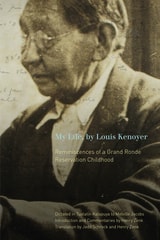
My Life, by Louis Kenoyer
Reminiscences of a Grand Ronde Reservation ChildhoodLouis Kenoyer
Oregon State University Press, 2017
My Nerves Are Bad
Puerto Rican Women Managing Mental Illness and HIV RiskSana Loue
Vanderbilt University Press, 2011
Sana Loue lets us see the remarkable strength of many of the women and hear in their own words about their efforts to survive, despite long histories of childhood physical and sexual abuse, partner violence, substance use, poverty, and severe mental illness. We also witness the violence that surrounds them and the HIV risk that becomes a part of their lives in their efforts to survive economically and emotionally.
My Odyssey Through the Underground Press
Michael Kindman
Michigan State University Press, 2011

My Palestine
An Impossible ExileMohammad Tarbush
Haus Publishing, 2025
Mohammad Tarbush was born in British Mandate Palestine. As an infant, he and his family were forced to evacuate their village together with its entire population, after the Zionist victory that led to the establishment of the State of Israel. Then as landless refugees in the West Bank, the family sank into poverty. When, as a teenager, Tarbush left home one day under the pretext of visiting relatives in Jordan, he in fact set off on a year-long hitchhiking journey to Europe, where he would eventually become a highly successful international banker and a key behind-the-scenes promoter of the Palestinian cause. In My Palestine, Mohammad Tarbush combines a poignant personal memoir with incisive political and economic commentary on the tumultuous events that shaped the history of Israel, Palestine, and the modern Middle East.
My Parents
Memoirs of New World IcelandersBirna Bjarnadottir
University of Manitoba Press, 2007
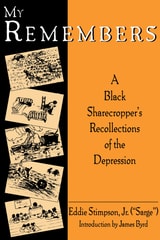
My Remembers
A Black Sharecropper's Recollections of the DepressionEddie Stimpson Jr.
University of North Texas Press, 1996
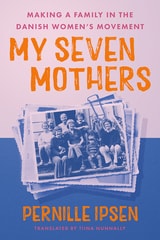
My Seven Mothers
Making a Family in the Danish Women's MovementPernille Ipsen
University of Minnesota Press, 2025
Seven women raise a child together while redefining their place in society at the beginning of the Women’s Movement in Denmark in the 1970s
On New Year’s Eve in Copenhagen in 1972, seven women had a child together: one gave birth and six others attended. They had met a year earlier at a feminist women’s camp on a small island and now, with about twenty other women’s liberationists, they occupied three dilapidated apartment buildings in the center of Copenhagen. One became the country’s first Women’s House, the nerve center of the Women’s Movement in Denmark, and the other two were women-only communal living spaces that were Pernille Ipsen’s first home. In this intimate portrait of life during the exhilarating early days of women’s liberation in Scandinavia and dramatic social change around the globe, she tells the stories of these seven women, her seven mothers.
Recounting her mothers’ history—from the passions and beliefs they shared to the political divisions over sexual identity that ultimately split them apart—Ipsen captures the individuality of each of her mothers as well as the common experiences that drew them together. As she deftly reflects the practical and emotional realities of her mothers’ women-centered life, Ipsen presents an engrossing picture of intersecting lives that, half a century ago, raised questions we still grapple with today: What is a family? Who is a woman? And who gets to decide?
A chronicle of gender, sexuality, and feminism as it was constructed, contested, and lived, My Seven Mothers is an eye-opening account of the challenges and possibilities connected with liberation and radical social change during the 1970s. In this time of fierce struggles over family, sexuality, and child-rearing, it reminds us that new worlds are always possible.
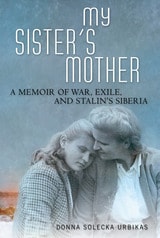
My Sister's Mother
A Memoir of War, Exile, and Stalin’s SiberiaDonna Solecka Urbikas
University of Wisconsin Press, 2019
In 1940, Janina Ślarzynska and her five-year-old daughter Mira were taken by Soviet secret police (NKVD) from their small family farm in eastern Poland and sent to Siberia with hundreds of thousands of others. So began their odyssey of hunger, disease, cunning survival, desperate escape across a continent, and new love amidst terrible circumstances.
But in the 1950s, baby boomer Donna yearns for a “normal” American family while Janina and Mira are haunted by the past. In this unforgettable memoir, Donna recounts her family history and her own survivor’s story, finally understanding the damaged mother who had saved her sister.
Finalist, Best Traditional Non-Fiction Book, Chicago Writers Association
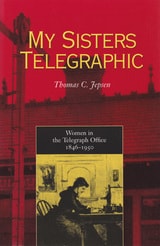
My Sisters Telegraphic
Women in the Telegraph Office, 1846–1950Thomas C. Jepsen
Ohio University Press, 2000
The role of the telegraph operator in the mid-nineteenth century was like that of today’s software programmer/analyst, according to independent scholar Tom Jepsen, who notes that in the “cyberspace” of long ago, male operators were often surprised to learn that the “first-class man” on the other end of the wire was a woman.
Like the computer, the telegraph caused a technological revolution. The telegraph soon worked synergistically with the era’s other mass-scale technology, the railroad, to share facilities as well as provide communications to help trains run on time.
The strategic nature of the telegraph in the Civil War opened opportunities for women, but tension arose as men began to return from military service. However, women telegraphers did not affect male employment or wage levels. Women kept their jobs after the war with support from industry—Western Union in particular—and because they defended and justified their role.
“Although women were predominantly employed in lower-paying positions and in rural offices, women who persisted and made a career of the profession could work up to managerial or senior technical positions that, except for wage discrimination, were identical to those of their male counterparts,” writes Jepsen. “Telegraphy as an occupation became gendered, in the sense that we understand today, only after the introduction of the teletype and the creation of a separate role for women teletype operators.”
My Sisters Telegraphic is a fresh introduction to this pivotal communications technology and its unsung women workers, long neglected by labor and social historians.
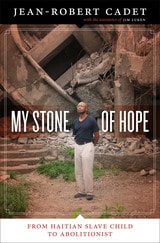
My Stone of Hope
From Haitian Slave Child to AbolitionistBy Jean-Robert Cadet
University of Texas Press, 2011
There are 27 million slaves living in the world today—more than at any time in history. Three hundred thousand of them are impoverished children in Haiti, who "stay with" families as unpaid and uneducated domestic workers, subject to physical, emotional, and sexual abuse. This practice, known locally as restavek ("staying with"), is so widespread that one in ten Haitian children is caught up in this form of slavery.
Jean-Robert Cadet was a restavek in Haiti from the late 1950s until the early 1970s. He told the harrowing story of his youth in Restavec: From Haitian Slave Child to Middle-Class American—a landmark book that exposed ongoing child slavery in Haiti. Now in My Stone of Hope, Cadet continues his story from his early attempts to adjust to freedom in American society to his current life mission of eliminating child slavery through advocacy and education. As he recounts his own struggles to surmount the psychological wounds of slavery, Cadet puts a human face on the suffering that hundreds of thousands of Haitians still endure daily. He also builds a convincing case that child slavery is not just one among many problems that Haiti faces as the Western Hemisphere's poorest nation. Rather, he argues that the systematic abuse of so many of its children is Haiti's fundamental problem, because it creates damaged adults who seem incapable of governing the country justly or managing its economy productively.
For everyone concerned about the fate of Haiti, the welfare of children, and the freedom of people around the globe, My Stone of Hope sounds an irresistible call to action.