Results by title
3071 books match the query 'Business & Economics' and 177 start with m
Monetary Policy Rules
Edited by John B. Taylor
University of Chicago Press, 1999
Monetary Policy Rules illustrates that simple policy rules are more robust and more efficient than complex rules with multiple variables. A state-of-the-art appraisal of the fundamental issues facing the Federal Reserve Board and other central banks, Monetary Policy Rules is essential reading for economic analysts and policymakers alike.
Monetary Policy in the United States
An Intellectual and Institutional HistoryRichard H. Timberlake
University of Chicago Press, 1993
After describing the constitutional principles that the Founding Fathers laid down to prevent state and federal governments from printing money. Timberlake shows how the First and Second Banks of the United States gradually assumed the central banking powers that were originally denied them. Drawing on congressional debates, government documents, and other primary sources, he analyses the origins and constitutionality of the greenbacks and examines the evolution of clearinghouse associations as private lenders of last resort. He completes this history with a study of the legislation that fundamentally changed the power and scope of the Federal Reserve System—the Banking Act of 1935 and the Monetary Control Act of 1980.
Writing in nontechnical language, Timberlake demystifies two centuries of monetary policy. He concludes that central banking has been largely a series of politically inspired government-serving actions that have burdened the private economy.
Monetary Policy with Very Low Inflation in the Pacific Rim
Edited by Takatoshi Ito and Andrew K. Rose
University of Chicago Press, 2006
The editors of this volume attribute low inflation and deflation in the region to a number of recent phenomena. Some of these episodes, they argue, may be linked to rapid growth on the supply side of economies. Here, inadequate demand policy can produce what is referred to as a "liquidity trap" in which the expectation of falling prices encourages agents to defer costly purchases, thereby discouraging growth. Low inflation rates can also be traced to the presence of a "zero-lower bound" on interest rates, as well as the inflation-targeting phenomenon. Targets have been set so low, the editors argue, that in some cases a few bad shocks lead to deflation.

Monetary Politics
Exchange Rate Cooperation in the European UnionThomas H. Oatley
University of Michigan Press, 1998
Monetary Trends in the United States and the United Kingdom
Their Relations to Income, Prices, and Interest RatesMilton Friedman and Anna J. Schwartz
University of Chicago Press, 1982

Money Talks
Media, Markets, CrisisEdited by Graham Murdock andJostein Gripsrud
Intellect Books, 2014
Money and Liberation
The Micropolitics of Alternative Currency MovementsPeter North
University of Minnesota Press, 2007
Is conventional money simply a discourse? Is it merely a socially constructed unit of exchange? If money is not an actual thing, are people then free to make collective agreements to use other forms of currency that might work more effectively for them? Proponents of “better money” argue that they have created currencies that value people more than profitability, ensuring that human needs are met with reasonable costs and decent wages—and supporting local economies that emphasize local sustainability. How did proponents develop these new economies? Are their claims valid?
Grappling with these questions and more, Money and Liberation examines the experiences of groups who have tried to build a more equitable world by inventing new forms of money. Presenting in-depth profiles of the trading networks that have been constructed both historically and more recently, including Local Exchange Trading Schemes (England), Green Dollars (New Zealand), Talente (Hungary), and the barter system in Argentina, Peter North shows how the use of currency has been redefined as part of political action, revealing surprising political ambiguity and a nuanced understanding of the potential and limits on alternative currencies as a resistance practice.
Peter North is lecturer in geography at the University of Liverpool.
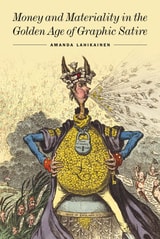
Money and Materiality in the Golden Age of Graphic Satire
Amanda Lahikainen
University of Delaware Press, 2022
This book examines the entwined and simultaneous rise of graphic satire and cultures of paper money in late eighteenth- and early nineteenth-century Britain. Asking how Britons learned to value both graphic art and money, the book makes surprising connections between two types of engraved images that grew in popularity and influence during this time. Graphic satire grew in visual risk-taking, while paper money became a more standard carrier of financial value, courting controversy as a medium, moral problem, and factor in inflation. Through analysis of satirical prints, as well as case studies of monetary satires beyond London, this book demonstrates several key ways that cultures attach value to printed paper, accepting it as social reality and institutional fact. Thus, satirical banknotes were objects that broke down the distinction between paper money and graphic satire altogether.

Money and Power
Great Predators in the Political Economy of DevelopmentSarah Bracking
Pluto Press, 2009
Sarah Bracking explores the role of governments and development finance institutions in managing the markets in which the poorest countries operate. These institutions -- the 'Great Predators' -- are trapping the populations of the south in a permanent cycle of austerity.
Bracking examines the political economy relations between states. She shows how pseudo-public 'development' institutions retain complete economic control over Southern markets, yet the international system is itself unregulated. Operating in the interests of North America and the European Union, they have a political purpose, and yet serve to cloud the brute power relations between states.
This book will be of interest to anyone studying debt and development, global financial institutions, and the way the world economy is regulated and governed.
Money and Society
A Critical CompanionAxel T. Paul
Pluto Press, 2021

Money in Historical Perspective
Anna J. Schwartz
University of Chicago Press, 1987
In the papers in part I, dating from 1947 to the present, Dr. Schwartz examines money and banking in the United States and the United Kingdom from a historical perspective. Her investigation of the historical evidence linking economic instability to erratic monetary behavior—this behavior itself a product of discretionary monetary policy—has led her to argue for the importance of stable money, and her writings on these issues over the last two decades form part II. The volume concludes with four recent articles on international monetary arrangements, including Dr. Schwartz's well-known work on the gold standard.
This volume of classic essays by Anna Schwartz will be a useful addition to the libraries of scholars and students for its exemplary historical research and commentary on monetary systems.

Money, Capital, and Fluctuations
Early EssaysF. A. Hayek
University of Chicago Press, 1984
EDITOR'S INTRODUCTION
INTRODUCTION
1. THE MONETARY POLICY OF THE UNITED STATES AFTER THE RECOVERY FROM THE 1920 CRISIS (1925)
2. SOME REMARKS ON THE PROBLEM OF IMPUTATION (1926)
3. ON THE PROBLEM OF THE THEORY OF INTEREST (1927)
4. INTERTEMPORAL PRICE EQUILIBRIUM AND MOVEMENTS IN THE VALUE OF MONEY (1928)
5. THE FATE OF THE GOLD STANDARD (1932)
6. CAPITAL CONSUMPTION (1932)
7. ON 'NEUTRAL MONEY' (1933)
8. TECHNICAL PROGRESS AND EXCESS CAPACITY (1936)
Two reviews
MARGINAL UTILITY AND ECONOMIC CALCULATION (1925)
THE EXCHANGE VALUE OF MONEY (1929)
NAME INDEX

Money, History, and International Finance
Essays in Honor of Anna J. SchwartzEdited by Michael D. Bordo
University of Chicago Press, 1989

Money, Money, Money!
A Short Lesson in EconomicsHans Magnus Enzensberger
Seagull Books, 2020
The Federmanns live a pleasant but painfully normal life in the Munich suburbs. All that the three children really know about money is that there’s never enough of it in their family.
Every so often, their impish Great-Aunt Fé descends on the city. After repeated cycles of boom and bust, profligacy and poverty, the grand old lady has become enormously wealthy and lives alone in a villa on the shore of Lake Geneva. But what does Great-Aunt Fé want from the Federmanns, her only surviving relatives? This time, she invites the children to tea at her luxury hotel where she spoils, flummoxes, and inspires them. Dismayed at their ignorance of the financial ways of the world, she gives them a crash course in economics that piques their curiosity, unsettles their parents, and throws open a whole new world. The young Federmanns are for once taken seriously and together they try to answer burning questions: Where does money come from? Why are millionaires and billionaires never satisfied? And why are those with the most always showered with more?
In this rich volume, the renowned poet, translator, and essayist Hans Magnus Enzensberger turns his gimlet eye on the mechanisms and machinations of banks and politicians—the human greed, envy, and fear that fuels the global economy. A modern, but moral-less fable, Money, Money, Money! is shot through with Enzensberger’s trademark erudition, wit, and humanist desire to cut through jargon and forearm his readers against obscurantism.
Money, Myths, and Change
The Economic Lives of Lesbians and Gay MenM.V. Lee Badgett
University of Chicago Press, 2001
Money, Myths, and Change provides new answers to these complex questions. This is the first comprehensive work to explore the economic lives of gays and lesbians in the United States. M. V. Lee Badgett weaves through and debunks common stereotypes about gay privilege, income, and consumer behavior. Studying the ends and means of gay life from an economic perspective, she disproves the assumption that gay men and lesbians are more affluent than heterosexuals, that they inspire discrimination when they come out of the closet, that they consume more conspicuously, that they enjoy a more self-indulgent, even hedonistic lifestyle. Badgett gets to the heart of these misconceptions through an analysis of the crucial issues that affect the livelihood of gay men and lesbians: discrimination in the workplace, denial of health care benefits to domestic partners and children, lack of access to legal institutions such as marriage, the corporate wooing of gay consumer dollars, and the use of gay economic clout to inspire social and political change.
Both timely and readable, Money, Myths, and Change stands as a much-needed corrective to the assumptions that inhibit gay economic equality. It is a definitive work that sheds new light on just what it means to be gay or lesbian in the United States.
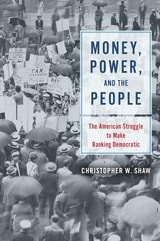
Money, Power, and the People
The American Struggle to Make Banking DemocraticChristopher W. Shaw
University of Chicago Press, 2019
Yet the situation was vastly different a century ago, as Christopher W. Shaw shows. This book upends the conventional thinking that financial policy in the early twentieth century was set primarily by the needs and demands of bankers. Shaw shows that banking and politics were directly shaped by the literal and symbolic investments of the grassroots. This engagement remade financial institutions and the national economy, through populist pressure and the establishment of federal regulatory programs and agencies like the Farm Credit System and the Federal Deposit Insurance Corporation. Shaw reveals the surprising groundswell behind seemingly arcane legislation, as well as the power of the people to demand serious political repercussions for the banks that caused the Great Depression. One result of this sustained interest and pressure was legislation and regulation that brought on a long period of relative financial stability, with a reduced frequency of economic booms and busts. Ironically, this stability led to the decline of the very banking politics that brought it about.
Giving voice to a broad swath of American figures, including workers, farmers, politicians, and bankers alike, Money, Power, and the People recasts our understanding of what might be possible in balancing the needs of the people with those of their financial institutions.
Monitored
Business and Surveillance in a Time of Big DataPeter Bloom
Pluto Press, 2019
What does this technocratic ideology and surveillance-heavy culture reveal about the deeper reality of modern society? Monitored investigates the history and implications of this modern accountability paradox. Peter Bloom reveals pervasive monitoring practices which mask how at its heart, the elite remains socially and ethically out of control.
Challenging their exploitive 'accounting power', Bloom demands that the systems that administer our lives are oriented to social liberation and new ways of being in the world.
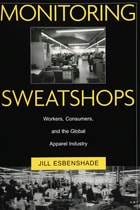
Monitoring Sweatshops
Workers, Consumers, And TheJill Esbenshade
Temple University Press, 2004
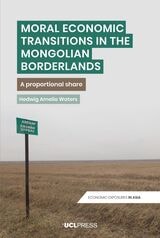
Moral Economic Transitions in the Mongolian Borderlands
A Proportional ShareHedwig Amelia Waters
University College London, 2023
In the early 1990s, Mongolia began a transition from socialism to a market democracy. In the process, the country became more than ever dependent on international mining revenue. Nearly thirty years later, many of Mongolia’s poor and rural feel that, rather than share in the prosperity the transition was supposed to spread, they have been forgotten.
Moral Economic Transitions in the Mongolian Borderlands analyzes this period of change from the viewpoint of the rural township of Magtaal on the Chinese border. After the end of socialism, the population of this resource-rich area found itself without employment or state institutions yet surrounded by lush nature and mere kilometers from the voracious Chinese market. A two-tiered resource-extractive political-economic system developed. At the same time as large-scale, formal, legally sanctioned conglomerates arrived to extract oil and other resources, local residents grew increasingly dependent on the Chinese-funded informal, illegal cross-border wildlife trade. More than a story about rampant capitalist extraction in the resource frontier, this book intimately details the complex inner worlds, moral ambiguities, and emergent collective politics constructed by individuals who feel caught in political-economic shifts that are largely outside of their control.

Moral Philosophy and Development
The Human Condition in AfricaTedros Kiros
Ohio University Press, 1992
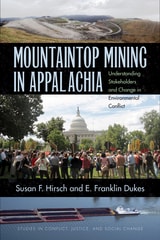
Mountaintop Mining in Appalachia
Understanding Stakeholders and Change in Environmental ConflictSusan F. Hirsch
Ohio University Press, 2014
Residents of the Appalachian coalfields share a history and heritage, deep connections to the land, and pride in their own resilience. These same residents are also profoundly divided over the practice of mountaintop mining—that is, the removal and disposal in nearby valleys of soil and rock in order to reach underlying coal seams. Companies and some miners claim that the practice has reduced energy prices, earned income for shareholders, and provided needed jobs. Opponents of mountaintop mining argue that it poisons Appalachia’s waters and devastates entire communities for the sake of short-term gains.
This conflict is emblematic of many other environmental disputes in the United States and around the world, disputes whose intensity derives not only from economic and environmental stakes but also from competing claims to individual and community identity. Looking beyond the slogans and seemingly irreconcilable differences, however, can reveal deeper causes of conflict, such as flawed institutions, politics, and inequality or the strongly held values of parties for whom compromise is difficult to achieve.
Mountaintop Mining in Appalachia focuses on the people of the region, the people who have the most at stake and have been the most active in trying to shift views and practices. By examining the experiences of these stakeholders and their efforts to effect change, Susan F. Hirsch and E. Franklin Dukes introduce key concepts and theories from the field of conflict analysis and resolution. They provide a compelling case study of how stakeholders challenge governance-as-usual, while offering insight into the causes of conflict over other environmental issues.

Moving Up or Moving On
Who Gets Ahead in the Low-Wage Labor Market?Fredrik Andersson
Russell Sage Foundation, 2005
Mozambique's Experience in Building a National Extension System
Helder Gemo
Michigan State University Press, 2005
Agricultural extension services are undergoing rapid change in many countries, with a shift in funding and management from the public to the private sector. This is especially true in Africa, where donors from industrial countries, and more recently from the middle-income developing countries such as Chile, have historically promoted and financed those extension models. Currently, African nations are being encouraged to import the Farmer Field School extension model, which is meeting with some success in Asia.
Mozambique, a former Portuguese colony, became independent in 1975 but was wracked by civil war in the 1980s. It was unable to establish its public extension service until 1987. The authors analyze the growth and evolution of extension from 1987 to 2004, as provided by public, private, and NGO sources in Mozambique.
This work highlights the Ministry of Agriculture's drive to develop and test both local and imported extension models and share its experience with other African countries.
Much Ado about Culture
North American Trade DisputesKeith Acheson and Christopher Maule
University of Michigan Press, 2001
Municipal Finance Journal, volume 45 number 2-3 (Summer 2024)
The University of Chicago Press
University of Chicago Press Journals, 2024

Mutant Ecologies
Manufacturing Life in the Age of Genomic CapitalErica Borg
Pluto Press, 2022
How capitalism is reconfiguring the very texture of life
Mutant Ecologies traces the spinning of new synthetic threads into the web of life. It is a critical cartography of the shifting landscapes of capital accumulation conjured by recent developments in genomic science, genome editing, and the biotech industry.
CRISPR crops, fast-growing salmons, heat-resistant Slick™ cows, Friendly™ Mosquitoes, humanized mice, pigs growing human organs – these are but a few of the dazzling new life-forms that have recently emerged from corporate and university laboratories around the world, all promising to lubricate the circuits of capital accumulation in distinct ways. The deliberate induction of genetic mutations is increasingly central to business operations in a number of sectors, from agriculture to pharmaceuticals.
While the Nobel Committee recently proclaimed the life sciences to have entered 'a new epoch', the authors show how these technological innovations continue to operate within a socio-historical context defined by the iron rules of capitalist competition and exploitation. Capital no longer contents itself by simply appropriating the living bodies of plants and animals. It purposefully designs its internal metabolism, and in that way, it redesigns the countless living vectors that constitute the global biosphere. It is driving a biological revolution, which will ripple through the everyday lives of people everywhere.

My Sisters Telegraphic
Women in the Telegraph Office, 1846–1950Thomas C. Jepsen
Ohio University Press, 2000
The role of the telegraph operator in the mid-nineteenth century was like that of today’s software programmer/analyst, according to independent scholar Tom Jepsen, who notes that in the “cyberspace” of long ago, male operators were often surprised to learn that the “first-class man” on the other end of the wire was a woman.
Like the computer, the telegraph caused a technological revolution. The telegraph soon worked synergistically with the era’s other mass-scale technology, the railroad, to share facilities as well as provide communications to help trains run on time.
The strategic nature of the telegraph in the Civil War opened opportunities for women, but tension arose as men began to return from military service. However, women telegraphers did not affect male employment or wage levels. Women kept their jobs after the war with support from industry—Western Union in particular—and because they defended and justified their role.
“Although women were predominantly employed in lower-paying positions and in rural offices, women who persisted and made a career of the profession could work up to managerial or senior technical positions that, except for wage discrimination, were identical to those of their male counterparts,” writes Jepsen. “Telegraphy as an occupation became gendered, in the sense that we understand today, only after the introduction of the teletype and the creation of a separate role for women teletype operators.”
My Sisters Telegraphic is a fresh introduction to this pivotal communications technology and its unsung women workers, long neglected by labor and social historians.