Results by title
2706 books match the query 'European' and 238 start with m
Middle English Dictionary
S.7Robert E. Lewis, Editor-in-Chief
University of Michigan Press, 1988
Middle English Dictionary
S.8Robert E. Lewis, Editor-in-Chief
University of Michigan Press, 1988
Middle English Dictionary
S.9Robert E. Lewis, Editor-in-Chief
University of Michigan Press, 1988
Middle English Dictionary
T.1Robert E. Lewis, Editor-in-Chief
University of Michigan Press, 1993
Middle English Dictionary
T.10Robert E. Lewis, Editor-in-Chief
University of Michigan Press, 1997
The Middle English Dictionary is a monumental scholarly endeavor that began more than fifty years ago and is expected to be completed in the late-1990s. The task of the editors compiling the dictionary is to document the English language from just after the Norman Conquest up to the introduction of the printing press at the end of the 1400s. With that innovation the language became more or less standardized, but during the Middle Ages the language was evolving under the stress of events and social change, particularly as French culture was absorbed into the language. These were truly the formative years of the English language, and they present major challenges to lexicographers.
Published volumes include all fascicles from A.1 through T.10, plus the Plan and Bibliography.
Middle English Dictionary
T.2Robert E. Lewis, Editor-in-Chief
University of Michigan Press, 1993
Middle English Dictionary
T.3Robert E. Lewis, Editor-in-Chief
University of Michigan Press, 1994
Middle English Dictionary
T.4Robert E. Lewis, Editor-in-Chief
University of Michigan Press, 1994
Middle English Dictionary
T.5Robert E. Lewis, Editor-in-Chief
University of Michigan Press, 1995
Middle English Dictionary
T.6Robert E. Lewis, Editor-in-Chief
University of Michigan Press, 1995
Middle English Dictionary
T.7Robert E. Lewis, Editor-in-Chief
University of Michigan Press, 1996
The Middle English Dictionary is a monumental scholarly endeavor that began more than fifty years ago and is expected to be completed in the late-1990s. The task of the editors compiling the dictionary is to document the English language from just after the Norman Conquest up to the introduction of the printing press at the end of the 1400s. With that innovation the language became more or less standardized, but during the Middle Ages the language was evolving under the stress of events and social change, particularly as French culture was absorbed into the language. These were truly the formative years of the English language, and they present major challenges to lexicographers.
Published volumes include all fascicles from A.1 through T.10, plus the Plan and Bibliography.
Middle English Dictionary
T.8Robert E. Lewis, Editor-in-Chief
University of Michigan Press, 1996
The Middle English Dictionary is a monumental scholarly endeavor that began more than fifty years ago and is expected to be completed in the late-1990s. The task of the editors compiling the dictionary is to document the English language from just after the Norman Conquest up to the introduction of the printing press at the end of the 1400s. With that innovation the language became more or less standardized, but during the Middle Ages the language was evolving under the stress of events and social change, particularly as French culture was absorbed into the language. These were truly the formative years of the English language, and they present major challenges to lexicographers.
Published volumes include all fascicles from A.1 through T.10, plus the Plan and Bibliography.
Middle English Dictionary
T.9Robert E. Lewis, Editor-in-Chief
University of Michigan Press, 1997
The Middle English Dictionary is a monumental scholarly endeavor that began more than fifty years ago and is expected to be completed in the late-1990s. The task of the editors compiling the dictionary is to document the English language from just after the Norman Conquest up to the introduction of the printing press at the end of the 1400s. With that innovation the language became more or less standardized, but during the Middle Ages the language was evolving under the stress of events and social change, particularly as French culture was absorbed into the language. These were truly the formative years of the English language, and they present major challenges to lexicographers.
Published volumes include all fascicles from A.1 through T.10, plus the Plan and Bibliography.
Middle English Dictionary
U.1Robert E. Lewis, Editor-in-Chief
University of Michigan Press, 1997
The Middle English Dictionary is a monumental scholarly endeavor that began more than fifty years ago and is expected to be completed in 2001. The task of the editors compiling the dictionary is to document the English language from just after the Norman Conquest up to the introduction of the printing press at the end of the 1400s. With that innovation the language became more or less standardized, but during the Middle Ages the language was evolving under the stress of events and social change, particularly as French culture was absorbed into the language. These were truly the formative years of the English language, and they present major challenges to lexicographers.
Fascicles U.1, U.2, and U.3 are the most recent additions to this ongoing undertaking. Published volumes include all fascicles from A.1 through U.3, plus the Plan and Bibliography.
Middle English Dictionary
U.2Robert E. Lewis, Editor-in-Chief
University of Michigan Press, 1998
The Middle English Dictionary is a monumental scholarly endeavor that began more than fifty years ago and is expected to be completed in 2001. The task of the editors compiling the dictionary is to document the English language from just after the Norman Conquest up to the introduction of the printing press at the end of the 1400s. With that innovation the language became more or less standardized, but during the Middle Ages the language was evolving under the stress of events and social change, particularly as French culture was absorbed into the language. These were truly the formative years of the English language, and they present major challenges to lexicographers.
Fascicles U.1, U.2, and U.3 are the most recent additions to this ongoing undertaking. Published volumes include all fascicles from A.1 through U.3, plus the Plan and Bibliography.
Middle English Dictionary
U.4Robert E. Lewis, Editor-in-Chief
University of Michigan Press, 1998
Middle English Dictionary
VRobert E. Lewis, Editor-in-Chief
University of Michigan Press, 1999
The Middle English Dictionary, a monumental scholarly endeavor that began more than fifty years ago, is scheduled to be completed in 2001. The task of the editors compiling the dictionary is to document the English language from just after the Norman Conquest to the introduction of the printing press at the end of the 1400s. With that innovation the language became more or less standardized, but during the Middle Ages the language was evolving under the stress of events and social change, particularly as French culture was absorbed into the language. These were truly the formative years of the English language, and they present major challenges to lexicographers.
Fascicles V.1, W.1, and W.2 are the most recent additions to this ongoing undertaking. Published volumes include all fascicles from A.1 through U.3, plus the Plan and Bibliography.
Middle English Dictionary
W.1Robert E. Lewis, Editor-in-Chief
University of Michigan Press, 1999
The Middle English Dictionary, a monumental scholarly endeavor that began more than fifty years ago, is scheduled to be completed in 2001. The task of the editors compiling the dictionary is to document the English language from just after the Norman Conquest to the introduction of the printing press at the end of the 1400s. With that innovation the language became more or less standardized, but during the Middle Ages the language was evolving under the stress of events and social change, particularly as French culture was absorbed into the language. These were truly the formative years of the English language, and they present major challenges to lexicographers.
Fascicles V.1, W.1, and W.2 are the most recent additions to this ongoing undertaking. Published volumes include all fascicles from A.1 through U.3, plus the Plan and Bibliography.
Middle English Dictionary
W.2Robert E. Lewis, Editor-in-Chief
University of Michigan Press, 1999
The Middle English Dictionary, a monumental scholarly endeavor that began more than fifty years ago, is scheduled to be completed in 2001. The task of the editors compiling the dictionary is to document the English language from just after the Norman Conquest to the introduction of the printing press at the end of the 1400s. With that innovation the language became more or less standardized, but during the Middle Ages the language was evolving under the stress of events and social change, particularly as French culture was absorbed into the language. These were truly the formative years of the English language, and they present major challenges to lexicographers.
Fascicles V.1, W.1, and W.2 are the most recent additions to this ongoing undertaking. Published volumes include all fascicles from A.1 through U.3, plus the Plan and Bibliography.
Middle English Dictionary
W.3Robert E. Lewis, Editor-in-Chief
University of Michigan Press, 2000
Middle English Dictionary
W.5Robert E. Lewis, Editor-in-Chief
University of Michigan Press, 2000
TheMiddle English Dictionary, a monumental scholarly endeavor that began more than fifty years ago, is completed with the publication of these remaining fascicles. The task of the editors compiling the dictionary is to document theE nglish language from just after the Norman Conquest up to the introduction of the printing press at the end of the 1400s. With that innovation the language became more or less standardized, but during the Middle Ages the language was evolving under the stress of events and social change, particularly as French culture was absorbed into the language. These were truly the formative years of the English language, and they present major challenges to lexicographers.
Middle English Dictionary
W.6Robert E. Lewis, Editor-in-Chief
University of Michigan Press, 2000
TheMiddle English Dictionary, a monumental scholarly endeavor that began more than fifty years ago, is completed with the publication of these remaining fascicles. The task of the editors compiling the dictionary is to document theE nglish language from just after the Norman Conquest up to the introduction of the printing press at the end of the 1400s. With that innovation the language became more or less standardized, but during the Middle Ages the language was evolving under the stress of events and social change, particularly as French culture was absorbed into the language. These were truly the formative years of the English language, and they present major challenges to lexicographers.
Fascicle X/Y/Z is the final addition to this incredible undertaking. Published volumes include all fascicles from A.1 through X/Y/Z, plus the Plan and Bibliography.
Middle English Dictionary
W.7Robert E. Lewis, Editor-in-Chief
University of Michigan Press, 2001
TheMiddle English Dictionary, a monumental scholarly endeavor that began more than fifty years ago, is completed with the publication of these remaining fascicles. The task of the editors compiling the dictionary is to document theE nglish language from just after the Norman Conquest up to the introduction of the printing press at the end of the 1400s. With that innovation the language became more or less standardized, but during the Middle Ages the language was evolving under the stress of events and social change, particularly as French culture was absorbed into the language. These were truly the formative years of the English language, and they present major challenges to lexicographers.
Fascicle X/Y/Z is the final addition to this incredible undertaking. Published volumes include all fascicles from A.1 through X/Y/Z, plus the Plan and Bibliography.
Middle English Dictionary
W.8Robert E. Lewis, Editor-in-Chief
University of Michigan Press, 2001
TheMiddle English Dictionary, a monumental scholarly endeavor that began more than fifty years ago, is completed with the publication of these remaining fascicles. The task of the editors compiling the dictionary is to document theE nglish language from just after the Norman Conquest up to the introduction of the printing press at the end of the 1400s. With that innovation the language became more or less standardized, but during the Middle Ages the language was evolving under the stress of events and social change, particularly as French culture was absorbed into the language. These were truly the formative years of the English language, and they present major challenges to lexicographers.
Fascicle X/Y/Z is the final addition to this incredible undertaking. Published volumes include all fascicles from A.1 through X/Y/Z, plus the Plan and Bibliography.
Middle English Dictionary
X/Y/ZRobert E. Lewis, Editor-in-Chief
University of Michigan Press, 2001
TheMiddle English Dictionary, a monumental scholarly endeavor that began more than fifty years ago, is completed with the publication of these remaining fascicles. The task of the editors compiling the dictionary is to document theE nglish language from just after the Norman Conquest up to the introduction of the printing press at the end of the 1400s. With that innovation the language became more or less standardized, but during the Middle Ages the language was evolving under the stress of events and social change, particularly as French culture was absorbed into the language. These were truly the formative years of the English language, and they present major challenges to lexicographers.
Fascicles W.9 and X/Y/Z will be the final additions to this incredible undertaking. Published volumes include all fascicles from A.1 through W.8, plus the Plan and Bibliography.
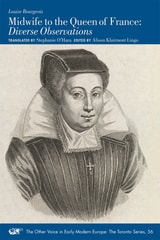
Midwife to the Queen of France
Diverse ObservationsLouise Bourgeois
Iter Press, 2017
Migration and Identity in Nordic Literature
Edited by Martin Humpál and Helena Brezinová
Karolinum Press, 2022
Migration is a frequent topic of many debates nowadays, whether it concerns refugees from war-torn areas or the economic pros and cons of the mobility of multinational corporations and their employees. Yet such migration has always been a part of the human experience, and its dimensions—with its shifting nature, manifestations, and consequences—were often greater than we can imagine today.
In this book, ten scholars from Czechia, Denmark, the Netherlands, Norway, Poland, and Sweden focus on how migration has manifested itself in literature and culture through the nineteenth, twentieth, and early twenty-first centuries in Denmark, Norway, Sweden, Finland, and Iceland. Examining the theme of migration as it relates to questions of identity, both national and individual, the authors argue that migration almost always leads to a disturbance of identity and creates a potential for conflicts between individuals and larger groups. The book digs deep into such cases of disturbance, disruption, and hybridization of identity as they are represented in three centuries of literary works from the European North.
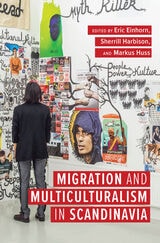
Migration and Multiculturalism in Scandinavia
Edited by Eric Einhorn, Sherrill Harbison, and Markus Huss
University of Wisconsin Press, 2022
Drawing from personal experiences and theoretical perspectives in such varied fields as sociology, political science, literature, and media studies, nineteen scholars assess recent shifts in Scandinavian societies and how they intertwine with broader transformations in Europe and beyond. Chapters explore a variety of topics, including themes of belonging and identity in Norway, the experiences and activism of the Nordic countries’ Indigenous populations, and parallels between the racist far-right resurgence in Sweden and the United States.
Contributors: Ellen A. Ahlness, Julie K. Allen, Grete Brochmann, Eric Einhorn, Sherrill Harbison, Anne Heith, Markus Huss, Peter Leonard, Barbara Mattsson, Kelly McKowen, Andreas Önnerfors, Elisabeth Oxfeldt, Tony Sandset, Carly Elizabeth Schall, Ryan Thomas Skinner, Admir Skodo, Benjamin R. Teitelbaum, Sayaka Osanami Törngren, Ethelene Whitmire
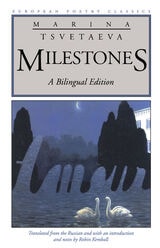
Milestones
A Bilingual EditionMarina Tsvetaeva, translated from the Russian by Robin Kemball
Northwestern University Press, 2003
Milestones lays out a sensual feast of moods, themes, styles, and rhythms—all the ingredients that would in time reveal Tsvetaeva as one of the most daring and original poets of her time.
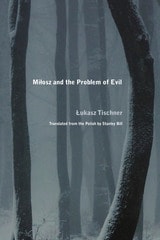
Milosz and the Problem of Evil
Lukasz Tischner; Translated from the Polish by Stanley Bill
Northwestern University Press, 2015
While scholars have chronicled Czesław Miłosz’s engagement with religious belief, no previous book-length treatment has focused on his struggles with theodicy in both poetry and thought. Miłosz wrestled with the problem of believing in a just God given the powerful evidence to the contrary in the natural world as he observed it and in the horrors of World War II and its aftermath in Poland. Rather than attempt to survey Miłosz’s vast oeuvre, Łukasz Tischner focuses on several key works—The Land of Ulro, The World, The Issa Valley, A Treatise on Morals, A Treatise on Poetry, and From the Rising of the Sun—carefully tracing the development of Miłosz’s moral arguments, especially in relation to the key texts that influenced him, among them the Bible, the Gnostic writings, and the works of Blake, Hegel, Kierkegaard, and Schopenhauer. The result is a book that examines Miłosz as both a thinker and an artist, shedding new light on all aspects of his oeuvre.
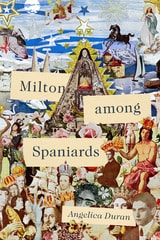
Milton Among Spaniards
Angelica Duran
University of Delaware Press, 2011
Published by University of Delaware Press. Distributed worldwide by Rutgers University Press.
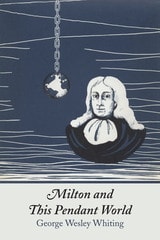
Milton and This Pendant World
By George W. Whiting
University of Texas Press, 1958
Milton and This Pendant World is an interpretation of the great English poet “in an age increasingly skeptical, in a culture dominated by the assumptions of the natural and historical sciences and by the illusions of progress and enlightenment.”
Those are the words of the author of this book, George Wesley Whiting, an eminent and devoted Miltonian. Believing that Milton has a vital message for the modern world, Whiting has abandoned the usual pattern for examining a poet—study of versification, meter, and other poetic devices. Instead, he presents an exposition of the spiritual and moral meaning of Milton’s poetry, which can still have truth and beauty for this doubting age.
The literary image of the pendant world was familiar in Milton’s seventeenth century, but is meaningless to most people of our day. The comforting picture of the world hanging from heaven on a golden chain signifies God’s close watchfulness over humanity and the inseparable bond which links us to the spiritual kingdom.
The author declares that the search for God and the struggle to overcome the spiritual and material forces that impede the search represent the most vital of all human efforts; for unless this search is our primary motivation, life is without meaning, without final purpose.
Whiting also observes that true Christianity stands not for the impoverishment of humanity and our enslavement to the Deity, but rather for human moral health, harmonious development, and spiritual welfare. In order to save civilization from destruction at the hands of its friends—secularists, specialists, militarists, and politicians—we must have a renaissance of the spirit, a cultural synthesis in which a revitalized religion, enriched by philosophy and science, renews the ideals of Christianity.
Milton's Epic Voice
The Narrator in Paradise LostAnne Ferry
University of Chicago Press, 1983
Milton’s Moving Bodies
Marissa Greenberg and Rachel Trubowitz
Northwestern University Press, 2024
A collection of innovative examinations of embodiment in Milton’s oeuvre that challenge assumptions about disciplinary boundaries
This volume brings unprecedented focus to the forms, spaces, and implications of embodied motion in Milton’s writing and its afterlives to explore how and why he privileges the body—human and textual—as a site of dynamic movement. The contributors bring a variety of lenses to Milton’s moving bodies: political history, kinematics, mathematics, cosmology, translation, illustration, anatomies of racialized and disabled bodies, and twenty-first-century pedagogies. From these wide-ranging vantage points, they consider anew Milton’s contributions to the histories of scientific development, global exploration and imperial expansion, migration and diaspora, and translation and adaptation in England, Europe, and the Americas, from the early modern period to today. Milton’s Moving Bodies draws together established and emerging scholars, offering fresh analyses of the poet’s legacy for multiple traditions within and beyond Milton studies.
Mimesis, Desire, and the Novel
Rene Girard and Literary CriticismPierpaolo Antonello
Michigan State University Press, 2015
Mimesis, Masochism, and Mime
The Politics of Theatricality in Contemporary French ThoughtTimothy Murray, Editor
University of Michigan Press, 1997
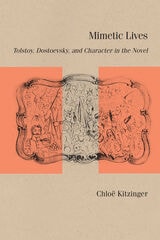
Mimetic Lives
Tolstoy, Dostoevsky, and Character in the NovelChloë Kitzinger
Northwestern University Press, 2021
Through new readings of War and Peace, Anna Karenina, The Brothers Karamazov, and other novels, Kitzinger traces a productive tension between mimetic characterization and the author’s ambition to transform the reader. She shows how Tolstoy and Dostoevsky create lifelike characters and why the dream of carrying the illusion of “life” beyond the novel consistently fails. Mimetic Lives challenges the contemporary truism that novels educate us by providing enduring models for the perspectives of others, with whom we can then better empathize. Seen close, the realist novel’s power to create a world of compelling fictional persons underscores its resources as a form for thought and its limits as a direct source of spiritual, social, or political change.
Drawing on scholarship in Russian literary studies as well as the theory of the novel, Kitzinger’s lucid work of criticism will intrigue and challenge scholars working in both fields.
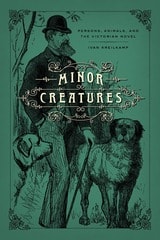
Minor Creatures
Persons, Animals, and the Victorian NovelIvan Kreilkamp
University of Chicago Press, 2018
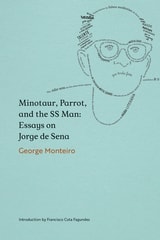
Minotaur, Parrot, and the SS Man
Essays on Jorge de SenaGeorge Monteiro
Tagus Press, 2021
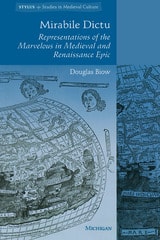
Mirabile Dictu
Representations of the Marvelous in Medieval and Renaissance EpicDouglas Biow
University of Michigan Press, 1996
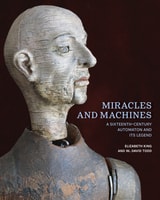
Miracles and Machines
A Sixteenth-Century Automaton and Its LegendElizabeth King
J. Paul Getty Trust, The, 0
This volume tells the singular story of an uncanny, rare object at the cusp of art and science: a 450-year-old automaton known as “the monk.” The walking, gesticulating figure of a friar, in the collection of the Smithsonian Institution’s National Museum of American History, is among the earliest extant ancestors of the self-propelled robot. According to legend connected to the court of Philip II of Spain, the monk represents a portrait of Diego de Alcalá, a humble Franciscan lay brother whose holy corpse was said to be agent to the miraculous cure of Spain’s crown prince as he lay dying in 1562.
In tracking the origins of the monk and its legend, the authors visited archives, libraries, and museums across the United States and Europe, probing the paradox of a mechanical object performing an apparently spiritual act. They identified seven kindred automata from the same period, which, they argue, form a paradigmatic class of walking “prime movers,” unprecedented in their combination of visual and functional realism. While most of the literature on automata focuses on the Enlightenment, this enthralling narrative journeys back to the late Renaissance, when clockwork machinery was entirely new, foretelling the evolution of artificial life to come.
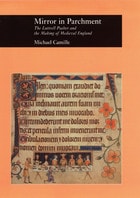
Mirror in Parchment
The Luttrell Psalter and the Making of Medieval EnglandMichael Camille
University of Chicago Press, 1998
The richly illuminated Luttrell Psalter was created for the English nobleman Sir Geoffrey Luttrell (1276-1345). Inexpensive mechanical illustration has since disseminated the book's images to a much wider audience; hence the Psalter's representations of manorial life have come to profoundly shape our modern idea of what medieval English people, high and low, looked like at work and at play. Alongside such supposedly truthful representations, the Psalter presents myriad images of fantastic monsters and beasts. These patently false images have largely been disparaged or ignored by modern historians and art historians alike, for they challenge the credibility of those pictures in the Luttrell Psalter that we wish to see as real.
In the conviction that medieval images were not generally intended to reflect daily life but rather to shape a new reality, Michael Camille analyzes the Psalter's famous pictures as representations of the world, imagined and real, of its original patron. Addressed are late medieval chivalric ideals, physical sites of power, and the boundaries of Sir Geoffrey's imagined community, wherein agricultural laborers and fabulous monsters play a similar ideological role. The Luttrell Psalter thus emerges as a complex social document of the world as its patron hoped and feared it might be.
Mirror of the Indies
A History of Dutch Colonial LiteratureRob Nieuwenhuys
University of Massachusetts Press, 1982
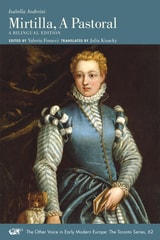
Mirtilla, A Pastoral
A Bilingual EditionIsabella Andreini
Iter Press, 2018
The Other Voice in Early Modern Europe - The Toronto Series: Volume 62

Miscellaneous Verdicts
Writings on WritersAnthony Powell
University of Chicago Press, 1992
Powell begins with a section on the British, exploring his fascination both with genealogy and with figures like John Aubrey, and writing in depth about writers like Kipling, Conrad, and Hardy. The second section, on America, also opens with discussions of family trees (in this case presidential ones) and includes pieces on Henry James, James Thurber, American booksellers in Paris, Hemingway, and Dashiell Hammett. Personal encounters, and absorbing incidents from the lives of his subjects, frequently fill these pages—as they do even more in the section on Powell's contemporaries—Connolly, Orwell, Graham Greene, and others. Finally, and aptly, the book closes with a section on Proust and matters Proustian, including a marvellous essay on what is eaten and drunk, and by whom, in A la Recherche du Temps Perdu.
"An urbane book, quietly erudite, very sensible, highly civilized, remarkably useful."—Anthony Burgess, Observer
"An acute intelligence and fastidious sense of humor make [Powell] the funniest and most profound living writer of the English language."—Hugh Montgomery-Massingberd, Sunday Telegraph
Anthony Powell was born in London in 1905. He is the author of seven novels, a biography of John Aubrey, two plays, a collection of memoirs, and the twelve-volume novel sequence Dance to the Music of Time.
Mission Accomplished
On Founding Constitutional Adjudication in Central EuropeRadoslav Procházka
Central European University Press, 2002
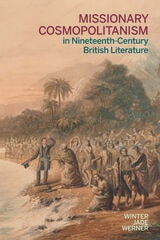
Missionary Cosmopolitanism in Nineteenth-Century British Literature
Winter Jade Werner
The Ohio State University Press, 2020
Missionary Cosmopolitanism identifies the nineteenth-century novel as thematically and formally attuned to the tension between missionaries’ cosmopolitan values and the moral impoverishment of their imperialist and expansionist practices. Werner’s chapters interact with canonical works such as Charlotte Brontë’s Jane Eyre and Charles Dickens’s Bleak House, along with lesser-known works by Robert Southey and Sydney Owenson. Ultimately, Missionary Cosmopolitanism demonstrates that nineteenth-century literature both illustrated and helped define missionary discourses regarding cosmopolitan ideas, showing how global evangelicalism continues to tap into the “new cosmopolitanisms” of today.
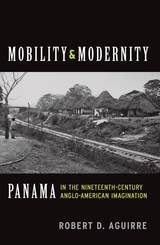
Mobility and Modernity
Panama in the Nineteenth-Century Anglo-American ImaginationRobert D. Aguirre
The Ohio State University Press, 2017
In this study, Robert D. Aguirre provides bold new interpretations of Anthony Trollope, John Lloyd Stephens, and Eadweard Muybridge and also recovers information about literary communities previously lost to history. Mobility and Modernity shows how Panama became defined as a site of incipient globalization and a crucial link of empire. Across this narrow strip of land people and things traveled, technology developed, and political forces erupted. The isthmus became a site of mobility that paradoxically produced varieties of immobility. Parting ways with histories that celebrate the canal as a mighty engineering feat, Mobility and Modernity reveals a more complex story of cultural conflict that began with the first gold rush news in the late 1840s and continued throughout the century.
Modern Odysseys
Cavafy, Woolf, Césaire, and a Poetics of IndirectionMichelle Zerba
The Ohio State University Press, 2021
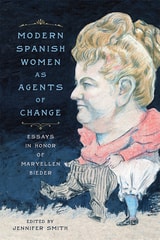
Modern Spanish Women as Agents of Change
Essays in Honor of Maryellen BiederSmith, Jennifer
Bucknell University Press, 2019
Published by Bucknell University Press. Distributed worldwide by Rutgers University Press.