Results by title
4030 books match the query 'Language Arts & Disciplines' and 196 start with m

More Storytime Action!
American Library Association, 2009
More Storytime Magic
Kathy MacMillan
American Library Association, 2016
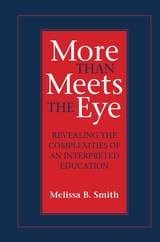
More Than Meets the Eye
Revealing the Complexities of an Interpreted EducationMelissa B. Smith
Gallaudet University Press, 2013
Sign language interpreters often offer the primary avenue of access for deaf and hard of hearing students in public schools. More than 80% of all deaf children today are mainstreamed, and few of their teachers sign well enough to provide them with full access. As a result, many K-12 interpreters perform multiple roles beyond interpreting. Yet, very little is known about what they actually do and what factors inform their moment-to-moment decisions. This volume presents the range of activities and responsibilities performed by educational interpreters, and illuminates what they consider when making decisions.
To learn about the roles of K-12 interpreters, author Melissa B. Smith conducted in-depth analyses at three different schools. She learned that in response to what interpreters feel that their deaf students need, many focus on three key areas: 1) visual access, 2) language and learning, and 3) social and academic participation/inclusion. To best serve their deaf students in these contexts, they perform five critical functions: they assess and respond to the needs and abilities of deaf students; they interpret with or without modification as they deem appropriate; they capitalize on available resources; they rely on interactions with teachers and students to inform their choices; and they take on additional responsibilities as the need arises.

More Than Words
A Memoir of a Writing LifeJerry Apps
Wisconsin Historical Society Press, 2022
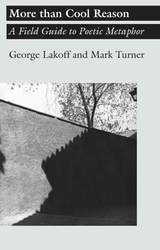
More than Cool Reason
A Field Guide to Poetic MetaphorGeorge Lakoff and Mark Turner
University of Chicago Press, 1989
We usually think of the language of poetry, the metaphors that poets use to express their intentions, as far removed from ordinary life. But in More than Cool Reason, George Lakoff and Mark Turner show how understanding how metaphor works in poetry, the tasks it takes on and the ways it shapes our patterns of thought, can be hugely helpful to seeing and understanding how we think in all manner of other fields and areas of life. Metaphor, they show, is a tool so familiar, so everyday, that we fail to notice it. Lakoff and Turner correct that failure here, helping us see how richly metaphorical our language and thought are, and what that means for not only reading and enjoying poetry and literature, but also for linguistics, philosophy, psychology, anthropology, cognitive science, and more.

More than They Bargained For
Scott Walker, Unions, and the Fight for WisconsinJason Stein and Patrick Marley
University of Wisconsin Press, 2013
“Stein and Marley deliver an impressively objective account of the struggle, ably describing the objectives and tactics of each side in a confident and engaging style.”—Kirkus Reviews
“Stein and Marley deliver a swashbuckling tale of Wisconsin's Republican Governor Scott Walker's election and tumultuous first year in office. . . . Instead of an expected dry read, the authors' lively, economical prose, supplemented by snippets of social media reporting in real time, place readers in the crowded Capitol building stairwells, or in the midst of Wisconsin's largest sustained demonstration since Vietnam protests rocked the University of Wisconsin campus.”—Publishers Weekly
“This book is a political thriller, an activists’ handbook (for the Left on how to organize mass protests, and for the Right on how to effectively fight public employee unions), and a work of investigative journalism all rolled into one. Social scientists, political junkies, and anyone interested in public affairs will devour it.”—Library Journal
“Not only have Stein and Marley organized this mass of material into a coherent whole, but they also write well, ensuring that even the drier parts of their narrative are clear as well as fair. Their book provides plenty of ammunition for both sides. But it also offers something far better: the basis for an adult conversation about what actually happened.”—Milwaukee Journal Sentinel
“This timely account covers the ethics investigations, public demonstrations, runaway legislators, recalls, and physical confrontation between two state Supreme Court justices. . . . This book is written in a concise, unbiased manner and includes complete details. In a greater sense, it explores the drastic polarization endemic in American society today.”—Choice
“A testament to the information-gathering powers of good beat reporters. In Bob Woodward style, they reconstruct the backroom meetings that ushered Gov. Scott Walker’s Act 10 legislation through the protester-crammed halls of the Wisconsin State Capitol.”—Milwaukee Magazine
“Stein and Marley have managed to produce a very readable, well-researched, and thoroughly interesting narrative without any notable bias—a major accomplishment.”—Wisconsin People & Ideas Magazine

More than a Farmer's Wife
Voices of American Farm Women, 1910-1960Amy Mattson Lauters
University of Missouri Press, 2009
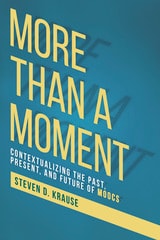
More than a Moment
Contextualizing the Past, Present, and FutureSteven D. Krause
Utah State University Press, 2019
Krause writes about his own experiences as a participant in several MOOCs and the experiences of faculty who developed and taught MOOCs. Contrary to many early claims from educational entrepreneurs, they were never entirely “new,” and MOOCs and their aftermath are still at the heart of the tensions between nonprofit universities and for-profit entities, particularly online program management firms, in delivering distance education.
While MOOCs are no longer a threat to education in the United States, they are part of the ongoing corporatization of education and remain part of conversations about experienced-based credit, corporate training, and open education. Presenting historical, student, teacher, and administrative perspectives, More than a Moment is a well-rounded treatment that will be of interest to academics and entrepreneurs interested in distance education, online pedagogy, online program management, and public-private partnerships in higher education.
Morphology and its Relation to Phonology and Syntax
Patrick Farrell
CSLI, 1998
Morphology and the Web of Grammar
Essays in Memory of Steven G. LapointeEdited by C. Orhan Orgun and Peter Sells
CSLI, 2003
Mother of Writing
The Origin and Development of a Hmong Messianic ScriptWilliam A. Smalley, Chia Koua Vang, and Gnia Yee Yang
University of Chicago Press, 1990
An anthropological linguist who has worked among the Hmong, William A. Smalley joins Shong Lue's chief disciple, Chia Koua Vang, and one of his associates, to tell the fascinating story of how the previously unschooled farmer developed his remarkable writing system through four stages of increasing sophistication. The uniqueness of Shong Lue's achievement is highlighted by a comparison of Shong Lue's writing system to other known Hmong systems and to the history of writing as a whole.
In addition to a nontechnical linguistic analysis of the script and a survey of its current use, Mother of Writing provides an intriguing cultural account of Shong Lue's life. The book traces the twenty-year-long struggle to disseminate the script after Shong Lue's death, first by handwriting, then by primitive moveable type, an abortive attempt to design a wooden typewriter, and finally by modern wordprocessing. In a moving concluding chapter, Smalley discusses his own complex feelings about his coauthors' story.
Motherless Tongues
The Insurgency of Language amid Wars of TranslationVicente L. Rafael
Duke University Press, 2016
Motivating Students in Information Literacy Classes
American Library Association, 2004

Motivating Students on a Time Budget
Pedagogical Frames and Lesson Plans for In-Person and Online Information Literacy InstructionSarah Steiner
Assoc of College & Research Libraries, 2019

Mourning in the Anthropocene
Ecological Grief and Earthly CoexistenceJoshua Trey Barnett
Michigan State University Press, 2022
Move, Play, Learn
Interactive Storytimes With Music, Movement, And MoreAlyssa Jewell
American Library Association, 2020
Foreword by Jamie Campbell Naidoo
Get ready to break out of your storytime routine by encouraging children’s natural instincts to move, sing, and play! Unlike traditional storytimes, where children are expected to sit quietly and just watch, music and movement storytimes encourage children to learn by getting inside stories while interacting with others. Research shows that this kind of play stimulates the senses, provides connections to all four lobes of the brain, touches on a variety of intelligences, and heightens social and emotional awareness—all while extending the early literacy practices of Every Child Ready to Read® and preparing children for school. And because there are no crafts to cut out, no snacks to pack, no scripts to memorize, and no story kits to make, it’s one of the simplest, most cost-effective storytime models to implement. Jewell’s complete guide shows the way, offering
- 20 ready-to-use storytime plans tailored to specific age groups, including babies, toddlers, preschool and all-ages programs, a real time-saver for storytime organizers and presenters;
- advice and best practices gleaned from interviews with professionals who specialize in storytimes, music making with children and families, yoga storytime, and drama education; and
- lists of recommended resources, from interactive print books to children’s music and videos available digitally, with tips on choosing the best materials.
Moving Beyond Academic Discourse
Composition Studies and the Public SphereChristian R. Weisser. Foreword by Gary A. Olson
Southern Illinois University Press, 2002
Moving student writing beyond academic discourse and into larger public spheres is a difficult task, but Christian R. Weisser’s study challenges composition instructors to do just that. This highly accessible book does what no other study has attempted to do: place the most current, cutting-edge theories and pedagogies in rhetoric and composition in their intellectual and historical contexts, while at the same time offering a unique, practical theory and pedagogy of public writing for use both inside and outside of the classroom.
By positing a theory of the public for composition studies, one which envisions the public sphere as a highly contested, historically textured, multilayered, and sometimes contradictory site, Weisser offers a new approach to the roles that compositionists might assume in their attempts to initiate progressive political and social change.
After first providing a historical context that situates composition’s recent interest in public writing, Weisser next examines recent theories in composition studies that consider writing an act of social engagement before outlining a more complex theory of the public based on the work of Jürgen Habermas. The resulting re-envisioning of the public sphere expands current conversations in rhetoric and composition concerning the public.
Weisser concludes with a holistic vision that places greater political and social import on addressing public issues and conversations in the composition classroom and that elucidates the role of the public intellectual as it relates specifically to compositionists in postmodern society.
Moving Image and Sound Collections for Archivists
Anthony Cocciolo
American Library Association, 2018
Moving Materials
Valerie American Library Association
American Library Association, 2009
Moving Your Library
Getting the Collection from Here to ThereSteven Carl Fortriede
American Library Association, 2010
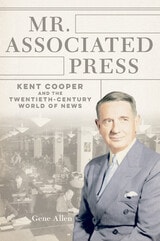
Mr. Associated Press
Kent Cooper and the Twentieth-Century World of NewsGene Allen
University of Illinois Press, 2023
- Finalist for the AEJMC Tankard Book Award
Allen critically assesses the many new approaches and causes that Cooper championed: introducing celebrity news and colorful features to a service previously known for stodgy reliability, pushing through disruptive technological innovations like the instantaneous transmission of news photos, and leading a crusade to bring American-style press freedom--inseparable from private ownership, in Cooper’s view--to every country. His insistence on truthfulness and impartiality presents a sharp contrast to much of today’s fractured journalistic landscape.
Deeply researched and engagingly written, Mr. Associated Press traces Cooper’s career as he built a new foundation for the modern AP and shaped the twentieth-century world of news.
Multicultural Aspects of Sociolinguistics in Deaf Communities
Ceil Lucas
Gallaudet University Press, 2001
This collection offers a wide variety of fascinating studies that consider multicultural aspects among deaf people worldwide. Mala Kleinfeld and Noni Warner investigate variation in the use of gay, lesbian, and bisexual signs in the Deaf community; Jan Branson, Don Miller, and I Gede Marsaja, assisted by I Wayan Negara, profile a deaf village in Bali, Indonesia in which hearing people are fluent in both sign and spoken languages. Alejandro Oviedo in Venezuela comments on bilingual deaf education in Venezuela, and Sara Schley outlines the sociolinguistic and educational implications of comparing ASL and English word definitions.
Susan Mather discusses initiation in visually constructed dialogue from reading books with 3- to 8-year-old students who are deaf or hard of hearing. Pietro Celo offers insights on the interrogative in Italian Sign Language, and Julie Wilson examines narrative structure in American Sign Language ASL) through her analysis of “the tobacco story.” Rhonda Jacobs completes this significant, wide-ranging volume with her research on second language learning, as she presents the case for ASL as a truly foreign language by posing the question, “Just how hard is it to learn ASL?”
Multicultural Programs for Tweens and Teens
Linda B. Alexander
American Library Association, 2010
Multicultural Storytime Magic
Kathy MacMillan
American Library Association, 2012
Multiethnic Books for the Middle-School Curriculum
Cherri Jones
American Library Association, 2013
Multilingual Contributions to Writing Research
Towards an Equal Academic Exchangeedited by Natalia Ávila Reyes
University Press of Colorado, 2022
This edited collection offers chapters based on presentations at the Second Latin American Association of Writing Studies in Higher Education and Professional Contexts International Congress (II ALES) held in Santiago, Chile, in 2018. Together, the contributors to the collection—drawn from nine countries and writing in three languages—highlight the many perspectives, resources, and traditions that enrich and expand international conversations about writing, writing instruction, and writing research. The multiple locations from which the chapters in this collection emerge contribute significantly to the situated findings and concerns they address, with the authors of each chapter considering the social, lingual, and institutional contexts shaping their work. Drawing on both robust traditions and cutting-edge research, this collection makes a distinctive contribution to discussions of writing in and beyond Latin America.
This book is also available as an open access ebook through the WAC Clearinghouse.
Multilingual Writers and Writing Centers
Ben Rafoth
Utah State University Press, 2015
Multilingual writers—often graduate students with more content knowledge and broader cultural experience than a monolingual tuto—unbalance the typical tutor/client relationship and pose a unique challenge for the writing center. Multilingual Writers and Writing Centers explores how directors and tutors can better prepare for the growing number of one-to-one conferences with these multilingual writers they will increasingly encounter in the future.
This much-needed addition of second language acquisition (SLA) research and teaching to the literature of writing center pedagogy draws from SLA literature; a body of interviews Rafoth conducted with writing center directors, students, and tutors, and his own decades of experience. Well-grounded in daily writing center practice, the author addresses which concepts and practices directors can borrow from the field of SLA to help tutors respond to the needs of multilingual writers, what directors need to know about these concepts and practices, and how tutoring might change in response to changes in student populations.
Multilingual Writers and Writing Centers is a call to invigorate the preparation of tutors and directors for the negotiation of the complexities of multilingual and multicultural communication.
Multilingual Writing in Entanglement
Becoming With Others Through Chronotopic Figuring and Unpredictable EncountersXiqiao Wang
Utah State University Press, 2025
This longitudinal qualitative study follows Morgan and Leo through their undergraduate careers, collecting rich ethnographic data across private, academic, and digital spaces. The resulting theoretical framework conceptualizes multilingual writing as simultaneously strategic, agentive, creative, diffused, contingent, and messy—a phenomenon shaped by dynamic interplay between ephemeral encounters and established practices. Employing chronotopic figuring as a methodological tool, Wang illuminates aspects of multilingual writing often elided in research: fleeting encounters that energize composition, reciprocal relationships that distribute writing labor, unexpected detours that redirect the writing process, and the layering of writing and identity practices across multiple historical trajectories. This approach moves beyond examining writing in isolated moments to trace how meaning emerges across languages, modes, and spacetimes.
Multilingual Writing in Entanglement offers crucial insights into how international students strategically and improvisationally reconfigure their semiotic and rhetorical repertoires to write multilingual lives into meaning. This work is influential for scholars and educators in composition, literacy studies, multilingual education, ESL, and linguistics.
Multilingualism and Sign Languages
From the Great Plains to AustraliaCeil Lucas
Gallaudet University Press, 2006
The 12th Volume in the Sociolinguistics in Deaf Communities Series
The latest entry in the Sociolinguistics in Deaf Communities series continues to mine the rich resources found in signing communities throughout the world. Divided into four parts, this collection features 16 internationally renowned linguistics experts whose absorbing studies reflect an astonishing range of linguistic diversity.
The sole essay in Part One: Multilingualism describes historic and contemporary uses of North American Indian Sign Language. Part Two: Language Contact examines language-contact phenomena between Auslan/English interpreters and Deaf people in Australia, and the features of bimodal bilingualism in hearing, Italian, native signers. Part Three: Variation reports the results of a study on location variation in Australian Sign Language.
Part Four: Discourse Analysis begins with an analysis of how deaf parents and their hearing toddlers establish and maintain sight triangles when conducting signed conversations. The ensuing chapter explores the use of evaluation within an informal narrative in Langue des Signes Québécoise. The final chapter explicates how a signer depersonalizes the concept of “self” in an American Sign Language narrative through the use of signs for “he” and “I.”
Multiliteracies for a Digital Age
Stuart A. Selber
Southern Illinois University Press, 2004
Just as the majority of books about computer literacy deal more with technological issues than with literacy issues, most computer literacy programs overemphasize technical skills and fail to adequately prepare students for the writing and communications tasks in a technology-driven era. Multiliteracies for a Digital Age serves as a guide for composition teachers to develop effective, full-scale computer literacy programs that are also professionally responsible by emphasizing different kinds of literacies and proposing methods for helping students move among them in strategic ways.
Defining computer literacy as a domain of writing and communication, Stuart A. Selber addresses the questions that few other computer literacy texts consider: What should a computer literate student be able to do? What is required of literacy teachers to educate such a student? How can functional computer literacy fit within the values of teaching writing and communication as a profession? Reimagining functional literacy in ways that speak to teachers of writing and communication, he builds a framework for computer literacy instruction that blends functional, critical, and rhetorical concerns in the interest of social action and change.
Multiliteracies for a Digital Age reviews the extensive literature on computer literacy and critiques it from a humanistic perspective. This approach, which will remain useful as new versions of computer hardware and software inevitably replace old versions, helps to usher students into an understanding of the biases, belief systems, and politics inherent in technological contexts. Selber redefines rhetoric at the nexus of technology and literacy and argues that students should be prepared as authors of twenty-first-century texts that defy the established purview of English departments. The result is a rich portrait of the ideal multiliterate student in a digital age and a social approach to computer literacy envisioned with the requirements for systemic change in mind.
Multimodal Composing and Writing Transfer
Kara Poe Alexander
Utah State University Press, 2024
Over the past two decades the concepts of multimodal composing and writing transfer have grown and reshaped the nature of writing studies, but rarely have the ways in which these areas overlap been studied. This collection shows how this shift in writing studies has been mutually informative, covering a wider range of contexts for multimodality and writing transfer than just in first-year composition courses. It places composition teaching practices and multimodal research in conversation with learning transfer theory to provide an in-depth examination of how they influence one another.
Multimodal Composing and Writing Transfer develops these intersections to connect multimodal composition and writing practices across a wide array of fields and contexts. Scholars across disciplines, postsecondary writing teachers, writing program administrators, writing center directors, and graduate students will find this collection indispensable.
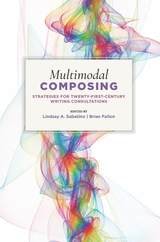
Multimodal Composing
Strategies for Twenty-First-Century Writing ConsultationsLindsay A. Sabatino
Utah State University Press, 2019
Multimodal Composing explores the relationship between rhetorical choices, design thinking, accessibility, and technological awareness in the writing center. Each chapter deepens consultants’ understanding of multimodal composing by introducing them to important features and practices in a variety of multimodal texts. The chapters’ activities provide consultants with an experience that familiarizes them with design thinking and multimodal projects, and a companion website (www.multimodalwritingcenter.org) offers access to additional resources that are difficult to reproduce in print (and includes updated links to resources and tools).
Multimodal projects are becoming the norm across disciplines, and writers expect consultants to have a working knowledge of how to answer their questions. Multimodal Composing introduces consultants to key elements in design, technology, audio, and visual media and explains how these elements relate to the rhetorical and expressive nature of written, visual, and spoken communication. Peer, graduate student, professional tutors and writing center directors will benefit from the activities and strategies presented in this guide.
Contributors:
Patrick Anderson, Shawn Apostel, Jarrod Barben, Brandy Ball Blake, Sarah Blazer, Brenta Blevins, Russell Carpenter, Florence Davies, Kate Flom Derrick, Lauri Dietz, Clint Gardner, Karen J. Head, Alyse Knorr, Jarret Krone, Sohui Lee, Joe McCormick, Courtnie Morin, Alice Johnston Myatt, Molly Schoen, James C. W. Truman
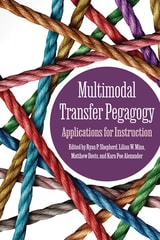
Multimodal Transfer Pedagogy
Applications for InstructionRyan P. Shepherd
Utah State University Press, 2027
Multimodal Transfer Pedagogy provides practical methods and materials for composition teachers and directors to facilitate multimodal transfer. This rich collection of resources presents new ways of incorporating digital texts, exploring modes of meaning beyond traditional print and encouraging students to think about rhetorical approaches to meaning making.
Together with its online companion materials, the book delivers a distinctive synthesis of multimodal composing practices, writing transfer research, and theory to provide clear, actionable guidance to teachers and directors to apply multimodal composition pedagogy effectively. Twenty-three chapters cover multimodal transfer pedagogy—including social media, composing with AI, visual rhetoric and design, public advocacy, tabletop games, podcasting, and more.
Multimodal Transfer Pedagogy is built from contextualized pedagogical approaches and course materials—syllabi, assignments, assessment documents—that specifically direct pedagogical application toward multimodal transfer in a range of contexts, from first-year writing to the science writing classroom and writing center. A natural follow-up to Multimodal Composition and Writing Transfer, the book introduces a unique practical-pedagogical model for implementing multimodal work in the classroom.

Murder in Montauk
Judy Soloway Kay
University of Michigan Press, 2005
The MICHIGAN Reading Plus Readers are original fiction written for students who wish to improve their reading skills. The MICHIGAN Reading Plus Readers support the need for extensive reading on topics of interest to today's students. The Readers offer students books in the genres of mystery, science-fiction, and romance. Activities that practice vocabulary and reading skills are provided on the companion website.

Murdoch's Politics
How One Man's Thirst For Wealth and Power Shapes our WorldDavid McKnight
Pluto Press, 2013
Rupert Murdoch's News Corporation is the most powerful media organisation in the world. Murdoch's commercial success is obvious, but less well understood is his successful pursuit of political goals, using News Corporation as his vehicle.
In Murdoch's Politics David McKnight tracks Murdoch's influence, from his support for Reagan and Thatcher, his deal with Tony Blair and attacks on Barack Obama. He examines the secretive corporate culture of News Corporation: its private political seminars for editors, its support for think tanks and its global campaigns on issues like Iraq and climate change.
Including analysis of the phone hacking crisis, possible bribery charges and Murdoch's appearance at the Leveson enquiry, this book is a highly topical study of one of the most influential and controversial figures of the modern age.

Musashino in Tuscany
Japanese Overseas Travel Literature, 1860–1912Susanna Fessler
University of Michigan Press, 2004
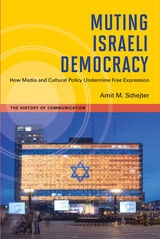
Muting Israeli Democracy
How Media and Cultural Policy Undermine Free ExpressionAmit M. Schejter
University of Illinois Press, 2009
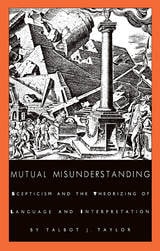
Mutual Misunderstanding
Scepticism and the Theorizing of Language and InterpretationTalbot J. Taylor
Duke University Press, 1992
Mutual Misundertanding thus presents a strikingly original analysis of the rhetorical patterns underlying Western linguistic thought, as exemplified in the works of John Locke, Jacques Derrida, Gottlob Frege, Jonathan Culler, Noam Chomsky, Ferdinand de Saussure, H. Paul Grice, Michael Dummet, Stanley Fish, Alfred Schutz, Barbara Herrnstein Smith, Harold Garfinkel, and others.
This analysis reveals how, by the combined effect of appeals to "commonsense" and anxieties about implications of relativism, scepticism has a determining role in the discursive development of a number of the intellectual disciplines making up the "human sciences" today, including critical theory, literary hermeneutics, philosophy of language and logic, communication theory, discourse and conversation analysis, pragmatics, stylistics, and linguistics. Consequently, this provocative study will be of value to readers from a wide variety of disciplinary backgrounds.
Mutuality in the Rhetoric and Composition Classroom
David L. Wallace and Helen Rothschild Ewald
Southern Illinois University Press, 2000
In Mutuality in the Rhetoric and Composition Classroom, David L. Wallace and Helen Rothschild Ewald point out the centrality of rhetoric in the academy, asserting the intimate connection between language and knowledge making. They also stress the need for a change in the roles of teachers and students in today’s classroom. Their goal is mutuality, a sharing of authority among teachers and students in the classroom that would allow everyone an equal voice in the communication of ideas.
Arguing that the impetus to empower students by engaging them in liberatory and emancipatory pedagogies is simply not enough, Wallace and Ewald seek to “help readers identify, theorize, and work through problems faced by teachers who already value alternative approaches but who are struggling to implement them in the classroom." It is not the teacher’s job merely to convey a received body of knowledge, nor is knowledge a prepackaged commodity to be delivered by the teacher. It is “constituted in the classroom through the dialogic interaction between teachers and students alike.”
Wallace and Ewald see mutuality as potentially transformative, but they “do not believe that the nature or that transformation can be designated in advance.” Rather it is located in the interaction between teachers and students. Wallace and Ewald look at how the transformative notion of mutuality can be effected in classrooms in three important ways: reconstituting classroom speech genres, redesigning the architecture of rhetoric and writing courses, and valuing students’ interpretive agency in classroom discourse. Mutuality in alternative pedagogy, they assert, is neither a single approach nor a specific set of valued practices; it is a continuous collaboration between teachers and students.
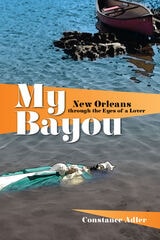
My Bayou
New Orleans through the Eyes of a LoverConstance Adler
Michigan State University Press, 2012
A vividly described and intensely personal memoir, My Bayou charts a personal and spiritual transformation along the fabled banks of Bayou Saint John in New Orleans. When Constance Adler moves to New Orleans, she begins what becomes a lasting love affair with the city, and especially the bayou—a living entity and the beating heart of local culture. Rites of passage, celebrations, mysterious accidents, and magic all take place on its banks, leading Adler to a vibrant awareness of the power of being part of a community. That faith is tested in the wake of Hurricane Katrina, and is ultimately proven right, as Bayou Saint John begins to rebuild.
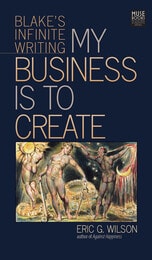
My Business Is to Create
Blake's Infinite WritingEric G. Wilson
University of Iowa Press, 2011
p.MsoNormal, li.MsoNormal, div.MsoNormal { margin: 0in 0in 0.0001pt; font-size: 12pt; font-family: "Times New Roman"; }div.Section1 { page: Section1; }
For William Blake, living is creating, conforming is death, and “the imagination . . . is the Human Existence itself.” But why are imagination and creation—so vital for Blake—essential for becoming human? And what is imagination? What is creation? How do we create? Blake had answers for these questions, both in word and in deed, answers that serve as potent teachings for aspiring writers and accomplished ones alike. Eric G. Wilson’s My Business Is to Create emulates Blake, presenting the great figure’s theory of creativity as well as the practices it implies.
In both his life and his art, Blake provided a powerful example of creativity at any cost—in the face of misunderstanding, neglect, loneliness, poverty, even accusations of insanity. Just as Los cries out in Jerusalem: The Emanation of the Giant Albion, “I must Create a System, or be enslav'd by another Man's; / I will not Reason and Compare: my business is to Create,” generations of writers and artists as diverse as John Ruskin, William Butler Yeats, Allen Ginsberg, Philip K. Dick, songwriter Patti Smith, the avant-garde filmmaker Jim Jarmusch, and the underground comic-book artist R. Crumb have taken Blake’s creed as inspiration.
Unwilling to cede his vision, Blake did more than simply produce iconoclastic poems and paintings; he also cleared a path toward spiritual and ethical enlightenment. To fashion powerful art is to realize the God within and thus to feel connected with enduring vitality and abundant generosity. This is Blake’s everlasting gospel, distilled here in an artist’s handbook of interest to scholars, writing teachers, and those who have made writing their way of life. My Business Is to Create is indispensable for all serious artists who want to transform their lives into art and make their art more alive.

My Language Is a Jealous Lover
Adrián N. Bravi
Rutgers University Press, 2023
My Language Is a Jealous Lover explores the plights and successes of authors who lived and wrote in languages other than their mother tongue, from Samuel Beckett and Vladimir Nabokov to Ágota Kristóf and Joseph Brodsky. Author Adrián N. Bravi weaves their stories in with his own experiences as an Argentinian-Italian, thinking and writing in the language of his new life while recalling that of his childhood. Bravi bears witness to the frustrations, the soul-searching, the pain, and the joys of embracing another language.

My Life with Literacy
The Continuing Education of a HistorianHarvey J. Graff
University Press of Colorado, 2025
My Odyssey Through the Underground Press
Michael Kindman
Michigan State University Press, 2011
Mystery Reader's Advisory
The Librarian's Clues to Murder and MayhemAmerican Library Association, 2002
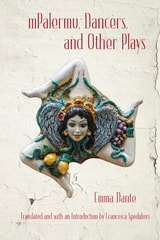
mPalermu, Dancers, and Other Plays
Emma Dante
Swan Isle Press, 2019
This exquisite first English translation of Emma Dante’s work enables English-speaking readers, theatre scholars, and directors alike to encounter character-driven “civic theatre” with its portraits of individuals existing at the fringes of Italy. Ultimately, it allows us to “listen” to those who are not given a voice anywhere else.