Results by title
2706 books match the query 'European' and 238 start with m

Modern Swedish Prose in Translation
Karl Erik Lagerlof, Editor
University of Minnesota Press, 1979
Modern Swedish Prose in Translation was first published in 1979. Minnesota Archive Editions uses digital technology to make long-unavailable books once again accessible, and are published unaltered from the original University of Minnesota Press editions.
These excerpts from Swedish prose works - mostly novels - reflect major shifts in mood and style in the 25 years since 1950. Editor Karl Erik Lagerlof traces cultural and political developments in Sweden from the post-World War II era, when writers felt themselves in a world devoid of political meaning and rejected realism as a literary mode, down to the intensely political years of the Vietnam era. The selections in this anthology range from the anti-ideological works of the postwar years to recent documentary methods influenced by Marxism, structuralism, and a renewed political consciousness.
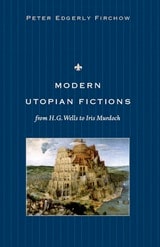
Modern Utopian Fictions from H. G. Wells to Iris Murdoch
Peter Edgerly Firchow
Catholic University of America Press, 2007
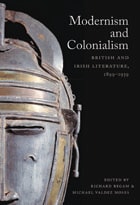
Modernism and Colonialism
British and Irish Literature, 1899–1939Richard Begam and Michael Valdez Moses, eds.
Duke University Press, 2007
Ranging over poetry, fiction, and criticism, the essays provide fresh appraisals of Joseph Conrad, T. S. Eliot, Ezra Pound, Virginia Woolf, D. H. Lawrence, Wyndham Lewis, E. M. Forster, W. B. Yeats, James Joyce, Elizabeth Bowen, Hugh MacDiarmid, and Evelyn Waugh, as well as Robert Louis Stevenson and H. Rider Haggard. The essays that bookend the collection connect the modernists to their Victorian precursors, to postwar literary critics, and to postcolonial poets. The rest treat major works written or published between 1899 and 1939, the boom years of literary modernism and the period during which the British empire reached its greatest geographic expanse. Among the essays are explorations of how primitivism figured in the fiction of Lawrence and Lewis; how, in Ulysses, Joyce used modernist techniques toward anticolonial ends; and how British imperialism inspired Conrad, Woolf, and Eliot to seek new aesthetic forms appropriate to the sense of dislocation they associated with empire.
Contributors. Nicholas Allen, Rita Barnard, Richard Begam, Nicholas Daly, Maria DiBattista, Ian Duncan, Jed Esty, Andrzej Gąsiorek, Declan Kiberd, Brian May, Michael Valdez Moses, Jahan Ramazani, Vincent Sherry
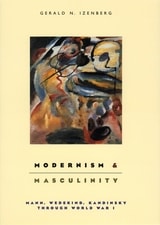
Modernism and Masculinity
Mann, Wedekind, Kandinsky through World War IGerald Izenberg
University of Chicago Press, 2000
But their critique of masculinity created enormous challenges: How could they appropriate a feminine aesthetic while retaining their own masculine idenitites? How did appropiating the feminine affect their personal relationships or their political views? Modernism and Masculinity seeks to answer these questions. In this absorbing combination of biography and formal critique, Izenberg reconsiders the works of Mann, Wedekind, Kandinsky and semonstrates how the cirses of masculinity they endure are found not just within the images and forms of their art, but in the distinct and very personal impulses that inspired it.
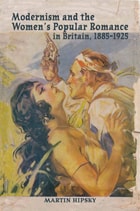
Modernism and the Women’s Popular Romance in Britain, 1885–1925
Martin Hipsky
Ohio University Press, 2011
Today’s mass-market romances have their precursors in late Victorian popular novels written by and for women. In Modernism and the Women’s Popular Romance Martin Hipsky scrutinizes some of the best-selling British fiction from the period 1885 to 1925, the era when romances, especially those by British women, were sold and read more widely than ever before or since.
Recent scholarship has explored the desires and anxieties addressed by both “low modern” and “high modernist” British culture in the decades straddling the turn of the twentieth century. In keeping with these new studies, Hipsky offers a nuanced portrait of an important phenomenon in the history of modern fiction. He puts popular romances by Mrs. Humphry Ward, Marie Corelli, the Baroness Orczy, Florence Barclay, Elinor Glyn, Victoria Cross, Ethel Dell, and E. M. Hull into direct relationship with the fiction of Virginia Woolf, Katherine Mansfield, James Joyce, and D. H. Lawrence, among other modernist greats.
Modernism
Representations of National CultureAhmet Ersoy
Central European University Press, 2010
Modernist Heresies
British Literary History, 1883–1924Damon Franke
The Ohio State University Press, 2008
Franke documents the untold history of the Cambridge Heretics Society and places the concerns of this discussion society in dialogue with contemporaneous literature by such authors as Pater, Hardy, Shaw, Joyce, Woolf, Lawrence, and Orwell. Since several highly influential figures of the modernist literati were members of the Heretics or in dialogue with the group, heresy and its relation to synthesis now become crucial to an understanding of modernist aesthetics and ethics.
From the 1880s through the 1920s, heresy commonly appears in literature as a discursive trope, and the literary mode of heresy shifts over the course of this time from one of syncretism to one based on the construction of modernist artificial or "synthetic" wholes. In Franke’s work, the discourse of heresy comes forth as a forgotten dimension of the origins of modernism, one deeply entrenched in Victorian blasphemy and the crisis in faith, and one pointing to the censorship of modernist literature and some of the first doctrines of literary criticism.
Modes of Play in Eighteenth-Century France
Fayçal Falaky
Bucknell University Press, 2022
Modes of Production of Victorian Novels
N. N. Feltes
University of Chicago Press, 1986
Feltes focuses on five English novels: Dickens's Pickwick Papers, Thackeray's Henry Esmond, Eliot's Middlemarch, Hardy's Tess of the d'Urbervilles, and Forster's Howards End. Published at approximately twenty year intervals between 1836 and 1920, they each represent a different first-publication format: part-issue, three-volume, bimonthly, magazine-serial, and single-volume. Drawing on publishing, economic, and literary history, Feltes offers a broad, synthetic explanation of the relationship between the production and format of each novel, and the way in which these determine, in the last instance, the ideology of the text.
Modes of Production in Victorian Novels provides a Marxist structuralist analysis of historical events and practices described elsewhere only empirically, and traces their relationship to literary texts which have been analyzed only idealistically, thus setting these familiar works firmly and perhaps permanently into a framework of historic materialism.
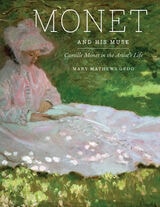
Monet and His Muse
Camille Monet in the Artist's LifeMary Mathews Gedo
University of Chicago Press, 2010
“The mourning never stops, it just changes.” (Edward Albee)
For Claude Monet (1840–1926), the founder of French Impressionist painting, these words are a fitting testament to his lifelong relationship with the female muse, most notably—and most hauntingly—with his first wife, the model Camille Doncieux.
For the esteemed clinical psychologist and art historian Mary Mathews Gedo, Monet and His Muse represents a project twenty years in the making. Artfully interweaving biographical insight with psychoanalytic criticism, Gedo takes us on an exploration of Claude Monet’s conflicted relationships with women, complete with exquisitely researched material never before understood about one of our most popular—and inimitable—artists. Beginning with Monet’s childhood, Gedo delves into his relationships with a distant, unreliable father and his beloved, doting mother—whose death when Monet was just sixteen, the author establishes, inspired a lifetime preoccupation with the sea, its lushly imagined flora, and the figurative landscapes Monet painted to such acclaim.
And then—Camille. Entering Monet’s life when he was still a young man, becoming first his model and then mistress and then—finally—his wife, Camille Doncieux always fulfilled the function of muse, even after her life had ended, as Monet not only painted her one last time on her deathbed, but preserved her memory through the gardens he planted at his home in Giverny. Demonstrating how Monet’s connections with women were exceedingly complex, fraught with abusive impulses and infantile longing, Gedo sensitively uses Monet and Camille as exemplars in order to explore links between artists and muses in our modern age.
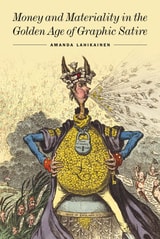
Money and Materiality in the Golden Age of Graphic Satire
Amanda Lahikainen
University of Delaware Press, 2022
This book examines the entwined and simultaneous rise of graphic satire and cultures of paper money in late eighteenth- and early nineteenth-century Britain. Asking how Britons learned to value both graphic art and money, the book makes surprising connections between two types of engraved images that grew in popularity and influence during this time. Graphic satire grew in visual risk-taking, while paper money became a more standard carrier of financial value, courting controversy as a medium, moral problem, and factor in inflation. Through analysis of satirical prints, as well as case studies of monetary satires beyond London, this book demonstrates several key ways that cultures attach value to printed paper, accepting it as social reality and institutional fact. Thus, satirical banknotes were objects that broke down the distinction between paper money and graphic satire altogether.
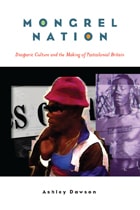
Mongrel Nation
Diasporic Culture and the Making of Postcolonial BritainAshley Dawson
University of Michigan Press, 2007
Mongrel Nation surveys the history of the United Kingdom’s African, Asian, and Caribbean populations from 1948 to the present, working at the juncture of cultural studies, literary criticism, and postcolonial theory. Ashley Dawson argues that during the past fifty years Asian and black intellectuals from Sam Selvon to Zadie Smith have continually challenged the United Kingdom’s exclusionary definitions of citizenship, using innovative forms of cultural expression to reconfigure definitions of belonging in the postcolonial age. By examining popular culture and exploring topics such as the nexus of race and gender, the growth of transnational politics, and the clash between first- and second-generation immigrants, Dawson broadens and enlivens the field of postcolonial studies.
Mongrel Nation gives readers a broad landscape from which to view the shifting currents of politics, literature, and culture in postcolonial Britain. At a time when the contradictions of expansionist braggadocio again dominate the world stage, Mongrel Nation usefully illuminates the legacy of imperialism and suggests that creative voices of resistance can never be silenced.Dawson
“Elegant, eloquent, and full of imaginative insight, Mongrel Nation is a refreshing, engaged, and informative addition to post-colonial and diasporic literary scholarship.”
—Hazel V. Carby, Yale University
“Eloquent and strong, insightful and historically precise, lively and engaging, Mongrel Nation is an expansive history of twentieth-century internationalist encounters that provides a broader landscape from which to understand currents, shifts, and historical junctures that shaped the international postcolonial imagination.”
—May Joseph, Pratt Institute
Ashley Dawson is Associate Professor of English at the City University of New York’s Graduate Center and the College of Staten Island. He is coeditor of the forthcoming Exceptional State: Contemporary U.S. Culture and the New Imperialism.
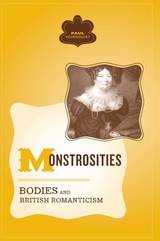
Monstrosities
Bodies And British RomanticismPaul Youngquist
University of Minnesota Press, 2003
A surprising evaluation of the role of the physical body in the construction of British identity
Eighteenth-century medicine used the word “monstrosities” to describe physically deformed bodies—those irreducible to the “proper body” in their singular, sometimes startling difference. Considering British society in confrontation with such monstrosities, Paul Youngquist reveals the cultural politics of embodiment in Britain during the late eighteenth and early nineteenth centuries. Drawing on the histories of medicine, economics, liberalism, and nationalism, his work shows that bodies are not simply born but rather built by cultural practices directed toward particular social ends.
Among the phenomena Youngquist treats are the science of comparative anatomy, the annual festivity of Bartholomew Fair, the social status of black Britons, opium habitués, pregnant women, and wounded war veterans. The authors he engages include John Locke, William Blake, Olaudah Equiano, Samuel Taylor Coleridge, Thomas De Quincey, Mary Wollstonecraft, Lord Byron, and Mary Shelley. Uniquely interdisciplinary, formidably researched, and replete with curious illustrations, this remarkable book should be of interest to anyone concerned with the historical and cultural fate of bodies in liberal society—and with the importance of deviance in determining that fate.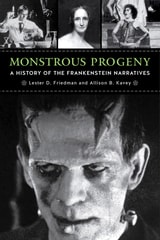
Monstrous Progeny
A History of the Frankenstein NarrativesFriedman, Lester D
Rutgers University Press, 2016
Mood and Trope
The Rhetoric and Poetics of AffectJohn Brenkman
University of Chicago Press, 2020
Engaging a quartet of modern philosophers—Kant, Nietzsche, Heidegger, and Deleuze—Brenkman explores how they all approach the question of affect primarily through literature and art. He draws on the differences and dialogues among them, arguing that the vocation of criticism is incapable of systematicity and instead must be attuned to the singularity and plurality of literary and artistic creations. In addition, he confronts these four philosophers and their essential concepts with a wide array of authors and artists, including Pinter and Poe, Baudelaire, Jorie Graham and Li-Young Lee, Shakespeare, Tino Sehgal, and Francis Bacon. Filled with surprising insights, Mood and Trope provides a rich archive for rethinking the nature of affect and its aesthetic and rhetorical stakes.
Moorings
Portuguese Expansion and the Writing of AfricaJosiah Blackmore
University of Minnesota Press, 2008
How Africa was perceived in the early modern imaginary
In this first book to study Portuguese texts about Africa, Moorings brings an important but little-known body of European writings to bear on contemporary colonial thought. Images of Africa as monstrous, dangerous, and lush were created in early Portuguese imperial writings and dominated its representation in European literature. Moorings establishes these key works in their proper place: foundational to Western imperial discourse.
Attentive to history as well as the nuances of language, Josiah Blackmore leads readers from the formation of the “Moor” in medieval Iberia to the construction of a full colonial imaginary, as found in the works of two writers: the royal chronicler Gomes Eanes de Zurara and the epic poet Luís de Camões. Blackmore’s original work helps to explain how concepts and myths—such as the “otherness” of Africa and Africans—originated, functioned, and were perpetuated.Delving into the Portuguese imperial experience, Moorings enriches our understanding of historical and literary imagination during a significant period of Western expansion.
Moot Plays of Corneille
Lacy Lockert
Vanderbilt University Press, 1959
In an earlier book, The Chief Plays of Corneille, Dr. Lockert translated the six most famous (but not necessarily the best) tragedies of that dramatist. The present volume makes available to English readers all his other plays, comedies aside, for which high claims have been or could be made. Some recent critics have pronounced some of them superior to everything else of Corneille but the Cid and Polyeucte.
A brief introduction is prefixed to each play, giving examples of the diverse opinions held by representative critics in the last eighty-five years.
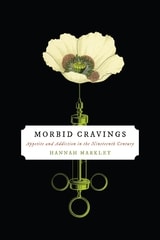
Morbid Cravings
Appetite and Addiction in the Nineteenth CenturyHannah Markley
The Ohio State University Press, 2027
Morbid Cravings is the first book toexamine how eating disorders and drug addiction developed in the nineteenth century as entwined psychosocial responses to imperial-driven cultural demands that Britons regulate their appetites. Through close readings of Jane Austen, Thomas De Quincey, Sydney Whiting, and Arthur Conan Doyle, Hannah Markley explores the comorbidity of these disorders in relation to imperial trade and colonial conquest, applying a postcolonial lens to show us how emerging, separate diagnostic categories were in fact structured by the same social and economic systems.
During the seventeenth and eighteenth centuries, the influx of sugar, tea, coffee, opium, chocolate, and tobacco began to transform British diets and nervous systems, creating dependence on not only these substances but on the colonial systems that delivered them. In turn, medicine attempted to curtail these appetites by promoting restrictive dietary practices. By focusing on how anorexia nervosa, opium-eating, dyspepsia, and compulsive injection emerged in relation to attempts to regulate British appetites for colonial substances, Markley argues that the medico-ideological imperative to restrict appetites produced interrelated representations of eating disorders and addictions that ultimately enacted the voracious logic of British racial capitalism.
More Plays by Rivals of Corneille and Racine
Lacy Lockert
Vanderbilt University Press, 0
More Than Life
Georg Simmel and Walter Benjamin on ArtStéphane Symons
Northwestern University Press, 2017
Reading Simmel’s work, particularly his essays on Michelangelo, Rembrandt, and Rodin, alongside Benjamin’s concept of Unscheinbarkeit (inconspicuousness) and his writings on Charlie Chaplin, More Than Life demonstrates that both Simmel and Benjamin conceive of art as the creation of something entirely new rather than as a mimetic reproduction of a given. The two thinkers diverge in that Simmel emphasizes the presence of a continuous movement of life, whereas Benjamin highlights the priority of discontinuous, interruptive moments.
With the aim of further elucidating Simmel and Benjamin’s ideas on art, Stéphane Symons presents a number of in-depth analyses of specific artworks that were not discussed by these authors. Through an insightful examination of both the conceptual affinities and the philosophical differences between Simmel and Benjamin , Symons reconstructs a crucial episode in twentieth-century debates on art and aesthetics.
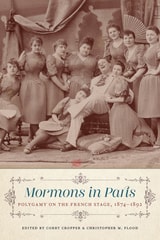
Mormons in Paris
Polygamy on the French Stage, 1874-1892Corry Cropper
Bucknell University Press, 2021
In the late nineteenth century, numerous French plays, novels, cartoons, and works of art focused on Mormons. Unlike American authors who portrayed Mormons as malevolent “others,” however, French dramatists used Mormonism to point out hypocrisy in their own culture. Aren't Mormon women, because of their numbers in a household, more liberated than French women who can't divorce? What is polygamy but another name for multiple mistresses? This new critical edition presents translations of four musical comedies staged or published in France in the late 1800s: Mormons in Paris (1874), Berthelier Meets the Mormons (1875), Japheth’s Twelve Wives (1890), and Stephana’s Jewel (1892). Each is accompanied by a short contextualizing introduction with details about the music, playwrights, and staging. Humorous and largely unknown, these plays use Mormonism to explore and mock changing French mentalities during the Third Republic, lampooning shifting attitudes and evolving laws about marriage, divorce, and gender roles.
Published by Bucknell University Press. Distributed worldwide by Rutgers University Press.
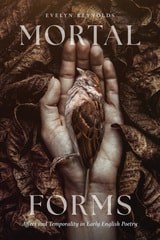
Mortal Forms
Affect and Temporality in Early English PoetryEvelyn Reynolds
The Ohio State University Press, 2026
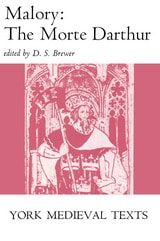
Morte Darthur
Sir Thomas Malory
Northwestern University Press, 1968
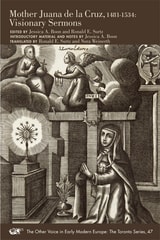
Mother Juana de la Cruz, 1481–1534
Visionary SermonsJuana de la Cruz
Iter Press, 2016
Juana de la Cruz (1481–1534) is a unique figure in the history of the Catholic Church, thanks to her public visionary experiences during which she lost consciousness, while a deep voice, identifying itself as Christ, issued from her, narrating the feasts and pageants taking place in heaven. Juana’s so called “sermons,” collected in a manuscript called Libro del Conorte, form a fascinating window into Castilian religiosity in the early sixteenth century. There is much to reap from these sermons concerning Spanish Renaissance culture, theology, mysticism, gender roles, and interreligious interactions.

Multiple Meanings of Gender Equality
A critical frame analysis of gender policies in EuropeMieke Verloo
Central European University Press, 2007
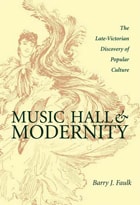
Music Hall and Modernity
The Late-Victorian Discovery of Popular CultureBarry J. Faulk
Ohio University Press, 2004
The late-Victorian discovery of the music hall by English intellectuals marks a crucial moment in the history of popular culture. Music Hall and Modernity demonstrates how such pioneering cultural critics as Arthur Symons and Elizabeth Robins Pennell used the music hall to secure and promote their professional identity as guardians of taste and national welfare. These social arbiters were, at the same time, devotees of the spontaneous culture of “the people.”
In examining fiction from Walter Besant, Hall Caine, and Henry Nevinson, performance criticism from William Archer and Max Beerbohm, and late-Victorian controversies over philanthropy and moral reform, scholar Barry Faulk argues that discourse on music-hall entertainment helped consolidate the identity and tastes of an emergent professional class. Critics and writers legitimized and cleaned up the music hall, at the same time allowing issues of class, respect, and empowerment to be negotiated.
Music Hall and Modernity offers a complex view of the new middle-class, middlebrow mass culture of late-Victorian London and contributes to a body of scholarship on nineteenth-century urbanism. The book will also interest scholars concerned with the emergence of a professional managerial class and the genealogy of cultural studies.
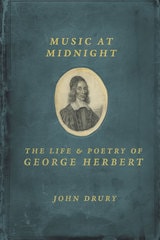
Music at Midnight
The Life and Poetry of George HerbertJohn Drury
University of Chicago Press, 2014
As Drury writes in his preface, Herbert lived “a quiet life with a crisis in the middle of it.” Drury follows Herbert from his academic success as a young man, seemingly destined for a career at court, through his abandonment of those hopes, his devotion to the restoration of a church in Huntingdonshire, and his final years as a country parson. Because Herbert’s work was only published posthumously, it has always been difficult to know when or in what context Herbert wrote his poems. But Drury skillfully places readings of the poems into his narrative at biographically credible moments, allowing us to appreciate not only Herbert’s frame of mind while writing, but also the society that produced it. A sensitive critic of Herbert’s poems as well as a theologian, Drury does full justice to the spiritual dimension of Herbert’s work. In addition, he reveals the occasions of sorrow, happiness, regret, and hope that Herbert captured in his poetry and that led T. S. Eliot to write, “What we can confidently believe is that every poem . . . is true to the poet’s experience.”
Painting a picture of a man torn between worldly ambition and spiritual life, Music at Midnight is an eloquent biography that breathes new life into some of the greatest English poems ever written.
Music's Monisms
Disarticulating ModernismDaniel Albright
University of Chicago Press, 2021
Daniel Albright was one of the preeminent scholars of musical and literary modernism, leaving behind a rich body of work before his untimely passing. In Music’s Monisms, he shows how musical and literary phenomena alike can be fruitfully investigated through the lens of monism, a philosophical conviction that does away with the binary structures we use to make sense of reality. Albright shows that despite music’s many binaries—diatonic vs. chromatic, major vs. minor, tonal vs. atonal—there is always a larger system at work that aims to reconcile tension and resolve conflict.
Albright identifies a “radical monism” in the work of modernist poets such as T. S. Eliot and musical works by Wagner, Debussy, Britten, Schoenberg, and Stravinsky. Radical monism insists on the interchangeability, even the sameness, of the basic dichotomies that govern our thinking and modes of organizing the universe. Through a series of close readings of musical and literary works, Albright advances powerful philosophical arguments that not only shed light on these specific figures but also on aesthetic experience in general. Music’s Monisms is a revelatory work by one of modernist studies’ most distinguished figures.
Musings on Mortality
From Tolstoy to Primo LeviVictor Brombert
University of Chicago Press, 2013
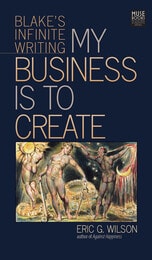
My Business Is to Create
Blake's Infinite WritingEric G. Wilson
University of Iowa Press, 2011
p.MsoNormal, li.MsoNormal, div.MsoNormal { margin: 0in 0in 0.0001pt; font-size: 12pt; font-family: "Times New Roman"; }div.Section1 { page: Section1; }
For William Blake, living is creating, conforming is death, and “the imagination . . . is the Human Existence itself.” But why are imagination and creation—so vital for Blake—essential for becoming human? And what is imagination? What is creation? How do we create? Blake had answers for these questions, both in word and in deed, answers that serve as potent teachings for aspiring writers and accomplished ones alike. Eric G. Wilson’s My Business Is to Create emulates Blake, presenting the great figure’s theory of creativity as well as the practices it implies.
In both his life and his art, Blake provided a powerful example of creativity at any cost—in the face of misunderstanding, neglect, loneliness, poverty, even accusations of insanity. Just as Los cries out in Jerusalem: The Emanation of the Giant Albion, “I must Create a System, or be enslav'd by another Man's; / I will not Reason and Compare: my business is to Create,” generations of writers and artists as diverse as John Ruskin, William Butler Yeats, Allen Ginsberg, Philip K. Dick, songwriter Patti Smith, the avant-garde filmmaker Jim Jarmusch, and the underground comic-book artist R. Crumb have taken Blake’s creed as inspiration.
Unwilling to cede his vision, Blake did more than simply produce iconoclastic poems and paintings; he also cleared a path toward spiritual and ethical enlightenment. To fashion powerful art is to realize the God within and thus to feel connected with enduring vitality and abundant generosity. This is Blake’s everlasting gospel, distilled here in an artist’s handbook of interest to scholars, writing teachers, and those who have made writing their way of life. My Business Is to Create is indispensable for all serious artists who want to transform their lives into art and make their art more alive.
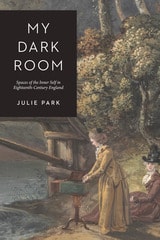
My Dark Room
Spaces of the Inner Self in Eighteenth-Century EnglandJulie Park
University of Chicago Press, 2023
In what kinds of spaces do we become most aware of the thoughts in our own heads? In My Dark Room, Julie Park explores places of solitude and enclosure that gave eighteenth-century subjects closer access to their inner worlds: grottos, writing closets, landscape follies, and the camera obscura, that beguiling “dark room” inside which the outside world in all its motion and color is projected. The camera obscura and its dreamlike projections within it served as a paradigm for the everyday spaces, whether in built environments or in imaginative writing, that generated the fleeting states of interiority eighteenth-century subjects were compelled to experience and inhabit.
My Dark Room illuminates the spatial and physical dimensions of inner life in the long eighteenth century by synthesizing material analyses of diverse media, from optical devices and landscape architecture to women’s intimate dress, with close readings of literary texts not traditionally considered together, among them Andrew Marvell’s country house poem Upon Appleton House, Margaret Cavendish’s experimental epistolary work Sociable Letters, Alexander Pope’s heroic verse epistle Eloisa to Abelard, and Samuel Richardson’s novel Pamela. Park also analyzes letters and diaries, architectural plans, prints, drawings, paintings, and more, drawing our attention to the lively interactions between spaces and psyches in private environments. Park’s innovative method of “spatial formalism” reveals how physical settings enable psychic interiors to achieve vitality in lives both real and imagined.
My Father's Book
Urs Widmer
Seagull Books, 2018
My Father, the Germans and I
Essays, Lectures, InterviewsJurek Becker
Seagull Books, 2010
Jürek Becker (1937–97) is best known for his novel Jacob the Liar, which follows the life of a man, who, like Becker, lived in the Lódz ghetto during the German occupation of Poland in World War II. Throughout his career, Becker also wrote nonfiction, and the essays, lectures, and interviews collected in My Father, the Germans and I share a common thread in that they each speak to Becker’s interactions with and opinions on the social, political, and cultural conditions of twentieth-century Germany.
Becker, who had lived in both German states and in unified Germany, was passionately and humorously active in the political debates of his time. Becker never directly aligned himself with either the political ideology of East Germany or the capitalist market forces of West Germany. The remains of fascism in postwar Germany, and the demise of Socialism, as well as racism and xenophobic violence, were topics that perpetually interested Becker. However, his writings, as evidenced in this collection, were never pedantic, but always entertaining, retaining the sense of humor that made his novels so admired.
My Father, the Germans and I gives expression to an exceptional author’s perception of himself and the world and to his tireless attempt to bring his own unique tone of linguistic brevity, irony, and balance to German relations.
My Language Is a Jealous Lover
Adrián N. Bravi
Rutgers University Press, 2023
My Language Is a Jealous Lover explores the plights and successes of authors who lived and wrote in languages other than their mother tongue, from Samuel Beckett and Vladimir Nabokov to Ágota Kristóf and Joseph Brodsky. Author Adrián N. Bravi weaves their stories in with his own experiences as an Argentinian-Italian, thinking and writing in the language of his new life while recalling that of his childhood. Bravi bears witness to the frustrations, the soul-searching, the pain, and the joys of embracing another language.
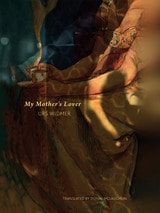
My Mother's Lover
Urs Widmer
Seagull Books, 2018
It’s Switzerland in the 1920s when the two lovers first meet. She is young, beautiful, and rich. In contrast, he can barely support himself and is interested only in music. By the end of their lives, he is a famous conductor and the richest man in the country, but she is penniless. And most important of all, no one knows of her love for him; it is a secret he took to his grave. Here begins Urs Widmer’s novel My Mother’s Lover.
Based on a real-life affair, My Mother’s Lover is the story of a lifelong and unspoken love for a man—recorded by the woman’s son, who begins this novel on the day his mother’s lover dies. Set against the backdrop of the Depression and World War II, it is a story of sacrifice and betrayal, passionate devotion, and inevitable suffering. Yet in Widmer’s hands, it is always entertaining and surprisingly comic—a unique kind of fairy tale.
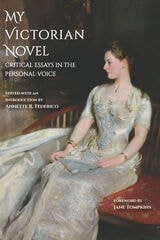
My Victorian Novel
Critical Essays in the Personal VoiceAnnette R. Federico
University of Missouri Press, 2020
These are essays in the original sense of the word, attempts: individual and experiential approaches to literary works that have subjective meanings beyond social facts. By reflecting on their own histories with novels taught, studied, researched, and re-experienced in different contexts over many years, the contributors reveal how an aesthetic object comes to inhabit our critical, pedagogical, and personal lives.
By inviting scholars to share their experiences with a favorite novel without the pressure of an analytical agenda, the sociable essays in My Victorian Novel seek to restore some vitality to the act of literary criticism, and encourage other scholars to talk about the importance of reading in their lives and the stories that have enchanted and transformed them.
The novels in this collection include:
Jane Eyre by Charlotte Brontë
The Duke’s Children by Anthony Trollope
The Adventures of Sherlock Holmes by Arthur Conan Doyle
The Newcomes by William Makepeace Thackeray
Middlemarch by George Eliot
Daniel Deronda by George Eliot
The Return of the Native by Thomas Hardy
Vanity Fair by William Makepeace Thackeray
North and South by Elizabeth Gaskell
Bleak House by Charles Dickens
David Copperfield by Charles Dickens
New Grub Street by George Gissing
The Pickwick Papers by Charles Dickens
Dracula by Bram Stoker
Wuthering Heights by Emily Brontë
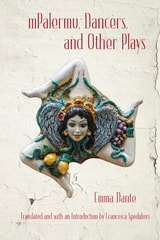
mPalermu, Dancers, and Other Plays
Emma Dante
Swan Isle Press, 2019
This exquisite first English translation of Emma Dante’s work enables English-speaking readers, theatre scholars, and directors alike to encounter character-driven “civic theatre” with its portraits of individuals existing at the fringes of Italy. Ultimately, it allows us to “listen” to those who are not given a voice anywhere else.

mit worten lûter unde glanz
Metapoetics in Konrad von Würzburg’s TrojanerkriegEsther Laufer
University of London Press, 2016