Results by title
4917 books match the query 'Philosophy' and 215 start with m
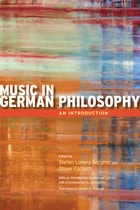
Music in German Philosophy
An IntroductionEdited by Stefan Lorenz Sorgner and Oliver Fürbeth
University of Chicago Press, 2011
Though many well-known German philosophers have devoted considerable attention to music and its aesthetics, surprisingly few of their writings on the subject have been translated into English. Stefan Lorenz Sorgner, a philosopher, and Oliver Fürbeth, a musicologist, here fill this important gap for musical scholars and students alike with this compelling guide to the musical discourse of ten of the most important German philosophers, from Kant to Adorno.
Music in German Philosophy includes contributions from a renowned group of ten scholars, including some of today’s most prominent German thinkers, all of whom are specialists in the writers they treat. Each chapter consists of a short biographical sketch of the philosopher concerned, a summary of his writings on aesthetics, and finally a detailed exploration of his thoughts on music. The book is prefaced by the editors’ original introduction, presenting music philosophy in Germany before and after Kant, as well as a new introduction and foreword to this English-language addition, which places contemplations on music by these German philosophers within a broader intellectual climate.
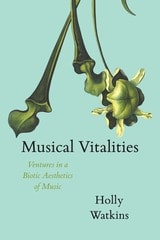
Musical Vitalities
Ventures in a Biotic Aesthetics of MusicHolly Watkins
University of Chicago Press, 2018
Redefining music as “the art of possibly animate things,” Musical Vitalities charts a new path for music studies that blends musicological methods with perspectives drawn from the life sciences. In opposition to humanist approaches that insist on a separation between culture and nature—approaches that appear increasingly untenable in an era defined by human-generated climate change—Musical Vitalities treats music as one example of the cultural practices and biotic arts of the animal kingdom rather than as a phenomenon categorically distinct from nonhuman forms of sonic expression. The book challenges the human exceptionalism that has allowed musicologists to overlook music’s structural resemblances to the songs of nonhuman species, the intricacies of music’s physiological impact on listeners, and the many analogues between music’s formal processes and those of the dynamic natural world. Through close readings of Austro-German music and aesthetic writings that suggest wide-ranging analogies between music and nature, Musical Vitalities seeks to both rekindle the critical potential of nineteenth-century music and rejoin the humans at the center of the humanities with the nonhumans whose evolutionary endowments and planetary fates they share.
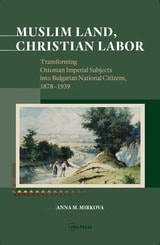
Muslim Land, Christian Labor
Transforming Ottoman Imperial Subjects into Bulgarian National Citizens, c. 1878-1939Anna M. Mirkova
Central European University Press, 2017

Mutual Integration in Immigration Society
An Epistemic ArgumentBodi Wang
Campus Verlag, 2023
The public culture of the receiving society and the dominant understanding of belonging and political membership can influence the social participation of immigrants as much as immigration law. However, current discussions of integration focus primarily on the distribution of rights and neglect the role of tacit knowledge. Through a systematical and philosophical analysis of identity’s role in policymaking, governance, and social practice, Bodi Wang shows how a one-sided understanding of integration resembles “assimilation” and why integration should be expected from locals as well. This argument weaves together extensive findings in sociology, history, critical race theory, and Chinese philosophy with ethics and migration studies.
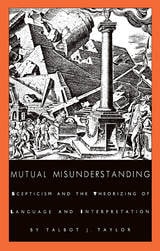
Mutual Misunderstanding
Scepticism and the Theorizing of Language and InterpretationTalbot J. Taylor
Duke University Press, 1992
Mutual Misundertanding thus presents a strikingly original analysis of the rhetorical patterns underlying Western linguistic thought, as exemplified in the works of John Locke, Jacques Derrida, Gottlob Frege, Jonathan Culler, Noam Chomsky, Ferdinand de Saussure, H. Paul Grice, Michael Dummet, Stanley Fish, Alfred Schutz, Barbara Herrnstein Smith, Harold Garfinkel, and others.
This analysis reveals how, by the combined effect of appeals to "commonsense" and anxieties about implications of relativism, scepticism has a determining role in the discursive development of a number of the intellectual disciplines making up the "human sciences" today, including critical theory, literary hermeneutics, philosophy of language and logic, communication theory, discourse and conversation analysis, pragmatics, stylistics, and linguistics. Consequently, this provocative study will be of value to readers from a wide variety of disciplinary backgrounds.
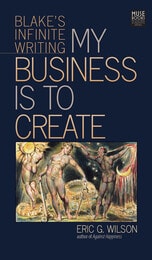
My Business Is to Create
Blake's Infinite WritingEric G. Wilson
University of Iowa Press, 2011
p.MsoNormal, li.MsoNormal, div.MsoNormal { margin: 0in 0in 0.0001pt; font-size: 12pt; font-family: "Times New Roman"; }div.Section1 { page: Section1; }
For William Blake, living is creating, conforming is death, and “the imagination . . . is the Human Existence itself.” But why are imagination and creation—so vital for Blake—essential for becoming human? And what is imagination? What is creation? How do we create? Blake had answers for these questions, both in word and in deed, answers that serve as potent teachings for aspiring writers and accomplished ones alike. Eric G. Wilson’s My Business Is to Create emulates Blake, presenting the great figure’s theory of creativity as well as the practices it implies.
In both his life and his art, Blake provided a powerful example of creativity at any cost—in the face of misunderstanding, neglect, loneliness, poverty, even accusations of insanity. Just as Los cries out in Jerusalem: The Emanation of the Giant Albion, “I must Create a System, or be enslav'd by another Man's; / I will not Reason and Compare: my business is to Create,” generations of writers and artists as diverse as John Ruskin, William Butler Yeats, Allen Ginsberg, Philip K. Dick, songwriter Patti Smith, the avant-garde filmmaker Jim Jarmusch, and the underground comic-book artist R. Crumb have taken Blake’s creed as inspiration.
Unwilling to cede his vision, Blake did more than simply produce iconoclastic poems and paintings; he also cleared a path toward spiritual and ethical enlightenment. To fashion powerful art is to realize the God within and thus to feel connected with enduring vitality and abundant generosity. This is Blake’s everlasting gospel, distilled here in an artist’s handbook of interest to scholars, writing teachers, and those who have made writing their way of life. My Business Is to Create is indispensable for all serious artists who want to transform their lives into art and make their art more alive.
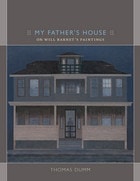
My Father's House
On Will Barnet's PaintingThomas Dumm
Duke University Press, 2014
Dumm first became acquainted with Barnet and his paintings in 2008. Given his scholarly focus on the lives of ordinary people, he was immediately attracted to the artist's work. When they met, Dumm and Barnet began a friendship and dialogue that lasted until the painter's death in 2012, at the age of 101. This book reflects the many discussions the two had concerning the series of paintings, Barnet's family, his early life in Beverly, and his eighty-year career as a prominent New York artist. Reading the almost gothic paintings in conversation with the writers and thinkers key to both his and Barnet's thinking—Emerson, Spinoza, Dickinson, Benjamin, Cavell, Nietzsche, Melville—Dumm's haunting meditations evoke broader reflections on family, mortality, the uncanny, and the loss that comes with remembrance.
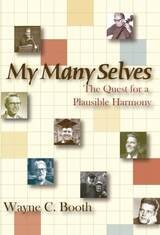
My Many Selves
The Quest for a Plausible HarmonyWayne C. Booth
Utah State University Press, 2006
His memoir, My Many Selves, is both an incisive self-examination and a creative approach to retelling his life. Writing his autobiography became a quest to harmonize the diverse, discordant parts of his identity and resolve the conflicts in what he thought and believed. To see himself clearly and whole, he broke his self down, personified the fragments, uncovered their roots in his life, and engaged his multiple identities and experiences in dialogue. Basic to his story and to its lifelong concerns with ethics and rhetoric was his youth in rural Utah. He valued that background, while acknowledging its ambiguous influence on him, and continued to identify himself as Mormon, though he renounced most Latter-day Saint doctrines.
Wayne Booth died in October 2005, soon after completing work on his autobiography.
Mystery Of Being Vol 1
Reflection & MysteryGabriel Marcel
St. Augustine's Press, 2001
These volumes deal with almost all of the major themes of Marcel's thought: the nature of philosophy, our broken world, man's deep ontological need for being, i.e., for permanent eternal values, our incarnate bodily existence, primary and secondary reflection, participation, being in situation, the identity of the human self, intersubjectivity, mystery and problem, faith, hope, and the reality of God, and immortality.
Mystery Of Being Vol 2
Faith & RealityGabriel Marcel
St. Augustine's Press, 2001
The Mystery of Being contains the most systematic exposition of the philosophical thought of Gabriel Marcel, a convert to Catholicism and the most distinguished twentieth-century exponent of Christian existentialism. Its two volumes are the Gifford lectures which Marcel delivered in Aberdeen, Scotland, in 1949 and 1950. Marcel's work fundamentally challenges most of the major positions of the atheistic existentialists (Sartre, Beauvoir, Camus), especially their belief in an absurd, meaningless, godless universe.
These volumes deal with almost all of the major themes of Marcel's thought: the nature of philosophy, our broken world, man's deep ontological need for being, i.e., for permanent eternal values, our incarnate bodily existence, primary and secondary reflection, participation, being in situation, the identity of the human self, intersubjectivity, mystery and problem, faith, hope, and the reality of God, and immortality.
Mystery and Intelligibility
History of Philosophy as Pursuit of WisdomJeffrey Dirk Wilson
Catholic University of America Press, 2021
Mystic Bones
Mark C. Taylor
University of Chicago Press, 2007
The desert has long been a theme in Mark C. Taylor’s work, from his inquiries into the religious significance of Las Vegas to his writings on earthworks artist Michael Heizer. At once haunted by absence and loss, the desert, for Taylor, is a place of exile and wandering, of temptation and tribulation. Bones, in turn, speak to his abiding interest in remnants, ruins, ritual, and immanence. Taylor combines his fascination in the detritus of the desert and its philosophical significance with his work in photography in Mystic Bones.
A collection of remarkably elegant close-up images of weathered bones—remains of cattle, elk, and deer skeletons gathered from the desert of the American West—Mystic Bones pairs each photograph with a philosophical aphorism. These images are buttressed by a major essay, “Rubbings of Reality,” in which Taylor explores the use of bones in the religious rituals of native inhabitants of the Western desert and, more broadly, the appearance of bones in myth and religious reality.
Meditating on the way in which bones paradoxically embody both the personal and the impersonal—at one time they are our very substance, but eventually they become our last remnants, anonymous, memorializing oblivion—Taylor here suggests ways in which natural processes can be thought of as art, and bones as art objects. Bones, Taylor writes, “draw us elsewhere.” To follow their traces beyond the edge of the human is to wander into ageless times and open spaces where everything familiar becomes strange.
By revealing beauty hidden in the most unexpected places, these haunting images refigure death in a way that allows life to be seen anew. A bold new work from a respected philosopher of religion, Mystic Bones is Taylor’s his most personal statement of after-God theology.
Myth
A HandbookWilliam G. Doty
University of Alabama Press, 2007
An accessible introduction to the role of myth historically and in popular culture.
Myth: A Handbook by William G. Doty is a foundational and wide-ranging exploration of myth as one of humanity’s most enduring and powerful forms of expression. Designed for students and scholars across the humanities and social sciences, this authoritative volume offers both a comprehensive introduction to myth studies and a sophisticated framework for interpreting myth in diverse cultural contexts.
Doty approaches myth not as a static body of ancient stories, but as a dynamic and evolving system of meaning—one that reflects the values, beliefs, and psychological structures of the societies that produce and preserve it. Drawing from a rich interdisciplinary base that includes anthropology, literary criticism, psychology, religious studies, and cultural theory, the book examines how myths operate symbolically, structurally, and socially. Readers are guided through major theoretical approaches to myth, from classical interpretations to modern critical frameworks, enabling them to engage thoughtfully with myth as both narrative and cultural artifact.
One of the book’s central strengths is its emphasis on methodology. Rather than presenting myth as a fixed subject, Doty equips readers with analytical tools to interpret myths across different traditions and historical periods. He explores how myths encode meaning through symbols and archetypes, how they reinforce or challenge cultural norms, and how they adapt over time to address shifting social realities. By emphasizing interpretation over simple retelling, Doty transforms myth from a collection of stories into a living field of inquiry.
The handbook also addresses key questions that continue to resonate in contemporary scholarship: What distinguishes myth from legend or folklore? How do myths shape identity—individual, communal, and national? In what ways do myths persist in modern literature, film, and popular culture? Through clear explanations and carefully structured discussions, Doty demonstrates that myth remains deeply relevant, not only in understanding ancient civilizations but also in analyzing modern narratives and cultural expressions.
Accessible yet intellectually rigorous, Myth: A Handbook has become a widely respected resource in university classrooms, providing students with the conceptual grounding needed to engage critically with mythological material. At the same time, its clarity and breadth make it valuable for general readers interested in the deeper meanings behind the stories that have shaped human thought across time and place.
Ultimately, Doty’s work reveals that myth is not confined to the past—it is an essential framework through which humans interpret experience, construct meaning, and understand their place in the world. This handbook stands as an indispensable guide to that process, illuminating the enduring significance of myth in both ancient traditions and contemporary life.

Mythistory and Other Essays
William H. McNeill
University of Chicago Press, 1986
Myths America Lives By
White Supremacy and the Stories That Give Us MeaningRichard T. Hughes
University of Illinois Press, 2018