Results by title
4743 books match the query 'Religion' and 235 start with m

Mourner's Bench
A NovelSanderia Faye
University of Arkansas Press, 2015
But first, Sarah would need to navigate the growing tensions of small-town Arkansas in the 1960s. Both smarter and more serious than her years (a “fifty-year-old mind in an eight-year-old body,” according to Esther), Sarah was torn between the traditions, religion, and work ethic of her community and the progressive civil rights and feminist politics of her mother, who had recently returned from art school in Chicago. When organizers from the Student Non-Violent Coordinating Committee (SNCC) came to town just as the revival was beginning, Sarah couldn’t help but be caught up in the turmoil. Most folks just wanted to keep the peace, and Reverend Jefferson called the SNCC organizers “the evil among us.” But her mother, along with local civil rights activist Carrie Dilworth, the SNCC organizers, Daisy Bates, attorney John Walker, and indeed most of the country, seemed determined to push Maeby toward integration.
With characters as vibrant and evocative as their setting, Mourner’s Bench is the story of a young girl coming to terms with religion, racism, and feminism while also navigating the terrain of early adolescence and trying to settle into her place in her family and community.
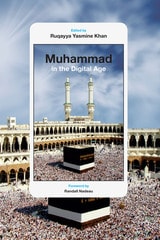
Muhammad in the Digital Age
Edited by Ruqayya Yasmine Khan, foreword by Randall Nadeau
University of Texas Press, 2015
The early twenty-first century has experienced an unrivaled dissemination of information and misinformation about Islam, its prophet Muhammad, and its followers, largely facilitated by the fact that the tragedy of 9/11 roughly coincided with the advent of the digital age. In the first collection of its kind, Ruqayya Khan has compiled essays that treat Muhammad and the core elements of Islam as focal points in an exploration of how the digital era—including social media and other expressions—have both had an effect on and been affected by Islam.
Scholars from a variety of fields deal with topics such as the 2005 cartoon controversy in Denmark and the infamous 2012 movie trailer “Innocence of Muslims” that some believe sparked the attacks on the US consulate in Benghazi, as well as how the digitization of ancient texts have allowed the origins of Islam to be studied in new ways. Other essays examine how Muhammad’s wives have been represented in various online sources, including a web comic; the contrasting depictions of Muhammad as both a warrior and peacemaker; and how the widespread distribution of “the look” of Islamic terrorists has led to attacks on Sikhs, whose only point of resemblance to them may be a full beard. These findings illuminate the role of the Internet in forms of representation, advocacy, and engagement concerning Islam and Muslims in our world today.
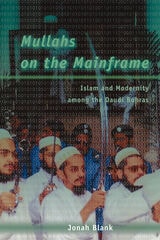
Mullahs on the Mainframe
Islam and Modernity among the Daudi BohrasJonah Blank
University of Chicago Press, 2001

Music and the Wesleys
Edited by Nicholas Temperley and Stephen Banfield
University of Illinois Press, 2010
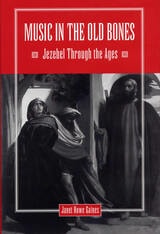
Music in the Old Bones
Jezebel Through the AgesJanet Howe Gaines
Southern Illinois University Press, 1999
An alien, a polytheist from Phoenicia, the biblical Queen Jezebel posed a serious threat to the stability of the Israelites' single male deity. So powerful was this threat that writers through the ages have portrayed her as the incarnation of feminine evil, and her name has become synonymous with the misogynist view of women as seductresses.
Janet Howe Gaines argues that the bride of the Israelite king Ahab became a convenient scapegoat for biblical writers who portrayed her as the primary force behind their nation's apostasy. The biblical account presents the queen as a murderer, as a disruptive force for evil. Despised, the strong-willed Jezebel is still one of the most intriguing women of the Bible.
Music in the Old Bones is a guide to the eternal Jezebel story. The first part of this illustrated study is a detailed analysis that explores the biblical tale from traditional and feminist points of view. Gaines then analyzes the ways authors through the centuries have treated Jezebel. Her unburied bones became misogynist relics for generations of writers who retold her story as a warning about the dangers of rebelling against patriarchal society. From the sermons of John Knox to the novels of Margaret Atwood, from the poetry of Percy Shelley to the ballads of Boyz II Men, from the drama of Racine to the Academy Award-winning film starring Bette Davis, Jezebel has long been the subject of artistic inquiry. Her image as the bad girl of the Bible is still useful to writers. Most exploit her name and evil reputation to enhance their admonitions to women, but a few break away from tradition and openly admire Jezebel's courage and vigor.
Placing the biblical account of Jezebel's doomed reign in the context of its xenophobic writers, Gaines proposes a new and more sympathetic reading of the murdered queen whose body was left to rot in the streets and whose reputation suffered a fate even more egregious. Rather than providing a decent burial for the mangled bones of Jezebel, Gaines seeks to flesh them out and revivify them because, as she demonstrates, "there's music in the old bones yet."
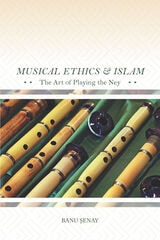
Musical Ethics and Islam
The Art of Playing the NeyBanu Senay
University of Illinois Press, 2020
Banu Şenay documents the years-long training required to become a neyzen—a player of the ney. The process holds a transformative power that invites students to create a new way of living that involves alternative relationships with the self and others, changing perceptions of the city, and a dedication to craftsmanship. Şenay visits reed harvesters and travels from studios to workshops to explore the practical processes of teaching and learning. She also becomes an apprentice ney-player herself, exploring the desire for spirituality that encourages apprentices and masters alike to pursue ney music and its scaffolding of Islamic ethics and belief.
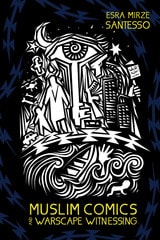
Muslim Comics and Warscape Witnessing
Esra Mirze Santesso
The Ohio State University Press, 2023
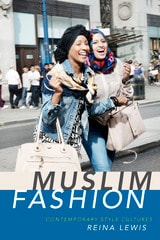
Muslim Fashion
Contemporary Style CulturesReina Lewis
Duke University Press, 2015
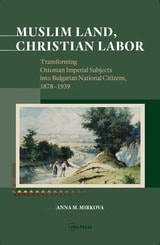
Muslim Land, Christian Labor
Transforming Ottoman Imperial Subjects into Bulgarian National Citizens, c. 1878-1939Anna M. Mirkova
Central European University Press, 2017
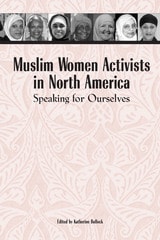
Muslim Women Activists in North America
Speaking for OurselvesEdited by Katherine Bullock
University of Texas Press, 2005
In the eyes of many Westerners, Muslim women are hidden behind a veil of negative stereotypes that portray them as either oppressed, subservient wives and daughters or, more recently, as potential terrorists. Yet many Muslim women defy these stereotypes by taking active roles in their families and communities and working to create a more just society. This book introduces eighteen Muslim women activists from the United States and Canada who have worked in fields from social services, to marital counseling, to political advocacy in order to further social justice within the Muslim community and in the greater North American society.
Each of the activists has written an autobiographical narrative in which she discusses such issues as her personal motivation for doing activism work, her views on the relationship between Islam and women's activism, and the challenges she has faced and overcome, such as patriarchal cultural barriers within the Muslim community or racism and discrimination within the larger society. The women activists are a heterogeneous group, including North American converts to Islam, Muslim immigrants to the United States and Canada, and the daughters of immigrants. Young women at the beginning of their activist lives as well as older women who have achieved regional or national prominence are included. Katherine Bullock's introduction highlights the contributions to society that Muslim women have made since the time of the Prophet Muhammad and sounds a call for contemporary Muslim women to become equal partners in creating and maintaining a just society within and beyond the Muslim community.
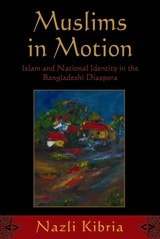
Muslims in Motion
Islam and National Identity in the Bangladeshi DiasporaKibria, Nazli
Rutgers University Press, 2011
In Muslims in Motion, Nazli Kibria provides a comparative look at Bangladeshi Muslims in different global contexts--including Britain, the U.S., the Middle East, and Malaysia. Kibria examines international migrant flows from Bangladesh, and considers how such migrations continue to shape Islamization in these areas. Having conducted more than 200 in-depth interviews, she explores how, in societies as different as these, migrant Muslims, in their everyday lives, strive to achieve economic gains, sustain community and family life, and realize a sense of dignity and honor.
Muslims in Motion offers fresh insights into the prominence of Islam in these communities, especially an Islam defined by fundamentalist movements and ideologies. Kibria also focuses on the complex significance of nationality--with rich analyses of the diaspora, the role of gender and class, and the multiple identities of the migrants, she shows how nationality can be both a critical source of support and also of difficulty for many in their efforts to attain lives of dignity. By bringing to life a vast range of experiences, this book challenges prevailing stereotypes of Muslims.
Muslims in Spain, 1500 to 1614
L. P. Harvey
University of Chicago Press, 2005
Picking up at the end of his earlier classic study, Islamic Spain, 1250 to 1500— which described the courageous efforts of the followers of Islam to preserve their secular, as well as sacred, culture in late medieval Spain—L. P. Harvey chronicles here the struggles of the Moriscos. These forced converts to Christianity lived clandestinely in the sixteenth century as Muslims, communicating in aljamiado— Spanish written in Arabic characters. More broadly, Muslims in Spain, 1500 to 1614, tells the story of an early modern nation struggling to deal with diversity and multiculturalism while torn by the fanaticism of the Counter-Reformation on one side and the threat of Ottoman expansion on the other. Harvey recounts how a century of tolerance degenerated into a vicious cycle of repression and rebellion until the final expulsion in 1614 of all Muslims from the Iberian Peninsula.
Retold in all its complexity and poignancy, this tale of religious intolerance, political maneuvering, and ethnic cleansing resonates with many modern concerns. Eagerly awaited by Islamist and Hispanist scholars since Harvey's first volume appeared in 1990, Muslims in Spain, 1500 to 1614, will be compulsory reading for student and specialist alike.
Muslims in a Post-9/11 America
A Survey of Attitudes and Beliefs and Their Implications for U.S. National Security PolicyRachel M. Gillum
University of Michigan Press, 2018
Muslims in a Post-9/11 America examines how public fears about Muslims in the United States compare with the reality of American Muslims’ attitudes on a range of relevant issues. While most research on Muslim Americans focuses on Arab Muslims, a quarter of the Muslim American population, Rachel Gillum includes perspectives of Muslims from various ethnic and national communities—from African Americans to those of Pakistani, Iranian, or Eastern European descent. Using interviews and one of the largest nationwide surveys of Muslim Americans to date, Gillum examines more than three generations of Muslim American immigrants to assess how segments of the Muslim American community are integrating into the U.S. social fabric, and how they respond to post-9/11 policy changes. Gillum’s findings challenge perceptions of Muslims as a homogeneous, isolated, un-American, and potentially violent segment of the U.S. population.
Despite these realities, negative political rhetoric around Muslim Americans persists. The findings suggest that the policies designed to keep America safe from terrorist attacks may have eroded one of law enforcement’s greatest assets in the fight against violent extremism—a relationship of trust and goodwill between the Muslim American community and the U.S. government. Gillum argues for policies and law enforcement tactics that will bring nuanced understandings of this diverse category of Americans and build trust, rather than alienate Muslim communities.
Muslims in the United States
The State of ResearchKaren Isaksen Leonard
Russell Sage Foundation, 2003
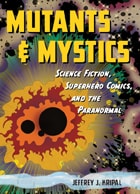
Mutants and Mystics
Science Fiction, Superhero Comics, and the ParanormalJeffrey J. Kripal
University of Chicago Press, 2011
But that's just scratching the surface, says Jeffrey Kripal. In Mutants and Mystics, Kripal offers a brilliantly insightful account of how comic book heroes have helped their creators and fans alike explore and express a wealth of paranormal experiences ignored by mainstream science. Delving deeply into the work of major figures in the field—from Jack Kirby’s cosmic superhero sagas and Philip K. Dick’s futuristic head-trips to Alan Moore’s sex magic and Whitley Strieber’s communion with visitors—Kripal shows how creators turned to science fiction to convey the reality of the inexplicable and the paranormal they experienced in their lives. Expanded consciousness found its language in the metaphors of sci-fi—incredible powers, unprecedented mutations, time-loops and vast intergalactic intelligences—and the deeper influences of mythology and religion that these in turn drew from; the wildly creative work that followed caught the imaginations of millions. Moving deftly from Cold War science and Fredric Wertham's anticomics crusade to gnostic revelation and alien abduction, Kripal spins out a hidden history of American culture, rich with mythical themes and shot through with an awareness that there are other realities far beyond our everyday understanding.
A bravura performance, beautifully illustrated in full color throughout and brimming over with incredible personal stories, Mutants and Mystics is that rarest of things: a book that is guaranteed to broaden—and maybe even blow—your mind.
My Brother's Keeper
George McGovern and Progressive ChristianityMark A. Lempke
University of Massachusetts Press, 2017
George McGovern is chiefly remembered for his landslide loss to Richard Nixon in 1972. Yet at the time, his candidacy raised eyebrows by invoking the prophetic tradition, an element of his legacy that is little studied. In My Brother's Keeper, Mark A. Lempke explores the influence of McGovern's evangelical childhood, Social Gospel worldview, and conscientious Methodism on a campaign that brought antiwar activism into the mainstream.
McGovern's candidacy signified a passing of the torch within Christian social justice. He initially allied with the ecumenical movement and the mainline Protestant churches during a time when these institutions worked easily with liberal statesmen. But the senator also galvanized a dynamic movement of evangelicals rooted in the New Left, who would dominate subsequent progressive religious activism as the mainline entered a period of decline. My Brother's Keeper argues for the influential, and often unwitting, role McGovern played in fomenting a “Religious Left” in 1970s America, a movement that continues to this day. It joins a growing body of scholarship that complicates the dominant narrative of that era's conservative Christianity.
My Family and Other Saints
Kirin Narayan
University of Chicago Press, 2007
A touching, funny, and always affectionate memoir, My Family and Other Saints traces the reverberations of Rahoul's spiritual journey through the entire family. As their beachside Bombay home becomes a crossroads for Westerners seeking Eastern enlightenment, Kirin’s sari-wearing American mother wholeheartedly embraces ashrams and gurus, adopting her son’s spiritual quest as her own. Her Indian father, however, coins the term “urug”—guru spelled backward—to mock these seekers, while young Kirin, surrounded by radiant holy men, parents drifting apart, and a motley of young, often eccentric Westerners, is left to find her own answers. Deftly recreating the turbulent emotional world of her bicultural adolescence, but overlaying it with the hard-won understanding of adulthood, Narayan presents a large, rambunctious cast of quirky characters. Throughout, she brings to life not just a family but also a time when just about everyone, it seemed, was consumed by some sort of spiritual quest.
“A lovely book about the author's youth in Bombay, India. . . . The family home becomes a magnet for truth-seekers, and Narayan is there to affectionately document all of it.”—Body + Soul
My Nine Lives
Sixty Years in Israeli and Biblical ArchaeologyWilliam G. Dever
SBL Press, 2020
Experience a lifetime of adventure
This autobiography of prominent American archaeologist William G. Dever is unabashedly his story, in which he offers candid, often brutally honest, reflections on his life and sixty-five-year career. Dever places himself in the midst of a remarkable generation of giants in archaeology in Israel during a period when the fields of biblical and Israeli archaeology were evolving. With technical expertise developed over a lifetime of working alongside four generations of Israeli and foreign excavators, he recalls their exploits and shares numerous personal stories that few others would know. His memoir concludes with a postscript on the likely future of biblical archaeology and an annotated bibliography for serious readers who wish to explore some of the scholarly literature to flesh out Dever’s narrative.
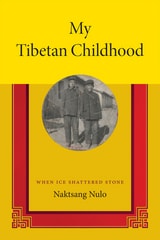
My Tibetan Childhood
When Ice Shattered StoneNatksang Nulo
Duke University Press, 2014
The real significance of this episodic narrative is the way it shows, through the eyes of a child, the suppressed histories of China's invasion of Tibet. The author's matter-of-fact accounts cast the atrocities that he relays in stark relief. Remarkably, Naktsang lived to tell his tale. His book was published in 2007 in China, where it was a bestseller before the Chinese government banned it in 2010. It is the most reprinted modern Tibetan literary work. This translation makes a fascinating if painful period of modern Tibetan history accessible in English.
Myriad Intimacies
Lata Mani
Duke University Press, 2022
Mysteries of the Lord's Prayer
Wisdom from the Early ChurchJohn Gavin
Catholic University of America Press, 2021
Mystery Of Being Vol 1
Reflection & MysteryGabriel Marcel
St. Augustine's Press, 2001
These volumes deal with almost all of the major themes of Marcel's thought: the nature of philosophy, our broken world, man's deep ontological need for being, i.e., for permanent eternal values, our incarnate bodily existence, primary and secondary reflection, participation, being in situation, the identity of the human self, intersubjectivity, mystery and problem, faith, hope, and the reality of God, and immortality.
Mystery of the Church, People of God
Rose Beal
Catholic University of America Press, 2014
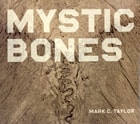
Mystic Bones
Mark C. Taylor
University of Chicago Press, 2007
The desert has long been a theme in Mark C. Taylor’s work, from his inquiries into the religious significance of Las Vegas to his writings on earthworks artist Michael Heizer. At once haunted by absence and loss, the desert, for Taylor, is a place of exile and wandering, of temptation and tribulation. Bones, in turn, speak to his abiding interest in remnants, ruins, ritual, and immanence. Taylor combines his fascination in the detritus of the desert and its philosophical significance with his work in photography in Mystic Bones.
A collection of remarkably elegant close-up images of weathered bones—remains of cattle, elk, and deer skeletons gathered from the desert of the American West—Mystic Bones pairs each photograph with a philosophical aphorism. These images are buttressed by a major essay, “Rubbings of Reality,” in which Taylor explores the use of bones in the religious rituals of native inhabitants of the Western desert and, more broadly, the appearance of bones in myth and religious reality.
Meditating on the way in which bones paradoxically embody both the personal and the impersonal—at one time they are our very substance, but eventually they become our last remnants, anonymous, memorializing oblivion—Taylor here suggests ways in which natural processes can be thought of as art, and bones as art objects. Bones, Taylor writes, “draw us elsewhere.” To follow their traces beyond the edge of the human is to wander into ageless times and open spaces where everything familiar becomes strange.
By revealing beauty hidden in the most unexpected places, these haunting images refigure death in a way that allows life to be seen anew. A bold new work from a respected philosopher of religion, Mystic Bones is Taylor’s his most personal statement of after-God theology.
Mystic Cults in Magna Graecia
Edited by Giovanni Casadio and Patricia A. Johnston
University of Texas Press, 2009
In Vergil's Aeneid, the poet implies that those who have been initiated into mystery cults enjoy a blessed situation both in life and after death. This collection of essays brings new insight to the study of mystic cults in the ancient world, particularly those that flourished in Magna Graecia (essentially the area of present-day Southern Italy and Sicily).
Implementing a variety of methodologies, the contributors to Mystic Cults in Magna Graecia examine an array of features associated with such "mystery religions" that were concerned with individual salvation through initiation and hidden knowledge rather than civic cults directed toward Olympian deities usually associated with Greek religion. Contributors present contemporary theories of ancient religion, field reports from recent archaeological work, and other frameworks for exploring mystic cults in general and individual deities specifically, with observations about cultural interactions throughout. Topics include Dionysos and Orpheus, the Goddess Cults, Isis in Italy, and Roman Mithras, explored by an international array of scholars including Giulia Sfameni Gasparro ("Aspects of the Cult of Demeter in Magna Graecia") and Alberto Bernabé ("Imago Inferorum Orphica"). The resulting volume illuminates this often misunderstood range of religious phenomena.
Mystical Languages of Unsaying
Michael A. Sells
University of Chicago Press, 1994
This book includes readings of the most rigorously apophatic texts of Plotinus, John the Scot Eriugena, Ibn Arabi, Marguerite Porete, and Meister Eckhart, with comparative reference to important apophatic writers in the Jewish tradition, such as Abraham Abulafia and Moses de Leon. Sells reveals essential common features in the writings of these authors, despite their
wide-ranging differences in era, tradition, and theology.
By showing how apophasis works as a mode of discourse rather than as a negative theology, this work opens a rich heritage to reevaluation. Sells demonstrates that the more radical claims of apophatic writers—claims that critics have often dismissed as hyperbolic or condemned as pantheistic or nihilistic—are vital to an adequate account of the mystical languages of unsaying. This work also has important implications for the relationship of classical apophasis to contemporary languages of the unsayable. Sells challenges many widely circulated characterizations of apophasis among deconstructionists as well as a number of common notions about medieval thought and gender relations in medieval mysticism.
Mystical Poems of Rumi
Jalal al-Din Rumi
University of Chicago Press, 2009
Devour it the moment it is fresh, before the dust settles upon it.
Its place is the warm climate of the heart; in this world it dies of cold.
Like a fish it quivered for an instant on dry land, another moment and you see it is cold.
Even if you eat it imagining it is fresh, it is necessary to conjure up many images.
What you drink is really your own imagination; it is no old tale, my good man.
“Rumi is one of the world’s greatest lyrical poets in any language—as well as probably the most accessible and approachable representative of Islamic civilization for Western students.”—James W. Morris, Oberlin College
Mystics
Presence and AporiaEdited by Michael Kessler and Christian Sheppard
University of Chicago Press, 2003
Mystics presents a collection of previously unpublished essays by prominent scholars that consider both the idea of mystics and mysticism. The contributors offer detailed discussions of a variety of mystics from history, including Dionysius the Areopagite, Thomas Aquinas, Joan of Arc, Nicholas of Cusa, Saint Teresa of Avila, Martin Luther, and George Herbert. Essays on mysticism in George Bataille, Maurice Blanchot, and contemporary technology bring the volume into the twenty-first century.
For anyone interested in the state of current thinking about mysticism, this collection will be an essential touchstone.
Contributors:
Thomas A. Carlson, Alexander Golitzin, Kevin Hart, Amy Hollywood, Michael Kessler, Jean-Luc Marion, Bernard McGinn, Françoise Meltzer, Susan Schreiner, Regina M. Schwartz, Christian Sheppard, David Tracy
Myth and Scripture
Contemporary Perspectives on Religion, Language, and ImaginationDexter E. Callender, Jr.
SBL Press, 2014
An interdisciplinary collection for scholars and students interested in the connections between myth and scripture
In this collection scholars suggest that using “myth” creates a framework within which to set biblical writings in both cultural and literary comparative contexts. Reading biblical accounts alongside the religious narratives of other ancient civilizations reveals what is commonplace and shared among them. The fruit of such work widens and enriches our understanding of the nature and character of biblical texts, and the results provide fresh evidence for how biblical writings became “scripture.”
Features:
- Essays that explore how myth sheds light on the emergence of scripture
- Examples drawn from the Ancient Near East, Hebrew Bible, New Testament, and Greco-Roman world
- Articles by experts from a range of disciplines
Myth of Quetzalcoatl
Religion, Rulership, and History in the Nahua WorldAlfredo López Austin
University Press of Colorado, 2015
The Myth of Quetzalcoatl is a translation of Alfredo López Austin’s 1973 book Hombre-Dios: Religión y politica en el mundo náhuatl. Despite its pervasive and lasting influence on the study of Mesoamerican history, religion in general, and the Quetzalcoatl myth in particular, this work has not been available in English until now.
The importance of Hombre-Dios and its status as a classic arise from its interdisciplinary approach, creative use of a wide range of source material, and unsurpassed treatment of its subject—the nature and content of religious beliefs and rituals among the native populations of Mesoamerica and the manner in which they fused with and helped sanctify political authority and rulership in both the pre- and post-conquest periods. Working from a wide variety of previously neglected documentary sources, incorporating myth, archaeology, and the ethnography of contemporary Native Americans including non-Nahua peoples, López Austin traces the figure of Quetzalcoatl as a “Man-God” from pre-conquest times, while Russ Davidson’s translator’s note, Davíd Carrasco's foreword, and López Austin’s introduction place the work within the context of modern scholarship.
López Austin’s original work on Quetzalcoatl is a pivotal work in the field of anthropology, and this long-overdue English translation will be of significance to historians, anthropologists, linguists, and serious readers interested in Mesoamerica.
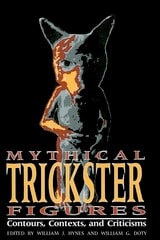
Mythical Trickster Figures
Contours, Contexts, and CriticismsEdited by William J. Hynes and William G. Doty
University of Alabama Press, 1997
The first substantial collection of essays about the trickster since 1955
Mythical Trickster Figures, is the first substantial collection of essays about the trickster to appear since Radin’s 1955 The Trickster. Contributions by leading scholars treat a wide range of manifestations of this mischievous character, ranging from the Coyote of the American Southwest to such African figures as Eshu-Elegba and Ananse, the Japanese Susa-no-o, the Greek Hermes, Christian adaptations of Saint Peter, and examples found in contemporary American fiction and drama.
The many humorous trickster stories included are fascinating in themselves, but Hynes and Doty also highlight the wide range of features of the trickster—the figure whose comic appearance often signifies that the most serious cultural values are being both challenged and enforced.
Mythography
The Study of Myths and RitualsWilliam G. Doty
University of Alabama Press, 2000
This new edition of William Doty's critically acclaimed study provides a comprehensive guidebook to the many schools of interpretation in this burgeoning field
William Doty's popular text has been hailed as the most comprehensive work of its kind. Extensively rewritten and completely restructured, the new edition provides further depth and perspective and is even more accessible to students of myth. It includes expanded coverage of postmodern and poststructuralist perspectives, the Gernet Center, mythic iconography, neo-Jungian approaches, and cultural studies, and it summarizes what is new in the study of Greek myth, iconography, French classical scholarship, and ritual studies. It also features a comprehensive index of names and topics, a glossary, an up-to-date annotated bibliography, and a guide to myth on the Internet.
Presenting all major myth theorists from antiquity to the present, Mythography is an encyclopedic work that offers a cross-disciplinary approach to the study of myth. By reflecting the dramatic increase in interest in myth among both scholars and general readers since publication of the first edition, it remains a key study of modern approaches to myth and
an essential guide to the wealth of mythographic research available today.
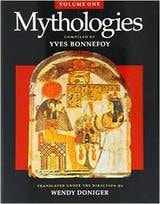
Mythologies
Edited by Yves Bonnefoy
University of Chicago Press, 1991
Drawing on a breathtaking array of sources, from the history of religions to anthropology, archaeology, literature, and linguistics, the contributors define a new approach to the understanding of myth in society.
For this first English-language edition, the articles have been rearranged by region or culture. Together they comprise an exceptionally broad, stimulating introduction to the religious and mythical traditions of the world—from the idea of death in Ancient Egypt to the ideology of nationalism in modern Europe. Greeks and Romans are here in force, naturally, but so too are the Bantu, Dinka, and Dogon of Africa and the Armenians, Mongols, and Turks of Asia.
Readers of Mythologies will discover a wealth of fresh primary sources on such little known traditions as those of the Vietnamese—and bold, provocative new interpretations of well-studied traditions, such as those of classical Greece.

Myths of the Dog-Man
David Gordon White
University of Chicago Press, 1991
Myths of the Popol Vuh in Cosmology, Art, and Ritual
Holley Moyes
University Press of Colorado, 2021
The chapters are grouped into four sections. The first section interprets the Highland Maya worldview through examination of the text, analyzing interdependence between deities and human beings as well as the textual and cosmological coherence of the Popol Vuh as a source. The second section analyzes the Precolumbian Maya archaeological record as it relates to the myths of the Popol Vuh, providing new interpretations of the use of space, architecture, burials, artifacts, and human remains found in Classic Maya caves. The third explores ancient Maya iconographic motifs, including those found in Classic Maya ceramic art; the nature of predatory birds; and the Hero Twins’ deeds in the Popol Vuh. The final chapters address mythological continuities and change, reexamining past methodological approaches using the Popol Vuh as a resource for the interpretation of Classic Maya iconography and ancient Maya religion and mythology, connecting the myths of the Popol Vuh to iconography from Preclassic Izapa, and demonstrating how narratives from the Popol Vuh can illuminate mythologies from other parts of Mesoamerica.
The Myths of the Popol Vuh in Cosmology, Art, and Ritual is the first volume to bring together multiple perspectives and original interpretations of the Popol Vuh myths. It will be of interest not only to Mesoamericanists but also to art historians, archaeologists, ethnohistorians, iconographers, linguists, anthropologists, and scholars working in ritual studies, the history of religion, historic and Precolumbian literature and historic linguistics.
Contributors: Jaime J. Awe, Karen Bassie-Sweet, Oswaldo Chinchilla Mazariegos, Michael D. Coe, Iyaxel Cojtí Ren, Héctor Escobedo, Thomas H. Guderjan, Julia Guernsey, Christophe Helmke, Nicholas A. Hopkins, Barbara MacLeod, Jesper Nielsen, Colin Snider, Karl A. Taube