Results by title
18284 books match the query 'United States' and 949 start with m
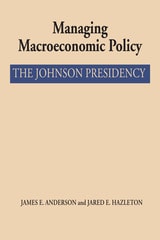
Managing Macroeconomic Policy
The Johnson PresidencyBy James E. Anderson and Jared E. Hazleton
University of Texas Press, 1986
Macroeconomic policy involves government action intended to influence the overall operation of the economy and to deal with such important public problems as economic growth, inflation, unemployment, and recession. In this first comprehensive treatment of presidential management of such policy for any presidency, authors James E. Anderson and Jared E. Hazleton focus on four tasks: developing and maintaining an information and decision-making system; coordination of policies in different macroeconomic areas; building support or consent for presidential policies; and administrative leadership. Drawing extensively upon presidential documents and interviews with Johnson administration officials, the authors pay particular attention to fiscal, monetary, wage-price, and international economic (especially balance of payments) policies during Johnson’s terms.
The authors use the concept of the subpresidency, as defined by Redford and Blisset in Organizing the Executive Branch: The Johnson Presidency (University of Chicago Press, 1981), to show how Johnson managed the macro-economic institutions of the council of Economic Advisors, the Bureau of the Budget (now the Office of Management and Budget), the Department of the Treasury, and the Federal Reserve Board in pursuit of his economic goals. What emerges is a vivid portrait of an activist president.
In evaluating management of macroeconomic policy in the Johnson administration, the authors focus on how presidential policies are developed and adopted rather than on the substance of the policies themselves. They conclude that the Johnson administration competently managed policy development during its presidential years.
This book is a volume in the Administrative History of the Johnson Presidency Series sponsored by the LBJ School of Public Affairs at the University of Texas at Austin, the first two volumes of which were published by the University of Chicago Press. Managing Macroeconomic Policy: The Johnson Presidency was funded in part by the National Endowment for the Humanities.

Managing Madness in the Community
The Challenge of Contemporary Mental Health CareKerry Michael Dobransky
Rutgers University Press, 0
In the wake of movies like One Flew Over the Cuckoo’s Nest and Shutter Island, most people picture the severely or chronically mentally ill being treated in cold, remote, and forbidding facilities. But the reality is very different. Today the majority of deeply troubled mental patients get treatment in nonprofit community organizations. And it is to two such organizations in the Midwest that this study looks for answers. Drawing upon a wealth of unique evidence—fifteen months of ethnographic observations, 91 interviews with clients and workers, and a range of documents—Managing Madness in the Community lays bare the sometimes disturbing nature and effects of our overly complex and disconnected mental health system.
Kerry Michael Dobransky examines the practical strategies organizations and their clients use to manage the often-conflicting demands of a host of constituencies, laws, and regulations. Bringing to light the challenges confronting patients and staff of the community-based institutions that bear the brunt of caring for the mentally ill, his book provides a useful broad framework that will help researchers and policymakers understand the key forces influencing the mental health services system today.

Managing Sickle Cell Disease
In Low-Income FamiliesShirley A. Hill
Temple University Press, 2003

Managing Your Library Construction Project
A Step-by-Step GuideRichard C. McCarthy
American Library Association, 2007
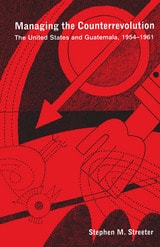
Managing the Counterrevolution
The United States and Guatemala, 1954–1961Stephen M. Streeter
Ohio University Press, 2001
The Eisenhower administration’s intervention in Guatemala is one of the most closely studied covert operations in the history of the Cold War. Yet we know far more about the 1954 coup itself than its aftermath. This book uses the concept of “counterrevolution” to trace the Eisenhower administration’s efforts to restore U.S. hegemony in a nation whose reform governments had antagonized U.S. economic interests and the local elite.
Comparing the Guatemalan case to U.S.-sponsored counterrevolutions in Iran, the Dominican Republic, Brazil, and Chile reveals that Washington’s efforts to roll back “communism” in Latin America and elsewhere during the Cold War represented in reality a short-term strategy to protect core American interests from the rising tide of Third World nationalism.
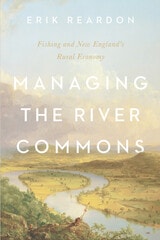
Managing the River Commons
Fishing and New England's Rural EconomyErik Reardon
University of Massachusetts Press, 2021
Historian Erik Reardon argues that to protect these fish, New England's farmer-fishermen pushed for conservation measures to limit commercial fishing and industrial uses of the river. Beginning in the colonial period and continuing to the mid-nineteenth century, they advocated for fishing regulations to promote sustainable returns, compelled local millers to open their dams during seasonal fish runs, and defeated corporate proposals to erect large-scale dams. As environmentalists work to restore rivers in New England and beyond in the present day, Managing the River Commons offers important lessons about historical conservation efforts that can help guide current campaigns to remove dams and allow anadromous fish to reclaim these waters.

Managing the Successful School Library
Strategic Planning and Reflective PracticeLesley S. J. Farmer
American Library Association, 2016
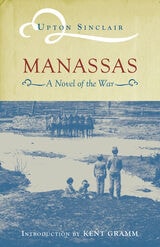
Manassas
A Novel of the WarUpton Sinclair
University of Alabama Press, 2000
Centers on the moral dimension of the conflict as it traces a young Mississippi boy’s conversion from pro-slavery Southerner to abolitionist Union soldier
Allan Montague, born on a Mississippi plantation about twenty years before the Civil War, has grown up with slavery and considers it natural. When his father moves to Boston for business and takes the boy with him, young Allan carries a knife given to him by his cousin to use in killing abolitionists.
The first abolitionist young Allan meets in Boston is Levi Coffin, the reputed founder of the Underground Railroad. In this first of many meetings with historical figures, Allan forms a friendship with Coffin, who eventually takes him to hear a speech by former slave Frederick Douglass. Douglass's powerful words cement Allan's transformation into an abolitionist—a transformation that will lead him back to his Deep South home with the hope of freeing slaves and eventually back to the North and the fateful Battle of Manassas.
Kent Gramm, author of the introduction for this new edition of Manassas, calls the novel “a modern version of the morality play,” with the United States as the central character. “The real story, he writes, is the moral phenomenon of the Civil War.” It is a powerful book that deserves to be revived, read, and studied.
Mandates, Parties, and Voters
How Elections Shape the FutureJames H Fowler and Oleg Smirnov
Temple University Press, 2007
Most research on two-party elections has considered the outcome as a single, dichotomous event: either one or the other party wins. In this groundbreaking book, James Fowler and Oleg Smirnov investigate not just who wins, but by how much, and they marshal compelling evidence that mandates-in the form of margin of victory-matter. Using theoretical models, computer simulation, carefully designed experiments, and empirical data, the authors show that after an election the policy positions of both parties move in the direction preferred by the winning party-and they move even more if the victory is large. In addition, Fowler and Smirnov not only show that the divergence between the policy positions of the parties is greatest when the previous election was close, but also that policy positions are further influenced by electoral volatility and ideological polarization.
This pioneering book will be of particular interest to political scientists, game theoreticians, and other scholars who study voting behavior and its short-term and long-range effects on public policy.

Mandolin Man
The Bluegrass Life of Roland WhiteBob Black
University of Illinois Press, 2022
Roland White’s long career has taken him from membership in Bill Monroe’s Blue Grass Boys and Lester Flatt’s Nashville Grass to success with his own Roland White Band. A master of the mandolin and acclaimed multi-instrumentalist, White has mentored a host of bluegrass musicians and inspired countless others.
Bob Black draws on extensive interviews with White and his peers and friends to provide the first in-depth biography of the pioneering bluegrass figure. Born into a musical family, White found early success with the Kentucky Colonels during the 1960s folk revival. The many stops and collaborations that marked White's subsequent musical journey trace the history of modern bluegrass. But Black also delves into the seldom-told tale of White's life as a working musician, one who endured professional and music industry ups-and-downs to become a legendary artist and beloved teacher.
An entertaining merger of memories and music history, Mandolin Man tells the overdue story of a bluegrass icon and his times.
Mangos, Chiles, and Truckers
The Business of TransnationalismRobert Alvarez Jr.
University of Minnesota Press, 2005
Contrary to common perceptions in postnational studies, Alvarez shows how the nation-state enacts and connects with the transnational, crossing borders in ways that underwrite new technology and trade. Emphasizing the importance and control of the nation-state in the global process, Mangos, Chiles, and Truckers demonstrates how people make meaning as they struggle with the economic circumstances of their lives, creating cultural traditions and giving new value to old customs and practices.
Robert R. Alvarez Jr. is professor of ethnic studies at the University of California, San Diego.
George Lipsitz is professor of American studies at the University of California, Santa Cruz.
Manhood in Hollywood from Bush to Bush
By David Greven
University of Texas Press, 2009
A struggle between narcissistic and masochistic modes of manhood defined Hollywood masculinity in the period between the presidencies of George H. W. Bush and George W. Bush. David Greven's contention is that a profound shift in representation occurred during the early 1990s when Hollywood was transformed by an explosion of films that foregrounded non-normative gendered identity and sexualities. In the years that have followed, popular cinema has either emulated or evaded the representational strategies of this era, especially in terms of gender and sexuality.
One major focus of this study is that, in a great deal of the criticism in both the fields of film theory and queer theory, masochism has been positively cast as a form of male sexuality that resists the structures of normative power, while narcissism has been negatively cast as either a regressive sexuality or the bastion of white male privilege. Greven argues that narcissism is a potentially radical mode of male sexuality that can defy normative codes and categories of gender, whereas masochism, far from being radical, has emerged as the default mode of a traditional normative masculinity. This study combines approaches from a variety of disciplines—psychoanalysis, queer theory, American studies, men's studies, and film theory—as it offers fresh readings of several important films of the past twenty years, including Casualties of War, The Silence of the Lambs, Fight Club, The Passion of the Christ, Auto Focus, and Brokeback Mountain.
Manhood on the Line
Working-Class Masculinities in the American HeartlandStephen Meyer
University of Illinois Press, 2016
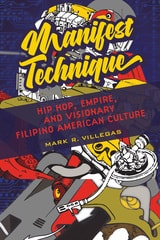
Manifest Technique
Hip Hop, Empire, and Visionary Filipino American CultureMark R. Villegas
University of Illinois Press, 2021
Filipino Americans have been innovators and collaborators in hip hop since the culture’s early days. But despite the success of artists like Apl.de.Ap of the Black Eyed Peas and superstar producer Chad Hugo, the genre’s significance in Filipino American communities is often overlooked. Mark R. Villegas considers sprawling coast-to-coast hip hop networks to reveal how Filipino Americans have used music, dance, and visual art to create their worlds. Filipino Americans have been exploring their racial position in the world in embracing hip hop’s connections to memories of colonial and racial violence. Villegas scrutinizes practitioners’ language of defiance, placing the cultural grammar of hip hop within a larger legacy of decolonization.
An important investigation of hip hop as a movement of racial consciousness, Manifest Technique shows how the genre has inspired Filipino Americans to envision and enact new ideas of their bodies, their history, and their dignity.
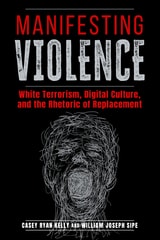
Manifesting Violence
White Terrorism, Digital Culture, and the Rhetoric of ReplacementCasey Ryan Kelly and William Joseph Sipe
University of Alabama Press, 2025
When communication becomes the engine of white supremacist violence.
Manifesting Violence: White Terrorism, Digital Culture, and the Rhetoric of Replacement by Casey Ryan Kelly and William Joseph Sipe is a compelling exploration of how the digital world has become a fertile ground for white supremacist ideology. Through an in-depth analysis of white supremacist manifestos, online rhetoric, and the myth of “white genocide,” Kelly and Sipe uncover the disturbing ways in which digital culture facilitates the spread of racist ideology and the radicalization of individuals. By examining the language of white nationalism—calls to defend the white race, family, and children—Kelly and Sipe reveal how these messages, often disguised as entertainment or humor, gradually transform passive consumers into active participants in a dangerous ideology.
Manifesting Violence sheds light on the alarming shift from organized white supremacist groups to a decentralized digital arena where hate speech is disguised as humor and online conversations foster a culture of violence. Kelly and Sipe’s thorough investigation of this growing digital ecosystem offers a chilling glimpse into the dark underbelly of online extremism. A must-read for anyone seeking to understand the growing threat of hate-motivated violence and the urgent need to address its roots in digital culture, Kelly and Sipe offer rich insights to readers, researchers, academics, and policymakers concerned about extremism, online radicalization, and white supremacy.

Manifold Destiny
Arabs at an American Crossroads of Exceptional RuleJohn Tofik Karam
Vanderbilt University Press, 2021
At the border where Brazil, Paraguay, and Argentina meet under the scrutiny of the US and Mercosur (the large South American trade bloc), Arabs have long fulfilled what author John Tofik Karam calls a "manifold destiny." Karam casts Lebanese, Palestinians, and Syrians at this American border as circumstantial protagonists of a hemispheric saga.
For the more than six decades since they started settling at the trinational border between Brazil, Paraguay, and Argentina, Arabs have animated the hemisphere. Their transnational economic and social projects reveal a heretofore unacknowledged venue of exceptional rule in which the community accommodates and abides multiple states' varied suspensions of norms and laws. Arabs set up businesses and community centers at the border under authoritarian military governments between the 1950s and 1980s; thereafter, when denied full democratic enfranchisement, they instead underwent increasing surveillance from the 1990s to today. Karam reveals an unfinished history of exceptional rule that Arabs accommodate from an authoritarian past to a counterterrorist present.
Karam's riveting account draws on anthropological and historical research from each side of this trinational South American border, as well as from the US—where government bureaucrats still suspect Arabs at the border of would-be-terrorist subversion. Offering a fresh understanding of the hemisphere, Manifold Destiny brings the transnational turn of Middle Eastern studies to bear upon the fields of American studies, Brazilian studies, and Latin American studies.
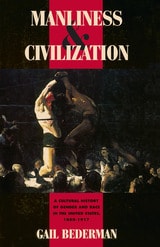
Manliness and Civilization
A Cultural History of Gender and Race in the United States, 1880-1917Gail Bederman
University of Chicago Press, 1995
In turn-of-the-century America, cultural ideals of manhood changed profoundly, as Victorian notions of self-restrained, moral manliness were challenged by ideals of an aggressive, overtly sexualized masculinity. Bederman traces this shift in values and shows how it brought together two seemingly contradictory ideals: the unfettered virility of racially "primitive" men and the refined superiority of "civilized" white men. Focusing on the lives and works of four very different Americans—Theodore Roosevelt, educator G. Stanley Hall, Ida B. Wells, and Charlotte Perkins Gilman—she illuminates the ideological, cultural, and social interests these ideals came to serve.
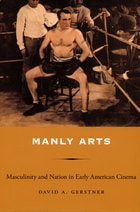
Manly Arts
Masculinity and Nation in Early American CinemaDavid A. Gerstner
Duke University Press, 2006
Gerstner provides in-depth readings of several early American films, illuminating their connections to a wide range of artistic traditions and cultural developments, including dance, poetry, cubism, realism, romanticism, and urbanization. He shows how J. Stuart Blackton and Theodore Roosevelt developed The Battle Cry of Peace (1915) to disclose cinema’s nationalist possibilities during the era of the new twentieth-century urban frontier; how Paul Strand and Charles Sheeler positioned a national avant-garde through the fusion of “American Cubism” and industrialization in their film, Manhatta (1921); and how Oscar Micheaux drew on slave narratives and other African American artistic traditions as he grappled with the ideological terms of African American and white American manhood in his movie Within Our Gates (1920). Turning to Vincente Minnelli’s Cabin in the Sky (1943), Gerstner points to the emergence of an aesthetic of cultural excess that brought together white and African American cultural producers—many of them queer—and troubled the equation of national arts with masculinity.
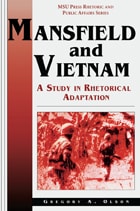
Mansfield and Vietnam
A Study in Rhetorical AdaptationGregory A. Olson
Michigan State University Press, 1995
Mansfield and Vietnam: A Study in Rhetorical Adaptation is the first major work to examine the role played by Senate Majority Leader Mike Mansfield, Democrat from Montana, in the formulation and execution of U.S. Vietnam policy. Drawing upon material from the Mansfield Papers, personal interviews, public speeches, and recently declassified documents, Olson traces Mansfield's journey from ardent supporter of Diem in the late 1950s to quiet critic of LBJ in the mid-1960s, and finally, to outspoken opponent of the Vietnam War in the late 1960s and early 1970s.
Olson focuses his attention on Mansfield's speaking ability and his use of the written word, analyzing the ways in which they proved crucial in shaping the policies of the Eisenhower, Kennedy, Johnson, Nixon, and Ford presidential administrations. He also examines the way personal and political situations converged to force Mansfield into the center of the stormy Vietnam controversy, and eventually into a position of leadership in the campaign to end America's military presence in Southeast Asia. To date, little has been done to evaluate the roles played by key congressional figures in the Vietnam War debate; thus, Mansfield and Vietnam is bound to become a significant contribution, not only to rhetorical studies, but also to twentieth-century diplomatic history and to the study of congressional-presidential relations.
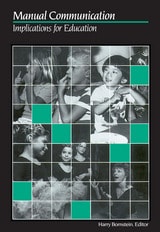
Manual Communication
Implications for EducationHarry Bornstein
Gallaudet University Press, 1990
Manual Communication: Implications for Education offers the first authoritative examination of sign systems used in the education of deaf students. Professionals, teachers, and parents will appreciate the individual, expert explanations of:
American Sign Language
Pidgin Sign (Contact Sign)
Signed English
Signing Exact English
Cued Speech.
The descriptions by the acknowledged designer, administrator, or scholar of each system ensures the highest accuracy and thoroughness, distinguishing Manual Communication as a significant, important resource.
The first chapter recounts the history of sign language, particularly American Sign Language (ASL), including foreign influences and conflicts about its use. An overview follows, describing factors that affect manual communication, such as learner characteristics. Also, an analysis of a nationwide survey of teachers shows the results of their use of the various forms of manual communication in different settings.

Manual of Grasses for North America
Mary E. Barkworth, Laurel K. Anderton Kathleen M. Capels, Sandy Long, and Michael B. Piep
Utah State University Press, 2007
The Manual of Grasses for North America is designed as a successor to the classic volume by Hitchcock and Chase. It reflects current taxonomic thought and includes keys, illustrations, and distribution maps for the nearly 900 native and 400 introduced species that have been found in North America north of Mexico. In addition, it presents keys and illustrations for several species that are known only in cultivation or are of major agricultural significance, either as progenitors of bread wheat and corn or as a major threat to North American agriculture because of their ability to hybridize with crop species. The Manual is a major reference work for grasses that will retain its value for many years.

Manufacturing Celebrity
Latino Paparazzi and Women Reporters in HollywoodVanessa Diaz
Duke University Press, 2020

Manufacturing Discontent
The Trap of Individualism in Corporate SocietyMichael Perelman
Pluto Press, 2005
Perelman describes the manufacture of unhappiness—the continual generation of dissatisfaction with products people are encouraged to purchase and quickly discard—and the complex techniques corporations employ to avoid responsibility and accountability to their workers, consumers and the environment. He outlines ways in which individuals can surpass individualism and instead work together to check the growing power of corporations.
While other books have surveyed the corporate landscape, or decried modern consumerism, Perelman, a professor of economics, places these ideas within a proper economic and historical context. He explores the limits of corporate accountability and responsibility, and investigates the relation between a wide range of phenomena such as food, fear and terrorism. Highly readable, Manufacturing Discontent will appeal to anyone with an interest in the way society works—and what really determines the rights of individuals in a corporate society.
Michael Perelman, Professor of Economics at California State University, Chico, received his Ph.D. from the University of California, Berkeley. He is the author of several books on economics and economic thought, including Railroading Economics (Routledge, 2006); Class Warfare in the Information Age (Palgrave Macmillan, 2000); The Invention of Capitalism (Duke University Press, 2000) and The Perverse Economy (Palgrave Macmillan, 2003).
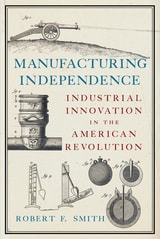
Manufacturing Independence
Industrial Innovation in the American RevolutionRobert F. Smith
Westholme Publishing, 2021
Benjamin Franklin was serious when he suggested the colonists arm themselves with the longbow. The American colonies were not logistically prepared for the revolution and this became painfully obvious in war’s first years. Trade networks were destroyed, inflation undermined the economy, and American artisans could not produce or repair enough weapons to keep the Continental Army in the field. The Continental Congress responded to this crisis by mobilizing the nation’s manufacturing sector for war. With information obtained from Europe through both commercial exchange and French military networks, Congress became familiar with the latest manufacturing techniques and processes of the nascent European industrial revolution. They therefore initiated an innovative program of munitions manufacturing under the Department of the Commissary General of Military Stores. The department gathered craftsmen and workers into three national arsenals where they were trained for the large-scale production of weapons. The department also engaged private manufacturers, providing them with materials and worker training, and instituting a program of inspecting their finished products.
As historian Robert F. Smith relates in Manufacturing Independence: Industrial Innovation in the American Revolution, the colonies were able to provide their military with the arms it needed to fight, survive, and outlast the enemy—supplying weapons for the victory at Saratoga, rearming their armies in the South on three different occasions, and providing munitions to sustain the siege at Yorktown. But this manufacturing system not only successfully supported the Continental Army, it also demonstrated new production ideas to the nation. Through this system, the government went on to promote domestic manufacturing after the war, becoming a model for how the nation could produce goods for its own needs. The War for Independence was not just a political revolution, it was an integral part of the Industrial Revolution in America.
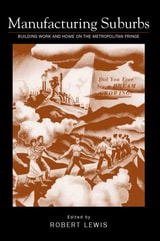
Manufacturing Suburbs
Building Work And Homeedited by Robert Lewis
Temple University Press, 2004
Manufacturing the Enemy
The Media War Against CubaKeith Bolender
Pluto Press, 2019
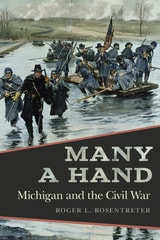
Many a Hand
Michigan and the Civil WarRoger L. Rosentreter
Michigan State University Press, 2026
When war came to the nation in 1861, Michiganians rallied around the Stars and Stripes and readily agreed with a veteran politician who declared, “He who is not for his country is against her.” Even as the conflict grew bloody and costly, they remained committed to suppressing the rebellion. By war’s end, an astonishing 50 percent of its military-age males had enlisted in the army. This Michigan Civil War chronicle is more than a story about soldiers’ heroism on distant battlefields. It also includes the often-overlooked role of women—some of whom refused to stay home and went to war. Also buried in the historical record are accounts of white soldiers whose views on slavery and African Americans, especially those in uniform, were transformed. There is also a much-needed exploration of Michigan’s response to the shocking assassination of a beloved president. Many a Hand captures these stories in a single volume.

Manzanar Mosaic
Essays and Oral Histories on America's First World War II Japanese American Concentration CampArthur A. Hansen
University Press of Colorado, 2023
To begin, Hansen presents two essays, the first centering on his work with Ronald Larson in the mid-1970s on the history of Doho, a Japanese and English dual-language newspaper, and the second an article with David Hacker on revisionist ethnic perspectives of the Manzanar “riot.” A second section is composed of five oral history interviews of selected camp personalities—a female Nisei journalist, a male Nisei historical documentarian, a male Kibei Communist block manager, the Caucasian wife and comrade of the block manager, and the male Kibei who was the central figure in the Manzanar Riot/Revolt—that offer powerful insight into the controversial content of the two essays that precede them.
Manzanar can be understood only by being considered within the much wider context of Japanese American community formation and contestation before, during, and after World War II. A varied collection of scholarly articles and interviews, Manzanar Mosaic engages diverse voices and considers multiple perspectives to illuminate aspects of the Japanese American community, the ethnic press, the Manzanar concentration camp, and the movement for redress and reparations.
Map Men
Transnational Lives and Deaths of Geographers in the Making of East Central EuropeSteven Seegel
University of Chicago Press, 2018
Taking us deep into cartographical archives, Seegel re-creates the public and private worlds of these five mapmakers, who interacted with and influenced one another even as they played key roles in defining and redefining borders, territories, nations—and, ultimately, the interconnection of the world through two world wars. Throughout, he examines the transnational nature of these processes and addresses weighty questions about the causes and consequences of the world wars, the rise of Nazism and Stalinism, and the reasons East Central Europe became the fault line of these world-changing developments.
At a time when East Central Europe has surged back into geopolitical consciousness, Map Men offers a timely and important look at the historical origins of how the region was defined—and the key people who helped define it.
Mapping Abundance for a Planetary Future
Kanaka Maoli and Critical Settler Cartographies in Hawai'iCandace Fujikane
Duke University Press, 2021

Mapping American Culture
Wayne Franklin
University of Iowa Press, 1995
What connections can be drawn between oral history and the shopping mall? Gospel music and the Diablo Canyon nuclear power plant? William Carlos Williams's Patterson and the Manhattan Project's secret cities? The answers lie in this insightful collection of essays that read and illuminate the American landscape. Through literature and folklore, music and oral history, autobiography, architecture, and photography, eleven leading writers and thinkers explore the dialectic between space and place in modern American life. The result is an eloquent and provocative reminder of the environmental context of events—the deceptively simple fact that events “take place.”
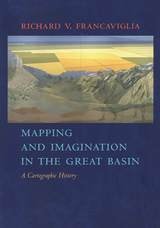
Mapping And Imagination In The Great Basin
A Cartographic HistoryRichard V. Francaviglia
University of Nevada Press, 2005
The Great Basin was the last region of continental North America to be explored and mapped, and it remained largely a mystery to Euro-Americans until well into the nineteenth century. In Mapping and Imagination in the Great Basin, geographer-historian Richard Francaviglia shows how the Great Basin gradually emerged from its “cartographic silence” as terra incognita and how this fascinating process both paralleled the development of the sciences of surveying, geology, hydrology, and cartography and reflected the changing geopolitical aspirations of the European colonial powers and the United States. Francaviglia’s interdisciplinary account of the mapping of the Great Basin combines a chronicle of the exploration of the region with a history of the art and science of cartography and of the political, economic, and cultural contexts in which maps are created. It also offers a compelling, wide-ranging discussion that combines a description of the daunting physical realities of the Great Basin with a cogent examination of the ways humans, from early Native Americans to nineteenth-century surveyors to twentieth-century highway and air travelers, have understood, defined, and organized this space, psychologically and through the medium of maps. Mapping and Imagination in the Great Basin continues Francaviglia’s insightful, richly nuanced meditation on the Great Basin landscape that began in Believing in Place.
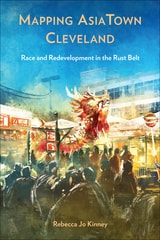
Mapping AsiaTown Cleveland
Race and Redevelopment in the Rust BeltRebecca Jo Kinney
Temple University Press, 2025
Mapping AsiaTown Cleveland challenges ideas about the invisibility of Asian Americans in the urban Midwest by linking the contemporary development of Cleveland’s “AsiaTown” to the multiple and fragmented histories of Cleveland’s Asian American communities from the 1940s to present day. Kinney’s sharp insights illustrate how region matters for Japanese Americans who resettled from concentration camps and Chinese Americans food purveyors, as well as the ways in which Asian American community leaders have had to fight for visibility and representation in city planning—even as the Cleveland Asian Festival is branded as a marquee “diversity” event for the city.
Mapping AsiaTown Cleveland recognizes the vibrant Asian American community formations and belonging that have developed in seemingly unexpected spaces and places.
In the series Asian American History and Culture
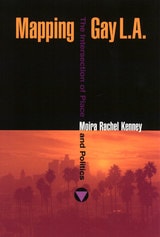
Mapping Gay L.A.
Intersection Of Place And PoliticsMoira Rachel Kenney
Temple University Press, 2001
By tracking the terrain of the movement since the beginnings of gay liberation in 1960s Los Angeles, Kenney shows how activists laid claim to streets, buildings, neighborhoods, and, in the example of West Hollywood, an entire city. Exploiting the area's lack of cohesion, they created a movement that maintained a remarkable flexibility and built support networks stretching from Venice Beach to East LA. Taking a different path from San Francisco and New York, gays and lesbians in Los Angeles emphasized social services, decentralized communities (usually within ethnic neighborhoods), and local as well as national politics. Kenney's grounded reading of this history celebrates the public and private forms of activism that shaped a visible and vibrant community.
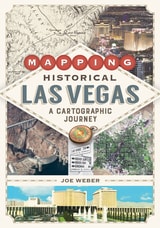
Mapping Historical Las Vegas
A Cartographic JourneyJoe Weber
University of Nevada Press, 2022
Reaching past the city limits, Mapping Historical Las Vegas also examines the development of public lands, military bases, and the canyons and valleys of the Colorado River before the Hoover Dam was built and Lake Mead was created. Weber also includes information on dams, highways, railroads, and other projects that were planned but never constructed— showing what might have been in one of the nation’s largest cities.
With 137 color maps generated using Geographic Information Systems, along with extensive mapping by Weber that draws on his decades of experience in the region, Mapping Historical Las Vegas offers a unique perspective on one of the world’s most famous desert cities.
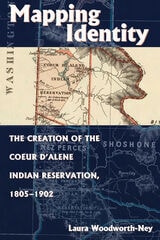
Mapping Identity
The Creation of the Coeur d'Alene Indian Reservation, 1805-1902Laura Woodworth-Ney
University Press of Colorado, 2004
Mapping Identity builds on the growing body of literature that presents a more complex picture of federal policy, native identity, and the creation of Indian reservations in the western United States. It will be important to readers interested in western U.S. history, legal and administrative history, Native American history, and interior Northwest history.
Mapping Multiculturalism
Gordon, Avery F.
University of Minnesota Press, 1996
Mapping Racial Literacies
College Students Write about Race and SegregationSophie R. Bell
Utah State University Press, 2020
This textual ethnography embeds early college students’ writing in deep historical and theoretical contexts and looks for new ways that their writing contributes to and reshapes contemporary understandings of how US and global citizens are thinking about race. The book is a teaching narrative, tracing a teaching journey that considers student writing not only in the moments it is assigned but also in continual revisions of the course, making it a useful tool in helping college-age students see, explore, and articulate the role of race in determining their life experiences and opportunities.
Sophie Bell’s work narrates the experiences of a white teacher making mistakes in teaching about race and moving forward through those mistakes, considering that process valuable and, in fact, necessary. Providing a model for future scholars on how to carve out a pedagogically responsive identity as a teacher, Mapping Racial Literacies contributes to the scholarship on race and writing pedagogy and encourages teachers of early college classes to bring these issues front and center on the page, in the classroom, and on campus.
Mapping The Empty
Eight Artists And NevadaWilliam L. Fox
University of Nevada Press, 1999
Mapping Wisconsin History
Teacher's Guide and Student MaterialsWisconsin Historical Society Press, 2000
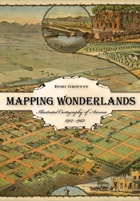
Mapping Wonderlands
Illustrated Cartography of Arizona, 1912–1962Dori Griffin
University of Arizona Press, 2013
Mapping Wonderlands fills part of this gap in existing regional studies by looking at early popular pictorial maps of Arizona. These cartographic representations of the state utilize formal mapmaking conventions to create a place-based state history. They introduce illustrations, unique naming conventions, and written narratives to create carefully visualized landscapes that emphasize the touristic aspects of Arizona.
Analyzing the visual culture of tourism in illuminating detail, this book documents how Arizona came to be identified as an appealing tourism destination. Providing a historically situated analysis, Dori Griffin draws on samples from a comprehensive collection of materials generated to promote tourism during Arizona’s first half-century of statehood. She investigates the relationship between natural and constructed landscapes, visual culture, and narratives of place. Featuring sixty-six examples of these aesthetically appealing maps, the book details how such maps offered tourists and other users a cohesive and storied image of the state. Using historical documentation and rhetorical analysis, this book combines visual design and historical narrative to reveal how early-twentieth-century mapmakers and map users collaborated to imagine Arizona as a tourist’s paradise.
Mapping the Invisible Landscape
Folklore, Writing, and the Sense of PlaceKent C. Ryden
University of Iowa Press, 1993
Any landscape has an unseen component: a subjective component of experience, memory, and narrative which people familiar with the place understand to be an integral part of its geography but which outsiders may not suspect the existence of—unless they listen and read carefully. This invisible landscape is make visible though stories, and these stories are the focus of this engrossing book.
Traveling across the invisible landscape in which we imaginatively dwell, Kent Ryden—himself a most careful listener and reader—asks the following questions. What categories of meaning do we read into our surroundings? What forms of expression serve as the most reliable maps to understanding those meanings? Our sense of any place, he argues, consists of a deeply ingrained experiential knowledge of its physical makeup; an awareness of its communal and personal history; a sense of our identity as being inextricably bound up with its events and ways of life; and an emotional reaction, positive or negative, to its meanings and memories.
Ryden demonstrates that both folk and literary narratives about place bear a striking thematic and stylistic resemblance. Accordingly, Mapping the Invisible Landscape examines both kinds of narratives. For his oral materials, Ryden provides an in-depth analysis of narratives collected in the Coeur d'Alene mining district in the Idaho panhandle; for his consideration of written works, he explores the “essay of place,” the personal essay which takes as its subject a particular place and a writer's relationship to that place.
Drawing on methods and materials from geography, folklore, and literature, Mapping the Invisible Landscape offers a broadly interdisciplinary analysis of the way we situate ourselves imaginatively in the landscape, the way we inscribe its surface with stories. Written in an extremely engaging style, this book will lead its readers to an awareness of the vital role that a sense of place plays in the formation of local cultures, to an understanding of the many-layered ways in which place interacts with individual lives, and to renewed appreciation of the places in their own lives and landscapes.
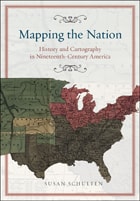
Mapping the Nation
History and Cartography in Nineteenth-Century AmericaSusan Schulten
University of Chicago Press, 2012
In the nineteenth century, Americans began to use maps in radically new ways. For the first time, medical men mapped diseases to understand and prevent epidemics, natural scientists mapped climate and rainfall to uncover weather patterns, educators mapped the past to foster national loyalty among students, and Northerners mapped slavery to assess the power of the South. After the Civil War, federal agencies embraced statistical and thematic mapping in order to profile the ethnic, racial, economic, moral, and physical attributes of a reunified nation. By the end of the century, Congress had authorized a national archive of maps, an explicit recognition that old maps were not relics to be discarded but unique records of the nation’s past.
All of these experiments involved the realization that maps were not just illustrations of data, but visual tools that were uniquely equipped to convey complex ideas and information. In Mapping the Nation, Susan Schulten charts how maps of epidemic disease, slavery, census statistics, the environment, and the past demonstrated the analytical potential of cartography, and in the process transformed the very meaning of a map.
Today, statistical and thematic maps are so ubiquitous that we take for granted that data will be arranged cartographically. Whether for urban planning, public health, marketing, or political strategy, maps have become everyday tools of social organization, governance, and economics. The world we inhabit—saturated with maps and graphic information—grew out of this sea change in spatial thought and representation in the nineteenth century, when Americans learned to see themselves and their nation in new dimensions.
Mapping the Way from Teacher Preparation to edTPA® Completion
A Guide for Secondary Education CandidatesJason C. Fitzgerald
Rutgers University Press, 2021
This book is here to help teacher candidates not only survive the challenge of the edTPA®, but also thrive. It maps out precisely what steps aspiring secondary education teachers should take to ensure successful completion of the edTPA®. Demystifying the language used in the assessment, it uniquely connects edTPA® requirements with what teacher candidates learn within their teacher preparation programs, showing them how the assessment relates to what they are already doing in their classrooms. The strategies in this book draw on both academic research and practical experience to guide student teachers as they plan for their edTPA® portfolios and for their teaching careers beyond.
Maps with the News
The Development of American Journalistic CartographyMark Monmonier
University of Chicago Press, 1989
"A most welcome and thorough investigation of a neglected aspect of both the history of cartography and modern cartographic practice."—Mapline
"A well-written, scholarly treatment of journalistic cartography. . . . It is well researched, thoroughly indexed and referenced . . . amply illustrated."—Judith A. Tyner, Imago Mundi
"There is little doubt that Maps with the News should be part of the training and on the desks of all those concerned with producing maps for mass consumption, and also on the bookshelves of all journalists, graphic artists, historians of cartography, and geographic educators."—W. G. V. Balchin, Geographical Journal
"A definitive work on journalistic cartography."—Virginia Chipperfield, Society of University Cartographers Bulletin

Maras
Gang Violence and Security in Central AmericaEdited by Thomas C. Bruneau, Lucía Dammert, and Elizabeth Skinner
University of Texas Press, 2011
Sensational headlines have publicized the drug trafficking, brutal violence, and other organized crime elements associated with Central America's mara gangs, but there have been few clear-eyed analyses of the history, hierarchies, and future of the mara phenomenon. The first book to look specifically at the Central American gang problem by drawing on the perspectives of researchers from different disciplinary backgrounds, Maras: Gang Violence and Security in Central America provides much-needed insight.
These essays trace the development of the gangs, from Mara Salvatrucha to the 18th Street Gang, in Los Angeles and their spread to El Salvador, Honduras, Guatemala, and Nicaragua as the result of members' deportation to Central America; there, they account for high homicide rates and threaten the democratic stability of the region. With expertise in areas ranging from political science to law enforcement and human rights, the contributors also explore the spread of mara violence in the United States. Their findings comprise a complete documentation that spans sexualized violence, case studies of individual gangs, economic factors, varied responses to gang violence, the use of intelligence gathering, the limits of state power, and the role of policy makers.
Raising crucial questions for a wide readership, these essays are sure to spark productive international dialogues.
March to Independence
The Revolutionary War in the Southern Colonies, 1775–1776Michael Cecere
Westholme Publishing, 2027
The Independence Trilogy
The American Revolutionary War began when Massachusetts militiamen and British troops clashed at Lexington and Concord on April 19, 1775. Two months later, a much larger engagement occurred at Bunker Hill in Boston. The conflict then expanded into a continent-wide war for independence from Great Britain. Or so we are taught. A closer look at events in the South in the eighteen months following Lexington and Concord tells different story. The practice of teaching the Revolutionary War as one generalized conflict between the American colonies and Great Britain assumes the South’s support for the Revolutionary War was a foregone conclusion. However, once shots were fired, it was not certain that the southern colonies would support the independence movement. What is clear is that both the fledgling American republic and the British knew that the southern colonies were critical to any successful prosecution of the war by either side.
In March to Independence: The American Revolution in the Southern Colonies, 1775–1776, historian Michael Cecere, consulting primary source documents, examines how Virginia, North Carolina, South Carolina, and Georgia ended up supporting the colonies to the north, while East Florida remained within the British sphere. South Carolina, Georgia, and East Florida all retained their royal governors through the summer of 1775, and no military engagements occurred in any of the southern colonies in the six months following the battles in Massachusetts. The situation changed significantly in the fall, however, with armed clashes in Virginia and South Carolina; by early 1776 the war had spread to all of the southern colonies except East Florida. Although their march to independence did not follow the exact route as the colonies to the north, events in the South pulled the southern colonists in the same direction, culminating with a united Declaration of Independence on July 4, 1776. This book explores the crucial events in the southern colonies that led all but East Florida to support the American cause.
Marcha
Latino Chicago and the Immigrant Rights MovementEdited by Amalia Pallares and Nilda Flores-Gonzalez
University of Illinois Press, 2010
Marcha is a multidisciplinary survey of the individuals, organizations, and institutions that have given shape and power to the contemporary immigrant rights movement in Chicago. A city with longstanding historic ties to immigrant activism, Chicago has been the scene of a precedent-setting immigrant rights mobilization in 2006 and subsequent mobilizations in 2007 and 2008.
Positing Chicago as a microcosm of the immigrant rights movement on national level, these essays plumb an extraordinarily rich set of data regarding recent immigrant rights activities, defining the cause as not just a local quest for citizenship rights, but a panethnic, transnational movement. The result is a timely volume likely to provoke debate and advance the national conversation about immigration in innovative ways.
Marching Dykes, Liberated Sluts, and Concerned Mothers
Women Transforming Public SpaceElizabeth Currans
University of Illinois Press, 2017
Marching Students
Chicana and Chicano Activism in Education, 1968 to the PresentMargarita Berta-Avila
University of Nevada Press, 2011
Contributors: Alejandro Covarrubias, Xico González, Eracleo Guevara, Adriana Katzew, Lilia R. De Katzew, Rita Kohli, Edward M. Olivos, Alejo Padilla, Carmen E. Quintana, Evelyn M. Rangel-Medina, Marianna Rivera, Daniel G. Solórzano, Carlos Tejeda