Results by title
22279 books match the query 'Social Science' and 1258 start with m
Market Friendly or Family Friendly?
The State and Gender Inequality in Old AgeMadonna Harrington Meyer
Russell Sage Foundation, 2007
Marketing Dreams, Manufacturing Heroes
The Transnational Labor Brokering of Filipino WorkersAnna Romina Guevarra
Rutgers University Press, 2009
The experience of Filipino nurses and domestic workers—two of the country's prized exports—is at the core of the research, which utilizes interviews with employees at labor brokering agencies, state officials from governmental organizations in the Philippines, and nurses working in the United States. Guevarra's multisited ethnography reveals the disciplinary power that state and employment agencies exercise over care workers—managing migration and garnering wages—to govern social conduct, and brings this isolated yet widespread social problem to life.

Marketing Schools, Marketing Cities
Who Wins and Who Loses When Schools Become Urban AmenitiesMaia Bloomfield Cucchiara
University of Chicago Press, 2013

Marketing the Wilderness
Outdoor Recreation, Indigenous Activism, and the Battle over Public LandsJoseph Whitson
University of Minnesota Press, 2025
How outdoor industry marketing promotes an image of “the wilderness” as an unpeopled haven
Marketing the Wilderness analyzes the relationship between the outdoor recreation industry, public lands in the United States, and Indigenous sovereignty and representation in recreational spaces. Combining social media analysis, digital ethnography, and historical research, Joseph Whitson offers nuanced insights into more than a century of the outdoor recreation industry’s marketing strategies, unraveling its complicity in settler colonialism.
Complicating the narrative of outdoor recreation as a universal good, Whitson introduces the concept of “wildernessing” to describe the physical, legal, and rhetorical production of pristine, empty lands that undergirds the outdoor recreation industry, a process that further disenfranchises Indigenous people from whom these lands were stolen. He demonstrates how companies such as Patagonia and REI align with the mining and drilling industries in their need to remove Indigenous peoples and histories from valuable lands. And he describes the ways Indigenous and decolonial activists are subverting and resisting corporate marketing strategies to introduce new narratives of place.
Through the lens of environmental justice activism, Marketing the Wilderness reconsiders the ethics of recreational land use, advocating for engagement with issues of cultural representation and appropriation informed by Indigenous perspectives. As he discusses contemporary public land advocacy around places such as Bears Ears National Monument, Whitson focuses on the deeply fraught relationship between the outdoor recreation industry and Indigenous communities. Emphasizing the power of the corporate system and its treatment of land as a commodity under capitalism, he shows how these tensions shape the American idea of “wilderness” and what it means to fight for its preservation.
Retail e-book files for this title are screen-reader friendly with images accompanied by short alt text and/or extended descriptions.

Markets
Armin Beverungen
University of Minnesota Press, 2018
A media theory of markets
Markets abound in media—but a media theory of markets is still emerging. Anthropology offers media archaeologies of markets, and the sociology of markets and finance unravels how contemporary financial markets have witnessed a media technological arms race. Building on such work, this volume brings together key thinkers of economic studies with German media theory, describes the central role of the media specificity of markets in new detail and inflects them in three distinct ways. Nik-Khah and Mirowski show how the denigration of human cognition and the concomitant faith in computation prevalent in contemporary market-design practices rely on neoliberal conceptions of information in markets. Schröter confronts the asymmetries and abstractions that characterize money as a medium and explores the absence of money in media. Beverungen situates these inflections and gathers further elements for a politically and historically attuned media theory of markets concerned with contemporary phenomena such as high-frequency trading and cryptocurrencies.
Markets in Oaxaca
Edited by Scott Cook and Martin Diskin; foreword by Sidney W. Mintz
University of Texas Press, 1976
Markets in Oaxaca is a study of the regional peasant marketing system in the Valley of Oaxaca, Mexico. It relates the marketing system to other aspects of the regional economy, to neighboring regions, and to the Mexican national economy. Combining ethnographic, theoretical, and regional analyses, it suggests new directions in the fields of peasant and development studies.
Contributors to the volume describe the operation and nature of several marketplaces in the region, analyze village-based artisan production and various specialized economic roles (particularly the role of traders), and describe the operation of several total regional marketing systems. The editors then consider their findings against the background of political, economic, and social structures from the pre-Conquest period to the present. In their conclusion, the editors find the regional peasant economy to be responsive both to the influence of the urban metropolitan sector, on the one hand, and to its own indigenous structural integrity and internal dynamism, on the other.
In addition to the editors, the contributors to Markets in Oaxaca are Ralph L. Beals, Richard L. Berg Jr., Beverly Chiñas, Herbert M. Eder, Charlotte Stolmaker, Carole Turkenik, John C. Warner, Ronald Waterbury, and Cecil R. Welte. Their essays combine analyses of the elements of the system within a comprehensive theoretical framework. Together, they present a complete and integrated view of a peasant economy.
Markets of Dispossession
NGOs, Economic Development, and the State in CairoJulia Elyachar
Duke University Press, 2005
Julia Elyachar studied the efforts of bankers, social scientists, ngo members, development workers, and state officials to turn the craftsmen and unemployed youth of Cairo into the vanguard of a new market society based on microenterprise. She considers these efforts in relation to the alternative notions of economic success held by craftsmen in Cairo, in which short-term financial profit is not always highly valued. Through her careful ethnography of workshop life, Elyachar explains how the traditional market practices of craftsmen are among the most vibrant modes of market life in Egypt. Long condemned as backward, these existing market practices have been seized on by social scientists and development institutions as the raw materials for experiments in “free market” expansion. Elyachar argues that the new economic value accorded to the cultural resources and social networks of the poor has fueled a broader process leading to their economic, social, and cultural dispossession.
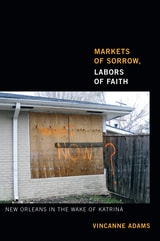
Markets of Sorrow, Labors of Faith
New Orleans in the Wake of KatrinaVincanne Adams
Duke University Press, 2013
Filled with the often desperate voices of residents who returned to New Orleans, Markets of Sorrow, Labors of Faith describes the human toll of disaster capitalism and the affect economy it has produced. While for-profit companies delayed delivery of federal resources to returning residents, faith-based and nonprofit groups stepped in to rebuild, compelled by the moral pull of charity and the emotional rewards of volunteer labor. Adams traces the success of charity efforts, even while noting an irony of neoliberalism, which encourages the very same for-profit companies to exploit these charities as another market opportunity. In so doing, the companies profit not once but twice on disaster.
Marking Indigeneity
The Tongan Art of Sociospatial RelationsTevita O. Ka‘ili; Foreword by ‘Okusitino Mahina
University of Arizona Press, 2017
In Marking Indigeneity, Tevita O. Ka‘ili examines the conflicts and reconciliation of indigenous time-space within the Tongan community in Maui, as well as within the time-space of capitalism. Using indigenous theory, he provides an ethnography of the social relations of the highly mobile Tongans.
Focusing on tauhi vā, Ka‘ili notes certain examples of this time marking: the faikava gatherings that last from sunset to sunrise, long eating gatherings, long conversations (talanoa), the all-night funeral wakes, and the early arrival to and late departure from meetings and celebrations. Ka‘ili also describes the performing art of tauhi vā, which creates symmetry through the performance of social duties (fatongia). This gives rise to powerful feelings of warmth, elation, and honor among the performers. Marking Indigeneity offers an ethnography of the extension of time-space that is rooted in ancient Moana oral traditions, thoughtfully illustrating the continuation of these traditions.
Marobavi
A Study of an Assimilated Group in Northern SonoraRoger C. Owen
University of Arizona Press, 1959
Maroon Choreography
fahima ife
Duke University Press, 2021
Duke University Press Scholars of Color First Book Award recipient
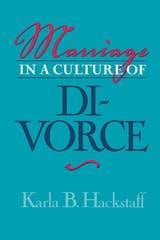
Marriage In A Culture Of Divorce
Karla B. Hackstaff
Temple University Press, 1999
Marriage in a Culture of Divorce examines the shifting meanings of divorce and gender for two generations of middle-class, married couples. Hackstaff finds that new social and economic conditions both support and undermine the efforts of spouses to redefine the meaning of marriage in a culture of divorce. The definitions of marriage, divorce, and gender have changed for all, but more for the young than the old, and more for women than for men. While some spouses in both generations believe that marriage is for life and that men should dominate in marriage, the younger generation of spouses increasingly construct marriage as contingent rather than forever.
Hackstaff presents this evidence in archival case studies of couples married in the 1950s, which she then contrasts with her own case studies of people married during the 1970s, finding evidence of a significant shift in who does the emotional work of maintaining the relationship. It is primarily the woman in the '50s couples who "monitors" the marriage, whereas in the '70s couples both husband and wife support a "marital work ethic," including couples therapy in some cases.
The words and actions of the couples Hackstaff follows in depth - the '50s Stones, Dominicks, Hamptons, and McIntyres, and the '70s Turners, Clement-Leonettis, Greens, Kason-Morrises, and Nakatos -- reveal the changes and contradictory tendencies of married life in the U.S. There are traditional relationships characterized by male dominance, there are couples striving for gender equality, there are partners pulling together, and partners pulling apart.
Those debating "family values" should not forget, Hackstaff contends, that there are costs associated with marriage culture as well as divorce culture, and they should view divorce as a transitional means for defining marriage in an egalitarian direction. She convincingly illustrates her controversial position, that although divorce has its cost to society, the divorce culture empowers wives and challenges the legacy of male dominance that previously set the conditions for marriage endurance.
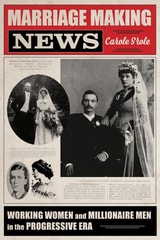
Marriage Making News
Working Women and Millionaire Men in the Progressive EraCarole Srole
University of Illinois Press, 2026
Women’s desire for autonomy, a rising divorce rate, the declining power of the upper class, new ideas of beauty and sexuality—newspaper tales of cross-class nuptials brought a host of anxieties about gender and class to the front page. Srole focuses particular attention on the economic changes faced by working-class women while also surveying newspaper attacks on their morality and womanhood, and their complicity in their own poverty. As she shows, working women and their advocates persevered by asserting an independence they pursued through union activism, professionalism, land ownership, and filling traditionally male jobs.
An engaging merger of media and women’s history, Marriage Making News looks at a rags-to-riches genre and illuminates the forces of change at work behind the stories.
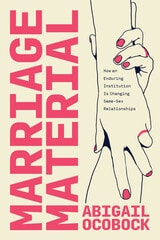
Marriage Material
How an Enduring Institution Is Changing Same-Sex RelationshipsAbigail Ocobock
University of Chicago Press, 2024
It is no secret that marriage rates in the United States are at an all-time low. Despite this significant decline, the institution of marriage endures in our society amid historic changes to its meaning and practice. How does the continuing strength of marriage impact the relationships of same-sex couples after the legalization of same-sex marriage?
Drawing on over one hundred interviews with LGBTQ+ people, Marriage Material reveals the transformative impact marriage equality has had on same-sex relationships. Sociologist Abigail Ocobock looks to same-sex couples across a wide age range to illuminate the complex ways institutional mechanisms work in tandem to govern the choices and behaviors of individuals with different marriage experiences. Ocobock examines both the influence of marriage on the dynamics of same-sex relationships and how LGBTQ+ people challenge heteronormative assumptions about marriage, highlighting the complex interplay between institutional constraint and individual agency.
Marriage Material presents a bold challenge to dominant scholarly and popular ideas about the decline of marriage, making clear that gaining access to legal marriage has transformed same-sex relationships, both for better and for worse.
Marriage Material
How an Enduring Institution Is Changing Same-Sex RelationshipsAbigail Ocobock
University of Chicago Press, 2024
A cutting-edge study of marriage’s transformative effects on same-sex relationships.
It is no secret that marriage rates in the United States are at an all-time low. Despite this significant decline, the institution of marriage endures in our society amid historic changes to its meaning and practice. How does the continuing strength of marriage impact the relationships of same-sex couples after the legalization of same-sex marriage?
Drawing on over one hundred interviews with LGBTQ+ people, Marriage Material reveals the transformative impact marriage equality has had on same-sex relationships. Sociologist Abigail Ocobock looks to same-sex couples across a wide age range to illuminate the complex ways institutional mechanisms work in tandem to govern the choices and behaviors of individuals with different marriage experiences. Ocobock examines both the influence of marriage on the dynamics of same-sex relationships and how LGBTQ+ people challenge heteronormative assumptions about marriage, highlighting the complex interplay between institutional constraint and individual agency.
Marriage Material presents a bold challenge to dominant scholarly and popular ideas about the decline of marriage, making clear that gaining access to legal marriage has transformed same-sex relationships, both for better and for worse.
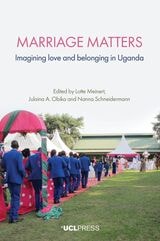
Marriage Matters
Imagining Love and Belonging in UgandaEdited by Lotte Meinert, Julaina A. Obika, and Nanna Schneidermann
University College London, 2025
Building on a collaborative research project between African and European scholars, this volume examines changes in ideas of partnership, kinship, child filiation, friendship, love, and commitment in Uganda. Through detailed portraits of Ugandan couples and communities, Marriage Matters offers fresh new insights within the burgeoning field of scholarship on marriage and family, as well as thought-provoking reflections on the consequences of partnership changes for the country’s future. Engaging with new and classical anthropological theory and gender studies, the volume reflects not only on how Ugandans imagine the relationships between genders and generations, but also broader trends in how we understand love and intimacy.
Marriage Migration in Asia
Emerging Minorities at the Frontiers of Nation-StatesEdited by Sari K. Ishii
National University of Singapore Press, 2016
Marriage Vows and Racial Choices
Jessica Vasquez-Tokos
Russell Sage Foundation, 2017
Vasquez-Tokos finds that their experiences in childhood, adolescence, and young adulthood shape their perceptions of race, which in turn influence their romantic expectations. Most Latinos marry other Latinos, but those who intermarry tend to marry whites. She finds that some Latina women who had domineering fathers assumed that most Latino men shared this trait and gravitated toward white men who differed from their fathers. Other Latina respondents who married white men fused ideas of race and class and perceived whites as higher status and considered themselves to be “marrying up.” Latinos who married non-Latino minorities—African Americans, Asian Americans, and Native Americans—often sought out non-white partners because they shared similar experiences of racial marginalization. Latinos who married Latinos of a different national origin expressed a desire for shared cultural commonalities with their partners, but—like those who married whites—often associated their own national-origin groups with oppressive gender roles.
Vasquez-Tokos also investigates how racial and cultural identities are maintained or altered for the respondents’ children. Within Latino-white marriages, biculturalism—in contrast with Latinos adopting a white “American” identity—is likely to emerge. For instance, white women who married Latino men often embraced aspects of Latino culture and passed it along to their children. Yet, for these children, upholding Latino cultural ties depended on their proximity to other Latinos, particularly extended family members. Both location and family relationships shape how parents and children from interracial families understand themselves culturally.
As interracial marriages become more common, Marriage Vows and Racial Choices shows how race, gender, and class influence our marital choices and personal lives.
Marriage and Cohabitation
Arland Thornton, William G. Axinn, and Yu Xie
University of Chicago Press, 2007
In an era when half of marriages end in divorce, cohabitation has become more commonplace and those who do get married are doing so at an older age. So why do people marry when they do? And why do some couples choose to cohabit? A team of expert family sociologists examines these timely questions in Marriage and Cohabitation, the result of their research over the last decade on the issue of union formation.
Situating their argument in the context of the Western world’s 500-year history of marriage, the authors reveal what factors encourage marriage and cohabitation in a contemporary society where the end of adolescence is no longer signaled by entry into the marital home. While some people still choose to marry young, others elect to cohabit with varying degrees of commitment or intentions of eventual marriage. The authors’ controversial findings suggest that family history, religious affiliation, values, projected education, lifetime earnings, and career aspirations all tip the scales in favor of either cohabitation or marriage. This book lends new insight into young adult relationship patterns and will be of interest to sociologists, historians, and demographers alike.
Marriage and Divorce in the Jewish State
Israel's Civil WarSusan M. Weiss and Netty C. Gross-Horowitz
Brandeis University Press, 2012
Marriage and Health
The Well-Being of Same-Sex CouplesHui Liu
Rutgers University Press, 2020
Marriage and Modernity
Family Values in Colonial BengalRochona Majumdar
Duke University Press, 2009
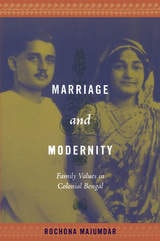
Majumdar examines three broad developments related to the modernity of arranged marriage: the growth of a marriage market, concomitant debates about consumption and vulgarity in the conduct of weddings, and the legal regulation of family property and marriages. Drawing on matrimonial advertisements, wedding invitations, poems, photographs, legal debates, and a vast periodical literature, she shows that the modernization of families does not necessarily imply a transition from extended kinship to nuclear family structures, or from matrimonial agreements negotiated between families to marriage contracts between individuals. Colonial Bengal tells a very different story.
Marriage by Force?
Contestation over Consent and Coercion in AfricaAnnie Bunting
Ohio University Press, 2016
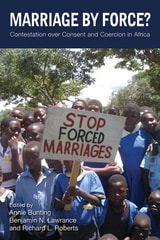
With forced marriage, as with so many human rights issues, the sensationalized hides the mundane, and oversimplified popular discourses miss the range of experiences. In sub-Saharan Africa, the relationship between coercion and consent in marriage is a complex one that has changed over time and place, rendering impossible any single interpretation or explanation.
The legal experts, anthropologists, historians, and development workers contributing to Marriage by Force? focus on the role that marriage plays in the mobilization of labor, the accumulation of wealth, and domination versus dependency. They also address the crucial slippage between marriages and other forms of gendered violence, bondage, slavery, and servile status.
Only by examining variations in practices from a multitude of perspectives can we properly contextualize the problem and its consequences. And while early and forced marriages have been on the human rights agenda for decades, there is today an unprecedented level of international attention to the issue, thus making the coherent, multifaceted approach of Marriage by Force? even more necessary.
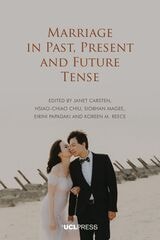
Marriage in Past, Present and Future Tense
Edited by Janet Carsten, Hsiao-Chiao Chiu, Siobhan Magee, Eirini Papadaki, and Koreen M. Reece
University College London, 2021
A series of global case studies, Marriage in Past, Present and Future Tense unravels the ever-changing intimate and institutional questions united by marriage. Traversing politics, economics, and religion, the authors explore how marital practices both react to and produce broader social transformation. In particular, the authors contend that contexts marked by violent sociopolitical ruptures such as civil war or colonization illuminate the links between the personal and political. What emerges is a complex portrait of marriage as a site of cultural memory, embodied experience, and active imagination.
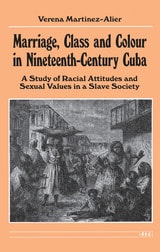
Marriage, Class and Colour in Nineteenth-Century Cuba
A Study of Racial Attitudes and Sexual Values in a Slave SocietyVerena Martinez-Alier
University of Michigan Press, 1989
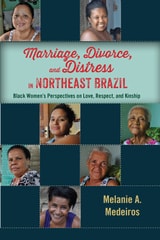
Marriage, Divorce, and Distress in Northeast Brazil
Black Women's Perspectives on Love, Respect, and KinshipMedeiros, Melanie A.
Rutgers University Press, 2018
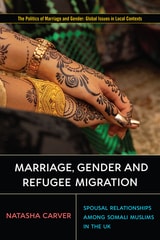
Marriage, Gender and Refugee Migration
Spousal Relationships among Somali Muslims in the United KingdomNatasha Carver
Rutgers University Press, 2021
This ethical and poetic ethnography analyses the upheavals to gender roles and marital relationships brought about by Somali refugee migration to the UK. Unmoored from the socio-cultural norms that made them men and women, being a refugee is described as making "everything" feel "different, mixed up, upside down." Marriage, Gender and Refugee Migration details how Somali gendered identities are contested, negotiated, and (re)produced within a framework of religious and politico-national discourses, finding that the most significant catalysts for challenging and changing harmful gender practices are a combination of the welfare system and Islamic praxis. Described as “an important and urgent monograph," this book will be a key text relevant to scholars of migration, transnational families, personal life, and gender. Written in a beautiful and accessible style, the book voices the participants with respect and compassion, and is also recommended for scholars of qualitative social research methods.
Married To A Daughter Of The Land
Spanish-Mexican Women And Interethnic Marriage In California, 1820-80Maria Raquel Casas
University of Nevada Press, 2009
Married to the Empire
Three Governors' Wives in Russian America 1829-1864Susanna Rabow-Edling
University of Alaska Press, 2015
Elisabeth von Wrangell, Margaretha Etholén, and Anna Furuhjelm were three of eight governors' wives who took up this domestic mantle. Married to the Empire tells their stories using their own words and though extraordinary research by Susanna Rabow-Edling. All three were young and newly wed when they left Russia for the furthest outpost of the empire, and all three went through personal and cultural struggles as they worked to adjust to life in the colony. Their trials offer a little-heard female history of Russian Alaska, while illuminating the issues that arose while trying to reconcile expectations of womanhood with the realities of frontier life.
Married, Middlebrow, and Militant
Sarah Grand and the New Woman NovelTeresa Mangum
University of Michigan Press, 1998

Marta
A NovelEliza Orzeszkowa
Ohio University Press, 2018
Eliza Orzeszkowa was a trailblazing Polish novelist who, alongside Leo Tolstoy and Henryk Sienkiewicz, was a finalist for the 1905 Nobel Prize in Literature. Of her many works of social realism, Marta (1873) is among the best known, but until now it has not been available in English. Easily a peer of The Awakening and A Doll’s House, the novel was well ahead of the English literature of its time in attacking the ways the labor market failed women.
Suddenly widowed, the previously middle-class Marta Świcka is left penniless and launched into a grim battle for her survival and that of her small daughter. As she applies for job after job in Warsaw—portrayed here as an every-city, an unforgiving commercial landscape that could be any European metropolis of the time—she is told time after time that only men will be hired, that men need jobs because they are fathers and heads of families.
Marta burns with Orzeszkowa’s feminist conviction that sexism was not just an annoyance but a threat to the survival of women and children. It anticipated the need for social safety nets whose existence we take for granted today, and could easily read as an indictment of current efforts to dismantle those very programs. Tightly plotted and exquisitely translated by Anna Gąsienica-Byrcyn and Stephanie Kraft, Marta resonates beyond its Polish setting to find its place in women’s studies, labor history, and among other works of nineteenth-century literature and literature of social change.

Martha Graham
Gender & the Haunting of a Dance PioneerVictoria Thoms
Intellect Books, 2013

Martians And Misplaced Clues
Life Work Of Fredric BrownJack Seabrook
University of Wisconsin Press, 1993

Martin Heidegger Saved My Life
Grant Farred
University of Minnesota Press, 2015
In Martin Heidegger Saved My Life, Grant Farred combines autobiography with philosophical rumination to offer this unusual meditation on American racism. In the fall of 2013 while raking leaves outside his home, Farred experienced a racist encounter: a white woman stopped to ask him, “Would you like another job?” Farred responded, “Only if you can match my Cornell faculty salary.” The moment, however, stuck with him. The black man had gravitated to, of all people, Martin Heidegger, specifically Heidegger’s pronouncement, “Only when man speaks, does he think—and not the other way around,” in order to unpack this encounter.
In this essay, Farred grapples with why it is that Heidegger—well known as a Nazi—resonates so deeply with him during this encounter instead of other, more predictable figures such as Malcolm X, W. E. B. DuBois, or Frantz Fanon.
Forerunners is a thought-in-process series of breakthrough digital works. Written between fresh ideas and finished books, Forerunners draws on scholarly work initiated in notable blogs, social media, conference plenaries, journal articles, and the synergy of academic exchange. This is gray literature publishing: where intense thinking, change, and speculation take place in scholarship.
Martin Luther King
Godfrey Hodgson
University of Michigan Press, 2010
Dr. Martin Luther King Jr. is as relevant today as he was when he led civil rights campaigns in the 1950s and 1960s. He was an agent and a prophet of political change in this country, and the election of President Barack Obama is his direct legacy.
Now from one of Britain's most experienced political observers comes a new, accessible biography of the man and his works. The story of King is dramatic, and Godfrey Hodgson presents it with verve, clarity, and acute insight based in part on his own reporting on-scene at the time. He interviewed King half a dozen times or more; heard his speech at the March on Washington; was in Birmingham, Selma and Chicago; and met many of the characters in King's life story. Martin Luther King combines the best of his own reporting, plus the work of other biographers and researchers, to trace the iconic civil rights leader's career from his birth in Atlanta in 1929, through the campaigns that made possible the Civil Rights Act of 1964 and the Voting Rights Act of 1965, to his assassination in Memphis in 1968. Hodgson sheds light on every aspect of an extraordinary life: the Black Baptist culture in which King grew up, his theology and political philosophy, his physical and moral courage, his insistence on the injustice of inequality, his campaigning energy, his repeated sexual infidelities.
Hodgson describes the political minefield in which King operated; follows how he gradually persuaded President Kennedy that he could not stand by and allow the civil rights movement to be frustrated; and describes how, on the verge of success, his career was threatened by President Johnson's anger at King's principled decision to come out against the Vietnam War. He also puts King's career into the context of American history in the crisis of the 1960s. In his life, King was frustrated; but in death, he has been triumphant.
Martin Luther King allows the charisma and power of King's personality to shine through, showing in gripping narrative style exactly how one man helped America to progress toward its truest ideals. Hodgson's extensive research and detail help paint an accurate, complex portrait of one of America's most important leaders.
Godfrey Hodgson has worked in Britain and America as a newspaper and magazine journalist; as a television reporter, documentary maker and anchor; as a university teacher and lecturer; and as the author of a dozen well-received books about U.S. politics and recent history, including America in Our Time, a history of the United States in the 1960s; More Equal than Others, on politics and society in twentieth-century America; and most recently, a biography of Senator Daniel Patrick Moynihan, The Gentleman from New York. Hodgson met King on a number of occasions between 1956 and 1967. He recently retired as director of the Reuters Foundation Programme at Oxford University and is a visiting journalism professor at City University in London.
PRAISE FOR America in Our Time
"A critique so stimulating and compelling that I can only say read it."
---Richard Lingeman, The New York Times
"It simply gets right, without great fuss, the detail and proportion of things like the civil rights movement, student unrest, the stages of our Vietnam engagement."
---Garry Wills, The New York Review of Books
PRAISE FOR More Equal than Others
"The most thoughtful, thorough and sorrowful book imaginable on what has happened in these years."
---Bernard Crick, The Independent
Martin Luther King Jr. and the Sermonic Power of Public Discourse
Carolyn Calloway-Thomas
University of Alabama Press, 1993
Critical studies of the prophetic voice that reshaped a nation.
Martin Luther King Jr. and the Sermonic Power of Public Discourse presents a rich and illuminating examination of Dr. King’s rhetorical mastery, revealing how his most iconic speeches and writings drew deeply from African American sermonic traditions to articulate a moral vision capable of transforming public consciousness. Through nine incisive essays, the volume explores how King’s oratory fused theology, ethics, metaphor, and call‑and‑response patterns to mobilize audiences and frame the civil rights movement as a universal moral struggle.
The collection focuses on five pivotal works—“Death of Evil on the Seashore,” “Letter from Birmingham Jail,” “I Have a Dream,” “A Time to Break Silence,” and “I’ve Been to the Mountaintop”—each analyzed for its rhetorical structure, historical context, and thematic force. These pieces span the full arc of King’s public career, illustrating not only his evolving political and theological commitments but also his sustained effort to envision and communicate a “beloved community” rooted in justice, equality, and human dignity.
In addition to unpacking King’s metaphoric language, ethical appeals, and theological grounding, several essays highlight the ways his rhetoric bridged diverse audiences and invited collective participation in social change. Scholars examine how King re‑constructed the rhetorical situation in “Letter from Birmingham Jail,” framed equality as a universal ideal, and used orality and performance to elevate “I Have a Dream” into one of the most resonant speeches in American history.
Far more than an anthology of commentary, this volume provides a nuanced, interdisciplinary understanding of King as a rhetorician whose discourse transcended political advocacy to become a powerful form of moral persuasion. It is an essential resource for readers interested in rhetoric, communication, civil rights history, and the enduring power of prophetic speech.
Martin Scorsese and the American Dream
Jim Cullen
Rutgers University Press, 2021
This book is the first study of Scorsese’s profound ambivalence toward the American Dream, the ways it drives some men and women to aspire to greatness, but leaves others seduced and abandoned. Showing that Scorsese understands the American dream in terms of a tension between provincialism and cosmopolitanism, Jim Cullen offers a new lens through which to view such seemingly atypical Scorsese films as The Age of Innocence, Hugo, and Kundun. Fast-paced, instructive, and resonant, Martin Scorsese and the American Dream illuminates an important dimension of our national life and how a great artist has brought it into focus.
Marx On Religion
John Raines
Temple University Press, 2002
Marx Went Away--But Karl Stayed Behind
Caroline Humphrey
University of Michigan Press, 1999
Marx and Digital Machines
Alienation, Technology, CapitalismMike Healy
University of Westminster Press, 2020
“Healy closes his marvellous book by saying that ‘alienation is a constant feature and is experienced as a norm rather than as an aberration’.” - https://marxandphilosophy.org.uk/reviews/19718_marx-and-digital-machines-alienation-technology-capitalism-by-mike-healy-reviewed-by-thomas-klikauer/
This book explores the fundamental contradiction at the heart of the digital environment: technology offers all manner of promises, yet habitually fails to deliver. This failure often arises from numerous problems: the proficiency of the technology or end-user, policy failure at various levels, or a combination of these. Solutions such as better technology and more effective end-user education are often put into place to solve these failures.
Mike Healy argues that such approaches are inherently faulty drawing upon qualitative research informed by Marx’s theory of alienation. Using Marx’s theory, he considers participants in three distinct settings: the workplace of information and communications technology (ICT) professionals; university scholars researching the ethical and societal implications of our digital environment; and a group of pensioners living in South London, UK, undertaking ICT training. By delving beneath the surface of how digital technologies are created, researched and experienced, this study illustrates the contradictory nature of our digital lives, as they directly arise from the needs of capitalism.
The book also places Marx’s theory in contrast to the mainstream approaches derived from Seaman and Blauner. In researching and comprehending ICT, this book reaffirms the superior explanatory power of Marx’s theory of alienation.
Marx at the Margins
On Nationalism, Ethnicity, and Non-Western SocietiesKevin B. Anderson
University of Chicago Press, 2010
In Marx at the Margins, Kevin Anderson uncovers a variety of extensive but neglected texts by the well-known political economist which cast what we thought we knew about his work in a startlingly different light. Analyzing a variety of Marx’s writings, including journalistic work written for the New York Tribune, Anderson presents us with a Marx quite at odds with our conventional interpretations. Rather than providing us with an account of Marx as an exclusively class-based thinker, Anderson here offers a portrait of Marx for the twenty-first century: a global theorist whose social critique was sensitive to the varieties of human social and historical development, including not just class, but nationalism, race, and ethnicity, as well.
Marx at the Margins ultimately argues that alongside his overarching critique of capital, Marx created a theory of history that was multi-layered and not easily reduced to a single model of development or revolution. Through highly-informed readings on work ranging from Marx’s unpublished 1879–82 notebooks to his passionate writings about the antislavery cause in the United States, this volume delivers a groundbreaking and canon-changing vision of Karl Marx that is sure to provoke lively debate in Marxist scholarship and beyond.
Marx at the Margins
On Nationalism, Ethnicity, and Non-Western SocietiesKevin B. Anderson
University of Chicago Press, 2016

Marx
The Alternative to CapitalismKieran Allen
Pluto Press, 2017
If we are serious about finding a different way to run the post-credit crunch society, we must start by introducing alternatives to undergraduates. Kieran Allen begins the task with an accessible and comprehensive look at the ideas of Karl Marx.
Dispensing with the dryness of traditional explanations of Marx, Allen shows how Marx's ideas apply to modern society. The first section briefly outlines Marx's life and the development of his work, then goes on to clearly explain his key theories, including historical materialism and surplus value. The second section examines alternatives to capitalism, the concept of 'anti-capitalism' and provides concrete, contemporary examples of Marx’s theories being put into practice in today's world.
Marxism and Media Studies
Key Concepts and Contemporary TrendsMike Wayne
Pluto Press, 2003
Marxist Inquiries
Studies of Labor, Class, and StatesEdited by Michael Burawoy and Theda Skocpol
University of Chicago Press, 1983
– the economic bases of state policies and their determination by social and political struggles;
– the politcal reshaping of international economic order;
– industrial work in relation to other institutions (such as education, patriarchy, and citizenship);
– the transformation of class structures in capitalist and state-socialist societies.
Published as a supplement to American Journal of Sociology, these studies constitute essential reading both for those sociologists who see Marxism as a powerful framework for understanding capitalist societies and for those who may not be committed to working within the Marxist tradition but nevertheless want to see Marxist hypotheses fully researched and debated.

Mary Climbs In
The Journeys of Bruce Springsteen's Women FansLorraine Mangione
Rutgers University Press, 2023
Mary Climbs In illuminates this once overlooked but increasingly important and multi-faceted conversation about female audiences for Springsteen’s music. Drawing on unique surveys of fans themselves, the study offers insight into women’s experiences in their own voices. Authors Lorraine Mangione and Donna Luff explore the depth of women fans’ connection to Springsteen and the profound ways this connection has shaped their lives. Reflections from fans enliven each page as readers journey through the camaraderie and joy of concerts, the sorrow and confusion of personal loss and suffering, the love and closeness of community, and the search for meaning and for the self. Viewed through a psychological lens, women fans’ relationship with Springsteen is revealed in all its complexity as never before. Mary Climbs In is an important interdisciplinary contribution to the growing field of Springsteen studies and a must-read for any fan.
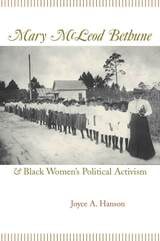
Mary McLeod Bethune and Black Women's Political Activism
Joyce A. Hanson
University of Missouri Press, 2003
Mary McLeod Bethune was a significant figure in American political history. She devoted her life to advancing equal social, economic, and political rights for blacks. She distinguished herself by creating lasting institutions that trained black women for visible and expanding public leadership roles. Few have been as effective in the development of women’s leadership for group advancement. Despite her accomplishments, the means, techniques, and actions Bethune employed in fighting for equality have been widely misinterpreted.
Examining the historical evolution of African American women’s activism in the critical period between 1920 and 1950, a time previously characterized as “doldrums” for both feminist and civil rights activity, Mary McLeod Bethune and Black Women’s Political Activism is important for understanding the centrality of black women to the political fight for social, economic, and racial justice.
Mary, Michael, and Lucifer
Folk Catholicism in Central MexicoBy John M. Ingham
University of Texas Press, 1986
The physical signs of Roman Catholicism pervade the Mexican countryside. Colonial churches and neighborhood chapels, wayside shrines, and mountaintop crosses dot the landscape. Catholicism also permeates the traditional cultures of rural communities, although this ideational influence is less immediately obvious. It is often couched in enigmatic idiom and imagery, and it is further obscured by the vestiges of pagan customs and the anticlerical attitudes of many villagers. These heterodox tendencies have even led some observers to conclude that Catholicism in rural Mexico is little more than a thin veneer on indigenous practice.
In Mary, Michael, and Lucifer John M. Ingham attempts to develop a modern semiotic and structuralist interpretation of traditional Mexican culture, an interpretation that accounts for the culture's apparent heterodoxy. Drawing on field research in Tlayacapan, Morelos, a village in the central highlands, he shows that nearly every domain of folk culture is informed with religious meaning. More precisely, the Catholic categories of spirit, nature, and evil compose the basic framework of the villagers' social relations and subjective experiences.
Masada Myth
Collective Memory and Mythmaking in IsraelNachman Ben-Yehuda
University of Wisconsin Press, 1996
Ben-Yehuda describes how, after nearly 1800 years, the long, complex, and unsubstantiated narrative of Josephus Flavius was edited and augmented in the twentieth century to form a simple and powerful myth of heroism. He looks at the ways this new mythical narrative of Masada was created, promoted, and maintained by pre-state Jewish underground organizations, the Israeli army, archaeological teams, mass media, youth movements, textbooks, the tourist industry, and the arts. He discusses the various organizations and movements that created “the Masada experience” (usually a ritual trek through the Judean desert followed by a climb to the fortress and a dramatic reading of the Masada story), and how it changed over decades from a Zionist pilgrimage to a tourist destination.
Placing the story in a larger historical, sociological, and psychological context, Ben-Yehuda draws upon theories of collective memory and mythmaking to analyze Masada’s crucial role in the nation-building process of modern Israel and the formation of a new Jewish identity. An expert on deviance and social control, Ben-Yehuda looks in particular at how and why a military failure and an enigmatic, troubling case of mass suicide (in conflict with Judaism’s teachings) were reconstructed and fabricated as a heroic tale.
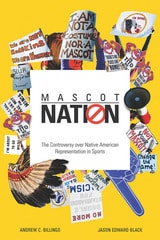
Mascot Nation
The Controversy over Native American Representations in SportsAndrew C. Billings, Jason Edward Black
University of Illinois Press, 2018