Results by title
784 books match the query 'American Government' and 13 start with n
Narratives of Justice
Legislators' Beliefs about Distributive FairnessGrant Reeher
University of Michigan Press, 1996
Narratives of Justice offers a provocative, contemporary look at the timeless questions of justice and fairness. Using face-to-face interviews, Grant Reeher plumbs the minds of legislators for their beliefs about distributive justice and attempts to discover the ways in which those beliefs influence their behavior. The book calls into question many notions of American political ideology and, in particular, the idea of an "American exceptionalism" regarding views from the political left, and the dominance in the United States of a "liberal tradition."
Political philosophers have amassed a large body of work on justice and fairness from a theoretical perspective, but there is comparatively little empirical work on the subject. The work that does exist concentrates on the beliefs of the public. We know very little concerning the beliefs about justice held by political elites. This work offers a window into the beliefs of legislators, a group for which such an inquiry is rarely undertaken.
The book is based on a set of extended, in-depth interviews with the members of the Connecticut State Senate as well as a year of close observation of the Senate in action. The interviews averaged four hours in length and covered a variety of topics related to fairness. Through this material, Reeher employs a narrative-based framework to understand the patterns in the senators' interview responses, and develops a typology of the senator's narratives. These narratives vary in both content and form, and as a whole present a surprising range of views.
Narratives of Justice will be of interest to those concerned with justice, political ideologies, and political beliefs, as well as state and local politics and, more generally, American politics. Its wide research and thorough documentation make it a useful guide to the literature within and beyond political science concerning beliefs, ideologies, legislative behavior, and qualitative research methods.
Grant Reeher is Assistant Professor, Maxwell School of Citizenship and Public Affairs, Department of Political Science, Syracuse University, and currently a Robert Wood Johnson Foundation Scholar in Health Policy Research, University of Michigan.
Nashville Metro
The Politics of City-County ConsolidationBrett W. Hawkins
Vanderbilt University Press, 2024
This is a valuable artifact in itself, but the new foreword by Judge David Briley—former Nashville mayor and grandson of the first metro Nashville mayor, Beverly Briley—offers a firsthand account of the realities of metropolitan government sixty years on.
Natural Right and History
Leo Strauss
University of Chicago Press, 1965
"Strauss . . . makes a significant contribution towards an understanding of the intellectual crisis in which we find ourselves . . . [and] brings to his task an admirable scholarship and a brilliant, incisive mind."—John H. Hallowell, American Political Science Review
Leo Strauss (1899-1973) was the Robert Maynard Hutchins Distinguished Service Professor Emeritus in Political Science at the University of Chicago.
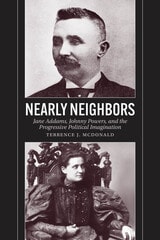
Nearly Neighbors
Jane Addams, Johnny Powers, and the Progressive Political ImaginationTerrence J. McDonald
University of Chicago Press, 2026
Jane Addams was full of courage and goodwill when she opened Hull House in Chicago’s Nineteenth Ward in 1889. However, she failed to understand that her immigrant neighbors had been well-organized around mostly Catholic churches and schools for decades before her arrival. Her ultimate political rival, Johnny Powers, grew up in this culture but was no ethnic hero or deep political thinker. Nearly Neighbors is the first book to provide a contextualized history of their encounter, embedding it in the social and political culture and structures of Chicago and the Nineteenth Ward in the 1890s.
Terrence J. McDonald provides a crucial analysis of two pivotal figures in Chicago’s political history, in part by providing the first detailed assessment of Powers’s life and practices, but also by demonstrating Addams’s misconception of him and her neighbors—and why it matters for understanding her Progressive work overall. In both her political work and writings, Addams saw her ethnic neighbors as bundles of economic need, rather than bearers of ethnic culture. At the same time, she was recruited by elite allies into causes that appeared to be opposed by her neighbors. These views and practices permitted Powers to win in their climactic political battle in 1898 simply by claiming to be the neighborhood defender against Addams and her “downtown” allies. Nearly Neighbors offers a new way of understanding Addams and the complicated legacy of her famous political work and writings.
Neither Liberal nor Conservative
Ideological Innocence in the American PublicDonald R. Kinder and Nathan P. Kalmoe
University of Chicago Press, 2017
Well, American elites disagree fiercely. But average Americans do not. This, at least, was the position staked out by Philip Converse in his famous essay on belief systems, which drew on surveys carried out during the Eisenhower Era to conclude that most Americans were innocent of ideology. In Neither Liberal nor Conservative, Donald Kinder and
Nathan Kalmoe argue that ideological innocence applies nearly as well to the current state of American public opinion. Real liberals and real conservatives are found in impressive numbers only among those who are deeply engaged in political life. The ideological battles between American political elites show up as scattered skirmishes in the general public, if they show up at all.
If ideology is out of reach for all but a few who are deeply and seriously engaged in political life, how do Americans decide whom to elect president; whether affirmative action is good or bad? Kinder and Kalmoe offer a persuasive group-centered answer. Political preferences arise less from ideological differences than from the attachments and antagonisms of group life.
New Jersey Politics and Government, 4th edition
The Suburbs Come of AgeSalmore, Barbara G
Rutgers University Press, 2013
Offering a comprehensive overview of New Jersey politics and government, chapters cover the state’s political history; campaigns and elections; interest groups; the constitution; the development of government institutions; relationships with neighboring states, the federal government, and its own municipalities and counties; tax and spending policies; education; and quality of life issues.
New Jersey Politics and Government
The Suburbs Come of AgeSalmore, Barbara G
Rutgers University Press, 2008
New York City Politics
Governing GothamBerg, Bruce F
Rutgers University Press, 2018
New York City Politics focuses on the impact of these three forces on the governance of New York City’s political system including the need to promote democratic accountability, service delivery equity, as well as the maintenance of civil harmony. This second edition updates the discussion with examples from the Bloomberg and de Blasio administrations as well as current public policy issues including infrastructure, housing and homelessness, land use regulations, and education.
Nixon's Court
His Challenge to Judicial Liberalism and Its Political ConsequencesKevin J. McMahon
University of Chicago Press, 2011
Most analysts have deemed Richard Nixon’s challenge to the judicial liberalism of the Warren Supreme Court a failure—“a counterrevolution that wasn’t.” Nixon’s Court offers an alternative assessment. Kevin J. McMahon reveals a Nixon whose public rhetoric was more conservative than his administration’s actions and whose policy towards the Court was more subtle than previously recognized. Viewing Nixon’s judicial strategy as part political and part legal, McMahon argues that Nixon succeeded substantially on both counts.
Many of the issues dear to social conservatives, such as abortion and school prayer, were not nearly as important to Nixon. Consequently, his nominations for the Supreme Court were chosen primarily to advance his “law and order” and school desegregation agendas—agendas the Court eventually endorsed. But there were also political motivations to Nixon’s approach: he wanted his judicial policy to be conservative enough to attract white southerners and northern white ethnics disgruntled with the Democratic party but not so conservative as to drive away moderates in his own party. In essence, then, he used his criticisms of the Court to speak to members of his “Silent Majority” in hopes of disrupting the long-dominant New Deal Democratic coalition.
For McMahon, Nixon’s judicial strategy succeeded not only in shaping the course of constitutional law in the areas he most desired but also in laying the foundation of an electoral alliance that would dominate presidential politics for a generation.
No Longer Outsiders
Black and Latino Interest Group Advocacy on Capitol HillMichael D. Minta
University of Chicago Press, 2021
In No Longer Outsiders, Minta provides a comprehensive account of the effectiveness of minority civil rights organizations and their legislative allies. He finds that the organizations’ legislative priorities are consistent with black and Latino preferences for stronger enforcement of civil rights policy and immigration reform. Although these groups focus mainly on civil rights for blacks and immigration issues for Latinos, their policy agendas extend into other significant areas. Minta concludes with an examination of how diversity in Congress helps groups gain greater influence and policy success despite many limits placed upon them.
No Middle Ground
How Informal Party Organizations Control Nominations and Polarize LegislaturesSeth E. Masket
University of Michigan Press, 2011
"This is a fascinating book. It is one of the best studies of the ways that parties and politics get conducted in any American state. Masket shows that legislators can be perfectly content without parties that control agendas and does a terrific job of explaining the transition from free-wheeling legislators to rigidly partisan voting blocs."
---Sam Popkin, University of California at San Diego
"No Middle Ground makes a significant contribution to the study of American parties and legislative politics."
---Matthew Green, Catholic University of America
Despite concerns about the debilitating effects of partisanship on democratic government, in recent years political parties have gained strength in state governments as well as in Washington. Whereas political machines of the past manipulated votes, today's machines determine which candidates can credibly compete in a primary.
Focusing on the history and politics of California, Seth E. Masket reveals how these machines evolved and how they stay in power by directing money, endorsements, and expertise to favored candidates, who often tend toward the ideological extreme. Masket argues that politicians are not inherently partisan. Instead, partisanship is thrust upon them by actors outside the government with the power to manipulate primary elections.
Seth E. Masket is Associate Professor of Political Science at the University of Denver.
Nobody Calls Just to Say Hello
Reflections on Twenty-Two Years in the Illinois SenatePhilip J. Rock, with Ed Wojcicki
Southern Illinois University Press, 2011
A native of Chicago's West Side, Rock became one of the most influential politicians in Illinois during the 1970s and 1980s. As a senator in the 1970s and senate president from 1979 to 1993, he sponsored historic legislation to assist abused and neglected children and victims of domestic violence, ushered the state through difficult income tax increases and economic development decisions, shepherded an unruly and fragmented Democratic senate caucus, and always was fair to his Republican counterparts. Covering in great detail a critical period in Illinois political history for the first time, Rock explains how making life better for others drove his decisions in office, while also espousing the seven principles he advocates for effective leadership and providing context for how he applied those principles to the legislative battles of the era.
Unlike many Illinois politicians, Rock, a former seminarian, was known for having a greater interest in issues than in partisan politics. Considered a true statesman, he also was known as a skilled orator who could silence a busy floor of legislators with his commentary on important issues and as a devoted public servant who handled tens of thousands of bills and sponsored nearly five hundred of them himself.
Nobody Calls Just to Say Hello, which takes its title from the volume of calls and visits to elected officials from constituents in need of help, perfectly captures Rock's profound reverence for the institutions of government, his respect for other government offices, and his reputation as a problem solver who, despite his ardent Democratic beliefs, disavowed political self-preservation to cross party lines and make government work for the people. Taking readers through his legislative successes, bipartisan efforts, and political defeats-including a heartbreaking loss in the U.S. Senate primary to Paul Simon in 1984-Rock passionately articulates his belief that government's primary role is to help people, offering an antidote to the current political climate with the simple legislative advice, "Just try to be fair, give everyone a chance, and everything else comes after that."
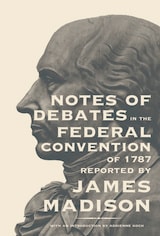
Notes of Debates in the Federal Convention of 1787
James Madison
Ohio University Press, 1987
James Madison’s record of the Constitutional Convention traces day by day the debates held from May to September 1787 and presents the only complete picture we have of the strategy, interests, and ideas of the Founders at the convention itself.
In this indispensable primary document, Madison not only provides detailed insights into one of the great events of US history, but clearly sets forth his own position on such issues as the balance of powers, the separation of functions, and the general role of the federal government. More than in Federalist, which shows the carefully formalized conclusions of his political thought, we see in Debates his philosophy in action, evolving in daily tension with the viewpoints of the other delegates. It is for this reason that Debates is invaluable for placing in perspective the incomplete records of such well-known figures as Rufus King and Alexander Hamilton, and the constitutional plans of such men as Edmund Randolph and Charles Pinckney.
Madison’s contemporaries regarded him as the chief statesmen at the Philadelphia convention; in addition to this, his record outranks in importance all the other writings of the founders of the American republic. He is thus identified, as no other man is, with the making of the Constitution and the correct interpretation of the intentions of its drafters.
New to this edition of Debates is a thorough, scholarly index of some two thousand entries.