Results by title
44 books match the query 'Astrophysics'
924 Elementary Problems and Answers in Solar System Astronomy
Van Allen, James A.
University of Iowa Press, 1993
This challenging collection of problems is organized into seven carefully crafted, thoughtful chapters on the Sun and the nature of the solar system; the motion of the planets; the Sun, Earth, and Moon; the sky as observed from the rotating, revolving Earth; other planets, their satellites, their rings; asteroids, comets, and meteoroids; and the radiations and telescopes. From question 1, "List characteristics of the solar system that are major clues in devising a hypothesis of its origin and evolution," through question 924, "Give a brief list of the contributions of radio and radar technologies in lunar and planetary astronomy," the problems range in difficulty from ones requiring only simple knowledge to ones requiring significant understanding and analysis. Many of the answers, in turn, illuminate the questions by providing basic explanations of the concepts involved.
Pioneer 10 and 11 are now halfway to the edge of the solar system. All beginning and advanced students of astronomy and their instructors as well as all dedicated amateurs can join James Van Allen on this journey by exploring the questions and answers in this stimulating book.

A Final Story
Science, Myth, and BeginningsNasser Zakariya
University of Chicago Press, 2017
In A Final Story, Nasser Zakariya delves into the origins and ambitions of these scientific epics, from the nineteenth century to the present, to see what they reveal about the relationship between storytelling, integrated scientific knowledge, and historical method. While seeking to transcend the perspectives of their own eras, the authors of the epics and the debates surrounding them are embedded in political and social struggles of their own times, struggles to which the epics in turn respond. In attempts to narrate an approach to a final, true account, these synthesizing efforts shape and orient scientific developments old and new. By looking closely at the composition of science epics and the related genres developed along with them, we are able to view the historical narrative of science as a form of knowledge itself, one that discloses much about the development of our understanding of and relationship to science over time.

American Astronomical Society Centennial Issue of the Astrophysical Journal
Edited by Helmut A. Abt
University of Chicago Press, 2000
An Introduction to Nuclear Astrophysics
Richard N. Boyd
University of Chicago Press, 2008
In An Introduction to Nuclear Astrophysics, author Richard Boyd includes basic nomenclature and information so that students from astronomy or physics can quickly orient themselves in the material. Subsequent chapters describe earthbound and space born instruments operating in service to nuclear astrophysics worldwide; background topics such as nuclear and neutrino physics, scattering formalism, and thermonuclear reaction rates; and information on galactic chemical evolution, solar nucleosynthesis, s- and r-processes, and gamma-ray bursts. Each chapter includes problem sets against which students may test their knowledge before moving ahead, and the author has included copious references intended to guide students to further study.
An Introduction to Nuclear Astrophysics is an essential textbook for undergraduate and graduate students in astronomy and astrophysics. It is also an invaluable overview of the subject for researchers in nuclear astrophysics and related fields.

Aurora Watcher's Handbook
Neil Davis
University of Alaska Press, 1992
Starting at a basic level, the handbook begins appropriately with matters of immediate concern to someone who hopes to see an auroral display: what causes the aurora, where and when it is most often seen, and how best to capture it on film. Later sections provide a thorough and clear review of all aspects of auroral science, including the mysterious realm of auroral sound. In a concise and readable fashion, the handbook covers what is known about auroras, encompassing overviews of the northern Natives' legends and myths and the several theories geophysicists have produced to explain why auroras behave as they do. The Aurora Watcher's Handbook includes numerous illustrations, ranging from cartoons to color plates and drawings.
"I am confident [this book] will become the aurora watcher's bible for many years to come." (Sky & Telescope)
"This is participatory science at its best!" (Midwest Book Review)
"A delightful book, highly recommended." (CHOICE )
"A complete course for the layman with an interest in the northern lights." (Fairbanks Daily News-Miner)
"[Davis] has written the book in a smooth, how-it-works style, and his presentation is remarkably clear. . . . [He] expended much effort on this book, forming from his lifetime of knowledge a coherent and comprehensible picture of the aurora for the non-specialist." (ARCTIC)
"For a comprehensive guide to the northern lights, read Neil Davis's The Aurora." (Small Press Magazine)
Battle of the Big Bang
The New Tales of Our Cosmic OriginsNiayesh Afshordi and Phil Halper
University of Chicago Press, 2025
“Excellent.”—Steven Poole, The Wall Street Journal • “Terrific.”—Liz Else, New Scientist (Best Popular Science Books of 2025 So Far) • “A brilliant overview of the state of modern cosmology.”—Alex O'Connor, alexoconnor.com • “This will expand readers’ minds.”—Publishers Weekly • One of Smithsonian's Ten Best Science Books of 2025
“An intellectual feast.”—Carlo Rovelli • “A must-read.”—Sabine Hossenfelder • “Wonderfully broad and open-minded.”—Roger Penrose • “Remarkable.”—Brian Keating
A thrilling exploration of competing cosmological origin stories, comparing new scientific ideas that upend our very notions of space, time, and reality.
By most popular accounts, the universe started with a bang some 13.8 billion years ago. But what happened before the Big Bang? And how do we know it happened at all? Here prominent cosmologist Niayesh Afshordi and science communicator Phil Halper offer a tour of the peculiar possibilities: bouncing and cyclic universes, time loops, creations from nothing, multiverses, black hole births, string theories, and holograms. Along the way, they offer both a call for new physics and a riveting story of scientific debate.
Incorporating insights from Afshordi’s cutting-edge research and Halper’s original interviews with scientists like Stephen Hawking, Roger Penrose, and Alan Guth, Battle of the Big Bang compares these models for the origin of our origins, showing each theory’s strengths and weaknesses and explaining new attempts to test these notions. Battle of the Big Bang is a tale of rivalries and intrigue, of clashes of ideas that have raged from Greek antiquity to the present day over whether the universe is eternal or had a beginning, whether it is unique or one of many. But most of all, Afshordi and Halper show that this search is filled with wonder, discovery, and community—all essential for remembering a forgotten cosmic past.
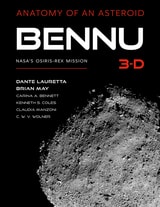
Bennu 3-D
Anatomy of an AsteroidDante Lauretta, Brian May, Carina A. Bennett, Kenneth S. Coles, Claudia Manzoni, and C. W. V. Wolner
University of Arizona Press, 2023
In 2020 the OSIRIS-REx spacecraft successfully landed on the surface of Bennu and collected pristine asteroid material for delivery to Earth in September 2023. Scientific studies of the samples, along with data collected during the rendezvous, promise to help find answers to some of humanity’s deepest questions: Where did we come from? What is our destiny in space?
This book, the world’s first complete (and stereoscopic) atlas of an asteroid, is the result of a unique collaboration between OSIRIS-REx mission leader Dante Lauretta and Brian May’s London Stereoscopic Company. Lauretta’s colleagues include Carina Bennett, Kenneth Coles, and Cat Wolner, as well as Brian May and Claudia Manzoni, who became part of the ultimately successful effort to find a safe landing site for sampling. The text details the data collected by the mission so far, and the stereo images have been meticulously created by Manzoni and May from original images collected by the OSIRIS-REx cameras.
Black Holes and Relativistic Stars
Edited by Robert M. Wald
University of Chicago Press, 1998
Volume contributors: Valeria Ferrari, John L. Friedman, James B. Hartle, Stephen W. Hawking, Gary T. Horowitz, Werner Israel, Roger Penrose, Martin J. Rees, Rafael D. Sorkin, Saul A. Teukolsky, Kip S. Thorne, and Robert M. Wald.
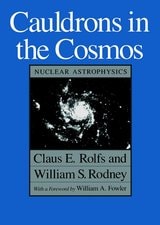
Cauldrons in the Cosmos
Nuclear AstrophysicsClaus E. Rolfs and William S. Rodney
University of Chicago Press, 1988
"One could not wish for a better account of the current state of knowledge (and uncertainty) about nuclear reactions in stars."—B. E. J. Pagel, Nature
"Written in an informal style that those uninitiated into the jargon of nuclear astrophysics and astronomy will find readable and illuminating. . . . A useful and long-awaited introduction to nuclear astrophysics."—G. J. Mathews, Science
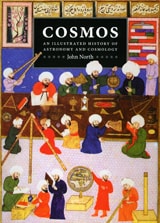
Cosmos
An Illustrated History of Astronomy and CosmologyJohn North
University of Chicago Press, 2008
Organizing his history chronologically, North begins by examining Paleolithic cave drawings that clearly chart the phases of the moon. He then investigates scientific practices in the early civilizations of Egypt, Greece, China, and the Americas (among others), whose inhabitants developed sophisticated methods to record the movements of the planets and stars. Trade routes and religious movements, North notes, brought these ancient styles of scientific thinking to the attention of later astronomers, whose own theories—such as Copernicus’ planetary theory—led to the Scientific Revolution.
The work of master astronomers, including Ptolemy, Galileo, Kepler, and Newton, is described in detail, as are modern-day developments in astrophysics, such as the advent of radio astronomy, the brilliant innovations of Einstein, and the many recent discoveries brought about with the help of the Hubble telescope. This new edition brings North’s seminal book right up to the present day, as North takes a closer look at last year’s reclassification of Pluto as a “dwarf” planet and gives a thorough overview of current research.
With more than two hundred illustrations and a comprehensive bibliography, Cosmos is the definitive history of astronomy and cosmology. It is sure to find an eager audience among historians of science and astronomers alike.
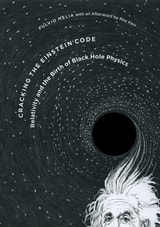
Cracking the Einstein Code
Relativity and the Birth of Black Hole PhysicsFulvio Melia
University of Chicago Press, 2009
Albert Einstein’s theory of general relativity describes the effect of gravitation on the shape of space and the flow of time. But for more than four decades after its publication, the theory remained largely a curiosity for scientists; however accurate it seemed, Einstein’s mathematical code—represented by six interlocking equations—was one of the most difficult to crack in all of science. That is, until a twenty-nine-year-old Cambridge graduate solved the great riddle in 1963. Roy Kerr’s solution emerged coincidentally with the discovery of black holes that same year and provided fertile testing ground—at long last—for general relativity. Today, scientists routinely cite the Kerr solution, but even among specialists, few know the story of how Kerr cracked Einstein’s code.
Fulvio Melia here offers an eyewitness account of the events leading up to Kerr’s great discovery. Cracking the Einstein Code vividly describes how luminaries such as Karl Schwarzschild, David Hilbert, and Emmy Noether set the stage for the Kerr solution; how Kerr came to make his breakthrough; and how scientists such as Roger Penrose, Kip Thorne, and Stephen Hawking used the accomplishment to refine and expand modern astronomy and physics. Today more than 300 million supermassive black holes are suspected of anchoring their host galaxies across the cosmos, and the Kerr solution is what astronomers and astrophysicists use to describe much of their behavior.
By unmasking the history behind the search for a real world solution to Einstein’s field equations, Melia offers a first-hand account of an important but untold story. Sometimes dramatic, often exhilarating, but always attuned to the human element, Cracking the Einstein Code is ultimately a showcase of how important science gets done.
Foundations of High-Energy Astrophysics
Mario Vietri
University of Chicago Press, 2008
The most thorough and engaging survey of high-energy astrophysics available today, Foundations of High-Energy Astrophysics introduces the main physical processes relevant to the field in a rigorous yet accessible way, while paying careful attention to observational issues. Vietri’s book will quickly become a classic text for students and active researchers in astronomy and astrophysics. Those in adjoining fields will also find it a valuable addition to their personal libraries.
From White Dwarfs to Black Holes
The Legacy of S. ChandrasekharEdited by G. Srinivasan
University of Chicago Press, 1999
Over the course of more than six decades of active research Chandrasekhar investigated a dizzying array of subjects. G. Srinivasan notes in the preface to this book that "the range of Chandra's contributions is so vast that no one person in the physics or astronomy community can undertake the task of commenting on his achievements." Thus, in this collection, ten eminent scientists evaluate Chandrasekhar's contributions to their own fields of specialization. Donald E. Osterbrock closes the volume with a historical discussion of Chandrasekhar's interactions with graduate students during his more than quarter century at Yerkes Observatory.
Contributors are James Binney, John L. Friedman, Norman R. Lebovitz, Donald E. Osterbrock, E. N. Parker, Roger Penrose, A. R. P. Rau, George B. Rybicki, E. E. Salpeter, Bernard F. Schutz, and G. Srinivasan.
Gravity's Ghost and Big Dog
Scientific Discovery and Social Analysis in the Twenty-First CenturyHarry Collins
University of Chicago Press, 2013
Gravity's Ghost
Scientific Discovery in the Twenty-first CenturyHarry Collins
University of Chicago Press, 2010
In theory, at least, gravitational waves do exist. We are constantly bathed in gravitational radiation, which is generated when stars explode or collide and a portion of their mass becomes energy that ripples out like a disturbance on the surface of a serene pond. But unfortunately no gravitational wave has ever been directly detected even though the search has lasted more than forty years.
As the leading chronicler of the search for gravitational waves, Harry Collins has been right there with the scientists since the start. The result of his unprecedented access to the front lines of physical science is Gravity’s Ghost, a thrilling chronicle of high-stakes research and cutting-edge discovery. Here, Collins reveals that scientific discovery and nondiscovery can turn on scientific traditions and rivalries, that ideal statistical analysis rests on impossible procedures and unattainable knowledge, and that fact in one place is baseless assumption in another. He also argues that sciences like gravitational wave detection, in exemplifying how the intractable is to be handled, can offer scientific leadership a moral beacon for the twenty-first century. In the end, Gravity’s Ghost shows that discoveries are the denouements of dramatic scientific mysteries.
Gravity's Shadow
The Search for Gravitational WavesHarry Collins
University of Chicago Press, 2004
Gravitational wave detection involves recording the collisions, explosions, and trembling of stars and black holes by evaluating the smallest changes ever measured. Because gravitational waves are so faint, their detection will come not in an exuberant moment of discovery but through a chain of inference; for forty years, scientists have debated whether there is anything to detect and whether it has yet been detected. Sociologist Harry Collins has been tracking the progress of this research since 1972, interviewing key scientists and delineating the social process of the science of gravitational waves.
Engagingly written and authoritatively comprehensive, Gravity's Shadow explores the people, institutions, and government organizations involved in the detection of gravitational waves. This sociological history will prove essential not only to sociologists and historians of science but to scientists themselves.
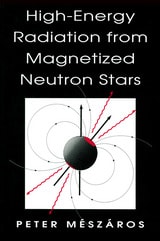
High-Energy Radiation from Magnetized Neutron Stars
Peter Mészáros
University of Chicago Press, 1992
Horizons of Cosmology
Joseph Silk
Templeton Press, 2009
Inner Space/Outer Space
Edited by Edward Kolb, Michael Turner, Keith Olive, David Seckel, and David Lind
University of Chicago Press, 1986
The papers collected here, from scores of scientists, constitute the proceedings of the first major international conference on research at the interface of particle physics and astrophysics, held in May 1984. The editors have written introductions to each major section that draw out the central themes and elaborate on the primary implications of the papers that follow.
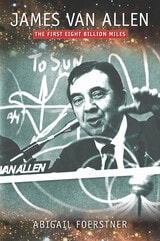
James Van Allen
The First Eight Billion MilesAbigail Foerstner
University of Iowa Press, 2009
Astrophysicist and space pioneer James Van Allen (1914–2006), for whom the Van Allen radiation belts were named, was among the principal scientific investigators for twenty-four space missions, including Explorer I in 1958, the first successful U.S. satellite; Mariner 2’s 1962 flyby of Venus, the first successful mission to another planet; and the 1970s Pioneer 10 and Pioneer 11 missions that surveyed Jupiter and Saturn. Although he retired as a University of Iowa professor of physics and astronomy in 1985, he remained an active researcher, using his campus office to monitor data from Pioneer 10—on course to reach the edge of the solar system when its signal was lost in 2003—until a short time before his death at the age of ninety-one. Now Abigail Foerstner blends space science drama, military agendas, cold war politics, and the events of Van Allen’s lengthy career to create the first biography of this highly influential physicist.
Drawing on Van Allen’s correspondence and publications, years of interviews with him as well as with more than a hundred other people, and declassified documents from such archives as the Jet Propulsion Laboratory, the Kennedy Space Center, and the Applied Physics Laboratory, Foerstner describes Van Allen’s life from his Iowa childhood to his ?rst experiments at White Sands to the years of Explorer I until his death in 2006.
Often called the father of space science, James Van Allen led the way to mapping a new solar system based on the solar wind, massive solar storms, and cosmic rays. Pioneer 10 alone sent him more than thirty years of readings that helped push our recognition of the boundary of the solar system billions of miles past Pluto. Abigail Foerstner’s compelling biography charts the eventful life and time of this trailblazing physicist.
Metaphysical Experiments
Physics and the Invention of the UniverseBjørn Ekeberg
University of Minnesota Press, 2019
An engaging critique of the science and metaphysics behind our understanding of the universe
The James Webb Space Telescope, when launched in 2021, will be the premier orbital observatory, capable of studying every phase of the history of the universe, from the afterglow of the Big Bang to the formation of our solar system. Examining the theoretical basis for key experiments that have made this latest venture in astrophysics possible, Bjørn Ekeberg reveals that scientific cosmology actually operates in a twilight zone between the physical and metaphysical.
Metaphysical Experiments explains how our current framework for understanding the universe, the Big Bang theory, is more determined by a deep faith in mathematical universality than empirical observation. Ekeberg draws on philosophical insights by Spinoza, Bergson, Heidegger, and Arendt; on the critical perspectives of Latour, Stengers, and Serres; and on cutting-edge physics research at the Large Hadron Collider, to show how the universe of modern physics was invented to reconcile a Christian metaphysical premise with a claim to the theoretical unification of nature.
By focusing on the nonmathematical assumptions underlying some of the most significant events in modern science, Metaphysical Experiments offers a critical history of contemporary physics that demystifies such concepts as the universe, particles, singularity, gravity, blackbody radiation, the speed of light, wave/particle duality, natural constants, black holes, dark matter, and dark energy. Ekeberg’s incisive reading of the metaphysical underpinnings of scientific cosmology offers an innovative account of how we understand our place in the universe.
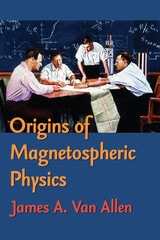
Origins Of Magnetospheric Physics
An Expanded EditionJames A. Van Allen
University of Iowa Press, 2004
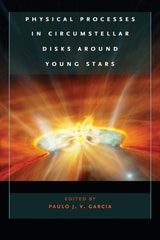
Physical Processes in Circumstellar Disks around Young Stars
Edited by Paulo J. V. Garcia
University of Chicago Press, 2011
Circumstellar disks are vast expanses of dust that form around new stars in the earliest stages of their birth. Predicted by astronomers as early as the eighteenth century, they weren’t observed until the late twentieth century, when interstellar imaging technology enabled us to see nascent stars hundreds of light years away. Since then, circumstellar disks have become an area of intense study among astrophysicists, largely because they are thought to be the forerunners of planetary systems like our own—the possible birthplaces of planets.
This volume brings together a team of leading experts to distill the most up-to-date knowledge of circumstellar disks into a clear introductory volume. Understanding circumstellar disks requires a broad range of scientific knowledge, including chemical processes, the properties of dust and gases, hydrodynamics and magnetohydrodynamics, radiation transfer, and stellar evolution—all of which are covered in this comprehensive work, which will be indispensable for graduate students, seasoned researchers, or even advanced undergrads setting out on the study of planetary evolution.
Quantum Field Theory in Curved Spacetime and Black Hole Thermodynamics
Robert M. Wald
University of Chicago Press, 1994
In this book, Robert Wald provides a coherent, pedagogical introduction to the formulation of quantum field theory in curved spacetime. He begins with a treatment of the ordinary one-dimensional quantum harmonic oscillator, progresses through the construction of quantum field theory in flat spacetime to possible constructions of quantum field theory in curved spacetime, and, ultimately, to an algebraic formulation of the theory. In his presentation, Wald disentangles essential features of the theory from inessential ones (such as a particle interpretation) and clarifies relationships between various approaches to the formulation of the theory. He also provides a comprehensive, up-to-date account of the Unruh effect, the Hawking effect, and some of its ramifications. In particular, the subject of black hole thermodynamics, which remains an active area of research, is treated in depth.
This book will be accessible to students and researchers who have had introductory courses in general relativity and quantum field theory, and will be of interest to scientists in general relativity and related fields.
Quantum Legacies
Dispatches from an Uncertain WorldDavid Kaiser
University of Chicago Press, 2024
The ideas at the root of quantum theory remain stubbornly, famously bizarre: a solid world reduced to puffs of probability; particles that tunnel through walls; cats suspended in zombielike states, neither alive nor dead; and twinned particles that share entangled fates. For more than a century, physicists have grappled with these conceptual uncertainties while enmeshed in the larger uncertainties of the social and political worlds around them, a time pocked by the rise of fascism, cataclysmic world wars, and a new nuclear age.
In Quantum Legacies, David Kaiser introduces readers to iconic episodes in physicists’ still-unfolding quest to understand space, time, and matter at their most fundamental. In a series of vibrant essays, Kaiser takes us inside moments of discovery and debate among the great minds of the era—Albert Einstein, Erwin Schrödinger, Stephen Hawking, and many more who have indelibly shaped our understanding of nature—as they have tried to make sense of a messy world.
Ranging across space and time, the episodes span the heady 1920s, the dark days of the 1930s, the turbulence of the Cold War, and the peculiar political realities that followed. In those eras as in our own, researchers’ ambition has often been to transcend the vagaries of here and now, to contribute lasting insights into how the world works that might reach beyond a given researcher’s limited view. In Quantum Legacies, Kaiser unveils the difficult and unsteady work required to forge some shared understanding between individuals and across generations, and in doing so, he illuminates the deep ties between scientific exploration and the human condition.
Relativistic Astrophysics, 2
The Structure and Evolution of the UniverseYa. B. Zel'dovich and I. D. Novikov
University of Chicago Press, 1983
This second volume of Relativistic Astrophysics provides a remarkably complete picture of the present state of cosmology. It is a synthesis of the theoretical foundations of contemporary cosmology, which are derived from work in relativity, plasma theory, thermodynamics, hydrodynamics, and particle physics. It presents the theoretical work that explains, describes, and predicts the nature of the universe, the physical process that occur in it, the formation of galaxies, the synthesis of the light elements, and the cosmological singularity and the theory of gravitation.
This book, long and eagerly awaited, is essential for everyone whose work is related to cosmology and astrophysics.
Selected Papers, Volume 1
Stellar Structure and Stellar AtmospheresS. Chandrasekhar
University of Chicago Press, 1989
Chandrasekhar has selected papers that trace the development of his ideas and that present aspects of his work not fully covered in the books he has periodically published to summarize his research in each area.
Volume 1, Stellar Structure and Stellar Atmospheres, covers primarily the period 1930-40 and includes early papers on the theory of white dwarfs. In the Preface, Chandrasekhar explains the criteria for selection and provides historical background. Each subsequent volume will include a foreword by an authority on the topics covered.
Selected Papers, Volume 2
Radiative Transfer and Negative Ion of HydrogenS. Chandrasekhar
University of Chicago Press, 1989
Chandrasekhar has selected papers that trace the development of his ideas and that present aspects of his work not fully covered in the books he has periodically published to summarize his research in each area.
Volume 2 covers primarily the period 1940-50 and includes papers on the theory of radiative transfer and on the physics and astrophysics of the negative ion of hydrogen. Of particular note are Chandrasekhar's Gibbs Lecture to the American Mathematical Society in 1946 and his "Personal Account" presented at a conference at Erevan in the U.S.S.R. in 1981. A foreword by T. W. Mullikin, a distinguished scholar in the area of radiative transfer, and an author's note provide a historical context for the papers.
Selected Papers, Volume 3
Stochastic, Statistical, and Hydromagnetic Problems in Physics and AstronomyS. Chandrasekhar
University of Chicago Press, 1989
Chandrasekhar has selected papers that trace the development of his ideas and that present aspects of his work not fully covered in the books he has periodically published to summarize his research in each area.
This volume is divided into four sections. The first, on dynamical friction and Brownian motion, includes papers written after Chandrasekhar published his 1942 monograph Principles of Stellar Dynamics. Also in this section is "Stochastic Problems in Physics and Astronomy," one of the most cited papers in the physics literature, as well as papers written jointly with John von Neumann that have been given impetus to recent research. As Chandrasekhar notes, the papers in the second section, on statistical problems in astronomy, were influenced by Ambartsumian's analysis of brightness in the Milky Way. A third section on the statistical theory of turbulence addresses issues still unresolved in fluid dynamics, and the last section is devoted to hydromagnetic problems in astrophysics that are not discussed in Chandrasekhar's monographs.
Selected Papers, Volume 5
Relativistic AstrophysicsS. Chandrasekhar
University of Chicago Press, 1990
Chandrasekhar has selected papers that trace the development of his ideas and that present aspects of his work not fully covered in the books he has periodically published to summarize his research in each area.
Volume 5 covers all of Chandrasekhar's contributions to the general theory of relativity and relativity's astrophysical applications (except his research on black holes and colliding gravitational waves, which is covered in Volume 6). The major topics include the influence of general relativity on the pulsations and stability of stars; the back reaction of gravitational waves on their sources; and post-Newtonian approximations to general relativity and their astrophysical applications. In addition to research papers, the volume includes two 1972 lectures in which Chandrasekhar assessed the past, present, and future of relativistic astrophysics. The foreword by astrophysicist Kip S. Thorne is an absorbing, brief history of the field since 1961, capturing the atmosphere of the early research and clarifying Chandrasekhar's dominant role in it.
Chandrasekhar has never written a monograph synthesizing his research in relativistic astrophysics, and therefore this volume of his papers serves as a summary of that work for students and more senior researchers.
Selected Papers, Volume 6
The Mathematical Theory of Black Holes and of Colliding Plane WavesS. Chandrasekhar
University of Chicago Press, 1991
Chandrasekhar has selected papers that trace the development of his ideas and that present aspects of his work not fully covered in the books he has periodically published to summarize his research in each area.
Selected Papers, Volume 7
The Non-Radial Oscillations of Stars in General Relativity and Other WritingsS. Chandrasekhar
University of Chicago Press, 1997
world through the eyes of one of the twentieth century's most brilliant
and sensitive scientists. Conceived by Chandrasekhar as a supplement to
his Selected Papers, this volume begins with eight papers he
wrote with Valeria Ferrari on the non-radial oscillations of stars. It
then explores some of the themes addressed in Truth and Beauty,
with meditations on the aesthetics of science and the world it examines.
Highlights include: "The Series Paintings of Claude Monet and the
Landscape of General Relativity," "The Perception of Beauty and the
Pursuit of Science," "On Reading Newton's Principia at Age Past
Eighty," and personal recollections of Indira Gandhi, Jawaharlal Nehru,
and others.
Selected Papers, Volume 7 paints a picture of Chandra's universe,
filled with stars and galaxies, but with space for poetics, paintings,
and politics.
The late S. Chandrasekhar was best known for his discovery of the upper
limit to the mass of a white dwarf star, for which he received the Nobel
Prize in Physics in 1983. He was the author of many books, including
The Mathematical Theory of Black Holes and, most recently,
Newton's Principia for the Common Reader.
Space, Time, and Gravity
The Theory of the Big Bang and Black HolesRobert M. Wald
University of Chicago Press, 1992
Star Day
A Story of 24 Hours and 24 Stellar LivesMarcia Bartusiak and Stephen Lowe
University of Chicago Press, 2027
An hourly guide that tracks twenty-four stars, stellar clusters, and constellations across the sky to reveal their luminous lives and lore.
Over the course of a day, the constellations slowly shift, rising in the east and setting in the west, due to Earth’s rotation. A full turn of the celestial sphere, that bowl above us where the stars seemingly appear fixed to the surface, is completed once every twenty-four hours. In fact, the stars inspired the twenty-four-hour day, and one star, our Sun, rules the circadian rhythms of all life on our planet. This short book sweeps through the celestial sphere hour by hour, introducing a remarkable cast of stellar characters with each chapter. Celebrated science writer Marcia Bartusiak and mathematician Stephen Lowe blend practical astronomy with fascinating history to share unique cosmological stories.
This husband and wife team explain that observers have long split the sky into twenty-four hours of right ascension—a celestial equivalent of longitude and a universal scheme for locating cosmological objects. Each chapter of Star Day presents a single right ascension hour, from the stellar death of S Andromedae (zeroth hour)—an explosion that helped reveal the size of the universe—to Scheat (twenty-third hour), an aging red giant. Twice the mass of the Sun and some 1,500 times as bright, Scheat sometimes guides amateur astronomers to distant galaxies. In between, we learn about humans’ pole star, Polaris (second hour), and meet the supermassive black hole at the center of our Milky Way galaxy (seventeenth hour). By the end of our star day, we will appreciate both our own stellar origins and the fragile and deep connections between human civilizations and the ever-changing heavens. Star Day reminds us that wonder and discovery are easily available, all for the simple price of looking up.
For each chapter, artist Matthew Green has depicted these stellar scenes with entrancing pen-and-ink drawings. Working together to narrate and illustrate these stars' stories, Bartusiak, Lowe, and Green have created an engaging read that is a perfect way to spend an hour or two—and a true gift to both seasoned skywatchers and curious beginners.
Stars as Laboratories for Fundamental Physics
The Astrophysics of Neutrinos, Axions, and Other Weakly Interacting ParticlesGeorg G. Raffelt
University of Chicago Press, 1996
Raffelt presents the many uses of stellar astrophysics for research in basic particle physics. He focuses primarily on the properties and nongravitational interactions of elementary particles. Numerous graphs and figures complement the text.
Stars as Laboratories for Fundamental Physics is a valuable reference for cosmologists, astrophysicists, and particle physicists.
The Physics of Extragalactic Radio Sources
David S. De Young
University of Chicago Press, 2002
In The Physics of Extragalactic Radio Sources, David De Young provides a clearly written overview of what is currently known about these objects. A unique feature of the book is De Young's emphasis on the physical processes associated with extragalactic radio sources: their evolution, their environment, and their use as probes to solve other astrophysical problems. He also makes extensive use of the large amount of data now available from observations at x-ray, optical, and radio wavelengths to illustrate his main points.
The Physics of Extragalactic Radio Sources will be a comprehensive introduction to the field for graduate students and a useful summary for astrophysicists.
The Space Station
A Personal JourneyHans Mark
Duke University Press, 1987
In The Space Station the story of this debate is told by Hans mark, who had major roles in the development of the space shuttle from its beginnings in the sixties and who bore a primary responsibility for overseeing the space station project during the decisive years from 1981 to 1984. Mark's appointment to the post of deputy administrator of NASA capped a career devoted to the development and management of space technology—he served as director of NASA's Ames Research Center, then as under secretary and later secretary of the U.S. Air Force. Serving under both President Carter and President Reagan, mark is uniquely able to chronicle the intricate process by which the space shuttle became a reality and the space station an acknowledged goal of the American space effort.
A scientist by training, Mark's account of his career in the space program is the story of a personal dream as well as the story of a vast public enterprise whose human side is only now being fully appreciated.
The Sun in Time
Edited by C. P. Sonett, M. S. Giampapa, and M. S. Matthews
University of Arizona Press, 1991
Theoretical Principles in Astrophysics and Relativity
Norman R. Lebovitz, William H. Reid, and Peter O. Vandervoort
University of Chicago Press, 1981
"The book as a whole should be a gift from every research supervisor to every new graduate student in theoretical astronomy."—D. W. Sciama, Science
Theory of Neutron Star Magnetospheres
F. Curtis Michel
University of Chicago Press, 1990
F. Curtis Michel, who was among the first theorists to propose a neutron star model for radio pulsars, analyzes competing models of pulsars, radio emission models, winds and jets from pulsars, pulsating X-ray sources, gamma-ray burst sources, and other neutron-star driven phenomena. Although the book places primary emphasis on theoretical essentials, it also provides a considerable introduction to the observational data and its organization. Michel emphasizes the problems and uncertainties that have arisen in the research as well as the considerable progress that has been made to date.
Three Steps to the Universe
From the Sun to Black Holes to the Mystery of Dark MatterDavid Garfinkle and Richard Garfinkle
University of Chicago Press, 2008
The authors begin by inviting readers to step away from the Earth and reconsider our Sun. What we can directly observe of this star is limited to its surface, but with the advent of telescopes and spectroscopy, scientists know more than ever about its physical characteristics, origins, and projected lifetime. From the Sun, the authors journey further out into space to explore black holes. The Garfinkle brothers explain that our understanding of these astronomical oddities began in theory, and growing mathematical and physical evidence has unexpectedly supported it. From black holes, the authors lead us further into the unknown, to the dark matter and energy that pervade our universe, where science teeters on the edge of theory and discovery. Returning from the depths of space, the final section of the book brings the reader back down to Earth for a final look at the practice of science, ending with a practical guide to discerning real science from pseudoscience among the cacophony of print and online scientific sources.
Three Steps to the Universe will reward anyone interested in learning more about the universe around us and shows how scientists uncover its mysteries.
Time Travel and Warp Drives
A Scientific Guide to Shortcuts through Time and SpaceAllen Everett and Thomas Roman
University of Chicago Press, 2011
To see video demonstrations of key concepts from the book, please visit this website: http://www.press.uchicago.edu/sites/timewarp/
Sci-fi makes it look so easy. Receive a distress call from Alpha Centauri? No problem: punch the warp drive and you're there in minutes. Facing a catastrophe that can't be averted? Just pop back in the timestream and stop it before it starts. But for those of us not lucky enough to live in a science-fictional universe, are these ideas merely flights of fancy—or could it really be possible to travel through time or take shortcuts between stars?
Cutting-edge physics may not be able to answer those questions yet, but it does offer up some tantalizing possibilities. In Time Travel and Warp Drives, Allen Everett and Thomas A. Roman take readers on a clear, concise tour of our current understanding of the nature of time and space—and whether or not we might be able to bend them to our will. Using no math beyond high school algebra, the authors lay out an approachable explanation of Einstein's special relativity, then move through the fundamental differences between traveling forward and backward in time and the surprising theoretical connection between going back in time and traveling faster than the speed of light. They survey a variety of possible time machines and warp drives, including wormholes and warp bubbles, and, in a dizzyingly creative chapter, imagine the paradoxes that could plague a world where time travel was possible—killing your own grandfather is only one of them!
Written with a light touch and an irrepressible love of the fun of sci-fi scenarios—but firmly rooted in the most up-to-date science, Time Travel and Warp Drives will be a delightful discovery for any science buff or armchair chrononaut.
Venus II
Geology, Geophysics, Atmosphere, and Solar Wind EnvironmentEdited by S. W. Bougher, D. M. Hunten, and R. J. Phillips
University of Arizona Press, 1997
Topics addressed include geology, surface processes, volcanism, tectonism, impact cratering, geodynamics, upper and lower atmospheres, and solar wind environment. The diversity of the coverage reflects the interdisciplinary nature of Venus science and the breadth of knowledge that has contributed to it. A CD-ROM developed by the Jet Propulsion Laboratory accompanies the book and incorporates text, graphics, video, software, and various digital products from selected contributors to the text. A multimedia interface allows users to navigate the text and the extensive databases included on the disk. Venus II is the most authoritative single volume available on the second planet. Its contents will not only help shape the goals of future Venus missions but will also enhance our understanding of current Mars explorations.
What's Eating the Universe?
And Other Cosmic QuestionsPaul Davies
University of Chicago Press, 2021
In the constellation of Eridanus, there lurks a cosmic mystery: It’s as if something has taken a huge bite out of the universe. But what is the culprit? The hole in the universe is just one of many puzzles keeping cosmologists busy. Supermassive black holes, bubbles of nothingness gobbling up space, monster universes swallowing others—these and many other bizarre ideas are being pursued by scientists. Due to breathtaking progress in astronomy, the history of our universe is now better understood than the history of our own planet. But these advances have uncovered some startling riddles. In this electrifying new book, renowned cosmologist and author Paul Davies lucidly explains what we know about the cosmos and its enigmas, exploring the tantalizing—and sometimes terrifying—possibilities that lie before us.
As Davies guides us through the audacious research offering mind-bending solutions to these and other mysteries, he leads us up to the greatest outstanding conundrum of all: Why does the universe even exist in the first place? And how did a system of mindless, purposeless particles manage to bring forth conscious, thinking beings? Filled with wit and wonder, What’s Eating the Universe? is a dazzling tour of cosmic questions, sure to entertain, enchant, and inspire us all.