Results by title
490 books match the query 'Asian' and 10 start with n
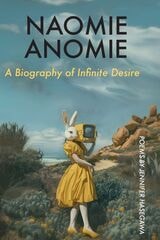
NAOMIE ANOMIE
A Biography of Infinite DesireJennifer Hasegawa
Omnidawn, 2025
Jennifer Hasegawa’s NAOMIE ANOMIE: A Biography of Infinite Desire, is an experimental poetic take on biography, growing increasingly surreal as it follows the truths behind its unreliable narrator through paradoxes rendered in luxurious detail. This book is a portrait of a flawed life, a call for attention to the looming ecological crisis, and a lyrical experiment in truth-telling.
Feeling ever-increasing existential strain leading up to the COVID-19 pandemic and culminating in her decision to no longer venture outside of her apartment, Naomie is not surprised to find her name is an anagram for anomie, a term for the breakdown of social norms. In these pages is a meticulous account of everything that went wrong in Naomie’s five decades of life. We find retellings of a life’s most significant moments—not because they are sources of pride, but because they stand as the only decipherable moments of humanity amid a world of static. This story in verse acts as a survival guide, romance novel, liberation handbook, pulp thriller, and jokebook for those who will live through ongoing plagues, environmental change, total AI integration, water wars, and cyberattacks and who will come out the other side ready to restart.
Nakagami, Japan
Buraku and the Writing of EthnicityAnne McKnight
University of Minnesota Press, 2010
In Nakagami, Japan, Anne McKnight shows how the writer’s exploration of buraku led to a unique blend of fiction and ethnography—which amounted to nothing less than a reimagining of modern Japanese literature. McKnight develops a parallax view of Nakagami’s achievement, allowing us to see him much as he saw himself, as a writer whose accomplishments traversed both buraku literary arts and high literary culture in Japan.
As she considers the ways in which Nakagami and other twentieth-century writers used ethnography to shape Japanese literature, McKnight reveals how ideas about language also imagined a transfigured relation to mainstream culture and politics. Her analysis of the resulting “rhetorical activism” lays bare Nakagami’s unique blending of literature and ethnography within the context of twentieth-century ideas about race, ethnicity, and citizenship—in Japan, but also on an international scale.
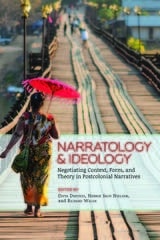
Narratology and Ideology
Negotiating Context, Form, and Theory in Postcolonial NarrativesDivya Dwivedi
The Ohio State University Press, 2018
The thirteen essays in Narratology and Ideology offer compelling readings of individual novels, with a focus upon South Asian literature, that provide a cumulative case study on the value of postcolonial narratology. The essays show not only how narrative theory can be productively applied in service of postcolonial criticism but also how such attention to postcolonial fictions can challenge and refine our theoretical understanding of narrative.
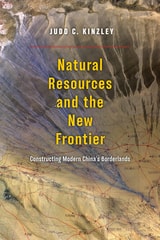
Natural Resources and the New Frontier
Constructing Modern China's BorderlandsJudd C. Kinzley
University of Chicago Press, 2018
China’s westernmost province of Xinjiang has experienced escalating cycles of violence, interethnic strife, and state repression since the 1990s. In their search for the roots of these growing tensions, scholars have tended to focus on ethnic clashes and political disputes. In Natural Resources and the New Frontier, historian Judd C. Kinzley takes a different approach—one that works from the ground up to explore the infrastructural and material foundation of state power in the region.
As Kinzley argues, Xinjiang’s role in producing various natural resources for regional powers has been an important but largely overlooked factor in fueling unrest. He carefully traces the buildup to this unstable situation over the course of the twentieth century by focusing on the shifting priorities of Chinese, Soviet, and provincial officials regarding the production of various resources, including gold, furs, and oil among others. Through his archival work, Kinzley offers a new way of viewing Xinjiang that will shape the conversation about this important region and offer a model for understanding the development of other frontier zones in China as well as across the global south.
Negative Exposures
Knowing What Not to Know in Contemporary ChinaMargaret Hillenbrand
Duke University Press, 2020
New Global Cities in Latin America and Asia
Welcome to the Twenty-First CenturyPablo Baisotti, Editor
University of Michigan Press, 2022
New Global Cities in Latin America and Asia: Welcome to the Twenty-First Century proposes new visions of global cities and regions historically considered “secondary” in the international context. The arguments are not only based on material progress made by these metropolises, but also on the growing social difficulties experienced (e.g., organized crime, drug trafficking, slums, economic inequalities). The book illustrates the growth of cities according to these problems arising from the modernity of the new century, comparing Latin American and Asian cities.
This book analyzes the complex relationships within cities through an interdisciplinary approach, complementing other research and challenging orthodox views on global cities. At the same time, the book provides new theoretical and methodological tools to understand the progress of “Third World” cities and the way of understanding “globality” in the 21st century by confronting the traditional views with which global cities were appreciated since the 1980s. Pablo Baisotti brings together researchers from various fields who provide new interpretative keys to certain cities in Latin America and Asia.
Nominal Things
Bronzes in the Making of Medieval ChinaJeffrey Moser
University of Chicago Press, 2023
This book opens in eleventh-century China, where scholars were the first in world history to systematically illustrate and document ancient artifacts. As Jeffrey Moser argues, the visual, technical, and conceptual mechanisms they developed to record these objects laid the foundations for methods of visualizing knowledge that scholars throughout early modern East Asia would use to make sense of the world around them.
Of the artifacts these scholars studied, the most celebrated were bronze ritual vessels that had been cast nearly two thousand years earlier. While working to make sense of the relationship between the bronzes’ complex shapes and their inscribed glyphs, they came to realize that the objects were “nominal things”—objects inscribed with names that identified their own categories and uses. Eleventh-century scholars knew the meaning of these glyphs from hallowed Confucian writings that had been passed down through centuries, but they found shocking disconnects between the names and the bronzes on which they were inscribed. Nominal Things traces the process by which a distinctive system of empiricism was nurtured by discrepancies between the complex materiality of the bronzes and their inscriptions. By revealing the connections between the new empiricism and older ways of knowing, the book explains how scholars refashioned the words of the Confucian classics into material reality.
Not Out of Hate
A Novel of BurmaMa Ma Lay
Ohio University Press, 1991
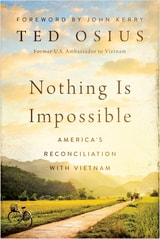
Nothing Is Impossible
America's Reconciliation with VietnamTed Osius
Rutgers University Press, 2022
Ted Osius, former ambassador during the Obama administration, offers a vivid account, starting in the 1990s, of the various forms of diplomacy that made this reconciliation possible. He considers the leaders who put aside past traumas to work on creating a brighter future, including senators John McCain and John Kerry, two Vietnam veterans and ideological opponents who set aside their differences for a greater cause, and Pete Peterson—the former POW who became the first U.S. ambassador to a new Vietnam. Osius also draws upon his own experiences working first-hand with various Vietnamese leaders and traveling the country on bicycle to spotlight the ordinary Vietnamese people who have helped bring about their nation’s extraordinary renaissance.
With a foreword by former Secretary of State John Kerry, Nothing Is Impossible tells an inspiring story of how international diplomacy can create a better world.
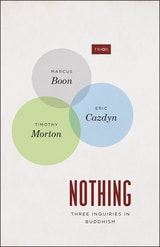
Nothing
Three Inquiries in BuddhismMarcus Boon, Eric Cazdyn, and Timothy Morton
University of Chicago Press, 2015