Results by title
200 books match the query 'Asian American & Pacific Islander' and 4 start with n
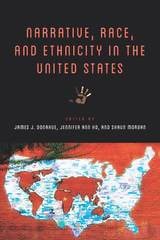
Narrative, Race, and Ethnicity in the United States
Edited by James J. Donahue, Jennifer Ann Ho, and Shaun Morgan
The Ohio State University Press, 2017
Recognizing that racial/ethnic issues and tensions are often contextualized geographically, this volume focuses on narratives associated with various racial and ethnic communities in the United States. By engaging with new developments in narrative theory and critical race studies, this volume demonstrates the vitality of using the tools of narratology and critical race theory together to understand how race influences narrative and how narratology illuminates a reading of race in ethnic American literature.
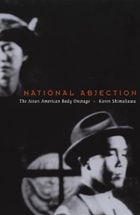
National Abjection
The Asian American Body OnstageKaren Shimakawa
Duke University Press, 2002
Shimakawa looks at the origins of Asian American theater, particularly through the memories of some of its pioneers. Her examination of the emergence of Asian American theater companies illuminates their strategies for countering the stereotypes of Asian Americans and the lack of visibility of Asian American performers within the theater world. She shows how some plays—Wakako Yamauchi’s 12-1-A, Frank Chin’s Chickencoop Chinaman, and The Year of the Dragon—have both directly and indirectly addressed the displacement of Asian Americans. She analyzes works attempting to negate the process of abjection—such as the 1988 Broadway production of M. Butterfly as well as Miss Saigon, a mainstream production that enacted the process of cultural displacement both onstage and off. Finally, Shimakawa considers Asian Americanness in the context of globalization by meditating on the work of Ping Chong, particularly his East-West Quartet.
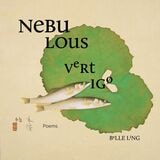
Nebulous Vertigo
Belle Ling
Tupelo Press, 2025
The realm that belongs to Nebulous Vertigo is both visceral and vibrant, and it is mysteriously familiar. If you come close to it, you will hear how rains eat, how a silken tofu revolts, how the Chinese word for “beans” turns into a speaking persona, and how a telephone bridges the surviving and the afterlife. In Nebulous Vertigo, everyday life is inevitably lost to the inevitable fate. And yet, with unexpected quivers, our fate and life keep surprising us.
Traveling through the cha chaan teng in Hong Kong, you can hear how Mrs. Suen, Mr. Yuen, and Waiter Kuen carry out intriguing conversations; astounded by the night sky in Paris, you will see how constellations narrate the lovers’ quirky destiny; and all the way through the Sayama Hills in Tokorozawa, you will be surprised by the turnings and upturnings of the myths told by a Japanese Uncle. Nebulous Vertigo, as its title beckons, “sighs an unreal cloud / for the fated sun to rise.” If fate can never be changed, how can we embrace its weaving? Every attempt, as the poems suggest, can be calmingly adventurous, unobvious yet magnanimous.
Nowhere to Arrive
PoemsJenny Xie, foreword by Chris Abani
Northwestern University Press, 2017
At the chapbook's center are two long poems, titled "Phnom Penh Diptych: Wet Season" and "Phnom Penh Diptych: Dry Season," that examine the escapist narratives that draw tourists and expatriates to Cambodia, and the speaker’s own privileged positioning.
On a formal level, the poems in Nowhere to Arrive make room for the unsaid and that which cannot be articulated. Here, we have a vocabulary of silence alongside stark imagistic juxtapositions, poems that celebrate compression and the force of paratactic constructions. Attentiveness and concentration emerge as virtues, as the speaker surveys the vast territory of the present with a wakeful gaze.