Results by title
59 books match the query 'Caribbean' and 2 start with n

Nature's Wild
Love, Sex, and Law in the CaribbeanAndil Gosine
Duke University Press, 2021
In Nature's Wild, Andil Gosine engages with questions of humanism, queer theory, and animality to examine and revise understandings of queer desire in the Caribbean. Surveying colonial law, visual art practices, and contemporary activism, Gosine shows how the very concept of homosexuality in the Caribbean (and in the Americas more broadly) has been overdetermined by a colonially influenced human/animal divide. Gosine refutes this presupposed binary and embraces animality through a series of case studies: a homoerotic game called puhngah, the institution of gender-based dress codes in Guyana, and efforts toward the decriminalization of sodomy in Trinidad and Tobago—including the work of famed activist Colin Robinson, paintings of human animality by Guadeloupean artist Kelly Sinnapah Mary, and Gosine's own artistic practice. In so doing, he troubles the ways in which individual and collective anxieties about “wild natures” have shaped the existence of Caribbean people while calling for a reassessment of what political liberation might look like.
Duke University Press Scholars of Color First Book Award recipient
Duke University Press Scholars of Color First Book Award recipient
[more]
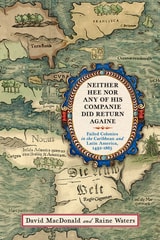
Neither Hee Nor Any of His Companie Did Return Againe
Failed Colonies in the Caribbean and Latin America, 1492–1865David MacDonald
Westholme Publishing, 2023
During the sixteenth and seventeenth centuries European powers vied for control of the land and resources in the Caribbean and Latin America. Colonies made Spain rich through gold, silver, and gems looted from the Native cultures, along with rare and exotic goods such as tobacco, sugar, and dyewood, and even humble products such as hides. In rapid turn, other European monarchies and merchants sent out colonizing expeditions to the region to exploit the resources of the New World, but creating permanent footholds was perilous. All European settlements founded in the New World faced a variety of challenges, including food supply, inconsistent support from Europe, leadership, ignorance of the area colonized, irrational expectations, religious discord, relations with Native peoples, and violent national rivalries. Colonies that succeeded and those that failed faced the same challenges, although in differing degrees and circumstances. The margin between survival and disaster was always small—there were few chances to succeed and the risk of failure was never far away.
In Neither Hee Nor Any of His Companie Did Return Againe: Failed Colonies in the Caribbean and Latin America, 1492–1865, historians David MacDonald and Raine Waters examine the European, and later American, failures to establish permanent settlements in the region. Beginning with Columbus’s ill-conceived ventures, the authors discuss the efforts, from German claims in Venezuela and Scottish attempts in Panama to defeated Confederates fleeing to Mexico, Brazil, and elsewhere. For each colony, the primary source information is contextualized and evaluated. Along the way, the authors determine commonalities across these ill-fated colonies as well as underscore the fact that while Indigenous peoples of the region often vigorously resisted predatory European colonization, their numbers were decimated by relentless warfare, slave raids, and European diseases. As Indian populations declined, colonists imported African slaves in large numbers. The brutal treatment of slaves resulted in those who escaped creating their own settlements that existed in a state of endemic warfare with European colonists. An important contribution to Atlantic World studies, this volume reveals the fine line between colonies that thrived and those that failed.
In Neither Hee Nor Any of His Companie Did Return Againe: Failed Colonies in the Caribbean and Latin America, 1492–1865, historians David MacDonald and Raine Waters examine the European, and later American, failures to establish permanent settlements in the region. Beginning with Columbus’s ill-conceived ventures, the authors discuss the efforts, from German claims in Venezuela and Scottish attempts in Panama to defeated Confederates fleeing to Mexico, Brazil, and elsewhere. For each colony, the primary source information is contextualized and evaluated. Along the way, the authors determine commonalities across these ill-fated colonies as well as underscore the fact that while Indigenous peoples of the region often vigorously resisted predatory European colonization, their numbers were decimated by relentless warfare, slave raids, and European diseases. As Indian populations declined, colonists imported African slaves in large numbers. The brutal treatment of slaves resulted in those who escaped creating their own settlements that existed in a state of endemic warfare with European colonists. An important contribution to Atlantic World studies, this volume reveals the fine line between colonies that thrived and those that failed.
[more]