Results by title
975 books match the query 'Case studies' and 26 start with n

Naked Fieldnotes
A Rough Guide to Ethnographic WritingDenielle Elliott
University of Minnesota Press, 2024
Creative and diverse approaches to ethnographic knowledge production and writing
Ethnographic research has long been cloaked in mystery around what fieldwork is really like for researchers, how they collect data, and how it is analyzed within the social sciences. Naked Fieldnotes, a unique compendium of actual fieldnotes from contemporary ethnographic researchers from various modalities and research traditions, unpacks how this research works, its challenges and its possibilities.
The volume pairs fieldnotes based on observations, interviews, drawings, photographs, soundscapes, and other contemporary modes of recording research encounters with short, reflective essays, offering rich examples of how fieldnotes are composed and shaped by research experiences. These essays unlock the experience of conducting qualitative research in the social sciences, providing clear examples of the benefits and difficulties of ethnographic research and how it differs from other forms of writing such as reporting and travelogue. By granting access to these personal archives, Naked Fieldnotes unsettles taboos about the privacy of ethnographic writing and gives scholars a diverse, multimodal approach to conceptualizing and doing ethnographic fieldwork.
Contributors: Courtney Addison, Te Herenga Waka—Victoria U of Wellington; Patricia Alvarez Astacio, Brandeis U; Sareeta Amrute, The New School; Barbara Andersen, Massey U Auckland, New Zealand; Adia Benton, Northwestern U; Letizia Bonanno, U of Kent; Alexandrine Boudreault-Fournier, U of Victoria; Michael Cepek, U of Texas at San Antonio; Michelle Charette, York U; Tomás Criado, Humboldt-U of Berlin; John Dale, George Mason U; Elsa Fan, Webster U; Kelly Fayard, U of Denver; Michele Friedner, U of Chicago; Susan Frohlick, U of British Columbia, Okanagan, Syilx Territory; Angela Garcia, Stanford U; Danielle Gendron, U of British Columbia; Mascha Gugganig, Technical U Munich; Natalia Gutkowski, Hebrew U of Jerusalem; T. S. Harvey, Vanderbilt U; Saida Hodžić, Cornell U; K. G. Hutchins, Oberlin College; Basit Kareem Iqbal, McMaster U; Emma Kowal, Deakin U in Melbourne; Mathangi Krishnamurthy, IIT Madras; Shyam Kunwar; Margaret MacDonald, York U in Toronto; Stephanie McCallum, U Nacional de San Martín and U de San Andrés, Argentina; Diana Ojeda, Cider, U de los Andes in Bogotá, Colombia; Valerie Olson, U of California, Irvine; Patrick Mbullo Owuor, Northwestern U; Stacy Leigh Pigg, Fraser U; Jason Pine, Purchase College, State U of New York; Chiara Pussetti, U of Lisbon; Tom Rice, U of Exeter; Leslie A. Robertson, U of British Columbia, Vancouver; Yana Stainova, McMaster U; Richard Vokes, U of Western Australia; Russell Westhaver, Saint Mary’s U in Nova Scotia; Paul White, U of Nevada, Reno.

Narrating the Organization
Dramas of Institutional IdentityBarbara Czarniawska
University of Chicago Press, 1997
involved in real-world managing are not always willing to reveal the intricacies of their
everyday muddles. Barbara Czarniawska argues that in order to understand these uncharted
territories, we need to gather local and concrete stories about organizational life and subject
them to abstract and metaphorical interpretation.
Using a narrative approach unique to organizational studies, Czarniawska employs literary
devices to uncover the hidden workings of organizations. She applies cultural metaphors to
public administration in Sweden to demonstrate, for example, how the dynamics of a
screenplay can illuminate the budget disputes of an organization. She shows how the
interpretive description of organizational worlds works as a distinct genre of social analysis,
and her investigations ultimately disclose the paradoxical nature of organizational life: we follow
routines in order to change, and decentralize in order to control. By confronting such
paradoxes, we bring crisis to existing institutions and enable them to change.
Narrative Policy Analysis
Theory and PracticeEmery Roe
Duke University Press, 1994
Assuming no prior knowledge of literary theory, Roe introduces the theoretical concepts and terminology from literary analysis through an examination of the budget crises of national governments. With a focus on several particularly intractable issues in the areas of the environment, science, and technology, he then develops the methodology of narrative policy analysis by showing how conflicting policy "stories" often tell a more policy-relevant meta-narrative. He shows the advantage of this approach to reading and analyzing stories by examining the ways in which the views of participants unfold and are told in representative case studies involving the California Medfly crisis, toxic irrigation in the San Joaquin Valley, global warming, animal rights, the controversy over the burial remains of Native Americans, and Third World development strategies.
Presenting a bold innovation in the interdisciplinary methodology of the policy sciences, Narrative Policy Analysis brings the social sciences and humanities together to better address real-world problems of public policy—particularly those issues characterized by extreme uncertainty, complexity, and polarization—which, if not more effectively managed now, will plague us well into the next century.
Nashville's New Americans
Tracing the Journeys of Our Immigrant NeighborsSheri Lea Sellmeyer
Vanderbilt University Press, 2026
Whether it’s building skyscrapers, running successful restaurants, researching diseases, performing music, cleaning hotel rooms, or holding public office, immigrants are changing Nashville from a mid‑sized city known for its country music industry to an increasingly diverse, multicultural destination. In Metro Nashville schools today, students speak more than 120 languages. The city is bigger, more congested, and more expensive than it’s ever been, drawing criticism from both longtime residents and newcomers. But growth has also brought top‑notch scientists and educators, a world‑class symphony, major league sports teams, investment from major corporations—and a wide range of immigrants whose talent and hard work have helped make all of that happen.
Through its profiles of thirty-nine immigrants from thirty-eight countries in Asia, the Middle East, Africa, Europe, Latin America, and Australia, Nashville’s New Americans provides a case study from one of the fastest-growing cities in the country on the contributions immigrants are making to its culture and economy.
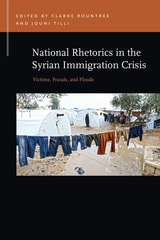
National Rhetorics in the Syrian Immigration Crisis
Victims, Frauds, and FloodsClarke Rountree
Michigan State University Press, 2019
National Saving and Economic Performance
Edited by B. Douglas Bernheim and John B. Shoven
University of Chicago Press, 1991
In National Saving and Economic Performance, edited by B. Douglas Bernheim and John B. Shoven, that task is addressed by offering the results of new research, with recommendations for policies aimed to improve saving. Leading experts in diverse fields of economics debate the need for more accurate measurement of official saving data; examine how corporate decisions to retain or distribute earnings affect household-level consumption and saving; and investigate the effects of taxation on saving behavior, correlations between national saving and international investment over time, and the influence of economic growth on saving.
Presenting the most comprehensive and up-to-date research on saving, this volume will benefit both academic and government economists.
Nationalism and Sexuality
Middle-Class Morality and Sexual Norms in Modern EuropeGeorge L. Mosse, With a critical introduction by Mary Louise Roberts
University of Wisconsin Press, 2020
Nature and the City
Making Environmental Policy in Toronto and Los AngelesGene Desfor and Roger Keil
University of Arizona Press, 2004
The book emphasizes ‘subaltern’ environmental justice concerns as instrumental in shaping the policy process. Looking back to the 1990s—when ecological modernization began to emerge as a dominant approach to environmental policy and theory—Desfor and Keil examine four case studies: restoration of the Don River in Toronto, cleanup of contaminated soil in Toronto, regeneration of the Los Angeles River, and air pollution reduction in Los Angeles. In each case, they show that local constituencies can develop political strategies that create alternatives to ecological modernization. When environmental policies appear to have been produced through solely technical exercises, they warn, one must be suspicious about the removal of contention from the process.
In the face of economic and environmental processes that have been increasingly influenced by neo-liberalism and globalization, Desfor and Keil’s analysis posits that continuing modernization of industrial capitalist societies entails a measure of deliberate change to societal relationships with nature in cities. Their book shows that environmental policies are about much more than green capitalism or the technical mastery of problems; they are about how future urban generations live their lives with sustainability and justice.

Navigating The Future With Sce Nario Planning
A Guidebook FoJoan Giesecke
Assoc of College & Research Libraries, 2015
Navigating the Future with Scenario Planning
A Guidebook for LibrariansJoan Giesecke
Assoc of College & Research Libraries, 2015
Negotiating Culture
Heritage, Ownership, and Intellectual PropertyLaetitia La Follette
University of Massachusetts Press, 2013
This provocative collection of essays—a series of case studies in cultural ownership by scholars from a range of fields—explores issues of cultural heritage and intellectual property in a variety of contexts, from contests over tangible artifacts as well as more abstract forms of culture such as language and oral traditions to current studies of DNA and genes that combine nature and culture, and even new, nonproprietary models for the sharing of digital technologies. Each chapter sets the debate in its historical and disciplinary context and suggests how the approaches to these issues are changing or should change.
One of the most innovative aspects of the volume is the way each author recognizes the social dimensions of group ownership and demonstrates the need for negotiation and new models. The collection as a whole thus challenges the reader to reevaluate traditional ways of thinking about cultural ownership and to examine the broader social contexts within which negotiation over the ownership of culture is taking place.
In addition to Laetitia La Follette, contributors include David Bollier, Stephen Clingman, Susan DiGiacomo, Oriol Pi-Sunyer, Margaret Speas, Banu Subramaniam, Joe Watkins, and H. Martin Wobst.
Neighborhood Poverty
Context and Consequences for ChildrenJeanne Brooks-Gunn
Russell Sage Foundation, 1997
Neighborhood Poverty
Policy Implications in Studying NeighborhoodsJeanne Brooks-Gunn
Russell Sage Foundation, 1997
New Borders
Migration, Hotspots and the European SuperstateAntonis Vradis, Evie Papada, Joe Painter, and Anna Papoutsi
Pluto Press, 2018
As borders across Europe have come to symbolize the European Union, this book provides answers to questions of European policy, the securitization of national boundaries, and how legislation determines who is free to belong to a place.

New Jersey Dreaming
Capital, Culture, and the Class of '58Sherry B. Ortner
Duke University Press, 2005
Ortner tracked down nearly all 304 of her classmates. She interviewedabout 100 in person and spoke with most of the rest by phone, recording her classmates’ vivid memories of time, place, and identity. Ortner shows how social class affected people’s livesin many hidden and unexamined ways. She also demonstrates that the Class of ‘58’s extreme upward mobility must be understood in relation to the major identity movements of the twentieth century—the campaign against anti-Semitism, the Civil Rights movement, and feminism.
A multisited study combining field research with an interdisciplinary analytical framework, New Jersey Dreaming is a masterly integration of developments at the vanguard of contemporary anthropology. Engaging excerpts from Ortner's field notes are interspersed throughout the book. Whether recording the difficulties and pleasures of studying one's own peer group, the cultures of driving in different parts of the country, or the contrasting experiences of appointment-making in Los Angeles and New York, they provide a rare glimpse into the actual doing of ethnographic research.

New Routes to Library Success
100+ Ideas from Outside the StacksElisabeth Doucett
American Library Association, 2015

New York, Chicago, Los Angeles
America’s Global CitiesJanet Abu-Lughod
University of Minnesota Press, 2001
Newcomers to Old Towns
Suburbanization of the HeartlandSonya Salamon
University of Chicago Press, 2003
Although the death of the small town has been predicted for decades, during the 1990s the population of rural America actually increased by more than three million people. In this book, Sonya Salamon explores these rural newcomers and the impact they have on the social relationships, public spaces, and community resources of small town America.
Salamon draws on richly detailed ethnographic studies of six small towns in central Illinois, including a town with upscale subdivisions that lured wealthy professionals as well as towns whose agribusinesses drew working-class Mexicano migrants and immigrants. She finds that regardless of the class or ethnicity of the newcomers, if their social status differs relative to that of oldtimers, their effect on a town has been the same: suburbanization that erodes the close-knit small town community, with especially severe consequences for small town youth. To successfully combat the homogenization of the heartland, Salamon argues, newcomers must work with oldtimers so that together they sustain the vital aspects of community life and identity that first drew them to small towns.
An illustration of the recent revitalization of interest in the small town, Salamon's work provides a significant addition to the growing literature on the subject. Social scientists, sociologists, policymakers, and urban planners will appreciate this important contribution to the ongoing discussion of social capital and the transformation in the study and definition of communities.
No Communication with the Sea
Searching for an Urban Future in the Great BasinTim Sullivan
University of Arizona Press, 2010
No Communication with the Sea is a journey through this urbanizing Great Basin landscape. Here, the land fosters illusions of limitless space and resources, but its space and resources are severely limited; its people live clustered in cities but are often reluctant to embrace urbanity. These tensions led journalist and urban planner Tim Sullivan to explore the developing centers and edges of the Great Basin cities and the ways some are trying to build livable and sustainable urban environments.
In this highly readable book of creative nonfiction, Sullivan employs a variety of methods—including interviews, research, travelogues, and narrative—to survey the harsh landscape for clues to the ways cities can adapt to their geography, topography, ecology, hydrography, history, and culture. No Communication with the Sea embarks on a quest for a livable future for the heart of the interior West. In the process, it both unearths the past and ponders the present and future Great Basin cities.
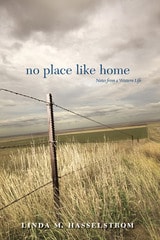
No Place Like Home
Notes from a Western LifeLinda M. Hasselstrom
University of Nevada Press, 2010
In No Place Like Home, Linda Hasselstrom ponders the changing nature of community in the modern West, where old family ranches are being turned into subdivisions and historic towns are evolving into mean, congested cities. Her scrutiny, like her life, moves back and forth between her ranch on the South Dakota prairie and her house in an old neighborhood at the edge of downtown Cheyenne, Wyoming. The vignettes that form the foundation of her consideration are drawn from the communities she has known during her life in the West, reflecting on how they have grown, thrived, failed, and changed, and highlighting the people and decisions that shaped them. Hasselstrom’s ruminations are both intensely personal and universal. She laments the disappearance of the old prairie ranches and the rural sense of community and mutual responsibility that sustained them, but she also discovers that a spirit of community can be found in unlikely places and among unlikely people. The book defines her idea of how a true community should work, and the kind of place she wants to live in. Her voice is unique and honest, both compassionate and cranky, full of love for the harsh, hauntingly beautiful short-grass prairie that is her home, and rich in understanding of the intricacies of the natural world around her and the infinite potentials of human commitment, hope, and greed. For anyone curious about the state of the contemporary West, Hasselstrom offers a report from the front, where nature and human aspirations are often at odds, and where the concepts of community and mutual responsibility are being redefined.
Nonprofits and Their Networks
Cleaning the Waters along Mexico’s Northern BorderDaniel M. Sabet
University of Arizona Press, 2008
Finding that these organizations do have a positive impact, Daniel Sabet seeks to understand how autonomous nonprofit organizations have emerged and developed along the border. He employs data from more than 250 interviews with members of civil society organizations and public officials, surveys of neighborhood association leaders, observations at public meetings, and many secondary sources. His research compares the experiences of third-sector organizations in four prominent Mexican border cities: Tijuana, Nogales, Ciudad Juárez, and Nuevo Laredo.
Sabet finds that political change is a necessary precondition for the establishment of an independent third sector. The demise of one-party rule in Mexico has given nonprofit organizations greater opportunities to flourish, he finds, but persistent informal rules still obstruct their emergence and development. Sabet concludes that the success of the third sector will depend on the organizations’ networks. He examines organizational ties to three key groups—U.S. nonprofits, the business community, and government-created methods for public participation—and evaluates the importance of these connections for the future.

North American Monsters
A Contemporary Legend CasebookDavid J. Puglia
Utah State University Press, 2021
A diverse cast of scholars contemplate these alluring creatures, feared and beloved by the communities that host them—the Jersey Devil gliding over the Pine Barrens, Lieby wriggling through Lake Lieberman, Char-Man stalking the Ojai Valley, and many, many more. Embracing local stories, beliefs, and traditions while neither promoting nor debunking, North American Monsters aspires to revive scholarly interest in local legendary monsters and creatures and to encourage folkloristic monster legend sleuthing.

Nostalgia and Videogame Music
A Primer of Case Studies, Theories and Analyses for the Player-AcademicEdited by Vincent E. Rone, Can Aksoy, and Sarah Pozderac-Chenevey
Intellect Books, 2022
This book allows readers to understand the relationships and memories they often form around games, and music is central to this process. The quest into the past begins with this book, a map that leads to the intersection between nostalgia and videogame music. Informed by research on musicology, memory, and practices of gaming culture, this edited volume discusses different forms of nostalgia, considers how videogames display their relation to those forms, and explores the ways theoretically self-conscious positions can be found in games. An important scholarly addition to the burgeoning field of ludomusicology, this book will appeal to researchers, educators, practitioners, undergraduate and graduate students, and videogame fans and players alike.
Not Just Where To Click
Teaching Students (Pil #68)Heather Jagman
American Library Association, 2015
Not Just Where to Click
Teaching Students How to Think About InformationTroy A. Swanson
Assoc of College & Research Libraries, 2015
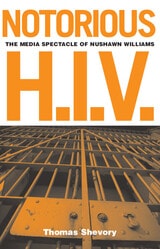
Notorious H.I.V.
The Media Spectacle Of Nushawn WilliamsThomas Shevory
University of Minnesota Press, 2004
The real story behind the Nushawn Williams case: media distortions, judicial contortions, ruined lives
In the fall of 1997, public authorities in Chautauqua County, New York, were granted an exception to the state’s HIV confidentiality law—and released Nushawn Williams’s name and picture to the press, deeming him a “public health threat,” the source of a “near epidemic” of HIV transmission. Williams, who is HIV-positive, had unprotected sex with many young women and girls and infected at least nine of them.
In Notorious H.I.V. Thomas Shevory sorts through the ensuing media panic and legal imbroglio to tell the story behind the Nushawn Williams case. Through media reports, legal documents, and interviews with many of the participants—including Williams, who eventually pled guilty to reckless endangerment and statutory rape charges and is currently serving time in a maximum security prison in New York—Shevory exposes the significant exaggerations, misunderstandings, and distortions that riddled the Williams case from the start. He contends that Williams’s portrayal as an “AIDS monster” served political purposes; specifically, representations of Williams helped to foster the passage of HIV-transmission statutes, resulting in criminalizing a public health problem in a virtually unprecedented fashion.Notorious H.I.V. also traces the impact of such high-profile cases on communities. Shevory provides a nuanced portrait of the hard economic and cultural realities of Jamestown, New York, and, drawing on Williams’s narratives, of the life of a lower-level drug dealer in a small upstate city. His work shows how media coverage robs individuals like Williams of their humanity, creating a pervasive atmosphere of threat that warps the integrity and fairness of the criminal justice and penal system.