Results by title
129 books match the query 'Civics & Citizenship' and 4 start with n
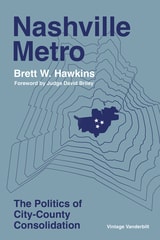
Nashville Metro
The Politics of City-County ConsolidationBrett W. Hawkins
Vanderbilt University Press, 2024
This is a valuable artifact in itself, but the new foreword by Judge David Briley—former Nashville mayor and grandson of the first metro Nashville mayor, Beverly Briley—offers a firsthand account of the realities of metropolitan government sixty years on.
National Myths in the Middle East
Representations, Revisions, and Critiques, Volume 2003Adina Back , Magnus T. Bernhardsson, Mansour Bonakdarian, and Sally Charnow, eds.
Duke University Press, 0
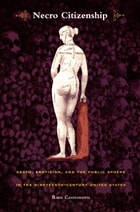
Necro Citizenship
Death, Eroticism, and the Public Sphere in the Nineteenth-Century United StatesRuss Castronovo
Duke University Press, 2001
Moving from medical engravings, séances, and clairvoyant communication to Supreme Court decisions, popular literature, and physiological tracts, Necro Citizenship explores how rituals of inclusion and belonging have generated alienation and dispossession. Castronovo contends that citizenship does violence to bodies, especially those of blacks, women, and workers. “Necro ideology,” he argues, supplied citizens with the means to think about slavery, economic powerlessness, or social injustice as eternal questions, beyond the scope of politics or critique. By obsessing on sleepwalkers, drowned women, and other corpses, necro ideology fostered a collective demand for an abstract even antidemocratic sense of freedom. Examining issues involving the occult, white sexuality, ghosts, and suicide in conjunction with readings of Harriet Jacobs, Ralph Waldo Emerson, Frederick Douglass, Nathaniel Hawthorne, and Frances Harper, Necro Citizenship successfully demonstrates why Patrick Henry's “give me liberty or give me death” has resonated so strongly in the American imagination.
New Advances in the Study of Civic Voluntarism
Resources, Engagement, and RecruitmentCasey Klofstad
Temple University Press, 2016
Individuals who are civically active have three things in common: they have the capacity to do so, they want to, and they have been asked to participate. New Advances in the Study of Civic Voluntarism is dedicated to examining the continued influence of these factors—resources, engagement, and recruitment—on civic participation in the twenty-first century.
The contributors to this volume examine recent social, political, technological, and intellectual changes to provide the newest research in the field. Topics range from race and religion to youth in the digital age, to illustrate the continued importance of understanding the role of the everyday citizen in a democratic society.
Contributors include:Molly Andolina, Allison P. Anoll, Leticia Bode, Henry E. Brady, Traci Burch, Barry C. Burden, Andrea Louise Campbell, David E. Campbell, Sara Chatfield, Stephanie Edgerly, Zoltán Fazekas, Lisa García Bedoll, Peter K. Hatemi, John Henderson, Krista Jenkins, Yanna Krupnikov, Adam Seth Levine, Melissa R. Michelson, S. Karthick Ramakrishnan, Dinorah Sánchez Loza, Kay Lehman Schlozman, Dhavan Shah, Sono Shah, Kjerstin Thorson, Sidney Verba, Logan Vidal, Emily Vraga, Chris Wells, JungHwan Yang, and the editor.