Results by title
161 books match the query 'Cuba' and 3 start with n
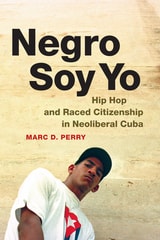
Negro Soy Yo
Hip Hop and Raced Citizenship in Neoliberal CubaMarc D. Perry
Duke University Press, 2016
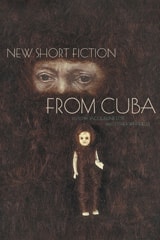
New Short Fiction from Cuba
Jacqueline Loss and Esther Whitfield
Northwestern University Press, 2007
An eclectic selection, the stories offer an exhilarating sense of a rich literary diversity and cultural history, an experience of Cuban literature that has rarely been available to an English audience. They differ widely, even wildly, in style and theme: from an impromptu encounter with Ernest Hemingway to an imagined romance mapped onto Cuba’s foundational nineteenth-century novel; from a witty, Borgesian satire on bureaucracy and officialist identity to a gothic adventure in homosexual voyeurism and mental illness; from an allegorical travelogue set in repressive China to a semi-surreal celebration of angels in Havana. These are the voices of Cuban fiction today, reflecting the past, anticipating the future, and composing in their infinite variety the stories of their culture.
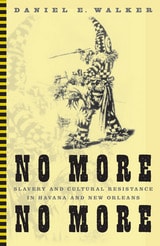
No More, No More
Slavery And Cultural Resistance In Havana And New OrleansDaniel E. Walker
University of Minnesota Press, 2004
An illuminating look at the festival performances of slaves in Havana and New Orleans
However urban slave societies might have differed from their rural counterparts, they still relied on a concerted assault on the psychological, social, and cultural identity of their African-descended inhabitants to maintain power and control. This ambitious book looks at how people of African descent in two such societies—Havana and New Orleans in the nineteenth century—created and maintained their own forms of cultural resistance to the slave regime’s assault and, in the process, put forth autonomous views of self and the social landscape.
In Havana’s annual Día de Reyes festival and in the weekly activities that took place at New Orleans’s Congo Square, author Daniel Walker identifies specific cultural beliefs and activities that Africans brought to the New World and modified in order to withstand and contest the dehumanizing effects of oppression. No More, No More crosses disciplinary boundaries as well, elucidating the economic, social, cultural, and demographic operations at work in two cities and the wide-scale efforts at cultural resistance embodied in public performances.