Results by title
615 books match the query 'England' and 15 start with n
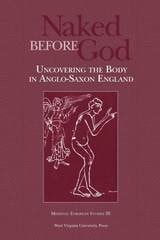
Naked Before God
Uncovering the Body in Anglo-Saxon EnglandBENJAMIN C. WITHERS
West Virginia University Press, 2003
At different times and in different places, the human form has been regarded in different ways. The Ancient Greeks thought it was the most admirable subject for art, whereas early Christians often viewed it as lascivious in our post-lapsarian state. With illustrations taken from manuscripts, statuary and literary, this is a fascinating collection of essays with much that will be new to scholars and general readers alike.
Narrative Mourning
Death and Its Relics in the Eighteenth-Century British NovelKathleen M. Oliver
Bucknell University Press, 2020
Published by Bucknell University Press. Distributed worldwide by Rutgers University Press.
National Duties
Custom Houses and the Making of the American StateGautham Rao
University of Chicago Press, 2016
In the wake of the American Revolution, if you had asked a citizen whether his fledgling state would survive more than two centuries, the answer would have been far from confident. The problem, as is so often the case, was money. Left millions of dollars of debt by the war, the nascent federal government created a system of taxes on imported goods and installed custom houses at the nation’s ports, which were charged with collecting these fees. Gradually, the houses amassed enough revenue from import merchants to stabilize the new government. But, as the fragile United States was dependent on this same revenue, the merchants at the same time gained outsized influence over the daily affairs of customs houses. As the United States tried to police this commerce in the early nineteenth century, the merchants’ stranglehold on custom house governance proved to be formidable.
In National Duties, Gautham Rao makes the case that the origins of the federal government and the modern American state lie in these conflicts at government custom houses between the American Revolution and the presidency of Andrew Jackson. He argues that the contours of the government emerged from the push-and-pull between these groups, with commercial interests gradually losing power to the administrative state, which only continued to grow and lives on today.
Nature's Engraver
A Life of Thomas BewickJenny Uglow
University of Chicago Press, 2009
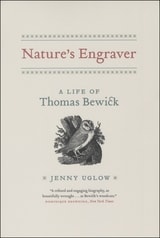
Thomas Bewick’s (1753–1828) History of British Birds was the first field guide for ordinary people, illustrated with woodcuts of astonishing accuracy and beauty. In Nature’s Engraver, Jenny Uglow tells the story of the farmer’s son from Tyneside who became one of Britain’s greatest and most popular engravers. It is a story of violent change, radical politics, lost ways of life, and the beauty of the wild—a journey to the beginning of our lasting obsession with the natural world.
“A refined and engaging biography, as beautifully wrought, in its way, as Bewick’s woodcuts.”—New York Times
“Uglow’s clear prose sparkles like Bewick’s River Tyne.”—Los Angeles Times
“This is a lovely book, not just in the quality and sympathy of the writing but in the care of its design and illustration. [Uglow] has turned a rich but undramatic life into a vignette as full of interest and details as one of Bewick’s own woodcuts.”—Sunday Telegraph
“A splendid biography. But it becomes an endearing one by the scattered presence of so many of Bewick’s woodcuts.”—Washington Post
“Another triumph for England’s most innovative biographer, and a marvelous treat for fans of Bewick’s beguiling work.”—Kirkus Reviews
New Bodleian
Making the Weston LibraryEdited by the Bodleian Library
Bodleian Library Publishing, 2015
New Bodleian: The Making of the Weston Library tells the story of how the plans for the new Weston Library—as the New Bodleian is now known—were realized, describing in detail the architectural, academic, curatorial, and heritage considerations addressed, as well as the successful collaborations between clients and consultants. Among the updates introduced were enhanced public access, including new entrance spaces; redesigned reading rooms for the study of special collections; new teaching facilities; and state-of-the-art storage space for the library’s many treasures. With over one hundred color illustrations, the book sheds light on the challenges of meeting the needs of an internationally renowned, four-hundred-year-old institution in the twenty-first century.
New Science, New World
Denise Albanese
Duke University Press, 1996
Albanese reads the inaugurators of the scientific revolution against the canonical authors of early modern literature, discussing Galileo’s Dialogue on the Two Chief World Systems and Bacon’s New Atlantis as well as Milton’s Paradise Lost and Shakespeare’s The Tempest. She examines how the newness or “novelty” of investigating nature is expressed through representations of the New World, including the native, the feminine, the body, and the heavens. “New” is therefore shown to be a double sign, referring both to the excitement associated with a knowledge oriented away from past practices, and to the oppression and domination typical of the colonialist enterprise. Exploring the connections between the New World and the New Science, and the simultaneously emerging patterns of thought and forms of writing characteristic of modernity, Albanese insists that science is at its inception a form of power-knowledge, and that the modern and postmodern division of “Two Cultures,” the literary and the scientific, has its antecedents in the early modern world.
New Science, New World makes an important contribution to feminist, new historicist, and cultural materialist debates about the extent to which the culture of seventeenth-century England is proto-modern. It will offer scholars and students from a wide range of fields a new critical model for historical practice.
New Troy
Fantasies Of Empire In The Late Middle AgesSylvia Federico
University of Minnesota Press, 2003
Examines the political and literary uses of the Trojan legend in the medieval period
England in the late fourteenth century witnessed a large-scale social revolt, a lingering and seemingly hopeless war with France, and fierce factional conflicts in royal politics and London civic government—struggles in which all parties sought to justify their actions by claiming historical precedent. How the Trojan legend figured in these claims—and in competing assertions of authorial legitimacy, nationhood, and rule in the later Middle Ages—is the complex nexus of history, myth, literature, and identity that Sylvia Federico explores in this ambitious book.
During the late medieval period, many European political and social groups took great pains to associate themselves with the ancient city; the claim on Troy, Federico asserts, was crucial to nationhood and was always a political act. Her book examines the poetry and prose of several late medieval authors, focusing particularly on how Chaucer’s use of the Trojan legend helped to set the terms by which the Ricardian and Lancastrian periods were distinguished, and further helped to establish English literary history as a noble precedent in its own right. Federico’s book affords remarkable insight into the workings of the medieval historical imagination.
Nightmare's Fairy Tale
A Young Refugee's Home Fronts, 1938–1948Gerd Korman
University of Wisconsin Press, 2007
Fleeing the Nazis in the months before World War II, the Korman family scattered from a Polish refugee camp with the hope of reuniting in America. The father sailed to Cuba on the ill-fated St. Louis; the mother left for the United States after sending her two sons on a Kindertransport. One of the sons was Gerd Korman, whose memoir follows his own path—from the family’s deportation from Hamburg, through his time with an Anglican family in rural England, to the family’s reunited life in New York City. His memoir plumbs the depths of twentieth-century history to rescue the remarkable life story of one of its survivors.
Nineteenth-Century Geographies
The Transformation of Space from the Victorian Age to the American CenturyThomas, Ronald R
Rutgers University Press, 2002
The nineteenth century was a time of unprecedented discovery and exploration throughout the globe, a period when the “blank spaces” of the earth were systematically investigated, occupied, and exploited by the major imperial powers of Western Europe and the United States. The lived experience of space was also changing in dramatic ways for people as a result of new developments in technology, communication, and transportation. As a result, the century was characterized by a new and intense interest in place, both local and global.
The collection is comprised of seventeen essays from various disciplines organized into four areas of geographic concern. The first, “Time Zones,” examines several ways that place gets expressed as time during the period, how geography becomes history. A second grouping, “Commodities and Exchanges,” explores the role of geographic origin as it was embodied in particular objects, from the souvenir map to imported tea. The set of essays on “Domestic Fronts” moves the discussion from the public to the private sphere by looking at how domestic space became defined in terms of its boundary with the foreign. The final section, “Orientations,” takes up the changing relations of bodies, identities, and the spaces they inhabit and through which they moved. The collection as a whole also traces the development of the discipline of geography with its different institutional and political trajectories in the United States and Great Britain.

No Machos or Pop Stars
When the Leeds Art Experiment Went PunkGavin Butt
Duke University Press, 2022
None a Stranger There
England and/in Europe on the Early Modern StageEdited by Scott Oldenburg and Matteo Pangallo
University of Alabama Press, 2025
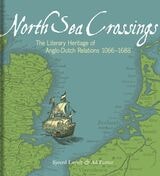
North Sea Crossings
The Literary Heritage of Anglo-Dutch Relations 1066–1688Sjoerd Levelt and Ad Putter
Bodleian Library Publishing, 2022
This richly illustrated book tells the story of cultural exchange between the people of the Low Countries and England in the Middle Ages and the Early Modern period, revealing how Anglo-Dutch connections changed the literary landscape on both sides of the North Sea.
Ranging from the Norman Conquest of 1066 to the “Glorious Revolution” of 1688, North Sea Crossings uncovers the lasting impact of contacts and collaborations between Dutch and English speakers on historical writing, map-making, manuscript production, and early printing. The literary heritage of Anglo-Dutch relations is explored and lavishly illustrated through a unique collection of manuscripts, early prints, maps, and other treasures from the Bodleian Library.
Notebooks, English Virtuosi, and Early Modern Science
Richard Yeo
University of Chicago Press, 2014
Novel Science
Fiction and the Invention of Nineteenth-Century GeologyAdelene Buckland
University of Chicago Press, 2013
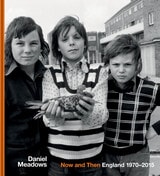
Now and Then
England 1970-2015Daniel Meadows
Bodleian Library Publishing, 2019
This book includes important work from Meadows’s groundbreaking projects, drawing on the archives now held at the Bodleian Library. It follows the maverick documentarian as he ran a free portrait studio in Manchester’s Moss Side in 1972 and then traveled 10,000 miles to make a national portrait from his converted double-decker, the Free Photographic Omnibus, a project he revisited a quarter-of-a-century later. The book goes on to show how, at the turn of the millennium, Meadows adopted new “kitchen table” technologies to make digital stories, which he dubbed “multimedia sonnets from the people.” Through the unique voices of his subjects, Meadows has made and continues to make moving and insightful commentaries on life in Britain.