314 books match the query 'Environmental aspects' and 8 start with n
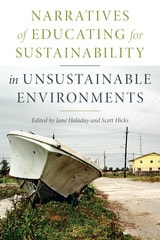
cover of Narratives of Educating for Sustainability in Unsustainable Environments

Narratives of Educating for Sustainability in Unsustainable Environments

Jane Haladay

Michigan State University Press, 2017
Through pedagogical narratives, literary analyses, reflective essays, and collaborative dialogues, Narratives of Educating for Sustainability in Unsustainable Environments explores the professional and intellectual tensions of curricula, pedagogies, and personal practices that honor the relationships of interspecies ecologies, reinhabit and reconceive wounded landscapes and wounding institutions, and allow us to reattune ourselves to new yet ancient frameworks for sustainability. For the writers here, fostering sustainability in higher education means focusing on place, creating positive relationships with humans and other beings, and creating administrative structures that will maintain new approaches for the long-term, showing how teaching environmentally is at once intensely site-specific yet powerfully global, deeply personal yet visibly public. Narratives of Educating for Sustainability in Unsustainable Environments confronts the contexts that make environmental pedagogies difficult, the challenges to the well-being of the teacher-scholar, and the corrosive academic structures that compartmentalize knowledge and people. The collection simultaneously offers models for working through and within these challenges to advance understandings and ways of being on local, global, and personal levels that will turn the planetary tide toward effective and shared sustainability.
[more]
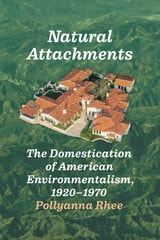
cover of Natural Attachments: The Domestication of American Environmentalism, 1920–1970

Natural Attachments

The Domestication of American Environmentalism, 1920–1970

Pollyanna Rhee

University of Chicago Press, 2025

A nuanced analysis takes a California oil spill as its point of departure to show how affluent homeowners pushed for an environmentalism that would protect not only the earth but also property and community norms.
 
A massive oil spill in the Pacific Ocean near Santa Barbara, California, in 1969 quickly became a landmark in the history of American environmentalism, helping to inspire the creation of both the Environmental Protection Agency and Earth Day. But what role did the history of Santa Barbara itself play in this? As Pollyanna Rhee shows, the city’s past and demographics were essential to the portrayal of the oil spill as momentous. Moreover, well-off and influential Santa Barbarans were positioned to “domesticate” the larger environmental movement by embodying the argument that individual homes and families—not society as a whole—needed protection from environmental abuses. This soon would put environmental rhetoric and power to fundamentally conservative—not radical—ends.

[more]
cover of Natural Resource Development and Human Rights in Latin America: State and non-state actors in the promotion of and opposition to extractivism

Natural Resource Development and Human Rights in Latin America

State and non-state actors in the promotion of and opposition to extractivism

Edited by Malayna Raftopoulos and Radoslaw Poweska

University of London Press, 2017
Contemporary development debates in Latin America are marked by the pursuit of economic growth, technological improvement and poverty reduction, and are overshadowed by growing concerns about the preservation of the environment and human rights. This collection’s multidisciplinary perspective links local, national, regional and transnational levels of inquiry into the interaction of state and non-state actors involved in promoting or opposing natural resource development. Taking this approach allows the book to contemplate the complex panorama of competing visions, concepts and interests grounded in the mutual influences and interdependencies which shape the contemporary arena of social-environmental conflicts in the region.
[more]
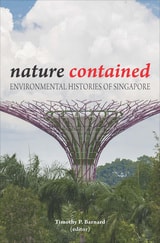
cover of Nature Contained: Environmental Histories of Singapore

Nature Contained

Environmental Histories of Singapore

Timothy P. Barnard

National University of Singapore Press, 2014
How has Singapore’s environment—and location in a zone of extraordinary biodiversity—influenced the economic, political, social, and intellectual history of the island since the early 19th century?  What are the antecedents to Singapore’s image of itself as a City in a Garden? Grounding the story of Singapore within an understanding of its environment opens the way to an account of the past that is more than a story of trade, immigration, and nation-building. Each of the chapters in this volume—focusing on topics ranging from tigers and plantations to trade in exotic animals and the greening of the city, and written by botanists, historians, anthropologists, and naturalists—examines how humans have interacted with and understood the natural environment on a small island in Southeast Asia over the past 200 years, and conversely how this environment has influenced humans. Between the chapters are travelers' accounts and primary documents that provide eyewitness descriptions of the events examined in the text. In this regard, Nature Contained: Environmental Histories of Singapore provides new insights into the Singaporean past, and reflects much of the diversity, and dynamism, of environmental history globally.
[more]
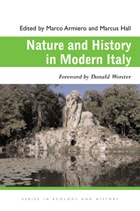
cover of Nature and History in Modern Italy

Nature and History in Modern Italy

Marco Armiero

Ohio University Press, 2010

Is Italy il bel paese—the beautiful country—where tourists spend their vacations looking for art, history, and scenery? Or is it a land whose beauty has been cursed by humanity’s greed and nature’s cruelty? The answer is largely a matter of narrative and the narrator’s vision of Italy. The fifteen essays in Nature and History in Modern Italy investigate that nation’s long experience in managing domesxadtixadcated rather than wild natures and offer insight into these conflicting visions. Italians shaped their land in the most literal sense, producing the landscape, sculpting its heritage, embedding memory in nature, and rendering the two different visions inseparxadable. The interplay of Italy’s rich human history and its dramatic natural diversity is a subject with broad appeal to a wide range of readers.
[more]
cover of Nearly Nuclear: A Mismanaged Energy Transition

Nearly Nuclear

A Mismanaged Energy Transition

leroy smith

Michigan State University Press, 2021
When Consumers Power’s plan to build a nuclear power plant in Midland, Michigan, was announced in 1967, it promised to free Michigan residents from expensive, dirty, coal-fired electricity and to keep Dow Chemical operating in the state. But before the plan could be completed, the facility was called an engineering nightmare, a financial disaster, a construction boondoggle, a political headache, and a regulatory muddle. Most locals had welcomed nuclear power eagerly. Why, after almost twenty years and billions of dollars, did this promise of a high-tech, coal-free, prosperous future fail? And what lessons does its failure offer today as Americans try to develop a clean energy  economy based on renewable power? To answer these questions, energy consultant and author LeRoy Smith carefully traces the design and construction decisions made by Consumers Power, including its choice of reactor and its hiring of the Bechtel Corporation to manage the project. He also details the rapidly changing regulatory requirements and growing public concern about the environmental risks of nuclear power generation. An examination of both the challenges and importance of renewable energy, this book will be of value to anyone interested in grappling with the complexities of our ongoing efforts to eliminate fossil fuels in favor of clean renewable energy.
[more]
cover of Neither Land nor Water: Planning Through Fringe Ecologies in the Meadowlands (1896–2020)

Neither Land nor Water

Planning Through Fringe Ecologies in the Meadowlands (1896–2020)

Sevin Yildiz

University of Chicago Press, 2026

An urban and environmental history of the New Jersey Meadowlands, where marsh meets megamall.

The New Jersey Meadowlands, the vast marshes across the Hudson River from New York City, are a mysterious and complex wetland. Both strange and well-known to the millions of people who traverse the northeast corridor every year, this landscape is not well understood despite its familiarity. Seemingly natural and unnatural, human and nonhuman, the Meadowlands has long been shaped by urban development, industry, infrastructure, and countless dreams.

In Neither Land nor Water, Şevin Yıldız offers a close look at the planners, scientists, developers, politicians, industrialists, and others who have engaged with, dreamed about, or damaged this transitional ecology in different ways over the decades. She traces key periods in the area’s rich histories of urban planning and ecological thought, from the dispossession of the Lenape natives, through the dawn of ecological science, and onto both intensive industrial developments and environmental resistance to them. She examines as well how the Meadowlands exposes the inadequacies of today’s approaches to planning in the face of climate change and how they perhaps offer clues to a better future.
[more]
cover of Nuclear Nuevo México: Colonialism and the Effects of the Nuclear Industrial Complex on Nuevomexicanos

Nuclear Nuevo México

Colonialism and the Effects of the Nuclear Industrial Complex on Nuevomexicanos

Myrriah Gómez

University of Arizona Press, 2022

In the 1940s military and scientific personnel chose the Pajarito Plateau to site Project Y of the secret Manhattan Project, where scientists developed the atomic bomb. Nuevomexicanas/os and Tewa people were forcibly dispossessed from their ranches and sacred land in north-central New Mexico with inequitable or no compensation.

Contrary to previous works that suppress Nuevomexicana/o presence throughout U.S. nuclear history, Nuclear Nuevo México focuses on recovering the voices and stories that have been lost or ignored in the telling of this history. By recuperating these narratives, Myrriah Gómez tells a new story of New Mexico, one in which the nuclear history is not separate from the collective colonial history of Nuevo México but instead demonstrates how earlier eras of settler colonialism laid the foundation for nuclear colonialism in New Mexico.

Gómez examines the experiences of Nuevomexicanas/os who have been impacted by the nuclear industrial complex, both the weapons industry and the commercial industry. Gómez argues that Los Alamos was created as a racist project that targeted poor and working-class Nuevomexicana/o farming families, along with their Pueblo neighbors, to create a nuclear empire. The resulting imperialism has left a legacy of disease and distress throughout New Mexico that continues today.
[more]