Results by title
18 books match the query 'Snow'
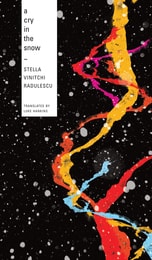
A Cry in the Snow
and Other PoemsStella Vinitchi Radulescu
Seagull Books, 2018
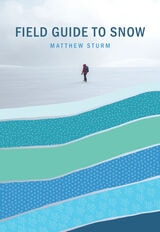
A Field Guide to Snow
Matthew Sturm
University of Alaska Press, 2020
In A Field Guide to Snow, veteran snow scientist Matthew Sturm answers those questions and more. Drawing on decades of study, he explains in clear and simple ways how and why snow works the way it does. The perfect companion a ski trip or a hike in the snowy woods, A Field Guide to Snow will give you a new appreciation for the science behind snow’s beauty.
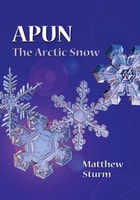
Apun
The Arctic SnowMatthew Sturm
University of Alaska Press, 2009
There are some twenty-five words for “snow” in the Inupiaq language. Each word denotes a different kind of snow—fresh powder snow, hard pack, soft snow, very wet snow, or just snow. Such fine distinction is reasonable, for over the centuries, Natives of the Arctic have had to rely on their knowledge of the snow to survive. Now Matthew Sturm has prepared an educational children’s book designed to teach a new generation of Arctic residents the importance of Arctic snow cover. Fully illustrated to demonstrate the cycle of the snow cover, Apun covers each phase of the “snow year.” Geared towards grades 3–4, this is a must read for elementary science classes.
Apun
The Arctic Snow (A Teacher's Guide)Matthew Sturm
University of Alaska Press, 2009
There are some twenty-five words for “snow” in the Inupiaq language. Each word denotes a different kind of snow—fresh powder snow, hard pack, soft snow, very wet snow, or just snow. Such fine distinction is reasonable, for over the centuries, Natives of the Arctic have had to rely on their knowledge of the snow to survive. Now Matthew Sturm has prepared an educational children’s book designed to teach a new generation of Arctic residents the importance of Arctic snow cover. Fully illustrated to demonstrate the cycle of the snow cover, Apun covers each phase of the “snow year.” Geared towards grades 3–4, this is a must read for elementary science classes.
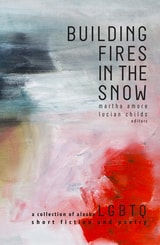
Building Fires in the Snow
A Collection of Alaska LGBTQ Short Fiction and PoetryEdited by Martha Amore and Lucian Childs
University of Alaska Press, 2016
In these pages we see the panoply of LGBTQ life in Alaska today, from the quotidian urban adventures of a family—shopping, going out, working—to intimate encounters with Alaska’s breathtaking natural beauty. At a time of great change and major strides in LGBTQ civil rights, Building Fires in the Snow shows us an Alaska that shatters stereotypes and reveals a side of Alaska that’s been little seen until now.
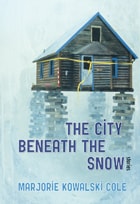
City Beneath the Snow
StoriesMarjorie Kowalski Cole
University of Alaska Press, 2012
"Marjorie Kowalski Cole's characters live, work, and struggle in interior Alaska, and she depicts life here with a keen eye and with compassion. We see the daughter of a Fairbanks junkyard owner struggling with her isolation. We meet a bartender at Circle Hot Springs who's also a certified nurse's assistant at Fairbanks Memorial Hospital. . . . These are inner lives, revealed with care and with skill, the true material of good literature."—Peggy Shumaker, Alaska State Writer Laureate
Deep in Alaska
Christine Johnson
University of Alaska Press, 2013
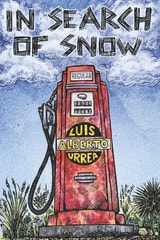
In Search of Snow
Luis Alberto Urrea
University of Arizona Press, 1999
In Search of Snow is an explosive coming-of-age adventure, full of hilarious episodes and still, poignant moments. Like a blue-collar Don Quixote, Mike must blow up his windmills before he can set off to find the things he lacks, especially the snow that will temper the passion he has just set aflame.
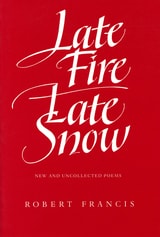
Late Fire, Late Snow
New and Uncollected PoemsRobert Francis
University of Massachusetts Press, 1992
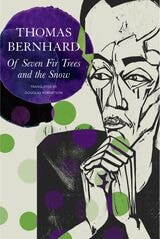
Of Seven Fir Trees and the Snow
Early StoriesThomas Bernhard
Seagull Books, 2025
Before Thomas Bernhard became one of the most provocative voices in modern literature, he was a young writer testing the limits of form and subject. Of Seven Fir Trees and the Snow offers an unprecedented look at his evolution, from his earliest published work at nineteen to the emergence of his unmistakable voice. Translated into English for the first time, in these stories, Bernhard moves from stark naturalism to fairy-tale simplicity to the eerie, stripped-down surrealism reminiscent of science fiction. At the same time, he grapples with the fundamental ethical questions that would define his career: how does one navigate personal autonomy in a world fractured by the upheavals of the twentieth century?
Selected and arranged in chronological order by Douglas Robertson, this collection traces Bernhard’s transformation from an ambitious chronicler of Austrian rural life to a writer in dialogue with the broader currents of world literature. A rare glimpse into the making of a literary icon, this volume is essential reading for both longtime admirers and those discovering Bernhard’s singular genius for the first time.

One Winter Up North
John Owens
University of Minnesota Press, 2022
A picture-book journey through the Boundary Waters Canoe Area Wilderness in winter, snowshoeing the frozen lakes and silent forest with family, encountering the wonders of northern wildlife in the cold season
In winter the Boundary Waters, way up north in Minnesota, is not the same place you canoed last summer—but still it beckons and welcomes you. Grab a pack, strap on snowshoes, make a path (Oh! they take some getting used to!), and venture out across the frozen lakes and through the snowy woods. The vast wintery world here is so still and quiet, you might think you’re all alone—but no! Who made these tracks? A deer? A hare? A fox? And far off there’s a musher, making tracks with his sled dogs.
It’s a magical place. The bright sun brilliant on the snow, the sparkling silence—wait, is that a wolf calling? Try to answer! And when the dark descends, the stars and pine trees holding up the night, your nose gets cold and it’s back to camp, to your warm winter tent, where Father feeds the stove with wood you gathered, Mother snuggles into her big sleeping bag, and you curl up in the fire’s glow and know that in your dreams and memories you will return again and again to this one winter up north.
A wintery adventure that unfolds in pictures, John Owens’s delightful book gives readers a chance to discover—or rediscover—another season full of wonder in the Boundary Waters Canoe Area Wilderness.
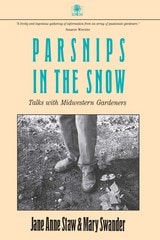
Parsnips in the Snow
Talks with Midwestern GardenersJane Anne Staw
University of Iowa Press, 1990
Through conversations with twelve vastly different gardeners—among them a Trappist monk, a retired mailman, and an advertising copywrite—this enchanting volume captures the spirit of midwestern garderners. Illustrated throughout it is the wholesale dedication of midwesterners to their gardens—despite drought, heat, disabilities, and other challenges. Anyone who delights in gardening, the Midwest, or human triumph will enjoy this book.
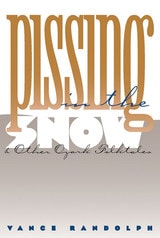
Pissing in the Snow and Other Ozark Folktales
Vance Randolph
University of Illinois Press, 1976
Randolph's reputation rests on the massive accumulation of folksong, folktale, and ballad materials he collected during forty years of living and working in the Ozarks. Unfortunately, in the 1950s when Randolph published several collection of Ozark tales, the material in this volume was considered unprintable.
Pissing in the Snow departs from the academic prudery that until recently has restricted the amount of bawdy folklore available for study. It presents a body of material that for twenty years has circulated only in manuscript or microfilm under its present title.
When placed in their rightful context alongside Randolph's other collections of folk material, the bawdy tales help provide evidence of what Ozark hill people think about their own lives and language. As Rayna Green writes in her introduction, "The entire body of material . . . offers a picture of expressive behavior unparalleled by any other American region's or group's study." Hoffmann's annotations draw parallels between the erotic narrative tradition of the Ozarks and that in other parts of the country and the world, especially Europe.
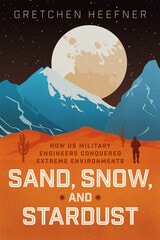
Sand, Snow, and Stardust
How US Military Engineers Conquered Extreme EnvironmentsGretchen Heefner
University of Chicago Press, 2025
Deserts, the Arctic, outer space—these extreme environments are often seen as inhospitable places at the edges of our maps. But from the 1940s through the 1960s, spurred by the diverse and unfamiliar regions the US military had navigated during World War II, the United States defense establishment took a keen interest in these places, dispatching troops to the Aleutian Islands, North Africa, the South Pacific, and beyond. To preserve the country’s status as a superpower after the war, to pave runways and build bridges, engineers had to understand and then conquer dunes, permafrost, and even the surface of the moon.
Sand, Snow, and Stardust explores how the US military generated a new understanding of these environments and attempted to master them, intending to cement America’s planetary power. Operating in these regions depended as much on scientific and cultural knowledge as on military expertise and technology. From General George S. Patton learning the hard way that the desert is not always hot, to the challenges of constructing a scientific research base under the Arctic ice, to the sheer implausibility of modeling Martian environments on Earth, Gretchen Heefner takes us on a wry expedition into the extremes and introduces us to the people who have shaped our insight into these extraordinary environments. Even decades after the first manned space flight, plans for human space exploration and extraplanetary colonization are still based on what we know about stark habitats on Earth.
An entertaining survey of the relationship between environmental history and military might, Sand, Snow, and Stardust also serves as a warning about the further transformation of the planet—whether through desertification, melting ice caps, or attempts to escape it entirely.
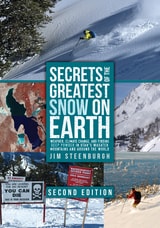
Secrets of the Greatest Snow on Earth, Second Edition
Weather, Climate Change, and Finding Deep Powder in Utah's Wasatch Mountains and Around the WorldJim Steenburgh
Utah State University Press, 2023
Utah has long claimed to have the greatest snow on Earth—the state itself has even trademarked the phrase. In Secrets of the Greatest Snow on Earth, Jim Steenburgh investigates Wasatch weather, exposing the myths, explaining the reality, and revealing how and why Utah’s powder lives up to its reputation. Steenburgh also examines ski and snowboard regions beyond Utah, providing a meteorological guide to mountain weather and snow climates around the world.
Chapters explore mountain weather, avalanches and snow safety, historical accounts of weather events and snow conditions, and the basics of climate and weather forecasting. In this second edition, Steenburgh explains what creates the best snow for skiing and snowboarding using accurate and accessible language and 150 color photographs and illustrations, making Secrets of the Greatest Snow on Earth a helpful tool for planning vacations and staying safe during mountain adventures.
This edition is updated with two new chapters covering microclimates and climate change in greater depth. Steenburgh addresses the declining snowpack and the future of snow across the western United States, as well as the declining snow and ice in several regions of the world—the European Alps in particular. Snowriders, weather enthusiasts, meteorologists, students of snow science, and anyone who dreams of deep powder and bluebird skies will want to get their gloves on this new edition of Secrets of the Greatest Snow on Earth.
Praise for the first edition:
“Everything you always wanted to know about how snow forms and how to follow forecasts so you see
how much an”d where is in the book. It’s a must-have for any fan of snow, sure to get you excited about
winter, and give you a bevy of conversation topics for the chairlift ride.”
—Utah Adventure Journal
“For backcountry enthusiasts that find themselves infatuated with weather patterns, snow-water
equivalents, microclimates, and Utah, this book is a dream come true.”
—The Backcountry Skiing Blog
“Steenburgh shares a career’s worth of knowledge in this book. His love of both snow science and skiing
is obvious, and he adds humor and personality to the scientific discussion.”
—First Tracks!! Online Skiing Magazine
“When it comes to snow, the details—both small- and large-scale—do matter. If we all observed our
surroundings with as much curiosity and enthusiasm as Steenburgh, the world could be a much better-
tended place.”
—American Scientist
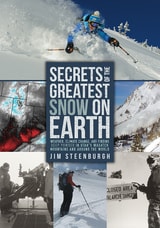
Secrets of the Greatest Snow on Earth
Weather, Climate Change, and Finding Deep Powder in Utah's Wasatch Mountains and around the WorldJim Steenburgh
Utah State University Press, 2014
Chapters explore mountain weather, avalanches and snow safety, historical accounts of weather events and snow conditions, and the basics of climate and weather forecasting. Steenburgh explains what creates the best snow for skiing and snowboarding in accurate and accessible language and illustrates his points with 150 color photographs, making Secrets of the Greatest Snow on Earth a helpful tool for planning vacations and staying safe during mountain adventures. Snowriders, weather enthusiasts, meteorologists, students of snow science, and anyone who dreams of deep powder and bluebird skies will want to get their gloves on Secrets of the Greatest Snow on Earth.
Watch Book Trailer!(Special thanks to Ski Utah)
Snow on the Cane Fields
Women’s Writing and Creole SubjectivityJudith Raiskin
University of Minnesota Press, 1995
Snow on the Cane Fields was first published in 1995. Minnesota Archive Editions uses digital technology to make long-unavailable books once again accessible, and are published unaltered from the original University of Minnesota Press editions.
In a probing analysis of creole women's writing over the past century, Judith Raiskin explores the workings and influence of cultural and linguistic colonialism. Tracing the transnational and racial meanings of creole identity, Raiskin looks at four English-speaking writers from South Africa and the Caribbean: Olive Schreiner, Jean Rhys, Michelle Cliff, and Zoë Wicomb. She examines their work in light of the discourses of their times: nineteenth-century "race science" and imperialistic rhetoric, turn-of-the-century anti-Semitic sentiment and feminist pacifism, postcolonial theory, and apartheid legislation.
In their writing and in their multiple identities, these women highlight the gendered nature of race, citizenship, culture, and the language of literature. Raiskin shows how each writer expresses her particular ambivalences and divided loyalties, both enforcing and challenging the proprietary British perspective on colonial history, culture, and language. A new perspective on four writers and their uneasy places in colonial culture, Snow on the Cane Fields reveals the value of pursuing a feminist approach to questions of national, political, and racial identity.
Judith Raiskin is assistant professor of women's studies at the University of California, Santa Barbara.
The Sergeant in the Snow
Mario Rigoni Stern
Northwestern University Press, 1998