Results by title
1832 books match the query 'Essays' and 37 start with n

NARRATIVE DYNAMICS
ESSAYS ON TIME, PLOT, CLOSURE, AND FRAMEEdited by Brian Richardson
The Ohio State University Press, 2002

NanoCulture
Implications of the New TechnoscienceEdited by N. Katherine Hayles
Intellect Books, 2004
Extraordinary visions of material abundance, unprecedented materials, and powerful engineering capabilities have marked the arrival of nanotechnology, as well as dystopian scenarios of self-replicating devices running amok and causing global catastrophe. Largely a future possibility rather than present actuality, nanotechnology has become a potent cultural signifier.
NanoCulture explores the ways in which nanotechnology interacts with, and itself becomes, a cultural construction. Topics include the co-construction of nanoscience and science fiction; the influence of risk assessment and nanotechnology on the shapes of narratives; intersections between nanoscience as a writing practice and experimental literature at the limits of fabrication; the Alice-in-Wonderland metaphor for nanotechnology; and the effects of mediation on nanotechnology and electronic literature.
NanoCulture is produced in collaboration with the nano art exhibit at the Los Angeles County Museum of Art (December 2003-September 2004), created by an interdisciplinary team led by media artist Victoria Vesna and nanoscientist James Gimzewski. NanoCulture is richly illustrated with images from the nano exhibit, which also provides the basis for an ethnographic analysis of collaborative process and an exploration of changing concepts of museum space.
The dynamic uniting these diverse perspectives is boundary crossing: between art, science, and literature; cultural imaginaries, scientific facts, and technological possibilities; actual. virtual, and hybrid spaces; the science of fictions and the fictions of science; and utopian dreams, material constraints, and dystopian nightmares.
The first book-length study focus on cultural implications of nanotechnology, NanoCulture breaks new ground in showing the importance of the new technoscience to contemporary culture and of culture to the development, interpretation, and future of this technoscience.
Nanovision
Engineering the FutureColin Milburn
Duke University Press, 2008
Milburn illuminates the practices of nanotechnology by examining an enormous range of cultural artifacts, including scientific research articles, engineering textbooks, laboratory images, popular science writings, novels, comic books, and blockbuster films. In so doing, he reveals connections between the technologies of visualization that have helped inaugurate nano research, such as the scanning tunneling microscope, and the prescient writings of Robert A. Heinlein, James Blish, and Theodore Sturgeon. He delves into fictive and scientific representations of “gray goo,” the nightmare scenario in which autonomous nanobots rise up in rebellion and wreak havoc on the world. He shows that nanoscience and “splatterpunk” novels share a violent aesthetic of disintegration: the biological body is breached and torn asunder only to be refabricated as an assemblage of self-organizing machines. Whether in high-tech laboratories or science fiction stories, nanovision deconstructs the human subject and galvanizes the invention of a posthuman future.
Narrative, Violence, and the Law
The Essays of Robert CoverMartha Minow, Michael Ryan, and Austin Sarat, Editors
University of Michigan Press, 1993
Narratives of Greater Mexico
Essays on Chicano Literary History, Genre, and BordersBy Héctor Calderón
University of Texas Press, 2005
Once relegated to the borders of literature—neither Mexican nor truly American—Chicana/o writers have always been in the vanguard of change, articulating the multicultural ethnicities, shifting identities, border realities, and even postmodern anxieties and hostilities that already characterize the twenty-first century. Indeed, it is Chicana/o writers' very in-between-ness that makes them authentic spokespersons for an America that is becoming increasingly Mexican/Latin American and for a Mexico that is ever more Americanized.
In this pioneering study, Héctor Calderón looks at seven Chicana and Chicano writers whose narratives constitute what he terms an American Mexican literature. Drawing on the concept of "Greater Mexican" culture first articulated by Américo Paredes, Calderón explores how the works of Paredes, Rudolfo Anaya, Tomás Rivera, Oscar Zeta Acosta, Cherríe Moraga, Rolando Hinojosa, and Sandra Cisneros derive from Mexican literary traditions and genres that reach all the way back to the colonial era. His readings cover a wide span of time (1892-2001), from the invention of the Spanish Southwest in the nineteenth century to the América Mexicana that is currently emerging on both sides of the border. In addition to his own readings of the works, Calderón also includes the writers' perspectives on their place in American/Mexican literature through excerpts from their personal papers and interviews, correspondence, and e-mail exchanges he conducted with most of them.
Nathaniel Mackey, Destination Out
Essays on His WorkJeanne Heuving
University of Iowa Press, 2021
This collection is organized through broad topics in order to provide entrances into his challenging work: myth, literature, and seriality; music, performance, and collaboration; syncretism, synopsis, and what-saying. It engages Mackey’s spiritual and esoteric disposition along with his attention to what Amiri Baraka called the “enraged sociologies” of Black music. In his manifesto “Destination Out,” Mackey describes his work as “wanting to bid all givens goodbye” and as “centrifugal.” It is also centripetal, manifesting a reflexive interiority that creates itself through recurring forms.
Contributors: Maria Damon, Joseph Donahue, Rachel Blau DuPlessis, Norman Finkelstein, Luke Harley, Paul Jaussen, Adalaide Morris, Fred Moten, Peter O’Leary, Anthony Reed
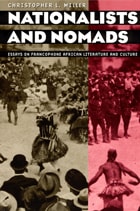
Nationalists and Nomads
Essays on Francophone African Literature and CultureChristopher L. Miller
University of Chicago Press, 1999
Miller ranges from the beginnings of francophone African literature—which he traces not to the 1930s Negritude movement but to the largely unknown, virulently radical writings of Africans in Paris in the 1920s—to the evolving relations between African literature and nationalism in the 1980s and 1990s. Throughout he aims to offset the contemporary emphasis on the postcolonial at the expense of the colonial, arguing that both are equally complex, with powerful ambiguities. Arguing against blanket advocacy of any one model (such as nationalism or hybridity) to explain these ambiguities, Miller instead seeks a form of thought that can read and recognize the realities of both identity and difference.
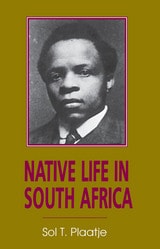
Native Life In South Africa
Before and Since the European War and the Boer RebellionSol T. Plaatje
Ohio University Press, 1991
First published in 1916 and one of South Africa’s great political books, Native Life in South Africa was first and foremost a response to the Native’s Land Act of 1913, and was written by one of the most gifted and influential writers and journalists of his generation. Sol T. Plaatje provides an account of the origins of this crucially important piece of legislation and a devastating description of its immediate effects.
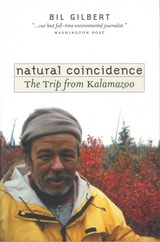
Natural Coincidence
The Trip from KalamazooBil Gilbert
University of Michigan Press, 2004
Natural Coincidence collects some of Bil Gilbert's finest writing, covering a diverse range of subjects that include investigations of the biology of Tasmanian devils, the lives and loves of snapping turtles, and an appreciation of the intelligence of crows. Perfectly suiting this eclectic choice of angles is Gilbert's unique writing style, a blend of unprepossessing erudition, wit, and honesty that has been compared to Aldo Leopold's Sand County Almanac.
The collection opens with a memoir of a childhood Christmas in western Michigan, before Gilbert's fascination with the natural world drew him to more exotic locales like Tasmania, Alaska, Nova Scotia, and Manhattan to write about such topics as the javelina, bigfoot, buffalo, and ringtails.
"More than 50 years ago," writes Gilbert, "without a clear notion about why or where I was going, I set off on a trip from Kalamazoo, Michigan. I am still traveling toward an unknown destination. But along the way, much more for reasons of good luck than thoughtful planning, I have met many wonderful beings and happenings. The essays appearing in Natural Coincidence represent an attempt to describe some of these wonders. I like to think, or at least pretend, that the inspiration for and theme of this book is gratitude."
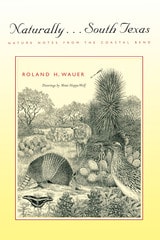
Naturally . . . South Texas
Nature Notes from the Coastal BendBy Roland H. Wauer
University of Texas Press, 2001
The Golden Crescent of South Texas, a fifteen-county region along and inland from the middle Gulf Coast, is often called "the Crossroads" because of its natural diversity. Located in the heart of the Gulf Coast Prairie and Marshes, the area also encompasses the trailing edges of the South Texas Plains, Post Oak Savannah, and Blackland Prairie. This confluence of ecological zones makes it a wonderful place for birding and for observing the changing face of nature, especially during seasonal transitions.
In this book, Ro Wauer describes a typical year in the natural life of South Texas. Using selected entries from his weekly column in the Victoria Advocate newspaper, he discusses numerous topics for each month, from the first appearance of butterflies in January, to alligators making a comeback in July, to the Christmas bird count in December. His observations are filled with intriguing natural history lore, from what sounds mockingbirds will imitate (almost any noise in their neighborhood) to how armadillos swim (by inflating themselves to increase their buoyancy).
Nature and Culture in the Northern Forest
Region, Heritage, and Environment in the Rural NortheastPavel Cenkl
University of Iowa Press, 2010
Nearly 30 million acres of the Northern Forest stretch across New York, Vermont, New Hampshire, and Maine. Within this broad area live roughly a million residents whose lives are intimately associated with the forest ecosystem and whose individual stories are closely linked to the region’s cultural and environmental history. The fourteen engaging essays in Nature and Culture in the Northern Forest effectively explore the relationships among place, work, and community in this complex landscape. Together they serve as a stimulating introduction to the interdisciplinary study of this unique region.
Each of the four sections views through a different lens the interconnections between place and people. The essayists in “Encounters” have their hiking boots on as they focus on personal encounters with flora and fauna of the region. The energizing accounts in “Teaching and Learning” question our assumptions about education and scholarship by proposing invigorating collaborations between teachers and students in ways determined by the land itself, not by the abstractions of pedagogy. With the freshness of Thoreau’s irreverence, the authors in “Rethinking Place” look at key figures in the forest’s literary and cultural development to help us think about the affiliations between place and citizenship. In “Nature as Commodity,” three essayists consider the ways that writers from the nineteenth and early twentieth centuries thought about nature as a product and, thus, how their conclusions bear on the contemporary retailing of place.
The writers in Nature and Culture in the Northern Forest reveal the rich affinities between a specific place and the literature, thought, and other cultural expressions it has nurtured. Their insightful and stimulating connections exemplify adventurous bioregional thinking that encompasses both natural and cultural realities while staying rooted in the particular landscape of some of the Northeast’s wildest forests and oldest settlements.
Neatness Counts
Essays on the Writer’s DeskKevin Kopelson Kopelson
University of Minnesota Press, 2006
Negotiating Responsibility in the Criminal Justice System
Edited by Jack Kamerman. Foreword by Gilbert Geis
Southern Illinois University Press, 1998
With this collection of essays, Jack Kamerman presents the first sustained examination of one of the underpinnings of the operation of the criminal justice system: the issue of responsibility for actions and, as a consequence, the issue of accountability.
Unique in the breadth of its approach, this volume examines the issue of responsibility from the perspectives of criminal justice professionals, sociologists, philosophers, and public administrators from four countries. Attacking the problem on various levels, the essayists look first at the assumptions made by criminal justice institutions regarding offender responsibility, then turn to the views of offenders on the causes of their own actions and to the consequences of offenders either to accept or deny responsibility.
These scholars also examine the social and psychological circumstances under which people in general accept or deny responsibility for what they do, thus providing the basis for understanding the process of social distance as a major precondition for people to commit atrocities without seeing themselves as responsible. Understanding the circumstances under which people either distance themselves from or embrace responsibility enables criminologists to make grounded recommendations for reordering responsibility in the criminal justice system and, more generally, for restoring a sense of responsibility to organizations, occupations, and society.
Aside from Kamerman, the contributors are William C. Collins, Charles Fethe, Gilbert Geis, Robert J. Kelly, Alison Liebling, Jess Maghan, Mark Harrison Moore, Paul Neurath, John Rakis, William Rentzmann, and José E. Sánchez.

Nemerov's Door
EssaysRobert Wrigley
Tupelo Press, 2021
Nevada's Changing Wildlife Habitat
An Ecological HistoryGeorge E. Gruell
University of Nevada Press, 2013
For millennia the ecology of the Great Basin has evolved because of climate change and the impacts of human presence. Nevada’s Changing Wildlife Habitat is the first book to explain the transformations in the plants and animals of this region over time and how they came about. Using data gleaned from archaeological and anthropological studies, numerous historical documents, repeat photography, and several natural sciences, the authors examine changes in vegetation and their impact on wildlife species and the general health of the environment. They also outline the choices that current users and managers of rangelands face in being good stewards of this harsh but fragile environment and its wildlife.
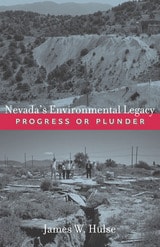
Nevada's Environmental Legacy
Progress or PlunderJames W. Hulse
University of Nevada Press, 2009
Nevada's relatively brief history (it became a state in 1864) has been largely a story of the exploitation of its natural resources. Mining has torn down mountains and poisoned streams and groundwater. Uncontrolled grazing by vast herds of sheep and cattle has denuded grasslands and left them prey to the invasion of noxious plant species and vulnerable to wildfire. Clear-cut logging practices have changed the composition of forests and induced serious soil erosion. More recently, military testing, including hundreds of atomic blasts to determine the efficacy of nuclear weapons, has irreversibly polluted expanses of fragile desert landscape. And rampant development throughout the state over the past four decades, along with the public's growing demand for recreational facilities, has placed intolerable demands on the arid state's limited water resources and threatened the survival of numerous rare plant and animal species. Veteran historian and Nevada native James W. Hulse considers the state's complex environmental history as a series of Faustian bargains between the state's need for economic development and the industries, government agencies, and individuals that have exploited Nevada's natural resources with little concern for the long-term consequences of their activities. His survey covers all these issues, and examines public attitudes about the environment and the role of federal and state agencies in creating, interpreting, and enforcing environmental policies.
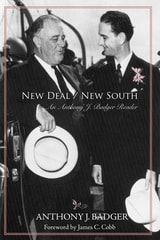
New Deal / New South
An Anthony J. Badger ReaderAnthony J. Badger
University of Arkansas Press, 2007
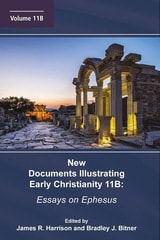
New Documents Illustrating Early Christianity 11B
Essays on EphesusJames R. Harrison
SBL Press, 2025
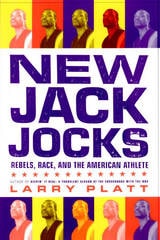
New Jack Jocks
Rebels, Race, And The American AthleteLarry Platt
Temple University Press, 2003

New Perspectives in American Jewish History
A Documentary Tribute to Jonathan D. SarnaEdited by Mark A. Raider and Gary Phillip Zola
Brandeis University Press, 2021
Widely regarded as today’s foremost American Jewish historian, Jonathan D. Sarna had a huge impact on the academy. Sarna’s influence is perhaps nowhere more apparent than among his former doctoral students—a veritable “Sarna diaspora” of over three dozen active scholars around the world. Both a tribute to Sarna and an important collection in its own right, New Perspectives in American Jewish History was compiled by Sarna’s former students and presents previously unpublished, neglected, or rarely seen historical documents and images that illuminate the breadth, diversity, and dynamism of the American Jewish experience. Beginning with the earliest known Jewish divorce in circum-Atlantic history (1774) and concluding with a Black Lives Matter Haggadah supplement (2019), the collection travels across time and space to shed light on intriguing and generative moments that span the varieties of Jewish experience in the American setting from the colonial era to the present. The materials underscore the interrelationship of myriad themes including ritual observance, Jewish-Christian relations, civil rights, Zionism and Israel, and immigration. While not intended as a comprehensive treatment of American Jewish history, the collection offers a chronological road map of American Jewry’s evolving self-understanding and encounter with America over the course of four centuries. A brief prefatory note sets up the analytic context of each document and helps to unpack and explore its significance. The capacious and multifaceted quality of the American Jewish experience is further amplified here by a sampling of artistic texts such as photographs, advertisements, cartoons, and more.
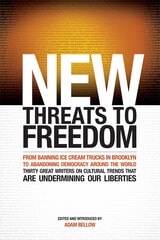
New Threats to Freedom
Adam Bellow
Templeton Press, 2011
New Threats to Freedom
In the twentieth century, free people faced a number of mortal threats,ranging from despotism, fascism,
and communism to the looming menace of global terrorism. While the struggle against some of these overt dangers continues, some insidious new threats seem to have slipped past our intellectual defenses. These often unchallenged threats are quietly eroding our hard-won freedoms and, in some cases, are widely accepted as beneficial.
In New Threats to Freedom, editor and author Adam Bellow has assembled an all-star lineup of innovative thinkers to challenge these insidious new threats. Some leap into already raging debates on issues such as Sharia law in the West, the rise of transnationalism, and the regulatory state. Others turn their attention to less obvious threats, such as the dogma of fairness, the failed promises of the blogosphere, and the triumph of behavioral psychology.
These threats are very real and very urgent, yet this collection avoids projecting an air of doom and gloom. Rather, it provides a blueprint for intellectual resistance so that modern defenders of liberty may better understand their enemies, more effectively fight to preserve the meaning of freedom, and more surely carry its light to a new generation.
What are the new threats to freedom?
when has authority not claimed, when imposing trammels and curbs on liberty, that it does so for a wider good and a greater happiness?” —Christopher Hitchens
“The regulatory state amounts to a regressive tax that penalizes small independent producers and protects
the status quo.” —Max Borders
“Europe tends to favor stability over democracy, America democracy over stability.” —Daniel Hannan
“The value of free expression is perceived to be at odds with goals that were considered ‘more important,’ like inclusiveness, diversity, nondiscrimination, and tolerance.” —Greg Lukianoff
“The masses cannot ultimately be free: only the individual can be.” —Robert D. Kaplan
“That old bugbear of postwar sociology—the mob-self—is now a reality. In a participatory/popularity culture, the freedom to think and act for ourselves becomes harder and harder to achieve.” —Lee Siegel
“As traditional marriage declines, the ranks of single women are growing, and increasingly these women are substituting the security of a husband with the security of the state.” —Jessica Gavora
“Ending the freedom to fail is a mean-spirited attack on the freedom to succeed.” —Michael Goodwin
“The only solution to the new threats to American press freedom lies in organized resistance.” —Katherine Mangu-Ward
“The new behaviorism isn’t interested in protecting people’s freedom to choose; on the contrary, its core principle is the idea that only by allowing an expert elite to limit choice can individuals learn to break their bad habits.” —Christine Rosen
“There’s a world of Travis Bickles out there, and they’re not driving cabs. They’re reading blogs.” —Ron Rosenbaum
“The first amendment ensures not that speech will be fair, but that it will be free. It cannot be both.” —David Mamet
Join the conversation about these issues at www.newthreatstofreedom.com
New Ways of Looking at Old Texts, VI
Papers of the Renaissance English Text Society 2011-2016Edited by Arthur F. Marotti
Arizona Center for Medieval and Renaissance Studies, 2019
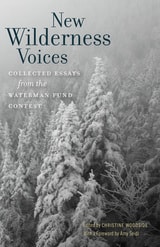
New Wilderness Voices
Collected Essays from the Waterman Fund ContestEdited by Christine Woodside
University Press of New England, 2017
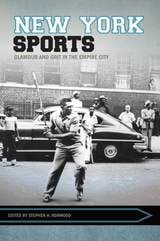
New York Sports
Glamour and Grit in the Empire CityStephen Norwood
University of Arkansas Press, 2018
New York has long been both America’s leading cultural center and its sports capital, with far more championship teams, intracity World Series, and major prizefights than any other city. Pro football’s “Greatest Game Ever Played” took place in New York, along with what was arguably history’s most significant boxing match, the 1938 title bout between Joe Louis and Max Schmeling. As the nation’s most crowded city, basketball proved to be an ideal sport, and for many years it was the site of the country’s most prestigious college basketball tournament. New York boasts storied stadiums, arenas, and gymnasiums and is the home of one of the world’s two leading marathons as well as the Belmont Stakes, the third event in horse racing’s Triple Crown.
New York sportswriters also wield national influence and have done much to connect sports to larger social and cultural issues, and the vitality and distinctiveness of New York’s street games, its ethnic institutions, and its sports-centered restaurants and drinking establishments all contribute to the city’s uniqueness.
New York Sports collects the work of fourteen leading sport historians, providing new insight into the social and cultural history of America’s major metropolis and of the United States. These writers address the topics of changing conceptions of manhood and violence, leisure and social class, urban night life and entertainment, women and athletics, ethnicity and assimilation, and more.
Night Life
Nature from Dusk to DawnDiana Kappel-Smith
University of Arizona Press, 0
Night Mother
A Personal and Cultural History of The ExorcistMarlena Williams
The Ohio State University Press, 2023
Night Music
Essays on Music 1928-1962Theodor W. Adorno
Seagull Books, 2009
Although Theodor W. Adorno is best known for his association with the Frankfurt School of Critical Theory, he began his career as a composer and successful music critic. Night Music presents the first complete English translations of two collections of texts compiled by German philosopher and musicologist Adorno—Moments musicaux, containing essays written between 1928 and 1962, and Theory of New Music, a group of texts written between 1929 and 1955.
In Moments musicaux, Adorno echoes Schubert’s eponymous cycle, with its emphasis on aphorism, and offers lyrical reflections on music of the past and his own time. The essays include extended aesthetic analyses that demonstrate Adorno’s aim to apply high philosophical standards to the study of music. Theory of New Music, as its title indicates, presents Adorno’s thoughts and theories on the composition, reception, and analysis of the music that was being written around him. His extensive philosophical writing ultimately prevented him from pursuing the compositional career he had once envisaged, but his view of the modern music of the time is not simply that of a theorist, but clearly also that of a composer. Though his advocacy of the Second Viennese School, comprising composer Arnold Schoenberg and his pupils, is well known, many of his writings in this field have remained obscure. Collected in their entirety for the first time in English, the insightful texts in Night Music show the breadth of Adorno’s musical understanding and reveal an overlooked side to this significant thinker.

Nobody Comes of Age
Essays on the Victorian NovelCatherine Gallagher
University of Chicago Press, 2027
A collection of field-defining essays on the Victorian novel, taking up a fascinating paradox in literary history: why do we care so deeply about fictional characters who don’t really exist?
n Nobody Comes of Age, Catherine Gallagher explores the Victorian novel by examining its most fundamental building block: the fictional character. Gallagher argues that “Nobodies”—nonreferential, yet realistic, invented personae, usually of middling social status—were the very engine of the genre’s development. Having arrived on the fictional scene in the eighteenth century, Nobody came of age during the Victorian era. The novel achieved cultural hegemony, and Victorian novelists explored these characters’ fictionality in tandem with the great intellectual developments of their time. Readers, knowing well that novel personae were not portraits of actual individuals, nevertheless expected them to yield important insights into the social and cultural changes of the age.
Nobody Comes of Age gathers in revised form a selection of Catherine Gallagher’s classic and still influential essays on the Victorian novel. These essays take up topics such as the relationship between fiction and the decline of religious belief in the period, and how novelists worked the tension between characters who seemed typical and plots that were unpredictable. Gallagher expertly navigates across a range of canonical texts, from the ordinary outcomes of George Eliot’s Middlemarch to the archetypal sacrifices in Thomas Hardy’s Tess of the d'Urbervilles. For scholars and students of nineteenth-century British literature, Nobody Comes of Age is an essential companion.
Noise That Stays Noise
EssaysCole Swensen
University of Michigan Press, 2011
Praise for Cole Swensen:
"One of the most assured voices in contemporary poetry."
---Library Journal
"Engaging and delightful."
---Publishers Weekly
A volume in the Poets on Poetry series, which collects critical works by contemporary poets, gathering together the articles, interviews, and book reviews by which they have articulated the poetics of a new generation.
Ezra Pound famously said that literature is "news that stays news," but recent experiments in poetry and the sciences allow us to enlarge the statement to bring information theory and biology to bear on the issue---in particular, how the information theory–based model of self-organization from noise offers a way to look at language as an art material as well as a mode of communication. This concept directs these essays on poetry by contemporary poet Cole Swensen.
Noise That Stays Noise covers a variety of subjects relevant to contemporary poetry and will give the general reader a broad notion of the issues that inform discourse around poetry today. Space---the conceptual geometry of poetry and its concrete mise-en-page---is an underlying theme of this collection, sometimes approached directly through the work of other twentieth-century poets, sometimes more obliquely through considerations of the role of the visual arts in contemporary poetry. This question of space and the shapes it includes and acquires offers a different way to look at some familiar writers, such as Mallarmé and Olson, and a way to introduce several more recent writers who may not yet be known to the general public.
North Writers II
Our Place in the WoodsJohn Henricksson
University of Minnesota Press, 1997
A new collection of writing by contemporary Minnesota writers.
This companion volume to the widely praised North Writers: A Strong Woods Collection features the work of a variety of authors-some new voices, some old friends-all of them writing about life in northern Minnesota.
The essays included in North Writers II explore the special relationship that exists between the people of northern Minnesota and the rugged yet beautiful landscape that surrounds them. These writers consider the things that make living in the far north unique—the red earth of the Iron Range, the spectacular and forbidding wildness of Lake Superior’s North Shore, the elemental nature of climate and wilderness that tests one’s mettle. There are also the farms and towns of northern Minnesota, with their heritage of self-reliance and the insight that comes with it. Taken together, these essays provide an exploration of the character, the essence, the spirit of this northern country, as well as the mystique it holds for those from more hospitable climes.
North of Empire
Essays on the Cultural Technologies of SpaceJody Berland
Duke University Press, 2009
Berland explores how understandings of space and time, empire and margin, embodiment and technology, and nature and culture are shaped by broadly conceived communications technologies including pianos, radio, television, the Web, and satellite imaging. Along the way, she provides a useful overview of the assumptions driving communications research on both sides of the U.S.-Canadian border, and she highlights the distinctive contributions of the Canadian communication theorists Harold Innis and Marshall McLuhan. Berland argues that electronic mediation is central to the construction of social space and therefore to anti-imperialist critique. She illuminates crucial links between how space is traversed, how it is narrated, and how it is used. Making an important contribution to scholarship on globalization, Berland calls for more sophisticated accounts of media and cultural technologies and their complex “geographies of influence.”
Northern Lights
Essays in Private Law in Memory of Professor David Carey MillerDouglas Bain, Roderick R.M. Paisley, Andrew R. Simpson and Nikola J.M. Tait
Aberdeen University Press, 2018
Not for Patching
A Strategic Welfare ReviewFrank Field and Andrew Forsey
Haus Publishing, 2017
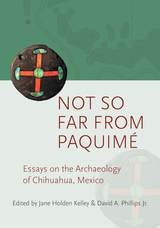
Not so Far from Paquimé
Essays on the Archaeology of Chihuahua, MexicoEdited by Jane Holden Kelley and David A. Phillips Jr.
University of Utah Press, 2017
Notes on Life
Theodore Dreiser
University of Alabama Press, 1974
Exploring human nature, society, and destiny through the lens of American naturalism.
In Notes on Life, Theodore Dreiser—best known for his landmark novels Sister Carrie and An American Tragedy—reveals himself as an incisive thinker grappling with the forces that shape human existence. This compelling collection of essays brings together Dreiser’s reflections on society, ambition, morality, and the often-unseen pressures that guide individual lives. Written during a period of rapid cultural and industrial transformation in the United States, these essays offer a deeply engaged response to the uncertainties and contradictions of modern life.
At the heart of Notes on Life lies Dreiser’s enduring commitment to the principles of literary naturalism: the belief that human behavior is influenced—if not determined—by environment, heredity, and social conditions. Yet these essays go beyond literary theory. They present a searching, often personal inquiry into what it means to live meaningfully in a world shaped by inequality, chance, and desire. Dreiser examines the tension between individual aspiration and societal constraint, probing the psychological and moral dimensions of success, failure, and identity.
What distinguishes this collection is its accessibility and range. Dreiser writes with a directness that invites readers into complex philosophical questions without sacrificing intellectual depth. Whether considering the nature of happiness, the role of material success, or the ethical dilemmas of modern society, he offers insights that remain strikingly relevant. His voice—by turns analytical, reflective, and quietly provocative—bridges the gap between literature and philosophy, making these essays as engaging for general readers as they are valuable for students and scholars.
For those interested in American literature, Notes on Life provides essential context for understanding Dreiser’s fiction and the broader movement of realism and naturalism in the early twentieth century. For contemporary readers, it offers a timeless meditation on the forces that continue to shape human experience: ambition, circumstance, and the search for meaning in an ever-changing world.
Both a work of literary significance and a volume of enduring philosophical reflection, Notes on Life stands as a testament to Dreiser’s intellectual breadth and his unwavering commitment to exploring the complexities of human life.
Novel and Film
Essays in Two GenresBruce Morrissette
University of Chicago Press, 1985
The influential essays collected in Novel and Film display a wide range of critical and analytic approaches to the narrative aspects of the two genres. For all the variety of their subjects, from constructional forms such as interior duplication and game play to intertextual parallels with mathematics and topology, these essays together define a unified critical perspective, one that has brought fresh precision to the analysis of narrative techniques and that continues to raise questions of prime importance to contemporary fiction. Included is a complete bibliography of Morrissette's scholarly works.
Now Don't Try to Reason with Me
Essays and Ironies for a Credulous AgeWayne C. Booth
University of Chicago Press, 1970
“Professor Booth’s earnestness is graced by wit, irony, and generous humor.”—Louis Coxe, New Republic