Results by title
2706 books match the query 'European' and 53 start with n
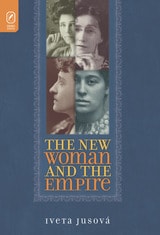
NEW WOMAN AND THE EMPIRE
Iveta Jusová
The Ohio State University Press, 2005

NOVEL PROFESSIONS
INTERESTED DISINTEREST AND THE MAKING OF THE VICTORIAN NOVELJennifer Ruth
The Ohio State University Press, 2006

Nabokov and Indeterminacy
The Case of The Real Life of Sebastian KnightPriscilla Meyer
Northwestern University Press, 2018
In Nabokov and Indeterminacy, Priscilla Meyer shows how Vladimir Nabokov’s early novel The Real Life of Sebastian Knight illuminates his later work. Meyer first focuses on Sebastian Knight, exploring how Nabokov associates his characters with systems of subtextual references to Russian, British, and American literary and philosophical works. She then turns to Lolita and Pale Fire, applying these insights to show that these later novels clearly differentiate the characters through subtextual references, and that Sebastian Knight’s construction models that of Pale Fire.
Meyer argues that the dialogue Nabokov constructs among subtexts explores his central concern: the continued existence of the spirit beyond bodily death. She suggests that because Nabokov’s art was a quest for an unattainable knowledge of the otherworldly, knowledge which can never be conclusive, Nabokov’s novels are never closed in plot, theme, or resolution—they take as their hidden theme the unfinalizability that Bakhtin says characterizes all novels.
The conclusions of Nabokov's novels demand a rereading, and each rereading yields a different novel. The reader can never get back to the same beginning, never attain a conclusion, and instead becomes an adept of Nabokov’s quest. Meyer emphasizes that, unlike much postmodern fiction, the contradictions created by Nabokov’s multiple paths do not imply that existence is constructed arbitrarily of pre-existing fragments, but rather that these fragments lead to an ever-deepening approach to the unknowable.

Napoleonic Friendship
Military Fraternity, Intimacy, and Sexuality in Nineteenth-Century FranceBrian Joseph Martin
University of New Hampshire Press, 2011
Winner of the Laurence Wylie Prize in French Cultural Studies
One of the first books on “Gays in the Military” published following the historic repeal of “Don't Ask Don't Tell” in 2011, Napoleonic Friendship examines the history of male intimacy in the French military, from Napoleon to the First World War. Echoing the historical record of gay soldiers in the United States, Napoleonic Friendship is the first book-length study on the origin of queer soldiers in modern France. Based on extensive archival research in France, the book traces the development of affectionate friendships in the French Army from 1789 to 1916.
Following the French Revolution, radical military reforms created conditions for new physical and emotional intimacy between soldiers, establishing a model of fraternal affection during the Revolutionary and Napoleonic Wars that would persist amid the ravages of the Franco-Prussian War and World War I. Through readings of Napoleonic military memoirs (and other non-fiction archival material) and French military fiction (from Hugo and Balzac to Zola and Proust), Martin examines a broad range of emotional and erotic relationships, from combat buddies to soldier lovers. He argues that the French Revolution's emphasis on military fraternity evolved into an unprecedented sense of camaraderie in the armies of Napoleon. For many soldiers, the hardships of combat led to intimate friendships. For some, the homosociality of military life inspired mutual affection, lifelong commitment, and homoerotic desire.
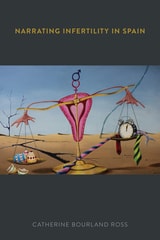
Narrating Infertility in Spain
Catherine Bourland Ross
Bucknell University Press, 2026
The drop in Spanish birth rates in 1998 to their lowest level of 1.1 births per woman was accompanied by a boom in publishing about motherhood. New narrative forms, ranging from blogs to diaries to comics, expressed women’s experiences, including ambivalence about motherhood in the face of societal pressures. Narrating Infertility in Spain, the first study of infertility in post-2008 female-authored texts, analyzes discussions of adoption, assisted reproduction, egg and sperm donation, and the decision not to have children due to economic or social instability. By examining the work of writers and vocal activists Silvia Nanclares, Raquel Sánchez-Silva, Samanta Villar, Laura Freixas, and Diana López Varela, Ross situates infertility in Spain within the cultural context of the Great Recession, while considering it as a business, a crisis, a stigma, and a class issue, and offering broader understandings of contemporary fertility challenges in Spain and beyond.
Published by Bucknell University Press. Distributed worldwide by Rutgers University Press.
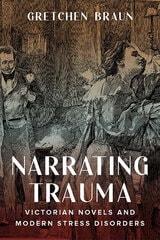
Narrating Trauma
Victorian Novels and Modern Stress DisordersGretchen Braun
The Ohio State University Press, 2022
Narrative Bonds
Multiple Narrators in the Victorian NovelAlexandra Valint
The Ohio State University Press, 2021
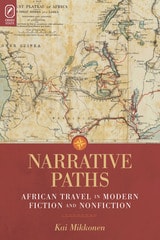
Narrative Paths
African Travel in Modern Fiction and NonfictionKai Mikkonen
The Ohio State University Press, 2015
Narrative Paths contributes to debates in narratology and rhetorical narrative theory about the fiction–nonfiction distinction. With chapters on a wide range of modernist authors—from Pierre Loti, André Gide, Michel Leiris, and Georges Simenon to Blaise Cendrars, Louis-Ferdinand Céline, Joseph Conrad, Graham Greene, Evelyn Waugh, and Isak Dinesen (Karen Blixen)—Mikkonen’s study also contributes to postcolonial approaches to these authors, examining issues of representation, narrative voice, and authority in narratives about colonial Africa.
Narratives Unsettled
Digression in Robert Walser, Thomas Bernhard, and Adalbert StifterSamuel Frederick
Northwestern University Press, 2012
Frederick's readings of the narrative experiments, utopian moments, and obsessions with the trivial in works by Walser, Bernhard, and Stifter point to new ways of approaching the ostensibly antinarrative as a productive element of narrativity. As a work that explores the often neglected crossroads of German studies and postclassical narratology, Narratives Unsettled will be of great interest to scholars in both of these fields, as well as to those working on literature and theory in general.
National Cultures at Grass-root Level
Antonina Kloskowska
Central European University Press, 2001
The major dilemma this volume addresses is the function of national identity in a modern society, for despite the trend towards globalization, the world continues to be riddled with national conflict.
Kłoskowska begins by looking at the controversy between two competing concepts of the origin of the nation – political and ethnic. She examines the central issues of the argument, and in particular, the characteristics and effects of ethnic differences on personal identity and the appropriation of national culture. Her theories are based upon autobiographies by individuals belonging to various national minorities in Poland and other areas where ethnic borders are blurred. The group studied included mostly young intellectuals: Ukrainians, Belarussians and Silesian-Germans. She examines the national attitudes of the various countries the ethnic minorities have been forced to live with. In her conclusion, Kłoskowska takes the view that national cultures are either ‘open’ or ‘closed’ and stresses the importance of participating in more than one cultural medium.
National Cultures at the Grass-Root Level is rich in information on contemporary theories of the nation, on its origin, character and future, and offers a deep insight into the complex and often ambiguous reality of national attitudes.
National Identity of Romanians in Transylvania
Sorin Mitu
Central European University Press, 2001
This meticulously researched and elegantly written book is the most authoritative study of the emergence of modern Romanian identity in Transylvania during the eighteenth and nineteenth centuries. Based upon a plethora of contemporary published sources, Mitu approaches national identity from a variety of perspectives - from within the Romanian community itself and their reaction to the image others had of them.
The author sheds new light on the problems of self-evaluation using a method he describes as "functional analysis" to examine a complex set of ideologies and propaganda. This approach helps the reader to understand the intricate web of contemporary Romanian nationalism.
National Identity of Romanians in Transylvania appeals to scholars of modern Romanian history, those focusing on the Habsburg Monarchy and the study of modern nationalism. The book is an important contribution to the expanding debate on nationalism and national identity from an East European perspective.

Nationalism, Colonialism, and Literature
Terry Eagleton
University of Minnesota Press, 1990
The three essays constituting this volume were originally published as individual pamphlets by the Field Day Theatre Company, in Derry, Northern Ireland. Each deals with the question of nationalism and the role of cultural production as a force in understanding and analyzing the aftermath of colonization. The authors’ diverse perspectives are demonstrated by the essays’ respective titles: Eagleton, Nationalism: Irony and Commitment; Jameson, Modernism and Imperialism; and Said, Yeats and Decolonization. The essays have implication beyond their immediate topics, bearing upon questions of feminism, decolonization, and modernism to illuminate problems that belong to other groups and regions.
Nationalists and Nomads
Essays on Francophone African Literature and CultureChristopher L. Miller
University of Chicago Press, 1999
Miller ranges from the beginnings of francophone African literature—which he traces not to the 1930s Negritude movement but to the largely unknown, virulently radical writings of Africans in Paris in the 1920s—to the evolving relations between African literature and nationalism in the 1980s and 1990s. Throughout he aims to offset the contemporary emphasis on the postcolonial at the expense of the colonial, arguing that both are equally complex, with powerful ambiguities. Arguing against blanket advocacy of any one model (such as nationalism or hybridity) to explain these ambiguities, Miller instead seeks a form of thought that can read and recognize the realities of both identity and difference.
Native Intelligence
Aesthetics, Politics, and Postcolonial LiteratureDeepika Bahri
University of Minnesota Press, 2003
A compelling reclamation of the place of aesthetics in postcolonial literature
Literature though it may be, postcolonial literature is studied and understood largely—and often solely—in social and political terms. In neglecting its aesthetic dimension, as this book forcefully demonstrates, we are overlooking not only an essential aspect of this literature but even a critical perspective on its sociopolitical function and value. In Native Intelligence, Deepika Bahri focuses on postcolonial literature’s formal and aesthetic negotiations with sociopolitical concerns.
How, Bahri asks, do aesthetic considerations contest the social function of postcolonial literature? In answering, her book takes on two tasks: First, it identifies the burden of representation borne by postcolonial literature through its progressive politicization. Second, it draws on Frankfurt School critical theory to reclaim a place for aesthetics in literary representation by closely engaging works of Rohinton Mistry, Salman Rushdie, and Arundhati Roy. Throughout, Bahri shows how attention to the aesthetic innovations and utopian impulses of postcolonial works uncovers their complex and uneven relationship to ideology, reanimating their potential to make novel contributions to the larger project of social liberation.
Natives against Nativism
Antiracism and Indigenous Critique in Postcolonial FranceOlivia C. Harrison
University of Minnesota Press, 2023
Examining the intersection of Palestine solidarity movements and antiracist activism in France from the 1970s to the present
For the pasty fifty years, the Palestinian question has served as a rallying cry in the struggle for migrant rights in postcolonial France, from the immigrant labor associations of the 1970s and Beur movements of the 1980s to the militant decolonial groups of the 2000s. In Natives against Nativism, Olivia C. Harrison explores the intersection of anticolonial solidarity and antiracist activism from the 1970s to the present.
Natives against Nativism analyzes a wide range of texts—novels, memoirs, plays, films, and militant archives—that mobilize the twin figures of the Palestinian and the American Indian in a crossed critique of Eurocolonial modernity. Harrison argues that anticolonial solidarity with Palestinians and Indigenous Americans has been instrumental in developing a sophisticated critique of racism across imperial formations—in this case, France, the United States, and Israel.
Serving as the first relational study of antiracism in France, Natives against Nativism observes how claims to indigeneity have been deployed in multiple directions, both in the ongoing struggle for migrant rights and racial justice, and in white nativist claims in France today.
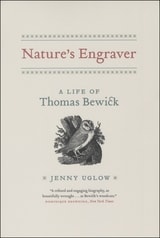
Nature's Engraver
A Life of Thomas BewickJenny Uglow
University of Chicago Press, 2009
Thomas Bewick’s (1753–1828) History of British Birds was the first field guide for ordinary people, illustrated with woodcuts of astonishing accuracy and beauty. In Nature’s Engraver, Jenny Uglow tells the story of the farmer’s son from Tyneside who became one of Britain’s greatest and most popular engravers. It is a story of violent change, radical politics, lost ways of life, and the beauty of the wild—a journey to the beginning of our lasting obsession with the natural world.
“A refined and engaging biography, as beautifully wrought, in its way, as Bewick’s woodcuts.”—New York Times
“Uglow’s clear prose sparkles like Bewick’s River Tyne.”—Los Angeles Times
“This is a lovely book, not just in the quality and sympathy of the writing but in the care of its design and illustration. [Uglow] has turned a rich but undramatic life into a vignette as full of interest and details as one of Bewick’s own woodcuts.”—Sunday Telegraph
“A splendid biography. But it becomes an endearing one by the scattered presence of so many of Bewick’s woodcuts.”—Washington Post
“Another triumph for England’s most innovative biographer, and a marvelous treat for fans of Bewick’s beguiling work.”—Kirkus Reviews
Necessary Nonsense
Aesthetics, History, Neurology, PsychologyIrving Massey
The Ohio State University Press, 2018
In Necessary Nonsense, Massey explores a range of literary and philosophical subjects, from Immanuel Kant to Lewis Carroll—parsing the ways in which nonsense permeates their writing and dialectics—including an exploration of the inability of those who suffer from Asperger's syndrome to distinguish between metaphor and nonsense, and an investigation of the neural signature of the nonsense words and phrases that occur during the transition from waking to sleep. Massey argues that while nonsense may be the “archenemy of reason,” it is also tied to the intrinsic nature of reason; the two, simply put, cannot exist without each other. Through a stunning array of exploratory topics, Massey concludes that we all live under a canopy of nonsense.
Neoliberal Bonds
Undoing Memory in Chilean Art and LiteratureFernando A. Blanco
The Ohio State University Press, 2015
Neoliberal Bonds vehemently criticizes how Chile’s transition governments, through a series of political and legal maneuvers, created the state’s official memory narratives. Blanco argues that the state, the media, academia, and the neoliberal market colluded to colonize and mediatize the “memory scene.” In contrast to these official narratives, Neoliberal Bonds analyzes alternative memory accounts within the visual arts and literature that push back against the state, its institutions, and its economic allies. These alternative memory narratives highlight the ontological fracture of the new neoliberal subjects; they also bring into sharp relief the urgent need for democratization that still poses a challenge to Chile a quarter century after its “transition to democracy” began.
Networking
Communicating with Bodies and Machines in the Nineteenth CenturyLaura Otis
University of Michigan Press, 2011
The interdisciplinary sweep of this book is impressive. Otis focuses simultaneously on literary works by such authors as George Eliot, Bram Stoker, Henry James, and Mark Twain and on the scientific and technological achievements of such pioneers as Luigi Galvani, Hermann von Helmholtz, Charles Babbage, Samuel Morse, and Werner von Siemens.
This unique juxtaposition of physiology, engineering, and literature reveals the common thoughts shared by writers in widely diverse fields and suggests that our current comparisons of nerve and computer networks may not only enhance but shape our understanding of both neurobiology and technology.
Highly accessible and jargon-free, Networking will appeal to general readers as well as to scholars in the fields of interdisciplinary studies, nineteenth-century literature, and the history of science and technology.
Laura Otis is Associate Professor of English, Hofstra University. In 2000, she was awarded a MacArthur Foundation Fellowship for her interdisciplinary studies of literature and science. Her previous books include Membranes: Metaphors of Invasion in Nineteenth-Century Literature, Science, and Politics and Organic Memory: History and the Body in the Late Nineteenth and Early Twentieth Centuries.
Networks of Improvement
Literature, Bodies, and Machines in the Industrial RevolutionJon Mee
University of Chicago Press, 2023
Working against the stubbornly persistent image of “dark satanic mills,” in many ways so characteristic of literary Romanticism, Jon Mee provides a fresh, revisionary account of the Industrial Revolution as a story of unintended consequences. In Networks of Improvement, Mee reads a wide range of texts—economic, medical, and more conventionally “literary”—with a focus on their circulation through networks and institutions. Mee shows how a project of enlightened liberal reform articulated in Britain’s emerging manufacturing towns led to unexpectedly coercive forms of machine productivity, a pattern that might be seen repeating in the digital technologies of our own time. Instead of treating the Industrial Revolution as Romanticism’s “other,” Mee shows how writing, practices, and institutions emanating from these industrial towns developed a new kind of knowledge economy, one where local literary and philosophical societies served as important transmission hubs for the circulation of knowledge.
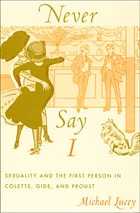
Never Say I
Sexuality and the First Person in Colette, Gide, and ProustMichael Lucey
Duke University Press, 2006
Considering novels along with journalism, theatrical performances, correspondences, and face-to-face encounters, Lucey focuses on the interlocking social and formal dimensions of using the first person. He argues for understanding the first person not just as a grammatical category but also as a collectively produced social artifact, demonstrating that Proust’s, Gide’s, and Colette’s use of the first person involved a social process of assuming the authority to speak about certain issues, or on behalf of certain people. Lucey reveals these three writers as both practitioners and theorists of the first person; he traces how, when they figured themselves or other first persons in certain statements regarding same-sex identity, they self-consciously called attention to the creative effort involved in doing so.

New Letters to the Tatler and Spectator
Edited by Richmond P. Bond
University of Texas Press, 1959
Ninety-six letters to the Tatler and the Spectator, representing what is probably the largest extant body of unpublished material relating directly to the two journals, appeared for the first time in print in this book.
The original letters were not published in the Tatler or the Spectator, but they were preserved by the editors and eventually found their way into the Marlborough and the Tickell collections. They have been prepared for publication and edited, with notes and an introduction, by an authority in the field of early periodicals.
The letters will be of especial interest to students of early eighteenth-century England, for few literary forms more clearly reflect the times in which they are written than the letter, particularly the letter to the editor. A wide range of writers is represented—the inarticulate and the witty, the serving maid and the gentleman. Subject matter is equally diverse, including such topics as women's petticoats, free thinking, the state lottery, the nuisance of a smoking wife, cock-throwing, and Platonic love.
Why the letters were not published in the Tatler or the Spectator is a matter for conjecture. Some of them were apparently used by Addison or Steele as topics for essays. Occasionally a letter was received or rewritten by the editors and printed in an altered form. Whatever the reason for their survival, these letters will be of value to students of language and literary journalism, social conditions, and popular philosophy.
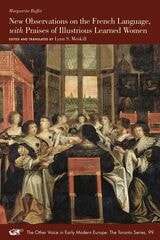
New Observations on the French Language, with Praises of Illustrious Learned Women
Marguerite Buffet
Iter Press, 2023
According to the few historical records that mention Marguerite Buffet, she lived her entire life in seventeenth-century Paris where she taught French to aristocratic women. Buffet’s vivid example of proper language use in New Observations on the French Language offers a rare glimpse into the life, habits, and culture of seventeenth-century France. She describes common errors in contemporary language use and gives examples of correct expressions for speaking and writing all the while encouraging women to aspire to higher levels of intellectual achievement.
In addition, her Praises of Illustrious Learned Women, a catalog of biographies of women who displayed exemplary intellect, wit, and conversation, includes a number of the author’s contemporaries such as Anna Maria van Schurman and Madeleine de Scudéry. Buffet’s collected praises of these women, many of whom were connected to the court of Louis XIV, show her unique position as both a participant in and historian of the intellectual and social world of the French salon.
This volume presents Buffet’s work in its near entirety for the first time in English, bringing to light Buffet’s unique contribution to the centuries-long debate concerning the status of women known as the querelle des femmes.
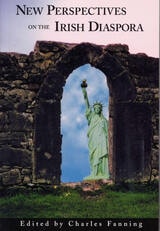
New Perspectives on the Irish Diaspora
Edited by Charles Fanning
Southern Illinois University Press, 2000
In New Perspectiveson the Irish Diaspora, Charles Fanning incorporates eighteen fresh perspectives on the Irish diaspora over three centuries and around the globe. He enlists scholarly tools from the disciplines of history, sociology, literary criticism, folklore, and culture studies to present a collection of writings about the Irish diaspora of great variety and depth.
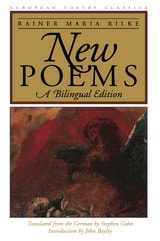
New Poems
A Bilingual EditionRainer Maria Rilke
Northwestern University Press, 1998
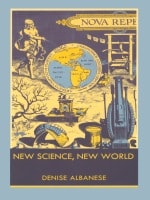
New Science, New World
Denise Albanese
Duke University Press, 1996
Albanese reads the inaugurators of the scientific revolution against the canonical authors of early modern literature, discussing Galileo’s Dialogue on the Two Chief World Systems and Bacon’s New Atlantis as well as Milton’s Paradise Lost and Shakespeare’s The Tempest. She examines how the newness or “novelty” of investigating nature is expressed through representations of the New World, including the native, the feminine, the body, and the heavens. “New” is therefore shown to be a double sign, referring both to the excitement associated with a knowledge oriented away from past practices, and to the oppression and domination typical of the colonialist enterprise. Exploring the connections between the New World and the New Science, and the simultaneously emerging patterns of thought and forms of writing characteristic of modernity, Albanese insists that science is at its inception a form of power-knowledge, and that the modern and postmodern division of “Two Cultures,” the literary and the scientific, has its antecedents in the early modern world.
New Science, New World makes an important contribution to feminist, new historicist, and cultural materialist debates about the extent to which the culture of seventeenth-century England is proto-modern. It will offer scholars and students from a wide range of fields a new critical model for historical practice.
New Spain, New Literatures
Luis Martín-Estudillo
Vanderbilt University Press, 2010
New Ways of Looking at Old Texts, VI
Papers of the Renaissance English Text Society 2011-2016Edited by Arthur F. Marotti
Arizona Center for Medieval and Renaissance Studies, 2019

New World Maker
Radical Poetics, Black Internationalism, and the Translations of Langston HughesRyan James Kernan, foreword by Robin D. G. Kelley
Northwestern University Press, 2022
Through original research and close readings alert to the foreign prosody underlying Hughes’s work, New World Maker recuperates his political writing, which had been widely maligned by Cold War detractors and adherents of New Criticism, and affirms his place as a progenitor of African diasporic literature and within the pantheon of US modernists. Demonstrating the integral part translation played in Hughes’s creative process, this book challenges a number of common assumptions about this canonical thinker and offers important insights for scholars of African diasporic literature, comparative literature, and American, Caribbean, and translation studies.
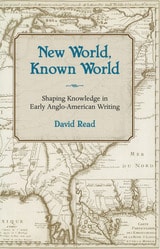
New World, Known World
Shaping Knowledge in Early Anglo-American WritingDavid Read
University of Missouri Press, 2005
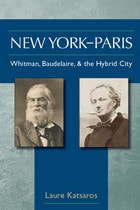
New York-Paris
Whitman, Baudelaire, and the Hybrid CityLaure Katsaros
University of Michigan Press, 2012
As New York and Paris began to modernize, new modes of entertainment, such as panoramas, dioramas, and photography, seemed poised to take the place of the more complex forms of literary expression. Dioramas and photography were invented in Paris but soon spread to America, forming part of an increasingly universal idiom of the spectacle. This brave new world of technologically advanced but crudely mimetic spectacles haunts both Whitman's vision of New York and Baudelaire's view of Paris. In New York-Paris, Katsaros explores the images of the mid-nineteenth-century city in the poetry of both Whitman and Baudelaire and seeks to demonstrate that, by projecting an image of the other's city onto his own, each poet tried to resist the apparently irresistible forward momentum of modernity rather than create a paradigmatically happy mixture of "high" and "low" culture.
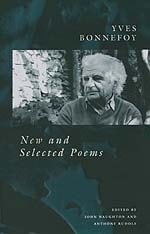
New and Selected Poems
Yves Bonnefoy
University of Chicago Press, 1995
Spanning four decades and drawing on all of Bonnefoy's major collections, this selection provides a comprehensive overview of and an ideal introduction to his work. The elegant translations, many of them new, are presented in this dual-language edition alongside the original French. Several significant works appear here in English for the first time, among them, in its entirety, Bonnefoy's 1991 book of verse, The Beginning and the End of the Snow, the 1988 prose poem Where the Arrow Falls, and an important long poem from 1993, "Wind and Smoke." Together with poems from such classic volumes as "In the Lure of the Threshold", these new works shed light on the growth as well as the continuity of Bonnefoy's work.
John Naughton's detailed introduction looks at the evolution of Bonnefoy's poetry from the 1953 publication of "On the Motion and Immobility of Douve", which immediately established his reputation as one of France's leading poets, through the 1993 publication of The Wandering Life and its centerpiece "Wind and Smoke."
"This is a comprehensive selection that contains examples of work spanning [Bonnefoy's] full career of forty years, from the ground-breaking "Du Mouvement et de l'Immobilité de Douve" through the celebratory "Pierre Ecrite" to the magical winter landscapes of America's East Coast and an unsettling reworking of myth in the recent "La Vie Errante" . . . The translations, which are the work of a variety of hands, including Galway Kinnell, Emily Grosholz and Anthony Rudolf, nevertheless fit well together and all are sensitive to the register and subtleties of both languages, while the introductory essay by John Naughton expertly explains Bonnefoy's importance as a poet and the influences which have shaped him. This is definitely a volume worth having, for layman and French specialist alike."—Hilary Davies, Times Literary Supplement
"Anyone not familiar with Bonnefoy's work will benefit from the background information and explanations given by John Naughton in his excellent introduction . . . . The book as a whole provides an excellent introduction to Bonnefoy's poetry and to his concerns of a lifetime."—Don Rodgers, Poetry Wales
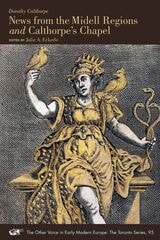
News from the Midell Regions and Calthorpe’s Chapel
Dorothy Calthorpe
Iter Press, 2022
This first print edition of two extant manuscripts by Dorothy Calthorpe (1648–1693) introduces a new seventeenth-century woman writer to the growing canon of early modern female authors. The edition provides transcriptions of the manuscripts and Calthorpe’s will, as well as a hefty apparatus that features a comprehensive introduction to Calthorpe, her family, and her work; a glossary of persons who figured in her writing and her life; and two genealogical charts. Calthorpe’s writings (including both prose and verse and ranging from Petrarchan love poems to roman à clef and devotional verse), and the thoughtfully constructed and illustrated volumes in which her texts appear, demonstrate the rich intellectual life of a previously unknown female writer and provide a compelling example of Restoration manuscript production.
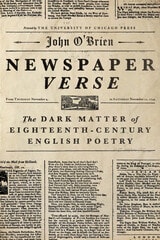
Newspaper Verse
The Dark Matter of Eighteenth-Century English PoetryJohn O'Brien
University of Chicago Press, 0
A study of the popular but forgotten poetry published in eighteenth-century English newspapers and their overlooked influence on the canonical work from the period.
The first book-length study of its kind, Newspaper Verse focuses on poetry published in English-language newspapers during the long eighteenth century, including odes, couplets, news poems, ballads, and elegies by such famous poets as Jonathan Swift, Samuel Taylor Coleridge, Alexander Pope, Elizabeth Carter, and Thomas Gray and also verse by lesser-known or anonymous writers. For John O’Brien, these texts constitute something like the dark matter of eighteenth-century letters: the most widely read poetry in the period and yet unincorporated into existing narratives of eighteenth-century English literature. By engaging with these forgotten poems, O’Brien demonstrates how popular media enabled poetry to thrive and recovers their rich influence on the shape of English literary history.
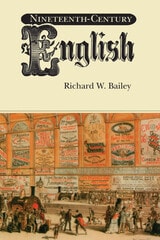
Nineteenth-Century English
Richard W. Bailey
University of Michigan Press, 1998

Nineteenth-Century Scottish Rhetoric
The American ConnectionWinifred Bryan Horner
Southern Illinois University Press, 1992
Winifred Bryan Horner argues that an understanding of the changes that occurred in the content of nineteenth-century courses in logic, rhetoric, and belles lettres taught in Scottish universities provides important critical insight into the development of the twentieth-century American composition course, as well as courses in English literature and critical theory.
Because of the inaccessibility of primary materials documenting the changes in courses taught at Scottish universities, the impression remains that the nineteenth century represents a break with the traditional school curriculum rather than a logical transition to a new focus of study. Horner has discovered that the notes of students who attended these classes—meticulously transcribed records of the lectures that professors dictated in lieu of printed texts—provide reliable documentation of the content of courses taught during the period. Using these records, Horner traces the evolution of current traditional composition, developed in the United States in the first part of the twentieth century, from courses taught in nineteenth-century, northern Scottish universities. She locates the beginning of courses in English literature and belletristic composition in the southern schools, particularly Edinburgh.
Horner’s study opens new vistas for the study of the evolution of university curricula, especially the never before acknowledged influence of belletristric rhetoric on the development of the North American composition course.

Nobody Comes of Age
Essays on the Victorian NovelCatherine Gallagher
University of Chicago Press, 2027
A collection of field-defining essays on the Victorian novel, taking up a fascinating paradox in literary history: why do we care so deeply about fictional characters who don’t really exist?
n Nobody Comes of Age, Catherine Gallagher explores the Victorian novel by examining its most fundamental building block: the fictional character. Gallagher argues that “Nobodies”—nonreferential, yet realistic, invented personae, usually of middling social status—were the very engine of the genre’s development. Having arrived on the fictional scene in the eighteenth century, Nobody came of age during the Victorian era. The novel achieved cultural hegemony, and Victorian novelists explored these characters’ fictionality in tandem with the great intellectual developments of their time. Readers, knowing well that novel personae were not portraits of actual individuals, nevertheless expected them to yield important insights into the social and cultural changes of the age.
Nobody Comes of Age gathers in revised form a selection of Catherine Gallagher’s classic and still influential essays on the Victorian novel. These essays take up topics such as the relationship between fiction and the decline of religious belief in the period, and how novelists worked the tension between characters who seemed typical and plots that were unpredictable. Gallagher expertly navigates across a range of canonical texts, from the ordinary outcomes of George Eliot’s Middlemarch to the archetypal sacrifices in Thomas Hardy’s Tess of the d'Urbervilles. For scholars and students of nineteenth-century British literature, Nobody Comes of Age is an essential companion.
Nomadic Voices of Exile
Feminine Identity in the Francophone Literature of the MaghrebValérie K. Orlando
Ohio University Press, 1999
Contemporary French writing on the Maghreb—that part of Africa above the Sahara—is truly postmodern in scope, the rich product of multifaceted histories promoting the blending of two worlds, two identities, two cultures, and two languages.
Nomadic Voices of Exile demonstrates how that postmodern sentiment has altered perceptions concerning Maghrebian feminine identity since the end of the French-colonial era. The authors discussed here, both those who reside in the Maghreb and those who have had to seek asylum in France, find themselves at the intersection of French and North African viewpoints, exposing a complicated world that must be negotiated and redefined.
In looking at the authors whose writings extend beyond a gender-based dialogue to include such issues as race, politics, religion, and history, Valérie Orlando explores the rich and changing landscape of the literature and the culture, addresses the stereotypes that have defined the past, and navigates the space of the exiled, a space previously at the peripheries of Western discourse.
Nomadic Voices of Exile will be useful to a variety of classrooms—women’s studies, Middle East studies, Francophone literature, Third World women writers—and to anyone interested in postcolonial and postmodern theory and philosophy and the history of the Maghreb through literature.
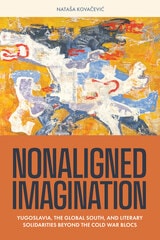
Nonaligned Imagination
Yugoslavia, the Global South, and Literary Solidarities Beyond the Cold War BlocsNataša Kovacevic
Northwestern University Press, 2026
Recovering the literary and intellectual history of anticolonial collaborations
Preoccupied with developing a multiethnic, postcolonial culture and seeking an alternative to Cold War–bloc politics, socialist Yugoslavia turned to the decolonizing countries of the Global South. It forged political, economic, and cultural links with postcolonial states and anticolonial liberation movements through the Non-Aligned Movement, of which it was a founding member in 1961. NAM spanned political and economic systems, uniting members in opposition to superpower politics and around policies of nuclear disarmament, active peaceful coexistence, anticolonialism, and respect for national sovereignty.
Nataša Kovačević reconstructs the forgotten literary and cultural history of this movement, tracing the development of new networks of intellectual engagement and cultural exchange between writers, journalists, and scholars who connected postwar Yugoslavia with 1950s India, 1960s Algeria and Guinea, 1970s Vietnam, and beyond. Nonaligned narratives attempted to reconfigure the understanding of the globe outside Eurocentric tropes and hegemonic political stratifications and to articulate Yugoslavs’ own internationalist sensibility. With Cold War–era rhetoric intensifying again in the twenty-first century, Nonaligned Imagination assumes the urgent task of unearthing a history of engaged writing and cultural diplomacy that imagined alternatives to superpower conflicts and a bipolar vision of the world.

Nonbinary Jane Austen
Chris Washington
University of Minnesota Press, 2025
A bold and provocative analysis of Jane Austen as an early gender abolitionist
Chris Washington reads Jane Austen differently than we have classically understood her: rather than the doyen of the cisheteronormative marriage plot, the author theorizes how Austen envisions a nonbinary future that traverses the two-sex model of gender that we can supposedly see solidifying in the eighteenth century. Instead, Washington argues, Austen leverages the generic restraints of the novel to write a disguised autofiction in which Austen imagines herself as transgender and works to abolish gender exclusivity altogether. In doing so, she establishes a politics that ushers in a future beyond the cisheteronormative binary, one built on plurality and possibility.
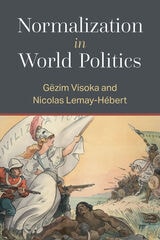
Normalization in World Politics
Gëzim Visoka and Nicolas Lemay-Hébert
University of Michigan Press, 2022
This book traces main discourses and practices associated with normalcy in world politics. Visoka and Lemay-Hébert mostly focus on how dominant states and international organizations try to manage global affairs through imposing normalcy over fragile states, restoring normalcy over disaster-affected states, and accepting normalcy over suppressive states. They show how discourses and practices come together in constituting normalization interventions and how in turn they play in shaping the dynamics of continuity and change in world politics.
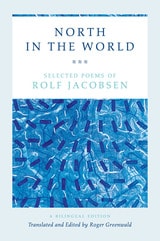
North in the World
Selected Poems of Rolf Jacobsen, A Bilingual EditionRolf Jacobsen
University of Chicago Press, 2002
Drawing from all twelve of his books, and including one poem collected posthumously, North in the World offers award-winning English translations of Jacobsen's poems, accompanied by the original Norwegian texts. The translator, the American poet Roger Greenwald, worked with Jacobsen himself to correct errors that had crept into the Norwegian texts over the years. An in-depth introduction by Greenwald highlights the main features of Jacobsen's poetry, and extensive endnotes, as well as indexes to titles and first lines in both languages, enhance the usefulness of the book for general readers and scholars alike. The result is the definitive bilingual edition of Jacobsen's marvelous poetry.
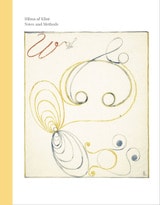
Notes and Methods
Hilma af Klint
University of Chicago Press, 2018
Hilma af Klint studied at the Royal Swedish Academy in Stockholm where she was part of the first generation of female students. Up until the beginning of the century, she painted mainly landscapes and detailed botanical studies. Her work from this period was that of a young artist of her time who meticulously observed the world around her. But, like many of her contemporaries, af Klint was also interested in the invisible relationships that shape our world, believing strongly in a spiritual dimension. She joined the Theosophical Society, and, with four fellow female members who together called themselves “The Five,” began to study mediumship. Between 1906 and 1915, purportedly guided by a higher power, af Klint created 193 individual works that, in both scale and scope of imagery, are like no other art created at that time. Botanically inspired images and mystical symbols, diagrams, words, and geometric series, all form part of af Klint’s abstract language. These abstract techniques would not be seen again until years later.
Notes and Methods presents facsimile reproductions of a wide array of af Klint’s early notebooks accompanied by the first English translation of af Klint’s extensive writings. It contains the rarely seen “Blue Notebooks,” hand-painted and annotated catalogues af Klint created of her most famous series “Paintings for the Temple,” and a dictionary compiled by af Klint of the words and letters found in her work. This extraordinary collection is edited by and copublished with Christine Burgin, and features an introduction by Iris Müller-Westermann. It will stand as an important and timely contribution to the legacy of Hilma af Klint.
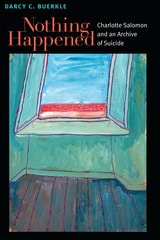
Nothing Happened
Charlotte Salomon and an Archive of SuicideDarcy C. Buerkle
University of Michigan Press, 2013
Charlotte Salomon's (1917-43) fantastical autobiography, Life? or Theater?, consists of 769 sequenced gouache paintings, through which the artist imagined the circumstances of the eight suicides in her family, all but one of them women. But Salomon's focus on suicide was not merely a familial idiosyncrasy. Nothing Happened argues that the social history of early-twentieth-century Germany has elided an important cultural and social phenomenon by not including the story of German Jewish women and suicide. This absence in social history mirrors an even larger gap in the intellectual history of deeply gendered suicide studies that have reproduced the notion of women's suicide as a rarity in history. Nothing Happened is a historiographic intervention that operates in conversation and in tension with contemporary theory about trauma and the reconstruction of emotion in history.
Notorious Facts
Publicity in Romantic England, 1780–1830James Mulvihill
University of Delaware Press, 2012
Notorious Facts examines the sensationalistic confounding of persons and principles in the public life of Romantic England (1780–1830). Its purview is limited to five decades straddling the late eighteenth and early nineteenth centuries, but its trajectory, moving from a politics rendered in personal terms to a politics of personality, describes a shift still in process today. The study’s chapters draw on a motley body of literature (pamphlets, secret histories, and the like) that at first glance seems uncharacteristic of what literary historians call the English Romantic period. Viewed in the context of something called late Georgian England, these texts seem more indigenous, but if the canonical revisionism of the last few decades should teach us anything, it is that a Romanticism encompassing all romanticisms ideally excludes nothing.
In its heroic Enlightenment sense, publicity is concerned with exposing the workings of power for all to see. A good deal may be inferred about publicity in Romantic England from primary texts in which this salutary function is at once espoused and subverted. These texts—the mostly nameless or pseudonymous authors of the age’s pamphlet literature are the heroes and villains of the piece—almost invariably claim to speak from a disinterested conception of publicity while putting its methods of critical exposure to wholly self-interested purposes. This study examines well-known authors of the period like Jeremy Bentham, Samuel Taylor Coleridge, and William Hazlitt, as well as pamphleteers like John Horne Tooke, Philip Withers, and Nathaniel Jefferys. Other figures include authors of secret history like Thomas Ashe, Mary Anne Clarke, Lewis Goldsmith, and Joseph Haslewood in addition to notorious figures in their own right such as the Prince and Princess of Wales, Mrs. Fitzherbert, and the Reverend Edward Irving. Among the topics treated are treasonous libel, royal scandal, secret history, and celebrity.
Published by University of Delaware Press. Distributed worldwide by Rutgers University Press.

Novalis, Spinoza, and the Limits of Romantic Materialism
Siarhei Biareishyk
Northwestern University Press, 2026
Offering an innovative and illuminating new reading of Spinoza and Novalis
This rigorously researched study reframes our understanding of the intellectual currents in Germany around 1800 through a careful reinterpretation of its key thinker, Novalis, in conversation with Spinoza’s philosophy. Siarhei Biareishyk presents an alternative to the standard narrative that resolutely links emergent modernity and secularization to philosophical “idealism” by showing how Spinozan materialism informs the scientific experiments, metaphysical inquiries, and political debates of Novalis and his contemporaries. Shifting our focus away from the historical interpretation of Novalis as a mystic and theorist of subjectivity, Biareishyk elaborates on the Spinozan materialist strain in Novalis in three key domains: ontology and the conception of nature, theories of singularity and individuation, and the concept of the political. He brings current romanticist scholarship into conversation with contemporary discussions of Spinoza in continental philosophy, in the Marxist tradition particularly, demonstrating that the Spinoza–Novalis encounter provides a viable alternative—in its articulation of causality, dialectics, and the political—to the dominant conceptual apparatuses of both Kant and Hegel.
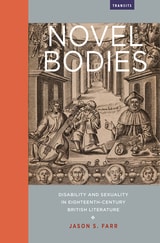
Novel Bodies
Disability and Sexuality in Eighteenth-Century British LiteratureJason S. Farr
Bucknell University Press, 2019
Published by Bucknell University Press. Distributed worldwide by Rutgers University Press.

Novel Science
Fiction and the Invention of Nineteenth-Century GeologyAdelene Buckland
University of Chicago Press, 2013
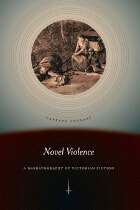
Novel Violence
A Narratography of Victorian FictionGarrett Stewart
University of Chicago Press, 2009
Victorian novels, Garrett Stewart argues, hurtle forward in prose as violent as the brutal human existence they chronicle. In Novel Violence, he explains how such language assaults the norms of written expression and how, in doing so, it counteracts the narratives it simultaneously propels.
Immersing himself in the troubling plots of Charles Dickens, Anne Brontë, George Eliot, and Thomas Hardy, Stewart uses his brilliant new method of narratography to trace the microplots of language as they unfold syllable by syllable. By pinpointing where these linguistic narratives collide with the stories that give them context, he makes a powerful case for the centrality of verbal conflict to the experience of reading Victorian novels. He also maps his finely wrought argument on the spectrum of influential theories of the novel—including those of Georg Lukács and Ian Watt—and tests it against Edgar Allan Poe’s antinovelistic techniques. In the process, Stewart shifts critical focus toward the grain of narrative and away from more abstract analyses of structure or cultural context, revealing how novels achieve their semantic and psychic effects and unearthing, in prose, something akin to poetry.

Novelization
From Film to NovelJan Baetens
The Ohio State University Press, 2018
Novelization offers a historical overview of the genre, focusing on the various formats that have been adopted since the first decades of the twentieth century until today: daily and weekly novelizations, cheap brochures, pocket books, and trade editions. It studies the specific features of the genre from various points of view: narrative style, illustrations, authorship, and marketing. By studying novelization from a broad historical perspective, Baetens reframes our understanding of adaptation and the relationship between cinema and literature. Rather than assume that cinematic adaptations either cannibalize or rejuvenate literature, Novelization ultimately offers the opportunity to rethink the adaptation paradigm of film and literary studies.