Results by title
67 books match the query 'Exile' and 4 start with n
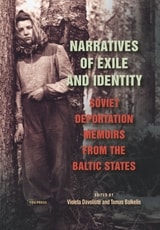
Narratives of Exile and Identity
Soviet Deportation Memoirs from the Baltic StatesTomas Balkelis
Central European University Press, 2018
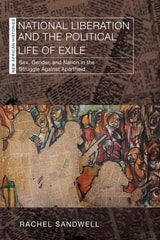
National Liberation and the Political Life of Exile
Sex, Gender, and Nation in the Struggle Against ApartheidRachel Sandwell
Ohio University Press, 2025
The first book-length study to reveal how women in exile shaped South Africa’s antiapartheid movement
This groundbreaking book explores the often-overlooked role of women in South Africa’s liberation movements, particularly within the African National Congress during its years in exile from 1960 to 1990. It examines how transformations in gender roles—though contested—were central to imagining a postapartheid South Africa.
Through an analysis of women’s diplomatic work and their advocacy for policies on sexual education, birth control, family life, and childcare, Rachel Sandwell challenges traditional narratives that have ignored or minimized women’s contributions. She highlights how South African women played a crucial role in connecting exiles to left-wing international organizations like the Women’s International Democratic Federation, positioning women as key figures in global anticolonial politics.
The book also explores how gender transformation was at the heart of the exiled antiapartheid movement’s vision for a free South Africa. Women fought for recognition beyond the role of “mothers of the nation,” sparking internal debates over revolutionary morality, the compatibility of motherhood with military service, and responses to sexual and domestic violence within the movement. These struggles mirrored broader ideological conflicts over nation building, belonging, and political identity as the African National Congress sought legitimacy as a government-in-exile.
Ultimately, National Liberation and the Political Life of Exile asks how we write histories of revolutionary movements—especially those that, despite their transformative ambitions, did not fully realize their goals. A vital contribution to feminist history, anticolonial studies, and the history of global liberation struggles, this book reshapes our understanding of gender and politics in the antiapartheid movement.

News from the New American Diaspora
and Other Tales of ExileBy Jay Neugeboren
University of Texas Press, 2005
Prize-winning novelist Jay Neugeboren's third collection of short stories focuses on Jews in various states of exile and expatriation—strangers in strange lands, far from home. These dozen tales, by an author whose stories have been selected for more than fifty anthologies, including Best American Short Stories and O. Henry Prize Stories, span the twentieth century and vividly capture brief moments in the lives of their characters: a rabbi in a small town in New England struggling to tend to his congregation and himself, retirees who live in Florida but dream of Brooklyn, a boy at a summer camp in upstate New York learning about the Holocaust for the first time, Russians living in Massachusetts with the family who helped them immigrate. In "The Other End of the World," an American soldier who has survived life in a Japanese prisoner of war camp grieves for members of his family murdered in a Nazi death camp, and in "Poppa's Books" a young boy learns to share his father's passion for the rare books that represent the Old World. "This Third Life" tells of a divorced woman who travels across Germany searching for new meaning in her life after her children leave home, while both "His Violin" and "The Golden Years" explore the plight of elderly Jews, displaced from New York City to retirement communities in Florida, who struggle with memory, madness, and mortality.
Set in various times and places, these poignant stories are all tales of personal exile that also illuminate that greater diaspora—geographical, emotional, or spiritual—in which many of us, whether Jews or non-Jews, live.
Nomadic Voices of Exile
Feminine Identity in the Francophone Literature of the MaghrebValérie K. Orlando
Ohio University Press, 1999
Contemporary French writing on the Maghreb—that part of Africa above the Sahara—is truly postmodern in scope, the rich product of multifaceted histories promoting the blending of two worlds, two identities, two cultures, and two languages.
Nomadic Voices of Exile demonstrates how that postmodern sentiment has altered perceptions concerning Maghrebian feminine identity since the end of the French-colonial era. The authors discussed here, both those who reside in the Maghreb and those who have had to seek asylum in France, find themselves at the intersection of French and North African viewpoints, exposing a complicated world that must be negotiated and redefined.
In looking at the authors whose writings extend beyond a gender-based dialogue to include such issues as race, politics, religion, and history, Valérie Orlando explores the rich and changing landscape of the literature and the culture, addresses the stereotypes that have defined the past, and navigates the space of the exiled, a space previously at the peripheries of Western discourse.
Nomadic Voices of Exile will be useful to a variety of classrooms—women’s studies, Middle East studies, Francophone literature, Third World women writers—and to anyone interested in postcolonial and postmodern theory and philosophy and the history of the Maghreb through literature.