Results by title
252 books match the query 'Future' and 11 start with n
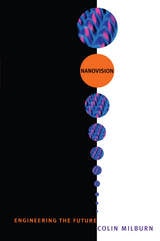
Nanovision
Engineering the FutureColin Milburn
Duke University Press, 2008
Milburn illuminates the practices of nanotechnology by examining an enormous range of cultural artifacts, including scientific research articles, engineering textbooks, laboratory images, popular science writings, novels, comic books, and blockbuster films. In so doing, he reveals connections between the technologies of visualization that have helped inaugurate nano research, such as the scanning tunneling microscope, and the prescient writings of Robert A. Heinlein, James Blish, and Theodore Sturgeon. He delves into fictive and scientific representations of “gray goo,” the nightmare scenario in which autonomous nanobots rise up in rebellion and wreak havoc on the world. He shows that nanoscience and “splatterpunk” novels share a violent aesthetic of disintegration: the biological body is breached and torn asunder only to be refabricated as an assemblage of self-organizing machines. Whether in high-tech laboratories or science fiction stories, nanovision deconstructs the human subject and galvanizes the invention of a posthuman future.

Narrative Interplay in the Digital Era
Generative AI, Alternate Reality Games, and the Future of Interactive PedagogyEdited by Andrew Klobucar
Intellect Books, 2025
In Narrative Interplay in the Digital Era, leading scholars and artists explore how digital narratives, alternate reality games, and AI-driven storytelling reshape how we create, experience, and teach interactive fiction. This collection moves beyond traditional analysis and examines the social and artistic dimensions of interactivity, highlighting how narratives unfold dynamically through player engagement and machine collaboration.
Organized into three sections—alternate realities, digital interactive fiction, and the politics of gaming—this book reveals the evolving role of play and interactivity in contemporary education, creative expression, and online culture. Contributors offer insights from inside the creative process, centering the perspectives of game designers and artists to shed light on how interactive stories emerge at the intersection of technology and human imagination.
A practical resource for researchers in game studies, electronic literature, and digital storytelling, this collection also speaks to educators and creators eager to explore how AI and interactivity are redefining the future of narrative.

Navigating The Future With Sce Nario Planning
A Guidebook FoJoan Giesecke
Assoc of College & Research Libraries, 2015
Navigating the Future with Scenario Planning
A Guidebook for LibrariansJoan Giesecke
Assoc of College & Research Libraries, 2015
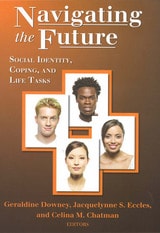
Navigating the Future
Social Identity, Coping, and Life TasksGeraldine Downey
Russell Sage Foundation, 2005
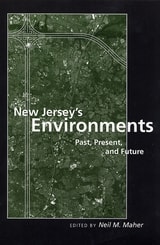
New Jersey's Environments
Past, Present, and FutureMaher, Neil M
Rutgers University Press, 2006
Americans often think of New Jersey as an environmental nightmare. As seen from its infamous turnpike, which is how many travelers experience the Garden State, it is difficult not to be troubled by the wealth of industrial plants, belching smokestacks, and hills upon hills of landfills. Yet those living and working in New Jersey often experience a very different environment. Despite its dense population and urban growth, two-thirds of the state remains covered in farmland and forest, and New Jersey has a larger percentage of land dedicated to state parks and forestland than the average for all states. It is this ecological paradox that makes New Jersey important for understanding the relationship between Americans and their natural world.
In New Jersey’s Environments,historians, policy-makers, and earth scientists use a case study approach to uncover the causes and consequences of decisions regarding land use, resources, and conservation. Nine essays consider topics ranging from solid waste and wildlife management to the effects of sprawl on natural disaster preparedness. The state is astonishingly diverse and faces more than the usual competing interests from environmentalists, citizens, and businesses.
This book documents the innovations and compromises created on behalf of and in response to growing environmental concerns in New Jersey, all of which set examples on the local level for nationwide and worldwide efforts that share the goal of protecting the natural world.
New Thought, Ancient Wisdom
The History and Future of the New Thought MovementGlenn Mosley
Templeton Press, 2006
In this book, Glenn R. Mosley chronicles the history of the movement, including biographical sketches and the philosophies of pioneers and influential leaders linked to the movement's development and growth. These include Charles and Myrtle Fillmore, the founders of Unity; Ernest Holmes, founder of the Science of Mind; Mary Baker Eddy, founder of the Church of Christ Science; Ralph Waldo Trine, philosopher, mystic, teacher, and early mentor of New Thought; Joel Goldsmith, founder of The Infinite Way, among others.
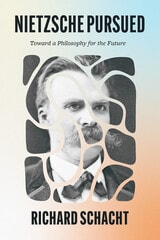
Nietzsche Pursued
Toward a Philosophy for the FutureRichard Schacht
University of Chicago Press, 2024
Nietzsche advocated for a post-theistic “philosophy of the future”—a new approach to human reality that would bend Western thought away from nihilism in a life-affirming, value-creative direction. His early demise left this endeavor only just begun. In Nietzsche Pursued, Richard Schacht examines Nietzsche’s revisionist approach to familiar philosophical topics, exploring how some may be further pursued in Nietzschean ways.
Each chapter focuses on one topic that is central to Nietzsche's vision of what philosophy can and should be and do. Among them: his kind of naturalism, humanity, perspectivism, morality, and music. Building on his analysis in Nietzsche’s Kind of Philosophy, Schacht invites readers to see with new appreciation the ongoing significance of Nietzsche’s thought for philosophy’s future.
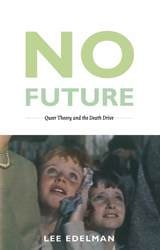
No Future
Queer Theory and the Death DriveLee Edelman
Duke University Press, 2004
Closely engaging with literary texts, Edelman makes a compelling case for imagining Scrooge without Tiny Tim and Silas Marner without little Eppie. Looking to Alfred Hitchcock’s films, he embraces two of the director’s most notorious creations: the sadistic Leonard of North by Northwest, who steps on the hand that holds the couple precariously above the abyss, and the terrifying title figures of The Birds, with their predilection for children. Edelman enlarges the reach of contemporary psychoanalytic theory as he brings it to bear not only on works of literature and film but also on such current political flashpoints as gay marriage and gay parenting. Throwing down the theoretical gauntlet, No Future reimagines queerness with a passion certain to spark an equally impassioned debate among its readers.
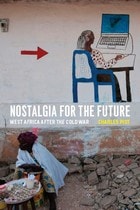
Nostalgia for the Future
West Africa after the Cold WarCharles Piot
University of Chicago Press, 2010
Since the end of the cold war, Africa has seen a dramatic rise in new political and religious phenomena, including an eviscerated privatized state, neoliberal NGOs, Pentecostalism, a resurgence in accusations of witchcraft, a culture of scamming and fraud, and, in some countries, a nearly universal wish to emigrate. Drawing on fieldwork in Togo, Charles Piot suggests that a new biopolitics after state sovereignty is remaking the face of one of the world’s poorest regions.
In a country where playing the U.S. Department of State’s green card lottery is a national pastime and the preponderance of cybercafés and Western Union branches signals a widespread desire to connect to the rest of the world, Nostalgia for the Future makes clear that the cultural and political terrain that underlies postcolonial theory has shifted. In order to map out this new terrain, Piot enters into critical dialogue with a host of important theorists, including Agamben, Hardt and Negri, Deleuze, and Mbembe. The result is a deft interweaving of rich observations of Togolese life with profound insights into the new, globalized world in which that life takes place.
Not in Our Lifetimes
The Future of Black PoliticsMichael C. Dawson
University of Chicago Press, 2011
For all the talk about a new postracial America, the fundamental realities of American racism—and the problems facing black political movements—have not changed. Michael C. Dawson lays out a nuanced analysis of the persistence of racial inequality and structural disadvantages, and the ways that whites and blacks continue to see the same problems—the disastrous response to Katrina being a prime example—through completely different, race-inflected lenses. In fact, argues Dawson, the new era heralded by Barack Obama’s election is more racially complicated, as the widening class gap among African Americans and the hot-button issue of immigration have the potential to create new fissures for conservative and race-based exploitation. Through a thoughtful analysis of the rise of the Tea Party and the largely successful “blackening” of President Obama, Dawson ultimately argues that black politics remains weak—and that achieving the dream of racial and economic equality will require the sort of coalition-building and reaching across racial divides that have always marked successful political movements.
Polemical but astute, passionate but pragmatic, Not in Our Lifetimes forces us to rethink easy assumptions about racial progress—and begin the hard work of creating real, lasting change.