Results by title
71 books match the query 'Historical Events' and 2 start with n
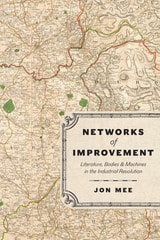
Networks of Improvement
Literature, Bodies, and Machines in the Industrial RevolutionJon Mee
University of Chicago Press, 2023
Working against the stubbornly persistent image of “dark satanic mills,” in many ways so characteristic of literary Romanticism, Jon Mee provides a fresh, revisionary account of the Industrial Revolution as a story of unintended consequences. In Networks of Improvement, Mee reads a wide range of texts—economic, medical, and more conventionally “literary”—with a focus on their circulation through networks and institutions. Mee shows how a project of enlightened liberal reform articulated in Britain’s emerging manufacturing towns led to unexpectedly coercive forms of machine productivity, a pattern that might be seen repeating in the digital technologies of our own time. Instead of treating the Industrial Revolution as Romanticism’s “other,” Mee shows how writing, practices, and institutions emanating from these industrial towns developed a new kind of knowledge economy, one where local literary and philosophical societies served as important transmission hubs for the circulation of knowledge.
Notorious Facts
Publicity in Romantic England, 1780–1830James Mulvihill
University of Delaware Press, 2012
Notorious Facts examines the sensationalistic confounding of persons and principles in the public life of Romantic England (1780–1830). Its purview is limited to five decades straddling the late eighteenth and early nineteenth centuries, but its trajectory, moving from a politics rendered in personal terms to a politics of personality, describes a shift still in process today. The study’s chapters draw on a motley body of literature (pamphlets, secret histories, and the like) that at first glance seems uncharacteristic of what literary historians call the English Romantic period. Viewed in the context of something called late Georgian England, these texts seem more indigenous, but if the canonical revisionism of the last few decades should teach us anything, it is that a Romanticism encompassing all romanticisms ideally excludes nothing.
In its heroic Enlightenment sense, publicity is concerned with exposing the workings of power for all to see. A good deal may be inferred about publicity in Romantic England from primary texts in which this salutary function is at once espoused and subverted. These texts—the mostly nameless or pseudonymous authors of the age’s pamphlet literature are the heroes and villains of the piece—almost invariably claim to speak from a disinterested conception of publicity while putting its methods of critical exposure to wholly self-interested purposes. This study examines well-known authors of the period like Jeremy Bentham, Samuel Taylor Coleridge, and William Hazlitt, as well as pamphleteers like John Horne Tooke, Philip Withers, and Nathaniel Jefferys. Other figures include authors of secret history like Thomas Ashe, Mary Anne Clarke, Lewis Goldsmith, and Joseph Haslewood in addition to notorious figures in their own right such as the Prince and Princess of Wales, Mrs. Fitzherbert, and the Reverend Edward Irving. Among the topics treated are treasonous libel, royal scandal, secret history, and celebrity.
Published by University of Delaware Press. Distributed worldwide by Rutgers University Press.