Results by title
28164 books match the query 'History' and 647 start with n

NATIONALIST FERMENT
ORIGINS OF U.S. FOREIGN POLICY, 1789-1812MARIE-JEANNE ROSSIGNOL
The Ohio State University Press, 2003
This book was published in June 1994 by a French publisher and became the winner of the Organization of American Historians foreign language book prize.
The Nationalist Ferment contributes significantly to the renewal of early U.S. diplomatic history. Since the 1980s, a number of diplomatic historians have turned aside from traditional diplomatic issues and sources. They have instead focused on gender, ethnic relationships, culture, and the connections between foreign and domestic policy.
Rossignol argues that in the years 1789–1812 the new nation needed to assert its independence and autonomous character in the face of an unconvinced world. After overcoming initial divisions caused by foreign policy, Americans met this challenge by defining common foreign policy objectives and attitudes, which both legitimized the United States abroad and reinforced national unity at home. This book establishes the constant connections between domestic and international issues during the early national period.
NATO and the UN
A Peculiar RelationshipLawrence S. Kaplan
University of Missouri Press, 2010
In NATO and the UN, Lawrence Kaplan, one of the leading experts on NATO, examines the intimate and often contentious relations between the two and describes how this relationship has changed over the course of two generations. Kaplan documents the many interactions between them throughout their interconnected history, focusing on the major flashpoints where either NATO clashed with UN leadership, the United States and the Soviet Union confronted each other directly, or fissures within the Atlantic alliance were dramatized in UN sessions. He draws on the organizations’ records as well as unpublished files from the National Archives and its counterparts in Britain, France, and Germany to provide the best account yet of working relations between the two organizations. By examining their complex connection with regard to such conflicts as the Balkan wars, Kaplan enhances our understanding of both institutions.
Crisis management has been a source of conflict between the two in the past but has also served as an incentive for collaboration, and Kaplan shows how this peculiar but persistent relationship has functioned. Although the Cold War years are gone, the UN remains the setting where NATO problems have played out, as they have in Iraq during recent decades. And it is to NATO that the UN has turned for military power to face crises in the Balkans, Middle East, and South Asia.
Kaplan stresses the importance of both organizations in the twenty-first century, recognizing their potential to advance global peace and security while showing how their tangled history explains the obstacles that stand in the way. His work offers significant findings that will especially impact our understanding of NATO while filling a sizable gap in our understanding of post-World War II diplomacy.
NEW WOMAN AND THE EMPIRE
Iveta Jusová
The Ohio State University Press, 2005

NEWSPEAK in the 21st Century
David Cromwell and David Edwards
Pluto Press, 2009
Since 2001, Media Lens has encouraged thousands of readers to challenge the filtered and distorted version of the world provided by major newspapers and broadcasters. The media responses, collected in Newspeak, are an exposé of the arrogance and servility to power of our leading journalists and editors, starring Andrew Marr, Alan Rusbridger, Roger Alton, Jon Snow, Jeremy Bowen and even George Monbiot.
Picking up where the highly acclaimed and successful Guardians of Power (2006) left off, Newspeak is packed with forensic media analysis, revealing the lethal bias in "balanced" reporting. Even the "best" UK media -- the Guardian, the Independent, Channel 4 News and the BBC -- turn out to be cheerleaders for government, business and war.
Alongside an A-Z of BBC propaganda and chapters on Iraq and climate change, Newspeak focuses on the demonisation of Iran and Venezuela, the Israel-Palestine conflict, the myth of impartial reporting and the dark art of smearing dissidents.
NFL Football
A History of America's New National PastimeRichard C. Crepeau
University of Illinois Press, 2014
Probing and learned, NFL Football tells an epic American success story peopled by larger-than-life figures and driven by ambition, money, sweat, and dizzying social and technological changes.
NFL Football
A History of America's New National PastimeRichard C. Crepeau
University of Illinois Press, 2020
A multi-billion-dollar entertainment empire, the National Football League is a coast-to-coast obsession that borders on religion and dominates our sports-mad culture. But today's NFL also provides a stage for playing out important issues roiling American society.
The updated and expanded edition of NFL Football observes the league's centennial by following the NFL into the twenty-first century, where off-the-field concerns compete with touchdowns and goal line stands for headlines. Richard Crepeau delves into the history of the league and breaks down the new era with an in-depth look at the controversies and dramas swirling around pro football today:
- Tensions between players and Commissioner Roger Goodell over collusion, drug policies, and revenue;
- The firestorm surrounding Colin Kaepernick and protests of police violence and inequality;
- Andrew Luck and others choosing early retirement over the threat to their long-term health;
- Paul Tagliabue's role in covering up information on concussions;
- The Super Bowl's evolution into a national holiday.

NOMADIC VOICES
CONRAD AND THE SUBJECT OF NARRATIVEBruce Henricksen
University of Illinois Press, 1992
successful study exploring the uncanny features of Conrad's art that respond,
and lend depth, to the concerns of theorists such as Bakhtin and Lyotard."
-- Suresh Raval, University of Arizona
NOTES OF A RED GUARD
Eduard M. Dune. Translated and Edited by Diane P. Koenker and S. A. Smith
University of Illinois Press, 1993
account takes the reader into Red Guard and Red Army units, Moscow factories,
workers' homes, and to the unfamiliar world of feudal Dagestan. Worker-revolutionary
Eduard Dune was seventeen when the Russian revolution began. He joined the Bolshevik
party and fought with the Moscow Red Guard during the October revolution. Notes
of a Red Guard is his candid account of what happened through 1921. This
uncensored account offers a rare glimpse of revolutionary Russia from the perspective
of an educated, skilled worker who became a rank-and-file participant.

NOVEL PROFESSIONS
INTERESTED DISINTEREST AND THE MAKING OF THE VICTORIAN NOVELJennifer Ruth
The Ohio State University Press, 2006
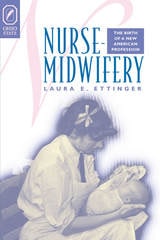
NURSE-MIDWIFERY
THE BIRTH OF A NEW AMERICAN PROFESSIONLaura E. Ettinger
The Ohio State University Press, 2006
Today, nurse-midwives have assumed a larger role in mainstream health care than before, yet they are still marginalized. As in the past, nurse-midwives’ futures will depend on continuing changes in American attitudes about childbirth, health care, and women professionals as well as on their own ability to adapt to the changes. The history of the profession suggests that nurse-midwives will continue to navigate in difficult waters in a middle space between the mainstream and the margins of medicine and between the nursing profession and midwifery traditions.
NURSING AND THE PRIVILEGE OF PRESCRIPTION
1893-2000Arlene W. Keeling
The Ohio State University Press, 2007
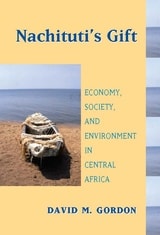
Nachituti's Gift
Economy, Society, and Environment in Central AfricaDavid M. Gordon
University of Wisconsin Press, 2006
Nachituti’s Gift challenges conventional theories of economic development with a compelling comparative case study of inland fisheries in Zambia and Congo from pre- to postcolonial times. Neoclassical development models conjure a simple, abstract progression from wealth held in people to money or commodities; instead, Gordon argues, primary social networks and oral charters like “Nachituti’s Gift” remained decisive long after the rise of intensive trade and market activities. Interweaving oral traditions, songs, and interviews as well as extensive archival research, Gordon’s lively tale is at once a subtle analysis of economic and social transformations, an insightful exercise in environmental history, and a revealing study of comparative politics.
“A powerful portrayal of the complexity, fluidity, and subtlety of Lake Mweru fishers’ production strategies . . . . Natchituti’s Gift adds nuance and evidence to some of the most important and sophisticated conversations going on in African studies today.”—Kirk Arden Hoppe, International Journal of African Historical Studies
“A lively and intelligent book, which offers a solid contribution to ongoing debates about the interplay of the politics of environment, history and economy.”—Joost Fontein, Africa
“Well researched and referenced . . . . [Natchituti’s Gift] will be of interest to those in a wide variety of disciplines including anthropology, African Studies, history, geography, and environmental studies.”—Heidi G. Frontani, H-SAfrica

Nagara and Commandery
Origins of the Southeast Asian Urban TraditionsPaul Wheatley
University of Chicago Press, 1983
Nahua Horizons
Writing, Persuasion, and Futurities in Colonial MexicoEzekiel G. Stear
University of Arizona Press, 2025
Nahua Horizons: Writing, Persuasion, and Futurities in Colonial Mexico investigates how Nahuas conceptualized their futures in the early colonial period. Scholar Ezekiel G. Stear delves deeply into canonical texts such as the Florentine Codex and the Crónica mexicayotl as well as understudied texts such as the Lienzo de Quauhquechollan, the Tira de Tepechpan, and the Anales de Juan Bautista. The study does more than describe how Nahuas conceived of their own futures: it also shows their specific plans for moving into the coming years.
The book examines how Nahua writers in Central Mexico and other Mesoamerican voices in colonial Spanish America played an active, decisive role in shaping culture, using writing to persuade their communities to mold their own destinies, even amid colonial upheaval. This work opens up new directions for research and teaching, shifting inquiry from how Nahuas preserved cultural continuity to how they envisioned their roles as pathfinders toward times to come.
Nahua Horizons challenges the notion that the Spanish erased Nahua culture. The book emphasizes the ways people kept sovereignty over the futures they envisioned for themselves and their communities. Stear’s bold new approach follows the paths that Nahuas forged ahead into unknown times.
Nahum Goldman
His Missions to the GentileRaphael Patai
University of Alabama Press, 1980
Nahum Goldmann (1895-1982) was a major Zionist figure for the last half-century and the chief architect of the pact pledging West Germany to pay reparations to Israel and to individual Jews for acts committed during the Nazi regime. He was co-founder of the Eschkol Publishing House in Berlin and was co-publisher of the Encyclopedia Judaica, the only major Jewish encyclopedia published in Germany.
Patai’s study is the first to explore this brilliant, often irritating, and enormously successful Jewish politician and diplomat. Goldmann represented no government, yet he effected important international change. The book discusses Goldmann’s involvement with the partition controversy which led to the establishment of Israel, West German reparation payments amounting to over $36 billion, and a series of attempts to meet with Egyptian President Nasser in hopes of bringing peace to the Middle East.
Naija Marxisms
Revolutionary Thought in NigeriaAdam Mayer
Pluto Press, 2016

Nails in the Wall
Catholic Nuns in Reformation GermanyAmy Leonard
University of Chicago Press, 2005
Focusing primarily on a group of Dominican nuns in Strasbourg, Germany, Amy Leonard's Nails in the Wall outlines the century-long battle between these nuns and the Protestant city council. With savvy strategies that employed charm, wealth, and political and social connections, the nuns were able to sustain their Catholic practices. Leonard's in-depth archival research uncovers letters about and records of the nuns' struggle to maintain their religious beliefs and way of life in the face of Protestant reforms. She tells the story of how they worked privately to keep Catholicism alive-continuing to pray in Latin, smuggling in priests to celebrate Mass, and secretly professing scores of novices to ensure the continued survival of their convents. This fascinating and heartening study shows that, far from passively allowing the Protestants to dismantle their belief system, the women of the Strasbourg convents were active participants in the battle over their vocation and independence.
Naked Agency
Genital Cursing and Biopolitics in AfricaNaminata Diabate
Duke University Press, 2020
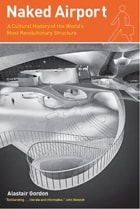
Naked Airport
A Cultural History of the World's Most Revolutionary StructureAlastair Gordon
University of Chicago Press, 2008
From global politics to action movies to the daily commute, Gordon shows how the airport has changed our sense of time, distance, and style, and ultimately the way cities are built and business is done. He introduces the people who shaped and were shaped by this place of sudden transition: pilots like Charles Lindbergh, architects like Le Corbusier, and political figures like Fiorello LaGuardia and Adolf Hitler. Naked Airport is a profoundly original history of a long-neglected yet central component of modern life.
“This charming history documents why airports have always been such intriguing places. Gordon wittily deconstructs air terminal architecture. . . . Here is a book with more than enough quirky details to last a long layover.”—People
“[A] splendid cultural history.”—Atlantic Monthly
“Gordon, an architecture and design critic, tells his story well, bringing to life some of the main characters and highlighting some of the important issues concerning urbanism and airports.”—Michael Roth, San Francisco Chronicle
“Gordon provides a truly compelling account of how airports had over the course of three-quarters of a century become the locus of not only modern dreams but postmodern nightmares as well. Don’t leave home without it.”—Terence Riley, director of the Miami Art Museum
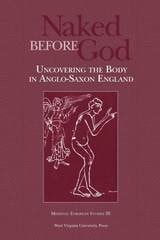
Naked Before God
Uncovering the Body in Anglo-Saxon EnglandBENJAMIN C. WITHERS
West Virginia University Press, 2003
At different times and in different places, the human form has been regarded in different ways. The Ancient Greeks thought it was the most admirable subject for art, whereas early Christians often viewed it as lascivious in our post-lapsarian state. With illustrations taken from manuscripts, statuary and literary, this is a fascinating collection of essays with much that will be new to scholars and general readers alike.
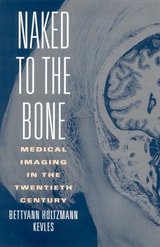
Naked to the Bone
Medical Imaging in the Twentieth CenturyKevles, Bettyann Holtzman
Rutgers University Press, 1996
X-rays, fluoroscopy, ultrasound, CT, MRI, and PET scans--medical imaging has become a familiar part of modern health care today. A century ago, however, the idea of looking inside the living body seemed absurd. Wilhelm Roentgen's X-ray image of his wife's shadowy hand--with her wedding band "floating" around a white bone--convinced doctors to rush the new tool into use for diagnosis and treatment.
By the 1920s, the technology was a commonplace wonder: army recruits had routinely lined up for chest X-rays during World War I, and children delighted in seeing the bones of their feet in the green glow of shoestore fluoroscopes. By the late 1960s, the computer and television were linked to produce medical images that were as startling as Roentgen's original X-rays. Computerized tomography (CT) and magnetic resonance imaging (MR) made it possible to picture soft tissues invisible to ordinary X-rays. Ultrasound allowed expectant parents to see their unborn children. Positron emission tomography (PET) enabled neuroscientists to map the brain.
In this lively history of medical imaging, the first to cover the full scope of the field from X-rays to MR-assistant surgery, Bettyann Kevles explores the consequences of these developments for medicine and society. Through lucid prose, vivid anecdotes, and more than seventy striking illustrations, she shows how medical imaging has transformed the practice of medicine--from pediatrics to dentistry, neurosurgery to geriatrics, gynecology to oncology.
Despite their formidable power to reveal the inner secrets of the body, no form of medical imaging can claim to be the product of a technological imperative. As Kevles points out, few of these costly inventions made it easily to the marketplace, and all are vulnerable to the changing economics of the health-care system. In the early years of X-rays, many doctors, technicians, and patients died from overexposure to the invisible radiation. Although we may still find delayed repercussions from these newer technologies, a different kind of danger may lie in our conviction that an early diagnosis is equivalent to a cure.
Beyond medicine, Kevles describes how X-rays and the newer technologies have become part of the texture of modern life and culture. They helped undermine Victorian sexual sensibilities, gave courts new forensic tools, provided plots for novels and movies, and offered artists from Picasso to Warhol new ways to depict the human form.
Naked to the Bone offers readers an unparalled picture of a key technology of the twentieth century.
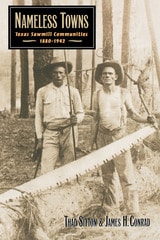
Nameless Towns
Texas Sawmill Communities, 1880-1942By Thad Sitton and James H. Conrad
University of Texas Press, 1998
Winner, T. H. Fehrenbach Award, Texas Historical Commission
Sawmill communities were once the thriving centers of East Texas life. Many sprang up almost overnight in a pine forest clearing, and many disappeared just as quickly after the company "cut out" its last trees. But during their heyday, these company towns made Texas the nation's third-largest lumber producer and created a colorful way of life that lingers in the memories of the remaining former residents and their children and grandchildren.
Drawing on oral history, company records, and other archival sources, Sitton and Conrad recreate the lifeways of the sawmill communities. They describe the companies that ran the mills and the different kinds of jobs involved in logging and milling. They depict the usually rough-hewn towns, with their central mill, unpainted houses, company store, and schools, churches, and community centers. And they characterize the lives of the people, from the hard, awesomely dangerous mill work to the dances, picnics, and other recreations that offered welcome diversions.
Names Of History
On the Poetics of KnowledgeJacques Ranciere
University of Minnesota Press, 1994
Names and Substance in the Australian Subsection System
C. G. von Brandenstein
University of Chicago Press, 1982
Though the author has restricted the results of his research to Aboriginal Australia, his methodological approach is generalizable. Hence this work will be of importance to specialists in many areas.

Namibia Under South African Rule
Mobility and Containment, 1915–46Patricia Hayes
Ohio University Press, 1998
The peoples of Namibia have been on the move throughout history. The South Africans in 1915 took over from the Germans in trying to fit Namibia into a colonial landscape. This book is about the clashes and stresses which resulted from the first three decades of South African colonial rule.
Namibia under South African Rule is a major contribution to Namibian historiography, exploring, in particular, many new themes in twentieth-century Namibian history. Here is exciting new work from a host of scholars and writers on a heretofore under-researched subject.
Namibia’s Liberation Struggle
The Two-Edged SwordColin Leys
Ohio University Press, 1994
It took twenty-three years of armed struggle before Namibia could gain its independence from South Africa in March 1990. Swapo’s victory was remarkable in the face of an overwhelmingly superior enemy. How this came about, and at what cost, is the subject of this outstanding study that is based on unpublished documents and extensive interviews with a large range of the key activists in the struggle.
The story that emerges is one of endurance and heroism in face of atrocious brutality on the part of the colonialists. But it reveals that it was also one of painful compromises imposed by the conditions of the struggle and the subordination of internal democracy within the liberation movement to the single goal of military and diplomatic victory.
The study will be of keen interest to everyone concerned with southern Africa. Students of armed liberation struggle generally will find much to challenge received wisdom. The sheer human interest of the interviews makes the book attractive to a wide readership.
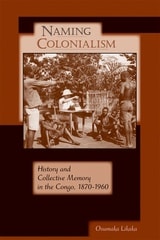
Naming Colonialism
History and Collective Memory in the Congo, 1870–1960Osumaka Likaka
University of Wisconsin Press, 2009
Methodologically innovative, Naming Colonialism advances a new approach that shows how a cultural process—the naming of Europeans—can provide a point of entry into economic and social histories. Drawing on archival documents and oral interviews, Likaka encounters and analyzes a welter of coded fragments. The vivid epithets Congolese gave to rubber company agents—“the home burner,” “Leopard,” “Beat, beat,” “The hippopotamus-hide whip”—clearly conveyed the violence that underpinned colonial extractive economies. Other names were subtler, hinting at derogatory meaning by way of riddles, metaphors, or symbols to which the Europeans were oblivious. Africans thus emerge from this study as autonomous actors whose capacity to observe, categorize, and evaluate reverses our usual optic, providing a critical window on Central African colonialism in its local and regional dimensions.
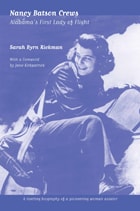
Nancy Batson Crews
Alabama's First Lady of FlightSarah Byrn Rickman
University of Alabama Press, 2009
This is the story of an uncommon woman--high school cheerleader, campus queen, airplane pilot, wife, mother, politician, business-woman--who epitomizes the struggles and freedoms of women in 20th-century America, as they first began to believe they could live full lives and demanded to do so. World War II offered women the opportunity to contribute to the work of the country, and Nancy Batson Crews was one woman who made the most of her privileged beginnings and youthful talents and opportunities.
In love with flying from the time she first saw Charles Lindbergh in Birmingham, (October 1927), Crews began her aviation career in 1939 as one of only five young women chosen for Civilian Pilot Training at the University of Alabama. Later, Crews became the 20th woman of 28 to qualify as an "Original" Women's Auxiliary Ferrying Squadron (WAFS) pilot, employed during World War II shuttling P-38, P-47, and P-51 high-performance aircrafts from factory to staging areas and to and from maintenance and training sites. Before the war was over, 1,102 American women would qualify to fly Army airplanes. Many of these female pilots were forced out of aviation after the war as males returning from combat theater assignments took over their roles. But Crews continued to fly, from gliders to turbojets to J-3 Cubs, in a postwar career that began in California and then resumed in Alabama.
The author was a freelance journalist looking to write about the WASP (Women Airforce Service Pilots) when she met an elderly, but still vital, Nancy Batson Crews. The former aviatrix held a reunion of the surviving nine WAFS for an interview with them and Crews, recording hours of her own testimony and remembrance before Crews's death from cancer in 2001. After helping lead the fight in the '70s for WASP to win veteran status, it was fitting that Nancy Batson Crews was buried with full military honors.
Nancy Drew and Company
Culture, Gender, and Girls’ SeriesEdited by Sherrie A. Inness
University of Wisconsin Press, 1997

Napoleonic Friendship
Military Fraternity, Intimacy, and Sexuality in Nineteenth-Century FranceBrian Joseph Martin
University of New Hampshire Press, 2011
Winner of the Laurence Wylie Prize in French Cultural Studies
One of the first books on “Gays in the Military” published following the historic repeal of “Don't Ask Don't Tell” in 2011, Napoleonic Friendship examines the history of male intimacy in the French military, from Napoleon to the First World War. Echoing the historical record of gay soldiers in the United States, Napoleonic Friendship is the first book-length study on the origin of queer soldiers in modern France. Based on extensive archival research in France, the book traces the development of affectionate friendships in the French Army from 1789 to 1916.
Following the French Revolution, radical military reforms created conditions for new physical and emotional intimacy between soldiers, establishing a model of fraternal affection during the Revolutionary and Napoleonic Wars that would persist amid the ravages of the Franco-Prussian War and World War I. Through readings of Napoleonic military memoirs (and other non-fiction archival material) and French military fiction (from Hugo and Balzac to Zola and Proust), Martin examines a broad range of emotional and erotic relationships, from combat buddies to soldier lovers. He argues that the French Revolution's emphasis on military fraternity evolved into an unprecedented sense of camaraderie in the armies of Napoleon. For many soldiers, the hardships of combat led to intimate friendships. For some, the homosociality of military life inspired mutual affection, lifelong commitment, and homoerotic desire.
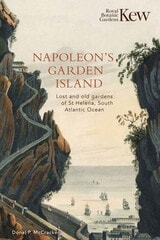
Napoleon’s Garden Island
Lost and Old Gardens of St Helena, South Atlantic OceanDonal P. McCracken
Royal Botanic Gardens, Kew, 2022
Though the South Atlantic island of St. Helena is best known as the site of Napoleon’s exile following his final defeat in 1815, this remote locale also has a rich gardening heritage and a population of highly diverse flora, both exotic and endemic. This is due to St. Helena’s history as a stopover for the vast East India Company fleets on their way to Europe, whose cargo holds carried not only spices but also plants from China, Malaysia, and India. As a result, St. Helena became a botanical hub and the island’s private plantation houses cultivated a number of extraordinarily varied gardens.
Illustrated throughout with drawings, maps, and archival materials, Napoleon’s Garden Island looks to St. Helena’s past and future alike. McCracken explores the island’s native and introduced flora, ultimately appealing for the establishment of a new permanent garden to showcase this singular botanical blend. Turning away from the military matters that characterize most other books about St. Helena’s history, Napoleon’s Garden Island highights how a dazzling assortment of plants have thrived thousands of miles from their nearest neighbors.
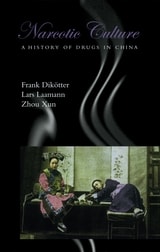
Narcotic Culture
A History of Drugs in ChinaFrank Dikötter, Lars Laamann, and Zhou Xun
University of Chicago Press, 2004
In a stunning historical reversal, Frank Dikötter, Lars Laamann, and Zhou Xun tell this different story of the relationship between opium and the Chinese. They reveal that opium actually had few harmful effects on either health or longevity; in fact, it was prepared and appreciated in highly complex rituals with inbuilt constraints preventing excessive use. Opium was even used as a medicinal panacea in China before the availability of aspirin and penicillin. But as a result of the British effort to eradicate opium, the Chinese turned from the relatively benign use of that drug to heroin, morphine, cocaine, and countless other psychoactive substances. Narcotic Culture provides abundant evidence that the transition from a tolerated opium culture to a system of prohibition produced a "cure" that was far worse than the disease.
Delving into a history of drugs and their abuses, Narcotic Culture is part revisionist history of imperial and twentieth-century Britain and part sobering portrait of the dangers of prohibition.
Narrating Jane
Telling the Story of an Early African American Mormon WomanQuincy D. Newell
Utah State University Press, 2016
In volume 21 of the Arrington Lecture Series, Quincy Newell studies the life of Jane Elizabeth Manning James, an African American, born in 1822, who converted to Mormonism in 1843. The narrative of Jane's life has to date been told in versions that favored official LDS positions on race and gender at the time of their telling. Newell's study here brings contemporary historical scholarship and critical distance to bear on the facts and the meanings of Jane M. James's experience.
The Arrington Lecture series, established by one of the twentieth-century West's most distinguished historians, Leonard Arrington, has become a leading forum for prominent historians to address topics related to Mormon history. Utah State University hosts the Leonard J. Arrington Mormon History Lecture Series through the Merrill-Cazier Library Special Collections and Archives department.
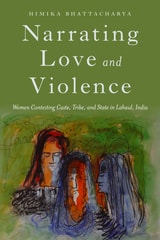
Narrating Love and Violence
Women Contesting Caste, Tribe, and State in Lahaul, IndiaBhattacharya, Himika
Rutgers University Press, 2017
The women in this book tell their stories through love, articulated as rejection, redefinition and reproduction of notions of violence and solidarity. Himika Bhattacharya centers the women’s narratives as a site of knowledge—beyond love and beyond violence. This book shows how women on the margins of tribe and caste know both, love and violence, as agents wishing to re-shape discourses of caste, tribe and community.
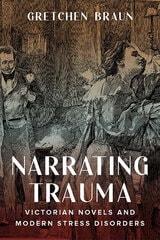
Narrating Trauma
Victorian Novels and Modern Stress DisordersGretchen Braun
The Ohio State University Press, 2022
Narrating the Past
Fiction and Historiography in Postwar SpainDavid K. Herzberger
Duke University Press, 1995
The narrative and rhetorical strategies of historical discourse figure in both the fiction and historiography of postwar Spain. Herzberger analyzes these strategies, identifying the structures and vocabularies they use to frame the past and endow it with particular meanings. He shows how Francoist historians sought to affirm the historical necessity of Franco by linking the regime to a heroic and Christian past, while several types of postwar fiction—such as social realism, the novel of memory, and postmodern novels—created a voice of opposition to this practice. Focusing on the concept of writing history that these opposing strategies convey, Herzberger discloses the layering of truth and meaning that lies at the heart of postwar Spanish narrative from the early 1940s to the fall of Franco. His study clearly reveals how the novel in postwar Spain became a crucial form of dissent from the past as it was conceived and used by the State.
Making a decisive intervention in the debate about the ways in which narration determines both the meaning and truth of history and fiction, Narrating the Past will be of special interest to students and scholars of the politics, history, and literature of twentieth-century Spain.
Narrative Middles
Navigating the Nineteenth-Century NovelEdited by Caroline Levine and Mario Ortiz-Robles
The Ohio State University Press, 2011
Narrative theorists have lavished attention on beginnings and endings, but they have too often neglected the middle of narratives. In this groundbreaking collection of essays, Narrative Middles: Navigating the Nineteenth-Century British Novel, nine literary scholars offer innovative approaches to the study of the underrepresented middle of the vast, bulky nineteenth-century multiplot novel. Combining rigorous formal analysis with established sociohistorical methods, these essays seek to account for the various ways in which the novel gave shape to British culture’s powerful obsession with middles. The capacious middle of the nineteenth-century novel provides ample room for intricately woven plots and the development of complex character systems, but it also becomes a medium for capturing, consecrating, and cultivating the middle class and its middling, middlebrow tastes as well as its mediating global role in empire. Narrative Middles explores these fascinating conjunctions in new readings of novels by Jane Austen, William Makepeace Thackeray, Anne Brontë, George Eliot, Charles Dickens, Wilkie Collins, Henry James, and William Morris. Contributors: Amanda Claybaugh, Suzanne Daly, Amanpal Garcha, Amy King, Caroline Levine, Mario Ortiz-Robles, Kent Puckett, Hilary Schor, and Alex Woloch.
Narrative Mourning
Death and Its Relics in the Eighteenth-Century British NovelKathleen M. Oliver
Bucknell University Press, 2020
Published by Bucknell University Press. Distributed worldwide by Rutgers University Press.
Narrative Podcasting in an Age of Obsession
Neil Verma
University of Michigan Press, 2024
Narrative Podcasting in an Age of Obsession is the first book to look back on this prodigious body of material and attempt to make sense of it from a structural, historical, and analytic point of view. Focusing on more than 350 podcasts and other audio works released between Serial and the COVID pandemic, the book explores why so many of these podcasts seem “obsessed with obsession,” why they focus not only on informing listeners but also dramatizing the labor that goes into it, and why fiction podcasts work so hard to prove they are a brand new form, even as they revive features of radio from decades gone by. This work also examines the industry's reckoning with its own implication in systemic racism, misogyny, and other forms of discrimination. Employing innovative new critical techniques for close listening—including pitch tracking software and spectrograms—Narrative Podcasting in an Age of Obsession makes a major contribution to podcast studies and media studies more broadly.
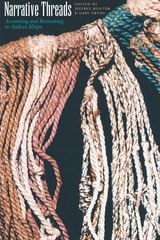
Narrative Threads
Accounting and Recounting in Andean KhipuEdited by Jeffrey Quilter and Gary Urton
University of Texas Press, 2002
The Inka Empire stretched over much of the length and breadth of the South American Andes, encompassed elaborately planned cities linked by a complex network of roads and messengers, and created astonishing works of architecture and artistry and a compelling mythology—all without the aid of a graphic writing system. Instead, the Inkas' records consisted of devices made of knotted and dyed strings—called khipu—on which they recorded information pertaining to the organization and history of their empire. Despite more than a century of research on these remarkable devices, the khipu remain largely undeciphered.
In this benchmark book, twelve international scholars tackle the most vexed question in khipu studies: how did the Inkas record and transmit narrative records by means of knotted strings? The authors approach the problem from a variety of angles. Several essays mine Spanish colonial sources for details about the kinds of narrative encoded in the khipu. Others look at the uses to which khipu were put before and after the Conquest, as well as their current use in some contemporary Andean communities. Still others analyze the formal characteristics of khipu and seek to explain how they encode various kinds of numerical and narrative data.
Narrative of the Incas
By Juan de Betanzos
University of Texas Press, 1996
One of the earliest chronicles of the Inca empire was written in the 1550s by Juan de Betanzos. Although scholars have long known of this work, only eighteen chapters were actually available until the 1980s when the remaining sixty-four chapters were discovered in the collection of the Fundación Bartolomé March in Palma de Mallorca, Spain.
Narrative of the Incas presents the first complete English translation of the original manuscript of this key document. Although written by a Spaniard, it presents an authentic Inca worldview, drawn from the personal experiences and oral traditions told to Betanzos by his Inca wife, Doña Angelina, and other members of her aristocratic family who lived during the reigns of the last Inca rulers, Huayna Capac Huascar and Atahualpa. Betanzos wrote a history of the Inca empire that focuses on the major rulers and the contributions each one made to the growth of the empire and of Inca culture.
Filled with new insights into Inca politics, marriage, laws, the calendar, warfare, and other matters, Narrative of the Incas is essential reading for everyone interested in this ancient civilization.
Narrative of the Persecutions of Agnes Beaumont
Vera J. Camden
Michigan State University Press, 2002
This is a critical edition, based on the Agnes Beaumont manuscripts in the British Library: Beaumont's homely account of the persecutions she endured from her father and suitor because of riding horseback behind the great preacher to a meeting is here presented in its original form. She rejects the traditional doctrine of women's subordination.
Narratives Unbound
Historical studies in post-communist Eastern EuropePéter Apor
Central European University Press, 2007
Narratives of (Dis)Enfranchisement
Reckoning with the History of Libraries and the Black and African American ExperienceTracey Overbey and Amanda L. Folk
American Library Association, 2022
Still a predominantly white profession, librarianship has a legacy of racial discrimination, and it is essential that we face the ways that race impacts how we meet the needs of diverse user communities. Identifying and acknowledging implicit and learned bias is a necessary step toward transforming not only our professional practice but also our scholarship, assessment, and evaluation practices. From this Special Report, readers will
- learn the hidden history of Africa’s contributions to libraries and educational institutions, which are often omitted from K-12, higher education, and library school curricula;
- engage with the racist legacies of libraries as well as contemporary scholarship related to Black and African American users’ experiences with libraries;
- be introduced to frameworks and theories that can help to identify and unpack the role of race in librarianship and in library users’ experiences; and
- garner practical takeaways to bring to their own views and practice of librarianship.
Narratives of Adversity
Jesuits on the Eastern Peripheries of the Habsburg Realms (1640–1773)Paul J. Shore
Central European University Press, 2012
Narratives of Exile and Identity
Soviet Deportation Memoirs from the Baltic StatesTomas Balkelis
Central European University Press, 2018
Narratives of Greater Mexico
Essays on Chicano Literary History, Genre, and BordersBy Héctor Calderón
University of Texas Press, 2005
Once relegated to the borders of literature—neither Mexican nor truly American—Chicana/o writers have always been in the vanguard of change, articulating the multicultural ethnicities, shifting identities, border realities, and even postmodern anxieties and hostilities that already characterize the twenty-first century. Indeed, it is Chicana/o writers' very in-between-ness that makes them authentic spokespersons for an America that is becoming increasingly Mexican/Latin American and for a Mexico that is ever more Americanized.
In this pioneering study, Héctor Calderón looks at seven Chicana and Chicano writers whose narratives constitute what he terms an American Mexican literature. Drawing on the concept of "Greater Mexican" culture first articulated by Américo Paredes, Calderón explores how the works of Paredes, Rudolfo Anaya, Tomás Rivera, Oscar Zeta Acosta, Cherríe Moraga, Rolando Hinojosa, and Sandra Cisneros derive from Mexican literary traditions and genres that reach all the way back to the colonial era. His readings cover a wide span of time (1892-2001), from the invention of the Spanish Southwest in the nineteenth century to the América Mexicana that is currently emerging on both sides of the border. In addition to his own readings of the works, Calderón also includes the writers' perspectives on their place in American/Mexican literature through excerpts from their personal papers and interviews, correspondence, and e-mail exchanges he conducted with most of them.
Narratives of Low Countries History and Culture
Reframing the PastEdited by Jane Fenoulhet and Lesley Gilbert
University College London, 2016
Narratives of Persistence
Indigenous Negotiations of Colonialism in Alta and Baja CaliforniaLee M. Panich
University of Arizona Press, 2020
The Ohlone of the San Francisco Bay area and the Paipai of northern Baja California occupy opposite ends of the spectrum of Native Californian identities. Or so it would appear. While the Ohlone lack popular recognition and official acknowledgement from the United States government, the Paipai occupy a large reserve and celebrate their ongoing cultural traditions throughout Baja California and southern California. Yet the two groups share a similar colonial history: entanglements with early European explorers, labor and enculturation at Spanish missions, and sustained interactions with American and Mexican settler colonialism.
Based on fifteen years of archaeological and historical research in the two regions, Narratives of Persistence charts the remarkable persistence of the Ohlone and Paipai alongside a synthesis of Native Californian endurance over the past five centuries. As the case studies demonstrate, Ohlone and Paipai people made intelligent and culturally appropriate choices to cope with the impact of colonialism on their communities, even as they took different pathways to the present day.
Lee M. Panich illustrates how changes in Native identity and practice within these colonial contexts were made to best conduct the groups’ lives within shifting sets of colonial constraints. He draws connections between the events and processes of the deeper past and the way the Ohlone and Paipai today understand their own histories and identities, offering a model for how scholars of Indigenous histories may think about the connections between the past and the present.

Narratives of the American West
Literature and HistoryRichard W. Etulain
University of Nevada Press, 2027
Narratives of the American West: Literature and History brings together Richard W. Etulain’s most resonant work—along with newly written essays—to reveal how history and storytelling have continually shaped each other in the making of the West. Part historiographical memoir, part wide‑ranging critical survey, the collection moves from Etulain’s Basque upbringing in eastern Washington to his lifetime of teaching, editing, and writing, showing how personal experience and intellectual inquiry converge on the page.
In the tradition of Elliott West’s The Essential West, Etulain maps the field’s major interpretive turns, from Frederick Jackson Turner to Earl Pomeroy to West’s“Greater Reconstruction,” and demonstrates how literary craft and historical method inform each other. Along the way, he demythologizes the stories of iconic figures, such as Billy the Kid, Calamity Jane, Chief Joseph, and Sacagawea, tracing how cultural memory evolves across novels, films, and archives.
Featuring new essays on Wallace Stegner and Elliott West, alongside revised classics on western myths, genres, regions, and peoples, this accessible yet rigorous volume invites readers to embrace narratives that are complex and morally engaged. Essential for scholars, students, and curious general readers alike, Narratives of the American West is a compelling guide to how the West has been written and remembered—and why those stories still matter.