112 books match the query 'Immigration' and 2 start with n
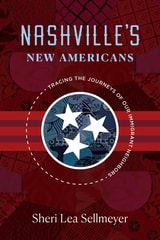
cover of Nashville's New Americans: Tracing the Journeys of Our Immigrant Neighbors

Nashville's New Americans

Tracing the Journeys of Our Immigrant Neighbors

Sheri Lea Sellmeyer

Vanderbilt University Press, 2026

Whether it’s building skyscrapers, running successful restaurants, researching diseases, performing music, cleaning hotel rooms, or holding public office, immigrants are changing Nashville from a mid‑sized city known for its country music industry to an increasingly diverse, multicultural destination. In Metro Nashville schools today, students speak more than 120 languages. The city is bigger, more congested, and more expensive than it’s ever been, drawing criticism from both longtime residents and newcomers. But growth has also brought top‑notch scientists and educators, a world‑class symphony, major league sports teams, investment from major corporations—and a wide range of immigrants whose talent and hard work have helped make all of that happen.

Through its profiles of thirty-nine immigrants from thirty-eight countries in Asia, the Middle East, Africa, Europe, Latin America, and Australia, Nashville’s New Americans provides a case study from one of the fastest-growing cities in the country on the contributions immigrants are making to its culture and economy.
[more]
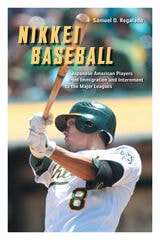
cover of Nikkei Baseball: Japanese American Players from Immigration and Internment to the Major Leagues

Nikkei Baseball

Japanese American Players from Immigration and Internment to the Major Leagues

Samuel Ragalado

University of Illinois Press, 2013

 
Nikkei Baseball examines baseball's evolving importance to the Japanese American community and the construction of Japanese American identity. Originally introduced in Japan in the late 1800s, baseball was played in the United States by Japanese immigrants first in Hawaii, then San Francisco and northern California, then in amateur leagues up and down the Pacific Coast. For Japanese American players, baseball was seen as a sport that encouraged healthy competition by imposing rules and standards of ethical behavior for both players and fans. The value of baseball as exercise and amusement quickly expanded into something even more important, a means for strengthening social ties within Japanese American communities and for linking their aspirations to America's pastimes and America's promise.
 
With World War II came internment and baseball and softball played behind barbed wire. After their release from the camps, Japanese Americans found their reentry to American society beset by anti-Japanese laws, policies, and vigilante violence, but they rebuilt their leagues and played in schools and colleges. Drawing from archival research, prior scholarship, and personal interviews, Samuel O. Regalado explores key historical factors such as Meji-era modernization policies in Japan, American anti-Asian sentiments, internment during World War II, the postwar transition, economic and educational opportunities in the 1960s, the developing concept of a distinct "Asian American" identity, and Japanese Americans' rise to the major leagues with star players including Lenn Sakata and Kurt Suzuki and even managers such as the Seattle Mariners' Don Wakamatsu.

[more]