Results by title
751 books match the query 'International Relations' and 15 start with n

NATIONALIST FERMENT
ORIGINS OF U.S. FOREIGN POLICY, 1789-1812MARIE-JEANNE ROSSIGNOL
The Ohio State University Press, 2003
This book was published in June 1994 by a French publisher and became the winner of the Organization of American Historians foreign language book prize.
The Nationalist Ferment contributes significantly to the renewal of early U.S. diplomatic history. Since the 1980s, a number of diplomatic historians have turned aside from traditional diplomatic issues and sources. They have instead focused on gender, ethnic relationships, culture, and the connections between foreign and domestic policy.
Rossignol argues that in the years 1789–1812 the new nation needed to assert its independence and autonomous character in the face of an unconvinced world. After overcoming initial divisions caused by foreign policy, Americans met this challenge by defining common foreign policy objectives and attitudes, which both legitimized the United States abroad and reinforced national unity at home. This book establishes the constant connections between domestic and international issues during the early national period.

NATO and Germany
A Study in the Sociology of Supranational RelationsStanford Lyman
University of Arkansas Press, 1995
Focusing on the Cold War years, thismonograph examines the processes, problems, and policies through which the Federal Republic of Germany was formed and admitted into the North Atlantic Treaty Organization (NATO). The author compares the situation of Weimar Germany during its short-lived postwar decade with that of the Federal Republic by applying geopolitical concepts and theory, illustrating Germany’s territorial uniqueness and how that special aspect of its place on the European continent in?uenced the nation’s diplomacy in both eras.
During the late 1940s and the 1950s, the problem presented by Germany to the other NATO allies was how to secure and maintain the Federal Republic’s allegiance to the anticommunist alliance without eliminating the country’s desire to be reunited with its Soviet-dominated eastern section. How both NATO and Germany managed to maintain themselves in a state of dynamic equilibrium throughout the era of the Cold War illustrates the concept of international organization called “cooptation,” which Lyman helped to de?ne and expand.
The epilogue explores the larger issues that the case study illuminates: global space, national territorialization, collective identity, and ethnocentrism. Considering the current con?ict in the Balkans as it relates to the new Germany and the role of NATO, this far-reaching book is especially relevant with its suggestions for a basic supranational sociology.

NGOs and Transnational Networks
Wild Cards in World PoliticsWilliam E. DeMars
Pluto Press, 2005
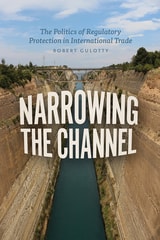
Narrowing the Channel
The Politics of Regulatory Protection in International TradeRobert Gulotty
University of Chicago Press, 2020
Narrowing the Channel demonstrates that globalization and globalized firms can paradoxically hinder rather than foster economic cooperation as larger firms seek to protect their markets through often unnecessarily strict product regulations. To illustrate the problem of regulatory protectionism, Robert Gulotty offers an in-depth analysis of contemporary rulemaking in the United States and the European Union in the areas of health, safety, and environmental standards. He shows how large firms seek regulatory schemes that disproportionately disadvantage small firms. When multinationals are embedded in the local economy, governments too have an incentive to use these regulations to shift profits back home. Today, the key challenge to governing global trade is not how much trade occurs but who is allowed to participate, and this book shows that new rules will be needed to allow governments to widen the benefits of global commerce and avoid further inequality and market concentration.
Nation-Building
A Key Concept For Peaceful Conflict Transformation?Jochen Hippler
Pluto Press, 2005
Currently the international debate on nation-building is heavily dominated by US actors and authors, especially by writers connected to the Bush administration or its policies. This book presents academic and political alternatives, presenting a critical view from 'Old Europe'.
The book combines academic research and analysis with policy orientation, with contributors from both fields. It clarifies the terminology distinguishing developmental, peace-related, imperial and analytical approaches to nation-building. Highlighting its connections to globalisation, democracy, ethnic and religious minorities, the contributors consider case studies such as Somalia, the Balkans, Afghanistan, Iraq, and Nigeria.
Dr. Jochen Hippler, Political Scientist at the University of Duisburg-Essen and its Institute for Development and Peace (INEF), specialises in regional conflicts and interventionism in the Third World, political identities, and the Middle East. He is the former Director of the Transnational Institute in Amsterdam and the author of numerous books and articles including Pax Americana (Pluto Press 1994), The Democratisation of Disempowerment (Pluto Press 1995) and The Next Threat (Pluto Press 1995).

National Deconstruction
Violence, Identity, and Justice in BosniaDavid Campbell
University of Minnesota Press, 1998
What our response to the Bosnian crisis can tell us about multiculturalism in the United States and beyond.
How did Bosnia, once a polity of intersecting and overlapping identities, come to be understood as an intractable ethnic problem? David Campbell pursues this question-and its implications for the politics of community, democracy, justice, and multiculturalism-through readings of media and academic representations of the conflict in Bosnia. National Deconstruction is a rethinking of the meaning of “ethnic/nationalist” violence and a critique of the impoverished discourse of identity politics that crippled the international response to the Bosnian crisis.
Rather than assuming the preexistence of an entity called Bosnia, Campbell considers the complex array of historical, statistical, cartographic, and other practices through which the definitions of Bosnia have come to be. These practices traverse a continuum of political spaces, from the bodies of individuals and the corporate body of the former Yugoslavia to the international bodies of the world community. Among the book’s many original disclosures, arrived at through a critical reading of international diplomacy, is the shared identity politics of the peacemakers and paramilitaries. Equally significant is Campbell’s conclusion that the international response to the Bosnian war was hamstrung by the poverty of Western thought on the politics of heterogeneous communities. Indeed, he contends that Europe and the United States intervened in Bosnia not to save the ideal of multiculturalism abroad but rather to shore up the nationalist imaginary so as to contain the ideal of multiculturalism at home.By bringing to the fore the concern with ethics, politics, and responsibility contained in more traditional accounts of the Bosnian war, this book is a major statement on the inherently ethical and political assumptions of deconstructive thought-and the reworkings of the politics of community it enables.Awarded “Book of the Year 1999” by the International Forum Bosnia (Sarajevo) and the Human Rights Review (USA).ISBN 0-8166-2936-6 Cloth $62.95xxISBN 0-8166-2937-4 Paper $24.95x382 pages 5 7/8 x 9 SeptemberTranslation inquiries: University of Minnesota Press
Neighbors and Strangers
The Fundamentals of Foreign AffairsWilliam R. Polk
University of Chicago Press, 1997
Indeed, going deeper into the human experience, Polk documents "fear of the foreigner" as a visceral response so deep-seated and so pervasive that it transcends human memory, individual experience and even logical analysis. More generally, he shows that the tension created by having to live as neighbors with those who, in the definition of contemporaries, were irredeemably alien has been one of the major causes of the rise of civilizations.
Accessible and engaging, Neighbors and Strangers is a revelatory look at how foreign affairs are a profound reflection of human nature.

Neoliberal Apartheid
Palestine/Israel and South Africa after 1994Andy Clarno
University of Chicago Press, 2017
After a decade of research in the Johannesburg and Jerusalem regions, Andy Clarno presents here a detailed ethnographic study of the precariousness of the poor in Alexandra township, the dynamics of colonization and enclosure in Bethlehem, the growth of fortress suburbs and private security in Johannesburg, and the regime of security coordination between the Israeli military and the Palestinian Authority in the West Bank. The first comparative study of the changes in these two areas since the early 1990s, the book addresses the limitations of liberation in South Africa, highlights the impact of neoliberal restructuring in Palestine, and argues that a new form of neoliberal apartheid has emerged in both contexts.
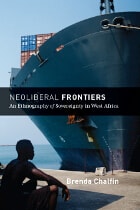
Neoliberal Frontiers
An Ethnography of Sovereignty in West AfricaBrenda Chalfin
University of Chicago Press, 2010
New Ideology of Imperialism
Renewing the Moral ImperativeFrank Furedi
Pluto Press, 1994
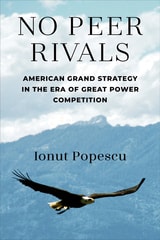
No Peer Rivals
American Grand Strategy in the Era of Great Power CompetitionIonut Popescu
University of Michigan Press, 2025
No Peer Rivals takes a major staple of International Relations scholarship—the offensive realist paradigm—and develops a comprehensive and practical grand strategy for the United States in this new era of Great Power Competition. The No Peer Rival framework is grounded in a realistic assessment of the most likely courses of action adopted by China, Russia, and other important regional powers. It prioritizes great power rivalry over other strategic goals, and identifies China as the biggest threat to America’s unique position in the international system. This grand strategic approach carefully aligns the domestic sources of national power (economic strength, energy security, and technological prowess) to America’s foreign policy and national security objectives. In addition to recommending necessary changes to America’s military and diplomatic strategies, No Peer Rivals also demonstrates that a realistic approach to industrial policy, international trade, energy production, and technological superiority offers the best chance for developing the sinews of power needed to outcompete Beijing in the long run.
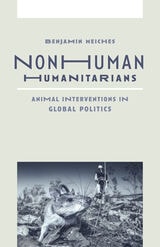
Nonhuman Humanitarians
Animal Interventions in Global PoliticsBenjamin Meiches
University of Minnesota Press, 2023
Examining the appearance of nonhuman animals laboring alongside humans in humanitarian operations
Both critical and mainstream scholarly work on humanitarianism have largely been framed from anthropocentric perspectives highlighting humanity as the rationale for providing care to others. In Nonhuman Humanitarians, Benjamin Meiches explores the role of animals laboring alongside humans in humanitarian operations, generating new ethical possibilities of care in humanitarian practice.
Nonhuman Humanitarians examines how these animals not only improve specific practices of humanitarian aid but have started to transform the basic tenets of humanitarianism. Analyzing case studies of mine-clearance dogs, milk-producing cows and goats, and disease-identifying rats, Nonhuman Humanitarians ultimately argues that nonhuman animal contributions problematize foundational assumptions about the emotional and rational capacities of humanitarian actors as well as the ethical focus on human suffering that defines humanitarianism.
Meiches reveals that by integrating nonhuman animals into humanitarian practice, several humanitarian organizations have effectively demonstrated that care, compassion, and creativity are creaturely rather than human and that responses to suffering and injustice do not—and cannot—stop at the boundaries of the human.
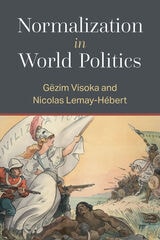
Normalization in World Politics
Gëzim Visoka and Nicolas Lemay-Hébert
University of Michigan Press, 2022
This book traces main discourses and practices associated with normalcy in world politics. Visoka and Lemay-Hébert mostly focus on how dominant states and international organizations try to manage global affairs through imposing normalcy over fragile states, restoring normalcy over disaster-affected states, and accepting normalcy over suppressive states. They show how discourses and practices come together in constituting normalization interventions and how in turn they play in shaping the dynamics of continuity and change in world politics.
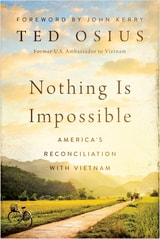
Nothing Is Impossible
America's Reconciliation with VietnamTed Osius
Rutgers University Press, 2022
Ted Osius, former ambassador during the Obama administration, offers a vivid account, starting in the 1990s, of the various forms of diplomacy that made this reconciliation possible. He considers the leaders who put aside past traumas to work on creating a brighter future, including senators John McCain and John Kerry, two Vietnam veterans and ideological opponents who set aside their differences for a greater cause, and Pete Peterson—the former POW who became the first U.S. ambassador to a new Vietnam. Osius also draws upon his own experiences working first-hand with various Vietnamese leaders and traveling the country on bicycle to spotlight the ordinary Vietnamese people who have helped bring about their nation’s extraordinary renaissance.
With a foreword by former Secretary of State John Kerry, Nothing Is Impossible tells an inspiring story of how international diplomacy can create a better world.
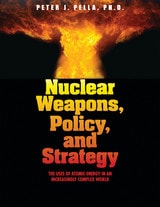
Nuclear Weapons, Policy, and Strategy
The Uses of Atomic Energy in an Increasingly Complex WorldPeter J. Pella
Parkhurst Brothers, Inc., 2010
In this comprehensive introduction to nuclear physics, related national and international policy issues from Dr. Pete Pella, Gettysburg College nuclear physicist, educators will find a definitive textbook on the peaceful and military uses of nuclear energy. Pella traces both the scientific evolution and political history of nuclear power and arms, bringing us to current events including nuclear plant development, status of treaties, U.S.-Russia disarmament efforts, and policing of rogue nations. Must reading for the world’s citizens concerned about these vital issues.