Results by title
328 books match the query 'Islam' and 8 start with n
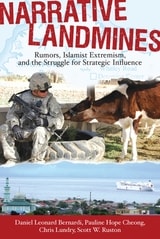
Narrative Landmines
Rumors, Islamist Extremism, and the Struggle for Strategic InfluenceBernardi, Daniel Leonard
Rutgers University Press, 2012
Islamic extremism is the dominant security concern of many contemporary governments, spanning the industrialized West to the developing world. Narrative Landmines explores how rumors fit into and extend narrative systems and ideologies, particularly in the context of terrorism, counter-terrorism, and extremist insurgencies. Its concern is to foster a more sophisticated understanding of how oral and digital cultures work alongside economic, diplomatic, and cultural factors that influence the struggles between states and non-state actors in the proverbial battle of hearts and minds. Beyond face-to-face communication, the authors also address the role of new and social media in the creation and spread of rumors.
As narrative forms, rumors are suitable to a wide range of political expression, from citizens, insurgents, and governments alike, and in places as distinct as Singapore, Iraq, and Indonesia—the case studies presented for analysis. The authors make a compelling argument for understanding rumors in these contexts as “narrative IEDs,” low-cost, low-tech weapons that can successfully counter such elaborate and expansive government initiatives as outreach campaigns or strategic communication efforts. While not exactly the same as the advanced technological systems or Improvised Explosive Devices to which they are metaphorically related, narrative IEDs nevertheless operate as weapons that can aid the extremist cause.
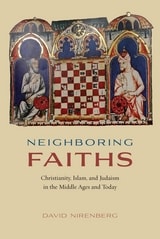
Neighboring Faiths
Christianity, Islam, and Judaism in the Middle Ages and TodayDavid Nirenberg
University of Chicago Press, 2014
There have been countless scripture-based studies of the three “religions of the book,” but Nirenberg goes beyond those to pay close attention to how the three religious neighbors loved, tolerated, massacred, and expelled each other—all in the name of God—in periods and places both long ago and far away. Nirenberg argues that the three religions need to be studied in terms of how each affected the development of the others over time, their proximity of religious and philosophical thought as well as their overlapping geographies, and how the three “neighbors” define—and continue to define—themselves and their place in terms of one another. From dangerous attractions leading to interfaith marriage; to interreligious conflicts leading to segregation, violence, and sometimes extermination; to strategies for bridging the interfaith gap through language, vocabulary, and poetry, Nirenberg aims to understand the intertwined past of the three faiths as a way for their heirs to produce the future—together.
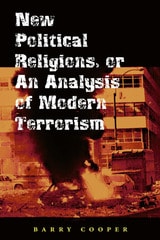
New Political Religions, or an Analysis of Modern Terrorism
Barry Cooper
University of Missouri Press, 2004
In New Political Religions, or an Analysis of Modern Terrorism, Barry Cooper applies the insights of Eric Voegelin to the phenomenon of modern terrorism. Cooper points out that the chief omission from most contemporary studies of terrorism is an analysis of the “spiritual motivation” that is central to the actions of terrorists today. When spiritual elements are discussed in conventional literature, they are grouped under the opaque term religion. A more conceptually adequate approach is provided by Voegelin’s political science and, in particular, by his Schellingian term pneumopathology—a disease of the spirit.
While terrorism has been used throughout the ages as a weapon in political struggles, there is an essential difference between groups who use these tactics for more of less rational political goals and those seeking more apocalyptic ends. Cooper argues that today's terrorists have a spiritual perversity that causes them to place greater significance on killing than on exploiting political grievances. He supports his assertion with an analysis of two groups that share the characteristics of a pneumopathological consciousness—Aum Shinrikyo, the terrorist organization that poisoned thousands of Tokyo subway riders in 1995, and Al-Qaeda, the group behind the infamous 9/11 killings.Cooper applies the Voegelinian terms first reality (a commonsense goal regarding legitimate political grievances) and second reality (a fantastic objective sought by those whose rationality has been obscured) to show the major divide between political and apocalyptic terrorist groups. Osama Bin Laden's "second reality" was the imaginary goal that the 9/11 attack was supposed to achieve, and the commonsense reality was what truly happened (the deaths of nearly 3,000 people and the United States's subsequent military response). Cooper shows how such spiritual perversity enables a human being, imagining himself empowered by God, to go on a campaign of mass destruction.
Cooper concludes with a chapter on the uniqueness of terrorist networks, their limitations, and the means by which they can be dealt with. In the ongoing conversations among specialists in terrorist studies, as well as the ordinary discourse of citizens in western democracies wishing to understand the world around them, this book will add a distinctive voice.
New Thinking in Islam
The Jihad for Democracy, Freedom and Women’s RightsKatajun Amirpur
Gingko, 2015
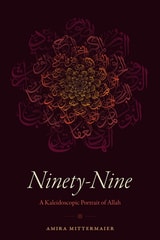
Ninety-Nine
A Kaleidoscopic Portrait of AllahAmira Mittermaier
Duke University Press, 2026
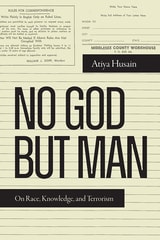
No God but Man
On Race, Knowledge, and TerrorismAtiya Husain
Duke University Press, 2025
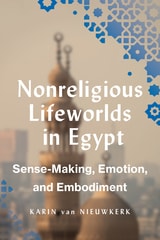
Nonreligious Lifeworlds in Egypt
Sense-Making, Emotion, and EmbodimentKarin van Nieuwkerk
University of Texas Press, 2026
An analysis of the growing visibility of nonreligion in Egypt.
Egypt's 2011 Uprising, while often perceived as a failed revolution, nonetheless nonetheless had durable social effects. Among these has been a rise in expressing atheism and agnosticism, especially among educated and affluent youth—the country’s future leaders.
An intimate ethnography, Nonreligious Lifeworlds in Egypt explores the intellectual and emotional transformations of atheists and agnostics inspired by the aspirational freedom-seeking of the Arab Spring. Rejecting both of Egypt’s dominant religious traditions, Islam and Coptic Christianity, nonreligious people are widely viewed as agents of moral outrage. Amid media-driven panics, their sanity is often questioned by their own families as they experiment with new ways of living and relating. Drawing from in-depth fieldwork, interviews, and social media analysis, Karin van Nieuwkerk reveals her interlocutors’ changing perspectives on sex and gender, eating and drinking, and life and death. Above all, she emphasizes the affective experiences of renouncing religion, marked by anxiety and regret—but also liberation and relief. With rigor and compassion, Van Nieuwkerk opens our minds to the arduous process of exchanging established norms for self-determination.
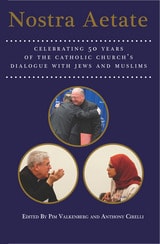
Nostra Aetate
Pim Valkenberg
Catholic University of America Press, 2016