Results by title
356 books match the query 'Jewish Studies' and 5 start with n
Nahum Goldman
His Missions to the GentileRaphael Patai
University of Alabama Press, 1980
Nahum Goldmann (1895-1982) was a major Zionist figure for the last half-century and the chief architect of the pact pledging West Germany to pay reparations to Israel and to individual Jews for acts committed during the Nazi regime. He was co-founder of the Eschkol Publishing House in Berlin and was co-publisher of the Encyclopedia Judaica, the only major Jewish encyclopedia published in Germany.
Patai’s study is the first to explore this brilliant, often irritating, and enormously successful Jewish politician and diplomat. Goldmann represented no government, yet he effected important international change. The book discusses Goldmann’s involvement with the partition controversy which led to the establishment of Israel, West German reparation payments amounting to over $36 billion, and a series of attempts to meet with Egyptian President Nasser in hopes of bringing peace to the Middle East.
Nationalizing a Borderland
War, Ethnicity, and Anti-Jewish Violence in East Galicia, 1914–1920Alexander Victor Prusin
University of Alabama Press, 2005
Nationalizing a Borderland enriches understanding of ethnic conflict by examining the factors in the Austro-Hungarian province of Galicia between 1914 and 1920 that led to the rise of xenophobic nationalism and to the ethnocide of World War II. From Russian, Polish, Ukrainian, and Austrian archival sources, Prusin argues that while the violence inflicted upon Jews during that period may at first seem irrational and indiscriminate, a closer examination reveals that it was generated by traditional antisemitism and by the security concerns of the Russian and Polish militaries in the front zone. This violence, Prusin contends, served as a means of reshaping the socio-economic and political space of the province by diminishing Jewish cultural and economic influence.
New Jewish Identities
András Kovács
Central European University Press, 2003
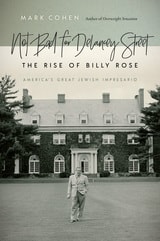
Not Bad for Delancey Street
The Rise of Billy RoseMark Cohen
Brandeis University Press, 2018
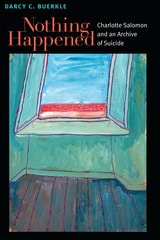
Nothing Happened
Charlotte Salomon and an Archive of SuicideDarcy C. Buerkle
University of Michigan Press, 2013
Charlotte Salomon's (1917-43) fantastical autobiography, Life? or Theater?, consists of 769 sequenced gouache paintings, through which the artist imagined the circumstances of the eight suicides in her family, all but one of them women. But Salomon's focus on suicide was not merely a familial idiosyncrasy. Nothing Happened argues that the social history of early-twentieth-century Germany has elided an important cultural and social phenomenon by not including the story of German Jewish women and suicide. This absence in social history mirrors an even larger gap in the intellectual history of deeply gendered suicide studies that have reproduced the notion of women's suicide as a rarity in history. Nothing Happened is a historiographic intervention that operates in conversation and in tension with contemporary theory about trauma and the reconstruction of emotion in history.