Results by title
92 books match the query 'Judges' and 5 start with n

Nature's Justice
Writings of William O. DouglasJames M. O'Fallon
Oregon State University Press, 2000
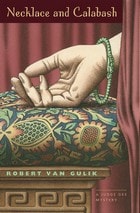
Necklace and Calabash
A Chinese Detective StoryRobert van Gulik
University of Chicago Press, 1967
Necklace and Calabash finds Judge Dee returning to his district of Poo-yang, where the peaceful town of Riverton promises a few days' fishing and relaxation. Yet a chance meeting with a Taoist recluse, a gruesome body fished out of the river, strange guests at the Kingfisher Inn, and a princess in distress thrust the judge into one of the most intricate and baffling mysteries of his career.
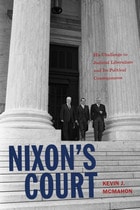
Nixon's Court
His Challenge to Judicial Liberalism and Its Political ConsequencesKevin J. McMahon
University of Chicago Press, 2011
Most analysts have deemed Richard Nixon’s challenge to the judicial liberalism of the Warren Supreme Court a failure—“a counterrevolution that wasn’t.” Nixon’s Court offers an alternative assessment. Kevin J. McMahon reveals a Nixon whose public rhetoric was more conservative than his administration’s actions and whose policy towards the Court was more subtle than previously recognized. Viewing Nixon’s judicial strategy as part political and part legal, McMahon argues that Nixon succeeded substantially on both counts.
Many of the issues dear to social conservatives, such as abortion and school prayer, were not nearly as important to Nixon. Consequently, his nominations for the Supreme Court were chosen primarily to advance his “law and order” and school desegregation agendas—agendas the Court eventually endorsed. But there were also political motivations to Nixon’s approach: he wanted his judicial policy to be conservative enough to attract white southerners and northern white ethnics disgruntled with the Democratic party but not so conservative as to drive away moderates in his own party. In essence, then, he used his criticisms of the Court to speak to members of his “Silent Majority” in hopes of disrupting the long-dominant New Deal Democratic coalition.
For McMahon, Nixon’s judicial strategy succeeded not only in shaping the course of constitutional law in the areas he most desired but also in laying the foundation of an electoral alliance that would dominate presidential politics for a generation.
Noble Purposes
Nine Champions of the Rule of LawNorman Gross
Ohio University Press, 2007
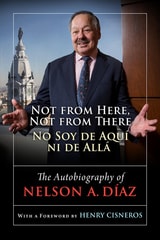
Not from Here, Not from There/No Soy de Aquí ni de Allá
The Autobiography of Nelson DíazNelson A. Díaz
Temple University Press, 2018
Raised in the squalor of a New York tenement until he was 10 years old, Nelson Díaz saw his life change when his family moved to a brand-new high-rise project in West Harlem in the 1950s. That experience, along with lessons learned as the only Latino law student at Temple University, would drive him throughout his life as a lawyer and activist, fighting for the expansion of rights for all Americans.
“No soy de aquí ni de allá” is a mantra for Puerto Ricans who feel like foreigners wherever they are and who seek a place for themselves. In his inspiring autobiography, Not from Here, Not from There, Díaz tells the story of his struggles and triumphs as his perspective widened from the New York streets and law school classrooms to the halls of power in Philadelphia and Washington, DC. Whether as a leader in economic development, a pioneer in court reform, or a champion of fair housing, Díaz has never stopped advocating for others. Díaz was happy to be the first Latino to “do something,” but he never wanted to be the last. This story of an outsider who worked his way to the inside offers powerful lessons on finding a place in the world by creating spaces where everyone is welcome.