301 books match the query 'Knowledge' and 9 start with n
cover of Names Of History: On the Poetics of Knowledge

Names Of History

On the Poetics of Knowledge

Jacques Ranciere

University of Minnesota Press, 1994
[more]
cover of Natural Aristocracy: History, Ideology, and the Production of William Faulkner

Natural Aristocracy

History, Ideology, and the Production of William Faulkner

Kevin Railey

University of Alabama Press, 1999
Kevin Railey uses a materialist critical approach--which envisions literature as a discourse necessarily interactive with other forces in the world--to identify and historicize Faulkner’s authorial identity. Working from the assumption that Faulkner was deeply affected by the sociohistorical forces that surrounded his life, Railey explores the interrelationships between American history and Faulkner’s fiction, between southern history and Faulkner’s subjectivity. Railey argues that Faulkner’s obsession with history and his struggle with specific ideologies affecting southern society and his family guided his development as an artist, influencing and overdetermining characterizations and narrative structures as well as the social vision manifest in his work. By seeing Faulkner the artist and Faulkner the man as one and the same, Railey concludes that the celebrated author wrote himself into history in a way that satisfied the image he had of himself as a natural, artistic aristocrat, based on the notion of natural aristocracy.
 
After examining two prevailing and opposing ideologies in the South of Faulkner’s lifetime--paternalism and liberalism--Railey shows how Faulkner’s working-through of his identifications with these forces helped develop his values and perceptions as an artist and individual. Railey reads Faulkner’s fiction as exploring social concerns about the demise of paternalism, questions of leadership within liberalism, and doubts about both an aristocracy of heritage and one of wealth. This reading of The Sound and the Fury, As I Lay Dying, Sanctuary, Light in August, Absalom, Absalom!, the Snopes trilogy and The Reivers details Faulkner’s explorations of various manifestations of paternalism and liberalism and the intense conflict between them, as well as his attempts to resolve that conflict.
 
Providing new insights into the full range of Faulkner’s fiction, Natural Aristocracy is the first systematic materialist critique of the author and his world.
[more]
cover of Nature and Culture in the Iliad: The Tragedy of Hector

Nature and Culture in the Iliad

The Tragedy of Hector

James M. Redfield

Duke University Press, 1994
By focusing on the story of Hector, James M. Redfield presents an imaginative perspective not only on the Iliad but also on the whole of Homeric culture. In an expansive discussion informed by a reinterpretation of Aristotle's Poetics and a reflection on the human meaning of narrative art, the analysis of Hector leads to an inquiry into the fundamental features of Homeric culture and of culture generally in its relation to nature. Through Hector, as the "true tragic hero of the poem," the events and themes of the Iliad are understood and the function of tragedy within culture is examined. Redfield's work represents a significant application of anthropological perspectives to Homeric poetry. Originally published in 1975 (University of Chicago Press), this revised edition includes a new preface and concluding chapter by the author.
[more]
cover of New Troy: Fantasies Of Empire In The Late Middle Ages

New Troy

Fantasies Of Empire In The Late Middle Ages

Sylvia Federico

University of Minnesota Press, 2003

Examines the political and literary uses of the Trojan legend in the medieval period

England in the late fourteenth century witnessed a large-scale social revolt, a lingering and seemingly hopeless war with France, and fierce factional conflicts in royal politics and London civic government—struggles in which all parties sought to justify their actions by claiming historical precedent. How the Trojan legend figured in these claims—and in competing assertions of authorial legitimacy, nationhood, and rule in the later Middle Ages—is the complex nexus of history, myth, literature, and identity that Sylvia Federico explores in this ambitious book.

During the late medieval period, many European political and social groups took great pains to associate themselves with the ancient city; the claim on Troy, Federico asserts, was crucial to nationhood and was always a political act. Her book examines the poetry and prose of several late medieval authors, focusing particularly on how Chaucer’s use of the Trojan legend helped to set the terms by which the Ricardian and Lancastrian periods were distinguished, and further helped to establish English literary history as a noble precedent in its own right. Federico’s book affords remarkable insight into the workings of the medieval historical imagination.
[more]
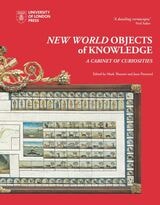
cover of New World Objects of Knowledge: A Cabinet of Curiosities

New World Objects of Knowledge

A Cabinet of Curiosities

Edited by Mark Thurner and Juan Pimentel

University of London Press, 2021

A stunning, richly illustrated hardback cataloging key artifacts from across Latin American art, nature, and history.
 
From the late fifteenth century to the present day, countless explorers, conquerors, and other agents of empire have laid siege to the New World, plundering and pilfering its most precious artifacts and treasures. Today, these natural and cultural products—which are key to conceptualizing a history of Latin America—are scattered in museums around the world.

With contributions from a renowned set of scholars, New World Objects of Knowledge delves into the hidden histories of forty of the New World’s most iconic artifacts, from the Inca mummy to Darwin’s hummingbirds. This volume is richly illustrated with photos and sketches from the archives and museums hosting these objects. Each artifact is accompanied by a comprehensive essay covering its dynamic, often global, history and itinerary. This volume will be an indispensable catalog of New World objects and how they have helped shape our modern world.
[more]
cover of Nietzsche and Asian Thought

Nietzsche and Asian Thought

Edited by Graham Parkes

University of Chicago Press, 1991

Friedrich Nietzsche's work has had a significant impact on the intellectual life of non-Western cultures and elicited responses from important thinkers outside of the Anglo-American philosophical traditions as well. Bringing together thirteen internationally renowned scholars, this is the first collection of essays to address the connection between Nietzsche's ideas and philosphies in India, China, and Japan.

The contributors are Roger T. Ames, Johann Figl, Chen Guying, Michel Hulin, Arifuku Kogaku, David A. Kelly, Glen T. Martin, Sonoda Muneto, Graham Parkes, okochi Ryogi, Eberhard Scheiffele, Mervyn Sprung, and Joan Stambaugh.

"Exemplary. Its comparative approach is incisive yet accessible. I consider it a 'must read'"—Kathleen Marie Higgins, Philosophy East and West

"An excellent introduction to the broad ranging reception of Nietzsche among Asian thinkers."—James R. Watson, Canadian Philosophical Review

"The essays in this welcome collection are invariably thought-provoking and genuinely cross-disciplinary."—Kenneth Surin, Religious Studies Review

"A worthy and undogmatic introduction to several fascinating questions concerning the relations between Nietzschean thought and certain traditions of thought in India, China, and Japan."—Don Miller, Asian Studies Review
[more]
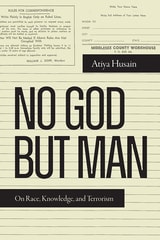
cover of No God but Man: On Race, Knowledge, and Terrorism

No God but Man

On Race, Knowledge, and Terrorism

Atiya Husain

Duke University Press, 2025
Reconceptualizing the relationship between race and Islam in the United States, No God but Man theorizes race as an epistemology using the FBI’s post-9/11 Most Wanted Terrorist list and its posters as its starting point. Atiya Husain traces the origins of the FBI wanted poster form to the work of nineteenth-century social scientist Adolphe Quetelet, specifically his overvalued type of human called “average man.” Husain argues that this notion of the human continues to structure wanted posters, as well as much contemporary social scientific thinking about race. Focusing on the curious representations on the Most Wanted Terrorist list that range from Muslims who lack a race category on their posters to the 2013 addition of Black revolutionary Assata Shakur, Husain demonstrates the ongoing influence of the average man and its relevance even today, proposing a counterweight to the category by engaging Shakur’s turn to Islam in the 1970s in the legal context. In doing so, Husain shows the limitations of race as an analytical category altogether.
[more]
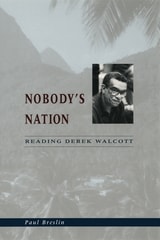
cover of Nobody's Nation: Reading Derek Walcott

Nobody's Nation

Reading Derek Walcott

Paul Breslin

University of Chicago Press, 2001

Nobody's Nation offers an illuminating look at the St. Lucian, Nobel-Prize-winning writer, Derek Walcott, and grounds his work firmly in the context of West Indian history. Paul Breslin argues that Walcott's poems and plays are bound up with an effort to re-imagine West Indian society since its emergence from colonial rule, its ill-fated attempt at political unity, and its subsequent dispersal into tiny nation-states.

According to Breslin, Walcott's work is centrally concerned with the West Indies' imputed absence from history and lack of cohesive national identity or cultural tradition. Walcott sees this lack not as impoverishment but as an open space for creation. In his poems and plays, West Indian history becomes a realm of necessity, something to be confronted, contested, and remade through literature. What is most vexed and inspired in Walcott's work can be traced to this quixotic struggle.
Linking extensive archival research and new interviews with Walcott himself to detailed critical readings of major works, Nobody's Nation will take its place as the definitive study of the poet.
[more]
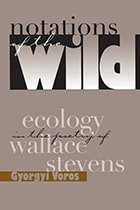
cover of Notations Of The Wild: Ecology Poetry Wallace Stevens

Notations Of The Wild

Ecology Poetry Wallace Stevens

Gyorgyi Voros

University of Iowa Press, 1997

In the summer of 1903, just before he turned twenty-four, Wallace Stevens joined a six-week hunting expedition to the wilderness of British Columbia. The adventure profoundly influenced his conceptions of language and silence, his symbolic geography, and his sensibilities toward wild nature as nonhuman “other.” The rugged western mountains came to represent that promontory of experience—“green's green apogee”—against which Stevens would measure the reality of all his later perceptions and conceptions and by which he would judge the purpose and value of works of the human imagination. Notations of the Wild views his poetry as a radical reimagining of the nature/culture dialectic and a reinstatement of its forgotten term—Nature.

Gyorgyi Voros focuses on three governing metaphors in Stevens' poems—Nature as house, Nature as body, and Nature as self. She argues that Stevens' youthful wilderness experience yielded his primary subject—the relationship between human beings and nonhuman nature—and that it spurred his shift from a romantic to a phenomenological understanding of nature. Most important, it prompted him to reject his culture's narrow humanism in favor of a singular vision that in today's terms would he deemed ecological.
[more]