Results by title
127 books match the query 'Leadership' and 6 start with n

Naval Leadership in the Atlantic World
The Age of Reform and Revolution, 1700–1850Richard Harding and Agustín Guimerá
University of Westminster Press, 2017
The naval leader has taken centre stage in traditional naval histories. However, while the historical narrative has been fairly consistent the development of various navies has been accompanied by assumptions, challenges and competing visions of the social characteristics of naval leaders and of their function. Whilst leadership has been a constant theme in historical studies, it has not been scrutinised as a phenomenon in its own right. This book examines the critical period in Europe between 1700 -1850, when political, economic and cultural shifts were bringing about a new understanding of the individual and of society. Bringing together context with a focus on naval leadership as a phenomenon is at the heart of this book, a unique collaborative venture between British, French and Spanish scholars. As globalisation develops in the twenty-first century the significance of navies looks set to increase. This volume of essays aims to place naval leadership in its historical context.
An electronic version of this book is freely available, thanks to the support of libraries working with Knowledge Unlatched. KU is a collaborative initiative designed to make high quality books Open Access for the public good. The Open Access ISBN for this book is 978-1-911534-76-1. More information about the initiative and details about KU’s Open Access programme can be found at www.knowledgeunlatched.org
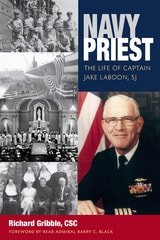
Navy Priest
Richard Gribble
Catholic University of America Press, 2015
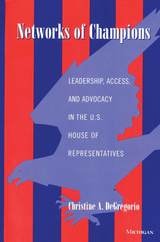
Networks of Champions
Leadership, Access, and Advocacy in the U.S. House of RepresentativesChristine A. DeGregorio
University of Michigan Press, 1999
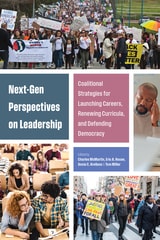
Next-Gen Perspectives on Leadership
Coalitional Strategies for Launching Careers, Renewing Curricula, and Defending DemocracyCharles McMartin
Utah State University Press, 2026
Next-gen faculty are leading now. Through coalition-building, care work, and equity-driven initiatives, they are transforming institutions from the ground up. From labor organizing and culturally responsive curriculum design to the care-work of academic parents and the leadership of writing program administrators, the contributors in this collection model the type of coalitional leadership needed in our institutions. Structured around intergenerational dialogues, the book brings together early-career scholars with mid-career leaders—Jennifer Sano-Franchini, Christina Cedillo, and Staci Perryman-Clark—who offer sharp, reflective responses to each section, and culminates in a powerful closing essay by Carmen Kynard. These voices trace a lineage of resistance and renewal, showing how the leadership strategies of today’s emerging scholars echo and evolve the activist traditions that have long shaped writing studies. Next-gen leaders are moving beyond individualistic models of success and embracing collective, justice-oriented leadership practices. This collection invites scholars to study and teach forms of leadership that help faculty and students step into the challenging opportunities they face.
For graduate students and early-career faculty, this book offers a model of leadership that creates meaningful change outside designated leadership roles or institutional metrics. For mid-career and senior faculty, it provides a framework for recognizing and supporting the ground-level leadership already happening in their contexts. This collection is for anyone committed to leading more inclusive and sustainable academic communities and encourages faculty across generations to reimagine how to mentor, collaborate, and lead in ways that reflect the values of equity, care, and coalition.
Contributors: Felicita Arzu-Carmichael, Amerdeep Bajwa, Christina Cedillo, Alexandra Chapa, Anicca Cox, Tom Do, Mena Hannakachl, Alice Hays, Charisse Iglesias, Brad Jacobson, Carmen Kynard, Adele Leon, Shaylyn Marks, Sean Moxley-Kelly, Abigail Oakley, Staci Perryman-Clark, Ana Milena Ribero, Jennifer Sano-Franchini
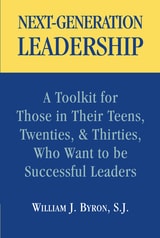
Next-Generation Leadership
A Toolkit for Those in Their Teens, Twenties, & Thirties, Who Want to be Successful LeadersWilliam J. Byron
University of Scranton Press, 2010
Drawing on his five decades of leadership experience, William Byron outlines in this volume the theory, practice, and purpose of leadership. Intuition, humility, empathy, simplicity of lifestyle, and sound speaking and writing skills are all essential for effective leadership, and Byron devotes separate, in-depth chapters to each. Aimed at an audience now largely overlooked by leadership literature, Next Generation Leadership will appeal to the business, government, religion, and nonprofit leaders of tomorrow.
No Band of Brothers
Problems of the Rebel High CommandSteven E. Woodworth
University of Missouri Press, 1999
The Civil War was barely over before Southerners and other students of the war began to examine the Confederate high command in search of an explanation for the South's failure. Although years of research failed to show that the South's defeat was due to a single, overriding cause, the actions of the Southern leaders during the war were certainly among the reasons the South lost the war.
In No Band of Brothers, Steven Woodworth explores, through a series of essays, various facets of the way the Confederacy waged its unsuccessful war for secession. He examines Jefferson Davis and some of his more important generals, including Pierre G. T. Beauregard, Leonidas Polk, Joseph E. Johnston, Robert E. Lee, James Longstreet, and Thomas J. "Stonewall" Jackson; the Confederacy's strategic plans; and the South's success in making competent officers out of men with very little military preparation.
Woodworth particularly looks at the personalities and personal relationships that affected the course and outcome of the war. What made a good general? What could make an otherwise able man a failure as a general? What role did personal friendships or animosities play in the Confederacy's top command assignments and decisions? How successful was the Confederacy in making competent generals out of its civilian leaders? In what ways did Jefferson Davis succeed or fail in maximizing the chances for the success of his cause?
In analyzing the Confederate leadership, Woodworth reveals some weaknesses, many strengths, and much new information. No Band of Brothers will be an important addition to Civil War scholarship and will be welcomed by professional historians, amateur historians, students, and the general reader alike.