Results by title
905 books match the query 'Literary' and 18 start with n
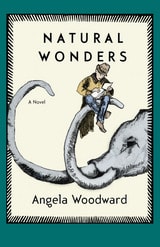
Natural Wonders
A NovelAngela Woodward, Foreword by Stacey Levine
University of Alabama Press, 2016
Natural Wonders is a novel in the form of a series of lectures about the earth and its prehistory. In it, a grieving widow assembles an idiosyncratic history of the earth’s history based on her understanding and impressions of her deceased husband’s papers.
In Natural Wonders, Jenny is given the task of assembling a memorial edition of her recently deceased husband Jonathan’s lecture series about the physical history of the earth. With little knowledge of his work or of Jonathan himself, Jenny constructs from his fragmentary and disorganized notes her own version of our planet’s past.
Presented as a series of lectures, Jenny’s earth history is an amalgam of stories from science and about scientists—a Serbian mathematician and his theory of the ice ages, a Swiss doctor camped on a glacier, the mysterious materia pinguis thought to have drifted down from stars to form fossils. Into these stories she interweaves scenes from their marriage as well as material she finds on Jonathan’s shelves. In her history, an explanation of continental drift becomes enmeshed with a schoolboy’s erotic encounter with an older woman. Icebergs in an Andean lake launch a woman’s jealous affair with a third-rate actor, and H. G. Wells’s Island of Dr. Moreau is dramatically recounted in new form.
Natural Wonders mixes mythology, popular fiction, and a misfired romance with the story of the earth hurtling around the sun. From intimately human to geologic to cosmic, it explores change, love, and loss.
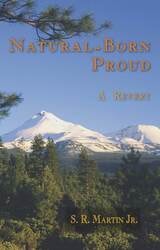
Natural-Born Proud
A ReveryS.R. Martin Jr.
Utah State University Press, 2010
A young man from Monterey and his younger brother go on their first deer hunt with their minister father and his friends. The setting is 1950s northern California, in country where, from the right height, one can see Mt. Shasta in one direction, Mt. Lassen in the other. It is a region of small, insular towns, and although it is a familiar hunting ground for the Reverend and his buddies, not everyone there welcomes black hunters. Father and son both shoulder their pride, and a racial confrontation seems inevitable.
Among the lessons young Satch learns is the sometime advantage of wit and spine. During their days in the wilderness, the brothers are initiated to the right practice of the hunt and camp and to the ribald talk, needling banter, camp tales, and occasional aggravation of sundry friends. Hunting has a primal nature, but as Satch sees, so may the variable interactions of men.

New Noir
John Shirley
University of Alabama Press, 1993

Night Patrol and Other Stories
Mikhail Kuraev
Duke University Press, 1994
Though steeped in history, his stories pluck from obscurity the little people history ignores—and, in the Soviet Union of Stalin, often crushed. In the complex "Captain Dikshtein," a fictional account of an incident in the 1921 Kronstad, Kuraev evokes life within Soviet military culture and draws a vivid, difficult portrait of one particular life amid the ships and artillery. In "Night Patrol," a lowly member of the Soviet secret police narrates his evening rounds, interspersing the nightly arrests with reflections on his long career in the KGB. In "Petya on His Way to the Heavenly Kingdom," set in a construction site for a hydroelectric dam near Murmansk, a soldier’s murder of the village simpleton resonates through a small community committed to an enormous and enormously dubious technological project. Ranging over a broad landscape of historical foibles, Kuraev’s sympathetic wit and satiric brilliance have invited comparison to Gogol, but are finally unique. In this book, English-reading audiences will discover a new and challenging voice in a tradition that has given the world some of its greatest stories.
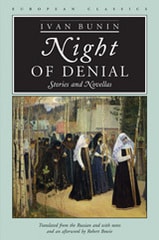
Night of Denial
Stories and NovellasIvan Bunin
Northwestern University Press, 2006
Bunin achieved his greatest mastery in the short story, and much of his finest work appears in this volume-the largest collection of his prose works ever published in English. In Robert Bowie's fine translation, with extensive annotations and a lengthy critical afterword, this work affords readers of English their first opportunity for a sustained encounter with a Russian classic, and one of the great writers of the twentieth century.
Nikola the Outlaw
Ivan Olbracht
Northwestern University Press, 2001
Ivan Olbracht's reputation as one of Czechoslovakia's most important authors stems from his works dealing with Ruthenia and the tensions between the two major ethnic groups of the region: the Ruthenians and the Jews. Weaving myth with realism, Nikola the Outlaw is considered Olbracht's masterpiece.
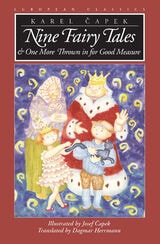
Nine Fairy Tales
and One More Thrown in for Good MeasureKarl Capek
Northwestern University Press, 1996
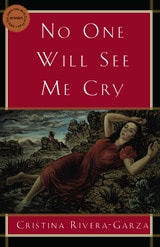
No One Will See Me Cry
Cristina Rivera-Garza
Northwestern University Press, 2003
Winner of the Mexico National Novel Prize, Sor Juana Inés de la Cruz Prize, and IMPACT Prize
Joaquín Buitrago, a photographer in the Castaneda Insane Asylum, believes a patient is a prostitute he knew years earlier. His obsession in confirming Matilde's identity leads him to explore the clinics records, and her tragic history. Joaquín and Matilda begin to tell each other fragmented stories about a past they almost shared, and a future in which they do not believe. Set in 1920s Mexico, this novel is at once an overview of one of the most turbulent times in Mexican history, a love story, and a meditation on the ways in which medical and popular language define insanity. No One Will See Me Cry is a lyrical and startling visitation with the so-called losers of an era as they try to plumb the meaning of their lives.
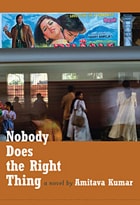
Nobody Does the Right Thing
A NovelAmitava Kumar
Duke University Press, 2010
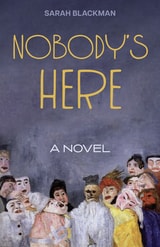
Nobody's Here
A NovelSarah Blackman
University of Alabama Press, 2026
An end-of-life sex worker accused of murdering the man she loved—and a town forced to reckon with what makes a life meaningful
Set amid the lush landscapes and winding waterways of Maryland’s Eastern Shore, Nobody’s Here is a haunting and compassionate novel about love, loss, and the value of a life. Flossie Taw works as an end-of-life sex worker, providing live-in care and companionship to men in their final days. Her latest client, Leonidas “Leo” Bane, has kept her by his side longer than anyone before him. Against her own rules, Flossie falls in love.
When Leo is found dead from what may or may not have been a self-inflicted gunshot wound, Flossie becomes the subject of suspicion in her small Maryland town. As she struggles with an unfamiliar grief, she becomes the subject of intense local speculation as neighbors, friends, police officers, the county coroner, and countless others weigh in on her character, her profession, and her possible role in Leo’s death.
Told through a rich chorus of voices alongside Flossie’s own, Nobody’s Here explores how ordinary people wrestle with life’s biggest questions while navigating the demands of everyday life. As the residents of Canterbury, Maryland, debate Flossie’s culpability, they are also forced to consider what makes a life meaningful and what we owe one another at the end of it. Nobody’s Here asks readers to look beyond appearances and decide for themselves whether Flossie Taw is responsible for Leo’s death, or whether she was responsible for giving his life meaning.
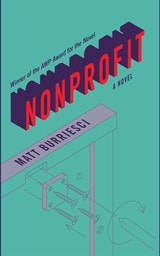
Nonprofit
Matt Burriesci
New Issues Poetry and Prose, 2015
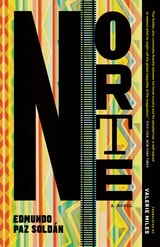
Norte
A NovelEdmundo Paz Soldán
University of Chicago Press, 2016
A prominent member of a new generation of Latin American writers, Paz Soldán stands in defiant opposition to the magical realism of the past century, instead grounding his work in political, economic, and historical realities. Norte is no exception; it is a tale of displacement and the very human costs of immigration. Shocking with its violence even as it thrills with its language, confounding rather than cowering under the cliché of the murderous, drug-dealing immigrant, Norte is a disquieting, imperative work—an undeniable reflection of our fragmented modern world.
North of Patagonia
Johnny Payne
Northwestern University Press, 2001
Northern Lights
Drago Jancar
Northwestern University Press, 2001

Nothing But the Night
John Edward Williams
University of Arkansas Press, 1990
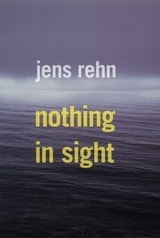
Nothing in Sight
Jens Rehn
University of Chicago Press, 2005
In a terse, almost clinically exact style, Nothing in Sight distills the brutal essence of what it is to die alone. Much more than a story of war, this short novel presents the memories, dreams, and hallucinations of two soldiers as they drift toward death. With nothing in sight on the horizon, Jens Rehn directs our view inward, into the minds of both men as they question the meaning of life, the existence of God, and the possibility of enduring human relationships. As the drama unfolds, each man recalls fragments of his past through the delirium of thirst and pain. The American soldier, his arm severed, dies first of gangrene. The German dies in agony a week later. Their life raft sinks into the vastness of the ocean.
Reissued two years ago in Germany, Nothing in Sight was hailed by critics there as a singular achievement. The work is presented here in a crystalline English translation for the first time, given new life for generations of readers to come.
Novel with Cocaine
M. Ageyev
Northwestern University Press, 1991
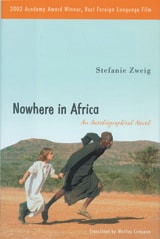
Nowhere in Africa
An Autobiographical NovelStefanie Zweig, Translated by Marlies Comjean
University of Wisconsin Press, 2007
Visit the Web site for the film at www.nowhereinafrica.com